
The Gabinete Gráfico, a space devoted exclusively to the exhibition of the Museo de Arte Carrillo Gil’s graphic-arts holdings, is presenting a selection of works by Alexandro Jodorowsky (Chile, 1929) centered around comic books and fantasy literature, two genres he has explored, among many others, throughout his varied and versatile trajectory. This exhibition, curated by Angélica García, emphasizes the years between 1960 and 1977 when the artist lived in Mexico. There were many later journeys, but those seventeen years was a highly prolific and crucial period for his work.
Jodorowsky and René Rebetez, a philosopher and writer, founded the Mexican Science-Fiction Club in 1964 and published, using their own funds, the magazine Crononauta, Mexico’s first publication specializing in the genre; only two issues were put in circulation. The great significance of these two issues of Crononauta is based on the graphic and literary material included, from artists such as Manuel Felguérez, Lila Carrillo, Carlos Monsiváis, José Luis Cuevas, and Alberto Gironella, among many others.
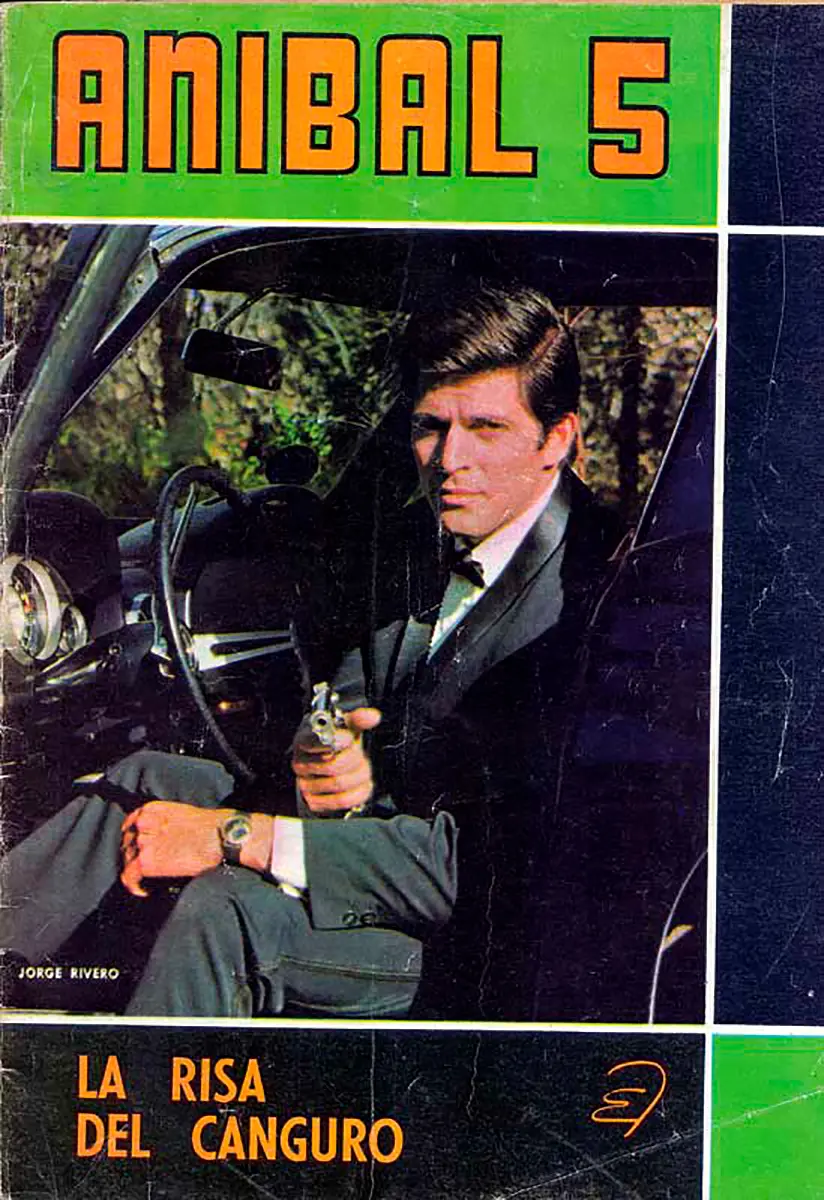
In mid-1966, Jodorowsky developed the script for the comic book Hannibal 5 in collaboration with artist Manuel Moro. Six issues of this comic were published. Later he was to try his hand as a draftsman, with a weekly contribution to the now extinct El Heraldo newspaper: his Fábulas Pánicas a comic strip dealing with mystical fables and stories, published between 1967 and 1973. These drawings are compiled in volumes that appeared in recent years.
Jodorowsky has gained great distinction as a filmmaker, and the show includes the posters that he created for his most famous films, made in Mexico: Fando y Lis (1968), El Topo (1970), The Holy Mountain (1973), and Santa Sangre (1989). These films won numerous awards but also collected negative critiques and plenty of controversies, and are now considered cult works. Surrealistic and mystical in character, the films meant fame and renown for Jodorowsky, as well as the interest of many international figures in his work. In several of them, he participates not only as a writer and director, but also as a set designer, costume designer, and composer.
The show also includes some of the drawings Jodorowsky made for the ambitious project of filming Frank Herbert’s 1965 novel Dune, a project that involved artists such as Orson Welles, Salvador Dalí, and H. R. Giger. The project was never completed due to lack of funding, but Jodorowsky created many drawings and sketches, working with French artist Moebius as art director. Also in collaboration with Moebius, Jodorowsky worked as a writer in Los ojos del gato (1978) and in the science-friction writer The Incal (1980-1988). In this exhibition, we can see some of these collaborative works by these two artists who joined forces again in 1991 for Le Coeur Couronné.
Another important facet of Jodorowsky’s activity has been the performance arts, and the show includes videos not only of scenes from his films but also of one of his most celebrated performances: Melodrama Sacramental, presented in Paris in 1965. In this discipline, besides participating as an actor in many of the works he writes and directs, he has also been a musician, starting with Zarathustra (1970), a controversial project where he also gave origin to the group Las Damas Chinas based on his compositions. The resulting album is on exhibit here.
Jodorowsky’s connection to the graphic arts has been extensive and abundant, and since his beginnings in the genre in 1966 he has remained active as a writer and a collaborator to many artists such as George Bess, Durandur, François Boucq, Fred Beltrán, Milo Manara, and Ladrönn, among many others.
This small show with unique samples of his comics, many translated to several languages and published in deluxe editions, does not offer a solid account of Jodorowsky’s work as a draftsman, a somewhat confusing situation for a space devoted to the exhibition of graphic works. The show aims, rather, to review the significance of his career in the graphic arts and to note the ways in which his work has influenced others in disciplines like music and film. The show also explores the way in which Jodorowsky has been able to work with equal success in dissimilar genres, and how the graphic arts have been a constant throughout his career. It does not aspire to dig down into the works themselves, but to present a general overview of Jodorowsky versatility, alluding to the graphic arts as a guiding axis for his stage and film work, both in conceptual and in visual terms.
Although there have been many retrospectives of Jodorowsky’s films and also some exhibitions of his comics, this show is important for a reassessment of the legacy of a transgressive, acclaimed artist.
ISAURA RUIZ