
In case there is any doubt that contemporary art has the capacity to be moving, I want to recall here the poignant experience many of us lived in La Extracción de la Piedra de la Locura, Javier Téllez’s 1996 exhibition where he installed the sound of the Gounod/Bach Ave María, sung a capella by a psychotic female patient of the Bárbula Psychiatric Hospital, at the Museo de Bellas Artes de Caracas, and made it play at all times as something that was much more than background music. And as we point out the work’s ability to touch and move the visitor, we must also note the capacity for expansion and penetration—spatial, and not only auditory—of the sounds recorded by the artist at the hospital and reproduced at the show, which flowed to the surrounding areas and overwhelmed with its emotional power the four walls of the white cube a cube that, as in other Téllez’s exhibitions, was truly not all that white anymore.
That voice not only broke with the canons of classical music, good diction, and vocal performance but appeared suddenly as a visceral testament from a different world. If was in fact a new language, even as it let out something as ancient as the suffering of the singer: a voice previously repressed and neutered (in turn symbolizing many other voices, silenced through the centuries.)

After his beginnings with the psychiatric patients in Bárbula, Venezuela, Javier Téllez built his own career in the art following the peculiar route of mental patients and the institutions that house them in different cities and continents. Marked early on by his connection to his parents, psychiatrists, and humanists who devoted their lives to the people interned in that hospital and who took their son often in their rounds, Téllez has made of madness and health one of his defining obsessions, a reiteration that is constitutive of language. This topic appears in his works along multiple lines of exploration: from madness as an ancient, inexhaustible theme for art, through the more direct and personal risk of giving a protagonistic role to mental patients, to the different social, ethical, and political connections that Téllez’s work has opened around the concept of madness, lining it to various forms of exclusion: of the disabled, of the Other, of those who are ethnically or geographically different.
In a process of self-criticism (in the broad sense of an artist who critiques art), Téllez has progressively established a set of relationships between psychiatric hospital and museum that, in the strictest sense, seemed to be extending an archeological consciousness over some of the features of these institutional languages, rather than critiquing them: the language of the mental institutions, so familiar to him through his own background, and the language of the museum, the paradigmatic site of visual culture, both a zone of illumination and of suspicion for many sensitive artists. Tellez says: ‘Both institutions are symbolic representations of authority, founded in taxonomies that are based on the distinction between the normal and the pathological, on inclusion and exclusion.
But while the artist is explicit in linking hospital and museum, we must note that in an implicit way he also brings together health and museum, as part of his own language is cathartic and, without pretending to be therapeutic art, it wants, like the Romantics, to generate spaces of respite and cure for those patients who are his co-actors, on occasion his co-creators, and always, at any rate, his most involved audience. Thus, he not only acts as an artist, but also as a healer, one who cures and cares for when he gathers these patients for weeks at a time, opening for them (even if still within the institutions where they are committed) spaces of expression of the kind that only art makes possible, and which the museum later welcomes in solidarity.
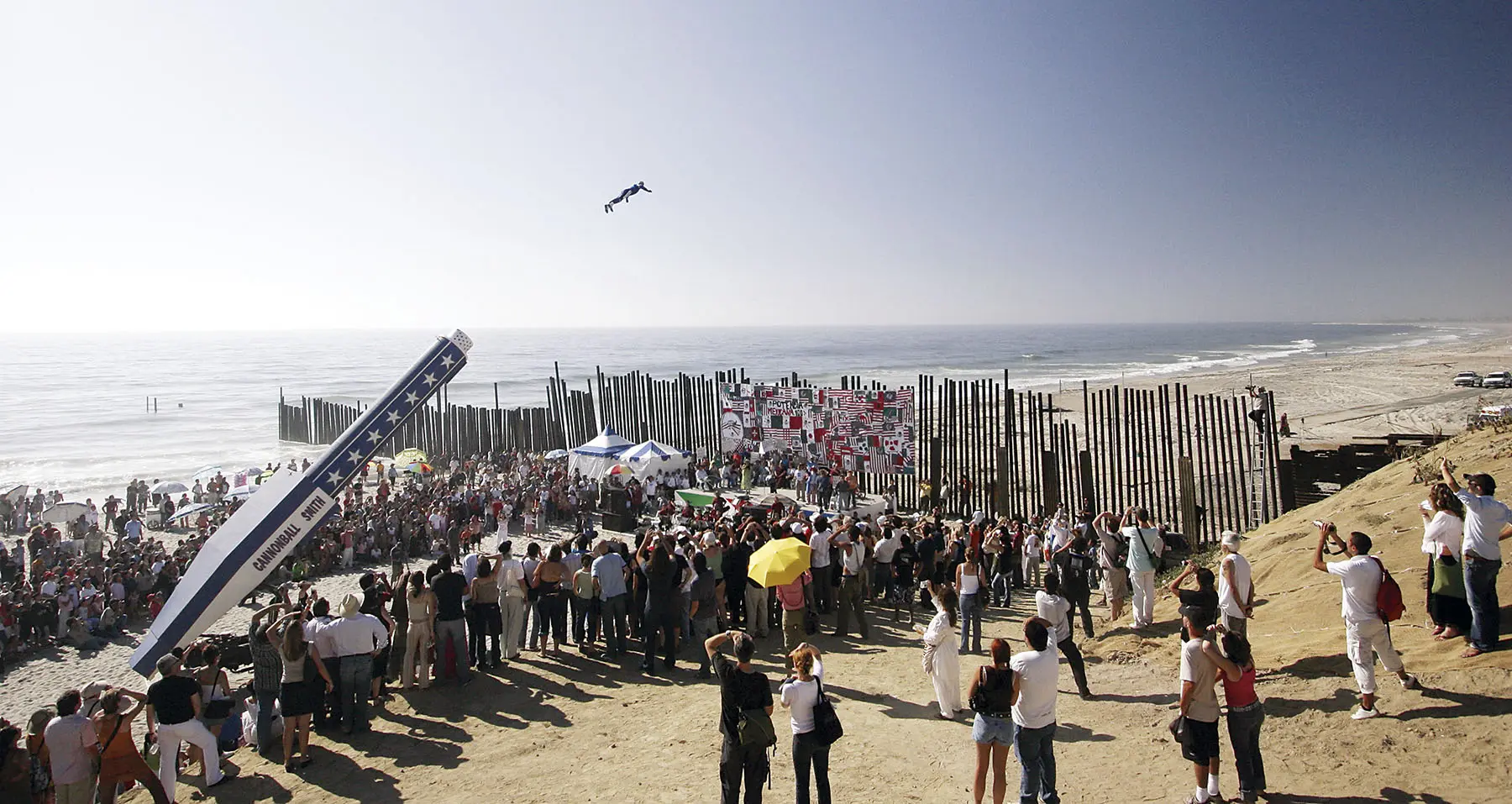
There is a crossing in this work between thematic continuity and local (and epochal) specificity. While the topic madness/cure is central, almost a constant, there somewhat site-specific variables that with each experience generate a new axis for a versatile trajectory that includes other discourses besides art and psychiatry: from politics to film, from drama to philosophy. In all of them, Téllez sheds light on the exclusions and inclusions that are created as ‘inside’ and ‘outside’ are defined by any borderline. He points out those borders: between health and illness, between I and the other, between a country and its (sometimes hostile) neighbor. In this way, he opens himself up to the concept of geographic borders as containment structures against undesired migration and creates an unusual elevation to traverse the dangerous line between Tijuana and San Diego. It is One Flew Over the Void (Lost Bullet) (2005), commissioned for Insite 05, where Dave Smith, the world’s most famous “human cannonball,” flies over the border wall erected on a narrow strip between Mexico and the United States known, due to its topography, as “Latin America’s Armpit.” Acting on the immediate (and breaking the border) but also on the symbolic (as a man flies against the gravity that pulls him down and also against his own tragedies), what Téllez does here is at once performance art, living sculpture, and video-installation with patients from the Centro de Salud Mental de Baja California, actors and co-creators of the set design, costumes, and music.
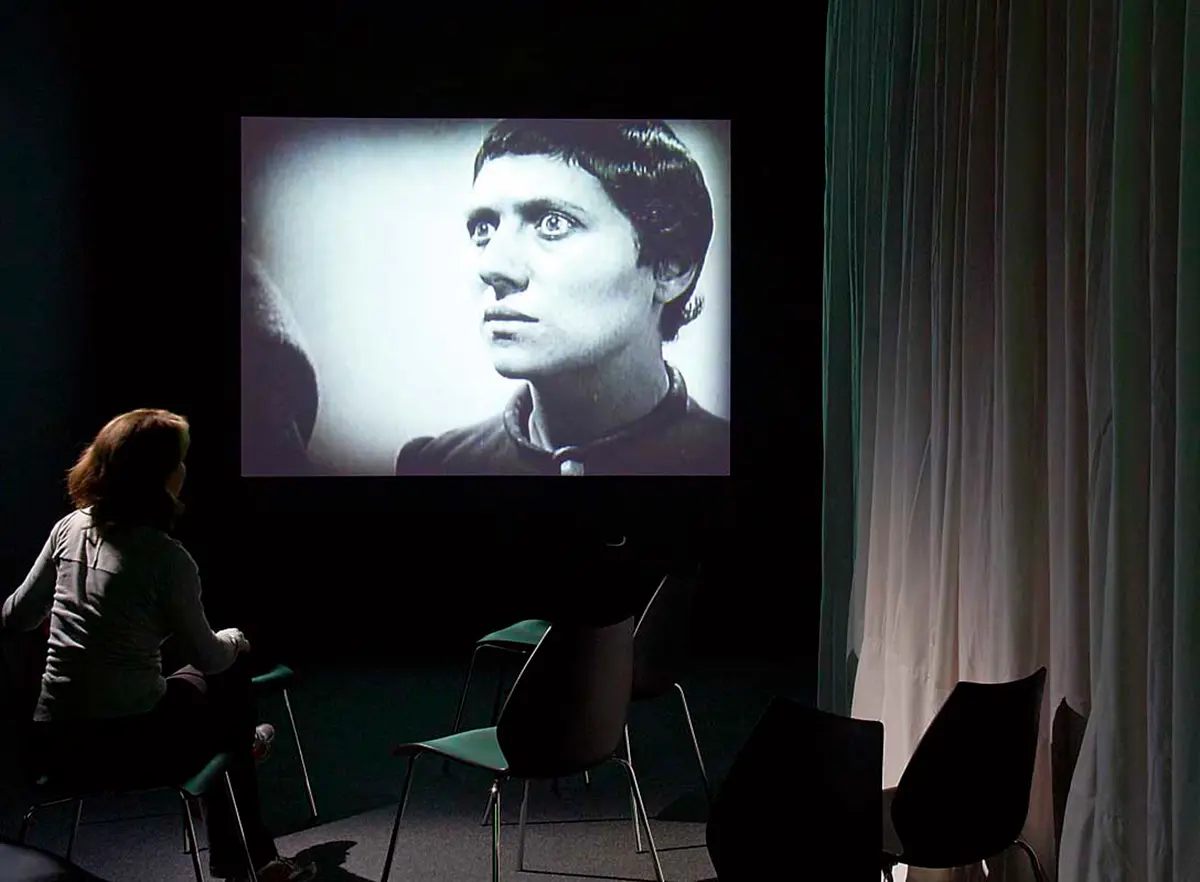
One of the region’s most interesting video-artists and widely projected at the international level, Téllez also explores videos and films by others as the starting point for his own production. In La Pasión de Juana de Arco (Rozelle Hospital) (2004), a group of female patients from this Sydney, Australia hospital watched with him Carl Dreyer’s classic silent-era film La passion de Jeanne d’Arc, then reinterpreted it according to their own dramas and wrote dialogues that extracted voices from their own silence. Watching the film time and again made it possible to build a peculiar site-based specificity: the patient-viewer was driven to take the place of Dreyer’s gaze, but especially the place of the Inquisition that sacrificed Jeanne, in order to return, with a contemporary way of seeing, to the neo-inquisitorial place at hand: the psychiatric institution.
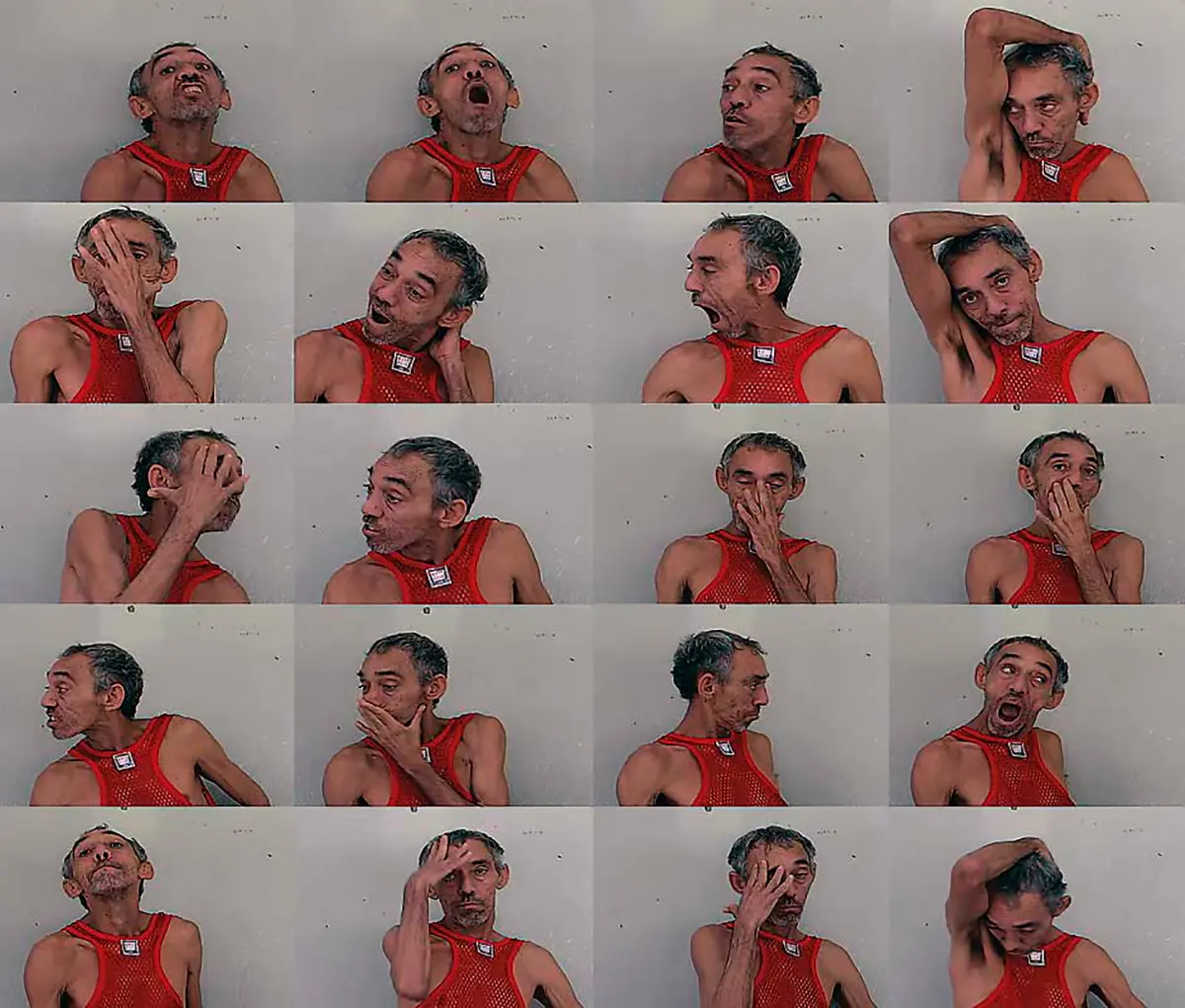
In the video-installation Choreutics (Venice Biennale, 2001), Téllez uses a documentary film by Venezuelan psychiatrist Dr. Avila Girón as his springboard to further explore an illness—Huntington’s Corea—that forces patients into a state of perpetual motion as neurons degenerate, an ailment of the body and mind that afflicts an unusual number of people living in poverty on the shores of Lake Maracaibo, Venezuela. The title is also a play of words with the term Choreutics, coined by choreographer Rudolf Laban to describe a new body movement technique that broke with the rigor of classical dance.
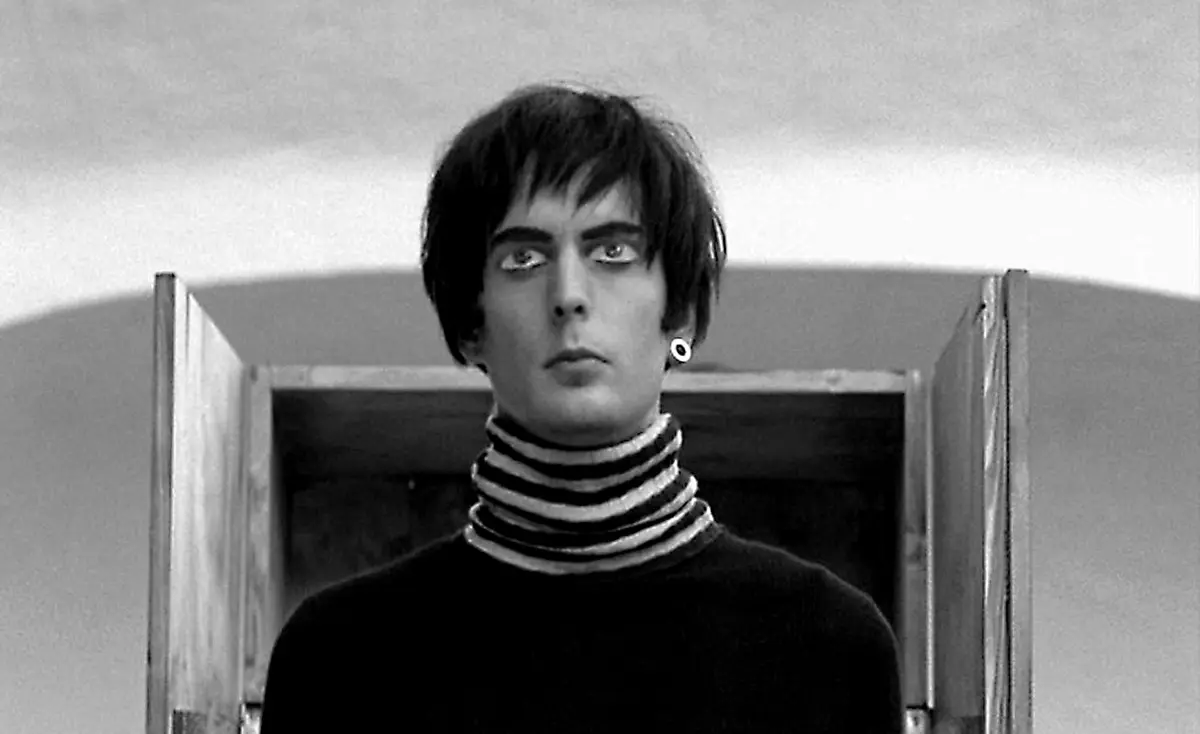
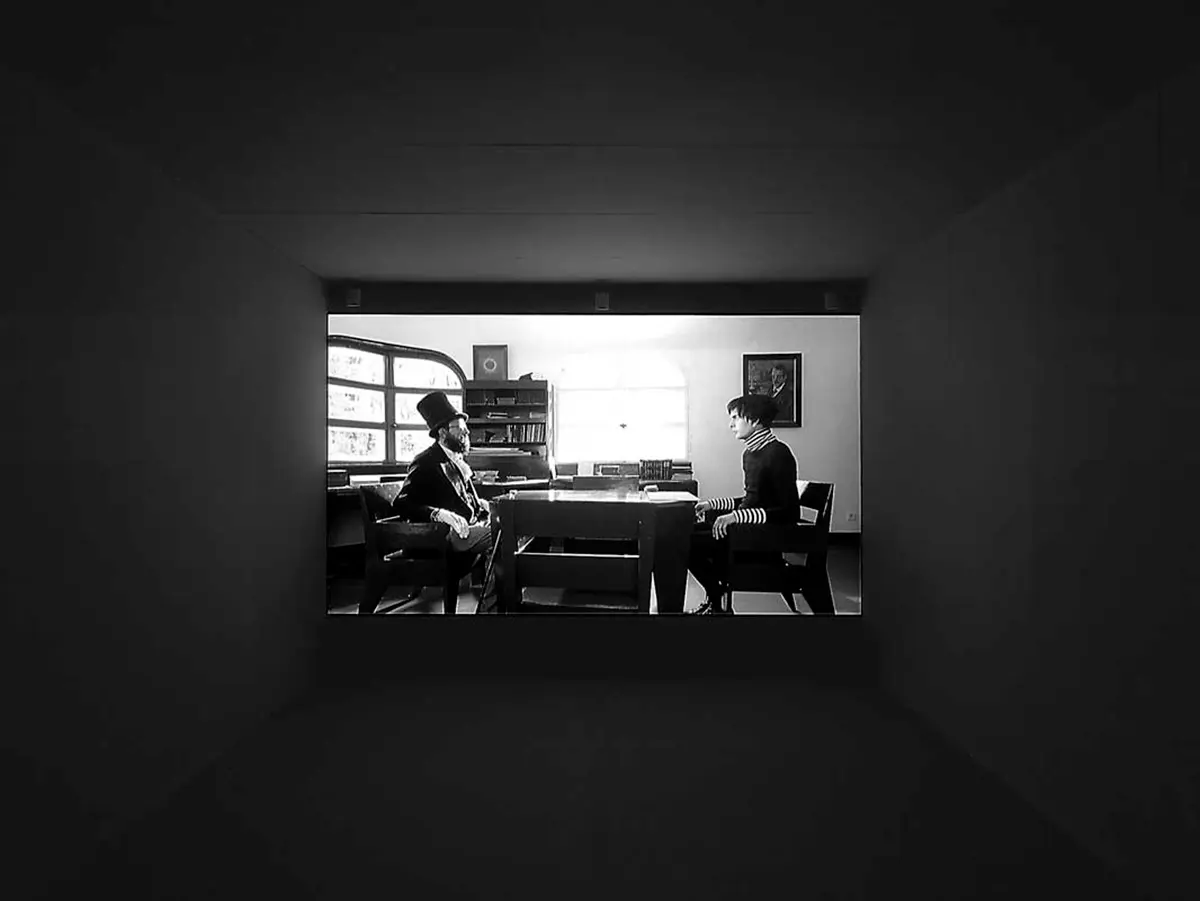
In the video-installation Calligari y el sonámbulo (2008), presented in Germany as part of the show Rational/Irrational, the artist and the patients at Berlin’s Vivantes Klinik take as their starting point Robert Wiene’s 1919 expressionist classic Das Kabinet des Dr. Caligari, considered the first feature film to deal with the topic of psychiatric institutions. More than playing here the intellectual card of the movie-within-a-movie, Téllez opts to set up a more life-based game of the asylum within the film, and the film within the asylum. The protagonists double into patient and actor: a real patient and a somnambulist in the fiction, he concentrates both roles with dramatic intensity and with hypnotic neutrality on a fixed gaze of indubitable aesthetic power.
Like many contemporary artists, Téllez incorporates into his work extra-artistic knowledge and spaces, establishing links between his practice and sociology and science (in this case, not “hard” sciences but those focused on human behavior). Open to ethics, the work itself is a thread of empathy thrown by the artist, and another way of reminding us that true art always touches on otherness, in one way or another. It shouldn’t surprise us that for the patients La Pasión de Juana de Arco was, in their own words, the best experience of their lives, since it offered them the opportunity to express in their own voices the exclusions they have suffered (told or read from their diaries, and in any case narrated more freely than in any clinical history.) But while for the committed patients these works of art can be a temporary lifeline, at other times the line is tensed into an arrow to point out sick zones to the eyes of society at large. In a broader sense, the artist includes art that society habitually excludes.
The issue of religion is also present in Téllez’s work: the notions of good and evil, guilt, punishment, ad the repressive presence of religious morality as a non-negligible add-on to the weight of madness. But he also incorporates a God that provides peace and beauty both to the patient’s place and to the circuit of art, an unforgettable leitmotiv when the presence of the sacred reaches his work via music.
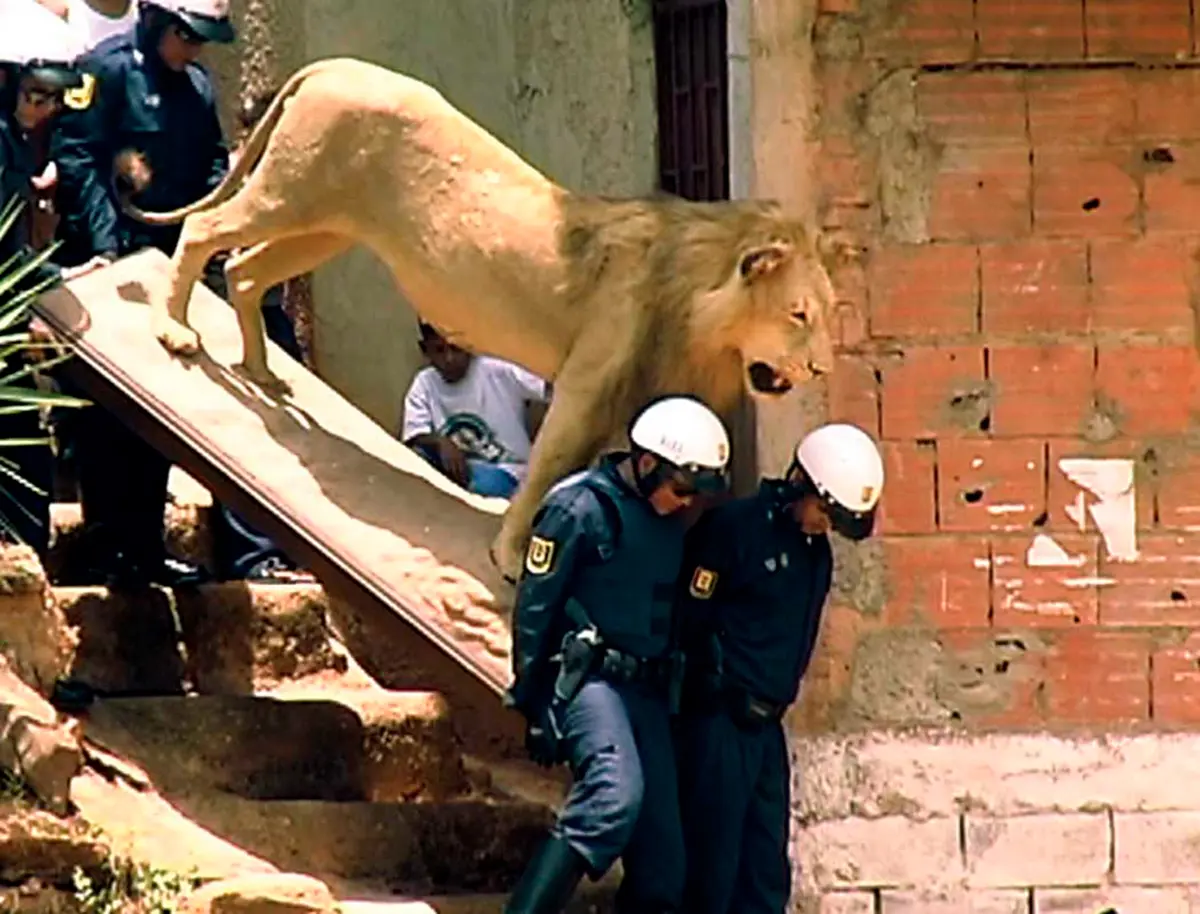
Téllez is open to processions, festivals, circuses, games, carnivals, masks. El León de Caracas is a video and performance that in 2002 brought together popular devotion and the repressive power of the state in a journey done in the fashion of Christian processions through Caracas’ marginal areas, with the city honoring not a saint of any kind but, with metaphorical irony, its own heraldic animal.
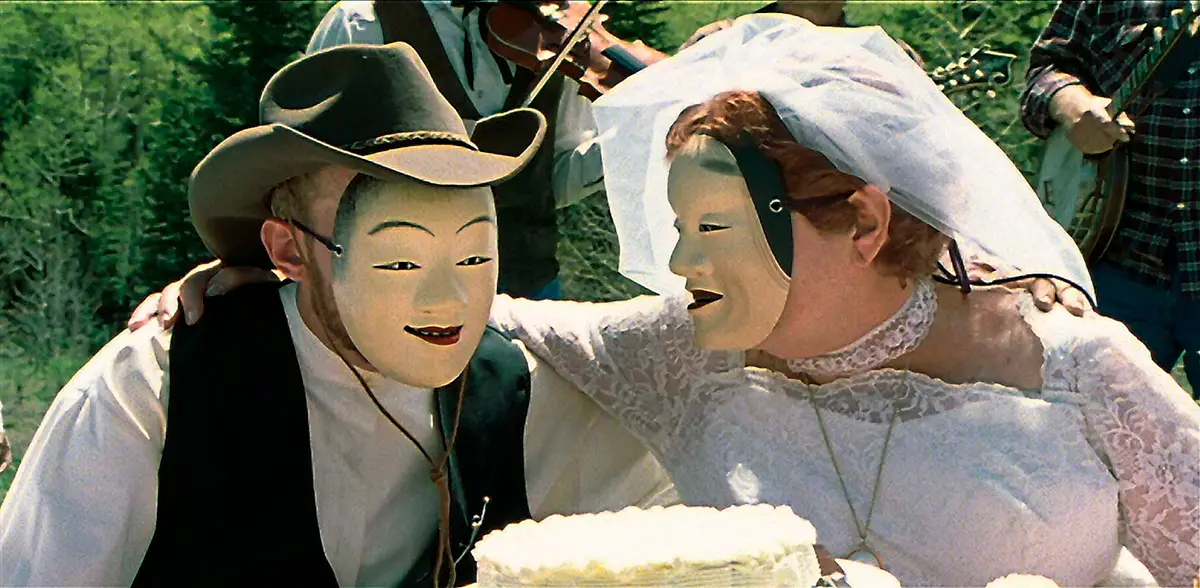
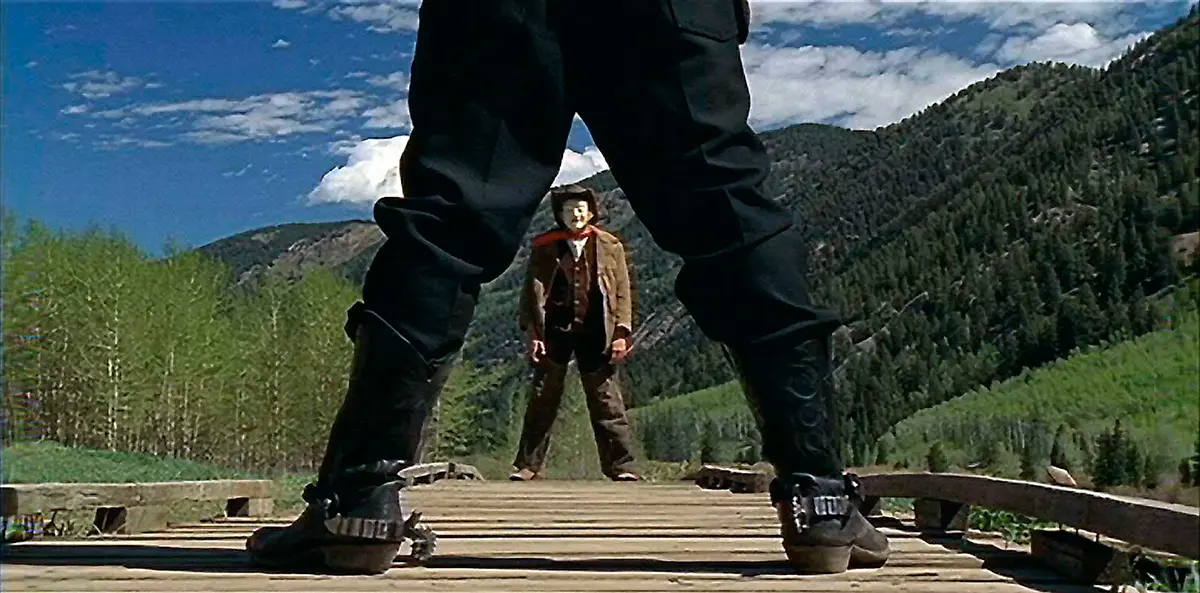
In Oedipus Marshal, a video produced for the Aspen Art Museum in 2006, Téllez brings together several different rhetorical systems: Sophocles’ Oedipus Rex is represented as a Western saga, and the actors (members of the Oasis Club House outpatient center, in Colorado) used Noh theater masks. Here, the ghost towns of the US West are visited by an Asian theatrical tradition that also tells of ghosts and uses masks as a way to reflect about identity and memory, confounding or exchanging roles, placing one in place of the other to let the acting start.
Javier Téllez’s work also has philosophical connections, in the sense of a particular kind of political and anthropological conceptualism that has helped him explore the languages of the other in order to provide those who can’t communicate with some voice. Thus, a portion of the language that is most unique to this is, precisely, the act of giving something of a language to those who don’t have it. That something is the hope afforded by art that, while not full saving, can facilitate steps in the process of achieving a more human existence.
At any rate, Téllez needs to reveal: for that which has been condemned to invisibility to become visible, bringing to the fore what had been marginalized. And he reveals in public the shame that society keeps out of sight: in psychiatric institutions, prisons, or borderlands. For the great art of the classic period, to ‘reveal’ was to bring into the image transcendent truths that had remained hidden; in Téllez, to reveal is to bring into the image truths that are too human and too everyday, truths that our collective psyche keeps under wraps (from the individual’s mental shadow to certain community-wide ailments that our statistics ignore). To reveal is to bring in a way those truths to the living body of contemporary art, an ideal space inasmuch as it is already open to the real problems of human beings and their circumstance.
The conceptual avant-garde had already stated that life is more important than art, even though they were not always able to embody such principles. Artists like Téllez, however implicitly, put it into practice by shortening the gap between creator and motif implied by representation—in painting or sculpture—across the centuries. With his videos, with his live actions, with his penetration into the interlocutor’s own anguish (his or her depression, his or her voice breaking to narrate, bitterly or confidently, a story of reclusion), Téllez makes an art of closeness to pulsating life, to beings who are genuinely suffering, beings that are not there ‘as if’ suffering because they are not there representing the role of the other but their own as well. There are moments when the artist gives them the ‘as if’ of fiction, having them write dialogue and decide on the plot, having them act “as if” they were Joan of Arc, somebody in a Western, or a somnambulist; or, more simply, as if they were themselves, but beyond (and before, or after) their illness and the walls.
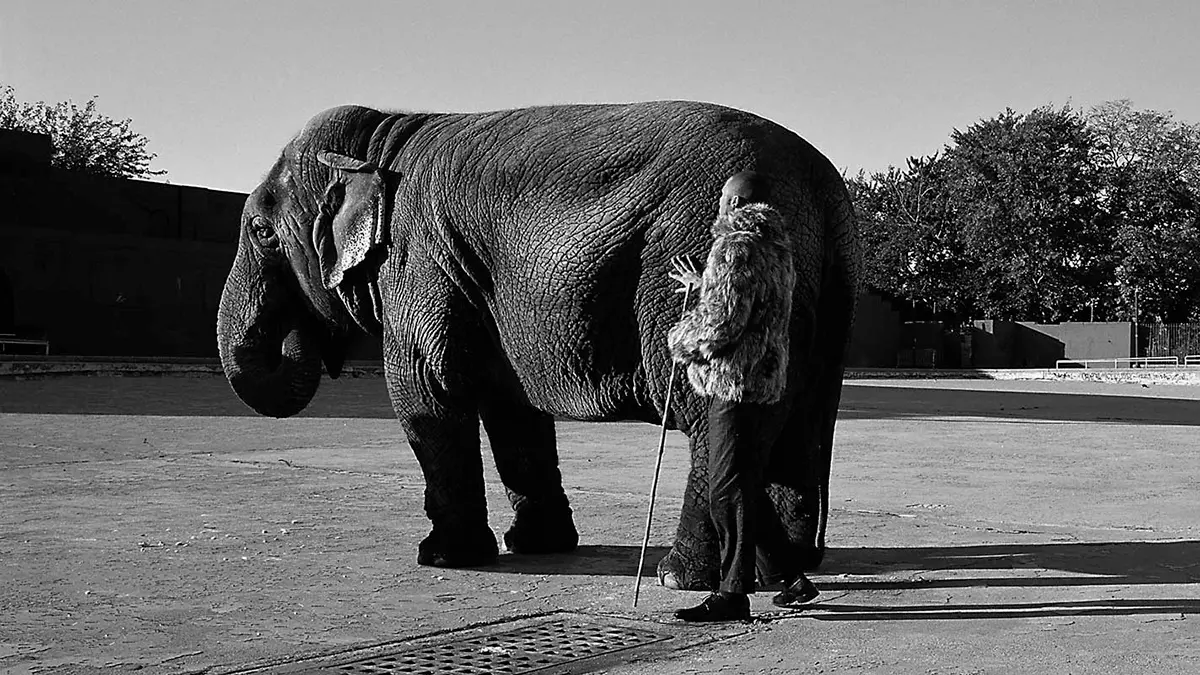
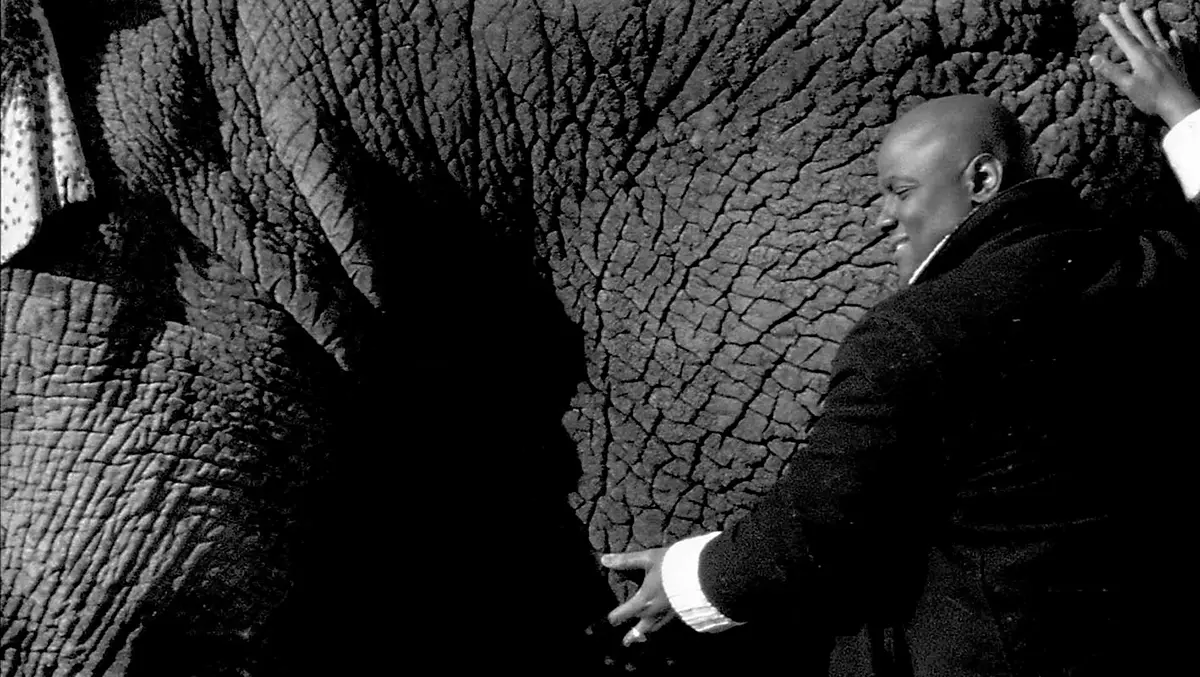
If to reveal is always connected to the past and to memory (and in Téllez it is a matter of making us see something that has wounded us for a long time), revelation also requires of the present tense of perception. Carta sobre los ciegos, para uso de aquellos que pueden ver brought into video, in 2007, the ancient fable of the blind touching an elephant and producing erroneous and fragmentary interpretations. The Hindu fable referred to a kind of perceptual blindness, the impossibility of truly knowing because our vision—considered the superior sense since classical philosophy—is blocked, Téllez takes a more positive and more modern turn by bringing to bear other senses: touch, smell, hearing, and even a more global capacity for synesthesia. And he also takes a positive, modern turn by pointing out that our fragmentary perception is not a handicap but a given of real life, and, for those who are able to ‘see’ and understand it, a permanent source of both sensual enjoyment and cognitive power in the fragmentariness of the world itself, and more precisely, of our times.
*All images illustrating this article are courtesy of Galerie Peter Kilchmann, Zürich.
MARÍA ELENA RAMOS
Writer and curator. Former president of the Museo de Bellas Artes de Caracas.