
The retrospective of photographs by Sandra Eleta at the Museum of Contemporary Art in Panama was one of those exhibitions that mark a milestone. For the broad audience that already knew her work, it offered an extraordinary opportunity to study the different photographic essays she has created over the past forty years. For those who were exposed to her work for the first time, it was a major revelation. With a sober and harmonious installation, the exhibition included sixty photographs, mostly in traditional black and white. From her renowned Portobelo collection, which she began decades ago, to the series titled Por los caminos de la piel (Along the Paths of the Skin) from just a few years ago, the exhibition leaves no doubt regarding the importance of this photographer.
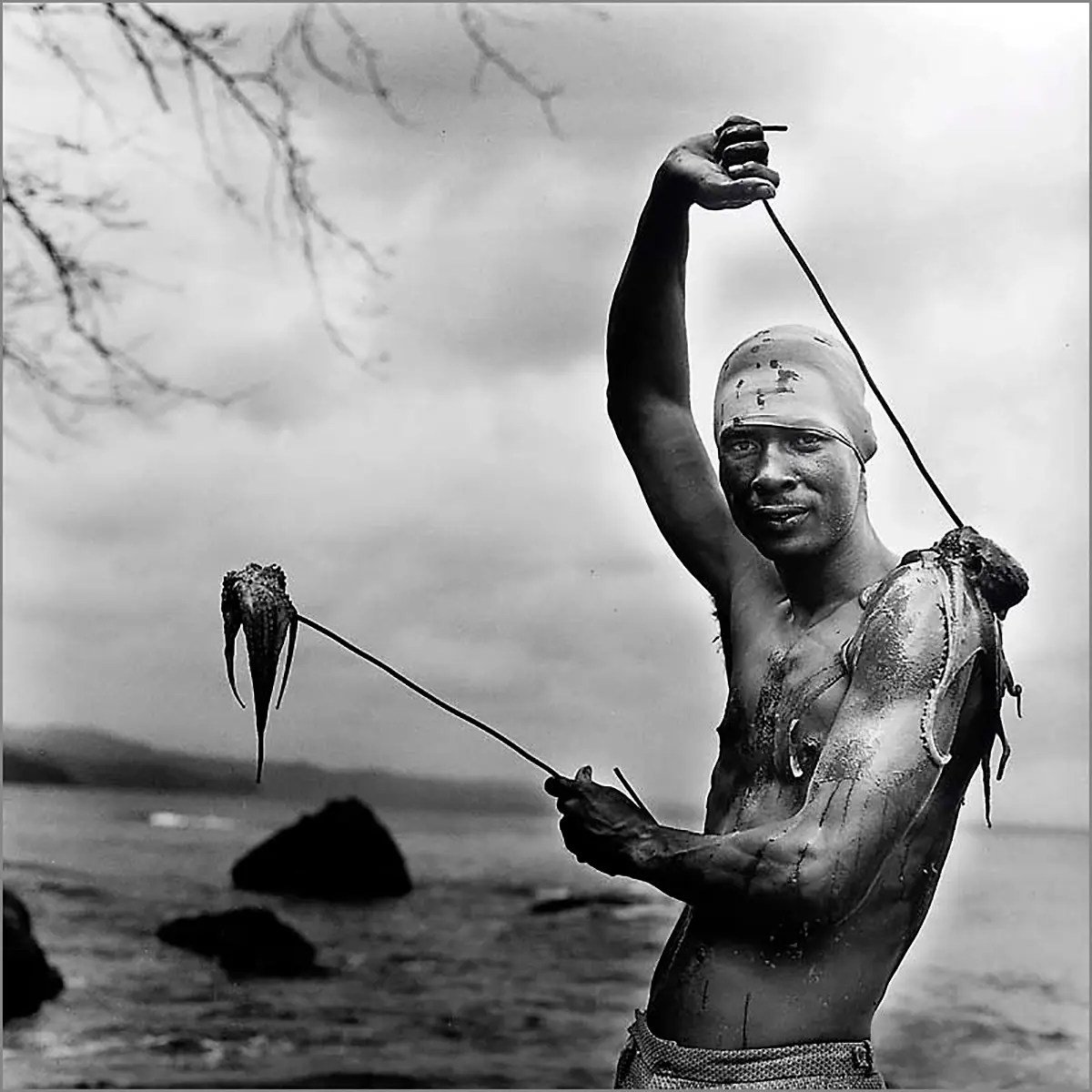
Sandra Eleta has achieved international renown with her photographs, most of which have immortalized the people and landscapes of her native Panama. In the seventies, she moved to the small town of Portobelo on the Atlantic coast, an unusual place where colonial history, African traditions, and Christian rituals come together. Over time, she gained the confidence of the portobeleños, whom she started photographing initially with a 35 mm camera and then with a Hasselblad, which she still uses today. It was at that time that Sandra Eleta developed the "eye" and the view of the world for which she is well known. More than just pictures of people, she creates portraits that are intimate, even spiritual; images that convey something deeper than the mere outer appearance of characters such as José, the healer, or Putulungo, the octopus fisherman. Sandra has said: "To delve deeply into their souls, I got closer and closer to them until it became possible for my lens to photograph their very beings, their 'auras.' As if in a dance, we would be following the same rhythm, the same frequency. That is how the protagonists in this story began to appear."
The retrospective included several photographic series begun in the 1970s, which had never been shown publicly, such as one of Las Campesinas (The Peasant Women), a mother and two daughters in the countryside, part of the group of poor settlers who migrate within Panama in search of a better future. Their pictures, taken in the fields, show a familial bond and a sense of courage before the unknown that the photographer emphasizes through remarkable pyramidal compositions. The exhibition also included seeing Eleta's series titled La Servidumbre (The Servants) in which she photographed domestic employees from two generations and two countries, Spain and Panama. Gladys and Rosa appear polishing the silverware; Victor, the butler, in a pose as distinguished as the Roman bust behind him; and Romy brandishes a rifle during the U.S. invasion of Panama, while her boss looks out from an oil portrait behind her.
In other words, we encountered familiar characters such as the young girl, whose name is America, floating in her dugout canoe, or the muscular Tentico holding his spear. According to the artist, "The Emberá tribesmen are water creatures, and, as nomads, their gravitational orbit is always centered on the river. I knew that to photograph their essence, I had to do it from the water." Another one of her series, Los Abuelos (The Grandparents), commissioned by the government, included photographs of old people from different parts of the country, who made it possible for Sandra Eleta to explore history from the perspective of those who have experienced it. Her conversations with them allowed her to come closer, but their photos do not reveal the sense of intimacy she achieved with both the people of Portobelo and the Emberás, with whom she lived for considerable periods of time. The photo essays Cuando los santos bajan (When the Saints Come Down) begun in Cuba in 2004 and Por los caminos de la piel that she started in Panama in 2006 completed the visitors' chronological journey. The first, with images of healers, rituals, and ceremonies typical of Cuba's syncretic religions, is still unfinished, pending a future trip to the island. The second group stands out for its color photographs of bodies painted with indigenous symbols by Kuna artist Olguaidi, as well as images of tattooed men and women, who reflect an urban culture that is also expressed through figurations on the skin. We sense the echoes of ancestral rites in the fantasized image of Pajarito –with his crown of shells and feathers, his body painted blue and gold– who poses holding two white doves.
Color also reigns supreme in the audiovisual titled Serenata en B (Serenade in B) created by Eleta in the '80s, which was fortunately included in the retrospective. It is "an explosion of color" through a great number of slides that tell the story of a bus driver in search of his ideal woman. Initially presented through nine synchronized projectors, the slides were digitalized for this exhibition, without diminishing the freshness, the imagination, and the psychedelic nature of the original presentation. At the time, this extraordinary audiovisual piece made a significant mark in this country's art history, as has so much of Sandra Eleta's photographic work since then.
MÓNICA E. KUPFER