
Flowers; red or gray flowers, painted on canvas, on gravel, traced with thread, ascending up the gallery walls, were the protagonists of the installations conceived by Aimée García for El jardín de la Intolerancia, her show at Villa Manuela last November and December. It is likely that a good number of visitors found themselves overcome by feelings of estrangement, particularly those among them who thought they were coming for a new lesson on the topic of portraiture, with emphasis on those self-portraits that have marked the development of García's work. This time around, though, there weren't any faces to be admired.
The work that gave the title to the show was a kind of wall composed of twenty small-format paintings. In each of them, a type of flower stood out. Contrary to what occurs in nature, here all the flowers were red. The appreciable diversity of kind (daisies, gladioluses, orchids, birds of paradise, guaiacums, butterfly flowers, reginas, among many other species) was smothered by such use of color in their representation. Thus, those flowers in El jardín de la Intolerancia, equalized in their spirit, were a comment by García, translating feelings and beliefs that stand apart from the narrative line her work has been following, freed now of the secondary role they have played in the past. The flowers were now characters, and with them, some observations about zones of reality that had not found a place in her discourse came to the forefront. What was precisely expressed in those flowers was the violence that results from intolerance. The absence of space for pluralism could be perceived in that metaphorical prison, as we discerned the excess of human power bent on subjugation; the clutches of totalitarianism in the excess of order, life's negation, and its polyphonic essence. Along with the confinement present in the structure, that red color, referring to the pulse of living things and to blood itself, was also the unequivocal symbol of decomposition and death.
In contrast to the dramatic weight of the previous work, in Aferrada, García reinforced the perverse interplay of delicate shapes; this installation was able to articulate a suggestive allegory with its lightness. While on the wall García's red threads outlined a large-scale butterfly flower—Cuba's national symbol since 1936 and a universal symbol of purity and sublime spirituality,—the emphasis was on the trap laid for Being by the persistence of dogma, whatever the kind and whatever the location. Domination, seen as a climbing vine in its all-devouring impetus, negates individual growth, and this stagnant state results in society's decay. As the wall was integrated into the work, the light emanating from it questioned the vitality of that weaving transformed into a restraining corset, and with that its vitality to constrain human drive.
In the midst of these oscillations of meaning and on the basis of her ironic playfulness, Aimée García turns a flower previously considered a symbol of freedom into an object of mockery. Representing it in grayish tones and bereft of the symbol's usual elegance, her Impura wants to break away from sublimation and rhetoric, stratagems that only serve for the obfuscation of truth and of the real world. It is here that the disenchantment, melancholy, and purposelessness of Lluvia de Ilusiones acquired full meaning. The intense shower of rocks seemed to become a deluge. Gravel splashed on the wall and, on it, like dead, tiny gray flowers under the weight of eternity. That torrent was the perennial flood of adversity, of contingency in the daily struggle for survival, the struggle to be beyond yokes and bridles; belligerence that is as old as the very origins of human society.
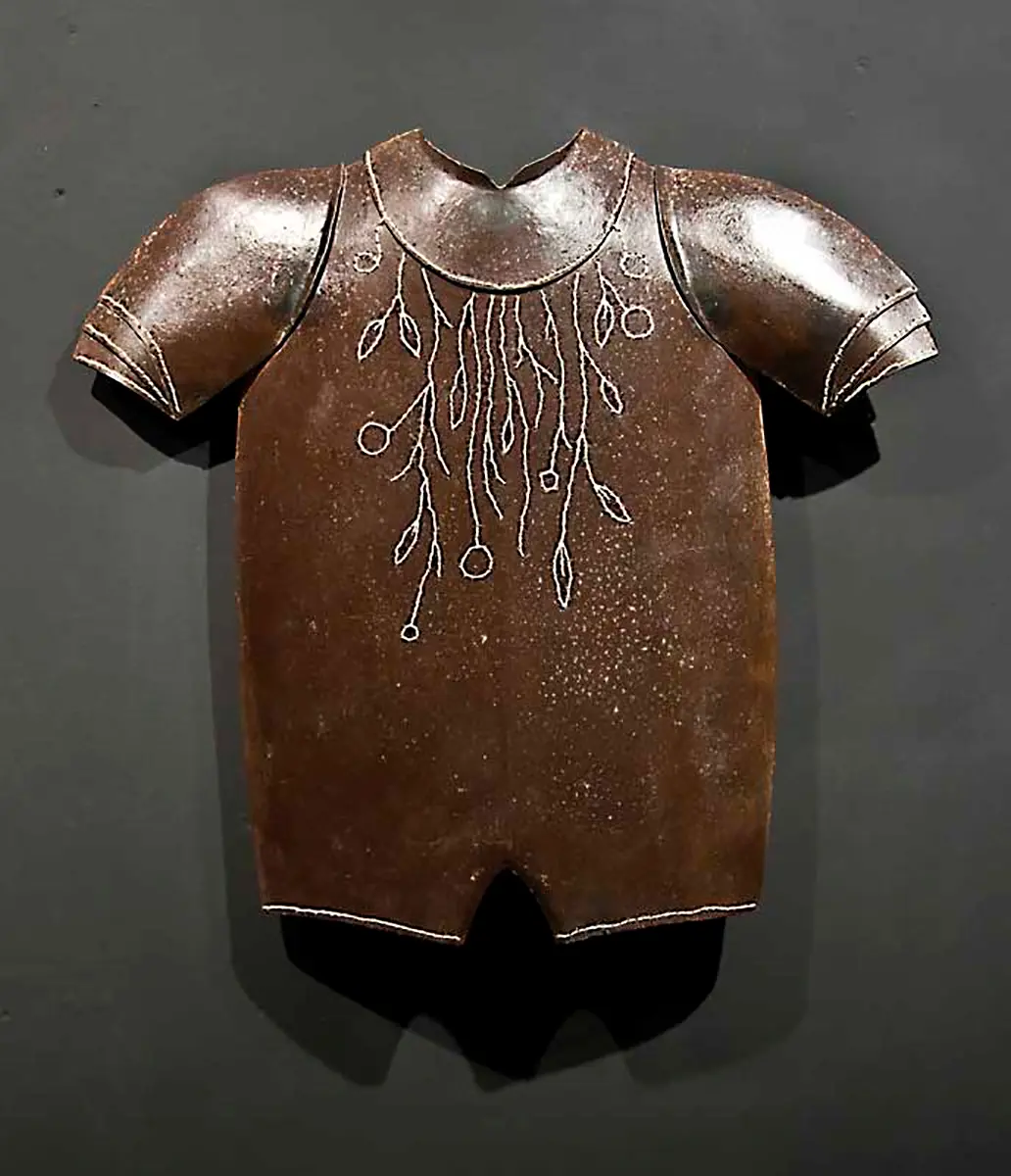
Dressed by history as a Magna mater, García closed her show with Resguardo, almost like a sentence. One needs to approach this world "armed" with all the ideas and all the will required to make living in freedom possible. That is the armor that protects, safeguards, and defends: five pectoral shields shining in the dark made that statement. Metallic armor embroidered by the artist, made to the measurements of a child, perhaps fitted for her small child. The lyrical construction that was El jardín de la Intolerancia spoke to us, from its fleetingness, about enduring themes. On that path, it was possible to encounter an artist's beliefs, anguish, and faith, and surely her most faithful portrait, Aimée García's subtle body.
CARIDAD BLANCO DE LA CRUZ