
Anna Maria Maiolino, the Italian-born Brazilian artist, is celebrating 50 years in the arts with nothing less than her first European retrospective.
For this event, Maiolino has worked in collaboration with curator Helena Tatay in the conception of the show, where some 100 works share a superbly organized display, especially alongside the installation Una vez mas (2010), which takes over the main gallery, where 6,000 kilograms of raw clay was kneaded by the artist and by students and professional ceramists a few days before the show's opening. This group of modeled works are neatly displayed on large tables and, not being cooked, will inevitably turn to dust, vanishing inside the spaces of the Antoni Tàpies Foundation in Barcelona, Spain.
The central axis in Maiolino's work is to be found not only in the gesture that translates the indisputable importance of process in her art but in the vindication of the body as the site for events and transformations, the body as a human—perhaps all too human—machinery able to synthesize deep contents, digesting and codifying them into a new serialized language.
Maiolino involved herself in the Neo-Concrete Movement at a young age. The movement gained momentum in Brazil in the 1960s, moving away from geometric codes and proposing a vocabulary built upon the architecture of the body.
With Lygia Clark and Hélio Oiticica, Maiolino took part in a number of neo-concrete shows and later, in 1967, was included in the exhibition Nova Objetividade Brasilera, in Rio de Janeiro, which produced the Declaration of Basic Principles for the New Avant-Garde that revisited the Antropophagia manifesto of 1922 and defended the strength and independence of Brazilian art.
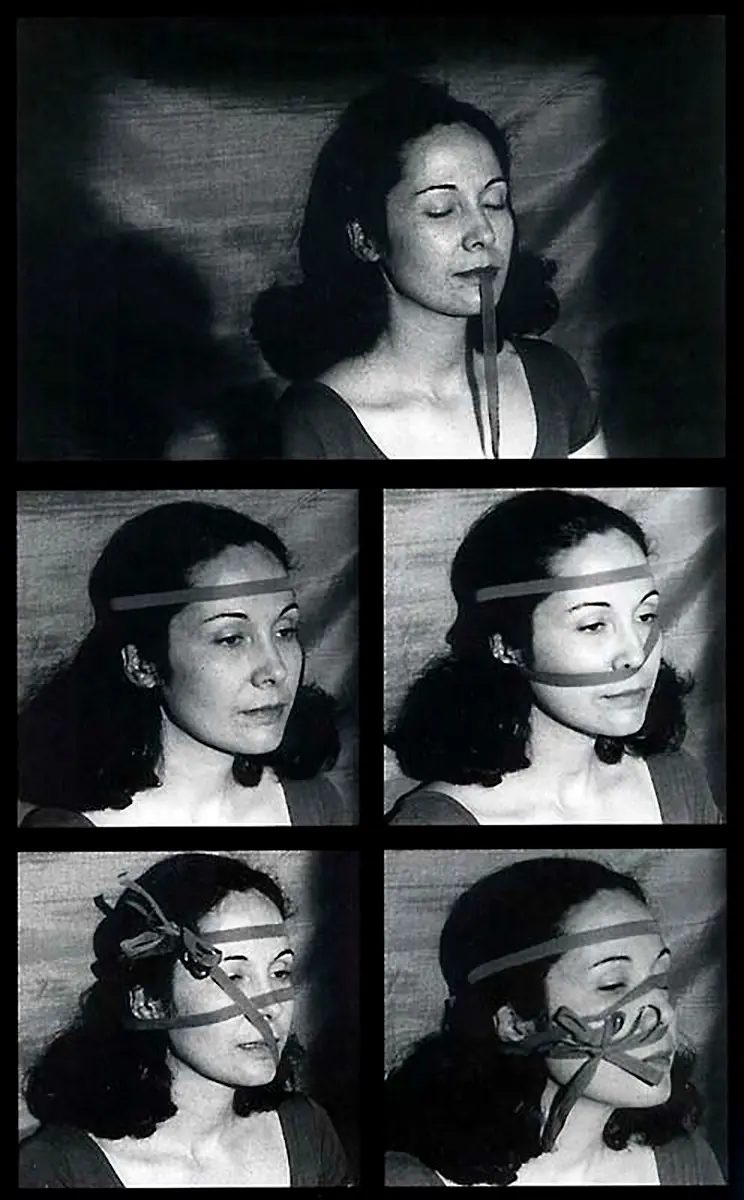
While the Neo-Concrete Movement that preceded Maiolino distilled away any lyrical connotation and sought to build a universal language on the basis of mathematics and industrial procedures, the need was emerging for a radical shift that would offer new expressive dimensions to modern people.
Maiolino responded by incorporating a new vocabulary that combines humanity, sublimating that industrial serialization into a manual gesture that, by cooking or modeling, summarized the fragility and complexity of the individual.
The works included in this exhibition, and their arrangement in space, are directly connected with Maiolino's discourse. They are testimonies of a gradual, cumulative process, metaphors of the way in which she assimilates the flow of her own emotions, and how she drains it in an eternal return between fullness and emptiness, nourishment, and objection.
Maiolino works in open series that are in a perpetual process of construction, feeding on and recycling highly personal contents in an exquisite anthropagism. Thread, paper, clay, plaster, spilled ink, wood, blown glass, eggs, and, basically, her own body, are deployed as linked words, spaces she occupies, blank areas she signals.
In the series Indicios (2004-20010), she weaves on the posterior and anterior faces of the paper guided by her tactile intuition, while the series Vestigios (2000-2010) compiles a variety of ink-on-paper drawings that bleed into the back pages. The Codificaciones matéricas series reveals the way in which gravity draws directly on the paper, dripping ink and creating a harmony where an unfinished drawing takes us to the next one; the series Mapas mentales is a cartography of Maiolino's concern with the political situation in Brazil during a military dictatorship, with its highlight in Alma negra de América Latina-Situación geográfica (1976), a map of the South American region that Maiolino fills with black ink on wood, and even Vacuum (1972), a word that summarizes the feeling of emptiness that overwhelms her.
There is, nevertheless, a glimmer of hope in this landscape and it is condensed in Entrevidas (1981), where the artist tentatively travels through a path strewn with eggs and fallen leaves. This is perhaps one of Maiolino's most delicate metaphors, one that reflects the gradual process of political gestation and change she desires for Brazil. One of the lower-level galleries in the Antoni Tàpies Foundation presents the sequel to this work, in an installation with the same title: Entrevidas (1981-2010).
Maiolino's Fotopoemas and other audio-visual works on exhibit here deal with the passage of time, eternal cycles, verses/obverses, superpositions, and complementary opposites. Special mention needs to be made of In-Out (Antropofagia) (1973-74), a loop where the artist ingests and expels threads, like words from a failed and unfinished political discourse. On the other hand, the audio-visual/self-portrait Un momento por favor (1999-2004) lets us see in detail the vulnerability contained in the expression lines that mark her face, while she talks to us at the same time with her voice and with the visceral bluntness of her body's worn flesh.
Anna Maria Maiolino develops a digestive ritual and poetically assimilates the contemporary concept of the process in which blanks and empty spaces are pauses before the occupation, silences before expressing, staining, pulling, multiplying, accumulating, and building from her own body. The maternal hands that were always occupied sewing or making bread never held her, she confesses, and it is now her own hands that remain busy mixing and cooking feelings, in order to free them.
ELISA RODRIGUEZ