
Paris Eternal: Feux de la Liberte 1944 is the title of a suggestive exhibition presented by the Ideobox space, located in Miami's Wynwood Art District. The show, comprised of some thirty photographs by that master of photography is Leo Matiz, captivates us with its high powers of synthesis and its evocative capacity.
The exhibition comprises works from a single series shot by the great Colombian photographer during the emblematic night of August 25th, 1944, in Paris. We are witnesses, then, to a renaissance: the celebration of a liberated France. The festivity after the arrival of the allied forces in Paris, the symbol of a new dawn, of an entire Europe freed from the clutches of fascism.
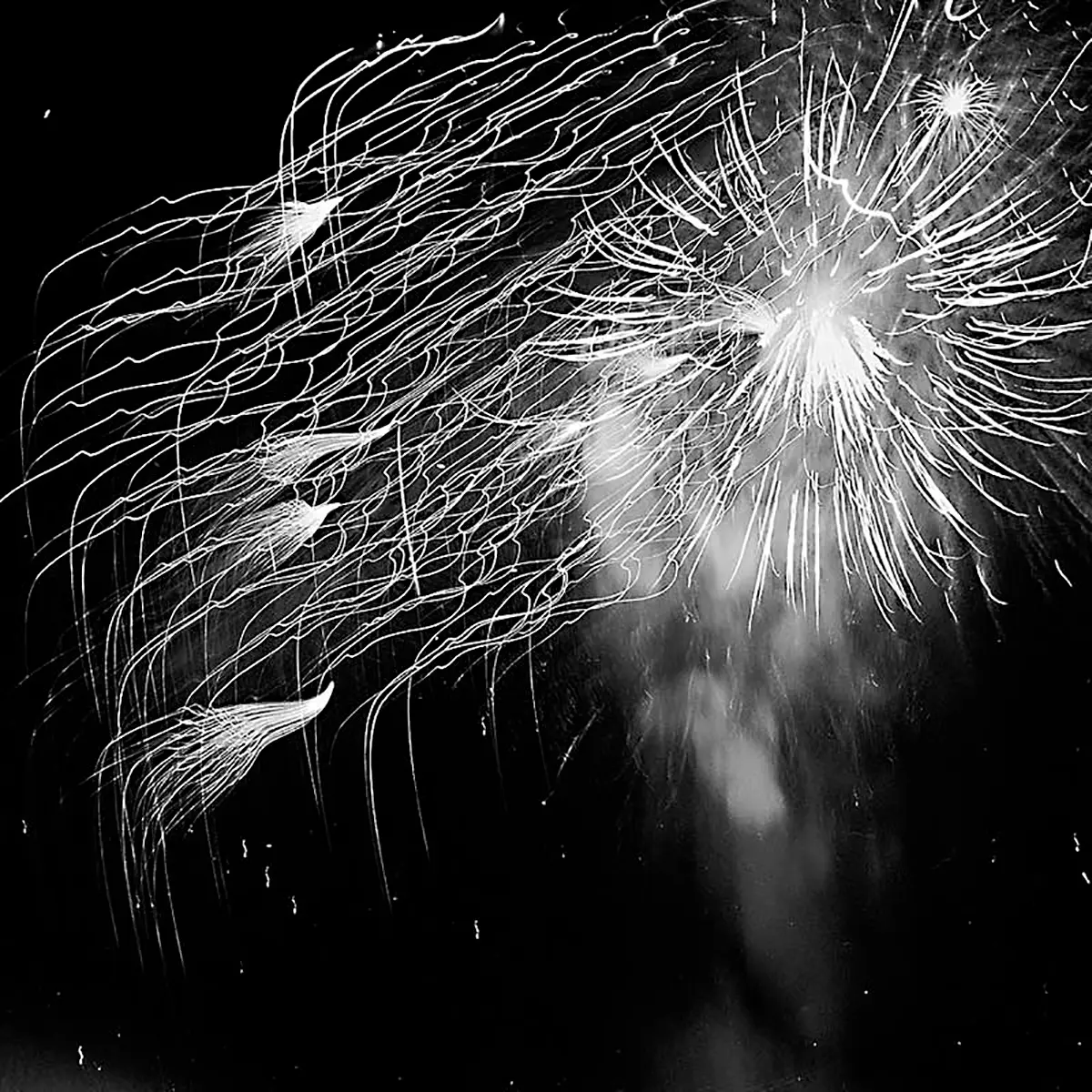
Yet, Matiz doesn't present us with a typical testimonial series dominated by the documentary spirit. Interested in emotions and in the unbridled explosion of joy, Leo Matiz summarizes the moment on the basis of a key poetic turn: fireworks replacing bombs, bouquets of light asserting themselves as magnificent blasts that capture the momentum.
Leo Matiz is one of the great legacies left to us by the Twentieth Century. This artist, born in the mythical town of Aracataca, Colombia, in 1917, and deceased in Bogotá in 1998, was a tireless adventurer. He traveled through Central America at an early age and settled in Mexico. The benefits were mutual: he feasted on Mexico's cultural effervescence at the time, of which he left memorable psychological portraits. By 1948, Matiz had reached New York, and a year later the UN commissioned him to the conflict zone of the Middle East.
Matiz's work can be classified around two essential vectors. On the one hand, figurativism, with portraiture and social testimony as to its essential pillars, characterized by psychological impact and a direct dialog with the viewer. On the other hand, a more abstract line of work that focuses on natural elements or on architecture, which under the photographer's sage gaze become geometric compositions with a high degree of poetic sensibility. These photographs are dominated by rhythm, high contrasts, and the use of parts to represent the whole.
Paris Eternal: Feux de la Liberte 1944 journeys between both territories, taking us back and forth from abstraction to figuration, from the purely formal to social subjects, effectively summarized here on the basis of the euphoria of the collective portrait symbolized by each image captured by the artist.
First, we are mesmerized by the pleasure of form as such. We are seduced by the rhythm of shapes within each photograph, and by the general rhythm that results from the set's relational dynamics. Invited by the beams of light, our imagination takes flight and we discover whimsical little worms drawing mysterious alphabets in the middle of the night, the wings of unknown insects, rain made of light.
A second reading reveals for us, however, an excellent collective portrait, perhaps one of the best for such a special moment in history. Thanks to Leo Matiz's sensibility, we are made witnesses to a portrait of that collective character that is the city of Paris in the midst of the euphoria provoked by its liberation from the Nazi regime and the arrival of peace. Each firework that opens is an individual who celebrates, and a tribute, and a promise.
Sponsored by the Leo Matiz Foundation in collaboration with the Saludarte Foundation, Paris Eternal: Feux de la Liberte 1944 is a first for Miami, as it is comprised of photographs that have never been published before, Curated by Alejandra Matiz and Carlos Plaza, the exhibition stands out for its cohesiveness and evocative power, and it includes a detailed catalog with a prologue by Miguel Ángel Flórez Góngora, one of the outstanding experts in Matiz's work. Besides the Catalog, the curators have conceived a portfolio of five photographs, printed in negative and positive, selected by Alejandra Matiz and Manuel Pérez-Petit, with texts by both, as a limited, ten-copy edition.
Paris Eternal: Feux de la Liberte 1944 is also an effective call to reflect on the contemporary on the basis of historical events. The a-temporal character of the work, emphasized by the title and by the character of the photographs on display, turns the historical event into a generic song of liberty and respect for the human condition.
JANET BATET