
The need to shape a recent history of art in Mexico is becoming increasingly more evident. The period from the end of the 1970s to the mid-1990s, which included important figures from the Neo-Mexicanism and Geometrism movements, has not been properly analyzed and documented. It is precise during this time that, together with these two better-known currents, several other art collectives emerged as the precursors of conceptual art.
Founded in 1977 as a workshop in which to discuss projects collectively, the No-Grupo was initially made up of a large number of artists. Nevertheless, the members of the group who remained in it throughout the entirety of its active life were Maris Bustamante, Rubén Valencia, Melquíades Herrera, and Alfredo Núñez.
According to the group's members, they were influenced by the Stridentist movement. Irreverence as its most important characteristic, it was a vanguard movement that took hold in the Mexican literary world and eventually grew to include other artistic disciplines.
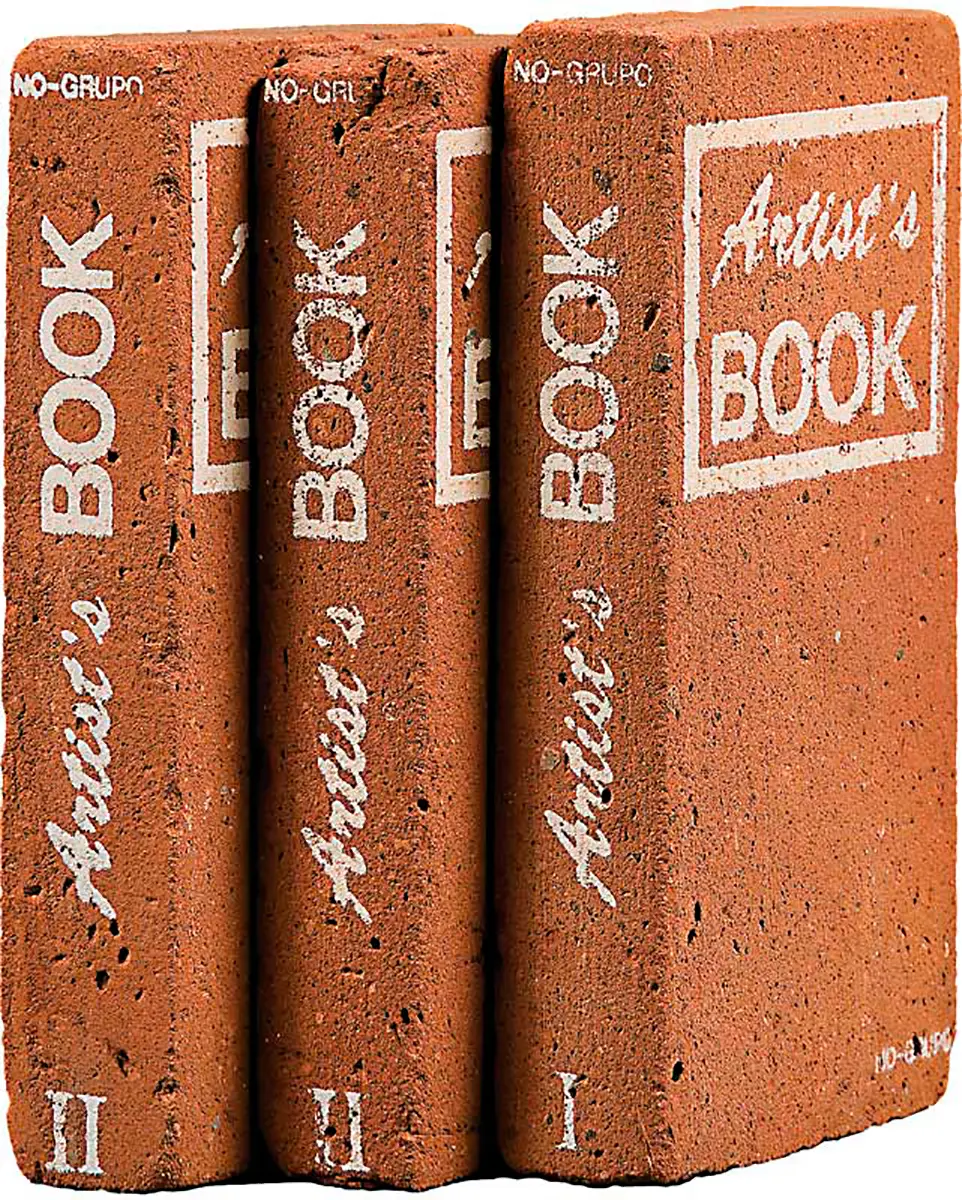
This current revision of the group's artistic proposals aims at, in layman's terms, shaking up the official memory and questioning contemporary Mexican art history by means of showcasing and analyzing the works by a relevant group that promoted reflection and non-conformism.
The exhibition is presented at the Museo de Arte Moderno. The venue of the exhibition is significant in that the group had presented three projects at this venue on separate occasions; the first was shown in 1979, concurrently with an individual show by José Luis Cuevas entitled José Luis Cuevas. El Regreso del Hijo Pródigo (José Luis Cuevas. The Return of the Prodigal Son). For their part, the group presented the exhibition Atentado al Hijo Pródigo (An Attack on the Prodigal Son). In 1980, they exhibited the action La Muerte del Performance (The Death of Performance), and in 1982 they presented another action in collaboration with Venezuelan artist Carlos Zerpa.
Sol Henaro, the curator of the exhibition, researched this period of Mexico's contemporary art history and, specifically, the evolution of the collective from 2003 and on. Her research led to her becoming interested in organizing a recompilation of testimonies by the artists involved in the group, with the purpose of developing a more integral memory and vision of the period.
With more than three hundred pieces spread across thirteen thematic modules, the exhibition showcases documents, visual registries of actions, and several testimonies of the works created in the years during which the group approached several genres, such as performance, installation, mail art, photography, film, video, and graphic art.
The contributions made by No-Grupo are vast and diverse. The members of the collective developed strategies that involved the public's participation as they broadened the concept of art and brought it closer to viewers who were unfamiliar with museums or artistic practices in general. With their works and actions, the collective reassessed popular urban culture by means of a more introspective and local approach to art, rejecting international styles and precepts and questioning the ideas imported from abroad, or the fayuca conceptual (conceptual smuggling), as Rubén Valencia would call it. This way of thinking led them, for instance, to adapt the performance concept to their practices, as they denominated their actions as momentos plásticos (artistic moments).
They had total respect for individual authorship within the collective and distinguished the works of each artist, but always in terms of the way that individual work related to the group effort. Internally, the members of the collective worked to propose and develop numerous projects and, according to their own statements, the group was "a workshop for the analysis and criticism of attitudes and positions."
During the existence of the group, the member artists maintained constant interaction with other artists and other collectives of the period. But, at the same time, they kept their distance from art critics and from the mainstream, because they were, after all, an alternative group prone to continuous questioning of the artistic and political world of their time. This did not mean that they lacked a self-critical and ironic vision of themselves, as the very name of the groups clearly suggests.
The interest in analyzing their work and context brought them closer to Juan Acha, the art theoretician who contributed several concepts to Latin American art, such as Non-Objectualism. He organized a colloquium on Non-Objectual art that took place in Medellín, Colombia, in 1981. No-Grupo participated in the event with one of their "artistic moments."
Since its foundation, No-Grupo has continually participated in international events. They participated in the Tenth Biennial of Young People, in Paris. Between 1981 and 1982, they traveled to Los Angeles, New York, and São Paulo, and presented artists' books.
Their political positions prompted them in 1983 to organize the Agenda Colombia 83 project, in which, together with more than thirty other participants, among them artists from other collectives such as Proceso Pentágono and Grupo MIRA, writers, poets, and cartoonists, they presented an artistic-political book on the situation in Colombia, and did this as a way to collaborate with the dissident group M19.
In 1983, the artists of the collective decided to dissolve the group. Alfredo Núñez moved to L.A. and left his artistic career behind. The remaining three founding members maintained their non-objectual approach and postures similar to those they followed inside No-Grupo. Rubén Valencia and Melquíades Herrera died in 1990 and 2003, respectively, and Maris Bustamante continues his association with art, particularly in the classroom as a teacher.
To accompany the exhibition, a book catalog will be published. It will include texts and documentary material from the exhibition that will undoubtedly offer new perspectives on the history of contemporary art in Mexico.
ISAURA RUIZ