
The 7th edition of the Central American Isthmus Visual Arts Biennial—BAVIC—was held in Managua, Nicaragua, between November 4th and December 5th, 2010. It is perhaps the region's most ambitious art event, in some instances resulting from the winners of selected representatives from Central America's national biennials—including Panama, of course—and in other instances from a selection process by an international jury. In this edition, the BAVIC gathered 60 works by 45 individual artists and collectives, resulting, all in all, in a good sample of what is being produced today across the region. Also, for the first time, the biennial was accompanied by Nadie sabe el pasado que le espera (Arte hoy desde Centroamérica), a theory-focused event dedicated to Virginia Pérez-Ratton that presented important contributions and reflections by a variety of professionals connected to Central America. This was undoubtedly a major contribution to the biennial's structure and to the region's art scene.
The organizers put emphasis on the process of professionalization, noticeable in, besides the theory component, the presence of a group of experts invited to participate and intervene in the event's different sections and activities. This, along with the programmed visit of a group of Friends of the Museo del Barrio, was the social and institutional highlight of the biennial, while the theory event was truly a stimulus not only for thinking about art in Central America—as was its goal—but to the nature, structure, and functioning of the biennial itself. This in terms of logistics and background concept.
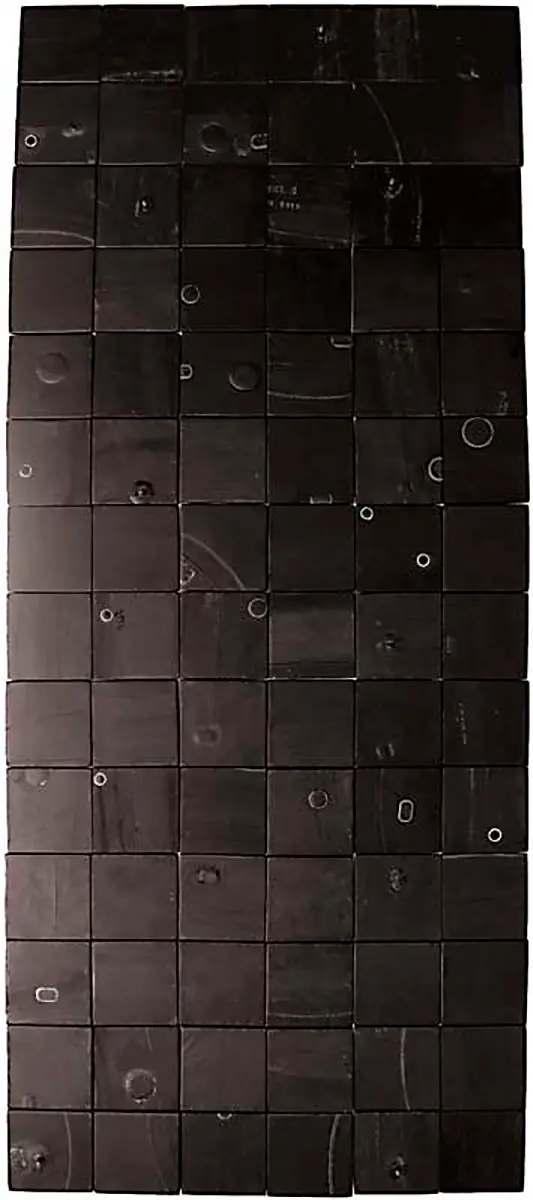
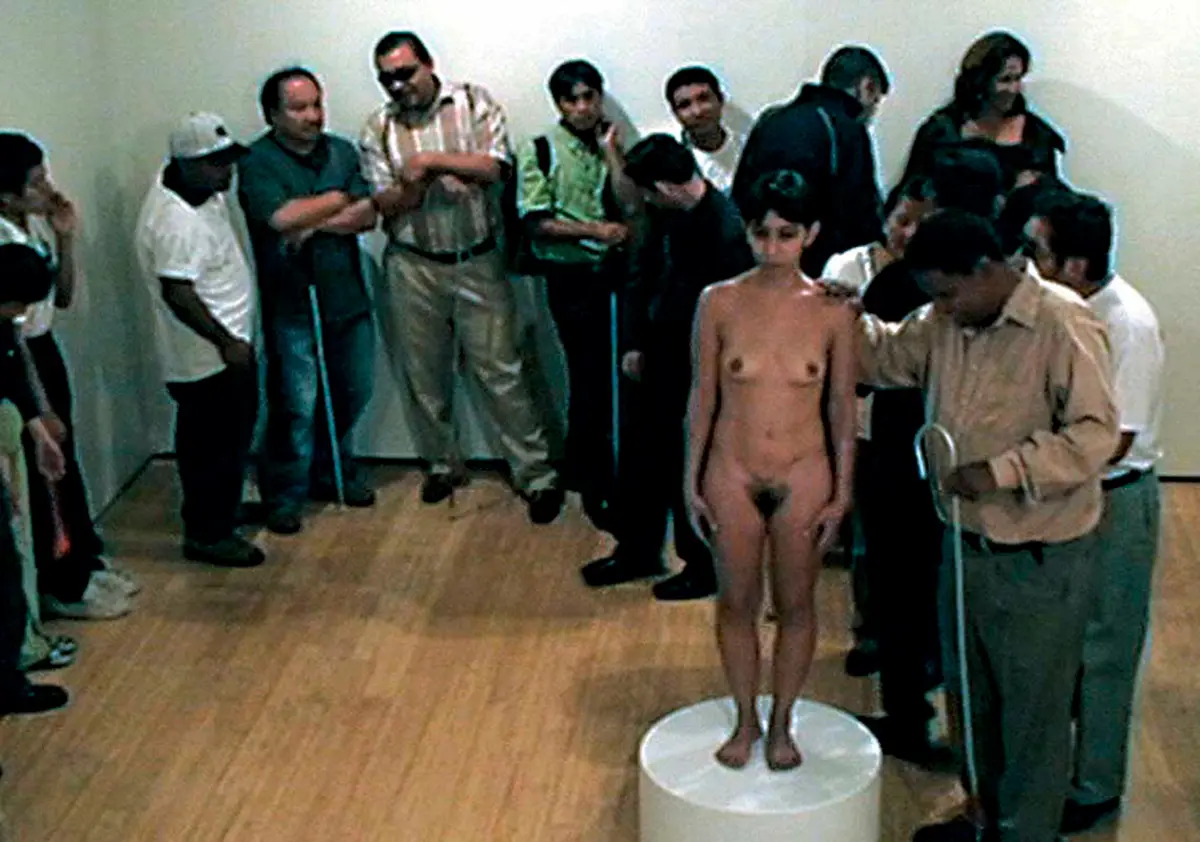
The show, resulting from the sum of works from each country, comprised what in theory could be considered a "best of" collection of Central American art; this is to say, the work of artists who have achieved relative recognition inside or outside the region. Save for an occasional discovery by an individual's attentive gaze or the event's general consensus, the biennial did not present any surprises. In this singular category, we can mention Adán Vallecillo's topographies, which explore Tegucigalpa from the standpoint of the traces left by streets on car tires; Regina Galindo's Punto Ciego, a reflection about what we see and what we fail to see in a subtle but eloquent performance; and Joaquín Rodríguez del Paso's always incisive paintings. What can not be questioned is that the show is a privileged opportunity to learn what has been produced in the last two years in this "doubtful strait," as Virginia Pérez-Ratton deemed it in one of the many shows about Central America she curated.
Despite its correct museography, efficient coordination, and resources deployed to adapt the theater facilities to the needs of the works, it was difficult to follow a logical path that didn't respond strictly to the building's physical characteristics. And beyond the specific experience provided by each work, there was no unifying discourse or at least one that connected the many parts with the whole. Nevertheless, it must be said that this was not due to problems with the production, arrangement, or presentation of the biennial, but to something that is much more important and structural: the way in which the works are selected. Thus, this edition of the BAVIC was organized as a collection of good artworks with the scant connection between them, other than their common origin in Central America. The Rubén Darío theater and the works themselves looked good; "like a good cup of decaf," commented recently one of the artists included in the show.

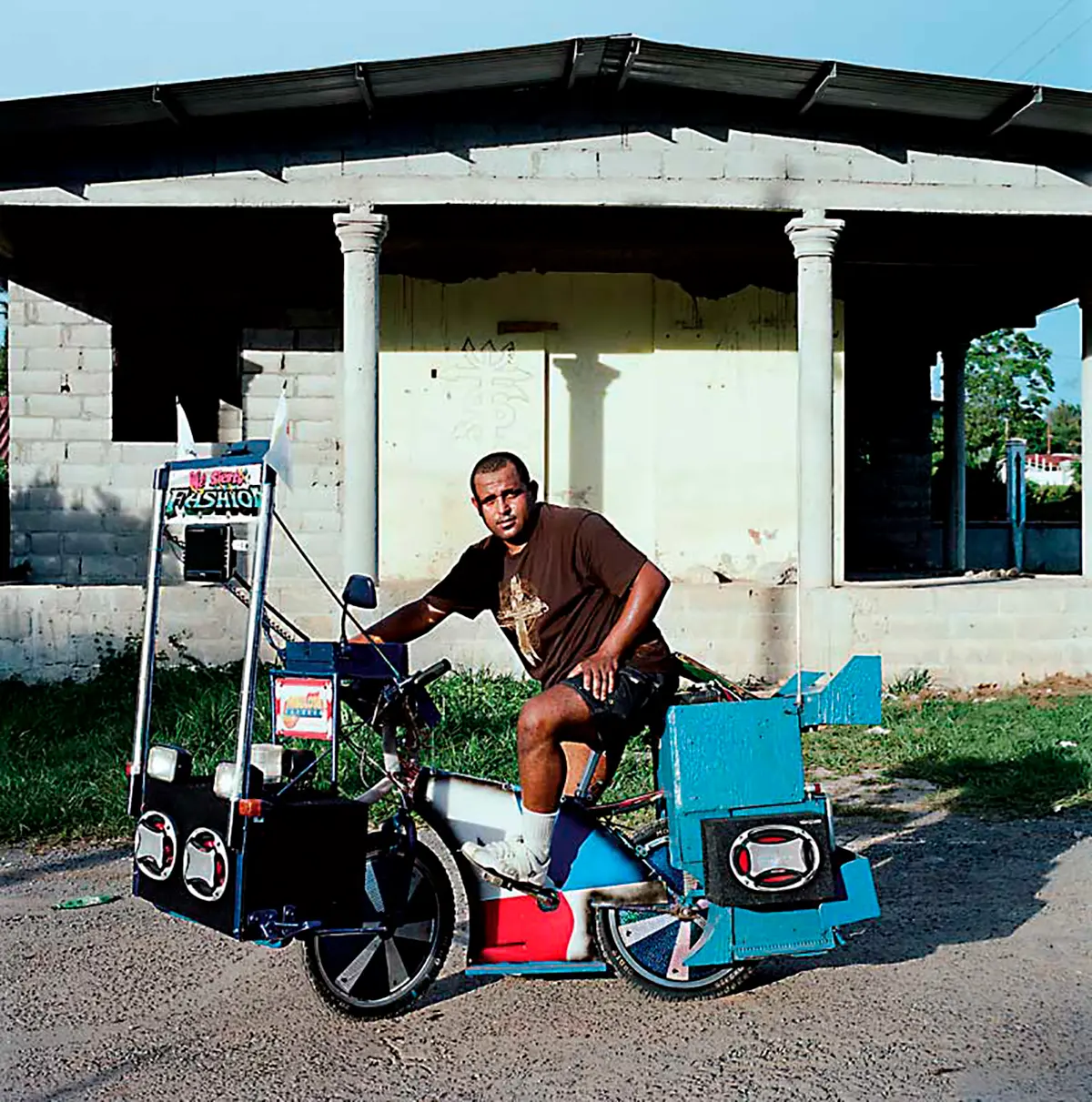
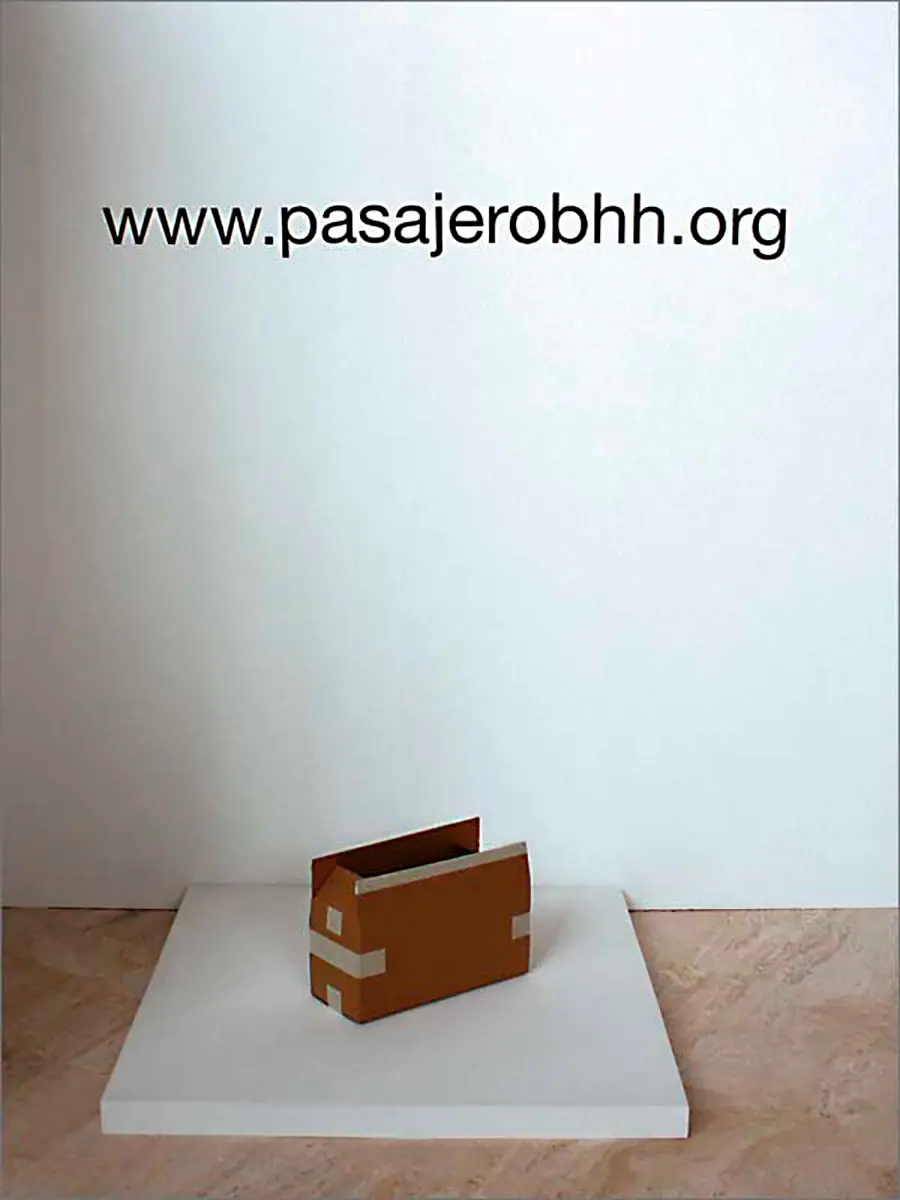
As a whole, the works on display gave the impression of growing formal maturity and of responding to concerns that are common across the Isthmus. First, the study of the context or a response to it seems to be one of the thematic axes in today's Central American art, as can be perceived in artists who work with specific cultural features: Yasmin Hage, with her Aldea Modelo; Lester Rodríguez and his Dispersión; José Manuel Castrellón and his series Priti Baiks, among others. Political issues also remain dominant, as do matters of gender, recent history, violence, and other social phenomena (Habacuc, the collective that presented Pasaje BHH, etc.). It is intriguing to note that, despite its regional character, the biennial presented few artists who deal with the idea of Central America; this once again prompts us to reflect on the implications of the "geographic categorization" as a strategy for the positioning of art. From the opinions of participants, and visitors, the reflections expressed by the visiting experts, and conversations around the theory event, it can be inferred that the problems with the show are the product of the biennial's structure, rather than of the institution itself or of one or another edition in particular. This also prompts a retrospective analysis of a geographical or "geopolitical" format that is exclusive—and perhaps necessary—inasmuch as this is a regional Central American event.
The BAVIC is the logical and necessary successor to the Central American Isthmus Painting Biennial, whose first two editions were held in 1998 (Guatemala City) and 2000 (San José, Costa Rica). On the basis of this experience, and the realization that the format was insufficient to capture what was being produced in the region in the late 1990s, the decision was made to upgrade it to a visual arts event (in plural). Thus, the first BAVIC as we know it was held in 2001. Or almost as we know it... Since then, an awareness evolved within its organizational structure of the ideal characteristics for an event of this kind and of its reach and implications. Ultimately, the Central American biennial emerges from the intention of generating a platform of visibility and consolidation for the region's art, and to achieve such a goal it would have to undergo a process of maturation and re-generation that is still ongoing, and that it remains intent on following through.
Along those lines, one of the theoretical interventions that proved most fruitful in terms of feedback was Nadie Sabe el Pasado que le Espera, by Elvis Fuentes (curator at El Museo del Barrio), who started from a speculation about an "ideal biennial," pulling from new and old, real and imaginary models, to reach a rich, multi-level dialog about the appropriateness of the reigning model and its potential for change (a potential that the biennial's organization has started to consider, and I have no doubt will soon reflect).
Fuentes' intervention prompted thoughts and debates about the different models of the biennial: the traditional kind (Venice, São Paulo); the newer ones (Mercosul, Tirana); the non-biennials such as InSite and art fairs, etc. And there was also mention of local Central American biennials, from where, as we have said, the participants in BAVIC are selected. All of this took place despite the fact that the theory event as not intended to reformulate the event's general structure; the pertinence and urgent necessity of the debate is beyond doubt. Yet, given that there is precious little to be invented, it is clear that the best biennial for Central America will be the one that best responds to the needs of a region that has gradually acquired new degrees of self-awareness and awareness of its artistic needs (I am thinking of those discourses about Central American art that, while subject to revision, did become an effective positioning strategy and now lie under everything that is promoted with the Centroamericano label). And while the purpose of these notes is not to find a solution to the certainly decisive moment the biennial is undergoing, I do believe that to continue feeding into that debate is an obligation for all of us who, in one way or another, operate in this field.
In sum, one is left with the feeling that despite the great effort of sponsors, organizers, and artists, there is something intrinsic that penalizes all, something to do with the way in which the BAVIC is formed, on the basis of a handful of artists who, in the end, and despite their geographical connection, come from different contexts and, above all, go through processes of selection or have won prizes that also differ widely. For example (and I am speaking as a participant in the selection process), the artists selected from Guatemala, whose works were first seen at the 17th Paíz Biennial Ver Para Creer, retained their individual force but lost their links to the topic under which they were originally presented: a reflection about faith in contemporary art and society. This makes me think that perhaps the artists selected don't necessarily have to emerge from national biennials and that the BAVIC, having reached its maturity, could and should go forward with the process of reformulation that sustains its validity. What is left, then? There are many models, and it is no easy task to find one that works for the paradigms of such a complex region. Yet, a simple scheme of proven efficacy is, precisely, that of a curated show, with an author (however arbitrary), with a discursive structure, with an intention. A show dealing with aspects of Central American-ness—whatever that may mean—that are common to all, where individual discourse can be interwoven to build a meta-discourse, where proximity and good production, museography, and presentation reinforce individual proposals rather than undermining them. The experiences of Panama and Guatemala, two biennials that adopted this model, prove that the results not only allow the art to operate on different planes, but also for the exhibition and its parallel activities to engage topics that are inherent to their context, acquiring not only added value but a reason for being beyond the mere presentation of the works and the social events. Indeed, it shouldn't be surprising that the most solid representations were precisely those from these two countries whose biennials are a key event in the local scene, with renovated models for activities that drive the level of national art generally up. And, as can be expected, all of this is reflected both in the individual works and in the dialog between creators, and between them and their public.
Independently of any steps the BAVIC may take to update its model and respond to the needs of the Central American scene, it is clear that a change is needed. On the other hand, it is the responsibility of artists, sponsors, organizers, and the public at large to support exchanges and collective reflection, from where productive, encouraging options may emerge. Ultimately, it is only through change and updating that an institution like the BAVIC can survive the challenges to its relevance. Fortunately, it is evident that this is what it wants to be.
EMILIANO VALDÉS
Curator, Responsible for the Visual Arts section at Centro Cultural de España in Guatemala.