
If I had to describe Eduardo Ponjuán's work in a single word, it would be thus: indispensable. Displaying at once humor and good judgment. It contains the spark that makes us come back to it again and again. Ponjuán's thesis is founded on a deconstruction of official art discourse and simulacrum is entirely alien to it. Ponjuán's work, addressing many aspects of existence and resolved in a vast array of supports according to the experiences on which the reflection is rooted, stands out for the flexibility of its conceptual borders. With this proposal, it has become known for its interpretation of Western culture and thought, with the condition of the artist itself as its cornerstone.
Ponjuán returned to the stage in 1988, after a period of deep reading and formal investigations, to form a duo with René Francisco Rodríguez. The show Reading 2 signaled a new period for both artists and revealed them as members of a "doomed generation" who approached art as a critical platform for commenting on political, religious, and cultural conflicts unacknowledged in other official spaces. The artist adopted the nickname of Ponjuán de la Coloma, in a radical tribute to his humble origins connected to the fishing village of La Coloma, in his native Pinar del Río. Academic influences were left behind, and we began to notice a predilection for images loaded with references—something like a postmodern pastiche in a parodic key. Realism, surrealism, symbolism, bad painting, metaphysics, Zen, new painting, were all part of the mixture. He stood with one leg in the history of his country, his identity, and the other in the need to create works of art that revisited the obstacles to the construction of that paradigmatic society.
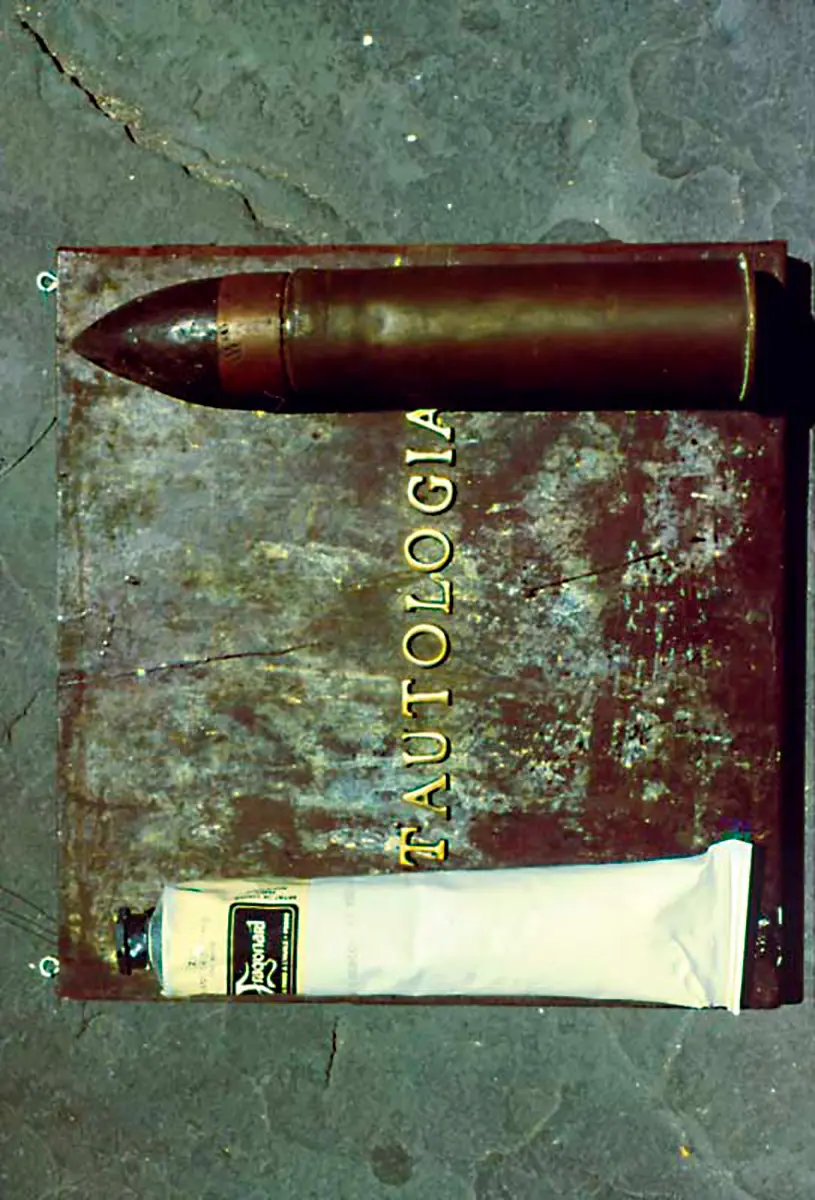
With the exhibition Melodramatic Artist (1989,) the duo demonstrated the maturity of their conceptually-tinged proposal, which disconcerts us with its levels of irony and its frontal allusions to conflicts in their environment. No themes are particularly favored, nor are any specific media, and the supports used to alternate between painting, object, installation, and assemblage, in a kind of destabilizing bricolage that includes kitsch, Bad Painting, the historical avant-garde, New Painting, naïf art, and anything else that can be rounded up, without established hierarchies. This show took place at a key moment in the country's history, a moment that also left a gaping hole in the realm of culture. Many Cubans opted for the tragedy of exile, and this marked the artistic discourses of the period beyond the trauma suffered by individuals.
Since reengaging in his solo career in 1996, Ponjuán has let loose a drive to incorporate everyday elements, regardless of how irrelevant they may seem, in order to offer ambiguous or ambivalent readings. His art evolves toward objectual works and assemblages while developing his taste for drawing with the same ideas, themes, and materials used in the 1980s. We often find clippings from magazines, newspapers, or books gleefully retouched by the artist once they are arranged on the paper. Ponjuán never uses collage techniques to alliterate the text, but rather in the opposite direction. He appears to delight in a self-complacent exercise, while he is offering effects that involve us in both private matters and socially resonant issues.
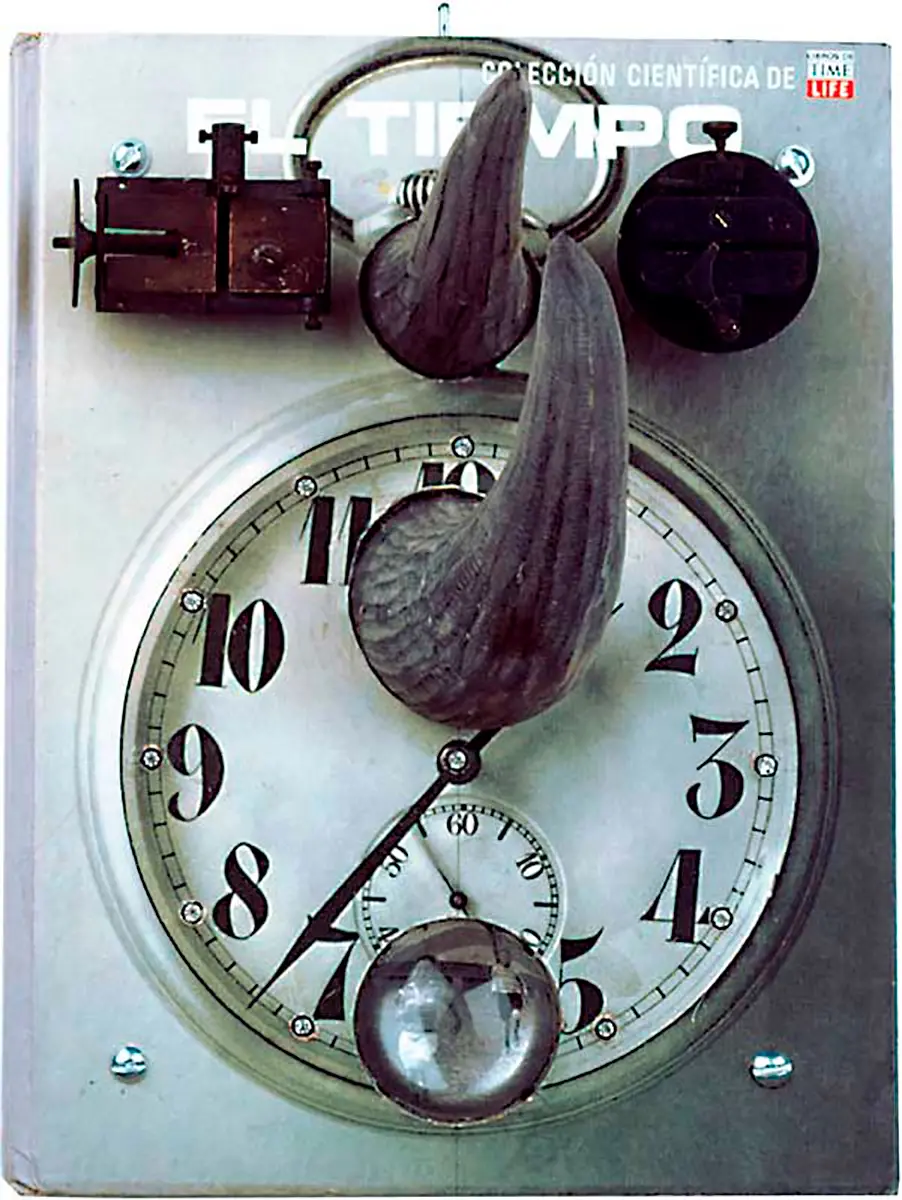
The entire history of civilization has placed its trust in the book as the carrier of knowledge, palliative to ignorance, and perhaps the countering to so much technological desire. The volumes he uses are generally hardcover, which is often associated with antiques; they are thick, cloth-bound, with titles and author names in gilded embossed letters. He literally empties them out of their original content by dismembering them and transforms them into decorated mechanical artifacts that on occasion even resemble punishment machines, in this way substituting a different kind of discourse for their original message. Each one of these books resembles a human head. Some were like self-portraits, others were portraits of loved ones, friends, acquaintances; they all seemed to comment on the artist's personal connection to each. Eyes, nose, mouth, hair, each of the elements of the face was substituted by a different element: fan blades, typewriter parts, silverware, rope, materials of all kinds, set in a frame that resembled a mask.
The proposal points to the transformation of our own faces into disguises, the journey of thought towards dark, low, trifling regions that lead to human decline. By exerting violence against these cultural epitomes and making room for banal or ephemeral symbols, or for symbols derived from the entertainment industry, Ponjuán signals the way in which reading has given way to pleasures of a more individualistic and less august kind. In Vacío, Ponjuán showed a series titled It Isn't the Mind, It Isn't Buddha, It Isn't Anything, which represents a step forward in the evolution of his career, his reaching a stage where everything is filtered through the sieve of simplicity. Let's be reminded of the Tao principle and its propensity to doubt, question, and negate everything since in negation resides the quest for perfection, our step-by-step ascent towards spiritual elevation and fulfillment. In the East, to reach emptiness is to reach completion. Experiencing such a state, Man is in harmony with the energy of the universe. And this is perhaps what Ponjuán is trying to say in drawings that bring calligraphy to the forefront—much in the way Vito Aconcci did when he spoke of the void of meaning in art, which acquires a different significance in Ponjuán—and represent objects from certain Japanese traditions such as the Tea Ceremony, the art of wrapping, heads of Geisha marionettes, offering them sometimes alone and sometimes in combination, arranged in geometrical order or in the shape of a circle, the latter being the sign that contains perfection.
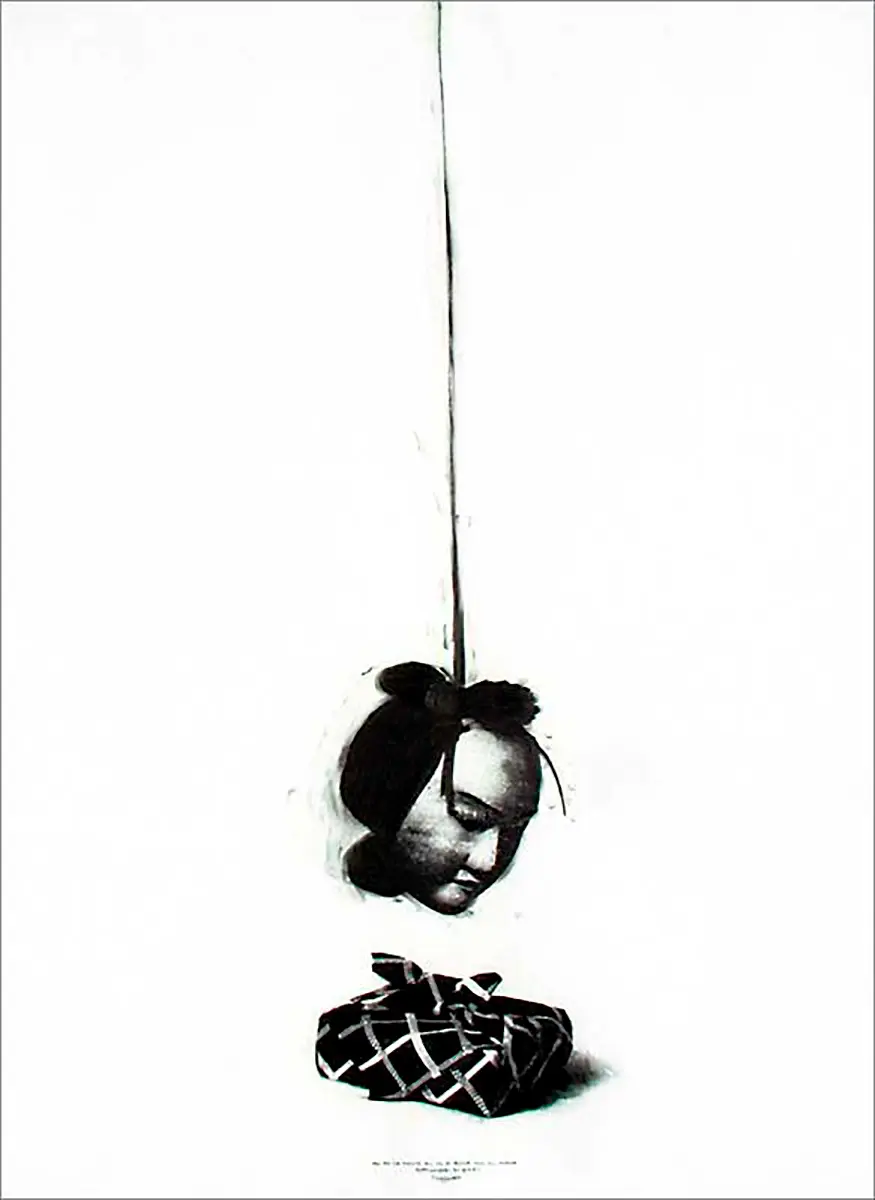
The artist is bothered by labels, and he expresses his discomfort in I Am A Man Not A Minimalist, included in his 2004 show at Bellas Artes, titled I Have It In The Tip of My Tongue in a foreshadowing of the playful and philosophical bent of a proposal that challenges knowledge as a portal to access a reality.
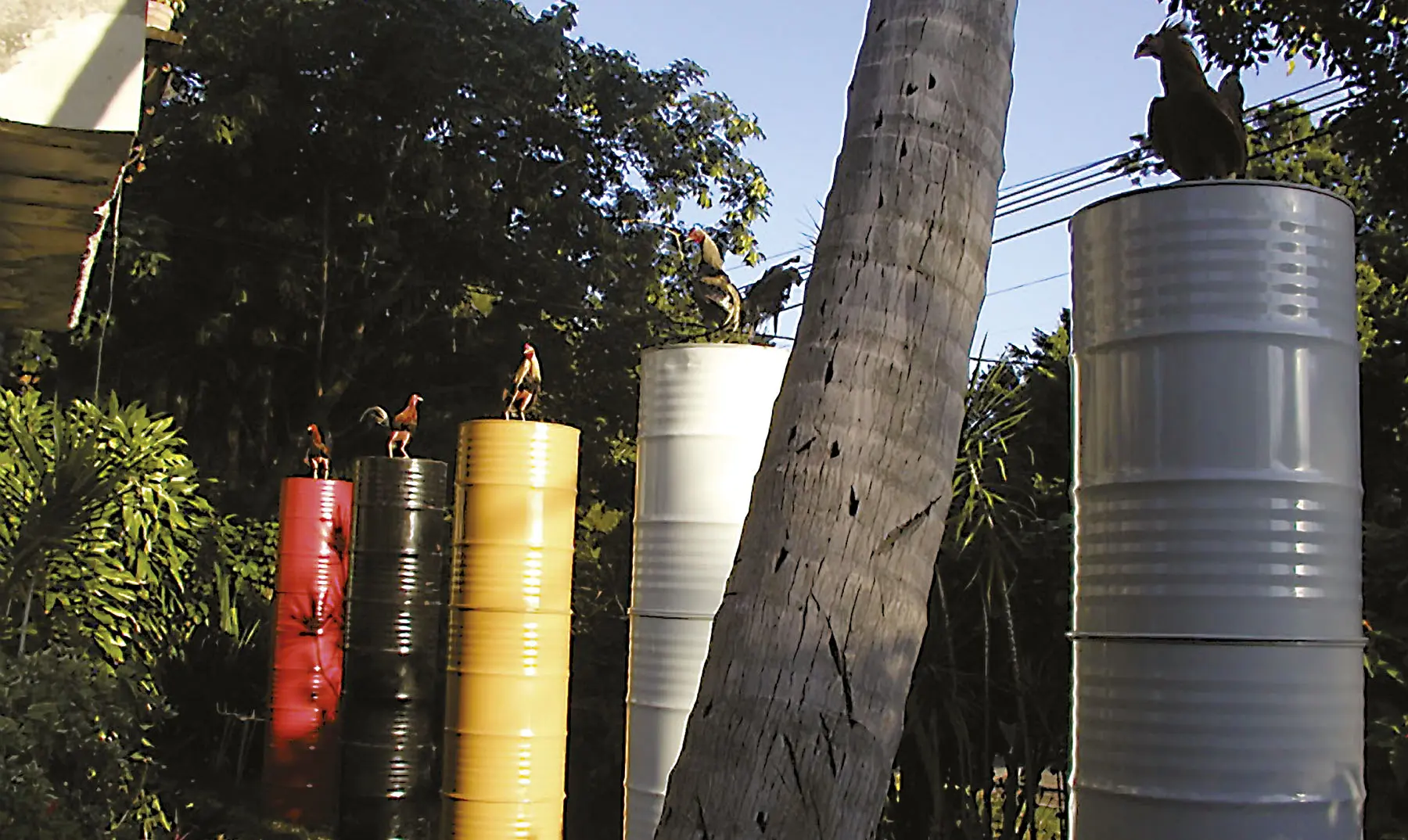
On each of five 55-gallon metal tanks (in black, red, white, grey, and yellow-ochre) that resemble Greek columns, Ponjuán placed an imposing, taxidermized fighting rooster, in vigilant and combative poses. If something unsettles a Gemini is to have his or her identity confused since its identity is obvious at a glance. And Ponjuán has made every possible effort to avoid confusion when it comes to assessing his work. He makes clear that above and beyond any conceptual elaboration, language, or creative gesture, there is a being filled with contradictions, longings, and feelings like those of any other mortal. Albeit one who is alert and with his guard up.
The work that titles the show pays tribute to many Cuban artists (some still living, some in exile, some deceased) who have been part of his experience as students or teachers. It was built using tar, with the names branded by force of heated iron on the disturbing material. A poetic allegory in somber notes about the traces these artists left in Ponjuán's own work. A display of great lyric virtuosity and mastery of his craft, involving our gaze in a game of shadows and images that shifted as the light hit them. We mustn't forget that the author played a protagonist role in the most enriching and most tragic period in the history of Cuban art. He also used roofing paper in three more works (With You There is No Coincidence, A Touch Makes Time Unable, An Inch, and Something More), infusing it with energy in his reference to abstract expressionism.
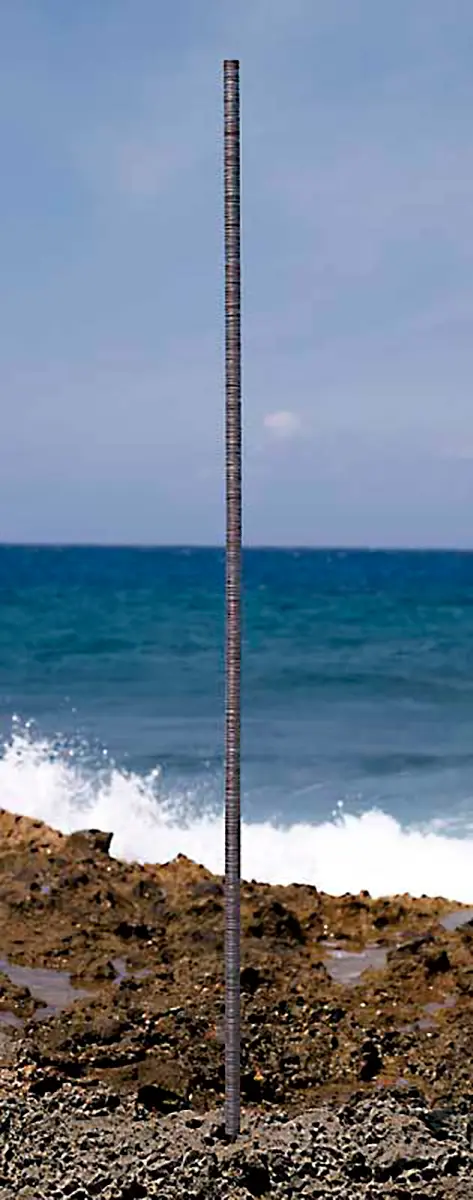
That show was followed by Full Open Flags (2006), the Monument project (2007) in tribute to the apostle—a singular metaphor that nails Cuban social reality in its moral and monetary duplicity—Salt Mine and South (2007). Salt Mine was a continuation of the prior project in its significant interpretations of today's Cuba. There he used money as the symbol of a pauperized situation that goes beyond the economic and reaches into more private realms, but never in Ponjuán as a unilateral construction. His interpretation is offered as part of an ambiguous oscillation.
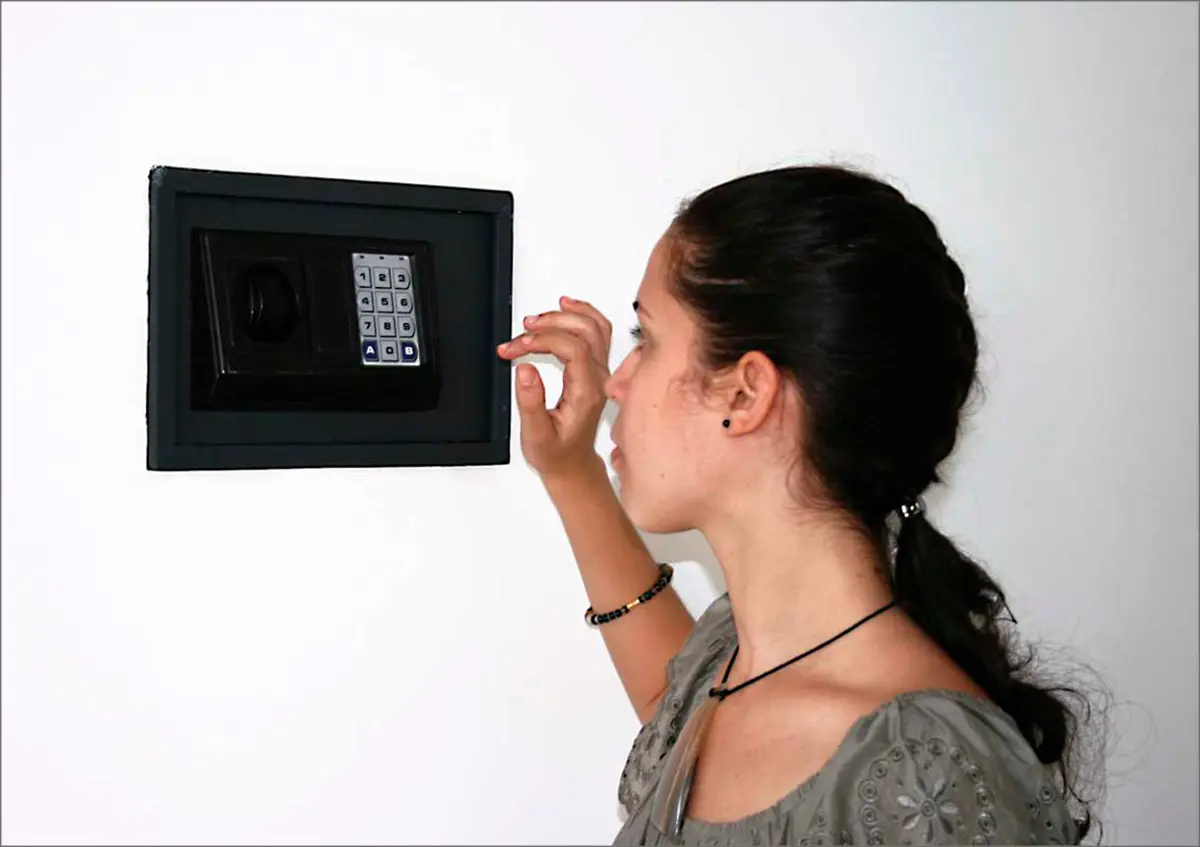
He seems to be always playing with the surprise factor. He decided to mount a strongbox into one of the walls in Galería 23 y 12 and titled his intervention Make a Wish. The term introduces an imperative in the verb make, thus triggering a desire and its materialization. The invitation, which doubled as a catalog for the show, included a full-color close-up shot of Puck, the Elf whose purview includes, in children's story, luck and games of chance—an Anglo version of the local Elegguá. A kind of angel or devil who amuses himself by mixing things up.
The distant chance that a viewer will guess the eight-digit combination and unlock the box introduces luck as a liberating element. Ponjuán, who had so far given such little importance to randomness, now subjects us to it entirely. The object becomes a collective fatum, key to fortune or misfortune. Strongboxes like this one are used to safeguard very important possessions, and this original meaning might be implicit in the artist's intentions for this work, yet his gesture goes well beyond it. Immersed as we are in a worldwide economic crisis that leaves many without options for the future, we find that often the worst damage is produced not at the financial level. To this, we must add the sketch of the most lucid Cuban art in the past few decades, with its manifold survival maneuvers. Yet, he hasn't met the recognition he deserves from the national promotion mechanisms (this would be a contradiction), perhaps because he has traded financial success in favor of sincerity. He is aware that true art, more than an aesthetic divertimento, is anguish, and that, as the Master said: "all who carry light, will be alone".
AMALINA BOMNIN
Art critic. Lives in Cuba.