
In a few years, Manifesta has positioned itself as the European biennial, especially because of its inclusive policies and its peculiarly itinerant character. Emerged as an answer to the new reality of the European Union, Manifesta differs as a matter of principle from its closest reference, Documenta Kassel. The inclusion of artists and curators of the former Eastern Bloc gave it a potential that ultimately, despite the polemics, has been beneficial. And being itinerant has provided Manifesta with singular flexibility that forces it to adopt new positions according to the context in which each new biennial takes place.
The topic of borders is an important and unavoidable part of an event that moves across countries that are joined into a community of political and economic representation. The director of the Manifesta Foundation, Hedwig Fijen, wrote in the catalog for this latest edition: "If we talk about migratory movements, Manifesta, as a nomadic biennial that every two years crosses borders in Europe, faces a multitude of pressures like those that confront recently arrived immigrants."1 While acknowledging the difference between a sub-Saharan person crossing the Channel in a flimsy boat and Europe's most prestigious art biennial, this eighth edition arrived for the second time in Spain with more than 100 invited artists. The risk was to propose a dialog between two divided borders: North Africa on the one hand, Murcia and Cartagena on the other; and, exponentially, inciting three collectives that differ in their origins and political perspectives regarding art: ACAF (Alexandria Contemporary Art Forum), CPS (Chamber of Public Secrets), and Tranzit.org.
During the week I spent visiting events, meetings, performances, and exhibitions in the two cities, my first sensation was that of bewilderment. Murcia seemed animated by an international contingent, completely unconnected to the place. Many activities were definitely for well-versed visitors. After the first few days, the city settled down and it was possible to judge whether the proposal of a dialog actually worked and whether the local public responded to the exhibitions and the educational activities around them.
The difficulties of describing an event of such size, with several sites, a large number of parallel activities, and more than 100 invited artists forced me to reduce my analysis to a panoramic view. The most immediately apparent thing was the difference between the collectives. Among the risks run by the Foundation, this was the most successful—and also the most problematic.
Any international scene wanting to make a space for itself seeks a certain coherence between its theoretical postulates and a direction for artistic events, which is to say, in the ways of making and circulating art. To be fair with Manifesta 8 as a biennial that experiments with new formats, it deserves praise for the presence of a variety of artistic positions, without the prevalence of one over others. In fact, there was no overarching curatorial statement, but a declaration that made explicit the differences between the three collectives. The need to make these differentiations was also evident in the 370-page catalog, which was divided into three parts marked even by color and layout, which worked as an independent project in itself.
Any artistic proposal, it must be noted, is defined by the exhibition devices it deploys. Today, there is great dissonance and contradiction between the practices of artists and collectives and those of the institutions that host them. As part of the critique of institutions, there is a kind of art that inscribes itself in political and social "reality" and whose semantic structures go entirely beyond visual aesthetic language and take the shape of street-based agitation and debate. Yet, this kind of art continues to use traditional mechanisms of exhibition and distribution. Tranzit.org, which operates in this way, lacked an effective presentation outside the written word.
Tranzit.org's curatorial proposal, Constitution for a Temporary Exhibit, is the best example of this dichotomy and its ultimate failure. The result of a long reflection directed at dismantling the mechanisms of the artistic institution, the Constitution sought to create a platform for more democratic access and dialog between artists and the curatorial collective of Vit Havránek, Abynek Baladrán, Dóra Hegyi, Boris Ondreicka, and Georg Schellhammer. They invited 32 artists to participate in debates on the basis of a questionnaire and built ephemeral contextual exhibition models called "temporary curatorial micropolitics". In principle, Tranzit.org refused to work on the biennial's topic and, rather, explored the notion of transference between Western Europe's neo-colonial perception of the formerly-communist, Slavic, Eastern countries, and North Africa. "This project, the goal of which is to subject the so-called post-colonial, post-decolonized, and post-socialist condition to analysis and revision, will take the format of a series of encounters, critical debates, and symposia, and will also come to light through a publication..."2 The result was like getting late to a political rally and finding on the ground the traces and leftovers of the event being described, its actual reach difficult to imagine. One highlight, however, seen at the Pavilion 2 in the Antiguo Cuartel de Artilería, was the model proposed by Mexican artist Erick Beltrán, which could be used to put together a variety of objects; in Pavilion 1, the collection of 400 postcards gathered by Swedish artist Kajsa Dahlberg, sent from Jerusalem to Sweden in the past century. Finally, Archivo F.X., by Spanish artist Pedro G. Romero, at the Centro Social de Santa Lucía in Cartagena, is pertinent as an investigation of anti-clerical and political iconoclasm in Spain since the Nineteenth Century
The second contradiction has to do with the pretension of art that seeks to communicate with a broader public and cease to be elitist in its configuration but remains "informed" by an elite of artists with sophisticated theoretical baggage. This new art, intent on democratizing knowledge, has to deal with a public that is very well informed but increasingly less political. I am referring to practices that operate with other circuits, such as the mass media.
Like Tranzit.org, CPS has ample experience working in networks, as well as producing ad organizing events. The most significant difference resides in their way of producing and inserting themselves. CPS uses in a programmatic way the formats of the documentary, film production, and what they have called "aesthetic journalism," a way of investigating social and political realities to generate stories and information parallel to those constructed by the mass media, including the Internet, radio, newspapers, and television. This is not a critique of institutions, but the re-manufacturing of a new conception of the artistic subject and the function of art in society.
The question Is the Rest History? positioned CPS' curatorial duet of Khaled Ramadan and Alfredo Cramerotti at the threshold of their investigations of the region. In their proposal, they imposed on many invited artists the criterion of working with CPS' own notions and schemes. In that way, individually created works could just as well be part of the group's collective creation. The works produced for Manifesta 8 thus became part of the record of (real or fictitious) events that wove a history of the place by means of images and narratives This curatorial perspective favored the production of Manifesta-specific works, among which it is important to note Amnesialand (2010), by Czech artist Stefanos Tsivopoulos, an installation including a 16-mm film made by the artist and three slide projectors showing archival images. These composed a parallel story about the two faces of the region's mining industry, now withered. Also, The Batteria Project, by Laurent Grasso, from France, at the Antiguo Pabellón de Autopsias, about the city's old military defense system.
The San Antón jailhouse in Cartagena was one of the most appropriate sites as a whole. The highlights there was Immigration forecast (5 TV episodes, 2010), by Lebanese artist Raed Yassin, with studies of time for immigrants; the video documentary The shadow of San Antón (2010), by Abed Anouti, also from Lebanon; and Violencias expandidas (2010), an installation by the Spanish group Brumaria, which includes the publication of a book with selections from texts about violence and the projection of videos. An impressive installation on the same topic of political violence was Visual Study for (in)Remembrances (11-M), 2010, by American artist Michael Takeo Magruder, at Cartagena's MURAM. Printed photographs about the 11-M terrorist attack in Madrid, selected from the Internet, could be perused by the viewer, along with a description of the policy declarations and the judicial process, while a video projected on the wall showed in slow motion the image of the explosion. In counterpoint, the drawings on plastic by Erlea Maneros Zabala, from Spain, deconstructed newspaper photographs about the invasion of Afghanistan and transformed them into beautiful landscape images.
The prison theme also generated three parallel projects in the key of documentary investigation and dynamics of interaction between artists and inmates. Among them, the work of the duet formed by Marcelo Expósito, from Argentina, and Verónica Iglesia, from Spain, presented at the MUBAM in Murcia, was truly significant. Finally, CPS' other gambit was related to notions of perception and other forms of visuality. They invited Turkish painter Esref Armagan to exhibit his extraordinary paintings alongside researcher John M. Kennedy, who has revolutionized current theory by demonstrating that this artist can "perceive" the real dimensions of objects and draw them with precision.
ACAF was, without a doubt, the best curatorial proposal, which is not to say the less risky one. They offered a new look at the current, dissimilar productions of artists in both continents while producing the best show seen at this Manifesta. Curators Bassam El Baroni and Jeremy Beaudry coined the concept of the overscore and the Theory of Applied Enigmatics. Overscore alluded to the action of scratching a hidden trace; something absent yet present, like urban grids in Alexandria, where ACAF is based. The curators appealed to a theoretical reflection on art from the standpoint of "enigmatics" (which alludes to the impressions or consequences that resonate from a confrontation with complexity).3 The word interface was an oft-used "token", from the reformulation of the relational linkage between the curatorial, the political, the cultural, and the artist's own practices. They made explicit their disinterest in a militant critique of institutions. What was important was to open up space for other concepts and relational perceptions between dissimilar artists and works, resisting pre-conceived ideas that are entrenched in contemporary theoretical discourses.
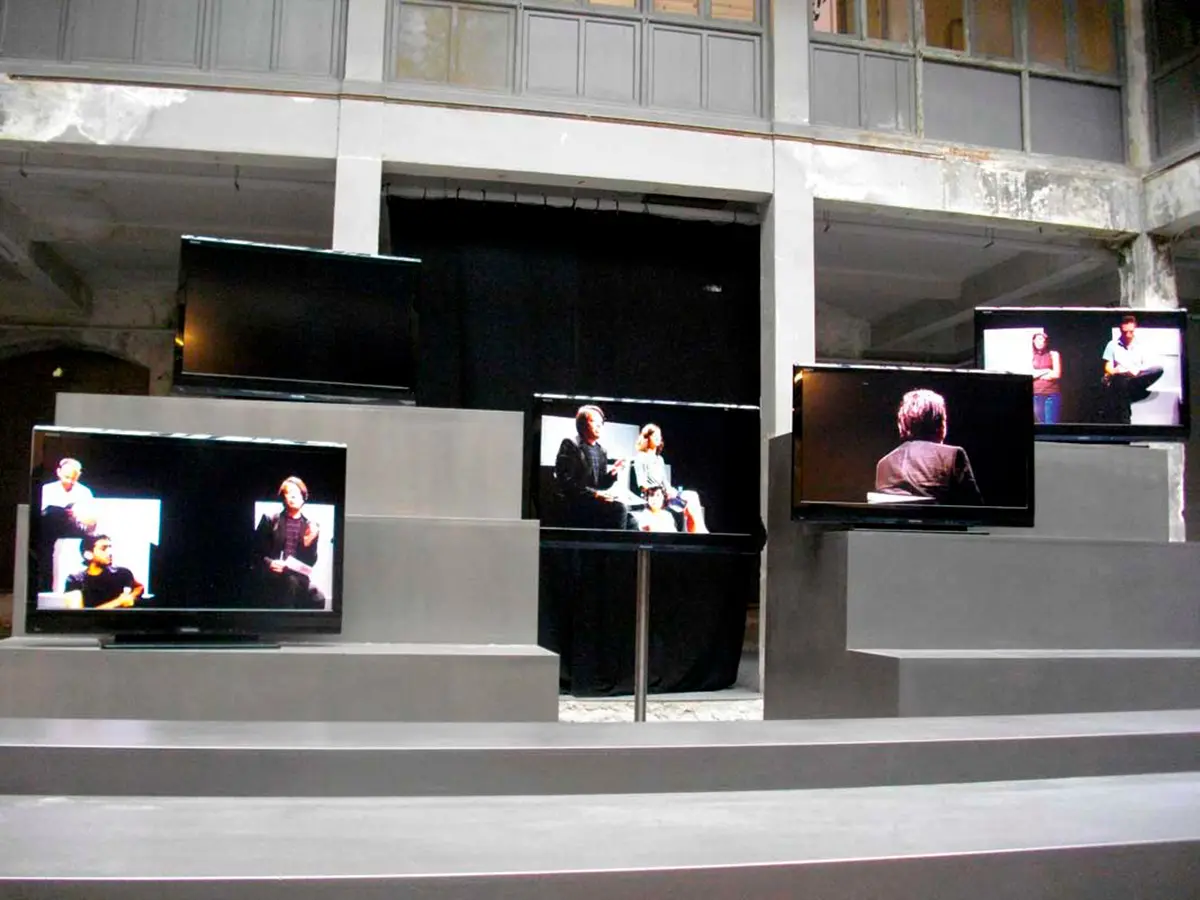
How did they apply the idea? The curators erected an architecture sustained on the Theory of Applied Enigmatics 4 with four elements in different formats and three sites: 1. Exhibition of 37 artists and collectives at the old headquarters of Correos y Telégrafos in Murcia and the Museo de Arqueología Subacuática (ARQUA) in Cartagena; 2. Backbench: a debate on current art topics between four collectives and two curators/theorists, held in June 2010 and presented in the video on monitors placed on the same benches where the debate took place, and Correos y Telégrafos; 3. Prayers for Art, in the same building, a video recording by Adam Carrigan of prayers created by artists, critics, and curators and performed by New York beatboxer Kenny Muhammad; 4. AV Space, MoCHA Sessions, a rather unusual proposal in the context of the biennial, which made available to three artists and three collectives the archives of New York's MoCHA (Museum of Contemporary Hispanic Art), to elaborate proposals based on an interpretation of the documents. Significant among them was the new archive created by Rosell Messeguer, from Spain, who, based on her own sources, generated a new frame of reference for Latin American art. Finally, Incubator for Pan-African Roaming Biennial, a workshop held before the event and during its first week to debate the viability of a Manifesta-type event in Africa.
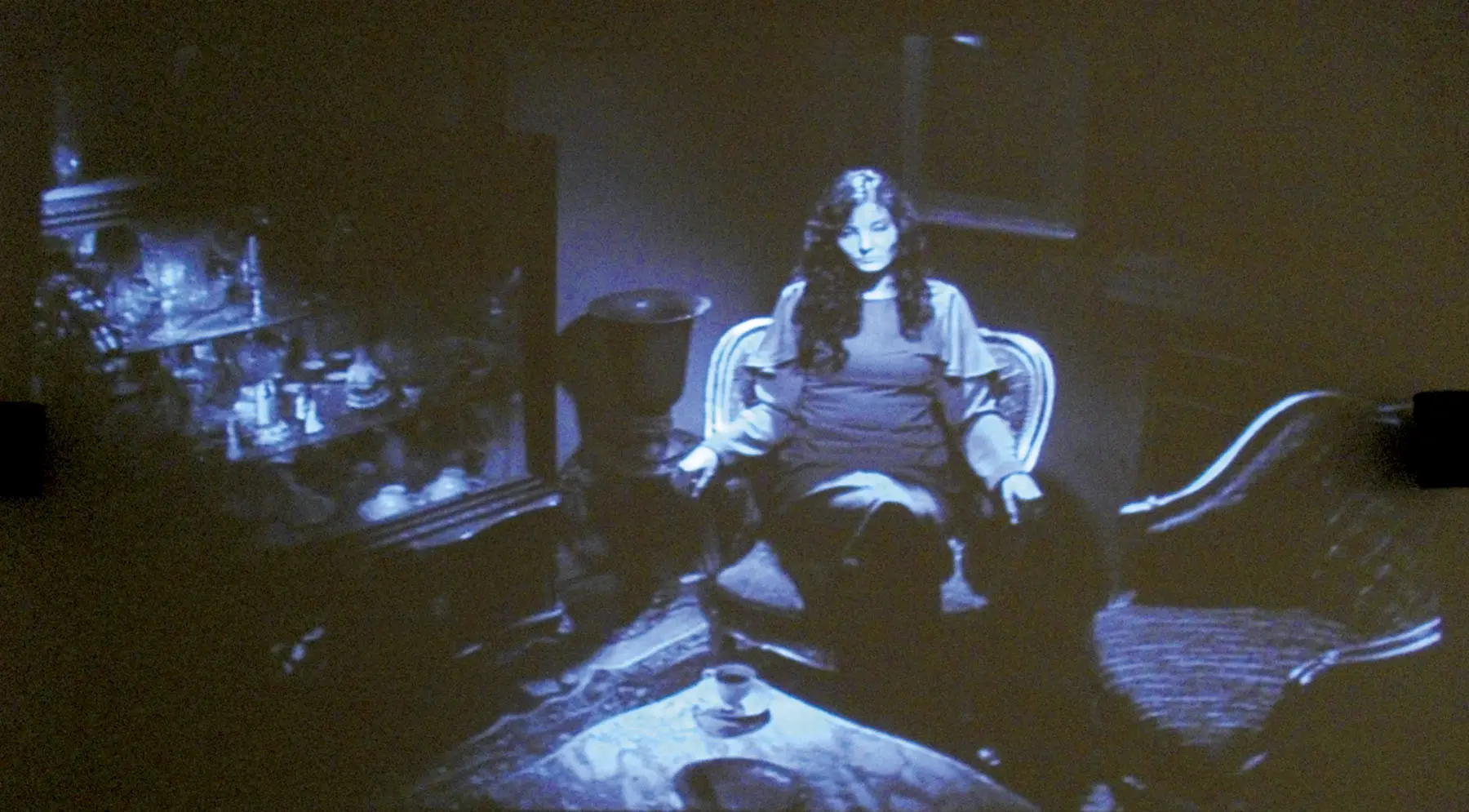
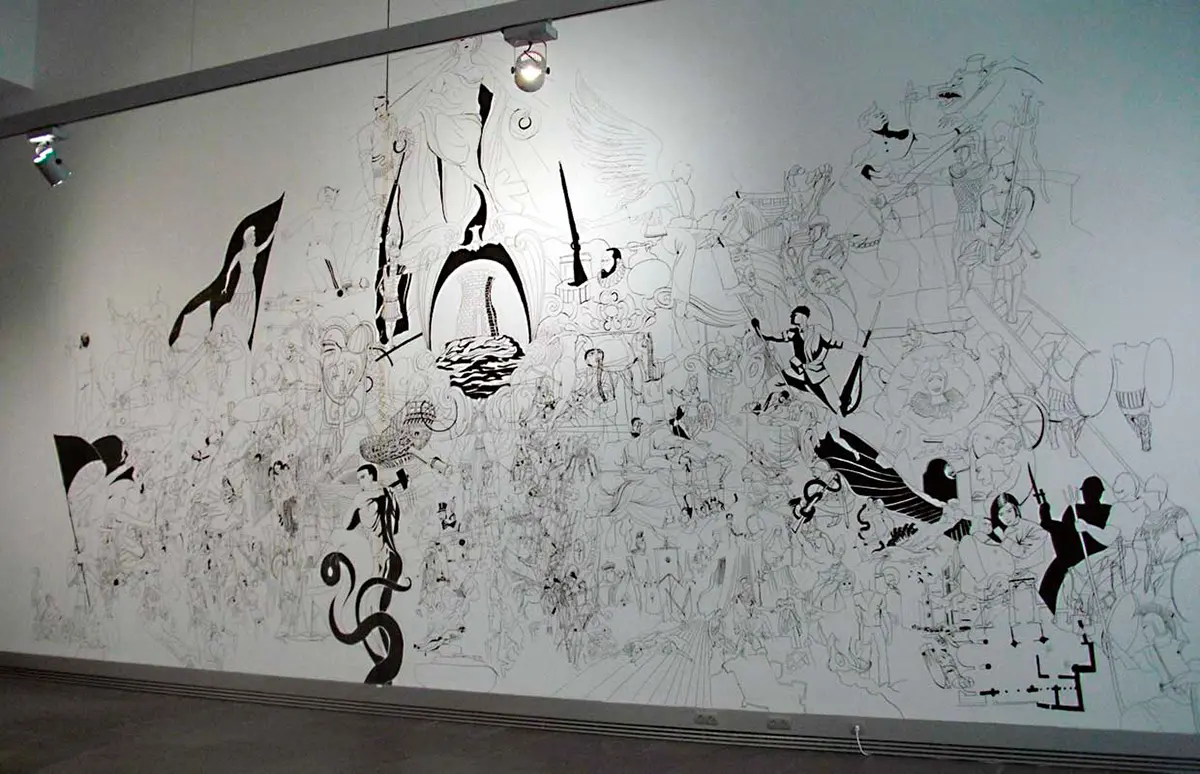
I want to consider in some detail what I thought was the best exhibition in all of these sites: the old Correos y Telégrafos headquarters in Murcia. While the curatorial proposal sought to avoid narratives that limited the dialog between works, leaving open for the public the possibility of establishing those bridges, one was indeed compelled to reflect on the relationships between our discourses and our perception of the "other"—i.e., the non-European. One highlight was American artist Sherif El Azma's film Mona, Hallway (2010), which revisited the aesthetics of film noir and melodrama in order to penetrate the melancholy intimacy of Egypt's post-colonial bourgeoisie. On the topic of the perception of a possible re-reading of the influence of Islamic culture in Spain, the exquisite drawings presented by Argentinean artist Pablo Bronstein and his appropriation of other referents gave this new "transculturation" an ironic character. Mariusz Tarkawian, from Poland, also explored local history by creating a large mosaic of drawings about the region on a wall of the ARQUA Museum, mixing iconic visual references. In turn, British artist Simon Fujiwara's enormous phallic sculpture Phallusies (2010), made in collaboration with Dai Jenkins, played with the idea of the (authentic or fake) found archeological object and the worker's reinterpretation of the im/possibility of Arab culture producing such an overt sexual representation. About equivocal uses of information and visual signs, Information Withheld (1983), a video by Joan Downey, from Chile, explored the ambiguity and multiplicity of meaning in narratives of encounters filmed in New York, Chile, and Egypt.
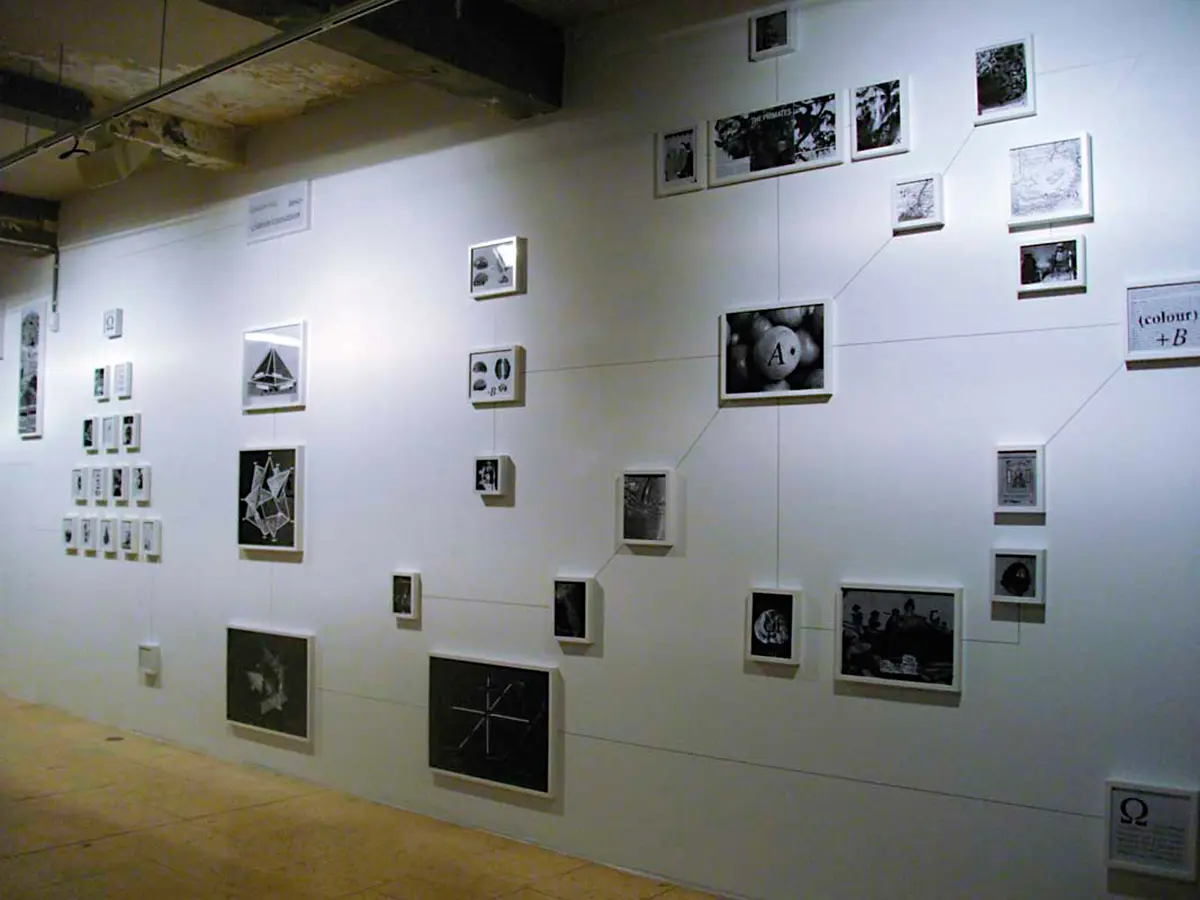
The application of the concept of the Theory of Applied Enigmatics certainly echoed in one of the most ambiguous sets presented in this building: Tangential Magick (2008), by Alexandre Singh, a series of 60 framed collages connected by dotted lines drawn in pencil on the walls.
In synthesis, let us say that the common thread between these three curatorial collectives was the assumption of the curatorial practice as part of a process of investigation of new artistic practices, in which they included themselves as producers be it of knowledge or of works of art. Despite the divergent opinions about Manifesta 8 (for some it was a success, for others a failure), we must say that its favor is that it provided the place, the conditions, and the opportunities for three collectives to experiments with formats, readings of works, protests, communiqués, and every possible way of undertaking this adventure. A biennial must be, precisely, spaces for risk and experimentation.
On the negative side, as was to be expected, the announced dialog Murcia-Cartagena-North Africa never came to pass, perhaps because of an unexpressed desire on the part of the collectives not to tread too close to the topic, or because of a lack of information and of time to embark on such a politically unresolved enterprise in the region. Whether the people of the hosting cities felt part of the project is something that, by its very nature as an elitist event, Manifesta as a whole tends to constrain.
NOTES
1. Hedwig Fijen, "Introduction," in Manifesta 8 Catalog, Manifesta International Foundation and Region of Murcia, Silvana Editoriale, Italy, p. 18.
2. "Our proposal for a Constitution sought to create a self-constituting, autonomous political and social space where artists, along with curators and later with the public, could subject the existence of their works to critique, imagination, and formulation in the context of a temporary exhibit." About how the idea of Constitution for a Temporary Exhibit came to be formed, see the catalog, pp. 210-282
3. OVERSCORE ACAF, id., p. 36.
4. The Theory of Applied Enigmatic was supported by five ideas described by ACAF in the catalog: a) Resisting the collective unconscious of contemporary art; b) Assimilating the legacy of Humanism; c) Being complexity; d) Applying enigmatic; e) Beginning to turn loose a point of equilibrium. Idem, p. 52-91.
DERMIS PÉREZ LEÓN