
Racism is a worldwide problem and traces can still be found even in developed countries where contemporary waves of migration happen. This is particularly prevalent in countries where there has been a history of racial confrontations and discrimination. One of these countries is Cuba, and despite the government's claim that racism was abolished in the 1960s, reality shows otherwise. Although racism and racial stereotypes are not institutionalized, it is palpable at a social level. They are embedded in the popular culture through jokes and sarcastic comments, and things like interracial marriages are still frowned upon.
Keloids are scars that can happen as a result of wounds. Although they occur more readily in people of African descent, they can really happen to anybody. The curators named the exhibition after keloids for two reasons. Firstly, due to its racial association, and secondly, because that is what racism is in Cuba: a very visible scar that everybody sees, but nobody talks about it.
Curated by Alejandro de la Fuente and Elio Rodriguez, the exhibition was shown at the Centro Wifredo Lam in 2010, shortly before traveling to Pittsburgh. This is not the first time that this theme has been the object of an exhibition. There were three other instances between 1997 and 1999 in Havana, Cuba. The first one was curated by Alexis Esquivel and Omar Pascual, and the last two were by the late curator and writer Ariel Ribeaux. This is, however, the first time that an exhibition with this theme and originating in Cuba, has been shown outside of the country.
Queloides/Keloids: Race and Racism in Cuban Contemporary Art got together thirteen artists whose work reflected their views on the subject matter. Many of them had participated in the aforementioned exhibitions and had been working consistently within the theme for years, often as the focus of their work. Others had touched on the subject in a tangent manner, nevertheless present in their work as a relevant concern. The participating artists in this exhibition were: Pedro Alvarez, Manuel Arenas, Belkys Ayón, Maria Magdalena Campos-Pons, Juan Roberto Diago, Alexis Esquivel, Armando Mariño, Marta Maria Pérez Bravo, Rene Peña, Douglas Pérez, Elio Rodríguez, and the duet of Meira Marrero and José A. Toirac.
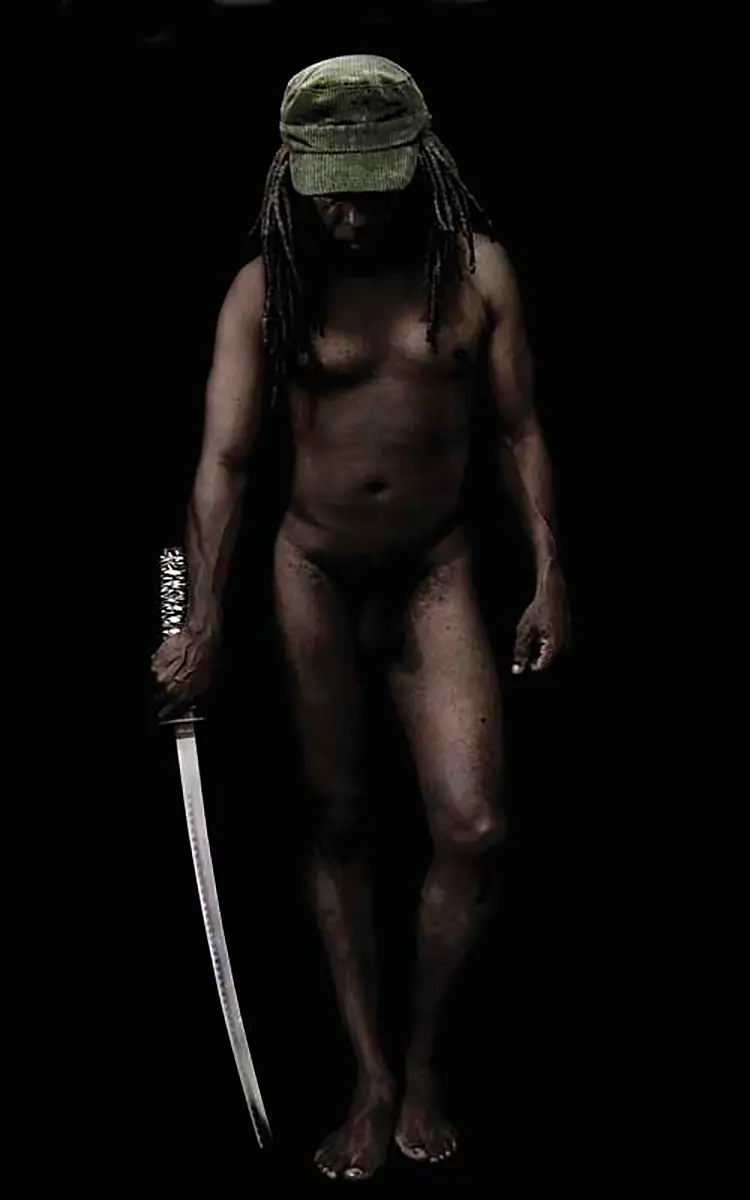
René Peña is one of the artists whose work has been dealing with race from a sexual point of view. His works show images of male naked bodies and other sexual references. Peña creates his photographs in black and white, for better contrast and for a better emphasis on the color aspect. His photographs are often considered shocking because the images portray themes that many in society might consider taboo in nature.
Another artist whose work makes references to race from a sexual perspective is Elio Rodriguez. His work has been centered in scatological and sexual commentaries from a racial and popular standpoint. For this exhibition, he made an outdoor piece titled BlackCeiba. It is a huge, black, inflatable assemblage made out of phallic forms, and positioned on the roof of one of the buildings as if organically it belonged there.
Pedro Alvarez (1967 -1994) based his work on what seems like historical renderings of colonial times in a folkloric way. In a humorous manner, he presented what seem like scenes from the past showing people dancing, commenting on the popular misconception in Cuba that black people's skills are limited to music, dancing, and sports, and that, therefore, these would be their only interests. Alvarez selected these passages to bring our attention to the similarities between colonial perception and the contemporary, which hasn't changed despite the so-called social equality.
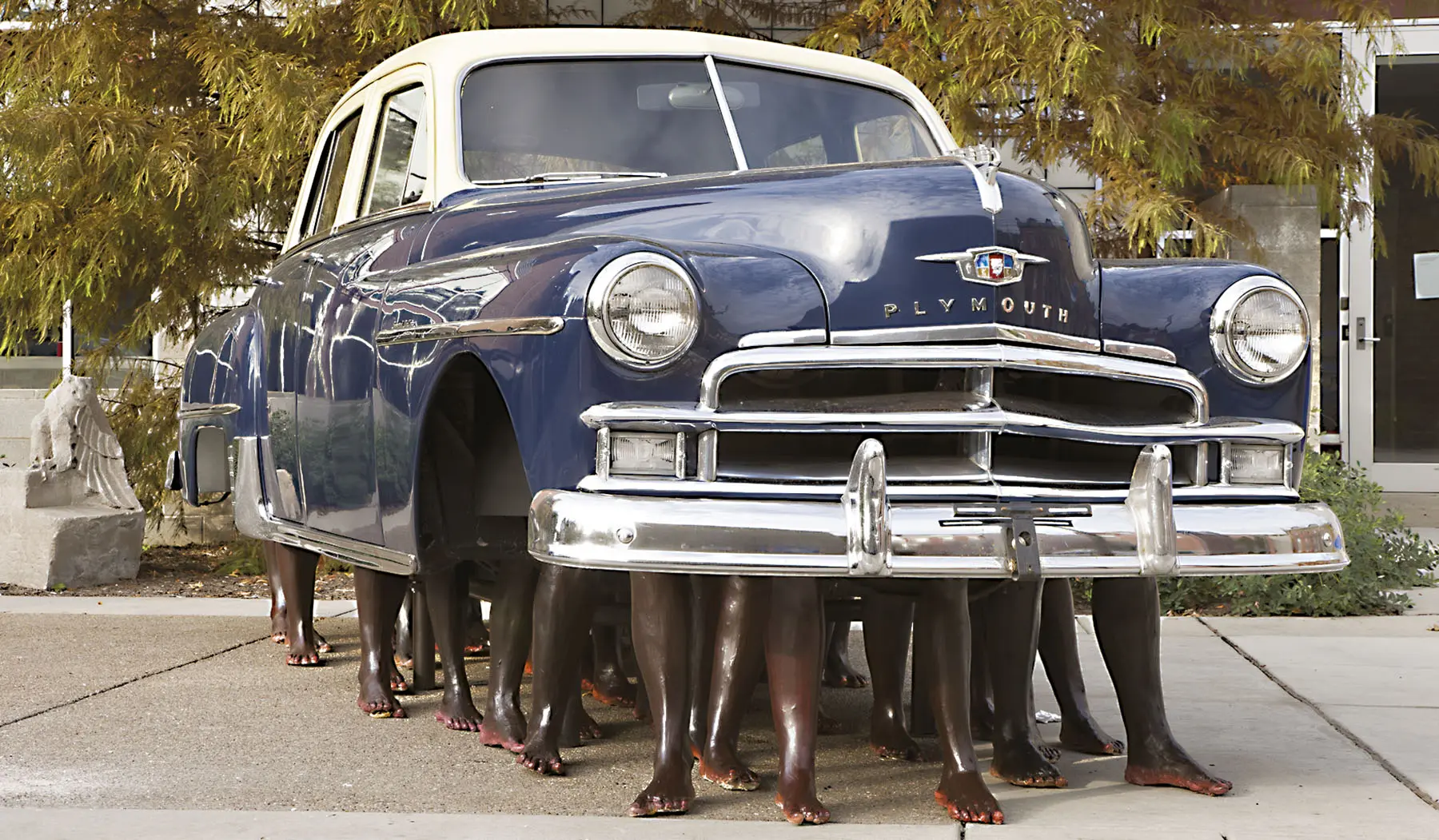
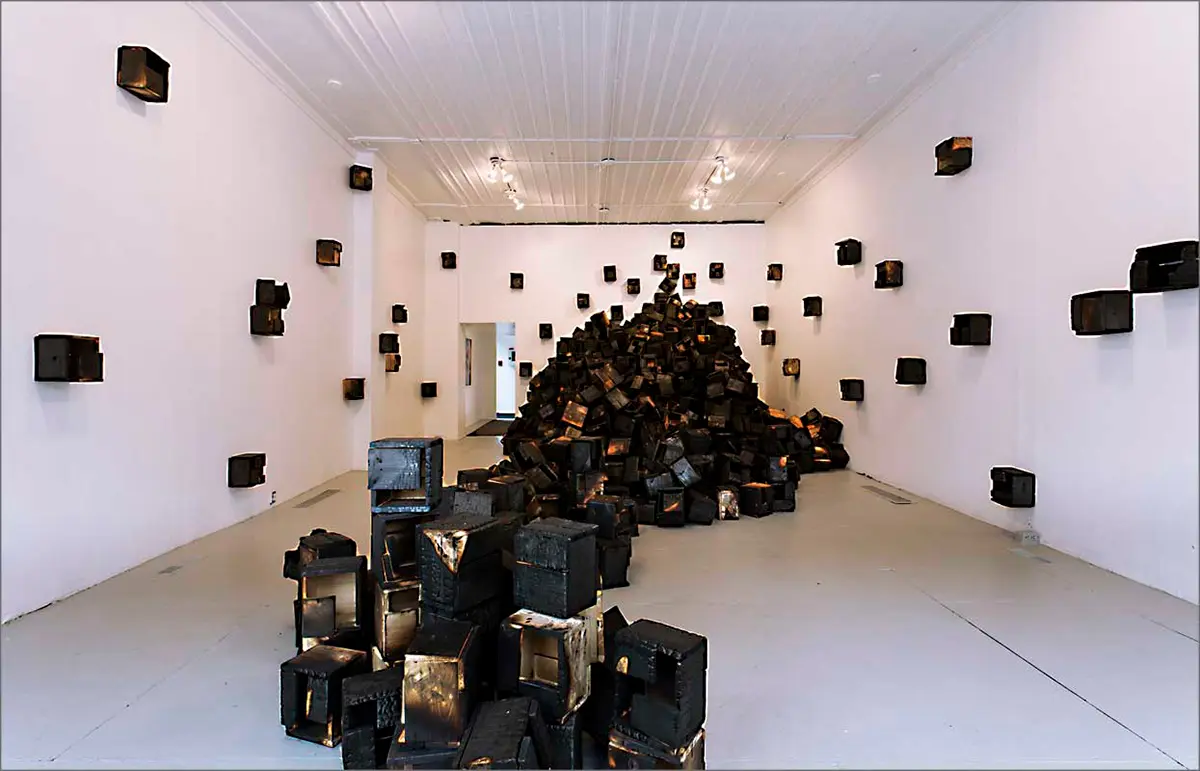
Armando Mariño is another artist that has been working with racial aspects. He very often creates, from an ironic perspective, pieces that comment on the real place of black people in Cuban society. This exhibition includes several paintings and sculptures based on his iconic The Raft, which shows an actual 1950 blue and white Plymouth Special Deluxe supported by black legs and bare feet. The piece is a reference to the many ways people migrate from Cuba. Roberto Diago's installation, Ascending City, is alluding to the infamous living conditions that people endure in Cuba. Although these conditions are not exclusively for black people, they have historically lived in the poorest neighborhoods, thus often bearing the worst situations. Diago's installation looks like a cascade of small houses made of charred scraps of wood and metal.
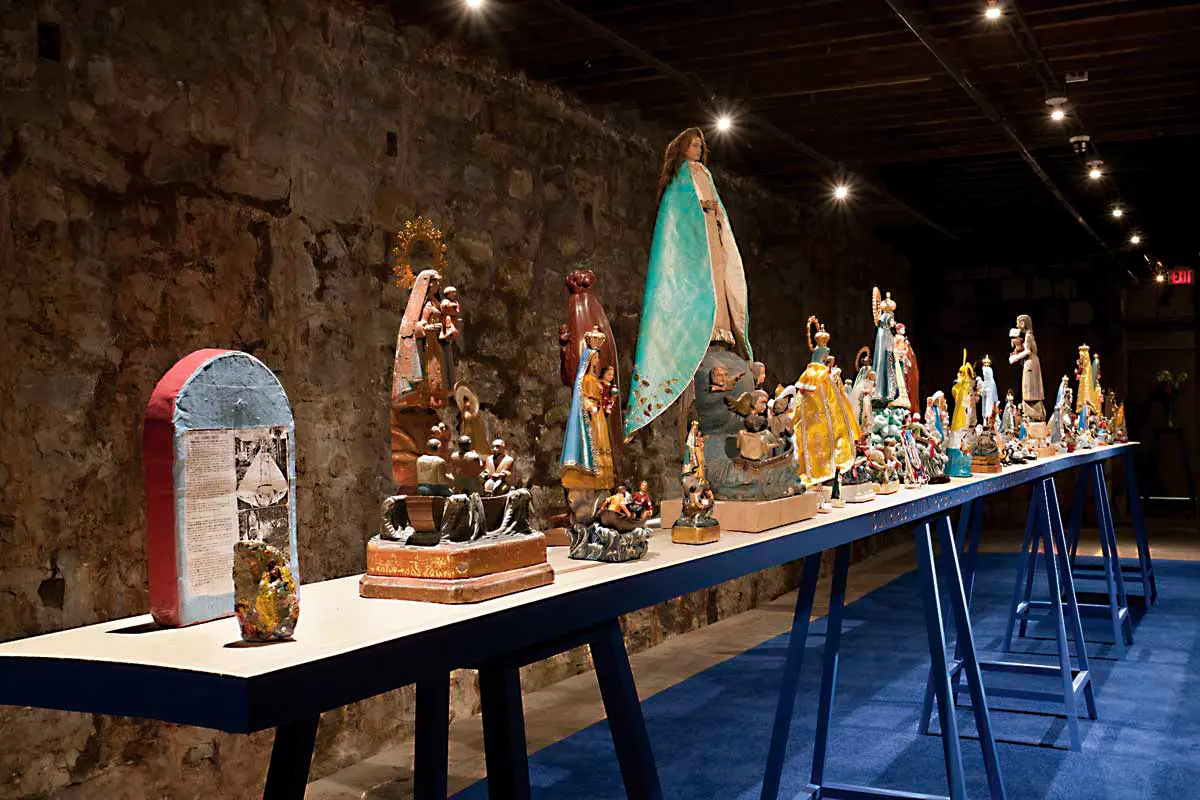
Ave Maria, Meira Marrero, and Jose A. Toirac's installation are based on the role of race as idiosyncrasy and a unifying factor. Their piece consists of a collection of Virgenes de la Caridad del Cobre (Virgins of Charity of El Cobre). This virgin is considered the patron of Cuba and a major exponent of mestizaje, venerated by Cubans regardless of their religion. The virgins are resting over a table that has a text by Jose Marti upon it, which is really a call for unity despite race, religion, or political affiliation.
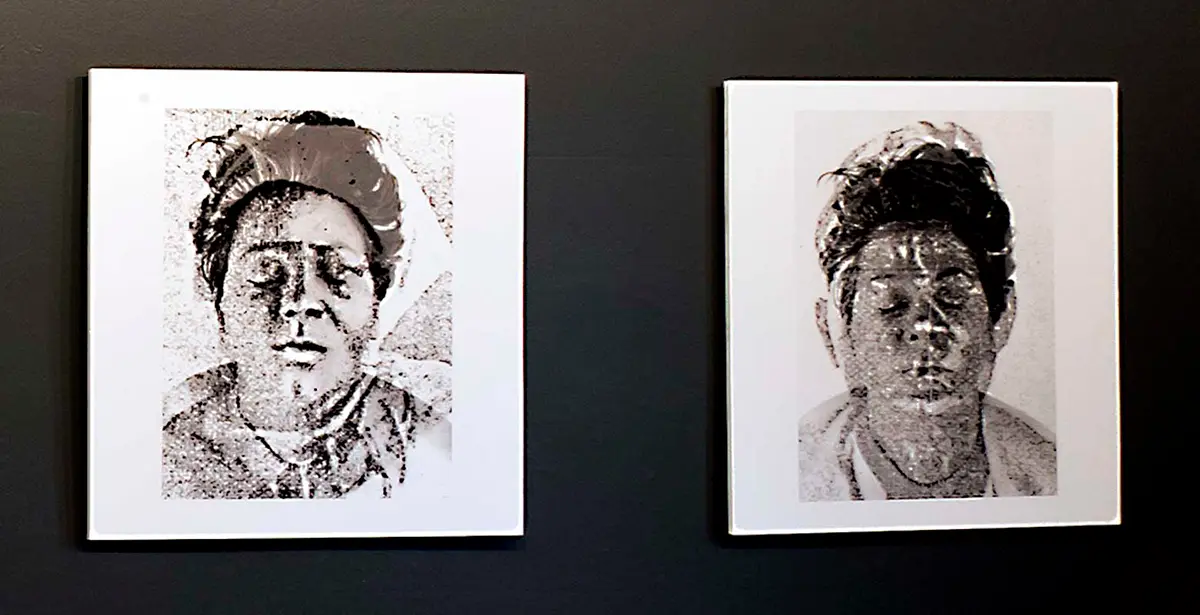
Marta Maria Perez Bravo's photographs contradict the usual assumption that only black people practice Afro-Cuban religions. Although not a practitioner, she shows herself as the protagonist of her pieces in what seems like acts of ritual practices.
One of the main achievements of the exhibition is that it brought together a multi-racial group of artists, which made possible an objective perspective on the theme. It also balanced the media including by bringing in paintings, sculptures, installations, and videos, among others. This open-minded attitude makes a broader understanding of the problem possible, especially since it is oriented to illustrating a problem that supposedly didn't exist in the country.
With this exhibition, the curators are successfully demonstrating, from the artists' perspective, how racism exists in Cuba, and how it is affecting society. Racism is being exposed and commented on from diverse viewpoints: artistic, social, and political. This exhibition is bringing down once and for all the myth that there is racial equality in Cuba and that discrimination is a problem of the past. This group of artists, with their comments and images, are unmasking the 'perfection' of Cuban society.
IRINA LEVYA