
When photography was first invented, materials were not as sensitive to light as one would wish. They required that models sit still, which is what sculptures did best during the first decades of the nineteenth century. It is a basic point made by Roxana Marcoci, the Curator of the Department of Photography who organized the show, and it serves to organize the documentary material at the beginning of the exhibition.
This beginning includes daguerreotypes by Hubert and Fortier made as early as 1839 and a print on paper by Talbot from 1846. Interspersed with pieces by Barbara Kruger, Lois Lawler, and Lorraine O'Grady, the message is clear that it is not a chronological show. Actually, the clusters of the exhibition follow different unrelated topics rather than dates.
Still, there is a sense of history and with the old work, depending on who was behind the camera in these first examples the results were more or less aestheticized. So, so far there is nothing unexpected and this part of the biography of photography shows that the medium was on its path to be a tool for documentation. It is a subsequent room dedicated to Brancusi that provides a serious break after the first documentary photographs and where the announced premise of photography vis-à-vis sculpture is broken and opens to a more interesting issue: photography stops being a technique to become space. This shift is never fully articulated and it could be no more than a projection of mine. However, it is this point that made the exhibition fascinating instead of irrelevant.
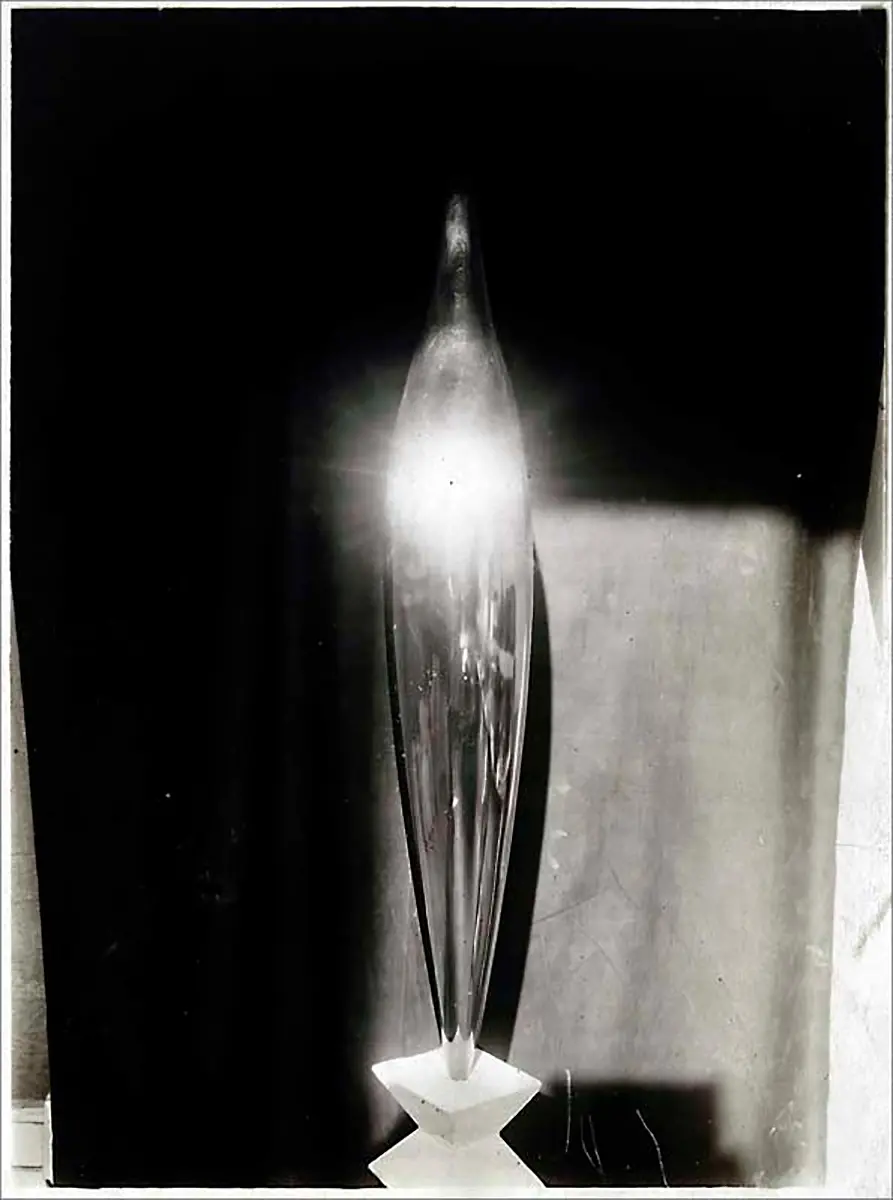
Apparently, Brancusi was very particular about how his sculptures should be photographed. He shot a lot of them himself and, from what can be seen, his photographic documentation skills were not his greatest strength. And yet, many of his pictures are remarkable inasmuch as they are not "rendering-photographs." Instead, they capture the atmosphere of his studio and possibly even a "spirit" that is not completely revealed by the physical presence of his sculptures. He often used flash to create light spots that disintegrate the solidity of his pieces. One of his photographs consists of carefully composed shadows cast by his sculptures, leaving the pieces out of the picture. The shadows create a new three-dimensional illusion thanks to the ambiguous calibration of the foreground with background shapes (Shadows, 1920). The Beginning of the World (1920) is an egg-shaped sculpture played against its own shadow and an unrelated background curve. Another photograph, a double exposure shot of his Endless Column in Voulangis (1927), translates the strong and heavy sculptural forms into a subtle and disturbing tremor.
From a theoretical point of view, Brancusi's room may very well be the most important space of the exhibition. It becomes clear that, against our assumptions, sculptures are not that static. Every change of light, a deposit of dust, erosion, and weathering gives them, if not exactly life, at least a living presence. History is always there but photography only is able to capture an instant and a particular angle and fragment, not the sculpture itself. The model/object that constitutes the original keeps changing. The copy is the one that remains permanent. In his photographs, Brancusi tried to overcome all of these limitations.
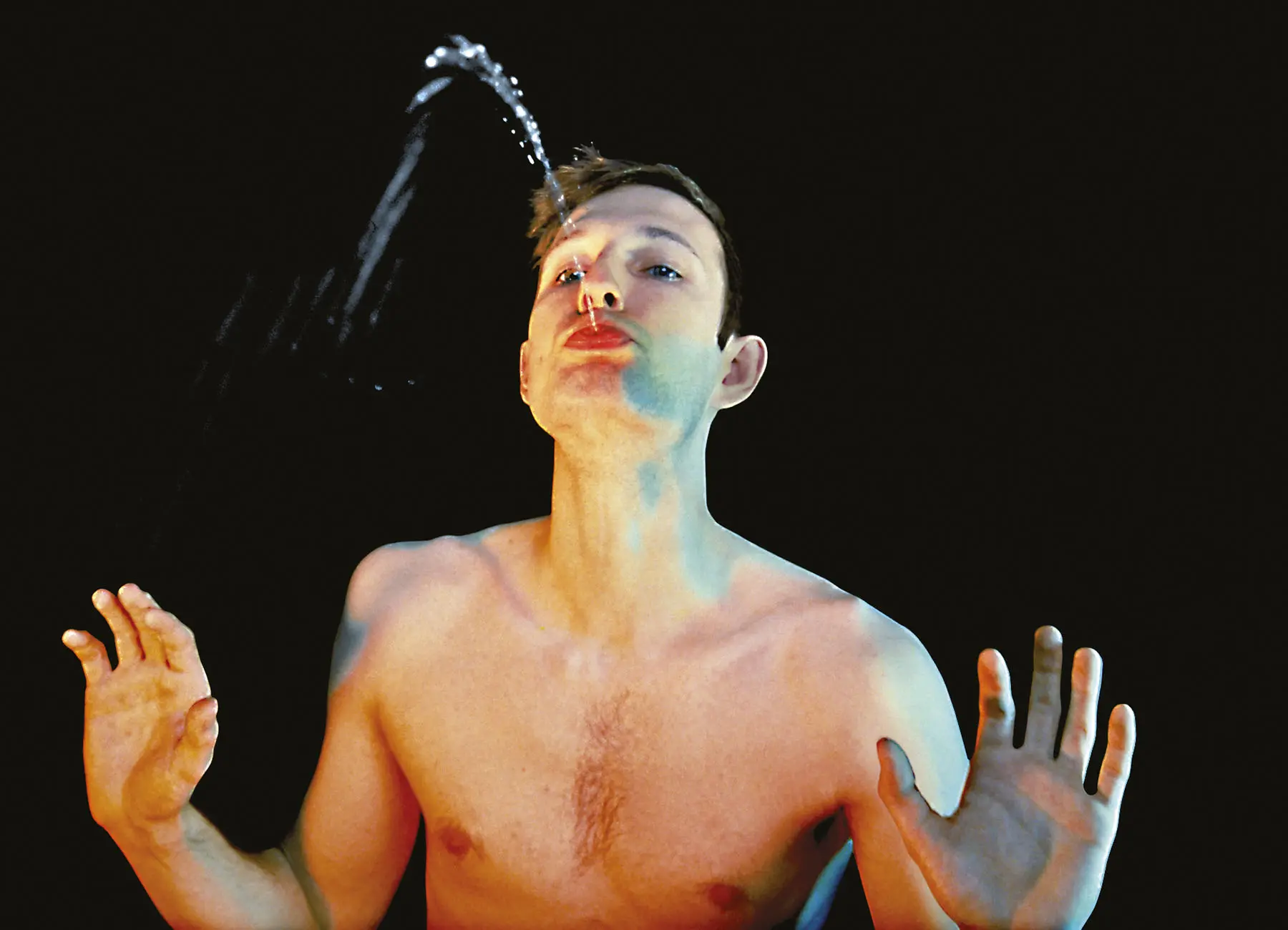
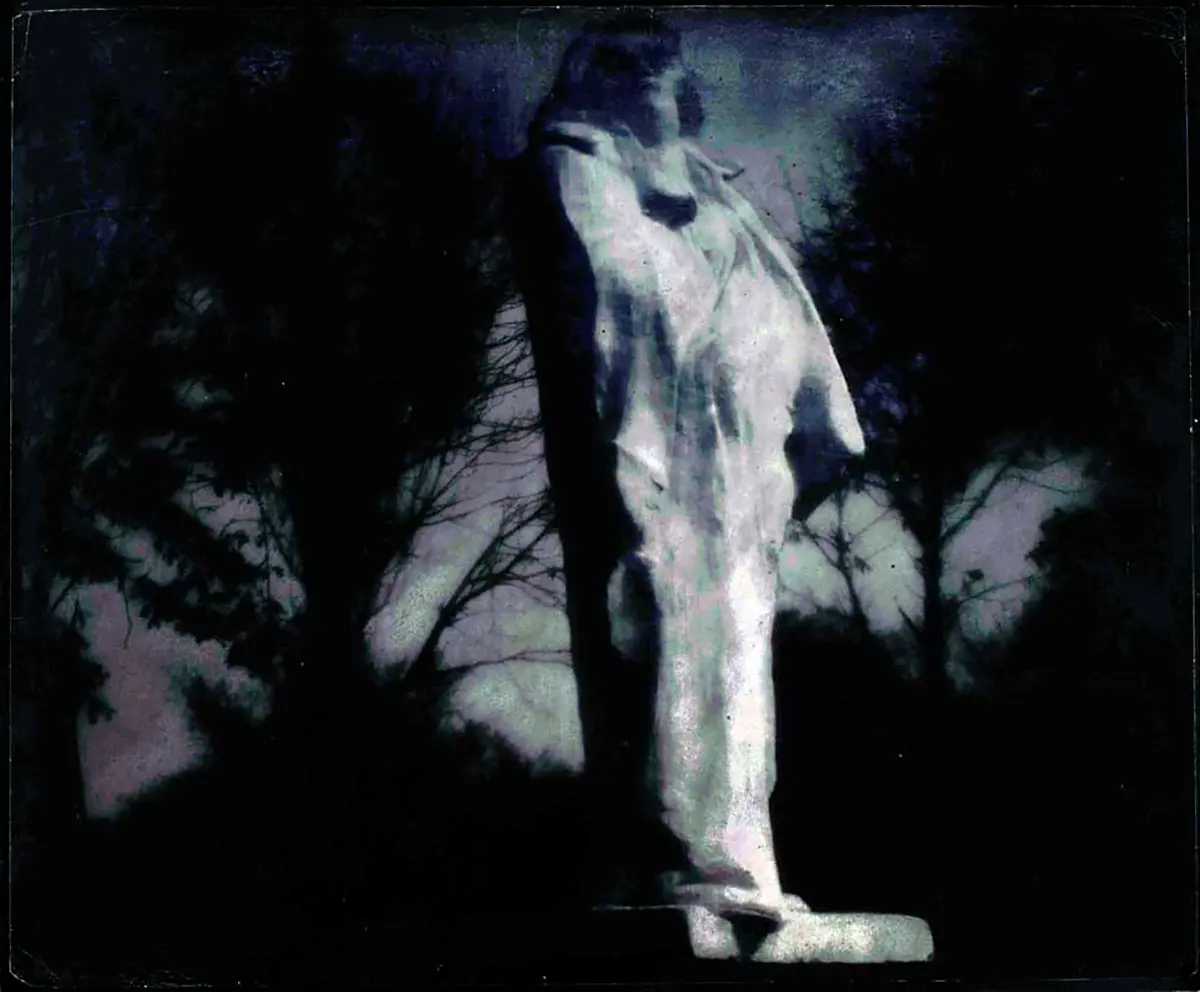
All along with the exhibition the underlying question—the backbone that organizes it in a non-linear way—is when and how does sculpture stop being this static content of the photograph to go beyond these limitations and integrate into a hybrid inconceivable without the use of photography. Edward Steichen's series on Rodin's sculpture of Balzac seems to address this same issue. Rodin's imposing sculpture happens to be greeting the public entering the space that leads to the museum's exhibitions. Steichen's 1908 images pursue the point of creating a rather sentimental expressionistic atmosphere that gives Balzac a Wagnerian aura. It is this atmosphere more than the sculpture that becomes the subject of the photographs. The sculpture, however, is needed to do this; here it is used as a prompt and as an excuse. Over seventy years later Barbara Kruger echoed the process in Untitled (Your Gaze Hits the Side of My Face), 1981. This time sculpture is used to accuse the depersonalized freezing caused by a sexist stare. Again, the sculpture is a prompt to make a point that goes way beyond the originating object.
These and other pieces challenge the prevailing concept of what photographic information should be. They shift photography from being a mere technique to become a space where a new reality can take place. Marcoci cites Charles Baudelaire when he opposed photography as a reproductive technique and "the popular notion that that art and truth lie in the replication of the physical world."2 It is a belief that continued until very recently when the digital age irrupted. Traditionally photography had been the paradigm for documentation and proof. Photography was the bearer of truth. It is only a relatively new development that we accept as a space where fiction takes place instead.
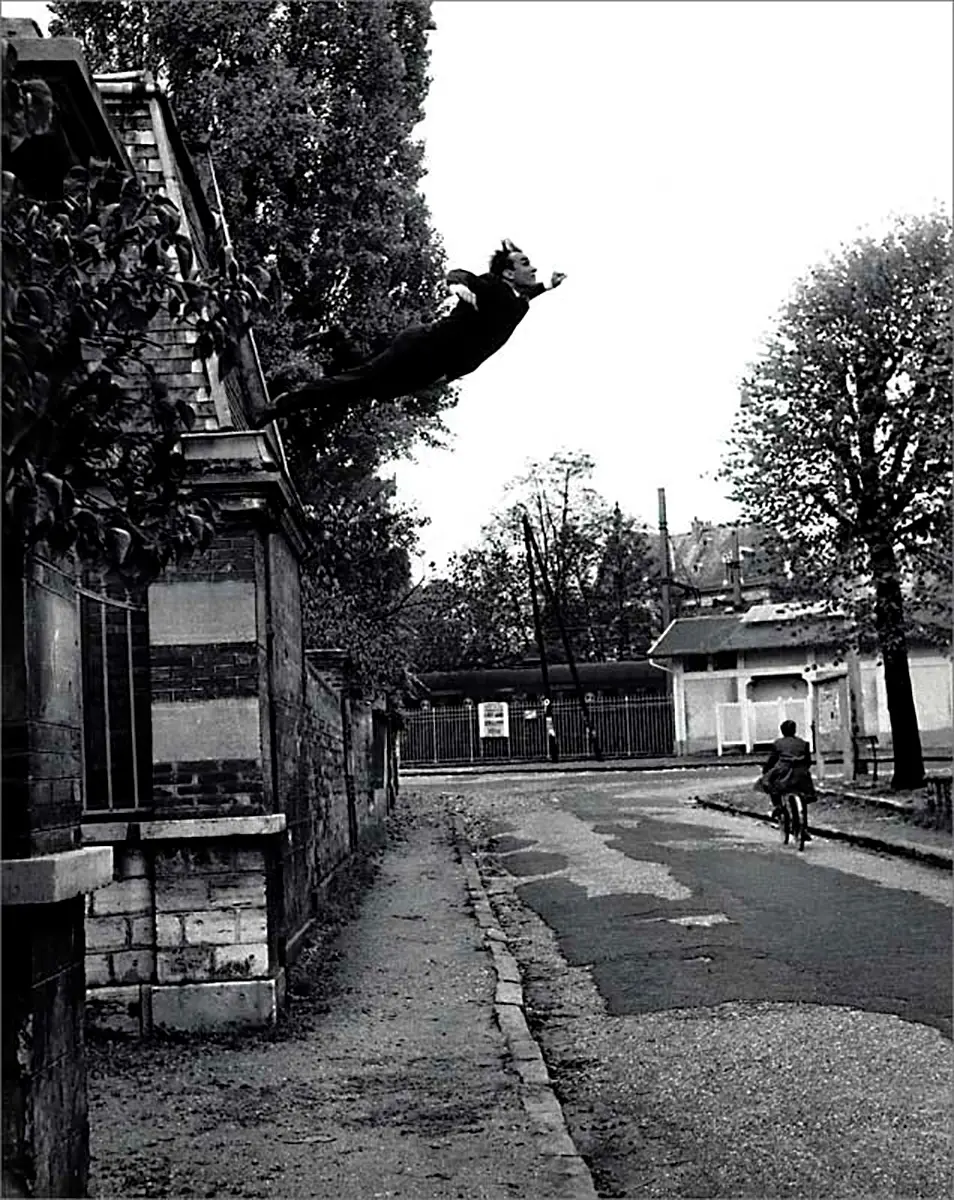
Although during the first half of the twentieth century there were examples of photography used to alter reality, these were the product of tedious retouching usually performed with the aim of rewriting political history or improving sales. When appearing in art, they used contextual montage and photomontage, present in the exhibition with several examples spanning Hannah Höch to Gordon Matta-Clark. Sometimes, like in Yves Klein's Leap into the Void (1960), a careful double exposure would show an improbable reality. Klein appears to be credibly flying off a building. Today, with Photoshop and other digital programs, photographed reality shifted from truth to credibility. The photographic space has become the space where the impossible becomes possible. Therefore a photograph is not anymore a trustworthy document that may or may not be enjoyable, but a space to be enjoyed and distrusted.
The Original Copy doesn't exactly make a case for this particular point, but it manages to minimize the borderlines laid out by traditional art techniques. Like many museums, MoMA continues to be organized according to the traditional crafts division of the arts. Departments are more or less neatly divided into painting, sculpture, drawing, photography, architecture, etc. to then make exceptions when things don't fit that well. Although exhibitions are organized by names, themes, and isms, the basic expertise of curators still seems to be grounded in how and when things were made rather than what the things being made are representing in terms of the exploration of knowledge. From an organizational point of view, this provides a much simpler structure than a bunch of conflicting philosophers might offer, and therefore the choice is understandable. From an art point of view, however, this perpetuates a fragmented and product-oriented contemplation of the arts and slows down the conveyance and sharing of creative processes.
Within this somewhat stuffy tradition, this exhibition threatened to be extra-stuffy by delving into the rather arcane topic of how two narrowly defined art areas might have connected. It sounded like an exhibit not only deeply rooted in photography but even worse, dealing with applied photography. The full title of the show sounds like a contradiction of intentions. The first part, "The Original Copy", proposes an oxymoronic and intriguing project. The second, "Photography of Sculpture 1839 to Today", seems to be about dull documentation of secondary use of a technique. Put together, this could have led to an exhibition that lacks the clarity of purpose and is not something really worth visiting.
Further, in his foreword, Glen Lowry, the Director of MoMA, still stresses the second part of the title and thereby short sells the exhibition. Lowry speaks of the show as a "[...] unprecedented exploration of one medium's critical role in the analysis and creative redefinition of another" and expanding "[...] the possibilities of photography to probe received ideas about how the sculpture should be understood."3
Fortunately, the exhibition escaped these constraints and the important part of the title remained "The Original Copy". It is derived from speculations around Duchamp's Boît-en-valise, the portable museum he made of his works in which reworked photographic reproductions acquired the quality of originals. On a superficial level, this is the same question raised by signed editions of art prints and multiples, where all the members of the edition are handled as originals. On a more profound level—the one partially explored in the exhibit—it addresses the reproductive quality of the camera that over time produced situations that take off on their own and leave the initial document behind. One could say that the use of sculpture as a photographic motif during the infancy of photography was a consequence of technical limitations rather than an aesthetic imperative. At the time the merger of both media, where one is acting as a topic for the other, is historically true, but only of anecdotal importance. What became really important is the evolution and growth of a photographic vision that went ahead and defined the space where this vision happens.
One could of course claim that this same evolution and growth takes place in any medium. Painting ultimately seeks the "painterly" as the reference for quality; sculpture is about seeking the sculptural, and so on. Most media are reductionist in that sense. The "painterly" is achieved by discarding non-painterly elements or at least by having them coexist on a lower level. In photography, maybe because of our long tradition of credibility and credulity, this is not the case. Or when the photographic quality happens beyond sharpness, good exposure, and richness, paradoxically it often produces "painterly" photographs. Fooled by two-dimensionality and fashionable taste, many early abstractionist photographs actually tried to emulate effects already developed in painting to only succeed in producing pale and distant replications.
What is remarkable about The Original Copy is how it meanders through the development of photography as an autonomous space, space whose existence, in spite of the statements about the exhibition, actually is not contingent on sculpture. And how the exhibition, although it shows results created by means of a camera, persuades the viewer that something is happening in an uncontaminated "there." The importance of the word "there" is, precisely, its connotation of space.
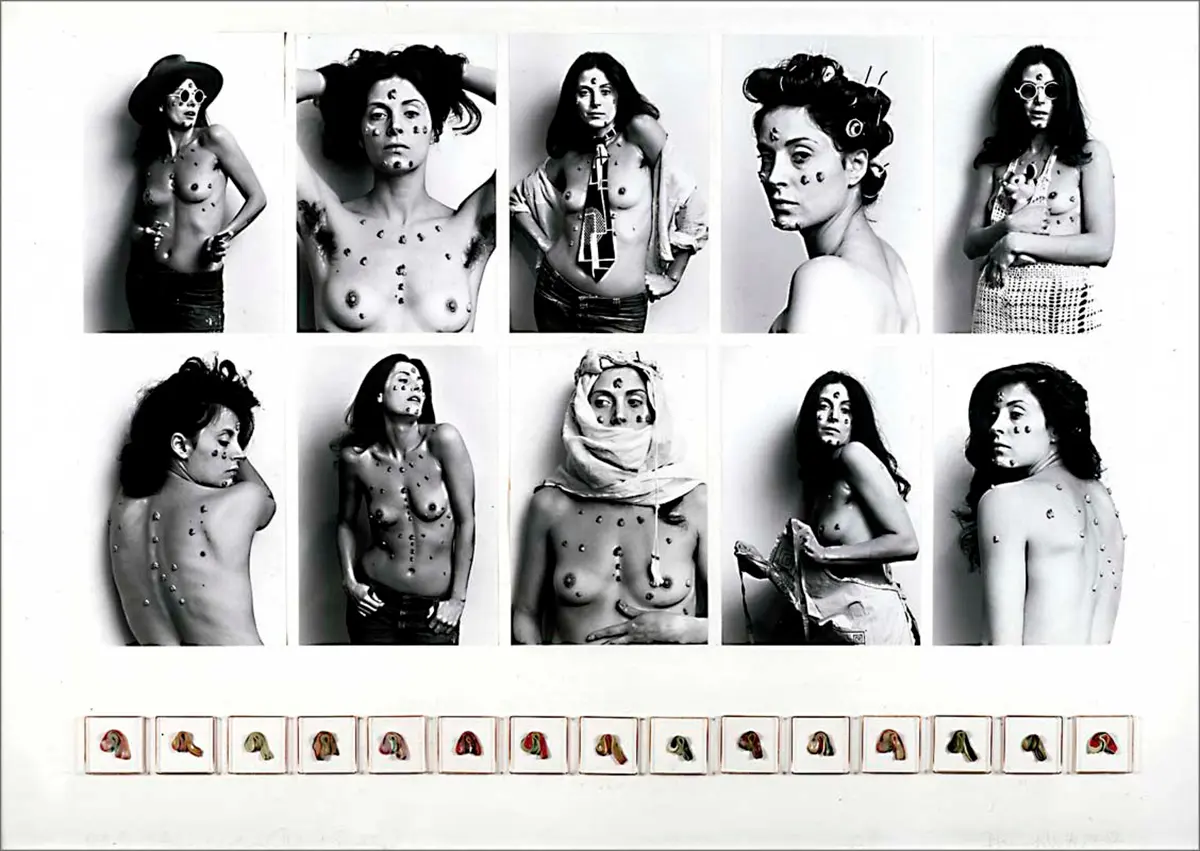
In all its fertility, the show persuades more about the importance of photography than that of sculpture. Starting later in history it might as well have made a case for fashion in photography. Many prominent photographers made amazing work for fashion magazines and developed a strong aesthetic language by letting the needs of the magazines interact with their own. One could even link fashion photography with sculpture photography. Coming to think of, fashion is curiously absent from this exhibition. The closest it comes to it is in the documentation of some performatic images by artists like Hanna Wilke, Ana Mendieta, and Bruce Nauman. The images do not share fashion aesthetics, but the same as models the artists are there as support and hopefully as enhancement of a broadened interpretation of a garment. In that sense, the self-imposed sculpture theme may very well have limited possibilities.
Many of the photographs in the show were chosen on the basis of sculptures-in-the-picture, but in essence, most refer to other things. Atget has shots of sculptures in Versailles, but in his Saint-Cloud series, shot between 1915 and 1922, he carefully composed tree lines and their reflections in a lavish garden pool. The pool is surrounded by sculptures, but the sculptures are not the subject of the photographs here; they are present only to signal a very peaceful opulence. And a similar argument could be made for Lee Friedlander's monuments swallowed by urban settings in his series of The American Monument (1976). Here the contextual interaction, something usually invisible to the selective bare eye, comes to the fore. In one picture a Coca-Cola sign drowns the bronze honoring Father Duffy, a not very well-known but highly decorated Catholic chaplain during World War I. In the real setting one either doesn't see the monument at all, or one isolates it from its surroundings. Friedlander, by focusing on the context, manages to show the conflict between both.
Photography may be used as a tool to contextualize but it also is used to decontextualize. The works of both Man Ray and Brassaï originate series by subsequent artists where photographs of objects isolated from their references become images of art objects. This editing device forces a comparison with Duchamp's work. With his ready-mades, Duchamp edited reality by taking actual things from one context and putting them into another one. An object used in daily life became art by being removed from its context and placed in an existing art space. With a slightly different strategy, Ray and Brassaï isolated, set up, and recorded objects placing them in the photographic space. Duchamp forced a new reading of the unchanged object. Ray and Brassaï intervened more strongly by introducing a translation where one dimension and color were dropped, where casting and cast shadows integrated, and where new space is defined. This space then opened for the following generations that used photography.
In his series of Involuntary Sculptures Brassaï includes a smear of toothpaste that becomes a menacing and undefined sea creature. Four decades later, Alina Szapocznikow continued that piece with her Photosculptures (1971) that document chewed gum in different states of distension. And in his Enigme d'Isidore Ducasse (the 1920 tribute to the Uruguayan poet known as Comte de Lautréamont), Man Ray outlined the whole of Christo's wrapping tasks (which are not documented in the exhibition). Many other artists, Robert Gober among them, also pick up on Ray and Brassaï's work.
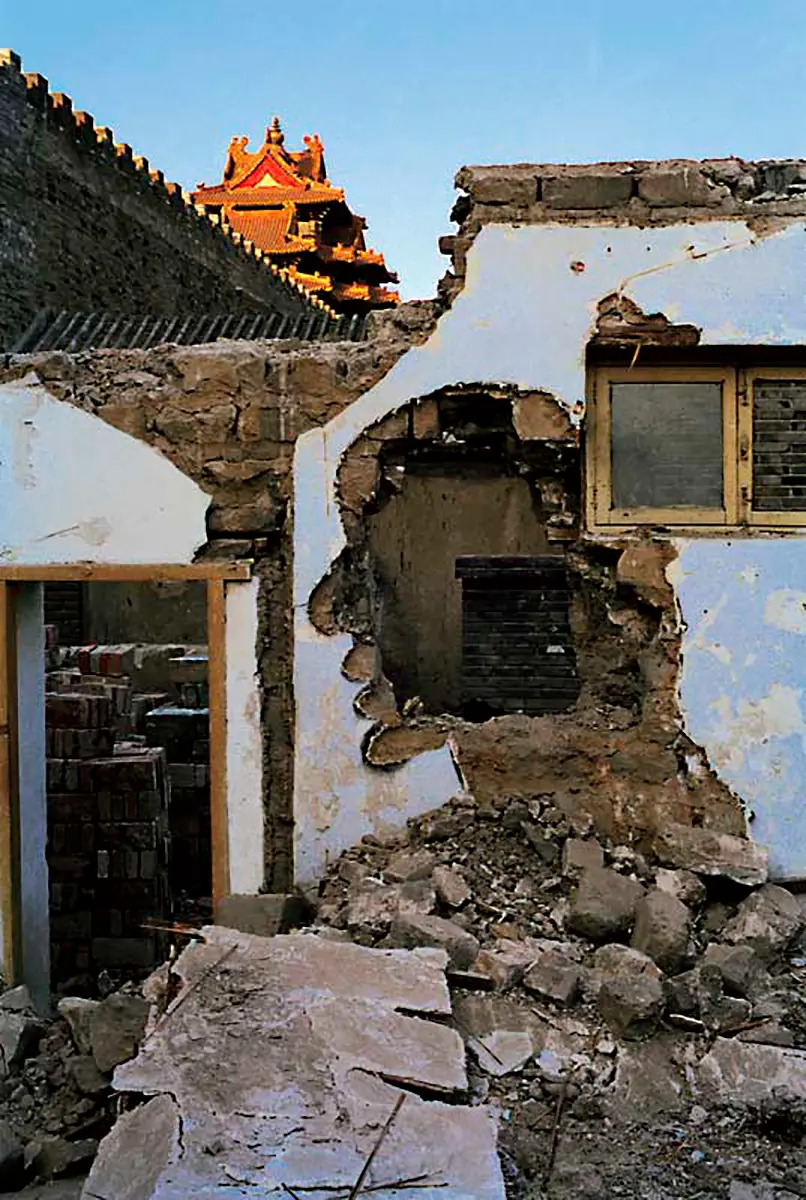
Zhang Dali's Demolition: Forbidden City, Beijing (1998) could also be seen in this context, but his works relate more to Friedlander's approach by turning it around. A whole in a broken wall becomes a relief profile of a face thanks to how it sits in the rectangle, thus beating the sense of ruin presented by reality.
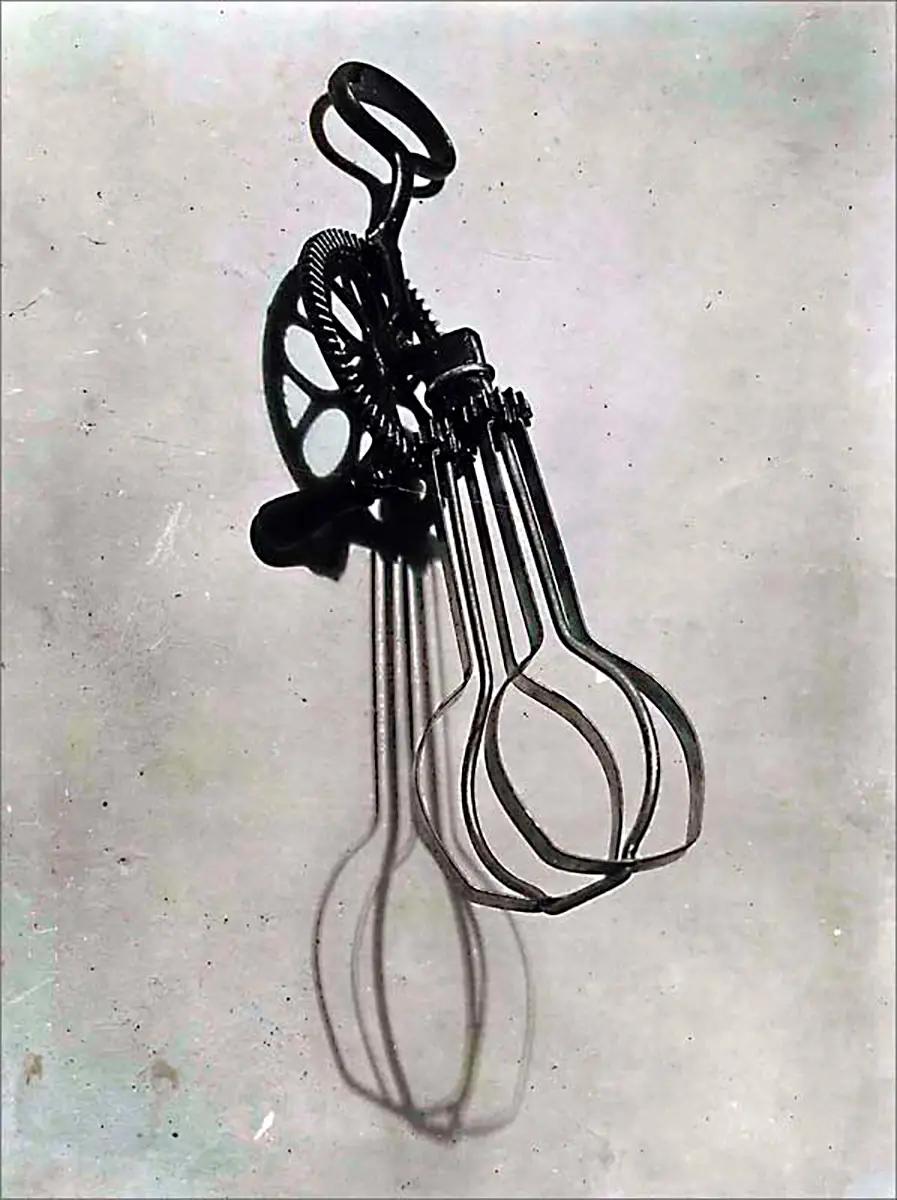
While in many cases one still might refer to sculpture (Man Ray's eggbeater, because of its interplay with its shadows could be appreciated as a sculptural contraption), there comes a point in the exhibition where the traditional idea of sculpture disappears. Robert Barry's Inert Gas Series: Neon shows two meaningless landscape shots taken from a hill near Los Angeles after he had released one liter of neon gas on March 1st, 1969. Eleanor Antin's The Last Seven Days from Carving A Traditional Sculpture (1972) shows various series of clinical shots of the author's body in her efforts to lose ten pounds in six weeks. And Robin Rhode's Stone Flag (2004) depicts him lying on the floor holding a bent flag mast next to a distorted rectangle of bricks in a perfectly vertical shot. Hanging on the wall, the photographs look like he is standing and waving the flag with the greatest of physical efforts.
In more than one sense, Marcoci's exhibition is not perfect. There are many contemporary works in the show that revert to documentation, works by famous names whose presence is not fully justified by the examples offered, or works that take up more space than they deserve and seem overblown. However, it is a great homage to the project that one wishes to see a second chapter. All the time there appear points that force one to continue thinking. Sometimes one even has the feeling that in the process of doing this exhibit she is trying with more precision to formulate a theory that at present she is only intuiting. Maybe the exhibition should have been called "In Search of the Original Copy". Unlike it frequently is the case with exhibitions of this scope The Original Copy doesn't seem intended as final and definitive. One has the opportunity to see wonderful gems rarely or never on view, and one keeps questioning ideas that are taken for granted. For a rather scholarly enterprise threatened by obscurity, this is a rare achievement.
NOTES
1. Museum of Modern Art, New York, August 1-November1, 2010
2. Marcoci, The Original Copy, Museum of Modern Art, New York, 2010, p. 12
3. Lowry, The Original Copy, p. 7.
LUIS CAMNITZER
Emeritus Professor at the SUNY College, Old Westbury.