It may seem commonplace to repeat that Colombia’s Pacific coast is one of the most biologically diverse regions on the planet (as well as one of the rainiest). Yet, in getting to know the projects carried out by the Más Arte Más Acción foundation in the Gulf of Tribuga, south of Nuqui, one cannot be but amazed at the vast natural wealth of a place so remote from urban centers, in the narrow strip of sand that separates the rainforest from the sea.
Plataforma Chocó is proposed as a space for thought and for an encounter between art, science, and nature, humanity, and knowledge. In a natural environment apart from the comforts of urban life, Plataforma Chocó offers artists, architects, dancers, writers, musicians, designers, philosophers, and scientists (be it astronomers, biologists, botanists, physicists, neurologists, economists), a physical base and the possibility to connect with what is truly necessary, basic, and essential; to perceive and experience nature, landscape, time, as flexible and intangible matter; to find new meanings for consciousness.
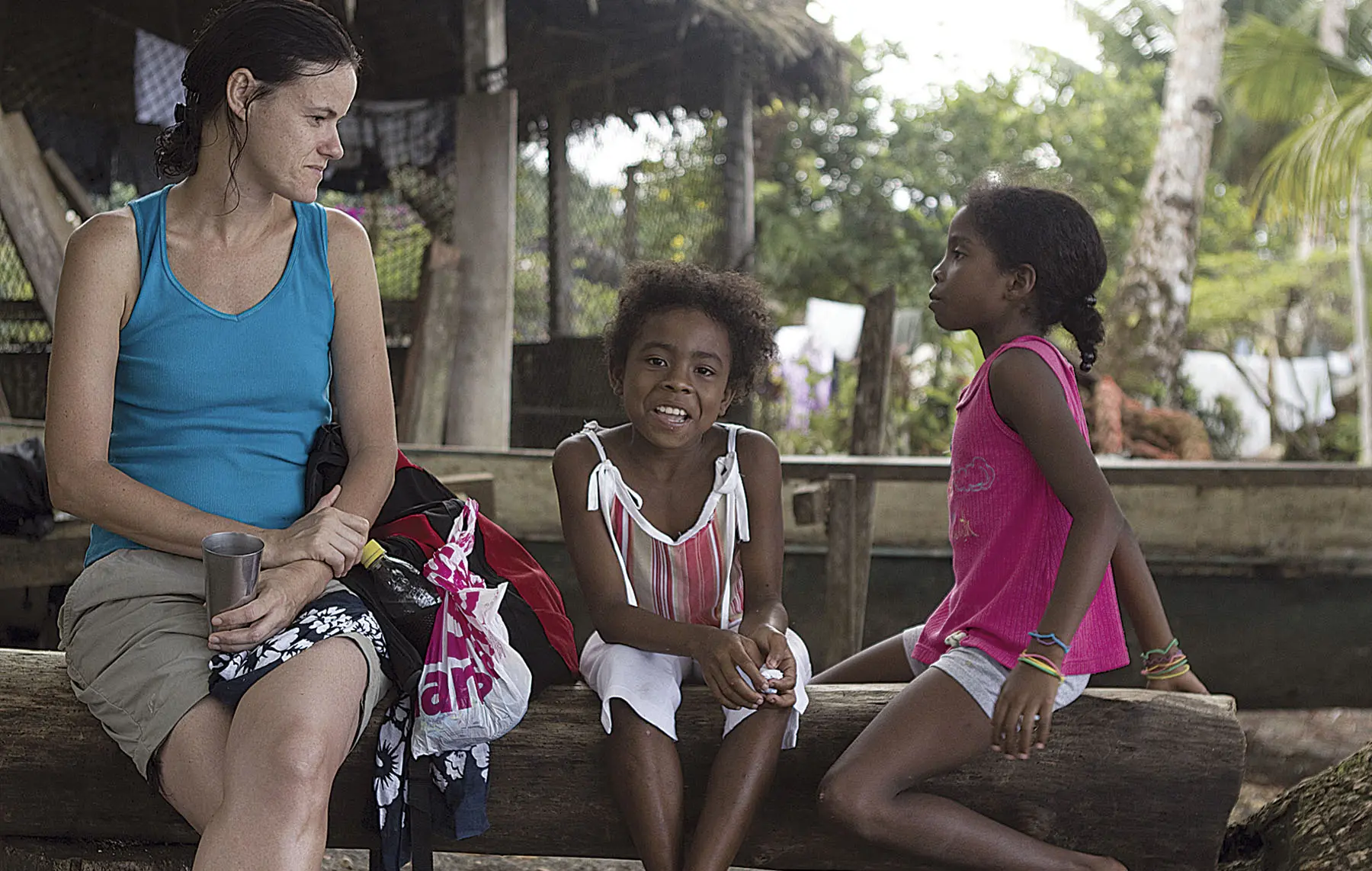
Plataforma Chocó is the result of an extended effort by Colombian artist Fernando Arias and project manager Jonathan Colin, directors of Más Arte Más Acción, who have been active in the region for over a decade. Among their previous projects are Niños pazificos (2000, with Diego Arias, Fernando’s brother), a project in the recovery of memory and tradition developed with children from the region, and Casa ChocoLate(2005), a cultural center for the youth of Nuqui, both supported by the Prince Klaus Foundation. These are the experiences from which Plataforma Chocó is launched, a novel space that is undoubtedly unique in the continent, also supported by (yet independent from) the Prince Klaus Foundation.
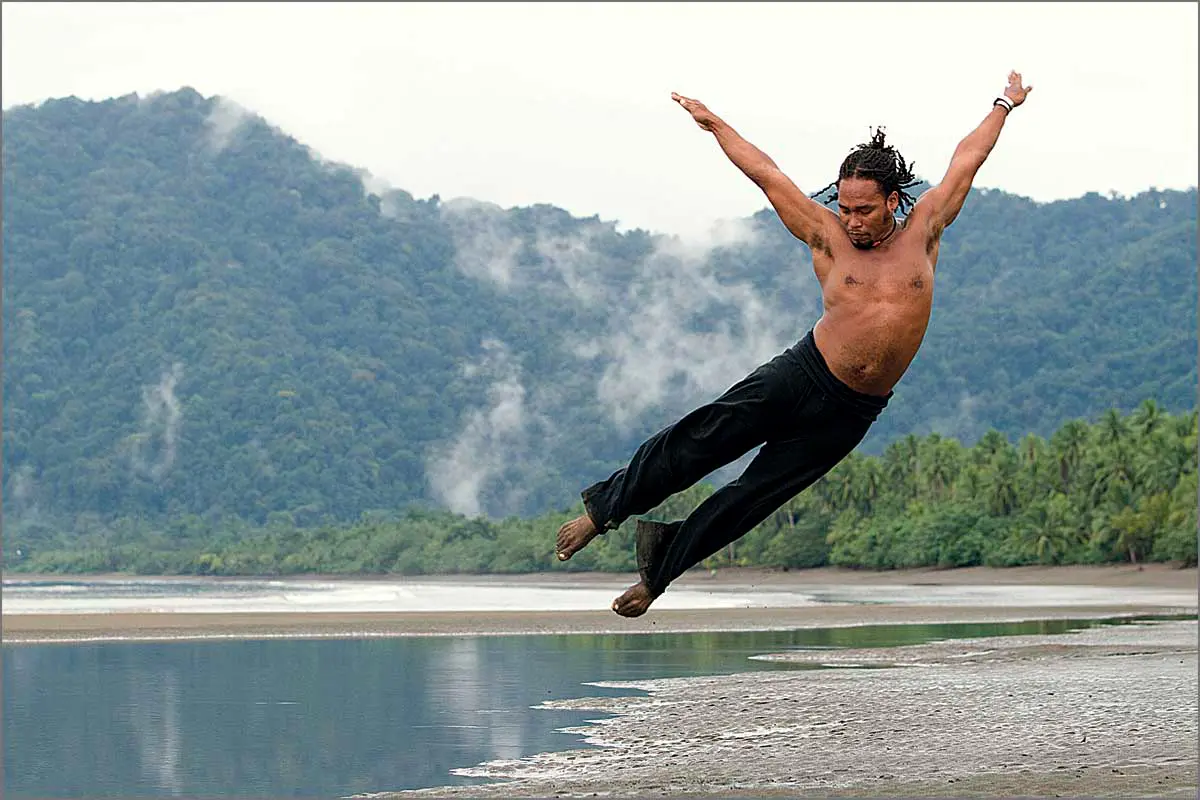
The first Plataforma Chocó was created by the Cartagena-born dancer Nemesio Berrio—who applied, with Más Arte Más Acción, to participate on a workshop on the African Diaspora at the Ecole des Sables, in Senegal, directed by the choreographer and dancer Germaine Acogni—as a dance laboratory with women from the community of Coqui, combining stories of the body, cultural traditions, and joie de vivre in a unique experience. Later, Berrio continued this work with dance students from Universidad de Antioquia in Medellín.
Brazilian artist Marie Ange Bordas, who has long worked with communities displaced by armed conflicts in Africa and Asia, was invited for the second Plataforma Chocó in February of 2011. It was a lab/workshop with the community of Termales, where issues of collective and personal memory, the place of tradition, and encounters between people were explored.
The Chocó Base
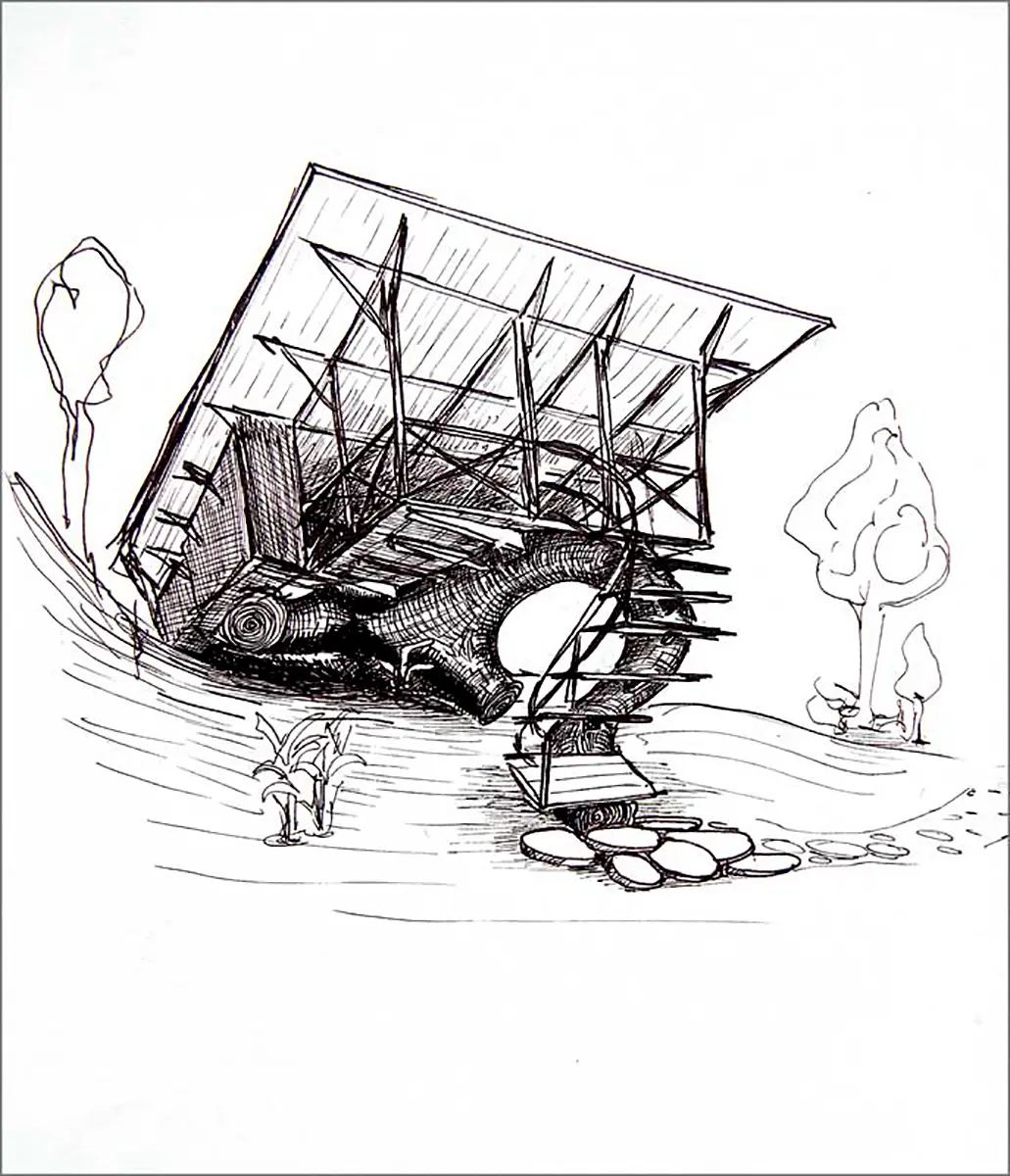
As demanded by the space for action and the mental space it offers, Plataforma Chocó has a concrete physical base. With the support of the Hivos, Mondrian, and Doen Foundations, and through the Arts Collaboratory, Dutch artist Joep Van Lieshout, director of the Van Lieshout Atelier in Rotterdam, was invited in 2011 to work alongside Fernando Arias in the design and construction of the Base Chocó. Van Lieshout, who has been working on the reinvention of the industrial revolution in a post-apocalyptic future, designed a habitable space to be built on the fallen tree with which a canoe was constructed 60 years ago. The design follows the shape of the tree in an organic way, adapting itself to nature, or at least to a natural object intervened in a past that is near and remote at the same time. Initially, Van Lieshout had proposed the construction of a white cube in the middle of the forest.
A place for artists to think and reflect, somewhat ironically, about art. Perhaps it bears mentioning that during the process of construction of the house on the fallen tree, I asked Van Lieshout whether what he was making was a nest, and he answered: “No, but it could be a nest surfing on a tree.”
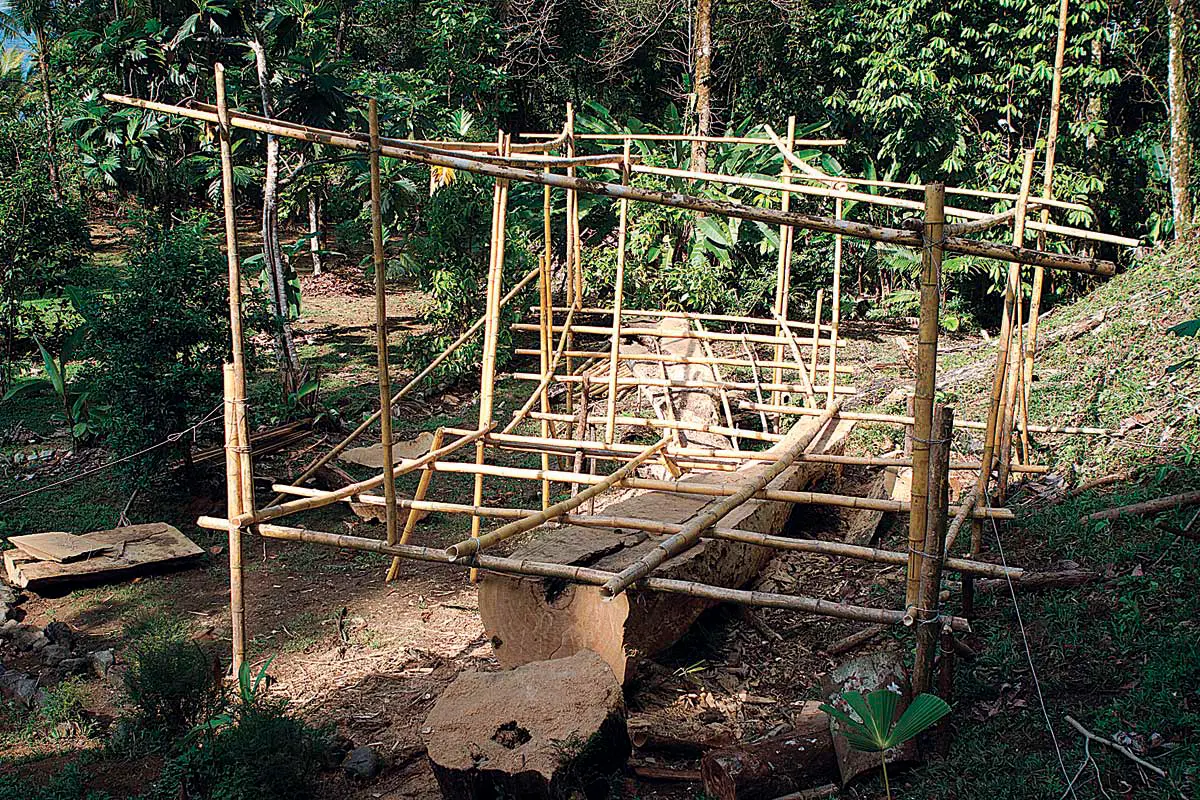
With these three guest artists—one Colombian, one Brazilian, one Dutch—Más Arte Más Acción began the central body of its program, which consists of extending invitations to unique personalities for a singular encounter with the region, and proposing to the region a singular encounter with them. We cannot help but think of Rousseau’s “noble savage,” of Thoreau’s Walden, or The Dharma bums of Jack Kerouac: what makes Plataforma Chocó so unique and appealing is this utopian aspiration to connect with our hidden side and a certain degree of idealistic stubbornness.
Both Bordas and Berrio complemented and presented their experiences at Casa Tres Patios in Medellín for two extra weeks; on their part, Van Lieshout and Arias gave a talk at Lugar a Dudas, in Cali. This will be another feature of Plataforma Chocó: the possibility of working through networks—spaces, institutions, and people, in Colombia and across the globe—that is constantly evolving and transforming. It must be mentioned, however, that unlike Lugar a Dudas and Casa Tres Patios, Plataforma Chocó is not a place for artistic residences.
From a unique site characterized by its biodiversity and beauty, but also by enormous resources that threaten it with disintegration (forests, fisheries, mining), Plataforma Chocó intends to offer a physical and mental space for utopia, creation, and an encounter with realities that, for those of us who inhabit the so-called “civilized world,” are unknown and strange.
SANTIAGO RUEDA FAJARDO