
Dr. Leslie King Hammond, co-curator of The Global Africa Project, has suggested this exhibition has had a gestation period of roughly 30 years, and given its complexity and ambitions, one can see some truth to that claim. Back then it was still a hard sell to find any representations of African artistic culture in museums outside of ethnographic displays and Hammond and her co-curator Dr. Lowery Stokes Simms were already questioning the way the story was being told. Among their dissatisfactions was the way the very concept of “African” was being defined, particularly following geopolitical and post-colonial divisions that viewed Egypt and other northern countries as culturally distinct or part of the “Middle East” and everything south of the Sahara as “African.” Another issue was how the art of these regions was consistently focused on the ancient or traditional folk practices that lent themselves most conveniently to a Western construction of the “primitive.” While in recent decades institutions such as New York’s Museum for African Art endeavored to offer a new paradigm for the presentation of art from the continent, many times its exhibitions were torn between an art historical versus an anthropological approach and it also seemed to delimit its definitions of what could be considered “African.” It is perhaps telling that visitors to that museum were often more engaged with the objects in the store than in the exhibitions that lay beyond, although some sections of the GAP exhibition certainly owe a debt to past shows from that museum, such as the works devoted to hair.
There may be no institution better suited for the type of exhibition planned by Hammond and Simms than the Museum for Arts and Design. Formerly The American Craft Museum, the MAD’s new vision is that all material culture is equal and all cultural manifestations are related, connected by fundamental principles of design and expression. This broader view of visual culture, one that deconstructs more traditional curatorial boundaries and hierarchies have been experimented with by other institutions such as The Tate Modern, which has broken with the teleology of historicist narrative in the display of its permanent collection, and The Brooklyn Museum whose modern and American collection is displayed thematically bringing together all eras and curatorial departments within each gallery. The MAD is dedicated to this approach throughout the entire museum, and this encyclopedic universality is embraced wholeheartedly in this exhibition. It is also of little surprise that one of the guiding visionaries behind this exhibition is Simms, one of the most prominent African-American female curators working today. In her own career, Simms has walked the fine line of being racially conscious and representing both her race and sex, but also refusing to be delimited by such definitions and doing groundbreaking exhibitions on artists such as Stuart Davis while working as a curator at the very white and largely male Metropolitan Museum of Art. Just as Simms has refused to allow herself and her work to be pigeonholed or narrowly defined, so she chooses to see African culture, indeed “African” itself, in a broader context.
One of the problems of addressing contemporary culture in Africa is in making this vast pluralistic entity fit within compartmentalization. One tends to overlook the fact that Africa is not one country or culture, and is in many ways too vast and complex to treat in one way. Moreover, standard means of presentation frequently fail because national styles are confused by tribal distinctions within each nation, yet a tribal approach often relies too heavily upon traditional “primitive” practices and does not lend itself to a sense of contemporaneity. Furthermore, it would be wrong to ignore how much African art and culture have been influenced by Western practices just as we acknowledge how much Western culture has been influenced by African culture. Yet despite the rich diversity to be found on the African continent as well as the putative global pluralism of contemporary art and design, there remains an African quality, identity, sensibility. In an attempt to avoid conventional departmentalization and other potential curatorial pitfalls common to the display of African art and culture, the exhibition avoids standard labeling and segregation by medium, practice, nationality, or tribal culture. Indeed Simms has commented that to her, for the purposes of this exhibition at least, “Africa” is more of a psychological space than a geographic one.
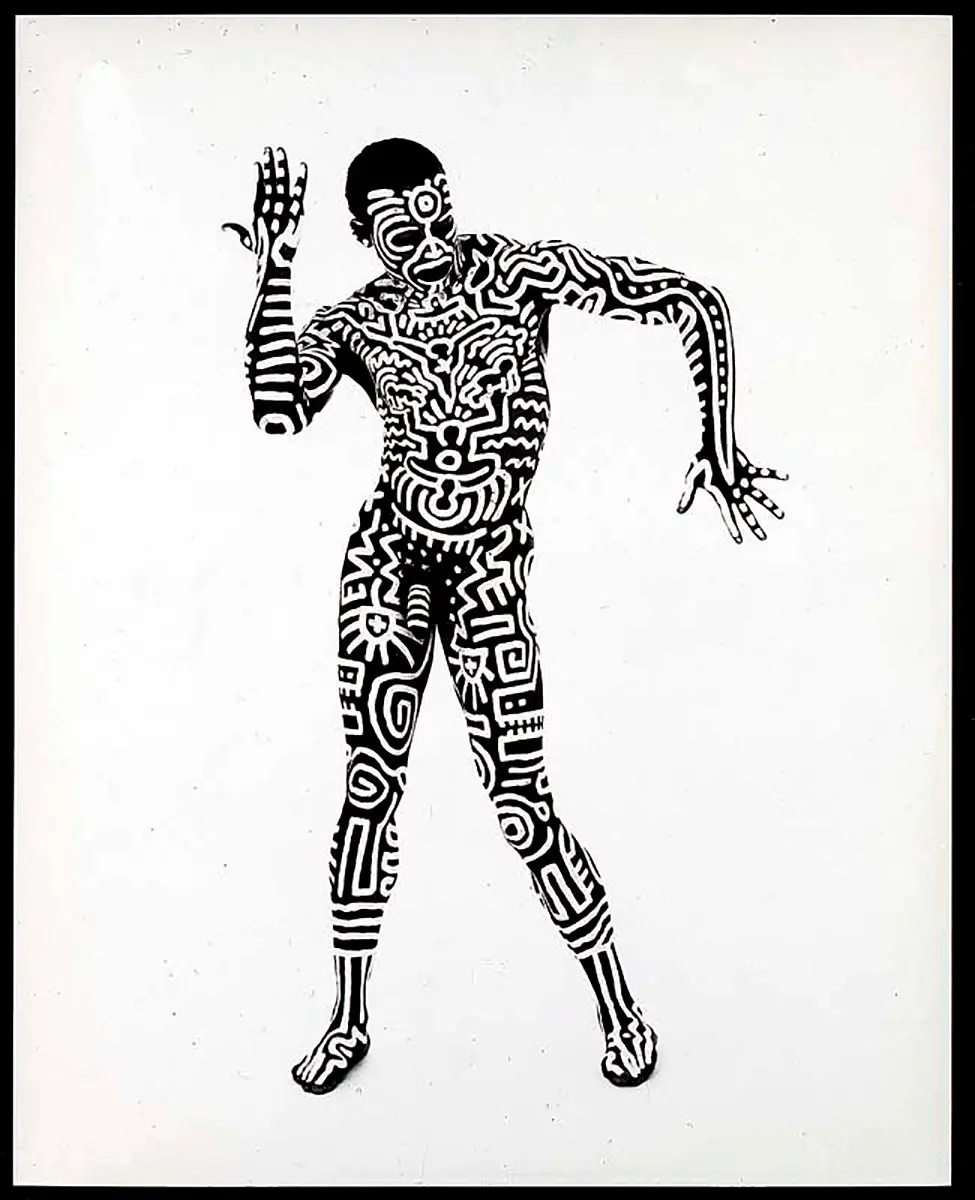
This has led to a show full of rich visual experiences and a plurality of expressions. Choosing to eschew more standard modes of organization, the works in the GAP have been arranged around certain themes. These include Competing Globally, Sourcing Locally, Branding Content, Transforming Traditions, and Intersecting Cultures. As one might expect with categories this broad, many of the works in the show could easily fit within more than one category. One example of this is the photograph by Tseng Kwon Chi of Bill T. Jones covered in body paint by Keith Haring. This Asian photographer has produced a portrait of a leading African American dancer/choreographer/performance artist whose body has been “branded” by the pseudo-tribal glyphic markings of an Anglo American artist. The work is not literally African nor are any of the participants yet it exudes that evasive sense of “African-ness” that the show strives to evoke, and it suggests aspects of “branding,” “intersecting cultures,” and “transforming traditions” all at the same time.
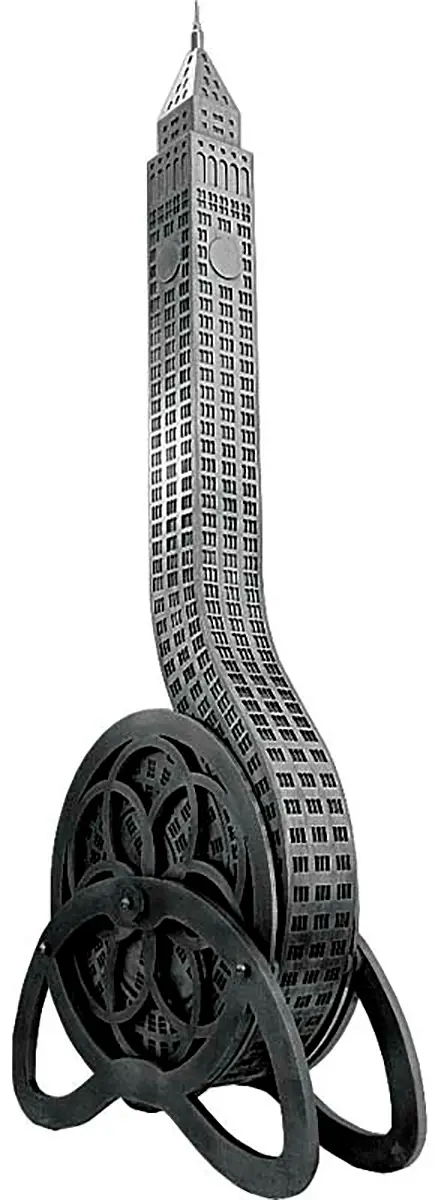
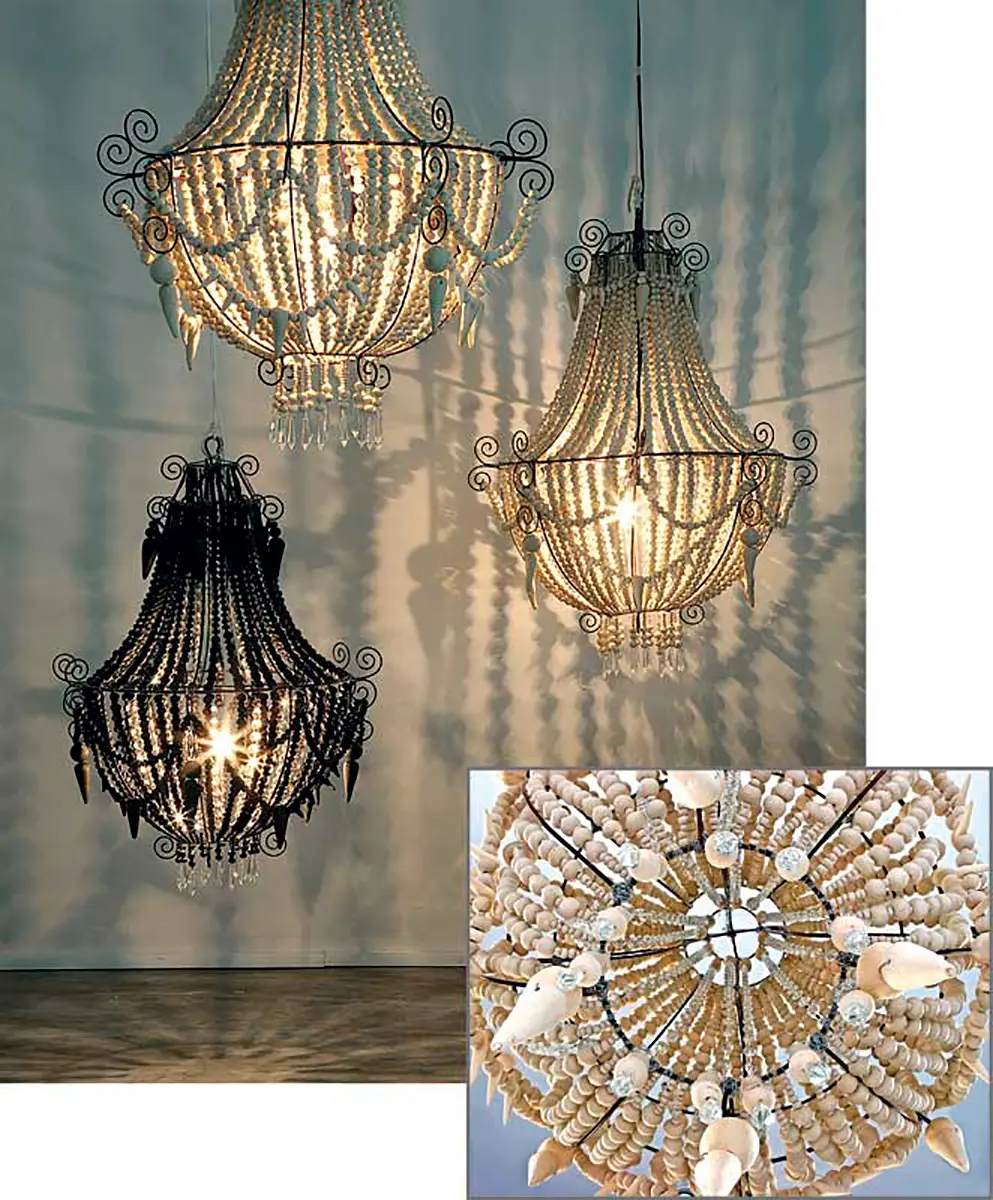
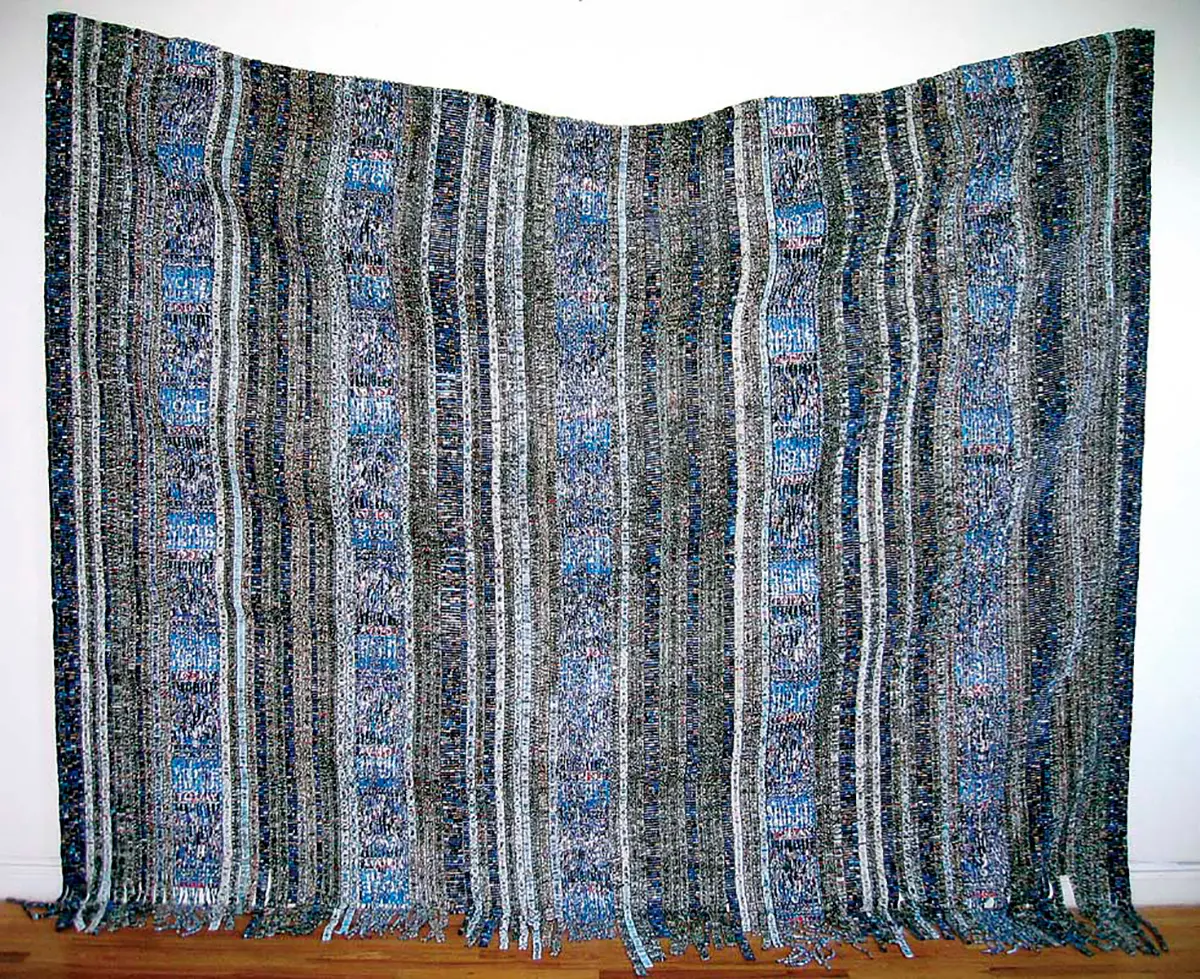
It is interesting that in addition to this photograph many of the works in the GAP are the results of collaborations or ensembles. One such outstanding work is Change, a large hanging beaded tapestry by the Harlem-born Algernon Miller in conjunction with Sanaa Gateja and the Kwetu Afrika Women’s Association Angels from Uganda. Upon closer inspection, the beads are actually made from paper, the source of which was literature and pamphlets from the Obama presidential campaign. Another collective is the company MUD studio from South Africa. Founded by head designers Werner and Phillipa du Toit, the studio is known among other things for its exquisite beaded chandeliers. The du Toits employ indigenous villagers from the Free States to fabricate the ceramic beads (the job of the women) and make the metal wire armatures (done by the men). This collaboration deliberately engages in issues of economic and cultural sustainability, helps reinforce a sense of gender equality, and attempts to broach some of the racial tensions and divisions still prevalent in that country. Another category that suggests concerns with economic power and representation is entitled Competing Globally, with perhaps the broadest range of practices and backgrounds. One artist included here is Cuban-born Alexandre Arrrecha, whose works such as and continue to explore the ideas he helped develop as a member of Los Carpentieros, including examing the intersection of power space and form through pieces that are either very architectural sculptures or very plastic buildings.
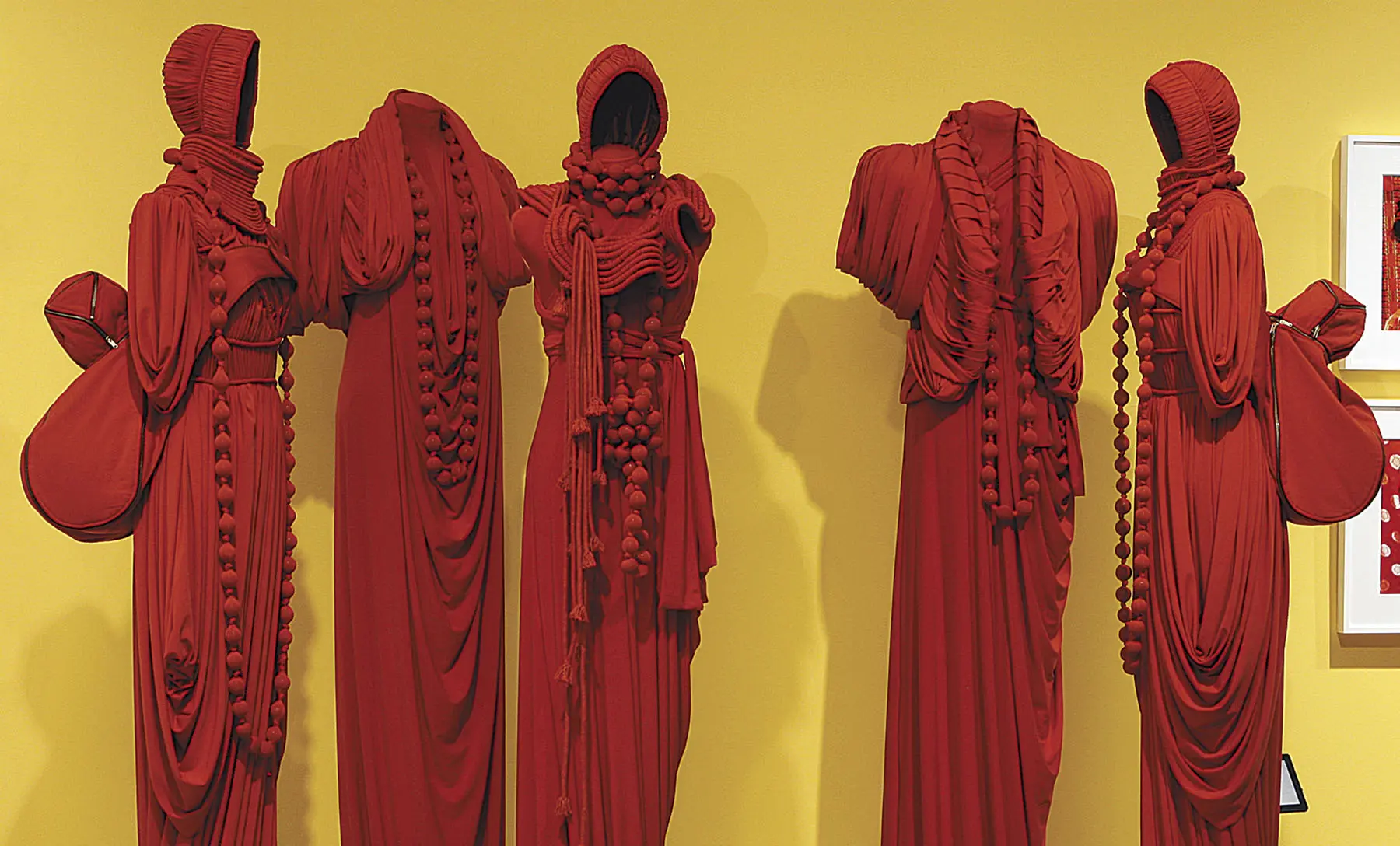
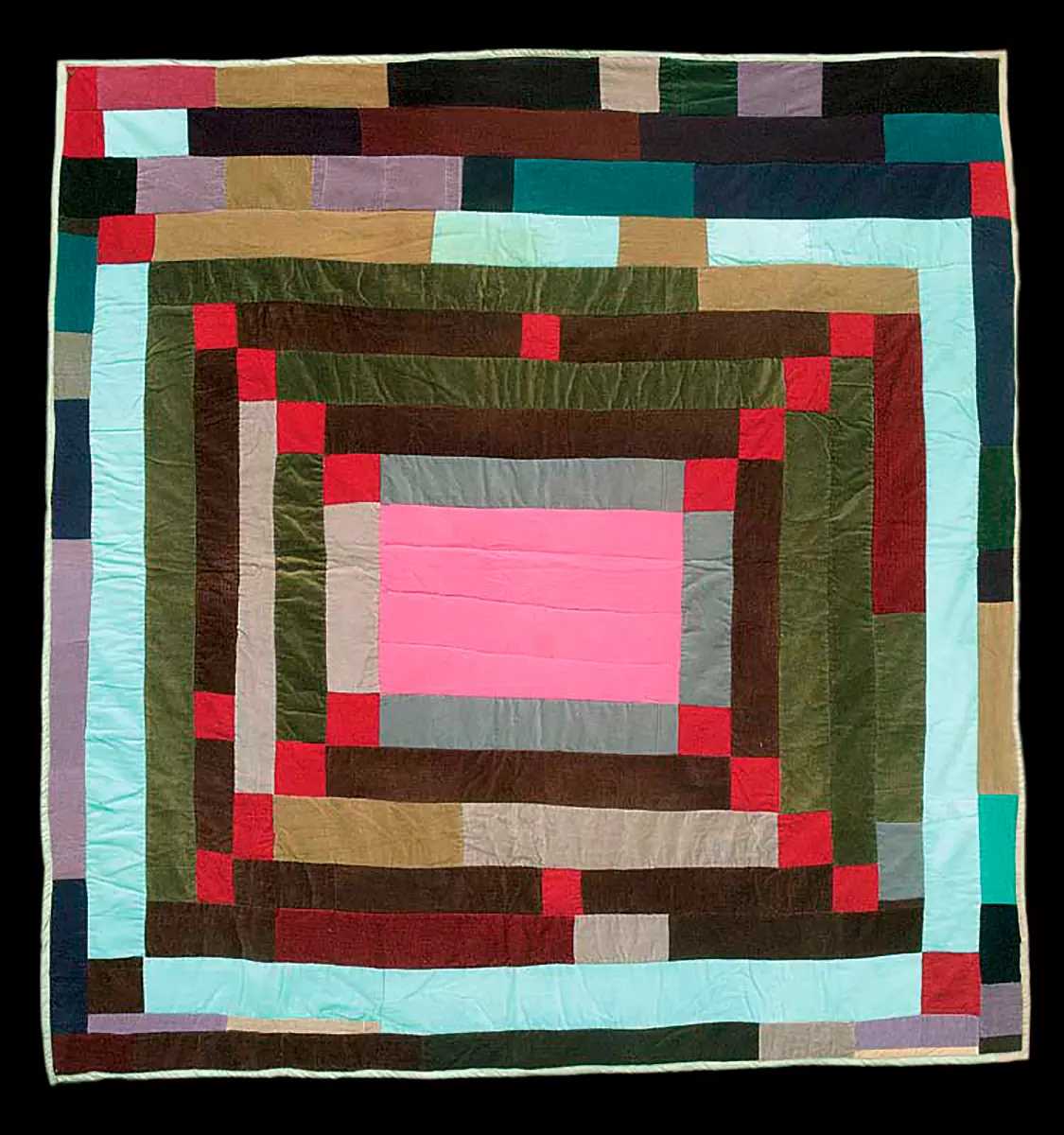
One of the consistently strong areas of the exhibition is the projects relating to fashion. An eloquent standout among these is a group of clothes from the South African firm Black Coffee. This suite of clothes won the 2010 Mercedez-Benz Fashion Week Award and in contrast to much of the other textiles which bear multiple bright colors and a myriad of patterns, is a bold monochromatic red/umber hue. Through what they consider to be a progressive updating of deep regional traditions the designers’ intention is to make clothing that expresses the values of the new, “Rainbow Nation” South Africa. Another visually concise way of bridging geographies cultures and generations in this exhibition is the juxtaposition of quilts from The Siddis Women’s Quilting Cooperative of India with those of Alabama’s Gees Bend Quilting Collective. The shared yet distinct aesthetics of these two disparate groups of women descended from African slaves once again exemplifies the psychic Africa to which Simms alludes.
The GAP is in many ways an exhibition that is easy to be critical of. Although expansive and presented in a generous space, there is always the question in such broad surveys of what has been included and, more importantly, what gets left out. Given the variety of media and their various spatial demands, there cannot help but be some muddying with works visually competing with one another and themes bleeding together, although the show employs colored sections on the walls to help clarify. The curators consciously avoid explicitly defining what they think is African, either politically culturally or more importantly aesthetically, and unless they are suggesting that somehow everything is, that is a bit of a missed opportunity. Tacitly, through their selections, they do suggest that they have a certain idea or standard of what that may be, and it would be nice to see them go out on that limb and declare it. They suggest that the main goal of this exhibition was to raise questions, and while that can be a worthy goal it can also be a bit of a dodge. It is time for the Great African Show that sparks some huge debates with a strong positioned stance, but until that comes along this will do nicely.
JOHN ANGELINE
Adjunct professor of art history, John Jay College and Parsons School of Design.