An active figure in the Brazilian avant garde in the 1950s and 1960s, Lygia Pape’s career began with an investigation in geometric abstraction. She took part in the most significant events related to the history of abstract art in Brazil, such as the National Abstract Art Exhibition held in Petropolis, State of Rio de Janeiro, in 1953. She joined the Concrete movement 1 and was a member of the Frente group, its historical point of reference. 2 In 1956 and 1957, she was present at the two important national exhibitions of Concrete art at the Museu de Arte Moderna in São Paulo and the Education and Culture Ministry in Rio de Janeiro, events that demonstrated the maturity and strength of Concrete art in the country.3
In 1959, Pape was among the signers of the Neo-Concrete Manifesto, alongside important figures of the Carioca art scene4 of the time, such as Hélio Oiticica, Ferreira Gullar, and Lygia Clark, among others. In 1960 she was invited to the First International Exhibition of Concrete Art in Zurich, Switzerland.
In her subsequent trajectory, Lygia Pape’s solidly independent production retained the marks of her Neo-Concrete experience and achieved significant recognition in the contemporary art scene. She used to say, jokingly: “I became a freelancer; I like to feel strewn about in the world.” 5
As part of the Neo-Concrete movement,6 in the late 1950s and early 1960s, Lygia Pape carried out experiments that defined the art of the period.
The Rio de Janeiro avant-garde promoted free experimentation and subjectivity and, after breaking the formal space of the work of art, started to work structurally with the surrounding space, reaching into bodily, performative experiments. In Neo-Concrete art, the sensorial dimension became the fundamental vector of an artist’s creative process, and viewer participation became the central premise in the reception of art.
Regarding Lygia Pape, it is important to underscore the fact that starting in the late 1950s the Rio avant-garde had adopted Merleau-Ponty’s philosophical positions, as well as Susanne Langer’s and, somewhat later, Foucault’s. For Neo-Concrete artists like Lygia Clark, Hélio Oiticica, and Lygia Pape, in particular, the perception was central to the production of the work of art. They valued the dimension of the sensible, and understood the body as the site of “perceptual consciousness.”7
In the work of these artists, such foundations established a dynamic between art and life. The body and the world derive from a common matrix. The body is a dimension of the subject; through it, the subject integrates itself into reality. A plurisensorial experience is projected towards the interlocutor with the proposal to “live the body”. In Lygia Pape, this is of the essence. The body is the key to experience the sensible world and establish a relationship with space. We arrive at cognition, at a subjective relationship with the world, through our corporeal experience.
The states of the body are various: body-subject; body-object; lived body; body-thing; body capable of perception; body-for-itself; body for others; the phenomenological body that constructs meaning.
It is important to note that the moment of emergence of Neo Concrete art coincided with an imbrication of the phenomenological and constructive dimension. Lygia Pape’s work is exemplary in this connection.
It bears remembering some of Pape’s specific works of the period, which are historical referents for Neo-Concrete art in Brazil and foreshadow some features of the new semantics in the language of international contemporary art.
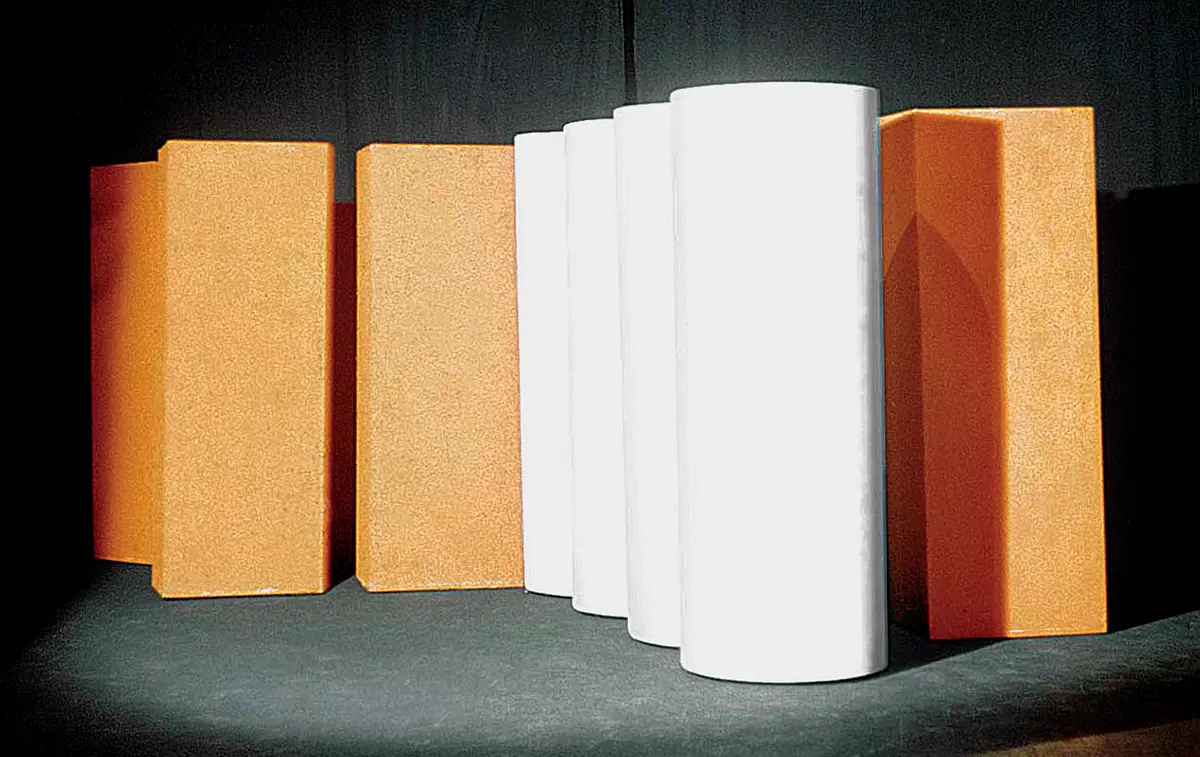
One of those works is her Neo-Concrete Ballet, of 1958, created on the basis of poetry. In this work, inspired by Reinaldo Jardim’s poem Olho/Alvo, large geometric volumes in various colors occupy the stage and dislocate themselves in space thanks to the action of dancers hidden inside them. The movements of the dancers are slow, forward, or backward or crossing paths. A conceptual articulation takes place. The dance generates a formal visuality that joins space and poem, and everything becomes structural raw material. 8
The artist gave us an illuminating explanation about the Neo-Concrete Ballet: “It was created in 1958, in the Special Presentation of the Neo-Concrete Movement in Rio de Janeiro. It was staged alongside Reynaldo Jardim, and produced by Gilberto Mota, who was a dancer. The work was structured around Reynaldo Jardim’s poem Olho/Alvo, which consists of two words arranged in space into a choreography. For the word “eye” I created four cylinders, 2-meters tall and 70 cm in diameter each; for the word “white”, four parallelograms painted with minium (lead tetroxide), all in wood and with rollers at their base, which gave the movements a sense of beauty and synchronicity. We used professional dances from the Municipal Theatre. And something interesting happened: our greatest difficulty was to convince them to do the show while hidden inside those objects because our intent was to capture the motility of the body, its potential to dislocate through space, freed from the presence of the human figure; this is to say, to capture the movement that the body is capable of executing… The music for the show was created by Gabriel Artusi, a heteronym of Reynaldo Jardim, and it was two tones, a kind of percussion on piano, all very rhythmic…” 9
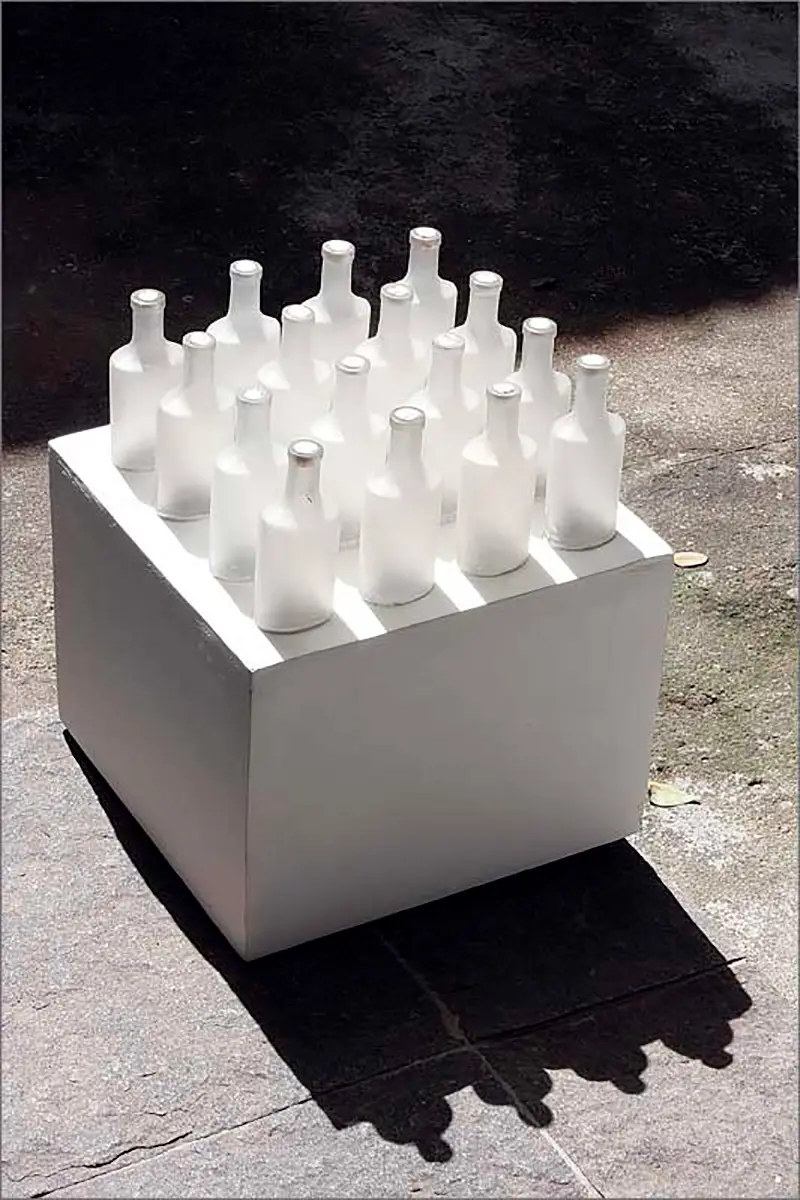
Another work that needs to be remembered is the Book of Creation, from 1959. There, Lygia Pape worked within the parameters of non-verbal communication. Her idea was to create a formal narrative about the creation of the world, in a conceptual dimension, albeit with words being very present in the book and playing an important role in the project. Each page presented a structural strategy —there was an articulation that required playful assemblage on the part of the reader/viewer. The latter could trigger, in his or her sensorial experience, a variety of interpretations, according to their own particular experience. The book is an “artistic creation” about the “creation of the world.”
Regarding this project, the artist says: “I invented this book in order to narrate the creation of the world in a non-verbal way. The book is comprised of 30 x 30 cm units, all of them moving from the plane towards space, meaning that as the book is manipulated, the structures are assembled and the reading proceeds through the colored shapes… two readings are possible: to me, this is the book of the creation of the world, but for others, it could be just the book of creation.” 10
Working with the sensorial dimension in the execution of her proposals, the use of the body became an increasingly more important strategy in Pape’s aesthetic project, be it in the creative process, be in the reception of the work by viewers interacting with it. In order to understand Pape’s work, it is essential to understand the importance of the performative quality of her creative gesture. Here we cite Helio Oiticica, one of the members of the Neo-Concrete Movement.
This performative quality is a “vital act,” Oiticica said, commenting on the foundations on which the movement’s art rested. This established the sensorial procedure as an essential requirement for the work of art, the supposition that body and mind were to act in perfect synchrony. It is with such “raw materials” that Lygia Pape, perfectly inserted within the Neo-Concrete avant-garde, created experiments that promoted aesthetic situations to be experienced by the public.
Lygia Pape called the procedure through which the artist gives new meaning to forms a “poetic act.” Ana about her creative process, she said:
“It is not easy. I always think about the work before executing it. It is an entirely mental process. While it remains unresolved, I continue to work on it for days and months. I test the demands of the work mentally. I consider the most adequate material for it… For example, when I did the Book of Creation, it was already resolved, meaning that I already knew what each unit would be like, its shape, colors, how to crop it, all of it was finished in my mind. After that, it was necessary to execute it technically… the creative process is always mental.” 11
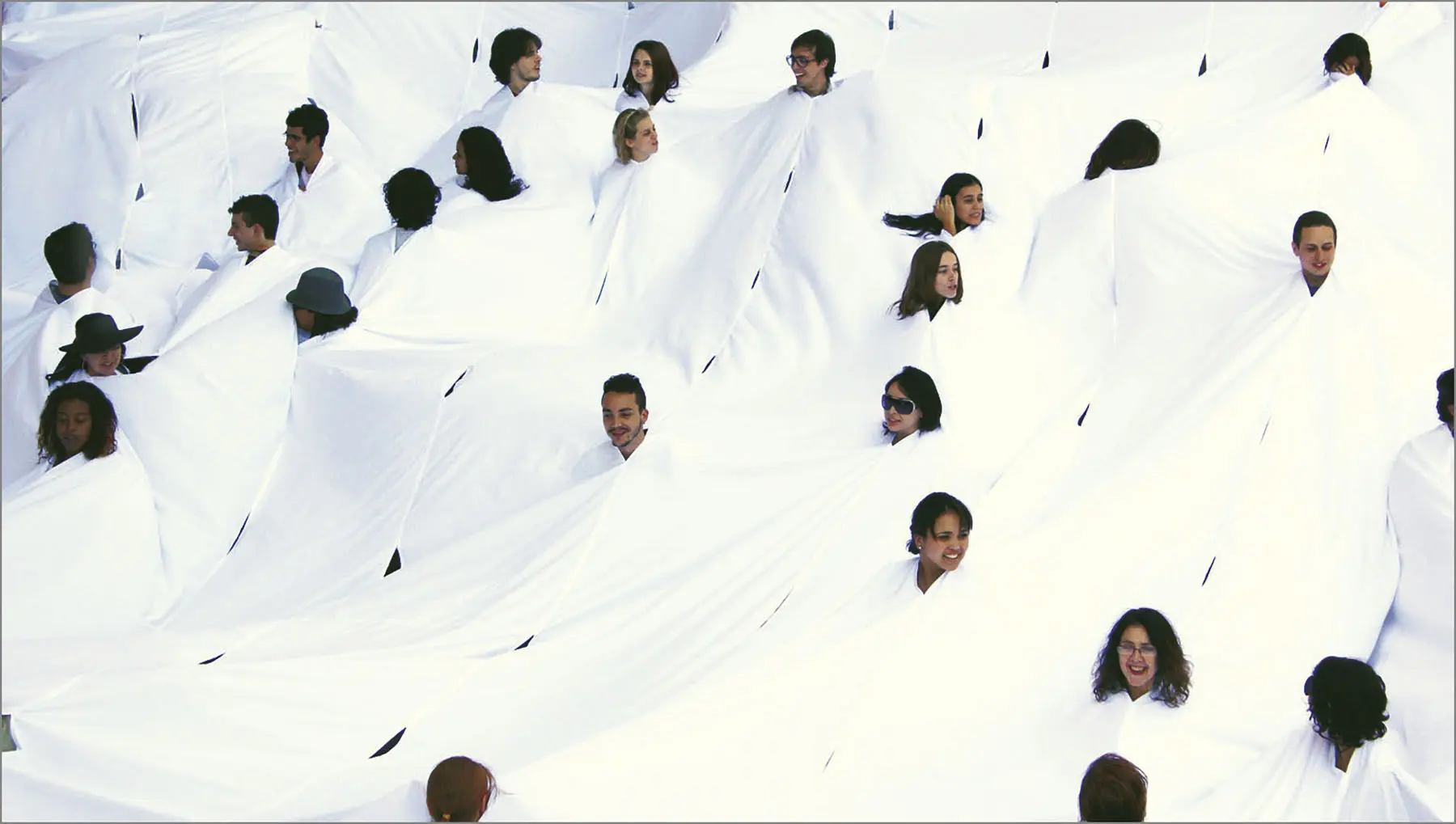
The artist expected a subjective reaction from the receptors of her work; the viewer is no longer someone who contemplates, but a committed receptor: social outcasts are incorporated into the work. Dated in 1968, the year when the military dictatorship hardened in Brazil, Divider proposed an exploration of the repressed condition of people in social reality.
This project was re-edited as a point of reference for that period at the 29th São Paulo Biennial, held between September and December of 2010 under the slogan "Art and Politics." A video of the performance was presented in a central location within the exhibition space, and the performance itself was staged outside the building on opening day, with the spontaneous participation of the public. The work was once again given a social use.
According to the artist, declaring in 1997, the Divider project was initially conceived for its presentation on an entirely white gallery. The idea was to set a giant plastic awning, with holes ripped through, above the exhibition space, lowering it towards the entrance. People entering would have to crouch and then seek a space—one of the slits—through which their head could be stuck. There would be mirrors to each side. There would also be a frigid wind blowing overhead and warm air below. This was to provoke a thermal and physical division. The mirror would show a large cloth filled with heads, without a view of the bodies. And the people could converse.
Due to a lack of funds, Lygia Pape was unable to present this project in a gallery. Instead, she developed a version for public space. She bought a 30 x 30-meter piece of fabric, opened the slits, and carried out the performance with children from a Rio de Janeiro favela. She took the fabric to an area close to the favela and then, on flat terrain, she had the children stick their heads through the openings. The bodies were hidden from sight, but, talking to each other all the way, the children started to move. The slits had been opened on a mathematical pattern, at equal distances.
According to the artist, the Divider sought to show, metaphorically, the massification of life, the obstacles to communication between people enclosed in their own isolating spaces and interacting only partially with each other.
We can also find this aspect of Pape’s work in EAT Me — Gluttony or lust?, from the following decade (1975).
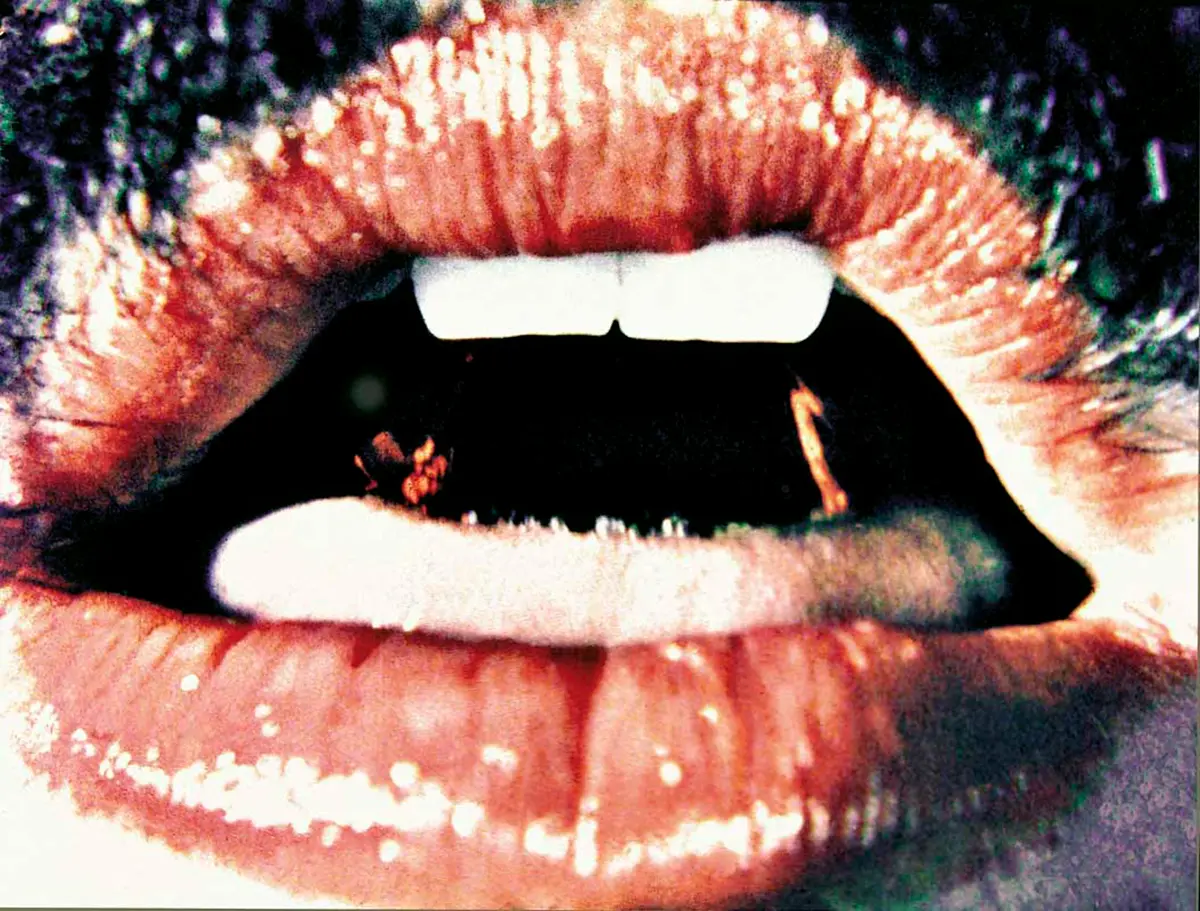
EAT Me — Gluttony or lust? is a short, 9’ film in 35mm built using elements that Pape called "objects of seduction:" neon, hair, teeth, ribbons, lipstick. I this proposal, the artist framed women as objects for consumption. About this project, Pape said:
“The elements used for this project refer to women-as-object and her use in consumerism: the codified fruit of behaviors that shape consumer society’s vision according to patriarchal patterns. It is not a manifesto or a thesis. I widen the project at the level of the ‘epidermization’ of an idea: the sensorial as a mode of knowledge and consciousness.”12
In the EAT Me project, presented in Rio and São Paulo, Pape built a situation in two spaces with opposing characteristics: the gallery (an institutional space for art, the physical space where an exhibition takes place), and outside the gallery, via an electronic medium, a 30’’ ad inserted in the daily programming of a TV station (a mass-communication medium). In this second space, it is possible to enter into contact with an unidentifiable public, with the masses. But for Lygia Pape, the home, where TV is watched, is also a poetic space where artwork can be displayed. As she put it, a “synthetic exhibition” is thus created, and a primordial encounter between art and life takes place.
Interlaced in Pape’s projects through the end of her life we find the vectors of sensorial experience, conceptualism, and social considerations. One of her last works was presented at the 4th Mercosur Biennial, in 2003. 13
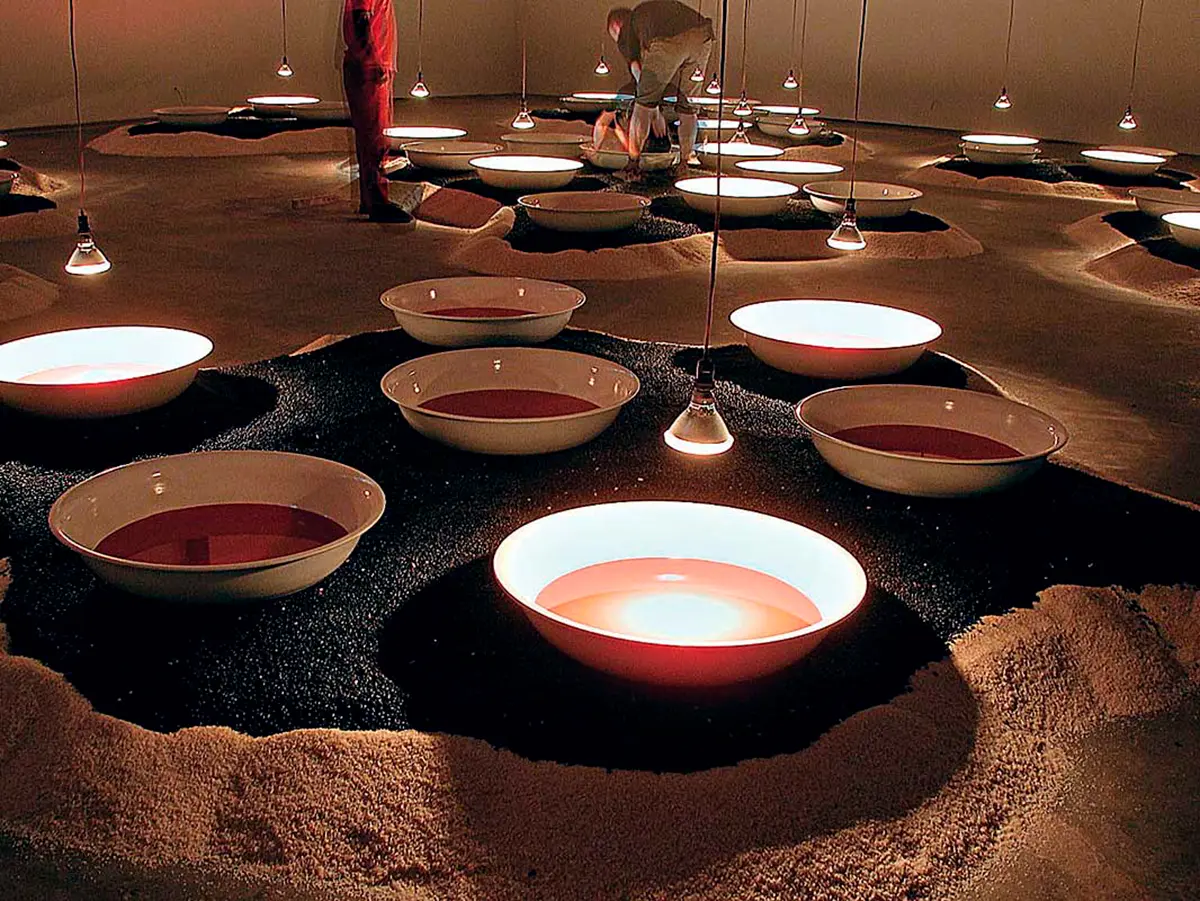
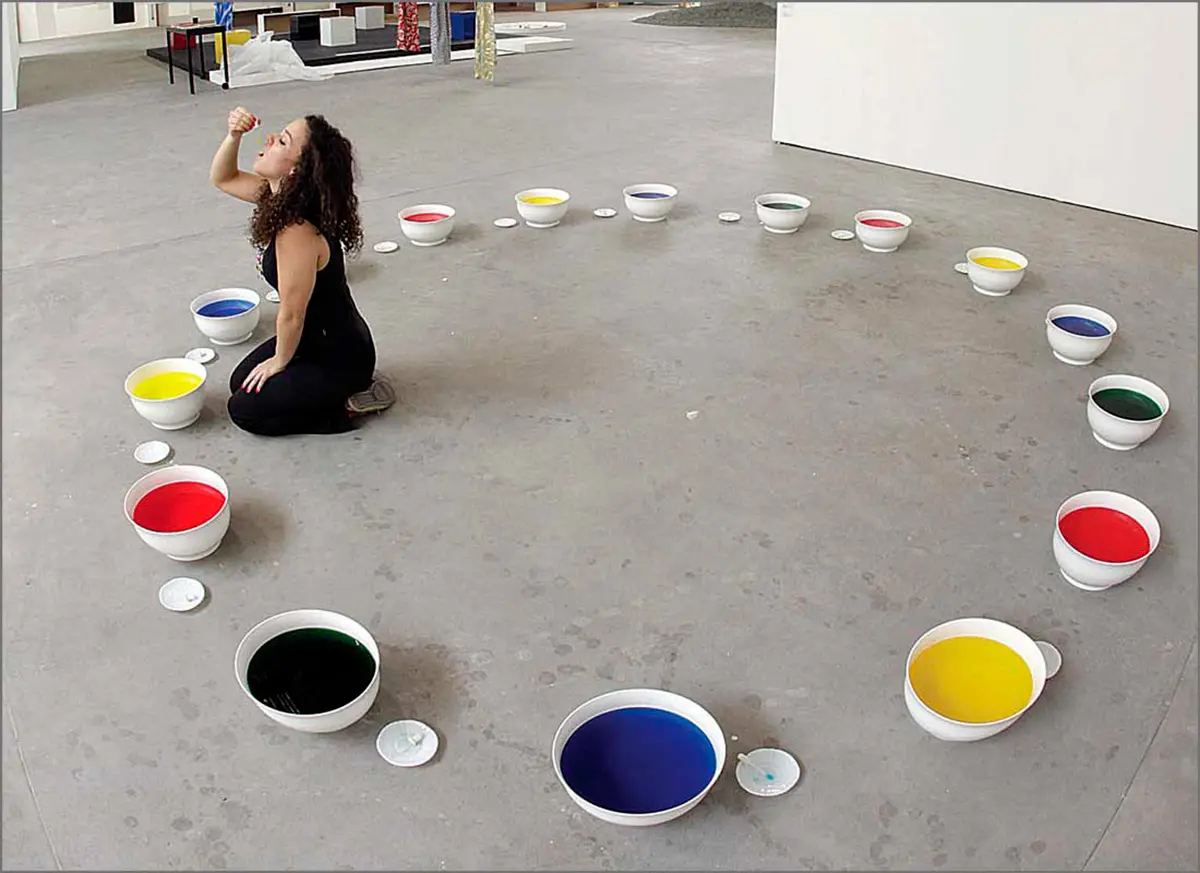
Invited by the show’s curators to take part in the thematic segment titled Genetic Archaeology, 14 Pape conceived the installation DNA, a poetic space dealing with the genetics of Brazilian populations. The work was comprised of white plates (of the kind used in hospitals) filled with a red liquid that referred to blood. The plates were placed on a floor covered with rice and beans, staples of the daily diet of Brazilian’s. The grains were arranged in piles or strewn on the floor. Through this construction, the artist explored the topic of miscegenation in Brazil and the unique ethnic and cultural characteristics that result from it.

It is important to note that Pape’s work has as one of its essential points of aesthetic reference her idea of the poetic space, a space of freedom with a strong ethical dimension.
Explaining her creative process, Pape referred to the idea of the poetic space as “any language at the service of the ethical.” In terms of how her projects were structured, she said she based them on the mathematical principle of the Moebius strip, which allowed her to move, to slide, over any language of the ideological field of her interest. 15
For Pape, the poetic space was a dynamic, yet ambiguous continuum. It “should provoke people at a private level—a permanent inside and outside. It is an internal and external space that combines and feed on each other.” The poetic space is not limited to an objective site; it transcends it to establish new meanings.
Lygia Pape left behind a highly significant body of work in the contemporary Brazilian art scene, relevant to this day. The public was able to revisit the strength of her work in the context of the most recent São Paulo Biennial, which sought to highlight, within the topics of art and politics, the essential pillars of the art of our times.
NOTES
1. In Brazil, Concrete Art was the most important movement of the 1950s, with repercussions and historical importance that are comparable to those of Modernism in the 1920s.
2. The Frente Group brought together young artists working in Rio de Janeiro at the time.
3. These shows also brought to the fore the significant differences in the practice and the production of Concrete artists working in Rio and São Paulo.
4. Carioca is a common term referring to Rio de Janeiro.
5. In LYGIA PAPE: Palavra do Artista. Interview with Lucía Carneiro and Ileana Pradilla. Rio de Janeiro, Nova Aguilar, 1998. p. 22
6. Poet and art critic Ferreira Gullar, one of the movement’s main figures, defined with great precision the contributions of the Rio group to Concrete art. Alongside poet Reinaldo Jardim and art Critic Theón Spanudis, as well as artists Amílcar de Castro, Franz Wiessman, Lygia Clark, and Lygia Pape, Ferreira Gullar signed the Neo-Concrete Manifesto, an essential point of reference in the history of Modern art in Brazil. There, we read: “The Neo-Concrete, born from a need to express, using the structural language of the new visual arts, the complex reality of modern man, denies the validity of scientistic and positivist positions in the realm of art, ad resituates the issue of expression, incorporating the new ‘verbal’ dimensions created by figurative constructive art…; for the Neo-Concretes, the reality of work of art as an entity is not exhausted by the external relationships between its elements, and is only achieved in full through a direct, phenomenological approach.” In this way, this group signaled its differences with the São Paulo cohort.
See: HERKENHOFF, Paulo. Poetics of Perception – issues of Phenomenology in Brazilian Art. Exhibition Catalog, São Paulo, 2007-2008, Rio de Janeiro and Curitiba, 2008. Phenomenology of Perception and later The Visible and the Invisible, by Merlau-Ponty, as well as Philosophy in a New Key and Feeling and Form, by Susanne Langer, are key texts for Brazilian Neo-Concrete art.
7. Reinaldo Jardim is a poet and a member of the Neo-Concrete movement.
8. In the 1950s and the early 1960s, the Concrete and Neo-Concrete movements evolved establishing interfaces between the experiences of the visual arts and of poetry.
9. In: LYGIA PAPE. Rio, Funarte (Contemporary Brazilian Art collection), 1983. p. 45. The work was first presented at the Copacabana Palace.
10. Ibid., p. 46
11. In: LYGIA PAPE: Palavra do Artista. Op. Cit., p. 26-27
12. Catalog of the exhibition at Arte Global gallery, May 11-28, 1976 (blank folios)
13. She died in 2004, at the age of 74.
14. This was one of the proposals presented to contemporary artists invited by the Mercosur Biennial curators: Nelson Aguilar, General Curator; Franklin Pedroso, Brazilian curator.
15. Ibid. Dated April 21st, 1976.
* All images illustrating this article are courtesy of Projeto Lygia Pape.
LISBETH REBOLLO GONÇALVES
Professor at the University of São Paulo and President of the Brazilian Association of Art Critics (AICA/Brazil).