
Approaching recent Cuban art, we find ourselves confronted with a noticeable degree of heterogeneity and indeterminacy, and although we can’t discern now the wide hegemonic lines that characterized previous decades, we do feel a sense of continuity in the critical orientation of the art made in the island. Contextual references have a specific valence in artistic discourses, especially in the sociological veneer and in the video. Nevertheless, obliqueness has become the norm, as has working with more universal themes in favor of communicability that some see as connected with the needs of the market. After the first decade of the new millennium, the coordinates are too diffuse to help clarify pathways in established and emergent oeuvres. It is precisely in this period of specific historical and cultural contingencies that the poetics of Yoan and Iván Capote have gained ascendance and consolidated, inscribed as they are in a domain that is close to post-minimalism in the local scene, with the preeminence of conceptual elements.
The Capote brothers shared space at Havana in 2001 with the exhibitions El diseño de lo híbrido and Armonía de contrarios; this was not only their first joint presentation—and in one of the city’s most legitimacy-conferring spaces, to boot—but their proposals reflected an integrated vision, a communion of concepts that up to that point had taken place only in private, given their blood connection and their exchanges as art students, at the time part of Galería DUPP. 1
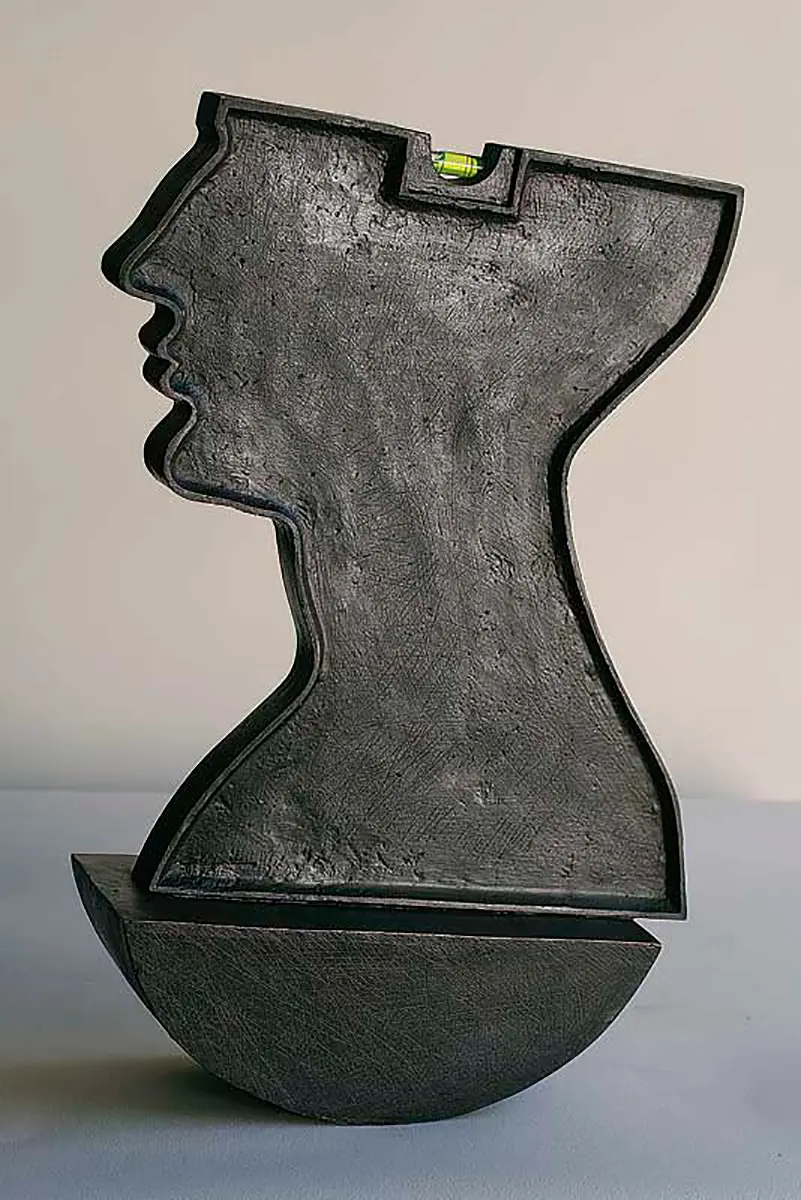
The conceptual roots they shared was visible in each one of the objects included in their shows, yet the value that Yoan Capote (Pinar del Río, 1977) assigned in El diseño de lo conceptual to space as an integral element of the work, his degree of interaction with the viewer—ready-mades of action or interactivity— and the diaphanous communication of his intentions through the (re)design of everyday objects, gave his art an extroverted and open character, exteriority in which the social element expanded as a background. In contrast, Iván Capote’s (Pinar del Río, 1973) more withdrawn art in Armonía de contrarios, an invitation to enjoy the meditative meanders of an object-centered interiority, seemed to have distilled thought to a high degree of purity into simple “machines” whose actions built symbolic statements calling us to private reflection and visual rejoicing.
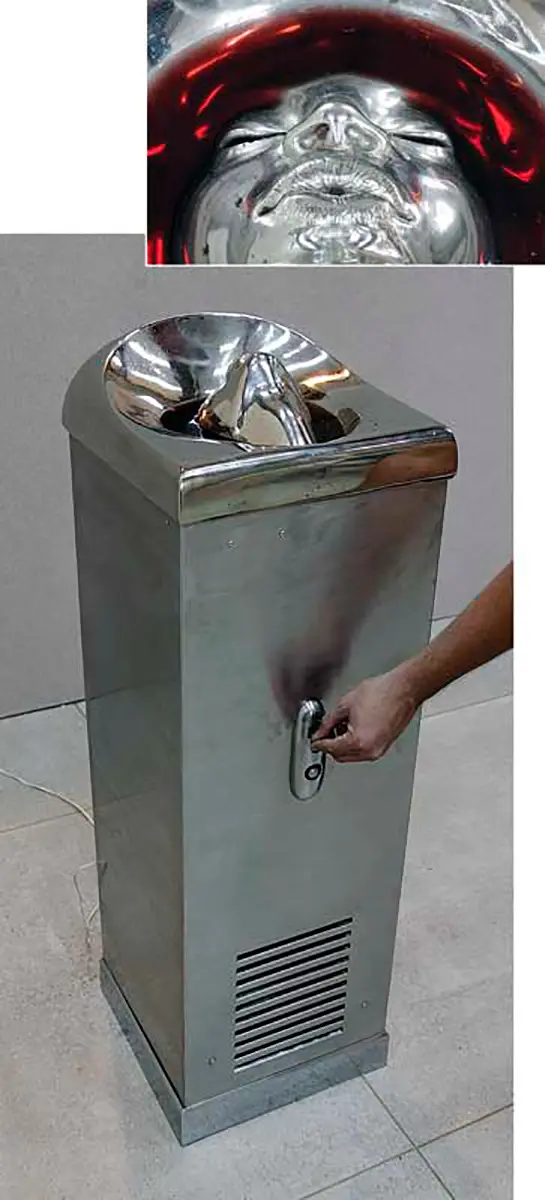
At the set of Protocolo, Yoan Capote offered viewers the option of sitting at the negotiation table, as it referred to the paucity of dialog between countries and between politicians. He also conceived a hybrid bench to be used, his Mueble homovariable; meanwhile, Lagrimal brought a wine that flowed from a female mouth to the mouth of the viewer, after inserting a coin and introducing one finger to activate the metallic drinking fountain. This exquisitely symbolical allegorical object reflected pointedly on the issue of prostitution, evaluating pleasure and pain in connection with sexual commerce.
Iván Capote, on his part, was able to create machines that communicated complex ideas.2 His effective mechanisms in action exhibited visual solutions of great synthetic capacity and full significance. In Historia, the tracing of a line on glass was suppressed in an unending cycle: writing/erasing was a gesture of power that canceled the narrative. With Armonía de contrarios, substances of opposed natures were forced into an impossible union, while Móvil perpetuo was the documentation of a performance that showed the rests of a coin (a US quarter) reduced to dust and the artist’s sweat from breaking it. In this condensed work, born under the heat of the contradictions generated by the circulation of two monetary denominations in Cuba, the movement was an illusion, dependent on a “motor”: an interest (necessity) regarding money, both in life and in the spaces of art.
This joint presentation of the Capote brothers highlighted their coincidences and, also, the divergences between their individual practices. The arguments in those exhibitions, according to their creative norms,3 situated them in communion as conceptual sculptors or, if you will, as creators of visual poetry by means of sculptural objects. Yet contrary pathways were established on the basis of those objects. What in Yoan is an awareness of the external, with his works linked to the social space (with the senses involved in their reception), becomes in Iván an invitation to decode, traversed by a kind of ontological inwardness that canceled the existential void. Such outlining of their identities gains precision when we contrast their more relevant exhibitions: Anímica, Psicomorfosis, and Estados Mentales in the case of Yoan; Aforismos and Sutil in the case of Iván.
With Anímica, presented in 2004 at the George Adams Gallery in New York, Yoan Capote returned to his dialog with the human body but expanding the symbolic force through the compactness of his design and execution. His critical commentary transcended primary references to sex, food, and money, as had occurred with Dinero bilingüe, by mirroring situations of tensions and other economic or political topics in order to follow the course of that (psychic/emotional) state or force that distinguished human activity and whose intimate stage resides in our minds. Emblematic works like Stress, Racional, Locura, and In love (After Brancusi), among others, emerged from the contrast between ratiocination and emotion.
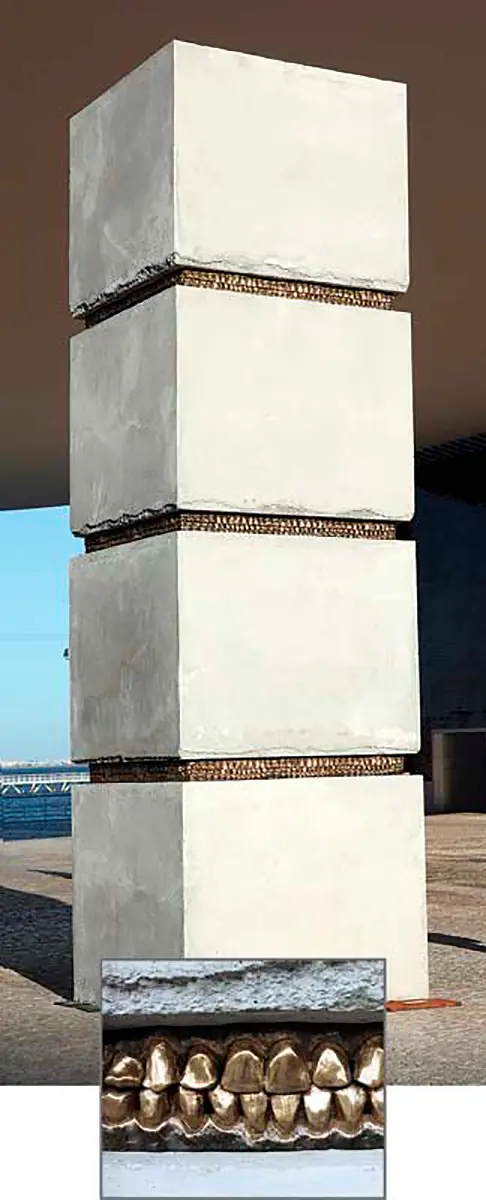
For Stress, Yoan created a column with blocks of concrete. Between these masses supported by gravity, he intercalated a line of teeth molded in bronze. He conceived this sculpture, a monument to the collective experience of stress, on the basis of individual perception of tension. In a different direction, his Racional, by placing a male torso with a head in place of genitalia, exteriorized the individual torn between instinct and reason, pleasure and fear; in turn, Locura defined psychic disturbances through a fragment of a lost brain, facilitating balance. These works, and others like Nostalgia, Casados, Impotencia, and Touch, were unique readings of human experiences.
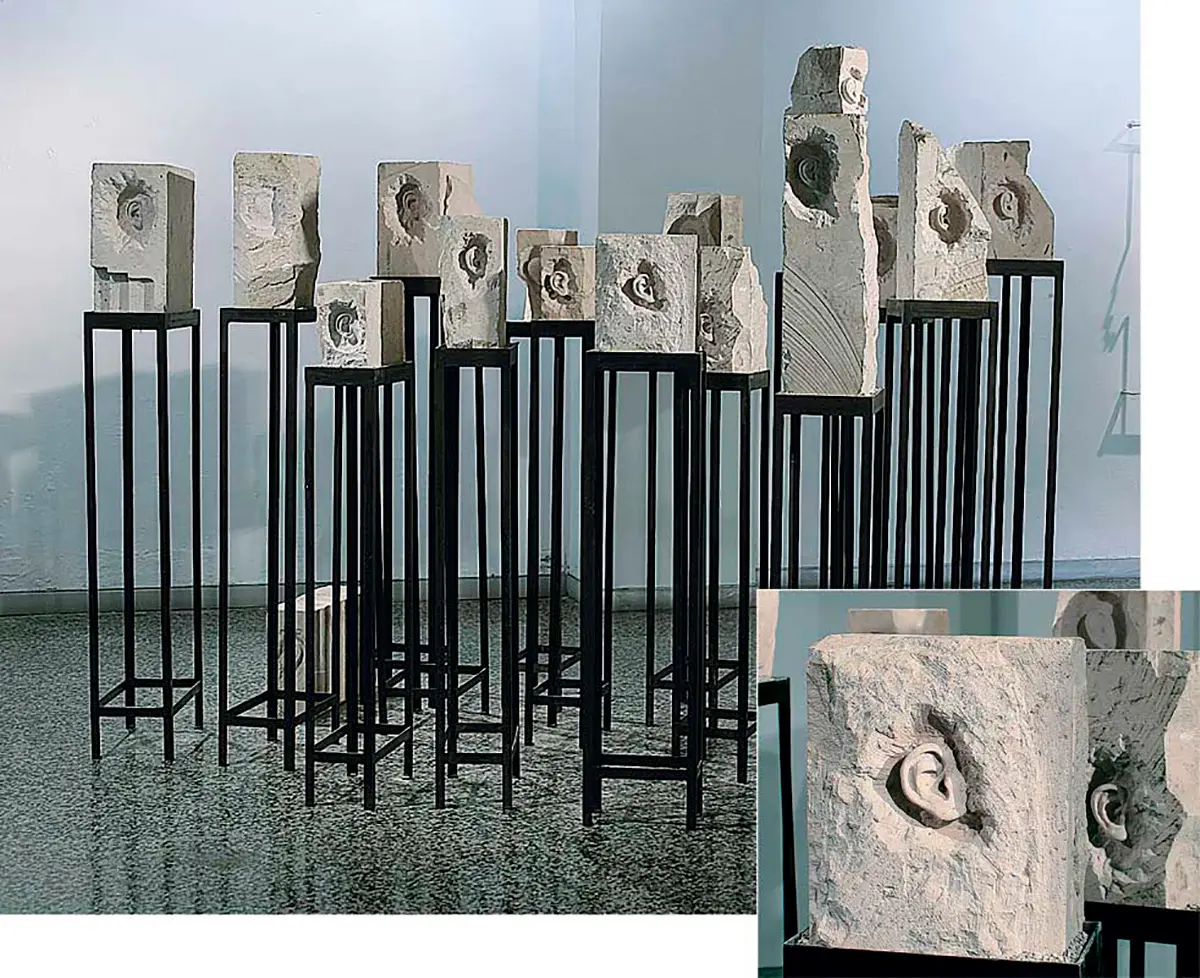
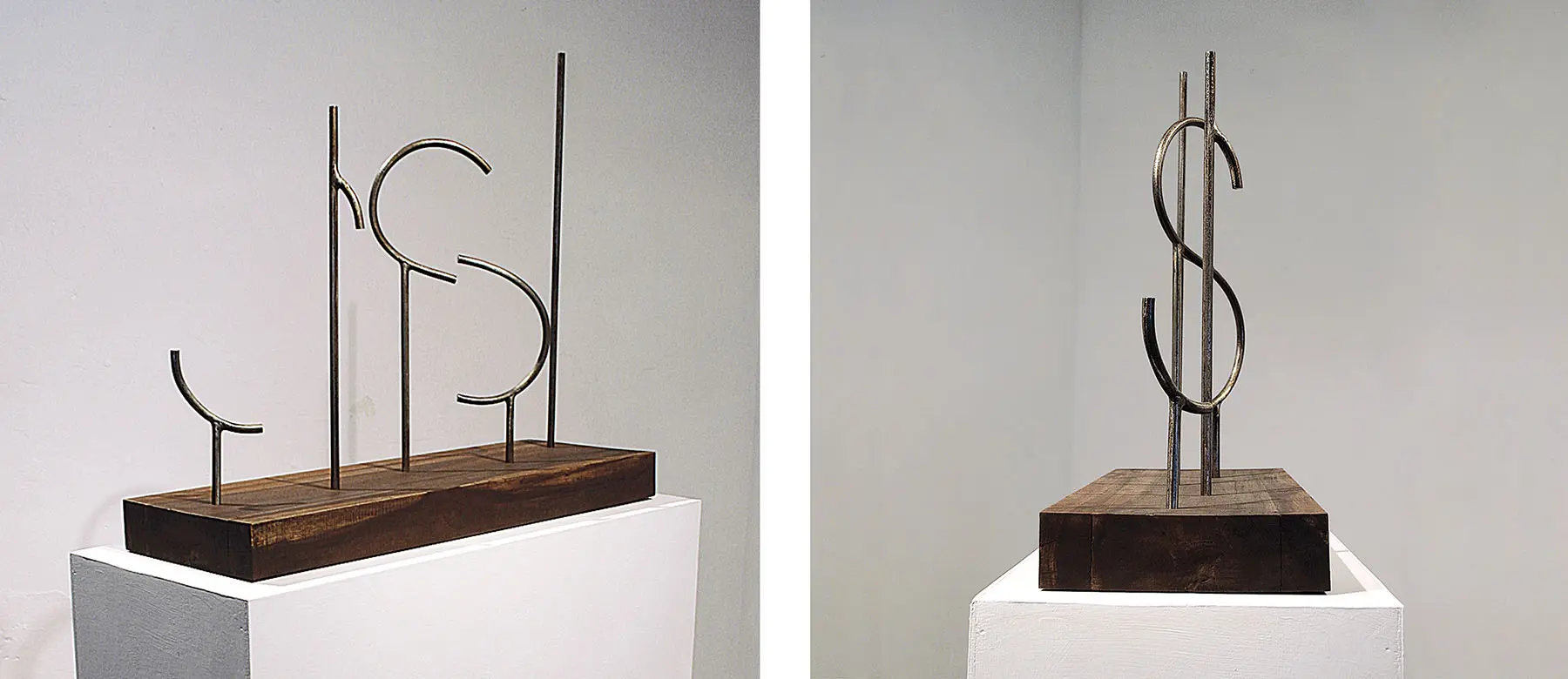
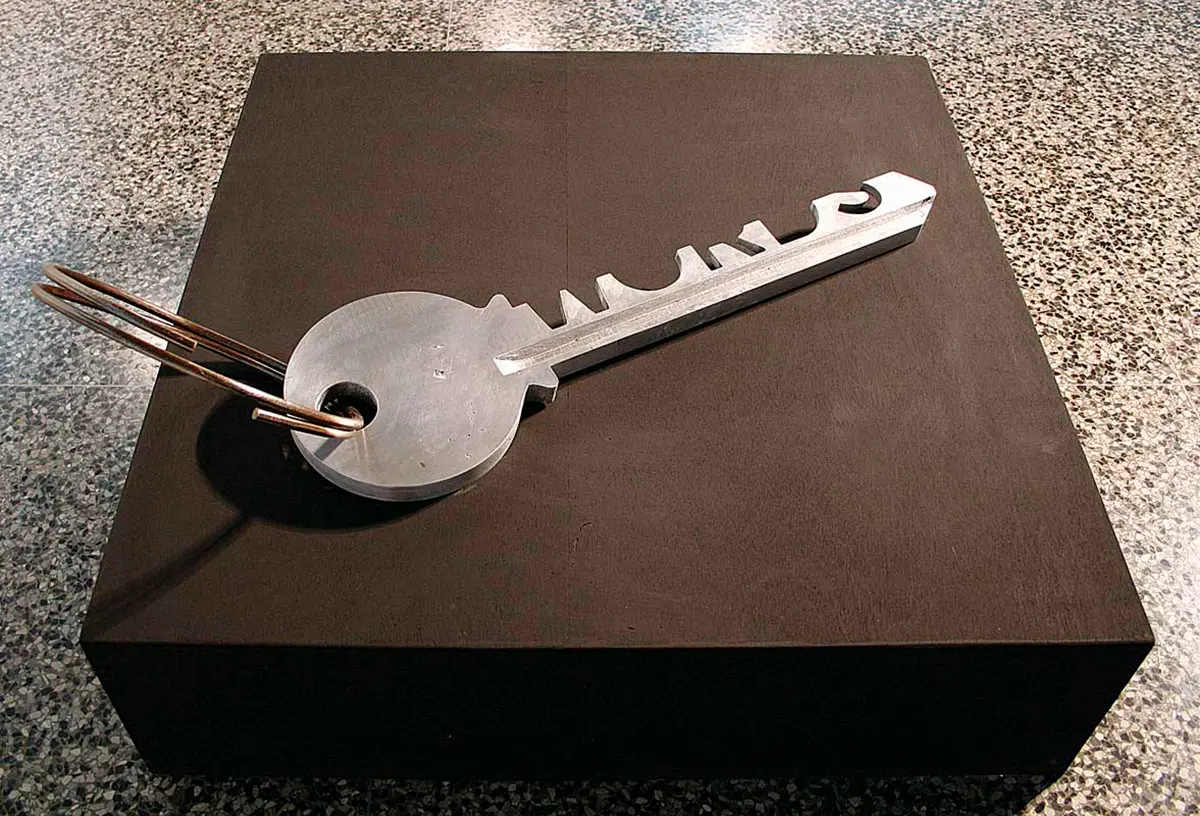
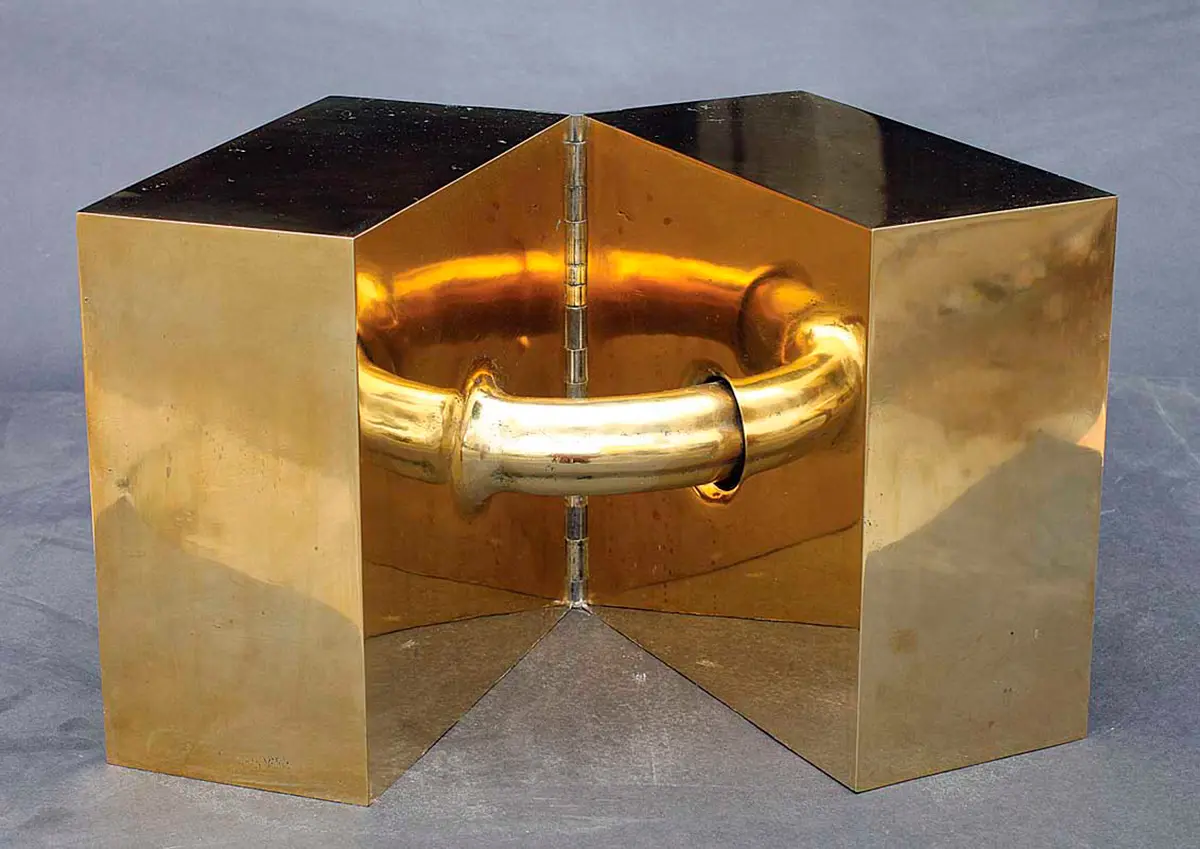
Iván Capote moved away from this psychological territory and condensed aspects of Being as such: its immaterial, intangible nature. In 2003, during the 8th Havana Biennial, his kinetic sculpture Dislexia had a text reading: “Life is a text that we learn to read-only too late.” It was here that texts came to the forefront of his work. Later, with Aforismos (Galería Habana, 2006), what was taken from writing became a tool for analysis based on revealing connections between the elements of language and their new condition as sculpture. In their very essence, words became protagonists in favor of symbolic manipulation of the viewer. Iván validated synthesis from the very concept of the aphorism, moving towards a more radical minimalist option. La llave de todas las cosas emphasized the value of the verbal; thus the preferential place given to the key, the instrument used to open doors, on whose teeth the artist had written the label “words.” At the same time, Punto de vista presented an incisive and caustic analysis of money, connecting the discovery of its sign (and its traps) with the viewer’s angle of view.
The artifacts established a diaphanous relationship with the public thanks to their scale, which facilitated a direct, intimate exchange with concerns and judgments about transcendence. This is what happened in Lost, where a magnifying glass was hand-placed in order to search for and find in a metallic plaque a very small engraving of the word (in English) truth, a search that posed real challenges.
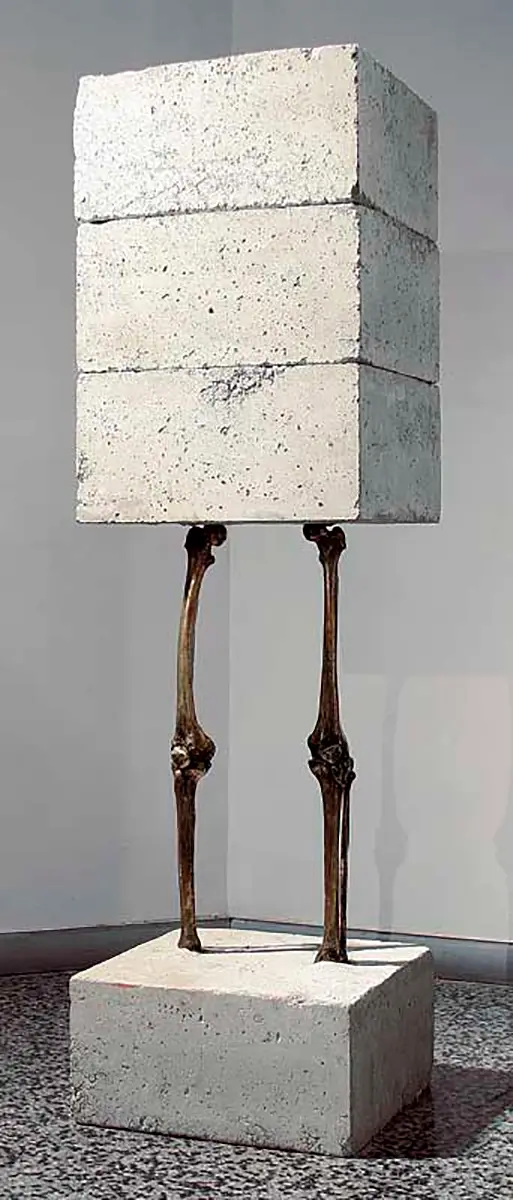
Starting with Stress (and some other works), Yoan Capote had confirmed that with psychology as the governing nucleus, it was possible for him to engage different themes without having his local references or the way in which he transcended them become limits to critical authenticity. With the independence of their origin, the codes could be read in different contexts, thus enriching the layers of meaning of a single work. Psicomorfosis, at Havana Gallery, resulted from these ideas. “I am interested in the poetry of transforming an emotional or psychological state of the mind into a physical experience,” 4 Yoan said, and he carried that notion into a lyrical, multi-sensorial universe. There we found collective portraits born from anonymous striving, in response to collective psychological states: Lote (Retrato de la masa), Paranoia y Maleable. His Autorretrato (Cada uno de nosotros) dissented from likeness and used gravity, the balancing of concrete blocks and bones molded in bronze, to reveal individuality: our capacity to resist and struggle, as well as the weight we labor under and the fragility of life itself.
In that context, Open Mind concentrated the expansive energy that guided the artist. In the model, a human brain functioned as meeting space, displacing the object towards the architectural and rendering it a symbolic site while emphatically signaling towards the urban environment as the background for almost all of his work. Open Mind referred to the tensions generated in the contemporary world by its lack of tolerance, to the frictions between the individual and society, and, on the basis of those contradictions, Yoan came out in favor of understanding and acceptance—of a mentality freed from political, racial, religious, sexual, or cultural distinctions. This public project gained increased visibility after being presented as an installation at the 10th Havana Biennial.
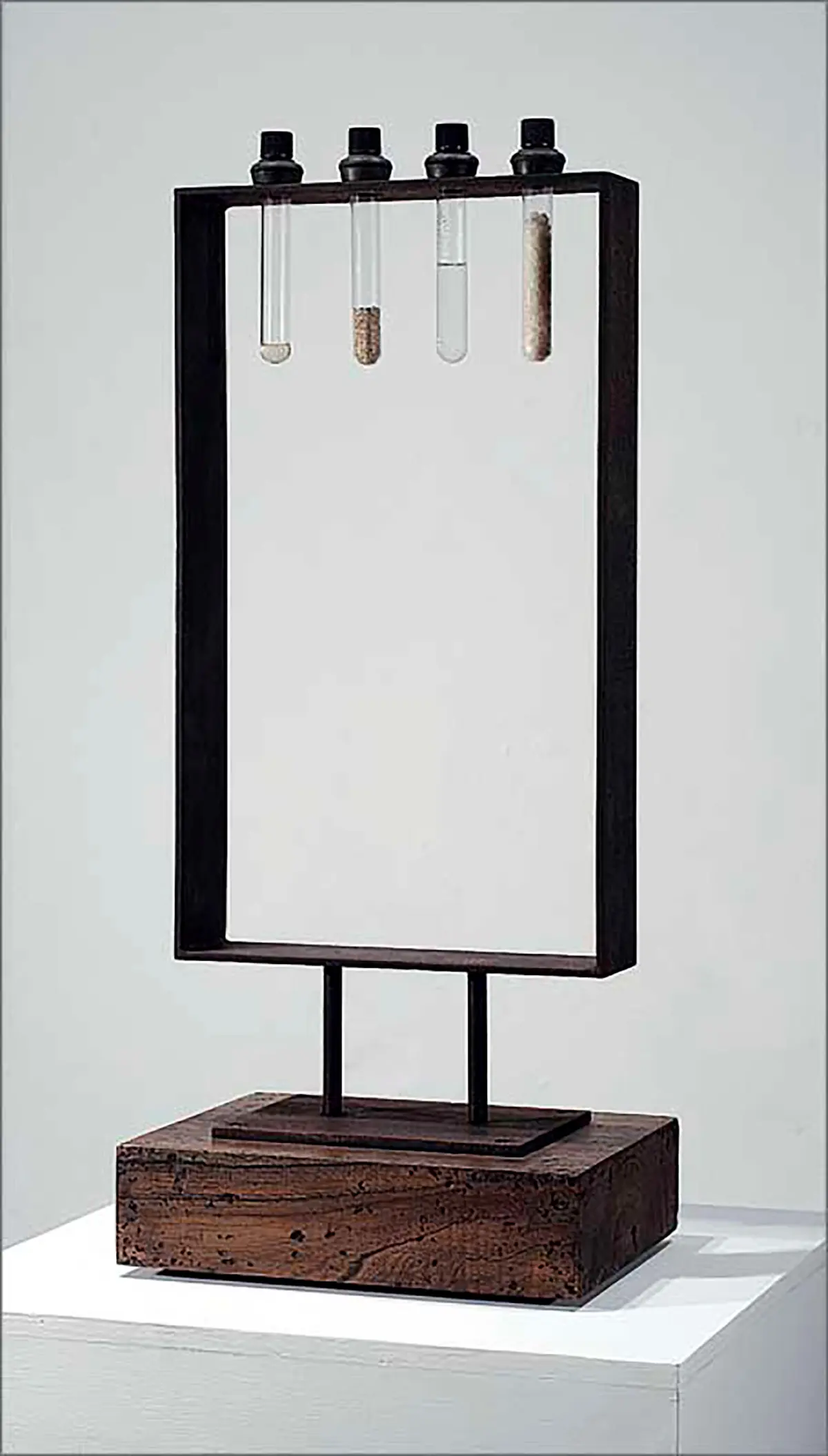
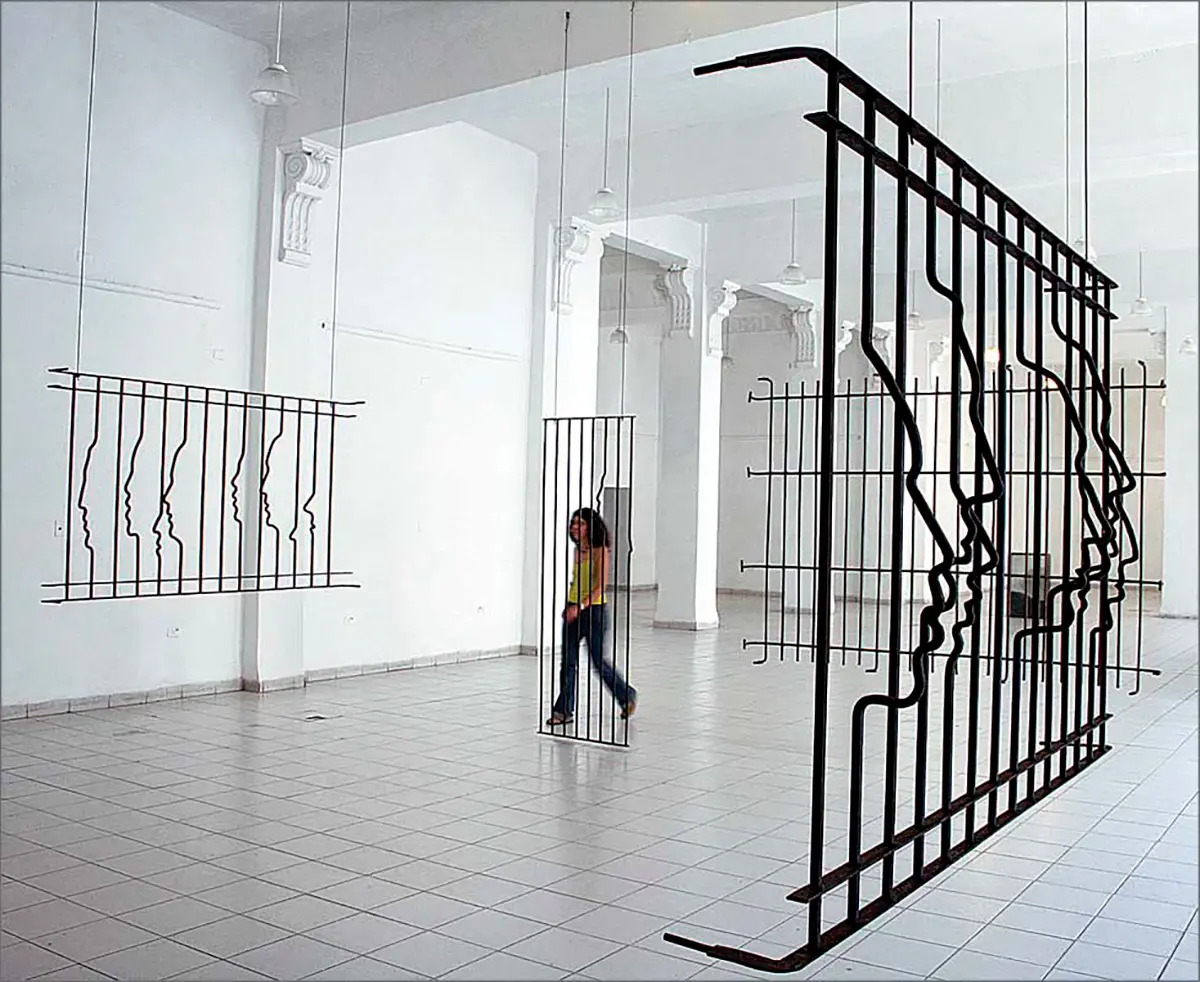
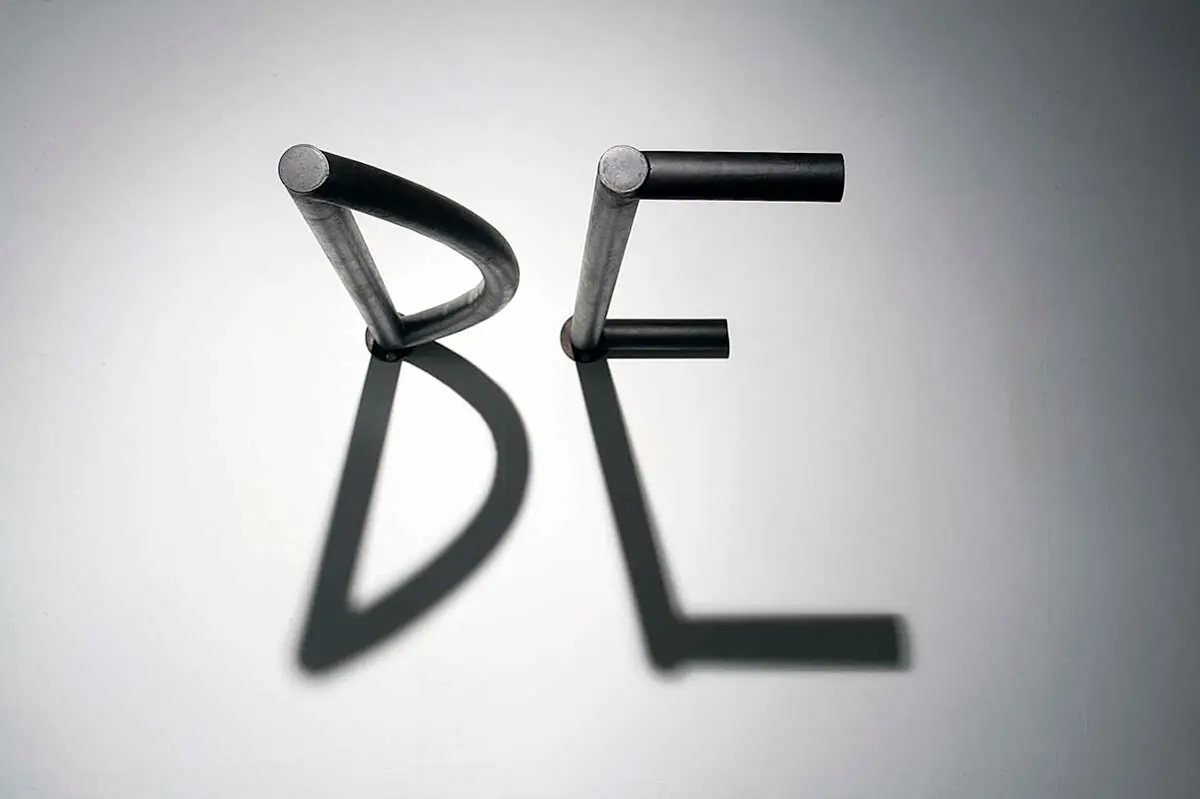
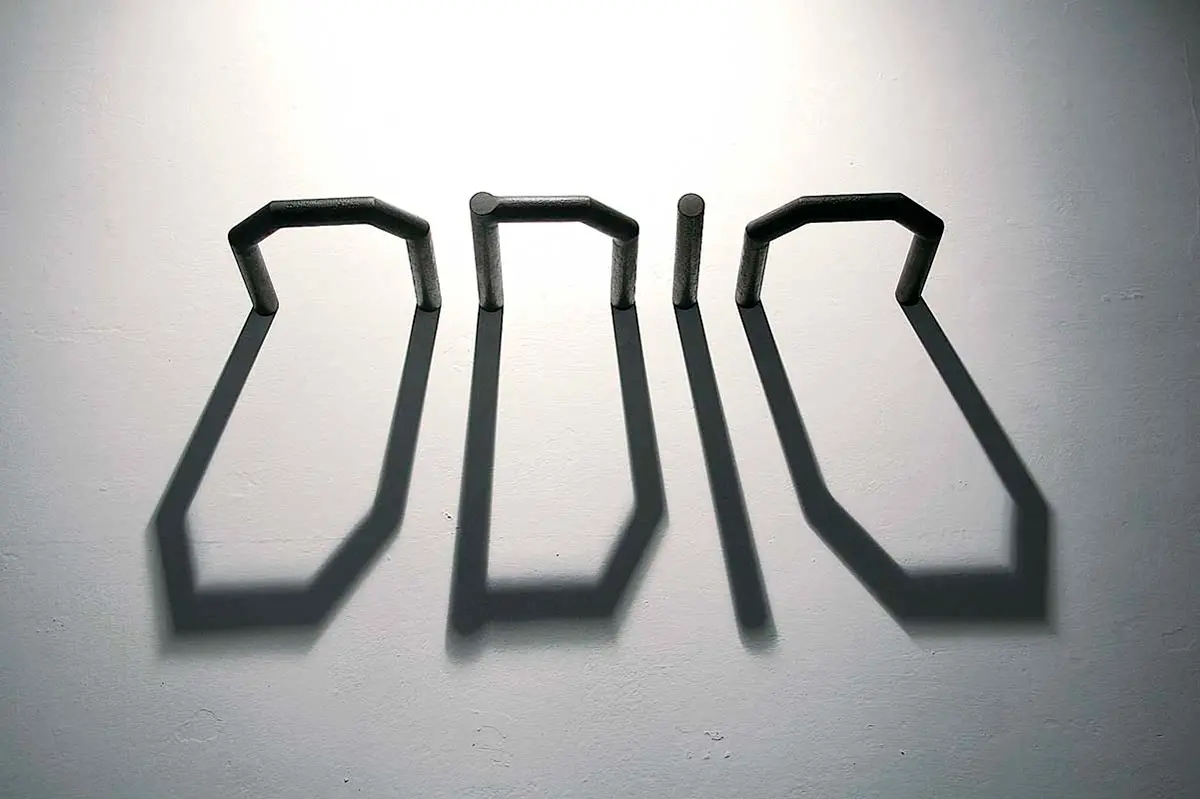
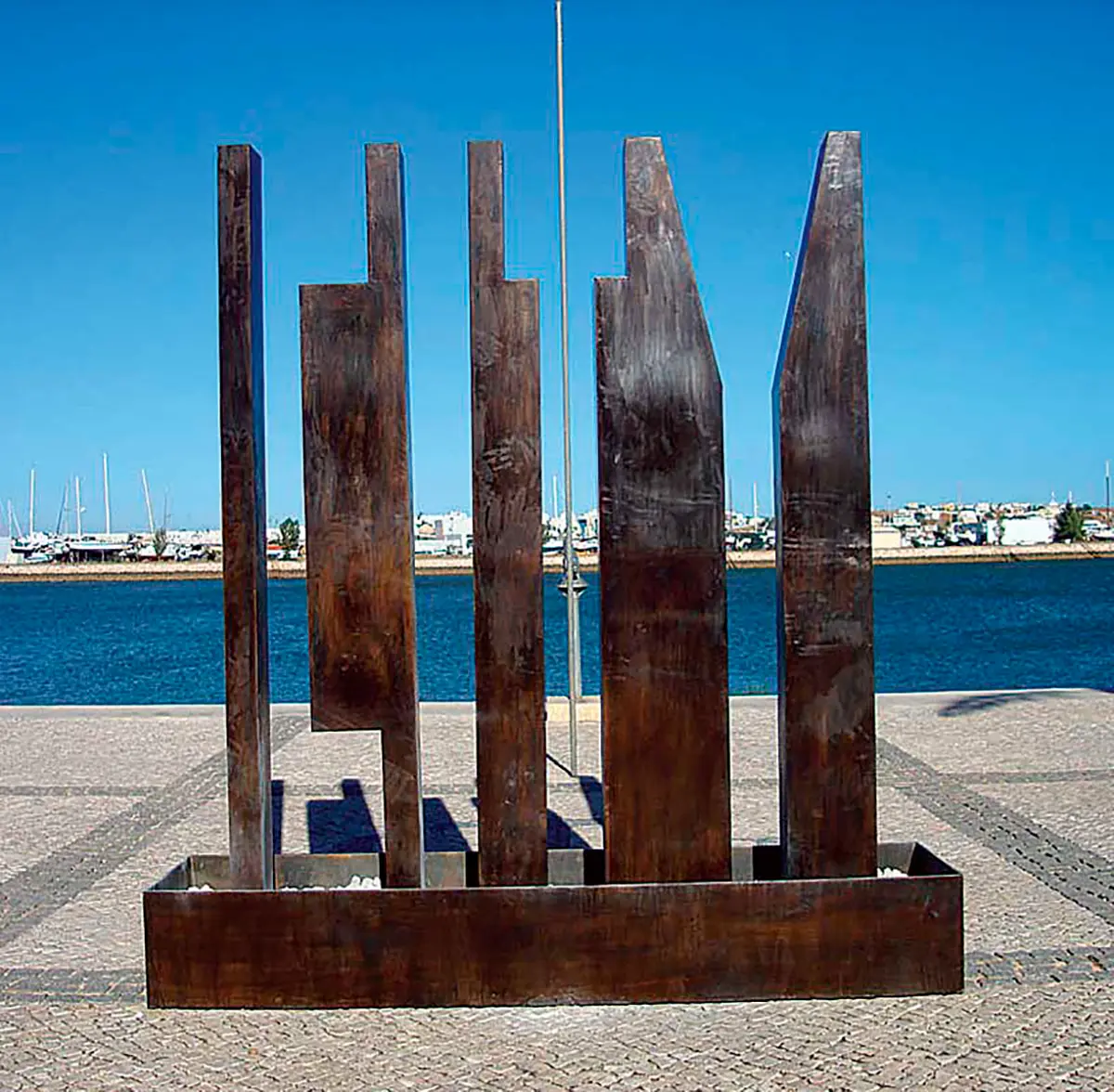
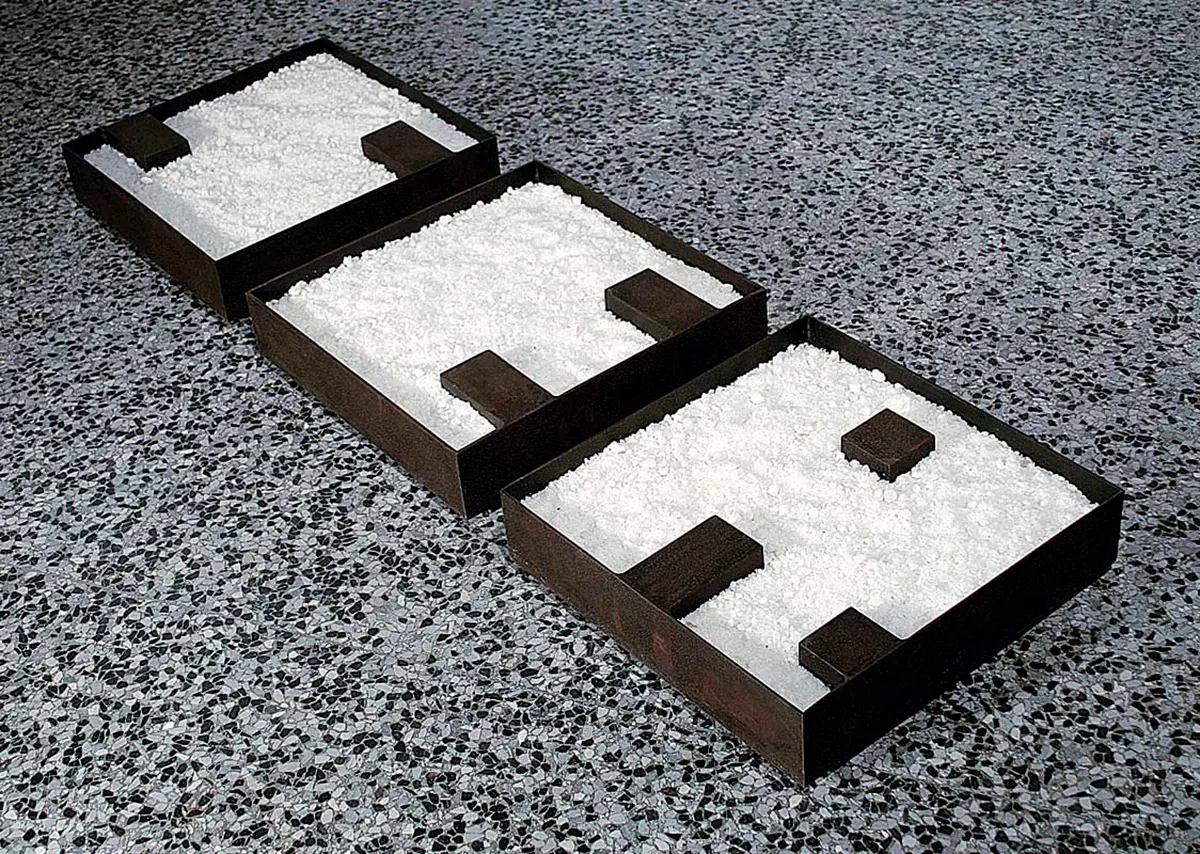
In contrast to this direction in Yoan’s work, Iván Capote’s 2009 exhibition at Havana Gallery, Sutil, reinforced the divergence in the brother’s projections. While in order to achieve his analogies Iván had previously joined words to everyday objects such as keys, shaving blades, fences, tools, and others, what has relevance now was the word itself, it fanning out into various meanings, and the weight of such meanings, their gravitational pull. There was an acute retraction of forms, in correspondence with the cardinal character of the themes. In some cases, only half a word appeared, arranged inside a wall. The reading was dependent on a mise-en-scene of the word. Iván’s simple steel shapes traced the outline and completed the word with their shadow, having been conveniently lighted. The uncanny effect produced by each word in isolation, selected for its symbolic charge and its existential weight, revealed the drama it contained. These words were signs and destiny. For instance, the English-language verb To Be; or in Estigma and Hacia la luz, with words like “odio” (hate) and “éxodo” (exodus), respectively. This visceral route was conditioned by contextual appropriations joined to Iván’s own experiences and his particular philosophy. From those coordinates, it was possible to understand the outsized ego to which Self-referred, or Ontology, a floor-level work where the word “ser” (being) was drawn using metal trays containing salt, and especially Separación and its small glass vials containing tears, water, salt, and sand: abstracted contractions with all the weight of danger for life, and the pathways with no return, in more than one sense, of those who emigrate.
In that site-specific that was his 2010 exhibition at the Jack Shainman Gallery in New York, Estados Mentales (inspired by his first visit to the US), Yoan Capote proposed a different scale. Longings, desires, and obsessions, both individual and collective, came to be embodied in the works on the basis of their large formats and multisensorial, impregnated with seductive powers akin to those of the American Dream itself.
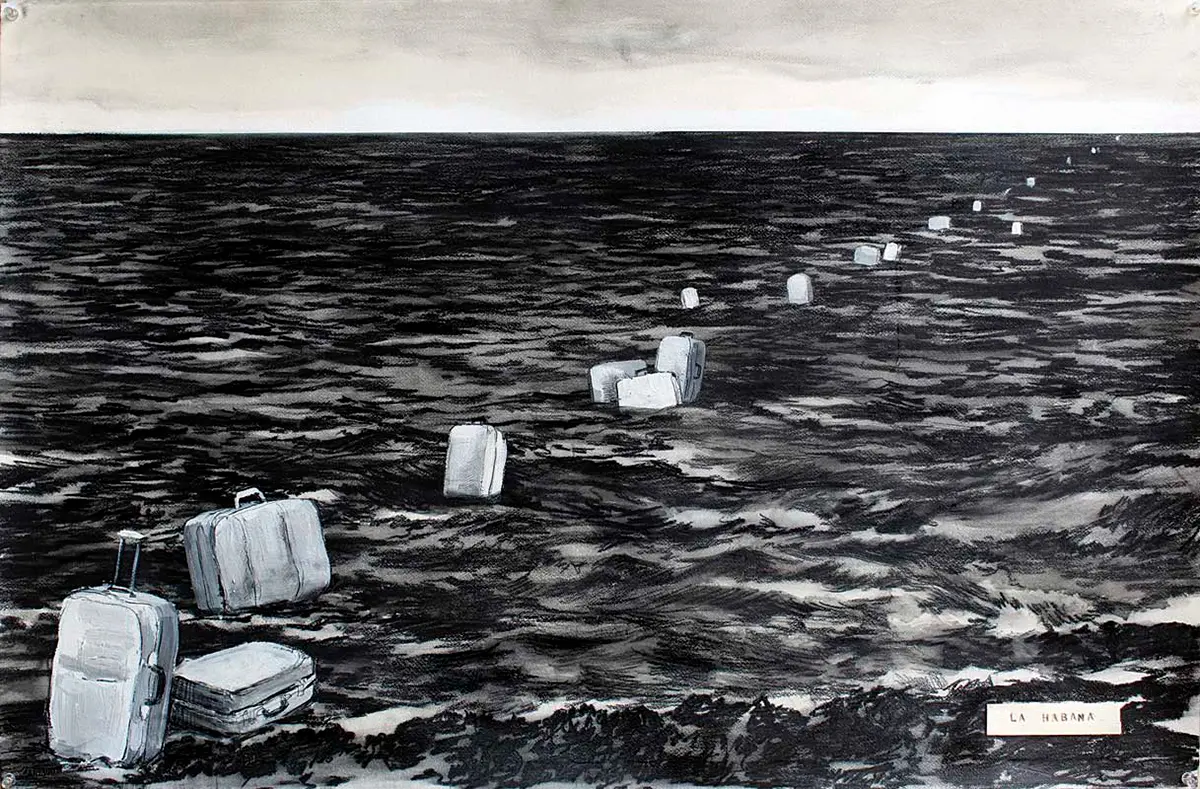
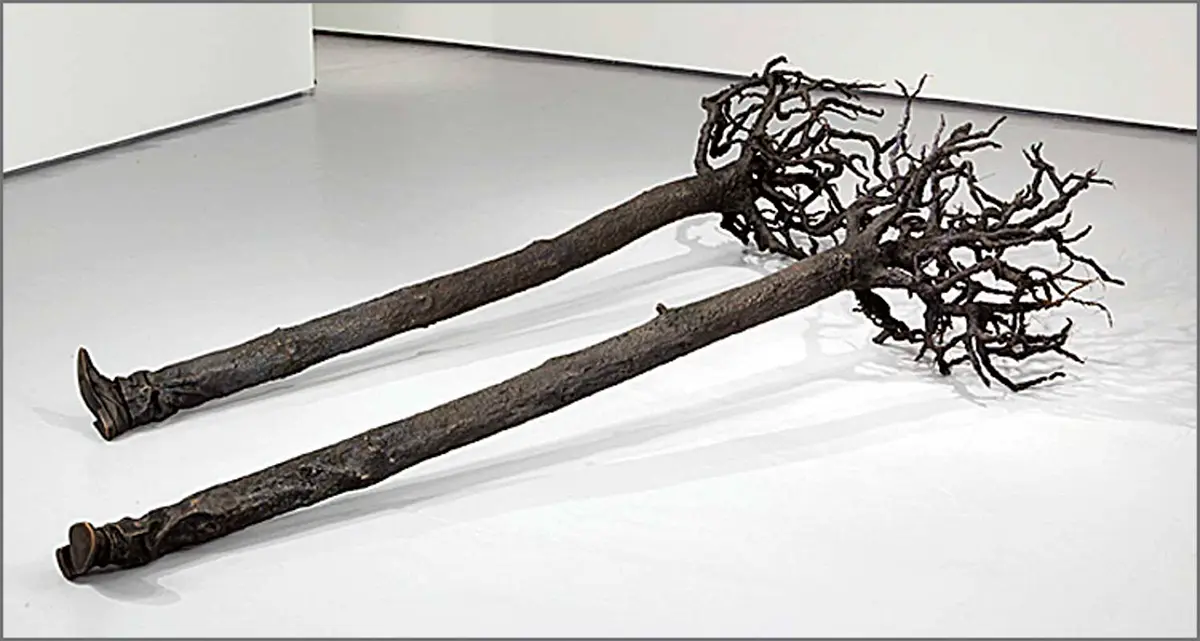
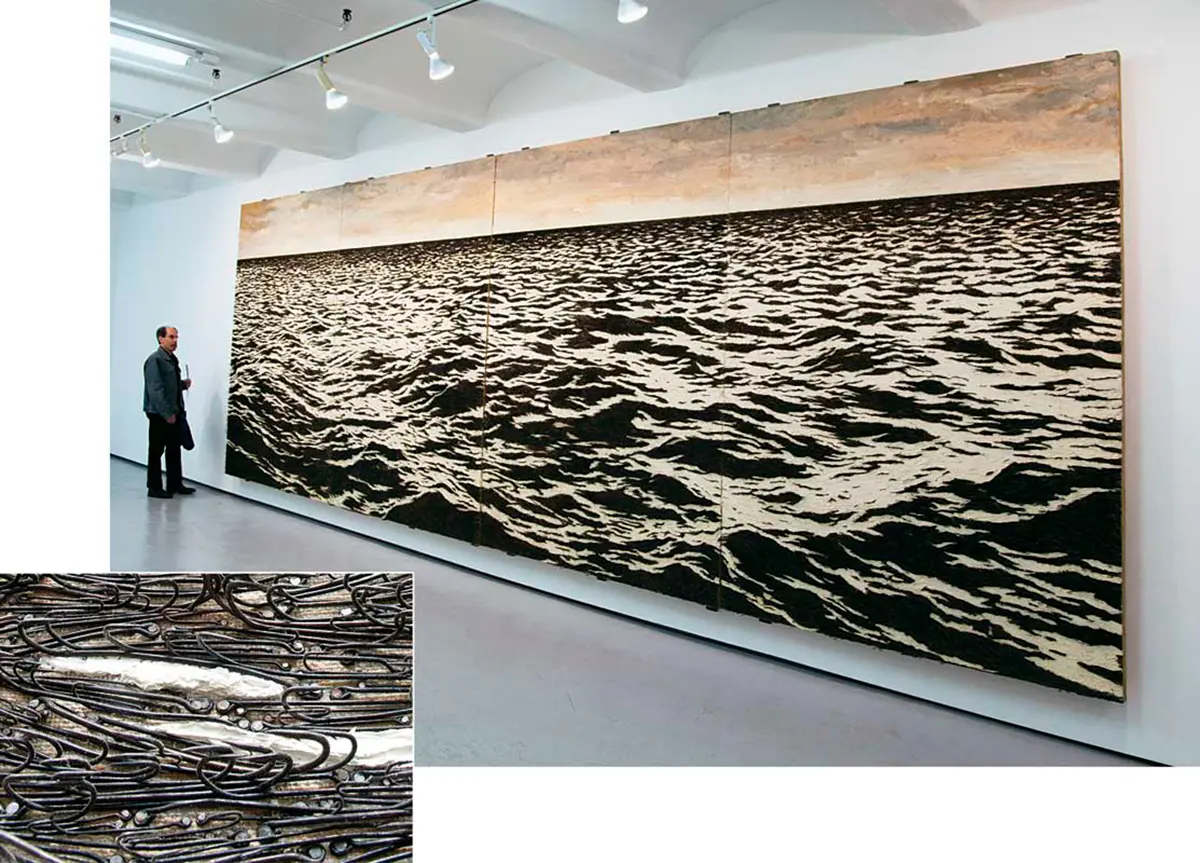
Isla referred to these topics. A view of the sea (of the horizon) with an island-based gaze. Using oil paints and 500,000 fishhooks, Capote outlined eight meters of monochrome oppressiveness, bringing together almost all art genres: drawing, engraving, painting, and sculpture. Similarly multifarious was the series American Appeal, where the city of New York ceased to be an archetypal fantasy of the United States and became a site of risk, thanks to the intimidating sensation provoked by the sharp-pointed traps, apprehended in the challenges of a society that we dream to conquer despite our uprootedness, one of the prices to be paid in such an endeavor, as dramatically metaphorized in Emigrante, a bronze sculpture that resembled (with its long legs crowned by roots) a tree that had lost its original support but is able to survive on other, more ethereal foundations.
Up to this point, it could be assumed that some convergences in the work of the Capote brothers result from the absence of a specific style in their language. In order to achieve its optimal concretization, the brothers’ morphological projection responds to demands that emanate from ideas. Each finished work fulfills a conceptual profile; in the process, according to the artists, the ideas drive the means, forms, and materials, seeking the most effective way to express content on the basis of visual solutions that are always different. Their titles signal a direction of approach and, without reiterating what is already explicit, expand the work’s meaning with the independence of the origin of the words, whether they come from English, Spanish, or any other language.
The perception of divergence between their ways of doing art comes across in some of the detectable influences. While Yoan Capote’s objects reveal the influence of Duchamp, and in a more discreet way an approximation, in terms of his creative methods, to Cildo Meireles and the new British sculpture, in Iván, at first somewhat influenced by Brazil’s Concrete poetry, we discern a move—differentiating emotions—towards something akin to the de-materialization of the work of art to which Joseph Kosuth referred.
What in one case is exuded by bodies and in the other is taken from language, are shapes loaded with emotion. They retain a lyrical grasp of contemporary contingencies as translated by these artists, which is, in the end, a kind of visual poetry, exhibited in each of the metaphorized entities that condense their ideas. In Yoan, the poetic element is to be found in the (re)design of objects; in the highlighting of the physical condition of matter and its expansive power; in the playfulness, sensitive beauty, and ironic sense of humor with which he expresses himself. In Iván, the poetic action is a journey to the depths of the human, to the essence of being, to the intangible spirit of Man and the weight that it possesses. Poetry, but of a critical kind, is in the end for them the technical solution, the selection of materials, the strength of their meanings, the paths chosen for the analysis. This is how they define the symbolic way in which the idea is communicated, making of art “a space of sublime savoring.” 5 This approach to the discourses of Yoan and Iván Capote and their interpretations of the global from the standpoint of local experiences (and vice versa) reveal the parallelism that defines the objectual universe they have built, and at the same time, in that tangible modeling, the disjunction between matter and spirit.
NOTES
1. Galería DUPP(the acronym stands for Desde una pragmática pedagógica) is a unique project for arts education based at Havana’s Universidad de las Artes (ISA) and headed by artist and educator René Francisco Rodríguez. The DUPP team that participated in the 7th Havana Biennial in 2000 was collectively given the Unesco Prize for the Promotion of the Arts.
2. The moment of the show Unidad de contrarios by Iván Capote (graduated from the Escuela Nacional de Arte, ENA, in 1992) was the artist’s presentation with an individual project in Havana’s art circuit. On his part, Yoan Capote had completed his studies at Havana’s Universidad de las Artes (ISA) in 2001, with his project El diseño de lo híbrido, to which the works shown there belong. Yoan’s work was already known to the public, thanks to his previous presentations: Track Back Trac. Instalaciones y objetos, at Centro de Arte 23 y 12 in 1998, and Nuevos Objetos, at the Carmelo González Gallery of the Casa de Cultura de Plaza in 1999, as part of the Ludwig Foundation’s Espacio Público Privado project.
3. Each exhibition follows a path of research and is curated by the artists themselves. They include analytical essays on portions of the oeuvre, where each work contributes to outline the totality of a closed unity of concepts. Each individual exhibition, in the case of these artists, is a new thematic proposal, distinct from the one immediately before and constituting an entirely new work of art.
4. Interview with Yoan Capote. January 31st, 2009, Havana.
5. Quoted from an interview with Yoan Capote, February 21st, 2009, in Havana.
CARIDAD BLANCO DE LA CRUZ
MsC in Art History. Curator and art critic. Specialist at the Centro de Desarrollo de las Artes Visuales, Cuba.