Argentine artist Nicola Costantino’s highly crafted objects, photographs, and films are on display as part of her first one-woman show with Daros Latinamerica.
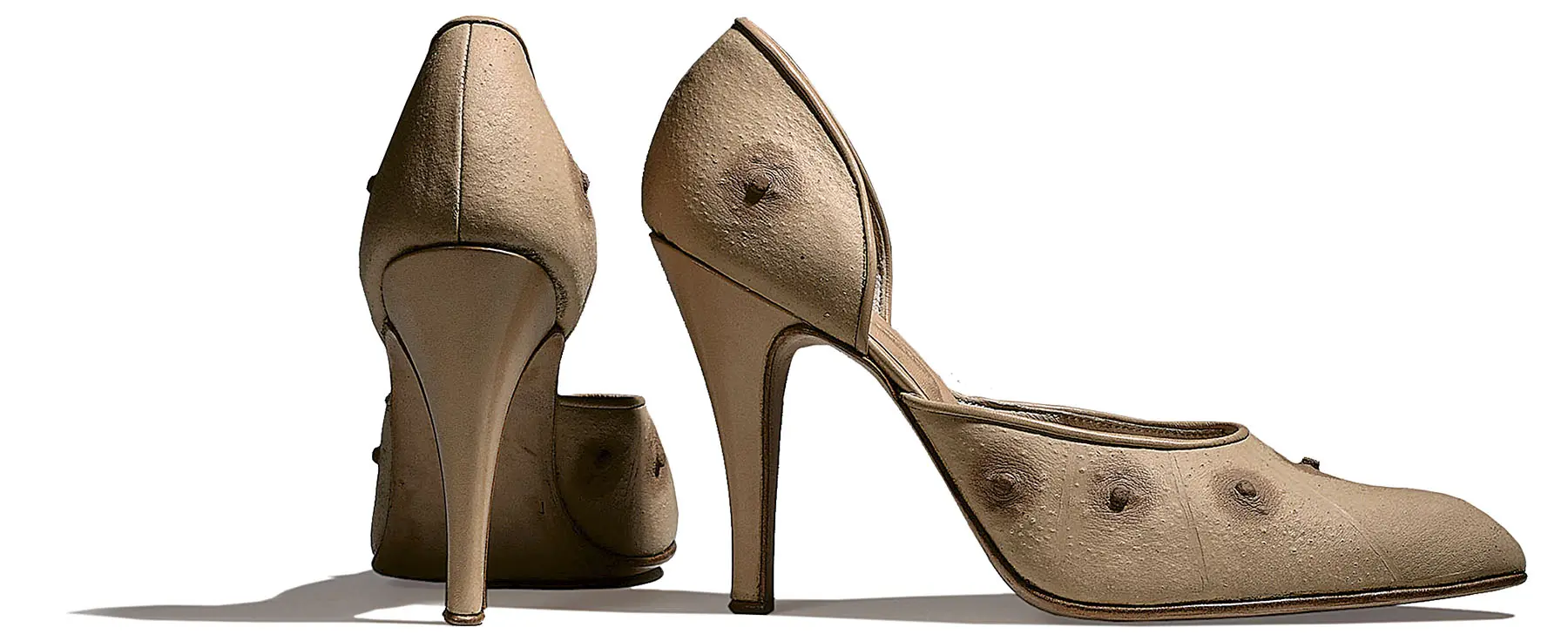
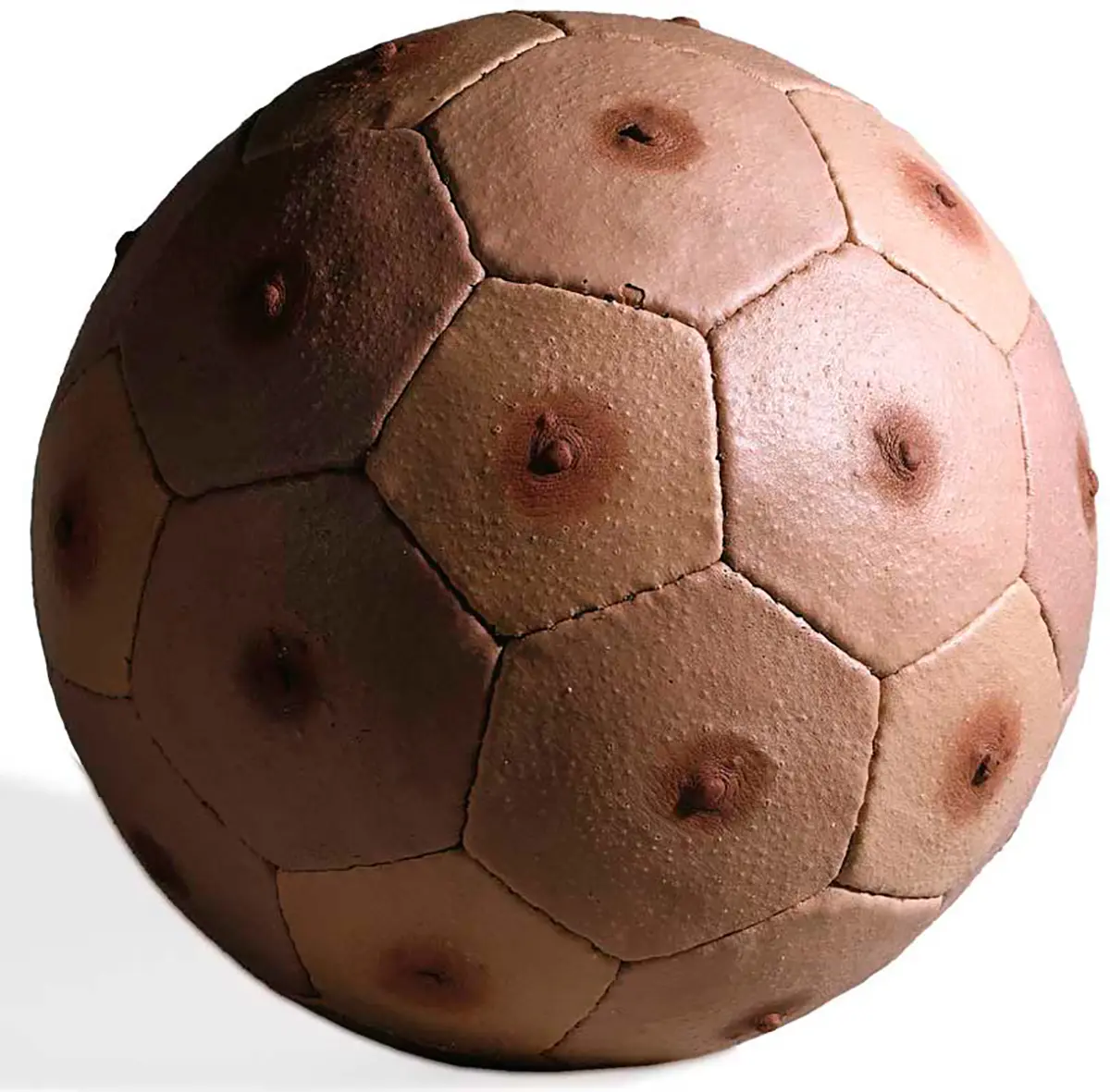
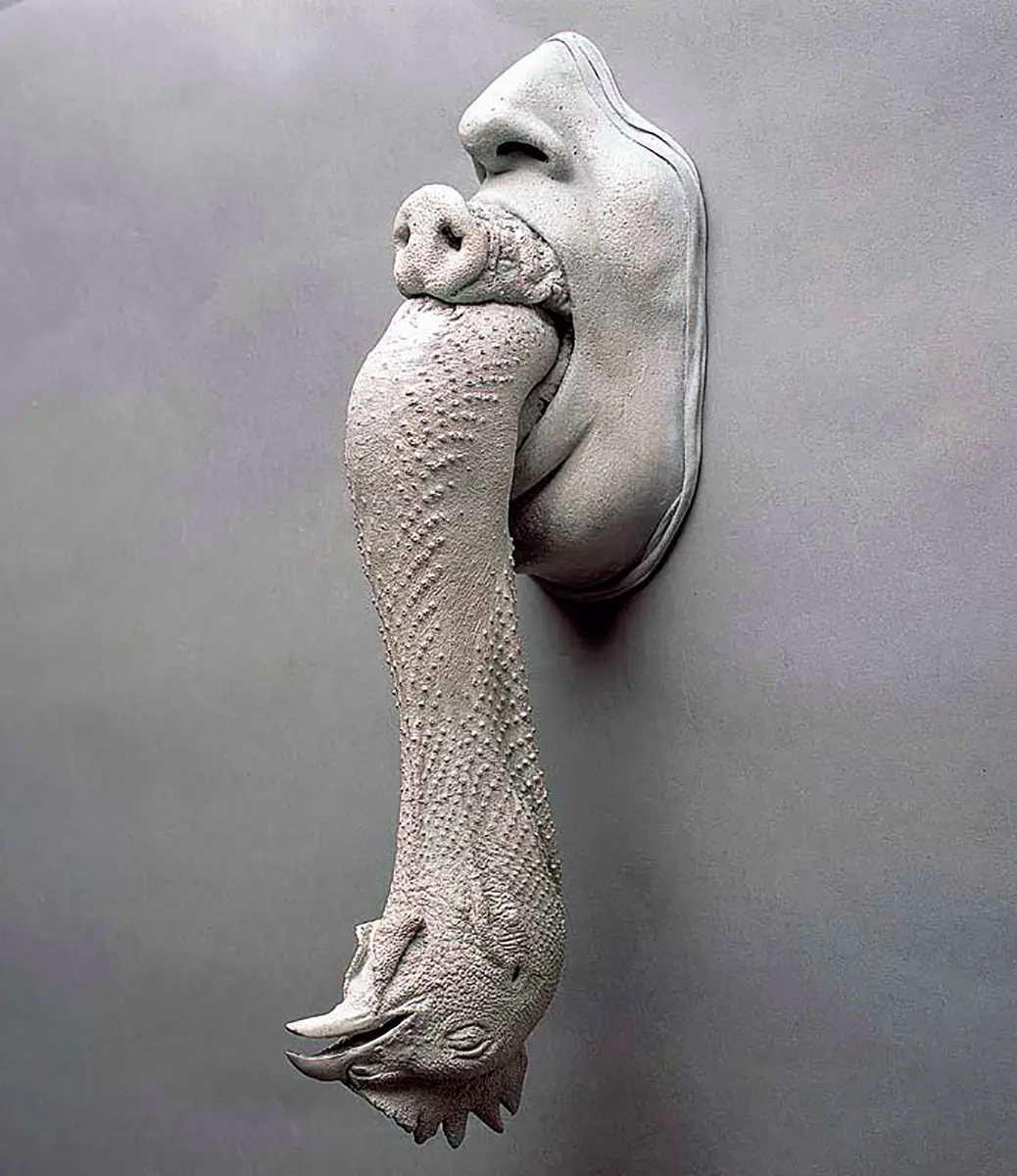
Born in Rosario in the mid-1960s, Costantino reached international notoriety with her clothing and accessories line made of silicon casts of human skin featuring male nipples and anuses. These and recent works can be seen until 15 May in the spaces occupied provisionally by the Migros Museum at Zurich Hubertus during the restoration of the Löwenbräu building in Limmatstrasse.
After the end of the last Argentina dictatorship in the early 1980s, Nicola Costantino trained in the fine art school of Rosario, where in contrast with the Buenos Aires art school — then highly traditional and conservative — she found a suitable atmosphere of experimentation that allowed students to push the limits of art-making.
Her interest in new materials began at her engineer brother’s workshop, where she entered into contact with the world of mechanical engineering and learned the basic rules of industrial processes. This was followed by her attendance at the workshops of artist Ennio Iomi in Buenos Aires where she began experimenting with offal and other animal parts, an interest that would eventually lead her to take taxidermy courses at Rosario’s Museum of Natural Sciences. There, for lack of better choices, Nicola began to embalm animals widely available to consumers such as piglets, chickens, and rabbits.
These initial experiments were shown in 1993 at the Castagnino Museum of Rosario, whereas part of her performance and installation Cochon sur Canapé she hung vacuum-packed chicken with fully feathered open wings from the ceiling of the space. This performative departure, which she attributes to the fascination with food connected to her Italian ancestry, was presented in the exhibition as a banquet served on a water mattress for the audience to consume with bare hands. The idea of the bacchanal would be revisited again in 2008 in her work La Cena (The Supper) presented at Buenos Aires’ Galeria Ruth Benzacar. On this occasion, the banquet took on sacrificial undertones, as after serving the feast to a participating audience, she uncovered a portrait of herself lying on a platter, thus turning the guest's experience into a cannibal ritual.
In 1995 she moved to Buenos Aires to attend the Taller de Barracas, the young artist's workshop funded by Fundación Antorchas and conducted by Pablo Suarez and Luis Benedit. The focus of the workshop was on conceptual analysis and production of sculpture and object-based work. This was a turning point for Costantino, as under the strong ideological stimulation of the workshop her sculptural work began to develop into a deeper investigation of animal casting by means of the molding in resin and, later on, in silicone.
One of these early works featuring Nicola’s first cast animal, Chanchito con motor (Mechanical Piglet, 1994) hangs from the ceiling in the center of the space at the Hubertus. The silicone cast little piglet is attached to an iron mechanized structure from which he hopelessly hangs, revolving above our heads, his fragile, scarf-wrapped little body seems a sinister joke, a reminder of the pop-culture image of the baby-carrying stork.
Chanchito con motor also links to later development in Costantino’s research of motion mechanics, her Animal Motion Planet series of drawings, and sculptures containing motorized mechanisms apt to provide movement to unborn calf and colt. This Frankensteinian fantasy echoes the investigations of Edward Muybridge’s photographs and is one among the many references in the work of Costantino to late XIXth century esprit du temps, including Victorian industrial and engineering projects, gothic novels (Mary Shelley), and a post-romantic aesthetic that intermittently emerges throughout her oeuvre.
In addition, this early period of the artist’s work could conjure up images of a science fiction world enticing both repulsion and attraction, particularly in the elaboration of friezes and balls made from unborn colt and calf casts. The animal fetuses appear compressed, caged in their friezes, and subsequently inserted inside walls as recently discovered archaeological remains: tragic fossils of social wreckage. One cannot help but associate these interstitial images of death with the anxiety produced in the Argentine people’s unconscious by the thousands of disappeared that began to be unearthed from the obscurity of state terrorism in public trials at the end of the dictatorship.
Seduction and horror: Human Furriery
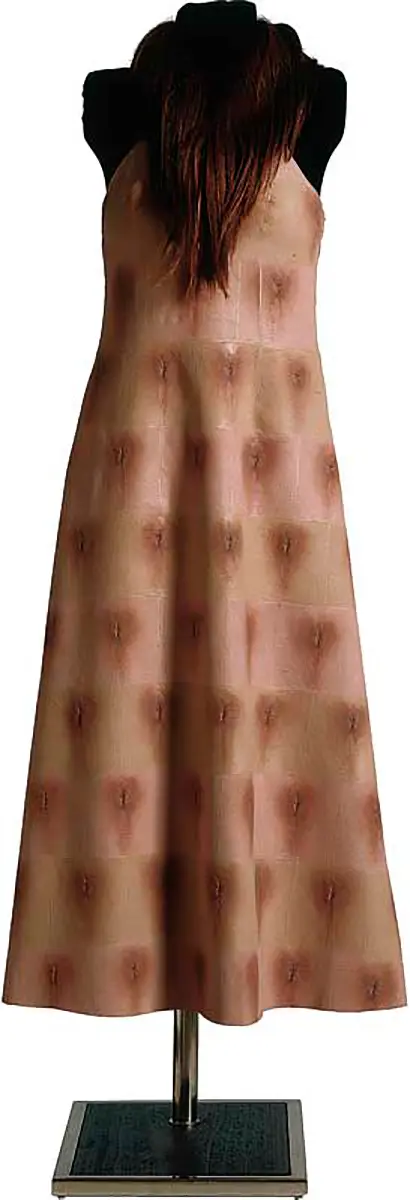
Samples of Costantino’s trademark series Peletería con piel humana(Human Furriery, 1995 -2001) consisting of dresses and accessories cast in silicone imitating human skin are displayed in the exhibition space on a low plinth shaped as a catwalk runway.
These powerful gender-bending objects, at once repulsive and erotic, abject but seductively luxurious, are highlighted by the installation in the Hubertus, were mimicking the fashion marketing system, are displayed as luxury goods, fetishized body parts for consumption.
The conceptual appeal of the art object as a commodity has been explored effectively by the artist with this series in carefully orchestrated displays. On the occasion of its exhibition at New York’s Jeffrey Deitch Gallery in 2000, the gallery was often mistaken by a high-end fashion house - something aided by the fact that most galleries were then moving from Soho to Chelsea, and the spaces were in actual fact taken over by luxury boutiques. The series as a fashion display was consequently sent as Argentina’s contribution to the São Paulo Biennial in 1998 and also projected Costantino’s career globally when shown at the First Liverpool Biennial in 1999, followed by numerous international exhibitions.
Such provocative juxtaposition of meaning could be traced to some historical precedents in Argentine avant-garde. Artist Dalila Puzzovio won an honorable mention in 1967 for her submission to the Instituto Torcuato Di Tella International Prize of twenty-five pairs of shoes designed by her and ‘exhibited’ in a store window to be sold as consumer goods. Although these insertions were generated by different conceptual operations, the design of clothing by Argentine pop artists Puzzovio, Delia Cancela, and Pablo Mesejean can also be seen as attempts by historical avant-garde artists to blur the borders between high and low culture and expand the realm of the art object to commodity markets.
In regards to the use of skin casts, what comes to mind when looking at Nicola’s Peletería con piel humana (Human Furriery) is the horrific objectification of human bodies in Nazi concentration camps. Moreover, this question is poignantly present in her piece Savon de Corps, based on the production of soap made of her own body fat.
Savon de corps (Prends ton bain avec moi) is presented in the exhibition as a video advertising campaign constructed with the aesthetics and language employed by the marketing of luxury cosmetic products. The video shows a semi-naked Nicola entering a bathtub and sensually holding a bar of soap in the shape of a female torso. The history behind the soap is another example of abject materiality: after undergoing liposuction to extract a total of two kilograms of her body fat, the artist made a multiple of one hundred soap bars molded as voluptuous female torsos.
These objectifying approaches to the body might have an explanation in the fact that Nicola was born of the union of a surgeon and a seamstress. While witnessing her father’s simple surgical procedures in the operation theatre, she would also find pleasure in the wonders of creating that external skin that we call fashion in her mother’s clothing workshop. It is no surprise that Nicola has summarised both worlds within her practice in such a powerful manner. Besides this combination of skills in her household, visual stimulation was provided to Nicola at an early age via her father’s collectible art books Pinacoteca de los genios, in whose pages she discovered among other paintings Antonio Berni’s Woman in Red Sweater of 1935. This painting gave her the spur to become an artist. In homage to the Rosario-born painter she masterfully reworked this image in a photograph of 2008, as part of a series of self-portraits conceived as re-enactments of iconic works of art.
If her use of body parts as references to death, the flesh as a commodity, embalming, and surgery as cultural practices could remind of the work of other contemporary figures such as Damien Hirst, their respective methods set them apart. Whilst Hirst resources to the industrial production of art commonly associated with post-minimal, conceptual art, Nicola develops hers as a traditional sculptor, with total input in the manufacturing process. That applies as well to her performance-based photography, where the props and sets are made in the studio with the emphasis placed on traditional means of construction. A key element of her practice across mediums is elaborated craftsmanship. Handmade and aesthetically appealing, the remarkable precision and visual quality of the works help serve the conceptual potency of her imagination.
Doppelgänger
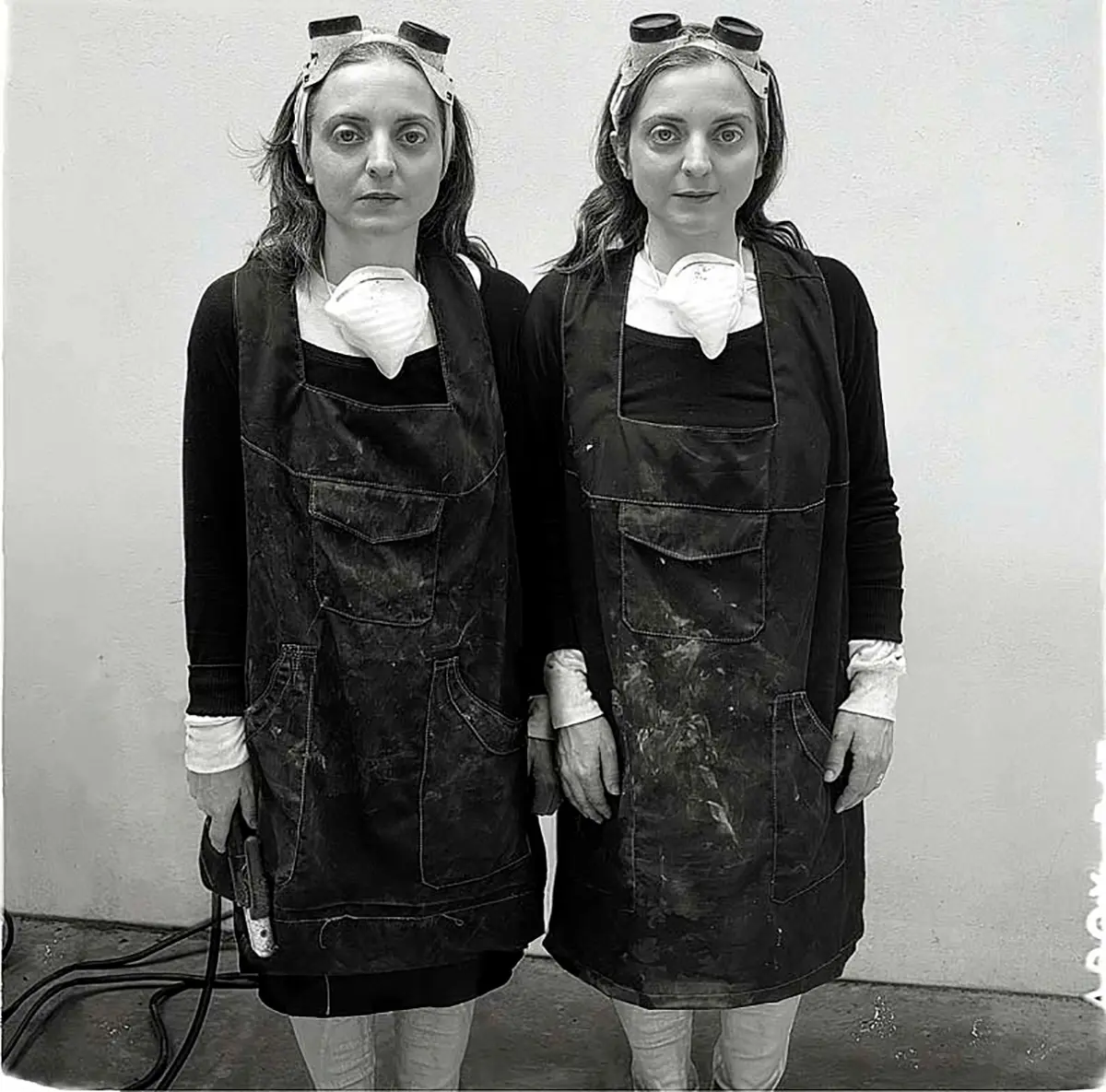
Gothic sources such as Mary Shelley’s Frankenstein seem to incarnate in the artist’s decision to make a double of herself. The other-self dichotomy surfaces anxiously in the doppelgänger, a recurrent theme in the history of art and literature. A clear precedent of this development is her photograph Narcissus Nicola evoking Caravaggio, (2009) where the artist is seen looking at her reflection in a pond after the historical painting. The image is part of a series of masterfully constructed photographs as quotes of iconic works in the history of image-making including those by Man Ray, Diane Arbus, Antonio Berni, Vermeer, Hoyningen-Huene, Velázquez, Caravaggio, Fritz Lang, Edward Steichen, and the Pre-Rafaelites.
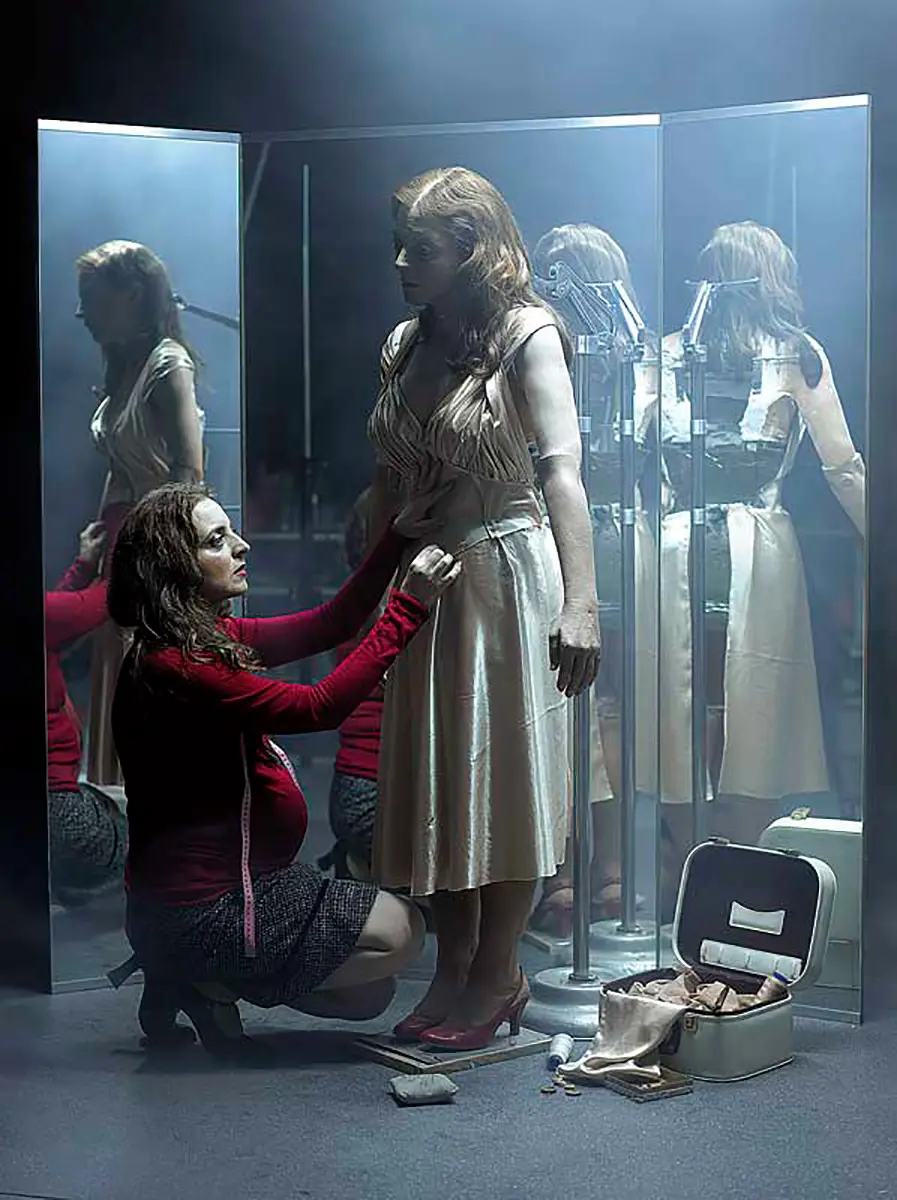
Following her decision to become a single mother through insemination, Nicola undertakes the making of a sculpture made in her image as a means of multiplying herself to cope with her double life as an artist and as a mother, in her own words. However alike, Nicola’s double is not intended to look human, as it is built to reveal the assembling of the limbs as proof of the artifice. The sinisterly doll-like other Nicola appears in a series of photographs that illustrate the process of the artist entering motherhood. A selection of those is shown in the exhibition, which surprisingly does not include the film Trailer (2010).
Trailer traces the life cycle of the double and it is structured as a classic film noir. We see a pregnant Nicola duplicating herself as a sculpture, a seemingly living corpse that acts as a companion during pregnancy, delivery, and post-partum, conceived to placate solitude. At the end of the film, the woman kills the doll in the face of the menace brought in by the double, the shadow. The film is heavily inspired by the work of Hitchcock, Kieslowski, and Di Palma, but also draws from psychoanalysis and mythology and could be critically underpinned by feminist theories exploring feminine subjectivity and its representation in film.
The double as a reflection of oneself is ultimately dangerous and sinister, symptomatic of a lack of equilibrium and escaping control as a freak taking its own place in the world. If the plot could be linked to the story of Frankenstein, visually the film brings to mind Hitchcock, an author widely referenced in contemporary cinema. Suggestions of the double are present in his masterpiece Rebecca (1940), whose main character is the unforgettable ghost living in the mind of a guilt-ridden husband and his second wife to end up setting the inevitable destruction by fire of the mansion. In Rebecca, the sexually ambiguous and sinister caretaker is the shadow of the other. This Jungian shadow represents a danger in Costantino’s doppelgänger and comes to the character as an unwillingly anti-heroine in her own film noir, the aesthetic qualities, settings, and tone of the film operating here as an homage to the genre. An homage that does not exhaust itself in a single reference but includes perverse heroines such as Bette Davis, with feminist undertones depicting the woman as an architect of her destiny, manufacturing motherhood, and wary of her mirror image, a beautiful narcissus with deadly intentions.
GABRIELA SALGADO
Independent curator and writer based in London, UK.