
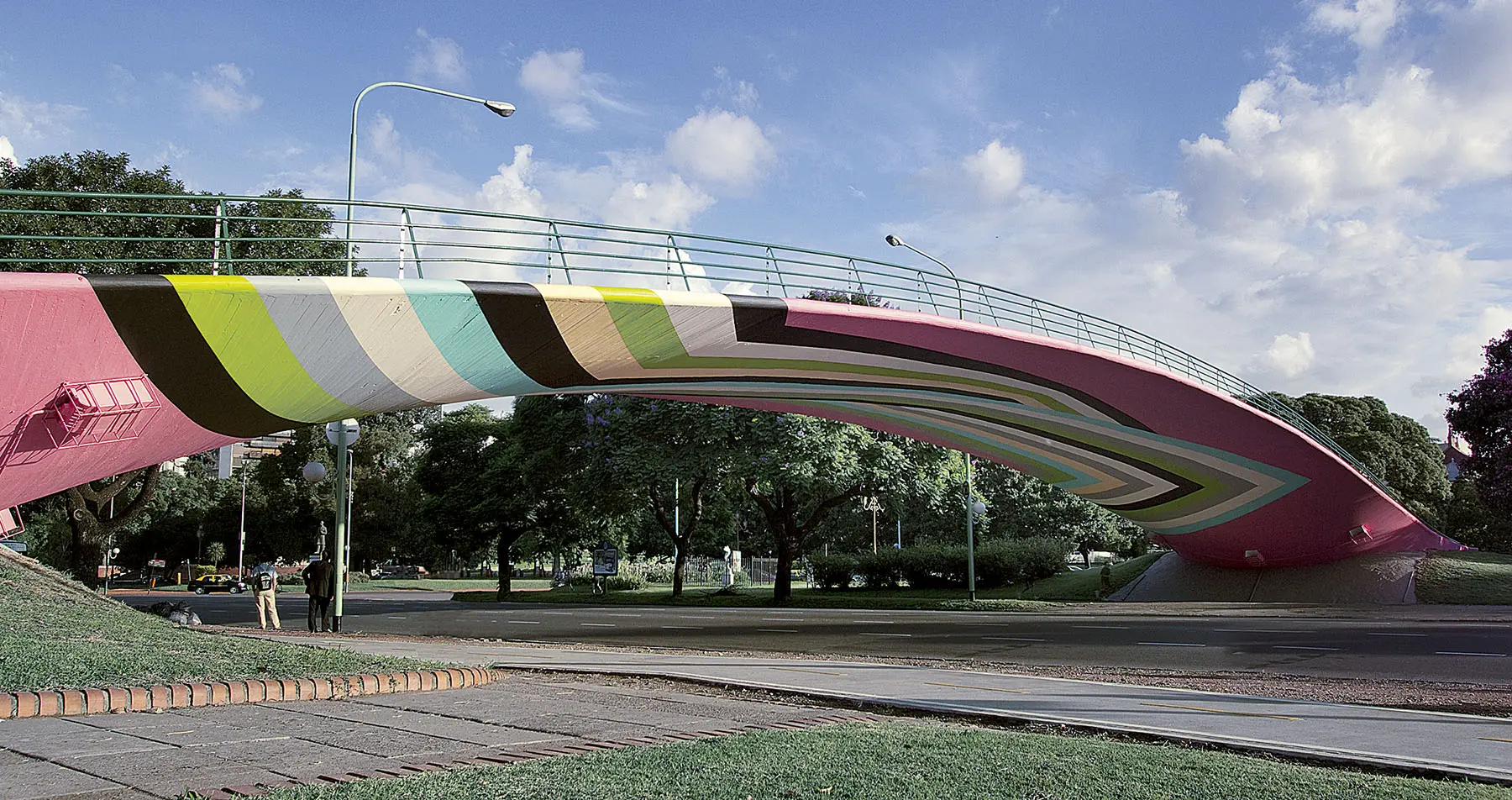
An underbelly traversed by a vibrant seven-color zigzag calls attention to a concrete structure that erects sobriety, the canon of modern elegance, into a mandate. For more clues, the work in question is some 40-meters long, highly stylized, and is to be found in the north area of Buenos Aires, on Figueroa Alcorta Avenue, connecting the Museo Nacional de Bellas Artes with the Law School. But it was only during the most recent southern-hemisphere summer when that very bridge was intervened as part of the global project Of Bridges & Borders curated by Sigismond de Vajay, that the name of architect César Jannello started to gain recognition commensurate with his importance. At least, it was then that he became known as the creator of that elevated passage made in concrete, which Jannello designed in collaboration with Silvio Grichener in 1960 on the occasion of the 160th anniversary of Argentina’s independence.
Adding to that, the name of this pioneer of modernity is once again gaining resonance in recent months thanks to the re-edition of his W Chairs, soon to be launched by his granddaughter María Jannello and designer Wustavo Quiroga, who together head a project for the re-edition of modern and contemporary furniture that carries the architect’s last name as its flagship. Connecting both pieces of news—which also open a new door for the fledgling drive to collect Latin American design—it is possible not only to plot a story of local modernity encompassing urban and domestic spaces but also, at the same time, to trace back the journey of an artist whose proper evaluation remains paradoxically pending. Because despite his great theoretical and practical influence, Jannello’s name is yet to be commonly associated with his contributions to projective culture. For instance, his research in the field of semiology dealt with a theory of the borders between semiotics and linguistics in the fields of design and architecture, a theoretical quest that put him in contact with Umberto Eco, Roland Barthes, and Oscar Masotta.
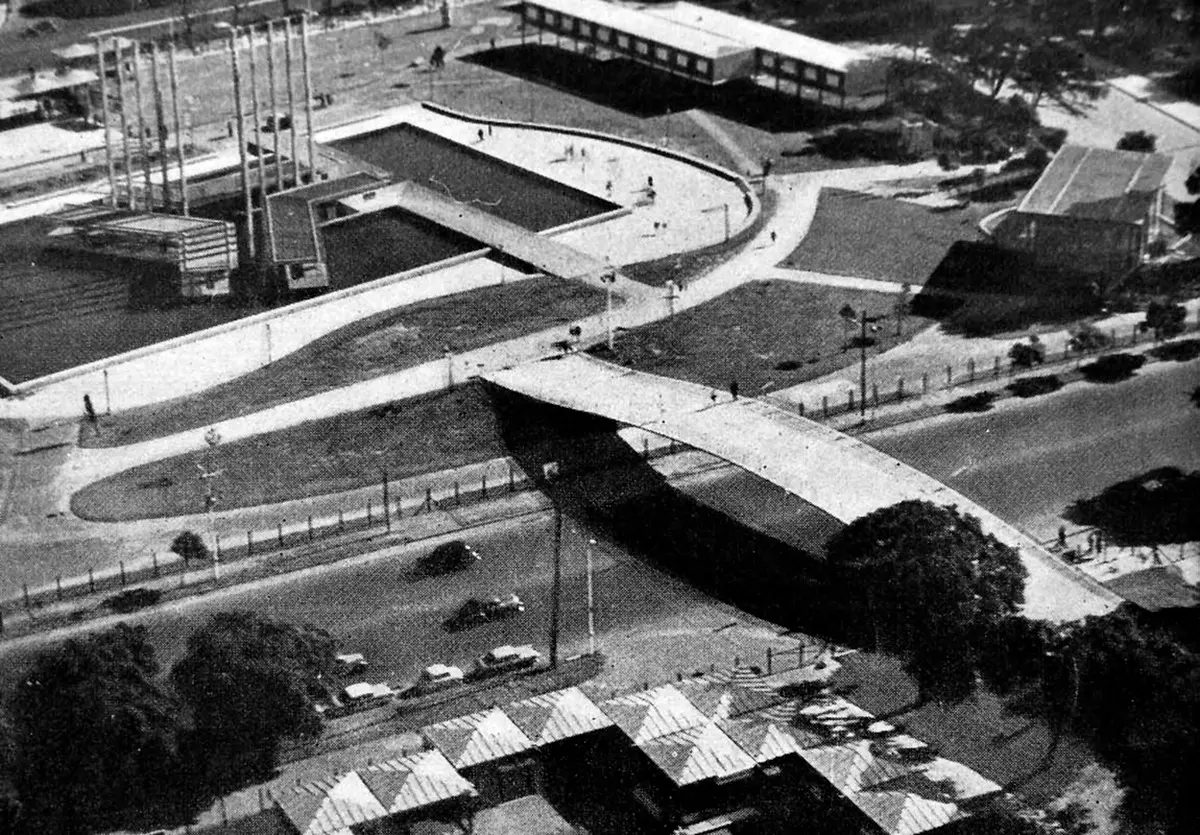
In the early 1940s, as a student influenced by the artistic avant garde, Jannello began exploring painting, drawing, and ceramics. At the same time, his forward-looking writings on art, design, and architecture were the springboard for an academic career of international reach, Jannello and his friend Tomás Maldonado, collaborators in the journal Nueva Visión from its first issue, formulated together with the Architecture and Design and Furniture and Design courses.
Thus, it was motivated by Jannello’s important theoretical work, more than his personal production as an artist, architect, and designer, that we sought to talk with Wustavo Quiroga, a young cultural promoter who, fascinated by the older man, works intensely in the investigation and reconstruction of his career.
What was Jannello’s impact on the culture of modernity?
WQ: His material works, be it visual or in design, are practical expressions, manifestoes, and learning experiences to deal with theoretical issues that continue throughout his life and with which he constantly reformulates the way in which design must be read and conceived. He even reaches beyond modernism as a romantic-aesthetic interpretation and sets forth a logic-based proposal with a deeper understanding of the autonomous production of design and architecture. The theoretical legacy is in the realm of morphology, a formal vision or structure, with special attention to cesías (a term he invented), textures, and the development of a system of formal reading that helps generate a “grammar of space.”
How does Jannello define the origins of design in the region?
WQ: On the one hand, through material legacies: the inheritance of furniture and objects that are part of the earliest productive experiences at the national level, where modern forms were considered along with functions, available materials, and the process of production of an object. On the other hand, his theoretical and educational collaborations, which will result in institutional projects with strong social connections. After studying architecture in Buenos Aires, Jannello moved with his then-wife, Colette Boccara, to Mendoza, and there he developed his first contributions at the Universidad Nacional de Cuyo, directing the Ceramics Program, doubling the time of study to transform it into a school-manufacturing plant to produce aesthetic and utilitarian objects for society. He promoted the creation of the Architecture School in San Juan province (a need after the great 1944 earthquake, which prompted the evolution of an updated, anti-seismic architecture and a reformulation of urbanistic) and emphasized the need for design; this resulted in the establishment of the Design School in Mendoza, the first in the country and one of the earliest ones in Latin America. That period concentrates his efforts in the Universidad Nacional de La Plata and the Universidad Nacional de Buenos Aires, where he was to remain, generating spaces for debate and research, until his death in 1985.
But Jannello’s project work extended also into the management, logistics, and design of democratic and national political proposals, both under the Juan Domingo Perón administration and under the government of Arturo Frondizi, when he carried out several public projects such as the San Martín Cantata (a staging in tribute to the Liberator at the foot of the Andes, in Mendoza, in 1950); the Fair of America, an unprecedented event that for the first time brought together industrial production from all the continent’s nations in a series of exquisite pavilions, mimicking the spirit of the great world fairs (Mendoza, 1953-54); and the Fair for the 160th Anniversary of the May Revolution (Buenos Aires, 1960).
Jannello was also part of a greater, non-partisan system of interactions, where the second cohort of Modern artists in Argentina worked to expand modernity in South America. And with other researchers in various regional and international academic spaces, he developed conceptual bases, with logical-mathematical and deductive roots, for design and architecture.
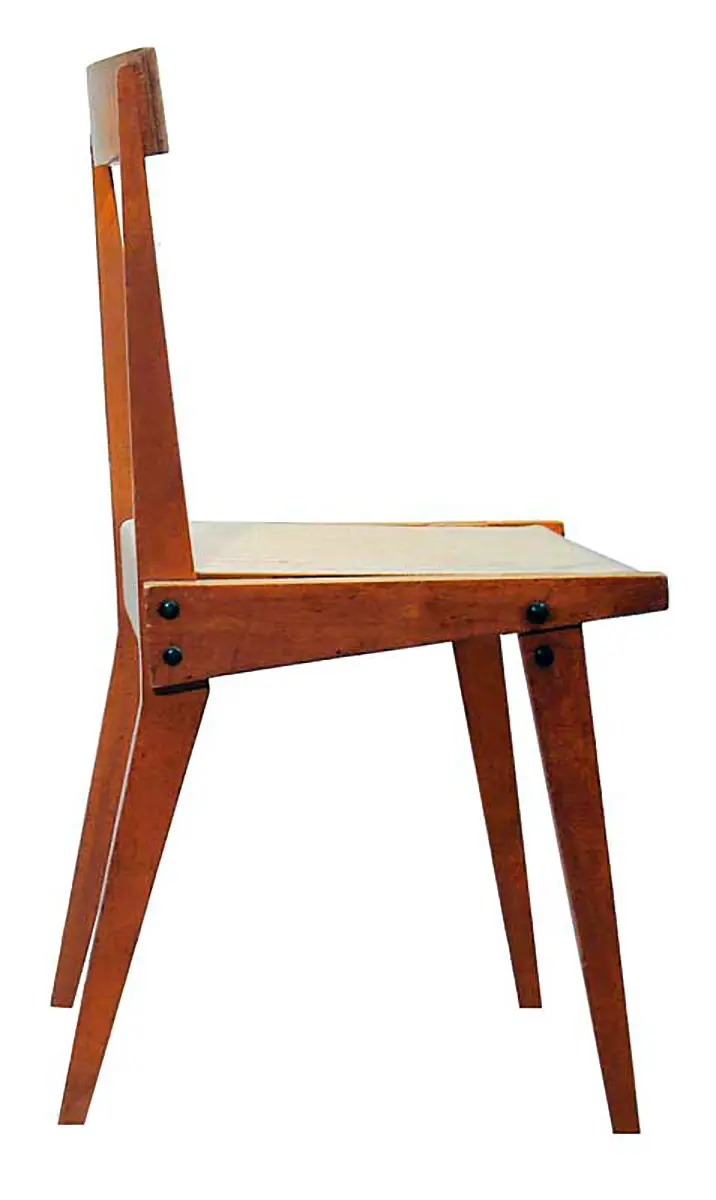
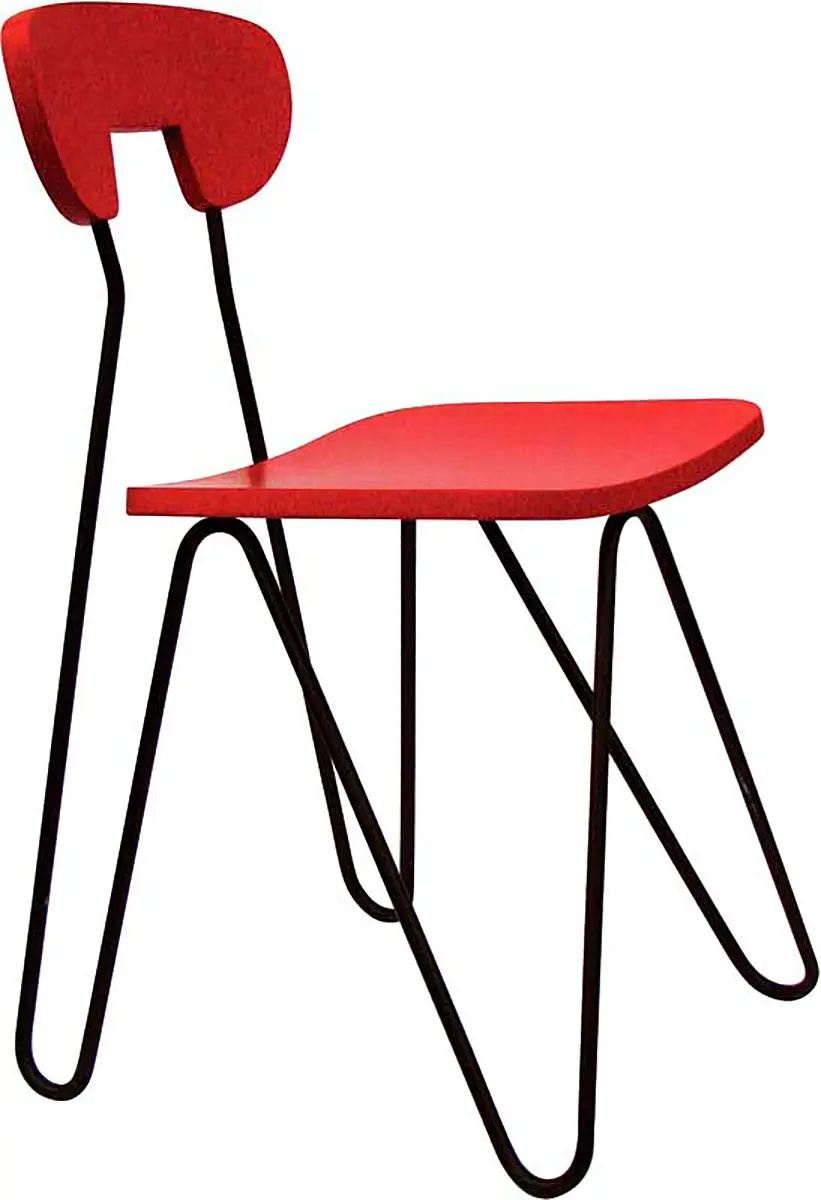
In connection with the launch of some of his landmark furniture works, which will undoubtedly give impulse to the collecting drive—curiously lazy in the region—it is important to contextualize the space in which he began to design these products. During the 1940s, the local markets in most Latin American countries were mostly supplied with imported furniture. In Argentina, with the effects of the post-war industrial revival and the need to address the new lifestyles evolved in modern society, architects and artists begin to project handmade or semi-handmade furniture and objects. The W chair, the prototype for which originated between 1943 and 1945 in Mar del Plata, during the construction of Amancio Williams’ famous Bridge House, is a pioneering product in Argentinean design. This chair kept transforming throughout the production process, reaching a powerful formal and functional synthesis that made it into an icon in Latin American design. For many critics, it is second in importance only to the famous BKF by Bonet, Kurchán, and Ferrari Hardoy.
The re-edition of the W chair (with unprecedented colors such as red, turquoise, orange, and green) takes advantage of available material resources and turns limitation into a great virtue. Besides its formal contribution, it could be set up and taken apart by fitting the pieces without the need for screws, using the structure’s elasticity also with an ergonomic intent, for back support. Among other productive experiences in Jannello’s object ecosystem, we find things like trundle beds and chairs for children, bookshelves and desks for workspaces, ceramic tables and vases, and even the space and equipment for a workshop that was the origin of the COLBO ceramics plant, directed by Colette Boccara, Jannello’s wife for two decades. COLBO became Latin America’s first designer tableware produce, with several serial collections that reached international commercialization.
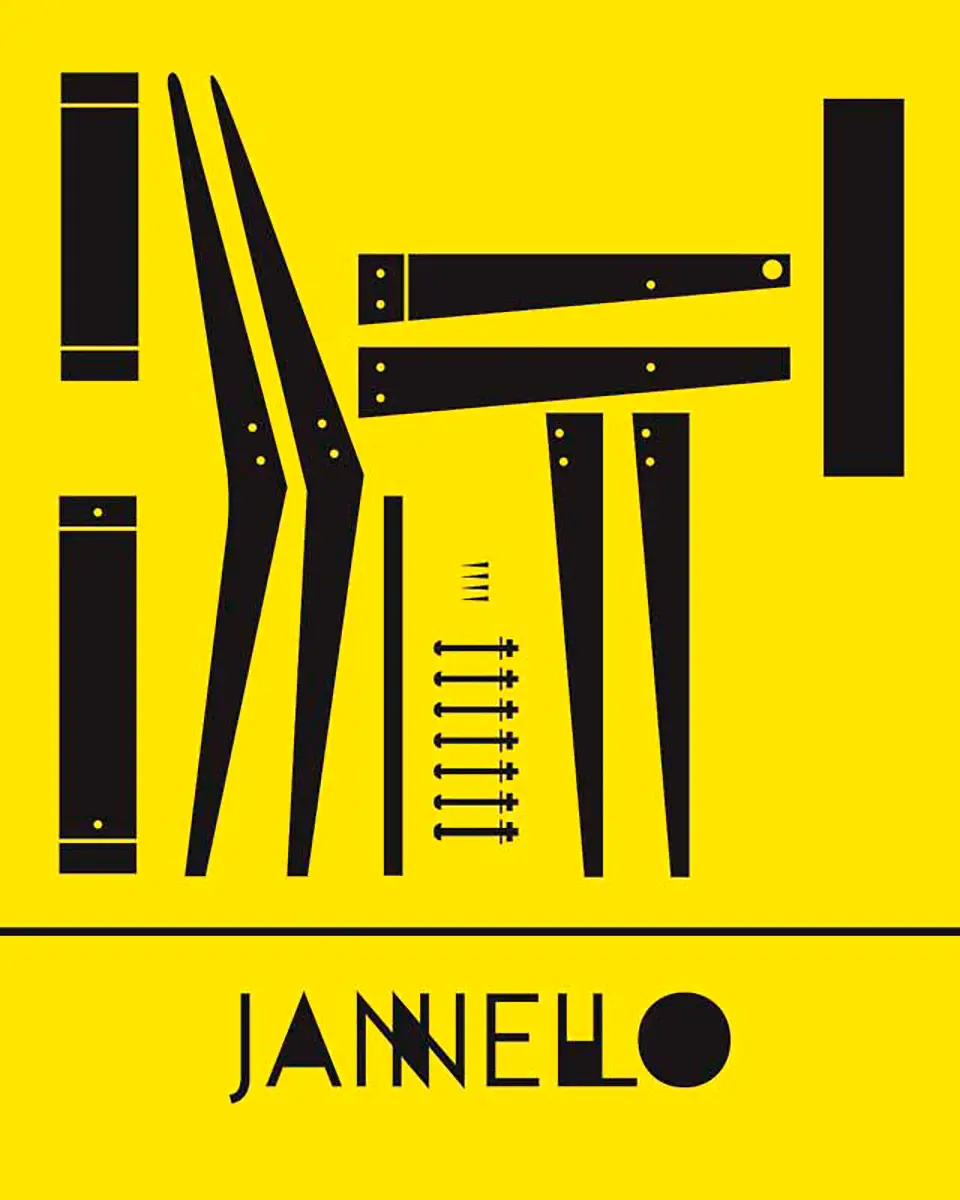
Another testament to Jannello’s approach to design is the K chair, created in 1953 using native woods (Viraró and Raulí) machine-tooled in simple and precise ways. It is put together using screws but no glue and the seat is made of rope or plastic cables that are tied to a crossbar underneath. It was sold in parts inside a book-like packaging, at a low cost, promising its users a quick and easy setup (an IKEA forerunner?). It was commercialized in Buenos Aires through the OAM / Organización Arquitectura Moderna, the design, architecture, and urbanistic studio formed by a new generation of modern artists; later, it was sold in Tucumán thanks to architect Hilario Zalaba and in Paris by decorator Raoul Guys, who incorporated it into his international furniture catalog Style AA, following a suggestion by André Bloc, the editor of L’architecture d’aujourd’hui.
The project JANNELLO EDITORA is part of a system of larger proposals: “The center is the MEC / Museo en Construcción, which hosts, among others, the Jannello-Boccara collection in order to study, appreciate, and communicate its legacy. Based on the productive potential and intrinsic value of the products designed by Jannello and Boccara for COLBO ceramics, we moved for the reopening and relaunching of this manufacturing concern, with autonomy from the MEC but in synergy with it. This experience, started in 2008 and directed by Matías Jannello in collaboration with Martín Endrizzi, had an economic potential that helped create new jobs and preserve the Museum’s holdings,” says María Jannello, the architect’s granddaughter.
JANNELLO EDITORA was created along the same line of reassessing the legacy. It also has an autonomous character and is helmed by María. It is open to the possibility of presenting works by other Latin American artists who might not be well known but have high-quality proposals and also to include contemporary proposals that fit the firm’s profile. There is an intent of bringing the beauty of these designs into everyday life, and in a way to verify their validity over time, demonstrating their status as classics of the modern period.
Regarding Jannello’s design work, the words “playful” and “rational” always go together: it maintains an intuitive and didactic side while normalizing itself under compositional and functional laws. His process sustains a continuous back and forth between experimentation and its logical basis, which feed on each other and are embodied in his works.
Also, his notion of design as a productive phase includes a great number of stages: the method, the project, its materialization, and its commercialization. “In the beginning, the contribution is the simplicity of construction; in later models, a technical and formal virtuosity. The earliest designs derived from a literal application of the modern manifesto, as in the primitive W chair; later he redesigned with a functionalist understanding that achieves sophisticated form/functions. His Butterfly chair and the Cup armchair posit a study of the formal-theoretical situation,” Quiroga points out. Another element he highlights in Jannello is his production method: he started as self-producer, continued as self-manager of the manufacturing process, and finally created a system that interconnected several workshops. And when his design expanded into the international market, manufacturing was delegated to representatives. A significant step forward for the period was the fact that distribution, promotion, and commercialization were part of the designing experience. For both María Jannello and for Quiroga, one of the lessons left by César Jannello is “the belief in a poetics of design, with its own rules and complex combinations, rather on the visual romanticism that is implicit in stylisms.”
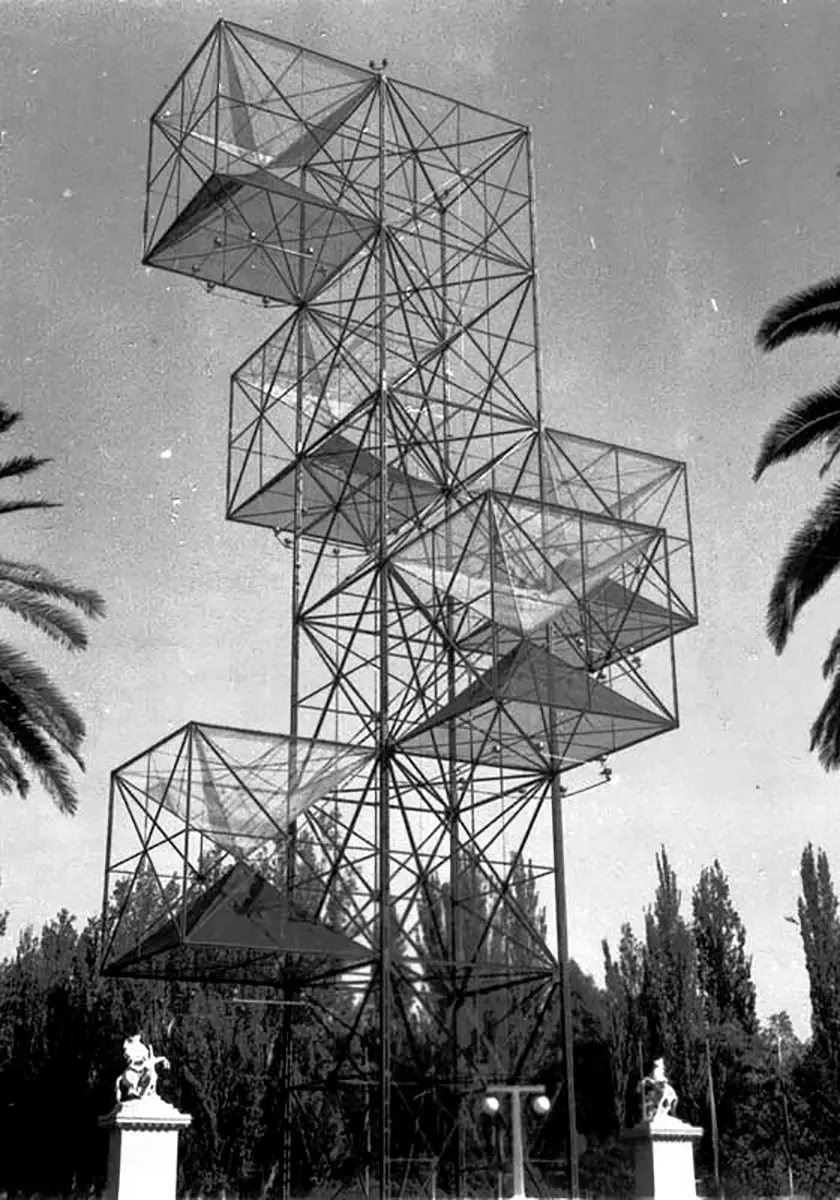
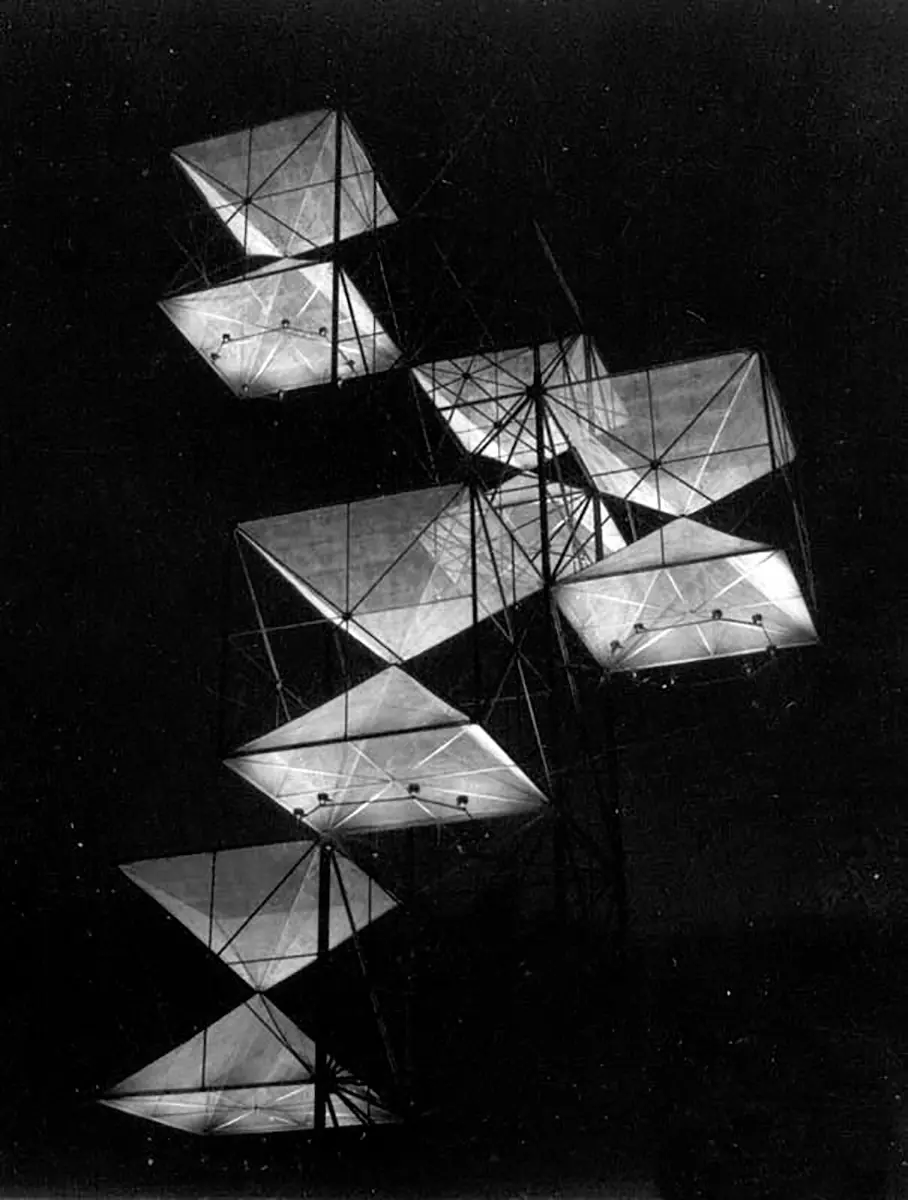
Besides the houses he projected in the provinces of Mendoza and San Juan, an important highlight of Jannello’s architectural legacy are the pavilions of the Feria de América, at the San Martín Park in Mendoza, which in 1954 established a landmark in the architecture of exhibition spaces. For instance, the ephemeral Torre de América, located at the entrance to the park as an allegory of industry, has recently been recognized as key in the story of the Latin American avant garde. The 50-meter tower, with a vertical metallic structure and a helix-like outer layer of cubes containing two inverted pyramids, was based on a graphic module created by Tomás Maldonado and had sound and lights by electro-acoustic musician Mauricio Kagel. The night-time show it offered was too new for the time and the place. A clear example of those “peripheral avant gardes” that fed into international theory and practice; today, such productions are intently sought after for their revalorization and for the recomposition of a narrative of modernity where traditional centers are no longer the sole originators. The tower, an allegorical element of the Feria de América, symbolizes an attempt at the industrial promotion of the Argentinean repertoire (and the international one, too, via licenses), which helped strengthen the ties between American nations.
Meanwhile, the exploration of Jannello’s work as a theorist continued in revisions (like Claudio Guerri’s sophisticated articles “Semiótica de la arquitectura, el diseño y el espacio en Argentina” from 1988 and “El nonágamo semiótico: un ícono diagramático y tres niveles de iconicidad” from 2003; and the book Diseño como poética, el pensamiento de CJ by Germán Carvajal, from 2005) or in the academic concepts applied by Lucrecia Escudero in France. During his second phase in furniture design, after leaving behind modernist radicalism, Jannello reformulates the way in which a product needs to be conceived, no longer from the starting point of functionalist axioms—the balance between beauty, good, and utility—but from formal quests in which some concessions are permitted. Such is the case of the Butterfly chair of 1964, or the Cup armchair of 1971, where Jannello uses, in a virtuosic way for the period, materials such as two-way-curved iron sheetlets. His designs retain the meaning of the theoretical conceptions and are material expressions that embodied Jannello’s intellectual process and ingenuity.
“In order to reproduce the original models, we had to undergo an exhaustive study of the formal and constructive process, recreate production methods of the period, like working with cabinetmakers,” says María Jannello. She works on a curatorial line that encompasses everything from the selection of works and the analysis of their historical contexts, to the operative level of re-design and identity. At the top of the catalog, the launch of the W original model chair, a limited edition of only 100 units produced through a process identical to the original, and the serialized version with polychrome applications or metal plating on wood. They are followed by the K chair with color ropes and its new Creole version with stretched-leather supports.

Why hasn’t Jannello achieved the valorization that is his due?
WQ: In part because his activity unfolded across a map that goes beyond Buenos Aires, which is Argentina’s main space for reading and legitimization. His territory includes the Federal Capital, Mendoza and San Juan, Tucumán and La Plata, and at the international level mainly Chile and France. And also because some of his works were connected to political positions that were repressed during military dictatorships, and this forced them to destroy materials while suffering censorship and needing to hide. There was also a process of suppression of educational institutions and research spaces, as well as the disarticulation of working groups, which erased his contributions. Finally, the variety of his career and the complexity of his family life are similarly difficult to approach.
CAROLINA MUZI
Journalist and independent design curator.