
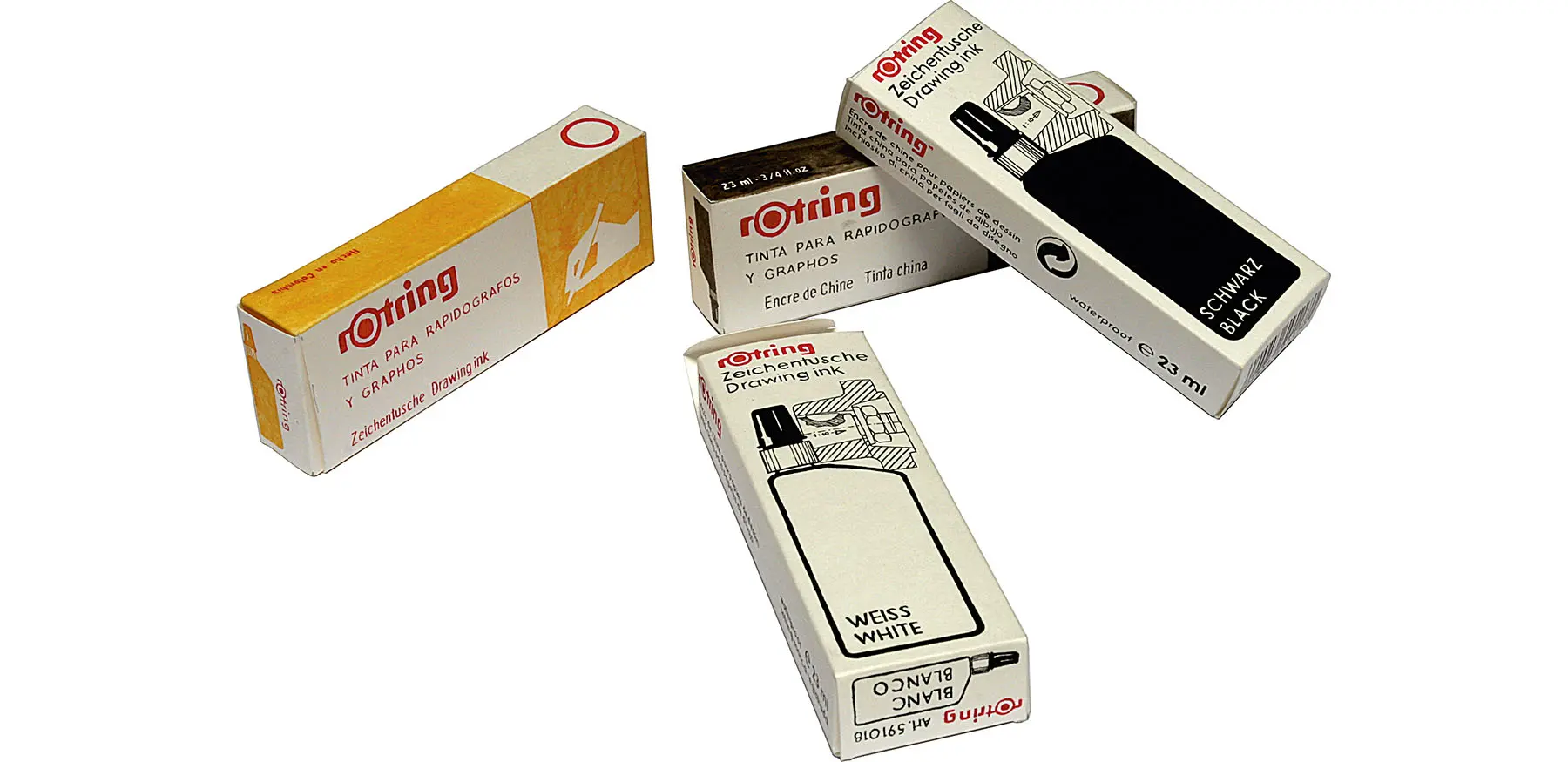
The rethinking of draftsmanship is one of the characteristics of contemporary art. In that reflection, the issue is not only to protect it from the standpoint of “expanded draftsmanship” that breaks with traditional materials and supports but also to revisit the meaning of the resource of two seemingly basic elements: paper and pencil. The practice brings together mental and material action, with the operation of a bidimensionality that can also become an investigation of the surrounding space.
For many artists, drawing ceased to be a transition, the stage prior to the work itself, and became an autonomous option in its own right. The medium’s processes and character allow artists to experiment and use it as a tool, or as a final result.
Mateo López (Bogotá, 1976) is fascinated by drawing, and this makes it possible for him to facilitate a dialog between two opposed artistic traditions: one that sees art as acting as a faithful representation of what is perceived and opts for realistic representation, and one that sees it as the possibility of exploring, question, and even transgresses the meaning of what is observed.

Thus López’s interest in artists like Sol Lewitt and Ramírez Villamizar. Lewitt’s idea of repetition, of a dichotomy between conception, opens itself up to creative processes in which exercises of serialized drawing, based on a specified format, recognize the value of chance. Meanwhile, the practice of drawing as an observation of the organic is significant in the explorations carried out by Ramírez Villamizar on seashells and landscapes. This aperture to lines of expanded draftsmanship does not mean a distance from more traditional conceptions, such as José Antonio Suárez’s, valuing an encounter with the masters with a craft that in its daily practice allows for other ways of approaching the real.
Another name that appears as a point of reference in his thought is Bruno Munari’s. The texts were written by the Italian artist and designer, for instance, “How Are Objects Born?”, interests López for their proposal of an approach to the idea and construction of an object: “I see as that initial idea, a notation —a diagram, then a more formal plan with measurements— proportions, then a construction. The idea onto the paper, and later the three-dimensional. In sum, the issue is to arrive at the materialization of a shape and the selection of materials. He is able to explain, starting from nature, geometric shapes and everyday uses, the way in which our body and our ideas define forms.”1
Since his earliest drawings, López proposes a revaluation of what is seen, a questioning, showing how a supposed investigation of “truth” in representation goes beyond imitation and allows us to examine that which the artists call the internal reality of objects. 2
The idea of an objective, the certain world is questioned already in his earliest works; El ideal de lo práctico (2004), Mímesis, and Fotocopias (both from 2005) are simulacra of the real and compel thoughts about how true the objective environment he analyzes, and whether it can be replaced with simulacra that are far from mere formal exercises.
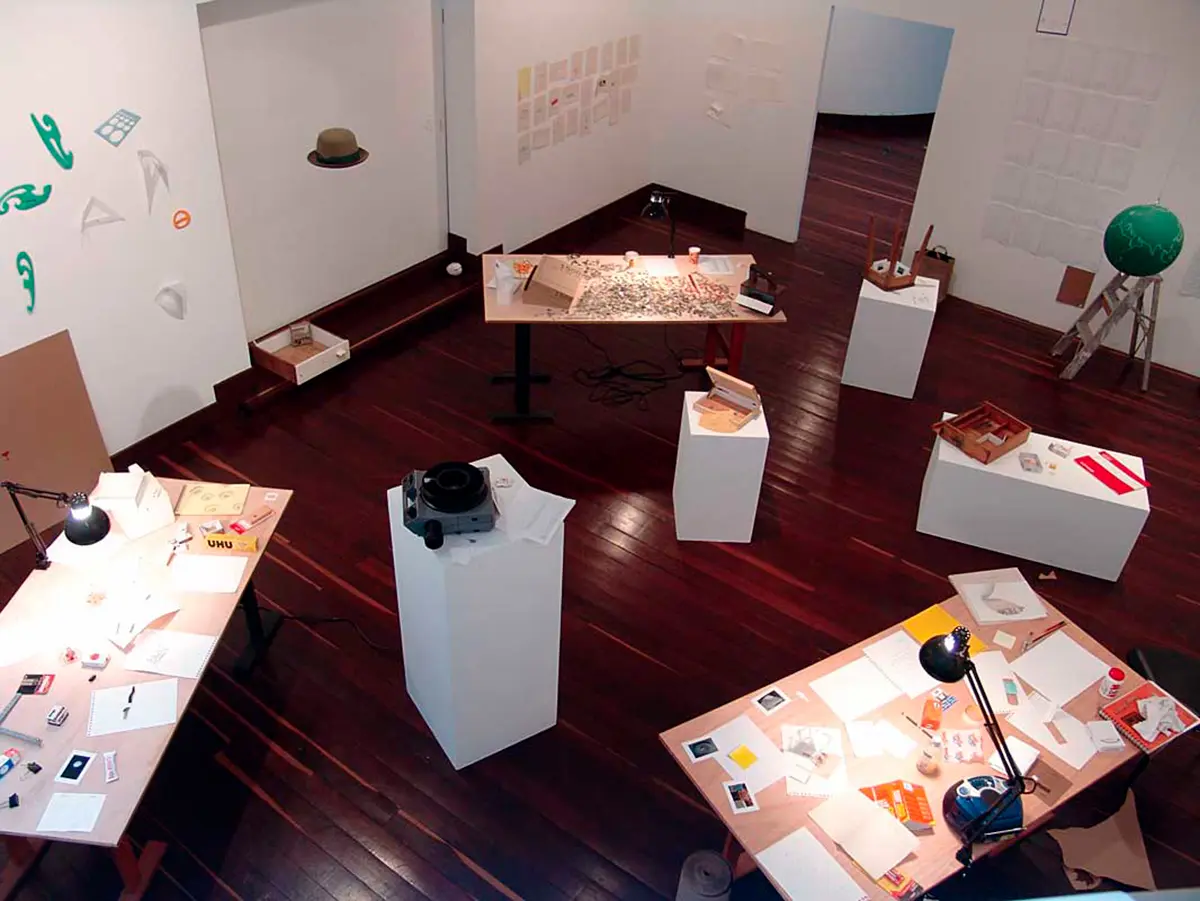
In 2006, López presented his exhibition Adentro y en Medio. He set up his studio in a room at Casas Riegner Gallery. Breaking with the traditional notion of an exclusionary space belonging only to the artist and his creative process, commonly closed to those who are not part of his immediate circle, López created a public space, a kind of large-sized architectural model inside which he worked for as long as the show lasted. It wasn’t a space where he limited himself to sharing his work with the viewer. The entire space was filled with facsimiles of the tools and materials used in a drawing: sheets of lined or grid paper were drawn and colored, creating a particular paradoxical relationship between the false and the true. What do those terms designate when the concepts can be interchanged?
Besides the ambiguity thus generated, López was able to start on a pathway that continued in later works: bringing draftsmanship beyond the two dimensions, transforming the drawing into something inhabitable. His original education in architecture, dropped when he felt they imposed constraints he would rather break, still count when we note his interest in space, in the transit from bi- to three-dimensionality, projecting drawing as something tangible in the space he intervenes.
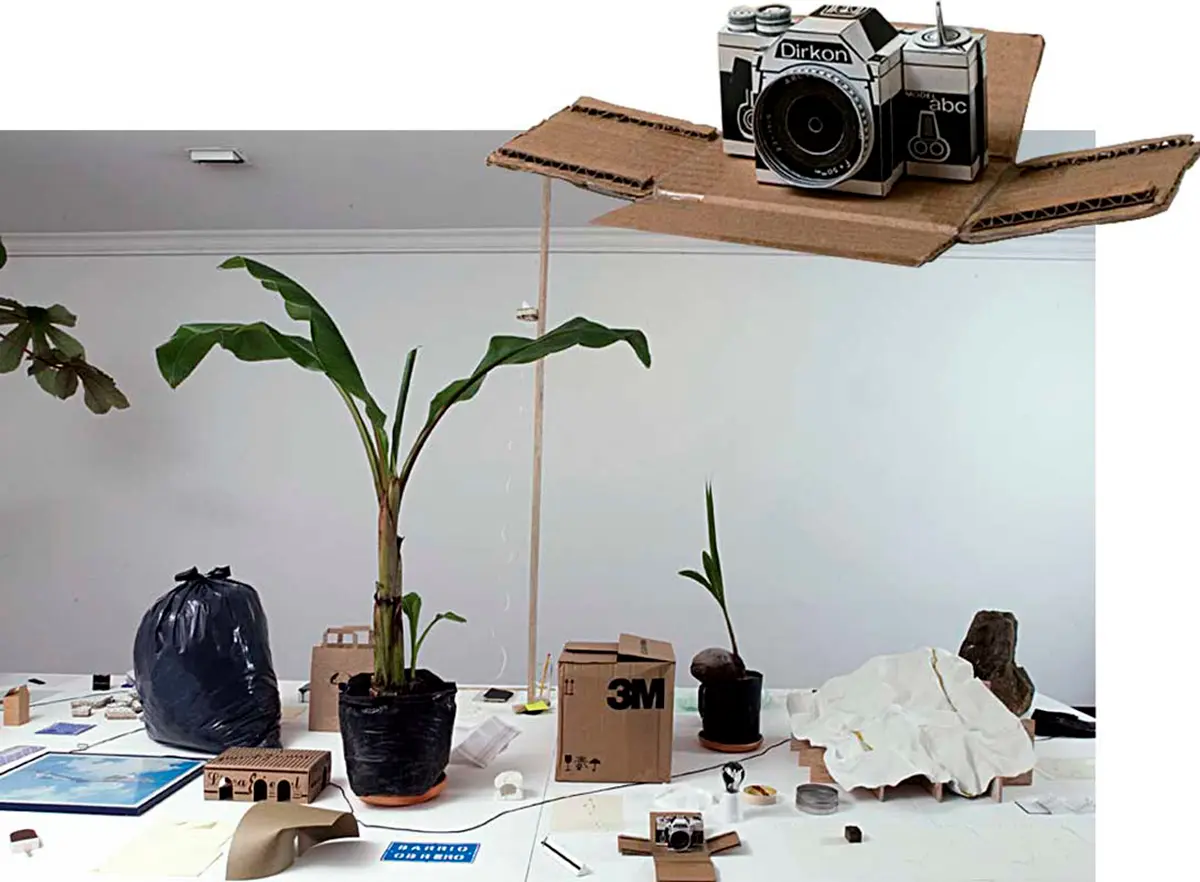
López’s complex way of understanding draftsmanship, his substitution of the “real” object, drives him to propose a series of facsimiles that allude to dissimilar cultural references, showing the variety of approaches that can emerge when the specific context is altered, building poetics that never cease to explore the meaning of the idea of representation.
More and more, López’s quests are connected with the idea of a path, of motion along a course, but also with documenting real or imaginary situations, and with the possibility of building archives.
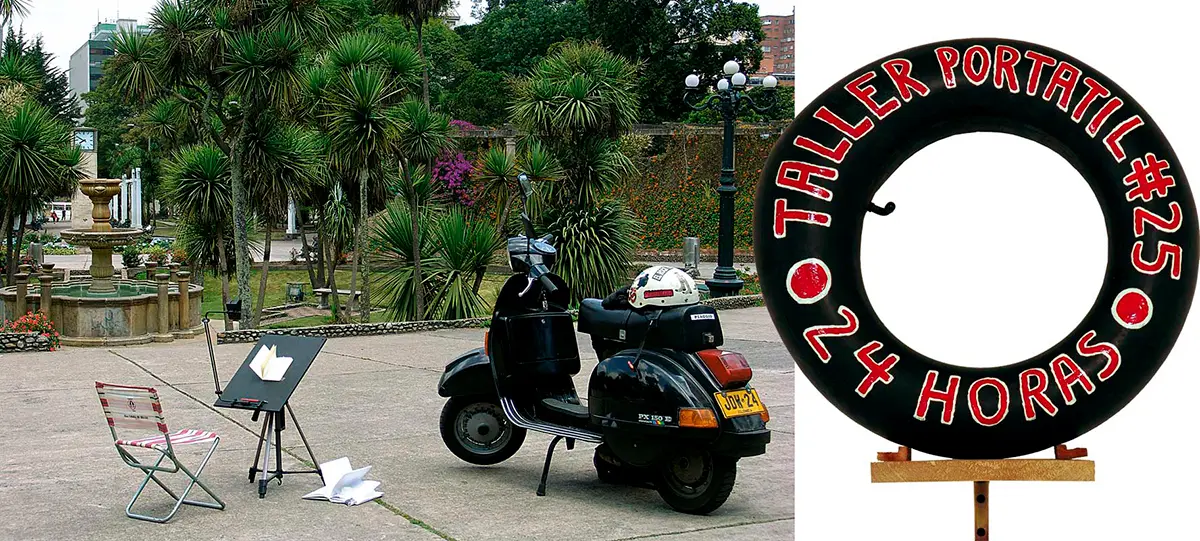
Diario de motocicleta (2007) is an example of such restlessness. López created a portable studio and traveled through Bogotá, Medellín, and Cali on a Vespa. Each trip, which takes thirty minutes on a plane and eight hours by car, meant a week for López. During the journey he kept a travel log, gathering graphic documents of what he saw. The project was possible thanks to what he calls Portable Studio #25, which includes, as the artists describe it, a motorcycle, two changes of clothes, music, a photo camera, a tripod, notebooks, and a camera lucida in a contemporary version, purchased in London.
The artist says that he came across a reference to this instrument while reading David Hockney’s The Secret Knowledge; there also was Roland Barthes’ disquisition on the camera obscura. López's interest grew by the fact that, as he explains, “the camera lucida doesn’t require darkness, it works like a mirror and a prism. You look through a hole and can see the image superimposed on the paper on which you will draw, like a double-exposure photograph. The effect is surprising, or at least is so basic that it makes us wonder about this digital age when we ignore how things work. At first, I wanted to travel using this tool; I had the romantic idea of the traveling painter, but it is a very fragile instrument, It is mounted on a tripod and needs to be still for long periods, and carrying out such maneuvers next to a Colombian highway can be rather difficult. The use of these kinds of tools in the drawing is one of the questions animating my interest in the genre and its historical process.”
In his log, López recorded places, objects found, and the date and time of the trip. Out of that experience, as a “wandering traveler” came his show Topografía anecdótica (2008), a narrative built on drawings, objects, and photographs from the 2,153 kilometers traveled on his Vespa. López’s interest in showing us things that we often do not see, to detect what has been abandoned, to jump from the landscape to the map, from the everyday object to the peculiarity of the road or of the tiles discovered in a small village patio, operate as salvaging of every day, but also as forgotten vestiges. Again, the show displayed the artist’s ability to transform the simplest materials, to give testimony of his unique way of approaching things around him, making evident interest in rescuing memories without canceling his attraction for experimenting with drawings that once again become objects.
The idea of change, of motion, was made concrete in yet another space: at Mexico City’s KBK gallery, located in an old chocolate factory in what was the city’s industrial zone and is now in a rapid process of transformation. Faithful to his interest in analyzing how the context in which he will act operates, López noted the importance that empty shoeboxes have for some of the locals. López thought about the relationship between the number of people living in the overcrowded city and the number of shoes it implies. From here came Sleeping Box (2007), a giant red box that reproduces in scale a shoebox, its inside transformed into a shoemaker’s workshop. The idea of the portable studio is carried forward here, and now the box includes a sleeping area, a chair, a white shirt hanging from the wall, and an LP vinyl record placed on the wall as decoration. A significant portion of the space is occupied by a desk covered by the cobbler’s tools, as well as the artist's everything is carefully placed and, whether it is the three-dimensional objects López builds or his drawings, impeccably made of paper. The small drawer that appears preceding the large red box foreshadows the installation’s conceptual support. Like a Matriushka doll, the drawer contains paper boxes organized in a spiral shape, reasserting the idea that, in the end, what is being shown, what we see, regardless of size or material, is a shoebox.
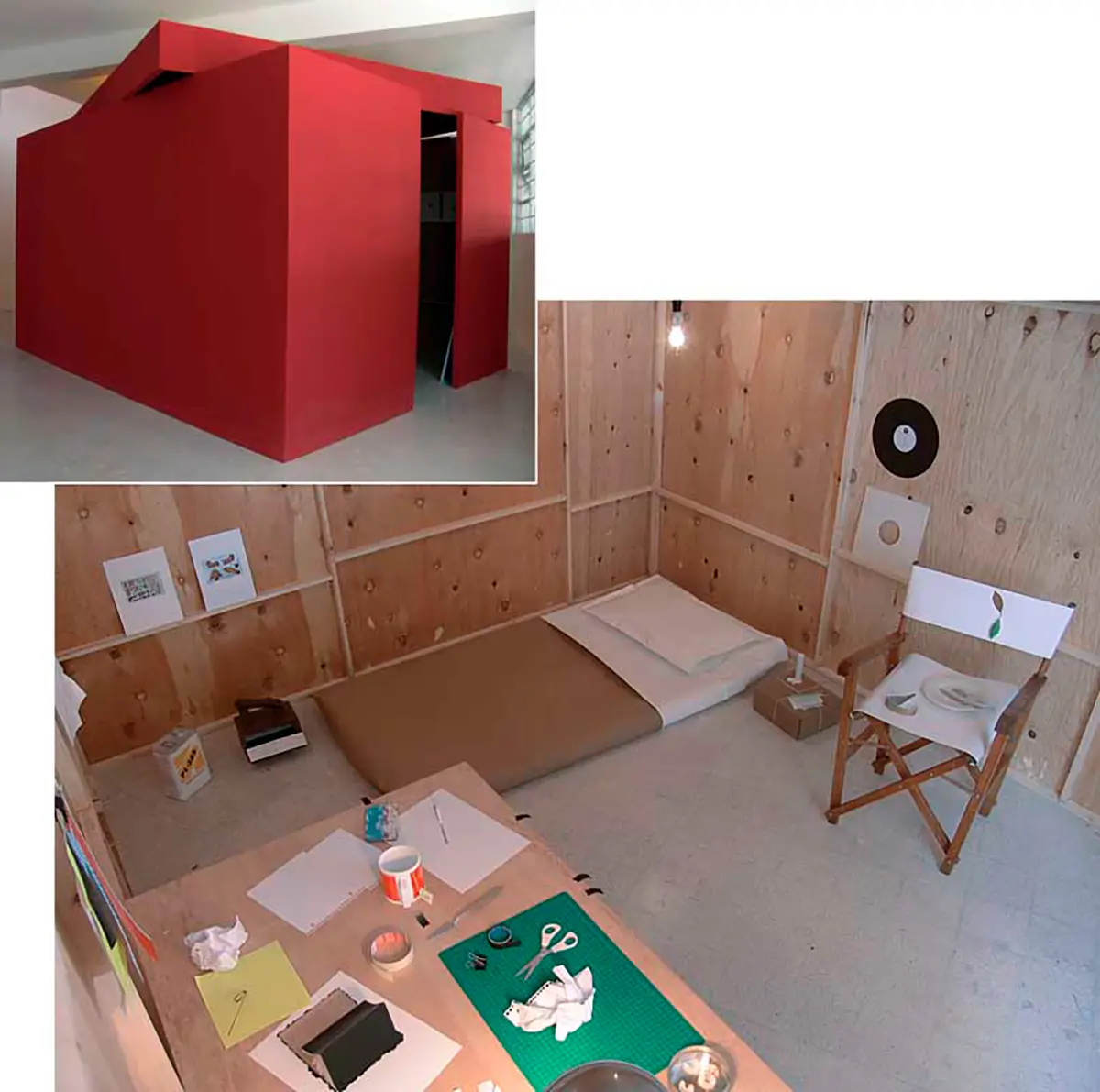
The feeling of staging is reinforced, and a space of surprising theatricality is built despite the familiar nature of the objects on the exhibit. Another exploration in his approach to the topic of mimesis is through the creation of those fragile paper replicas. Again, the staging of a fiction where falsity and truth operate once more, playing to create, through his narrative, a series of representations that circulate between the drawing, the paper, and the object, and end up inhabiting the entirety of the created space.
In 2008, López began to develop a book for the Puerto Rico Poli/Graphic Biennial (2009); the project is titled Deriva and, following on the line started with Diario de motocicleta, it records stage in its own process of creation. It brings together objects, bibliographical references, quotations, models, and texts written by guests and by López himself: “I have been trying to define a book in its content and form for several months (…) I am interested in the book printed in space, its ideas transmitted over time; the book as an anecdote that goes from mouth to mouth until it becomes a discourse. (…) I realize that I enjoy all kinds of visual languages that offer infinite readings, that transcend form and become remembrance, paradox, relationship, coincidence, anecdote.”3
The structure of a book may put us in mind the idea of the rhizome; any element can act upon another, or upon the relationships that are established. But there are also the artist’s literary recollections, where referents such as Borges and Cortázar have a significant presence. 4 There are several guests in the book, writing stories and errata lists, and an architect who helped design the module where the drawings will be installed for their exhibition.
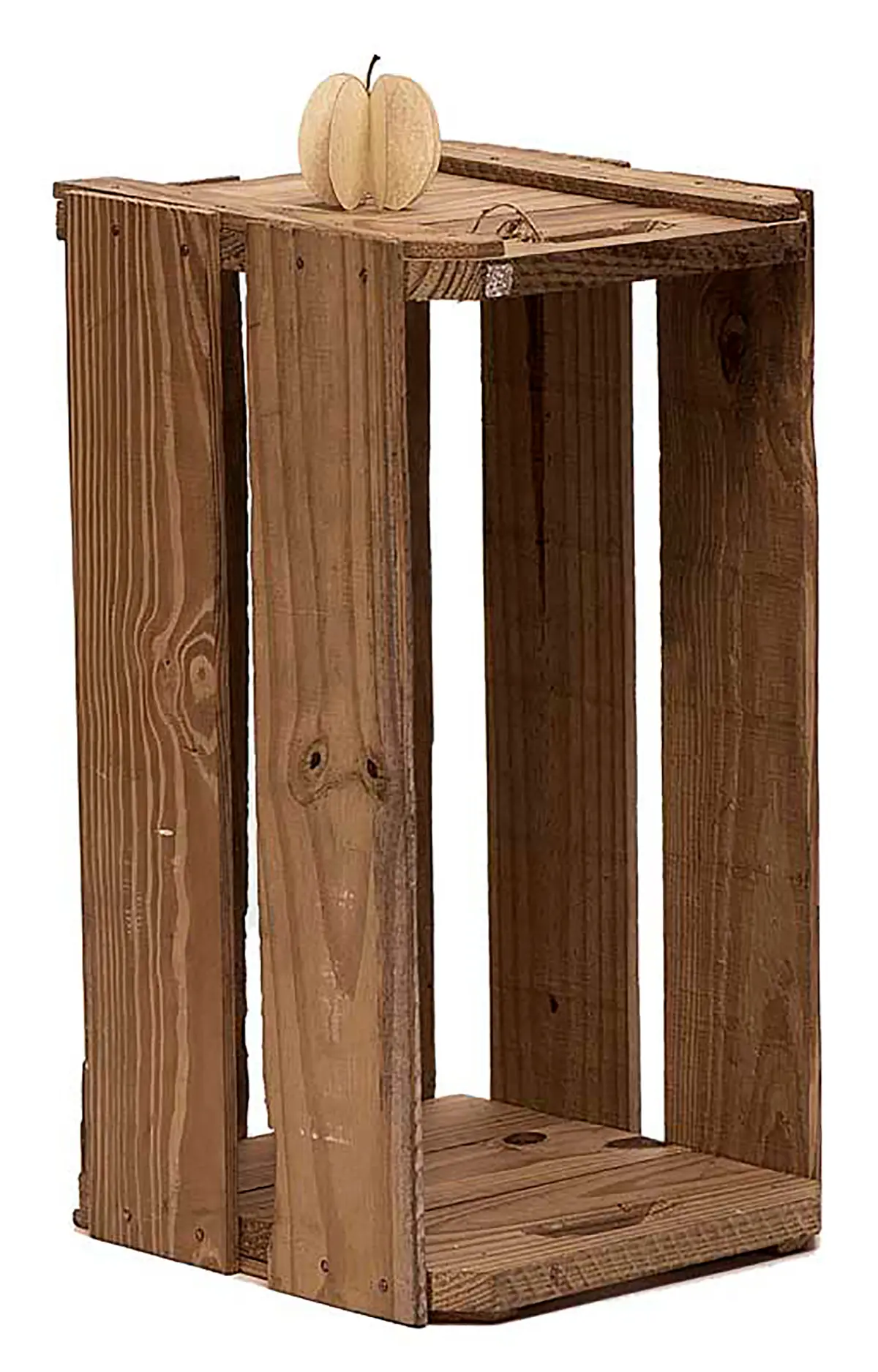
The images used to build the book were presented in a 2009 installation at MUSAC (Museo de Arte Contemporáneo de Castilla y León), and the module whose plans appeared in the book was built using recycled wood. Again, the long and thoughtful investigation process behind the editorial project was unfurled in the museum, recounting the experiences and situations that allowed López to put together a collection of personal anecdotes and share it with the viewer. Within that logic of reflection, in the prologue, Mateo López invites viewers to have “the end of my drift be the beginning of theirs.”
As happened with the precious ones, this installation takes us into a world where objects are painstakingly built and, despite their solidity, what populates the space is not “the objects” but their representations. Materiality is provided by draftsmanship, the paper or cardboard on which they are made; once again, the experience of the simulacrum of representation.
And the fiction in the construction of spaces will continue to operate. During an artists’ residence in São Paulo (2009), López was invited to participate in the show Panoramas, curated by Adriano Pedrosa. Part of Pedrosa’s curatorial proposal involved inviting a group of young artists and then also doing their residences to observe how the process of contact with Brazilian culture would influence their work. He was interested in exploring what would happen —as the artists of Brazilian Modernismo had appropriated aspects of European culture, anthropophagically digested, to produce their works— if artists coming from different parts used the same resource to analyze their Brazilian experience.
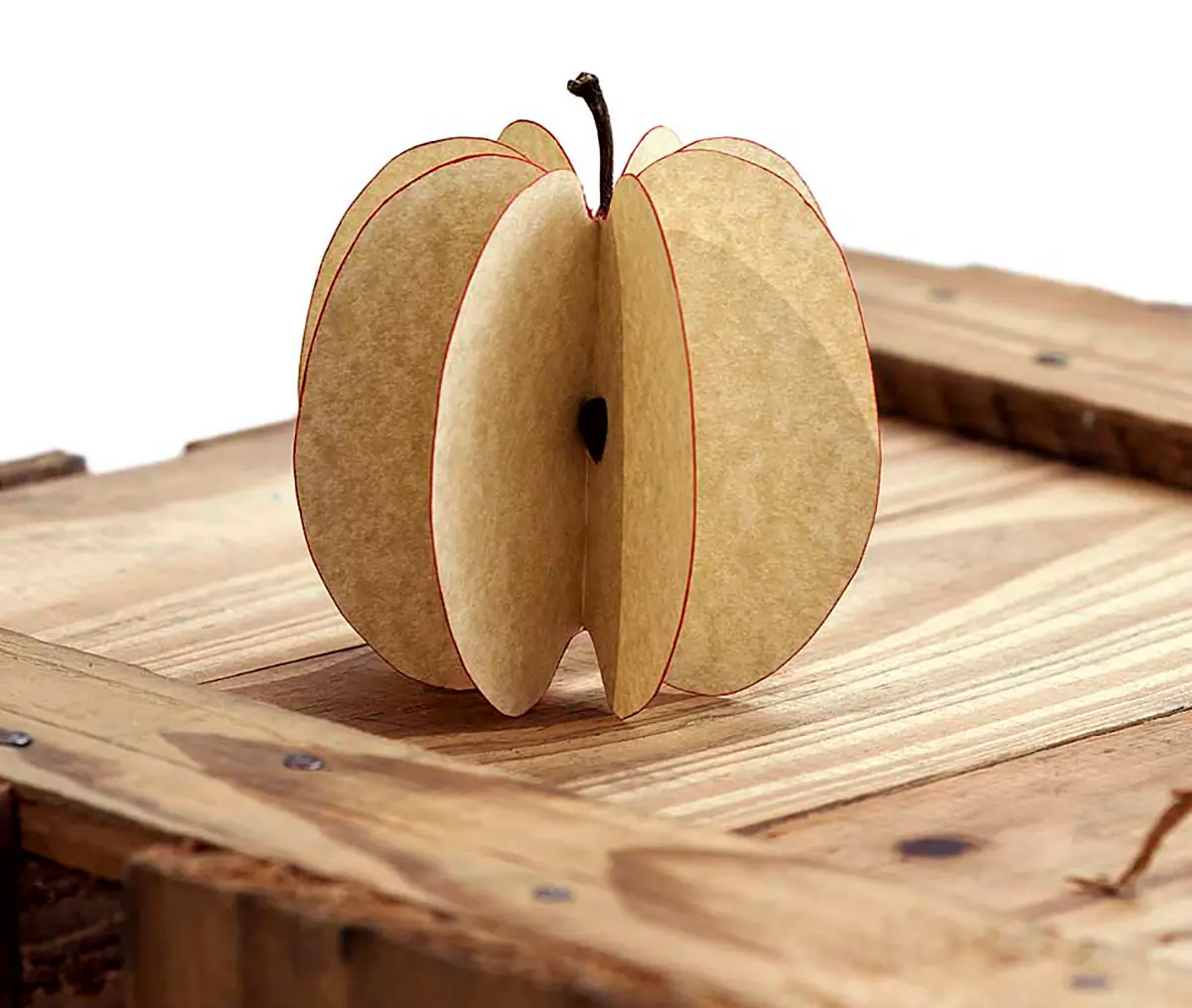
Traveling through the city, Mateo López discovered one of São Paulo’s first crafts stores. It was named Hilsco. He found special kinds of drawing instruments: they sold very traditional tools, and forms that connected to the past. His fascination with the store made him think of building a space based on that reference. When he went back to take photographs in order to record the features of the site, he found a notice that it was “closed for remodeling.” This unexpected circumstance didn’t stop him from making a replica of the objects based on his memory, but with one variation: he altered the original models and, working on the basis of the store’s inventory, created rulers with waves. The question came up: What would happen if that modified instrument were to be used to create architectural plans?
In parallel to his work on these projects, López started to process a different investigation. Since 2007, he asked José Antonio Suárez 5 to engage him in a visual conversation via a little notebook they exchange and on which each makes drawings. The experience resulted in the creation of several notebooks —Dibujos M.L. and J.A.L años 2007, 2008, 2009— that made it possible to produce the project titled Ping-Pong (2010), presented at Art Basel by the Casas Riegner Gallery.
They agreed on a series of words to be used as themes for their drawings: tree, abstract, architecture, home, song, reading, geometry, people, landscape, dreams, and color are some of the examples. Choosing one of these topics at random, each made a drawing, and the images were not signed. It was not an exquisite corpse; they worked on each topic separately.
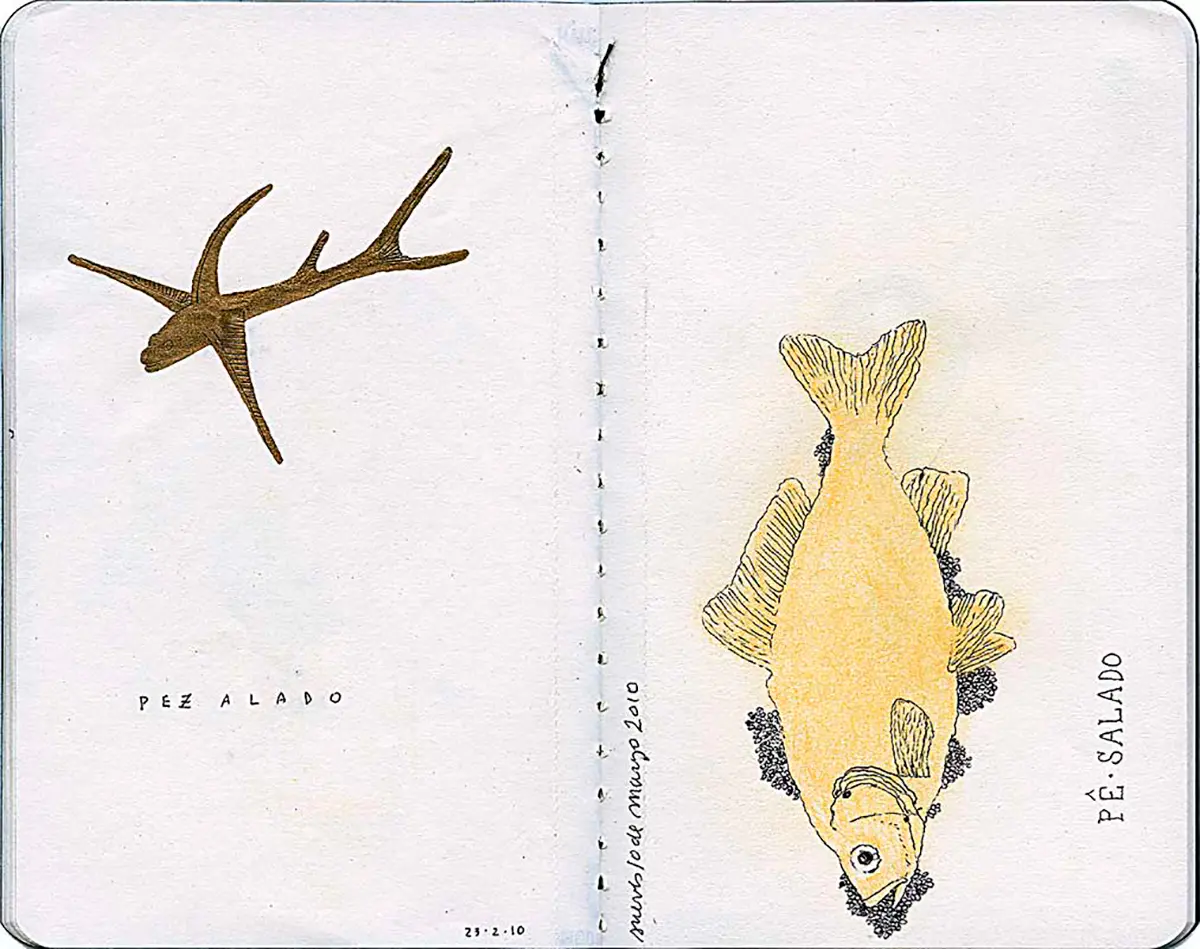
Ultimately, the result of their proposed visual ping-pong was 31 topics through 62 images. The generational dialog they established once again demonstrated that for these two artists drawing is the possibility of experimenting with a medium that makes possible the construction of records, diaries, and a particular relationship between word and image.
López has been working on a project titled Viaje sin movimiento since 2008. The proposal involves traversing the country’s railroad network, including both those still in operation and those that no longer work. As López explains, “The exercise includes drift, encounter, and collecting, and is not recorded on a specific format or support: the process results in drawings, photographs, videos, interviews, maps, objects, models.” 6
Recalling the tradition of travelers in prior centuries, such as Humboldt, Mutis, Agustín Codazzi, and so many others, there is one thing that connects them despite the diversity of classifying criteria: the use of drawing.
This long-term project once again deploys the proposal of traversing the landscape and using the most diverse media in order to accomplish his goals, and López’s intention of registering, building logs of what he sees, and transforming the archive of objects and materials without a single support or origin into a primordial source of his creative process, remains unchanged.
NOTES
1. Interview with the artist, January 2011
2. Ibid.
3. Mateo López, DERIVA, Second San Juan Poli/Graphic Biennial, Latin America and the Caribbean, Instituto de Cultura Puertorriqueña, San Juan, 2009.
4. Interview with the artist, January 2011.
5. José Antonio Suárez (Medellín, 1955) is one of the contemporary artists best known for the quality and rigor of his work. His affinity for drawing and print-making, the media he uses to create refined images that take no more than one small sheet of paper, allows him to build a complex and dissimilar world that combines the history of art, literature, and his own quotidian environment.
6. Mateo López, "Monumento Nacional," in Arte y Archivos, ERRATA 1, Gilberto Alzate Avendaño Foundation, Bogotá 2010
IVONNE PINI
ArtNexus Executive Editor. Professor at the Universidad Nacional de Colombia and the Universidad de los Andes.