This edition of Fotográfica Bogotá was held under the slogan: Testimony and Vision: Beyond Reportage. Mexico was the guest country, participating with a long roster of artists and photographers who use their craft from a variety of technical perspectives, thus expanding the panorama of the image. The international delegation comprised 49 Latin American artists, who, alongside the 16 local photographers also invited, guaranteed a wide view of what is happening in contemporary photography. This event, which has slowly asserted itself as Latin America’s most important biennial in its field, completely transforms the city’s cultural architecture, with museums, galleries, cultural centers, and universities joining forces to infuse photography.
The theme of this edition of Fotográfica Bogotá was especially interesting because it brought to the fore photographic images that approach reality to question and reinvent it, or simply to show it as it is, devoid of artifice. How to speak about reality? What does it mean to be a witness to the times? What gaze derives from reality? Can we still trust images, when they seem to have misled us so? These, among others, are the questions that emerge from an observation of the works on exhibit in Bogotá, which remained open to the public for over a month.
The intention is not to reproduce here a catalog, but to select what was most relevant and significant. In consequence, we will give a critical once-over to the various exhibitions I was able to see, noting, in general, that the curatorial selection both from the guest nation and the other participants was highly rigorous and of great quality.
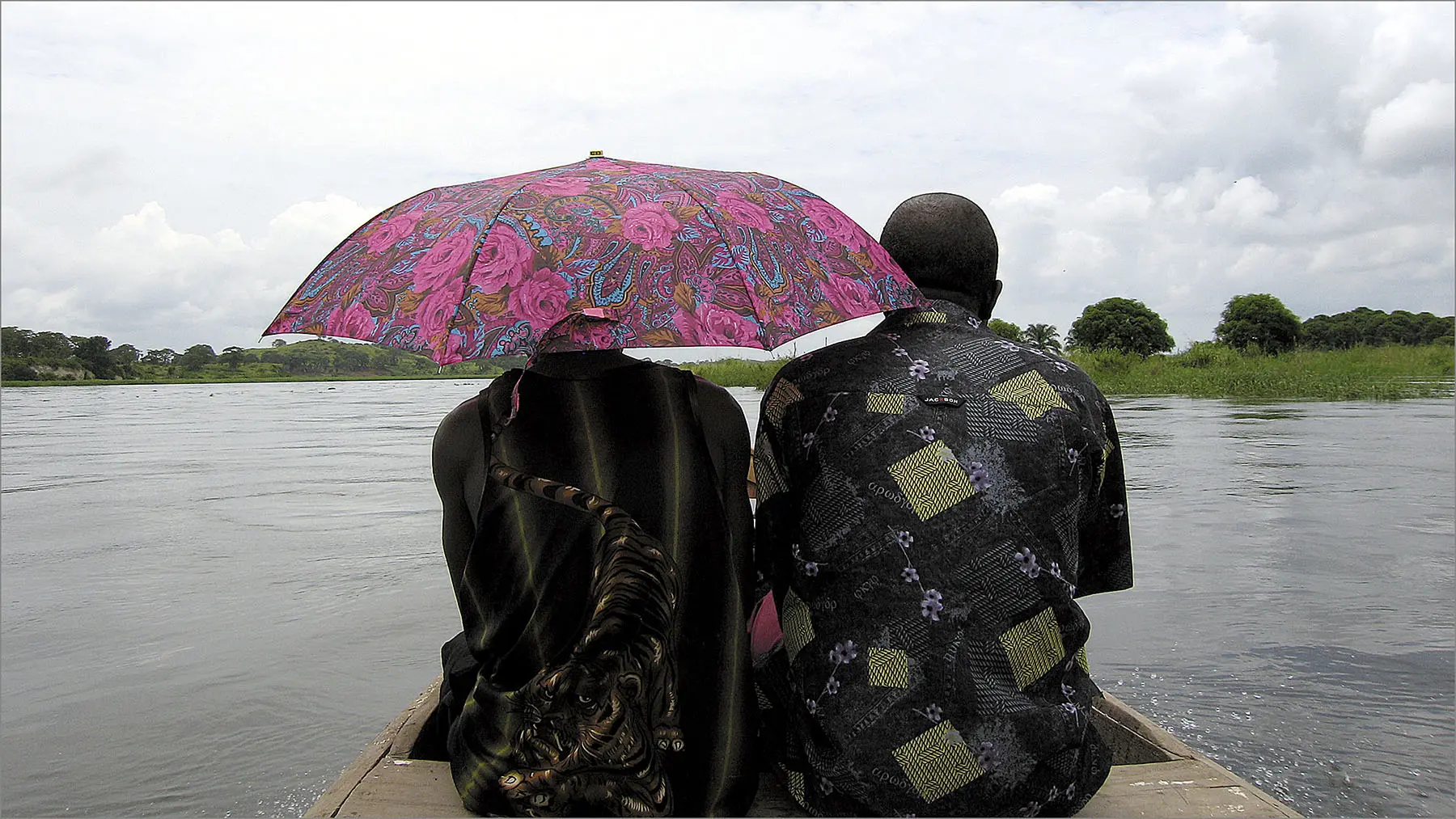
Let’s begin then with the exhibition of works by Alfredo Jaar, presented at the Museo de Artes Visuales of the Jorge Tadeo Lozano University. The Chilean artist-focused Muxima, his first individual show in Colombia, on an issue that provokes thoughts about the human condition and our tendency to establish racial borderlines. The visual device was comprised of a film, Muxima—an African (Angolan) word meaning “heart”—and a series of photographs. The film is inspired by a popular song presented by the artist in several versions—“chants” or “visual poems”, as he calls them. The background for this work is the artist’s twenty-year-long collection of Portuguese-based African music, where he found some six different versions of that song. This kind of Portuguese-language music is bathed with a certain nostalgic feeling or saudade, which fits well with Jaar’s film, where the artist attempts to help viewers carry away a feeling of Angola in their bodies. Regarding the photographs included by Jaar, we find portraits of Africans of various ages. The photographs are intervened by a large band in black, revealing portraits as a partial look at reality; in fact, the artist insists on asserting that it is impossible to speak of reality as a whole: in that sense, his images are but fragments.
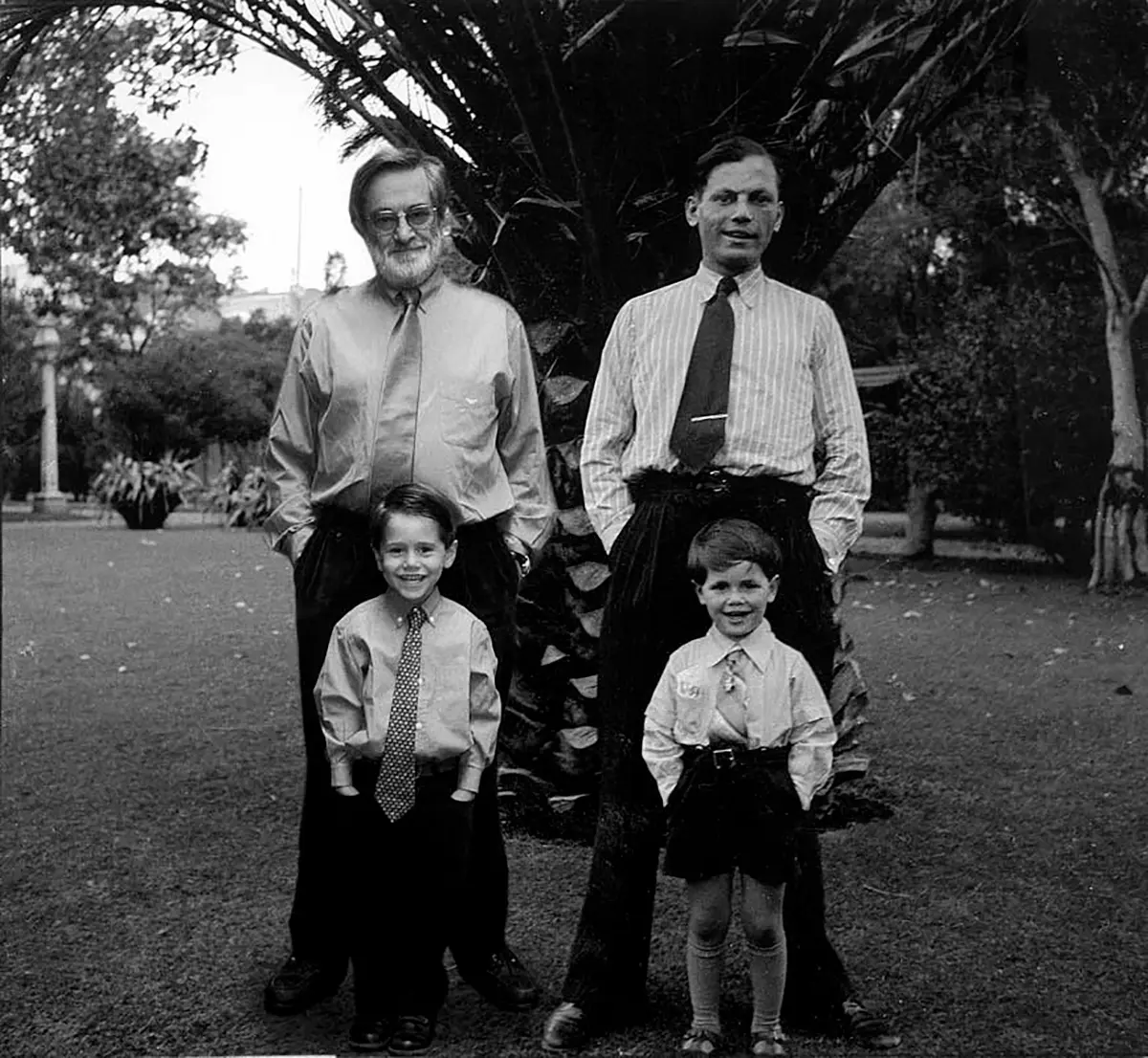
Mexican artist Pedro Meyer, one of the event’s guests of honor, exhibited a series of portraits at the Museo de Arte Moderno de Bogotá, alongside other Mexican guests such as Dulce Pinzón, Gabriel Figueroa Flores, Livia Corona, Manuel González, Graciela Iturbide, Joaquín Santamaría, José Luis Cuevas, Omar Gámez, Pablo López, Arelí Vargas, Gerardo Montiel Klint, and Fernando Brito. Meyer’s portraits of famous figures, such as Borges, are impressive in their veracity. His most recent production is also stunning, with Meyer displaying his fascination for digital photography and the many possibilities it offers to manipulate the image. Meyer’s presence in this event was undoubtedly key for us to be able to see his best-known images, which are already part of the history of Latin American photography, and to hear him in the accompanying lecture series, where he expounded on his interest in new technologies and their multiple opportunities for the manufacturing of images.
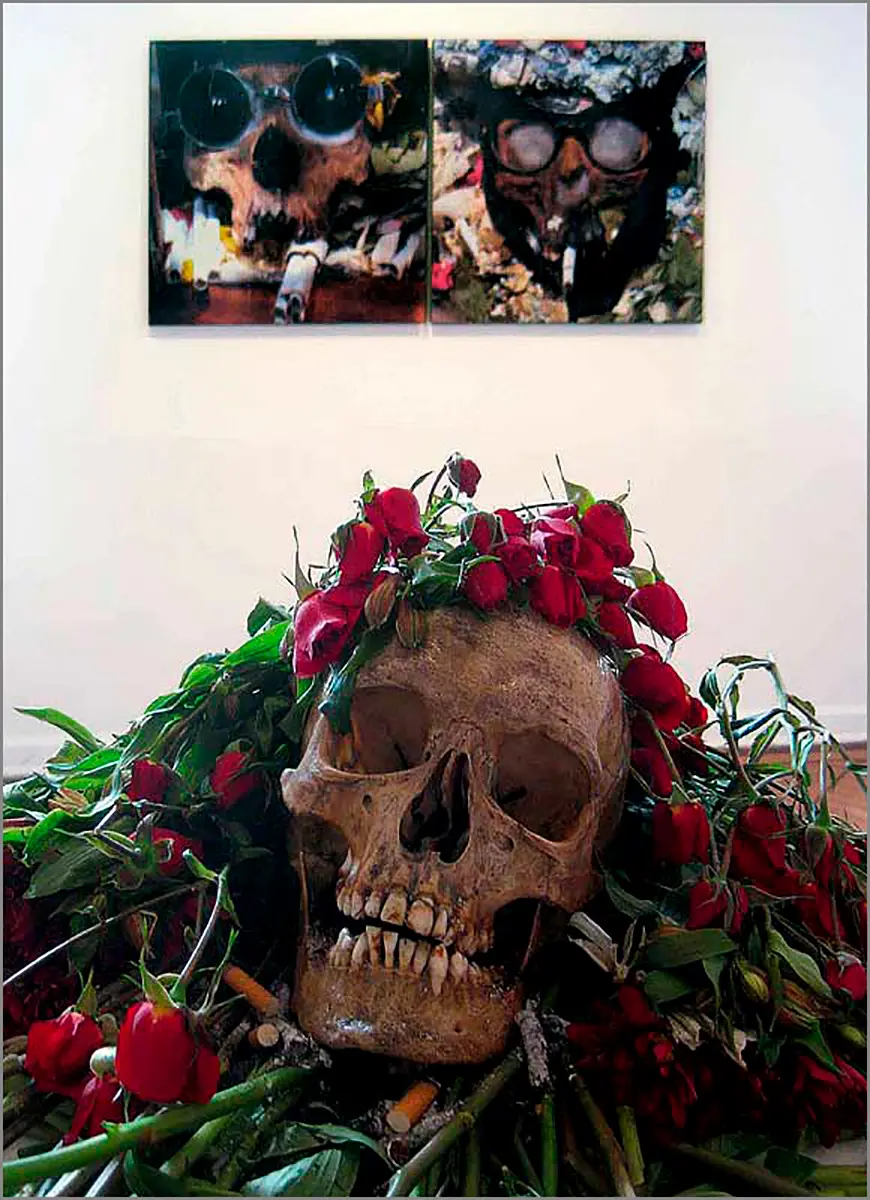
Gastón Ugalde, the Bolivian artist, exhibited his photographs of skulls at the Christopher Paschall Gallery. Through an anthropological gaze, the artist is able to bring center stage a series of ñatitas, as the preserved skulls of loved ones are known in Bolivia, where they are dressed with flowers in an indigenous festivity that is still part of the local culture. These skills are displayed in the streets like precious objects, carrying features of the personality of their former owners; in this case, the objects serve to enhance and emphasize that gaze. The skulls lose in this way their terrifying character and help exorcize death through a touch of humor.
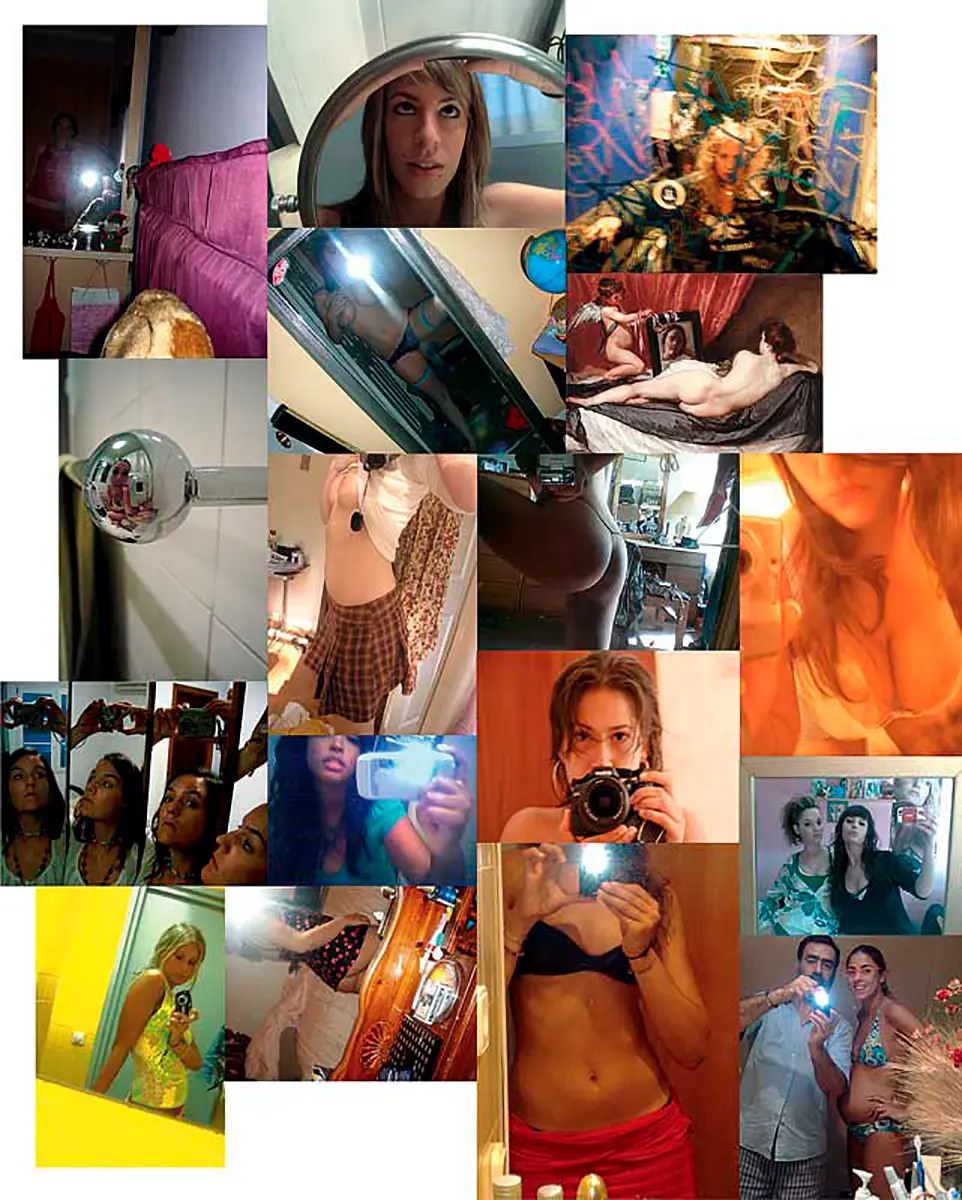
In his show, A través del espejo, at the Casa de la Moneda of the Banco de la República, Spanish artist Joan Fontcubert presented us with an interesting installation with projected “reflectograms” that displayed, in every wall, a series of self-portraits by anonymous characters, who reveal something of their private world in poses that are provocative without being pornographic. These images are taken from the Internet, where thousands upon thousands can be found. The installation interrogates the mirror mechanism, enacting the dual gaze of someone who watches himself on a mirror in order to produce a self-portrait and someone (us) who watches them in a voyeuristic act where privacy is completely nullified. As we observe the images projected like a slide show, with no particular organization, a melody comes up intermittently: Salt n’ Peppa’s Let’s Talk About Sex; the images are complemented by some “googlegrams,” where the network selects and archives images that are then revisited by the artist. Those photographs, having lost their ritual character, overflow the Web, and are an everyday occurrence in social networks such as Facebook, where the borders between public and private are customarily blurred. This poses a deep reflection about the digital, emphasizing the dissolution or perhaps assertion of identity in a world where it is more and more questioned or replaced.
Cero Gallery presented Kommunalka, by French artist Françoise Hugier. Hugier spent several months over seven years in St. Petersburg, visiting and sharing with people in community housing apartments. Her color photographs reveal the daily lives of a sector of the population that, one way or another, is immersed in marginality. But at the same time, and therein resides the strength of her work, Hugier’s goal is not to move us with images of their penury but to show us the dignity of their existence. Her magnificent images are filled with poetry.
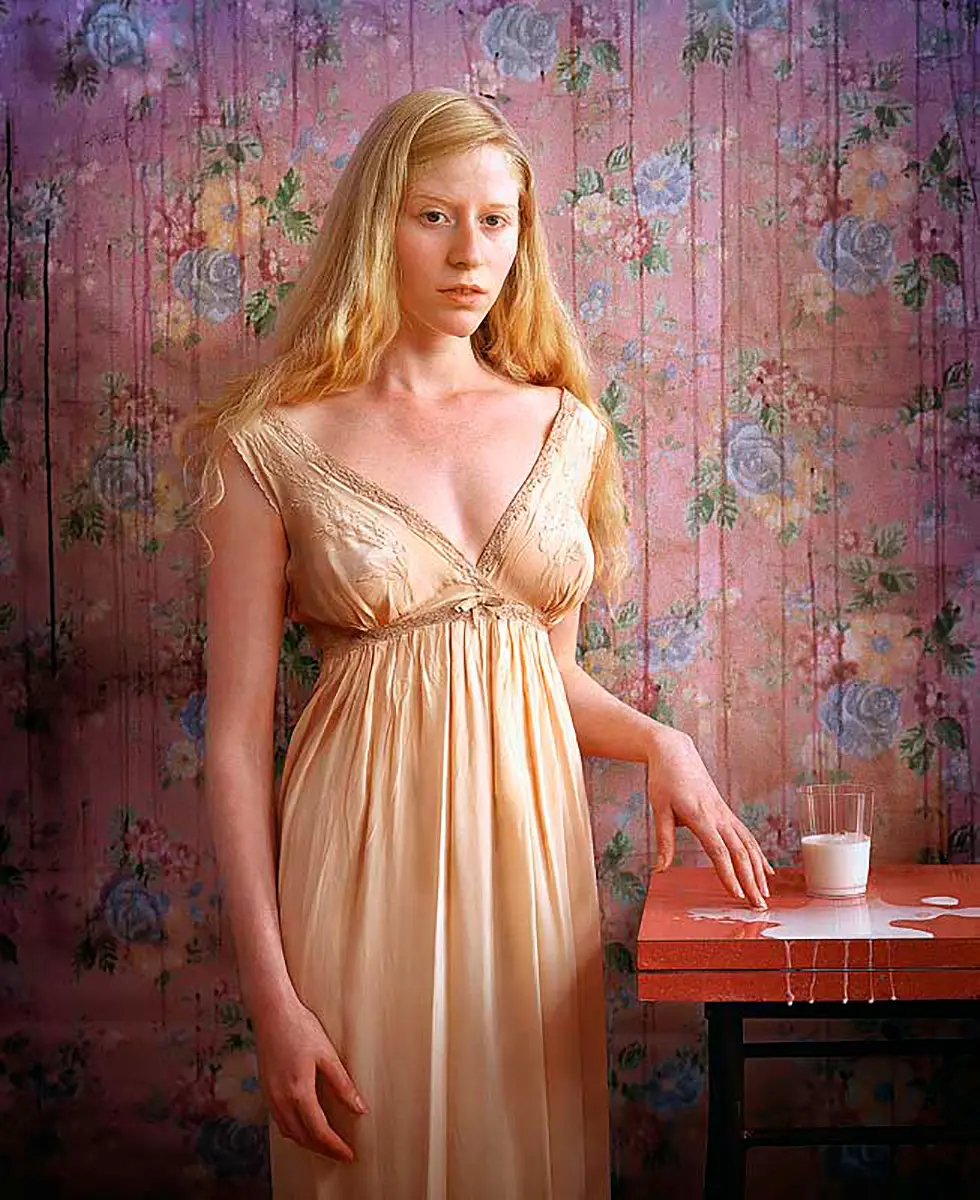
Argentinean artist Marcos López, a representative of what he has called the “creole surrealism,” brought to Bogotá a series of color images where humor and irony shift reality in order to make it better. There is in his work a degree of staging, giving the real a “false” character; far from lessening the impact of his photographs, this gives them formal and conceptual consistency, fostering the emergence of images where the Latin American character appears as an elevation of popular, kitsch, or plain bad taste. In López’s images, advertising and pictorial elements characteristic of popular iconography, as well as a sense of humor, come across forcefully in studied and prearranged situations. His work connects well with a kind of cinematography that emphasizes color.
Colombia’s Germán Arrubla presented Archivos paralelos, an exhibition comprising two photographic series: autopsia and ene-enes, and a video showing, in parallel, an abandoned morgue and the gaze and voice of a collector of postcards who ceases collecting them after finding his vanished sister dead in a morgue. Arrubla has been working on the topics of memory and death for a good time now, and this work underscores something that is already evident in the history of photography: the genre’s relationship to death. López is, also, a veritable collector of stories (as deemed by artist José Orlando Salgado); in fact, a good portion of this work gathers a story and a series of black-and-white postcards of women from the 1920s, placed one by one in the morgue’s cold cabinets. The color and coldness of the metal are contrasted with the warmth of the photographs.
There is a degree of fascination in Arrubla’s work: how he sets up a dialog of the past, of individual and collective history. His photographs are able to materialize an experience of death and the stubbornness of keeping the memory alive.
I was most impressed by the exhibition of works by Colombia’s Jesús Abad Colorado, at the García Márquez Cultural Center (his lecture was also impressive.) Abad Colorado is a journalist and reporter covering Colombia’s decades-long armed conflict. He insists that his photographs are true testimonies of what he has seen, beyond any aestheticism: the horrors of war, destruction, desolation, and displacement, and despite all that the hopefulness of survivors who can still revel in the beauty of life. These images tell stories of a country at war, where the great losers have been civilians who are forced to flee their homes in order to save their lives when caught in the crossfire between paramilitary groups, guerillas, and state forces. The mostly black-and-white photographs reveal the everyday nature of violence. In particular, I was shocked by one image: a four- or five-year-old girl cries inconsolably inside the sinuous ridges of a giant tree. Jesús Abad Colorado’s photographs bring to light the condition of an entire population that is usually ignored by the mass media: blacks, Indians, rural peoples, all of them the victims of displacement.
At Garcés Velásquez Gallery, Colombian artist Clemencia Echeverri exhibited a series of photographs accompanied by a video under the title Juegos de herencia. This work presented several projections of a game that takes place in the Chocó, a Department on Colombia’s Pacific coast. In the game, a hen or a rooster are buried head down in the sand, to be beheaded by a blindfolded individual. The artist sees this violent entertainment as connected to the root of the country’s political violence. This, of course, is debatable, especially when so many political scientists have shed a different light on the subject, yet what matters here is to acknowledge our implicit violence against animals: bullfighting, dog- and cockfights are entertainments designed to satisfy the violent urges of their viewers. The event’s sacrificial nature is emphasized here in beautifully composed photographs of the participants in the event, which expresses a certain aestheticism of violence that in one way or another confronts the viewer with a game that seems so far removed from our city lives.
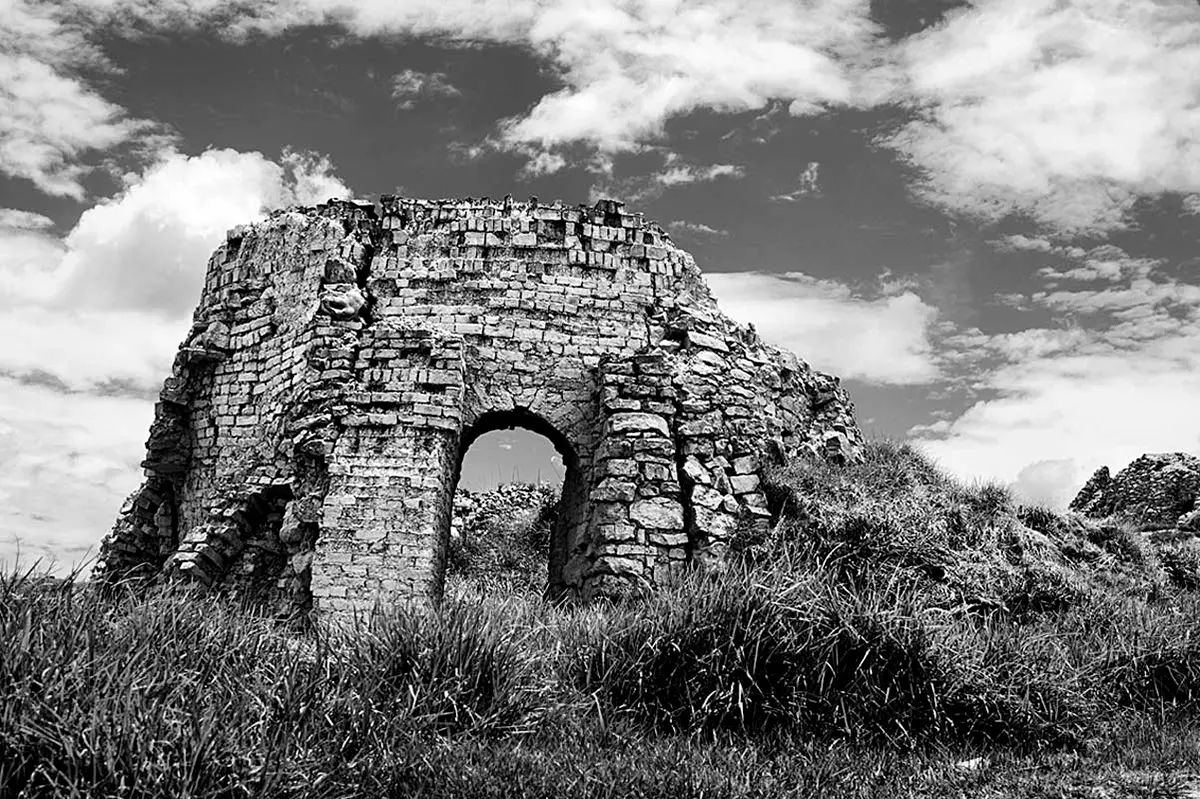
Sextante Gallery was host to Suroriente 1985-2010, a show of works by Fernando Cruz. Cruz is one of Colombia’s most important photographers, not only because of his trajectory but also because of the quality of his work. His black-and-white photographic oeuvre, analog and digital, is a true testament to architectural ruins and brings to mind lost civilizations or cities, those seemingly archeological remains are, in reality, old furnaces in brick-making factories active not too long ago in the city’s South East. In one way or another, these photographs become documents of those constructions, recorded over twenty-five years.
For those interested in building a history of urban development in Bogotá, this material is invaluable, taking into account the fact that a good portion of Bogotá’s architecture uses the famous red brick that differentiates the city from others.
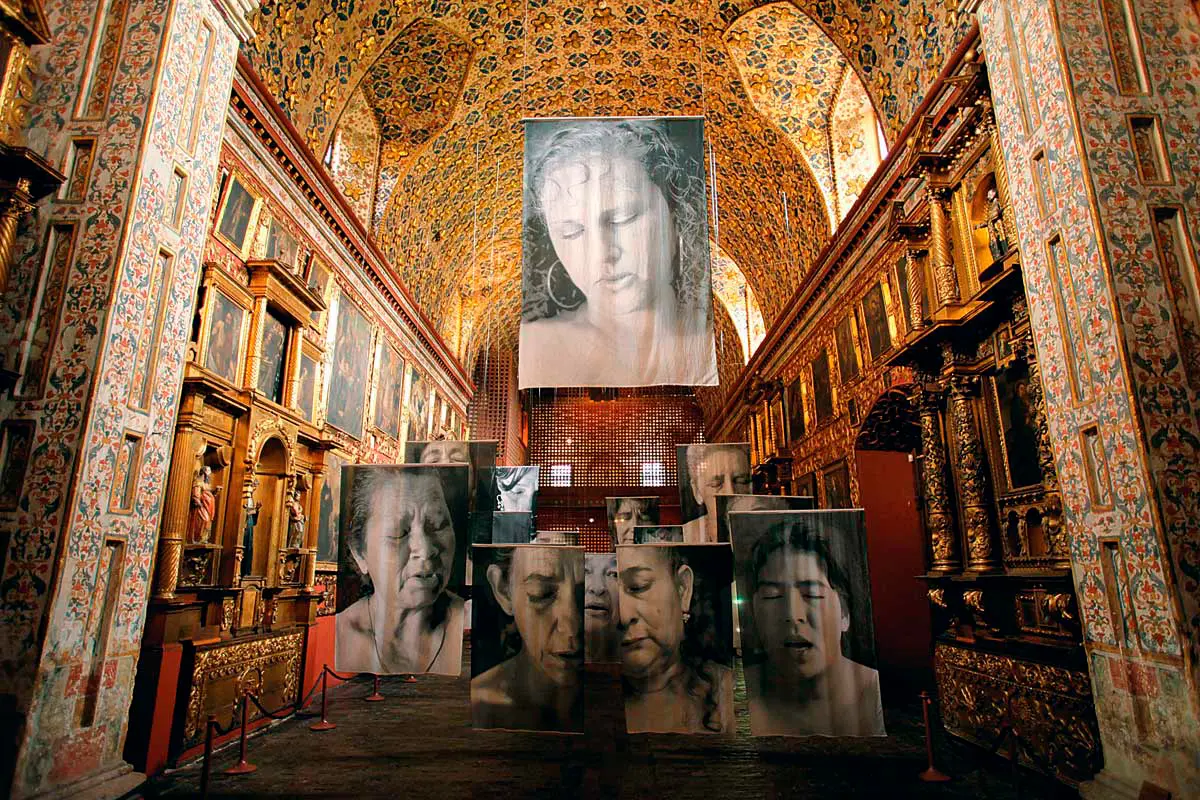
Colombian photographer Erika Diette presented Sudarios at the Museo Iglesia Santa Clara. An exhibition comprised of twenty black and white portraits of women, printed on large canvases that were arranged in the church’s central section. These female faces, which seemed to float in space, are portraits of victims of violence in the Colombian department of Antioquia. The exceptional arrangement was able to establish a dialog with space, where religious images emphasized, even more, the solemn character of the images. In the installation, we heard every once in a while a deep sigh, which imparted a certain level of drama to the show. With this exhibition, the artist takes a step beyond the anecdotal pitfall that besieges this type of work of art, focused on violence in a country like Colombia.
Finally, Colombian artist Rosario López presented Hangar 44 at the National Archives. For years, her work has explored photography in connection to landscape and sculpture. On this occasion, López presents us with a seemingly abandoned space in the middle of a vast prairie, against a deep blue sky. The construction puts us in mind of a kind of sculpture placed in the emptiness of the landscape. This construction emphasizes the landscape, or perhaps the landscape emphasizes the human creation. In any case, the relationship between nature’s immensity and humanity’s persistent drive to dominate it seems to be the essence of the work, where the fragility both of the constructions and of nature itself clash constantly.
RICARDO ARCOS PALMA
Ph.D. in Arts and Art Sciences. Coordinator of the Master's Program in The History and Theory of Art, Architecture, and The City, at Universidad Nacional de Colombia.