
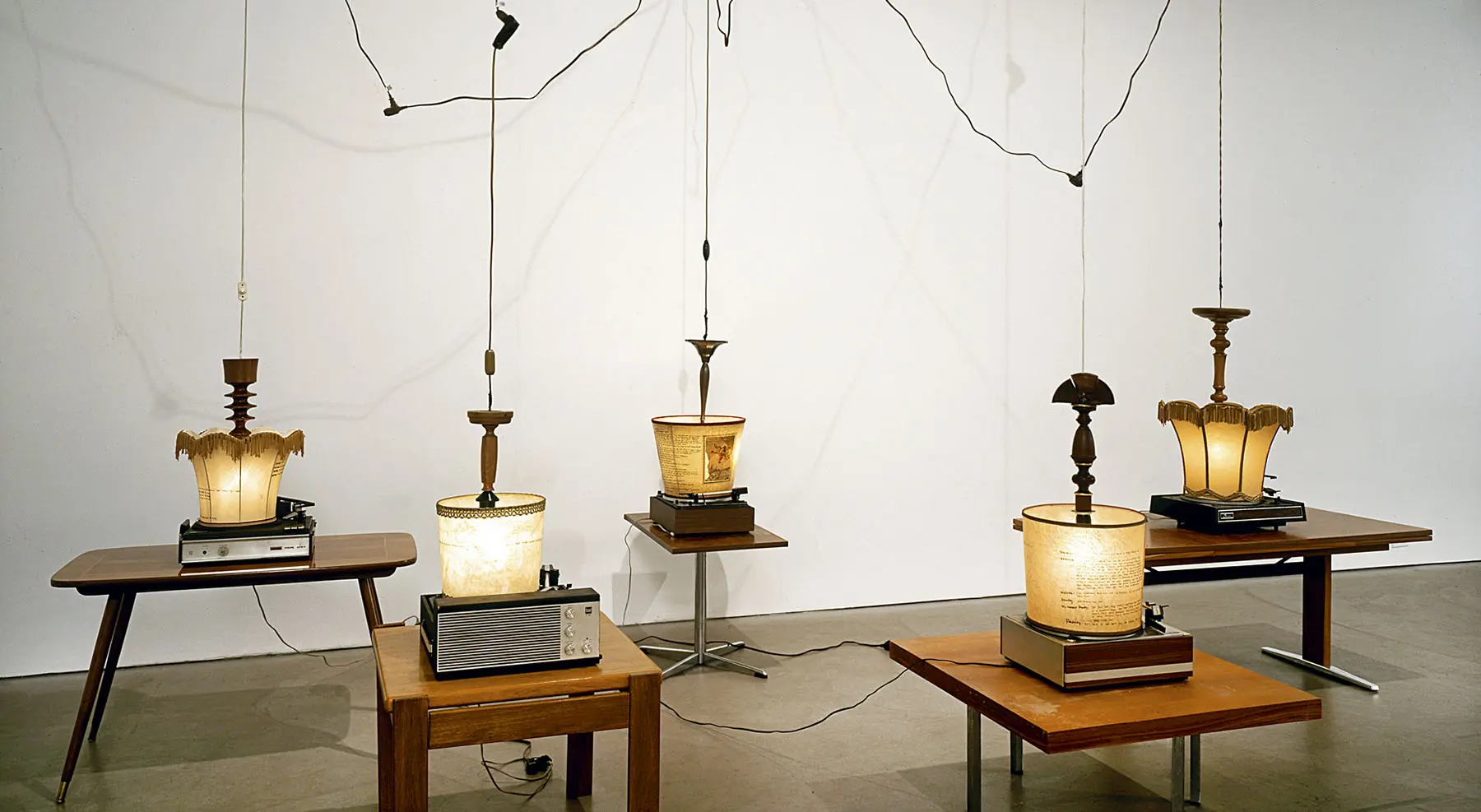
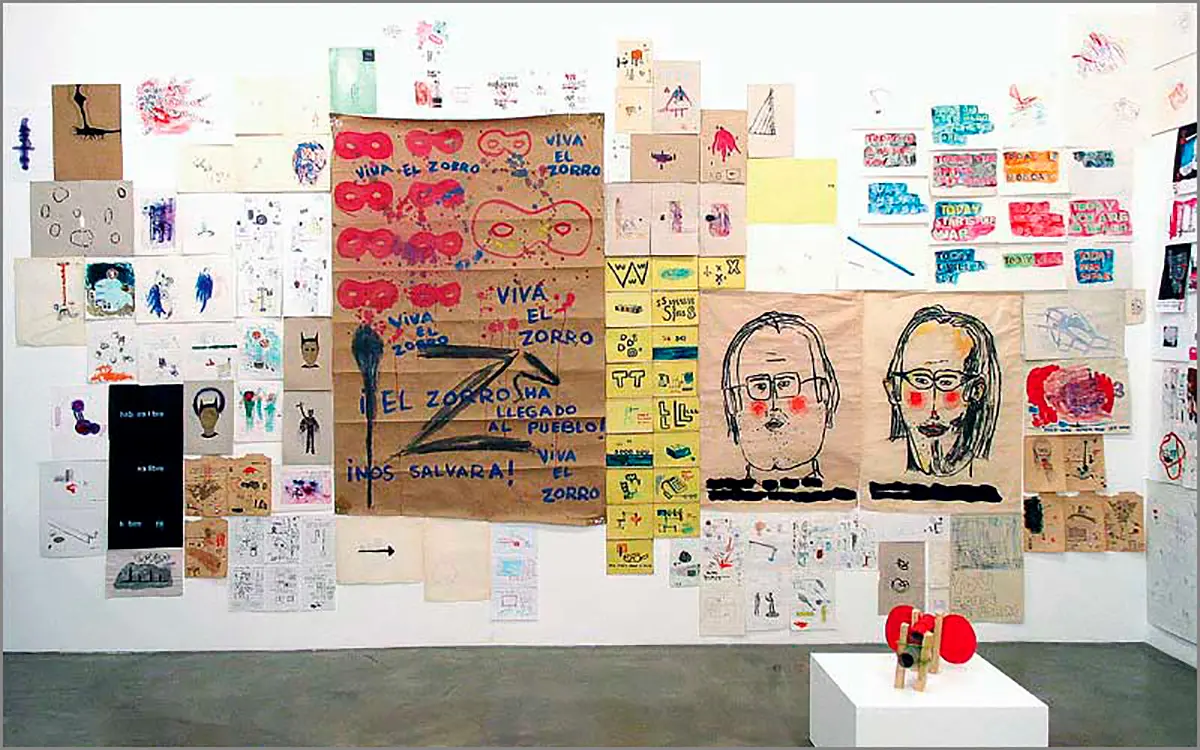
The first solo show presented by Diango Hernández (Sancti Spiritus, Cuba, 1970) was Amateur, at the Frehrking Wiesehofer Gallery in Cologne, Germany, in 2003. For a first attempt to launch himself outside of the well-known collective Gabinete Ordo Amoris, of which he was a member for ten years while remaining connected to Cuba, the title chosen was highly significant. Today, this Cuban artist has positioned himself as one of the relevant names in the European contemporary art scene.
On that occasion, I wrote an article that attempted to find a meaning for the unfolding of 2,000 stylistically variegated drawings and the fragile objects exhibited in the gallery. My article ended with a series of questions that, in an indirect way, questioned the possible future of works of art produced in a context that was ceasing to be, at least in immediate terms, the existential condition for their creation. In truth, I wondered about the chances that Diango would continue to create a discourse uprooted from its “natural landscape” without falling into the stereotype of “utopia” or nostalgia that so frequently shows up in contemporary Cuban art, be it by artists who have emigrated or by those who move back and forth between the island and temporary sojourns abroad. Really, was Diango prepared to compete in the “capitalist” space, without entirely forsaking his formative origins and his “sentimental education”?
With the distance of the nine intervening years between that text and this one, I realize the importance of Amateur in its moment, as the starting point of a corpus that implied a process of reflection and personal exploration. Beginning with that exhibition, Diango shifted his position of representing the collective as a metaphor—being part of a group—where the individual subject was obscured, to one of being an artist born, defined, and educated within the very experience of belonging to that collective ideal. And it is precisely that process that defines the whole of his work up to this point.
Alongside the Gabinete Ordo Amoris, the focus was on the collection and recontextualization of “provisional” objects from the everyday world into the artistic realm, in order to “construct a language that carries all the mystique and poetry of the Cuban context.”2 As an artist, Diango began to build and materialize a parallel world where re-appropriated objects disengaged from their original function and entered into a complex universe of imaginary personal relationships. Amateur thus became a positional turn between thinking like a collective and belonging to one, and developing a different type of work of art first in the private realm of his own home and later in the solitude of his studio. In his last interview with Patrizia Dander, Diango notes: “I decided to change the scene and to start creating a more private and fragile body of work.”3 The drawing would be key in this process of moving from the collection of provisional objects with the group, to the development of ideas, emotions, and commentary on the notion of being an artist.
In my 2003 article, I wrote this regarding Amateur: “… as the title indicates, it starts from a playful, humorous attitude, an ironic commentary on the very condition of art and the artist in this context. Art, like life, possesses a kind of temporal precariousness, where the ephemeral becomes a provisional gesture, a display of inventiveness in the service of survival. An entire aesthetics whose justification is that state of necessity that drives art to participate of a certain attitude that I would call of an emergent and provisory guerilla force, where what is used doesn’t really matter: anything at hand is valid.” 4
I’d like to briefly consider the idea of an “emergent and provisory guerilla force" at that initial point when Diango began to define his oeuvre; the invented term allowed me to separate him from Gabinete Ordo Amoris. With those words, I wanted to suggest the construction of discourse about fragility in time and space, the emergency of initial creations and interventions in the everyday context of Havana, and later the insertion of the same practice in a different reality (Europe’s). The idea of a guerilla force was conditioned by the early years in Cuba; later, after his relocation to Europe, the deployment of the same pragmatic, somewhat romantic strategy allowed Diango to move on the shifting, brittle terrain of an artistic action that contextualized his social experience in “capitalism”, defined ironically by the artist as the "revant grade" (2005).
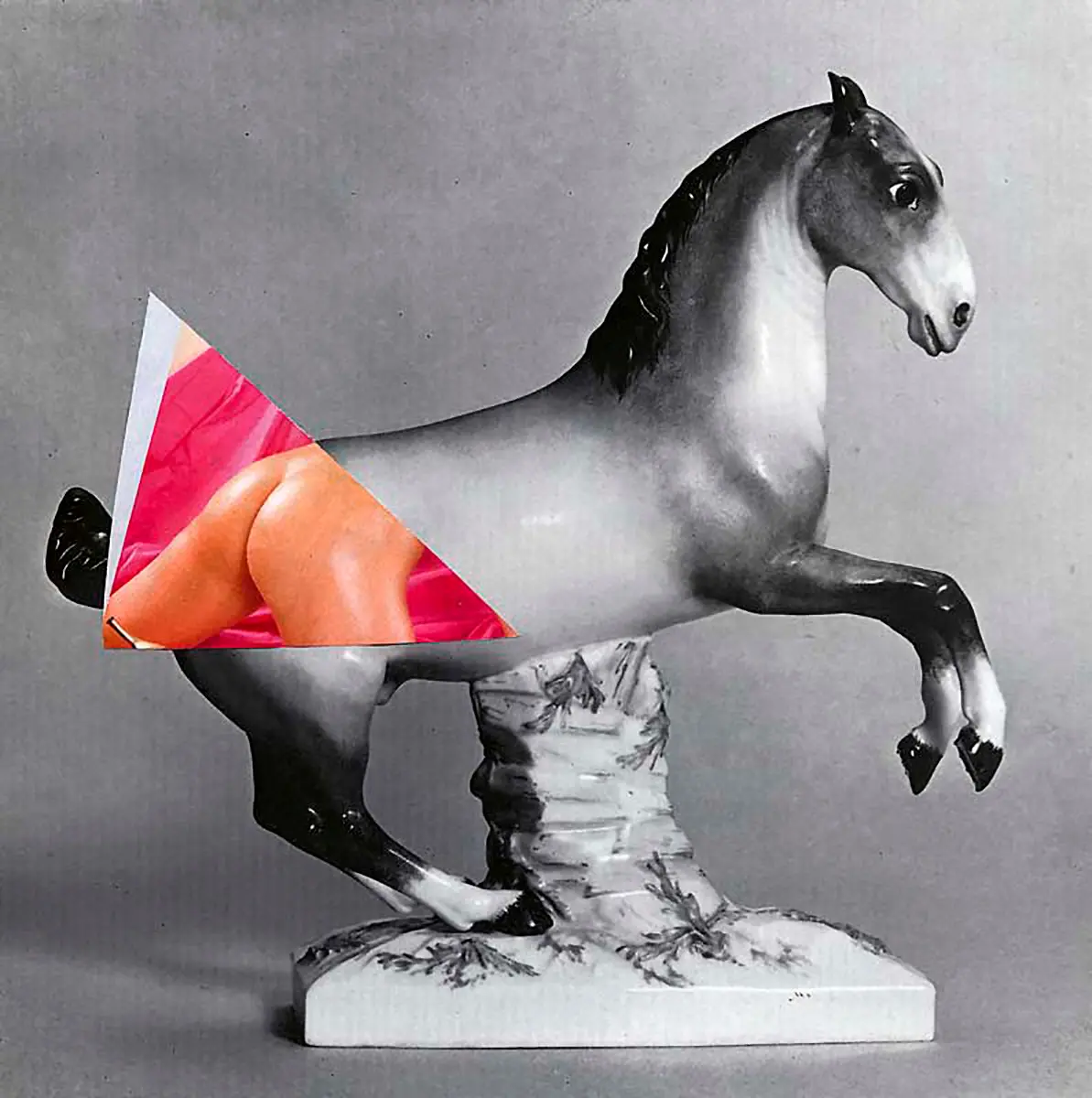
It is symptomatic that the collages combining photographs of Eighteenth-Century porcelain objects intervened with clips from porn magazines presented in the 2008 show Out-Of-Place Artifacts(OOPArt), were accompanied by a catalog that reproduced sections of Che Guevara’s book about guerilla war. Is it that after the failure of the socialist system, the only option is to sabotage, through guerilla actions, the triumph of capitalism and the bourgeoisie with is taste and consumerism? Or is it that the idea is still for art to be the state of our consciousness, the urban guerilla that questions the reality of the “best of all possible worlds” we are continually being sold on?
An obsession with the role of the artist in the process of building a society drove many in Cuba in the 1980s to refer to the Russian avant-garde. Incorporating that aesthetic and those “utopias” became a valid strategy for action. In turn, in the following decade of the 1990s, its inefficacy as a project in the Caribbean context was demonstrated once again (I am thinking of the work of Los Carpinteros and Carlos Garaicoa during those years). Yet the desire to involve oneself in the political and social events that marked the everyday lives of Cubans was an uncontestable reality to which that art could in no way remain aloof.
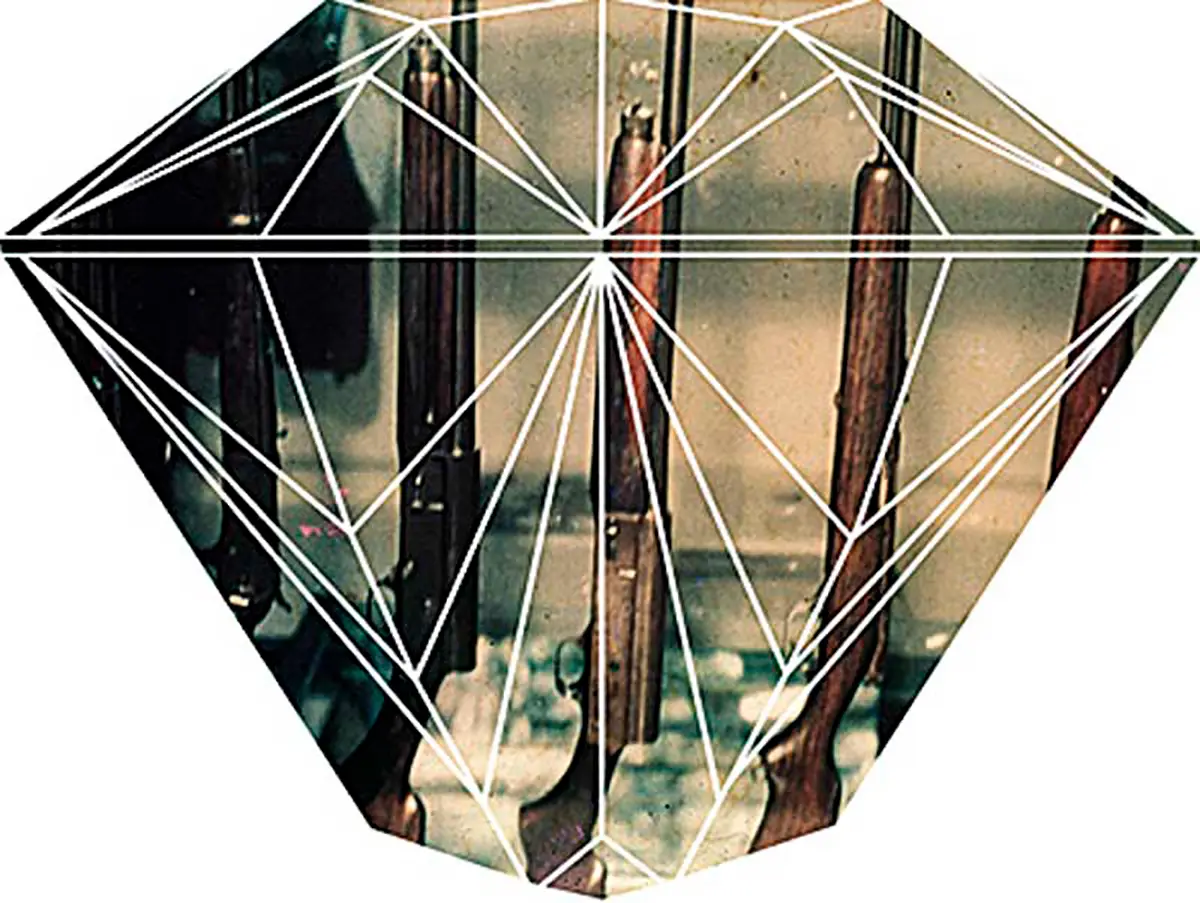
"Revantgarde" or "emergent guerilla", an ironic and a pragmatic term respectively, would be more appropriate to speak of Diango’s artistic practice. Revantgarde and other titles of solo shows, such as Democracy (2004), Traitors, Spies, Dictators, Revolution (2006), Swans without a Lake, and Power Pencil (2007), Diamonds and Stones: My Education (2008), would provide all too obvious references for an understanding of the importance of investigating his education and personal history in the context of the Cuban revolution. At a more formal level, there was a substantial shift in the relationship between drawing and object: from the architectural model presented at the São Paulo Biennial, which the artist included in the category of objectual drawings (2006), where the relationships between structures gave shape to the ghost of a dying modern city, through the “real” second-hand objects of Revolution at the Kunsthalle in Kassel, joined via a circuit of pipes that inevitably connected and rendered them dysfunctional. The construction of a language capable of representing that experience and being understood by a European audience that had idealized the process of the Revolution was ironically achieved through the remnant of “modern” objects and furniture found in second-hand markets or in the streets of Düsseldorf, his place of residence since 2006.
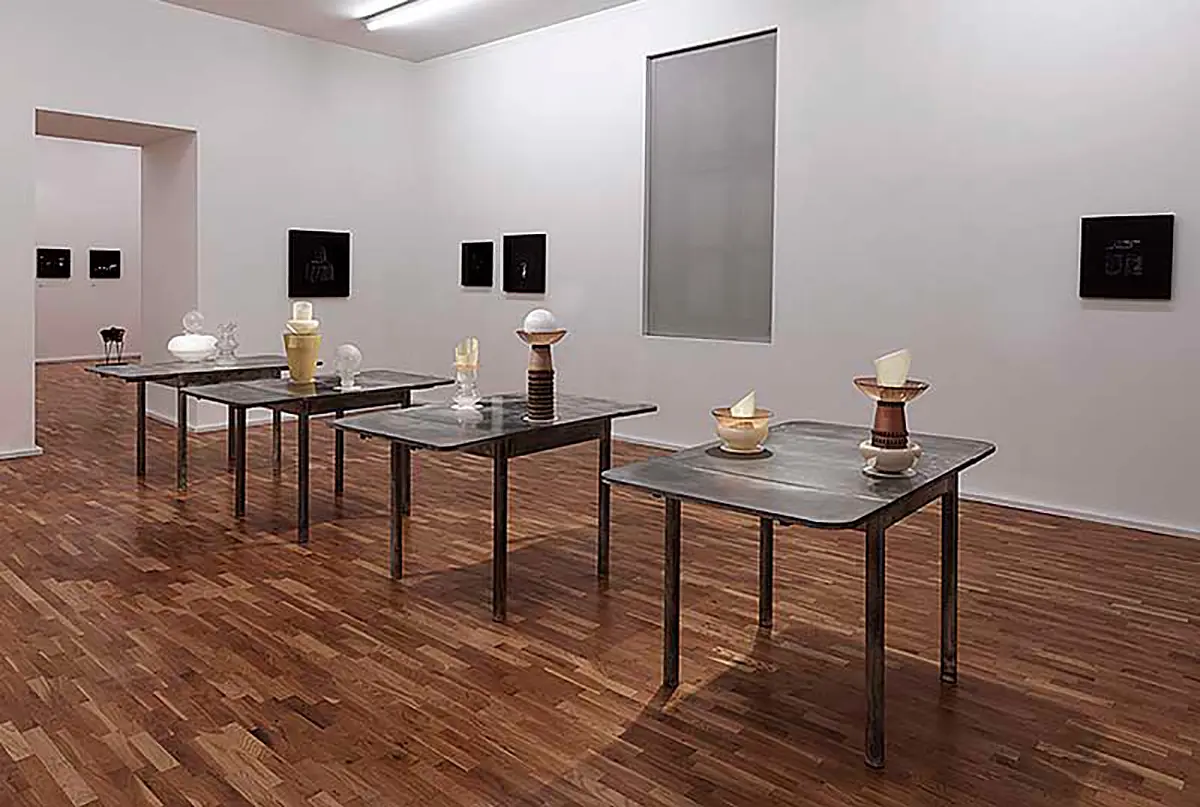
Once the artist was established in Europe, the question about provisional objects was displaced towards how to reconcile in the same space the bourgeois “taste” of certain furniture items and designs with the precariousness, simplicity, and ugliness of functional objects that strongly resembled the desks that populate offices and schools in socialist Cuba. One shouldn’t forget that, in Germany, the “found object” is almost like collecting “modernity” itself from the streets, discarded and placed at the disposal of whoever needs it before being picked up by a garbage truck.
“A drawing seen as a vision of the future can be a very strong tool. I haven’t found any other medium more effective when it comes to defining the complexity of our minds and visions than a drawing.”5
The principles and foundations were laid first through drawing; even the early objects, despite their seeming functionality, were related to lines: they participated in the same projective idea of the elaborate representation of a discourse circumscribed to its imaginary borders, scarcely or not at all connected to the idea of “utopia”. These were “facts” whose materiality approached the idea of a provisional object, a supplement that replaced the future, perfectly finished final product. Drawing is “itself the first visual element that appears while constructing an ‘object’. The drawing is permanently exposed to doubts and it is permanently under modification and analysis. The drawing allows us to change, to make mistakes, and to permanently question. I see drawings as a revolving door that takes us in and out, from doubt to statement, in a continuum.” 6 There are several key ideas in this statement; for instance, the realization that drawing is always part of a process that never ceases to be a project, and it's being a state of permanent motion of consciousness. Secondly, and I insist, is the importance that has had for Diango his training as a designer and project artist.
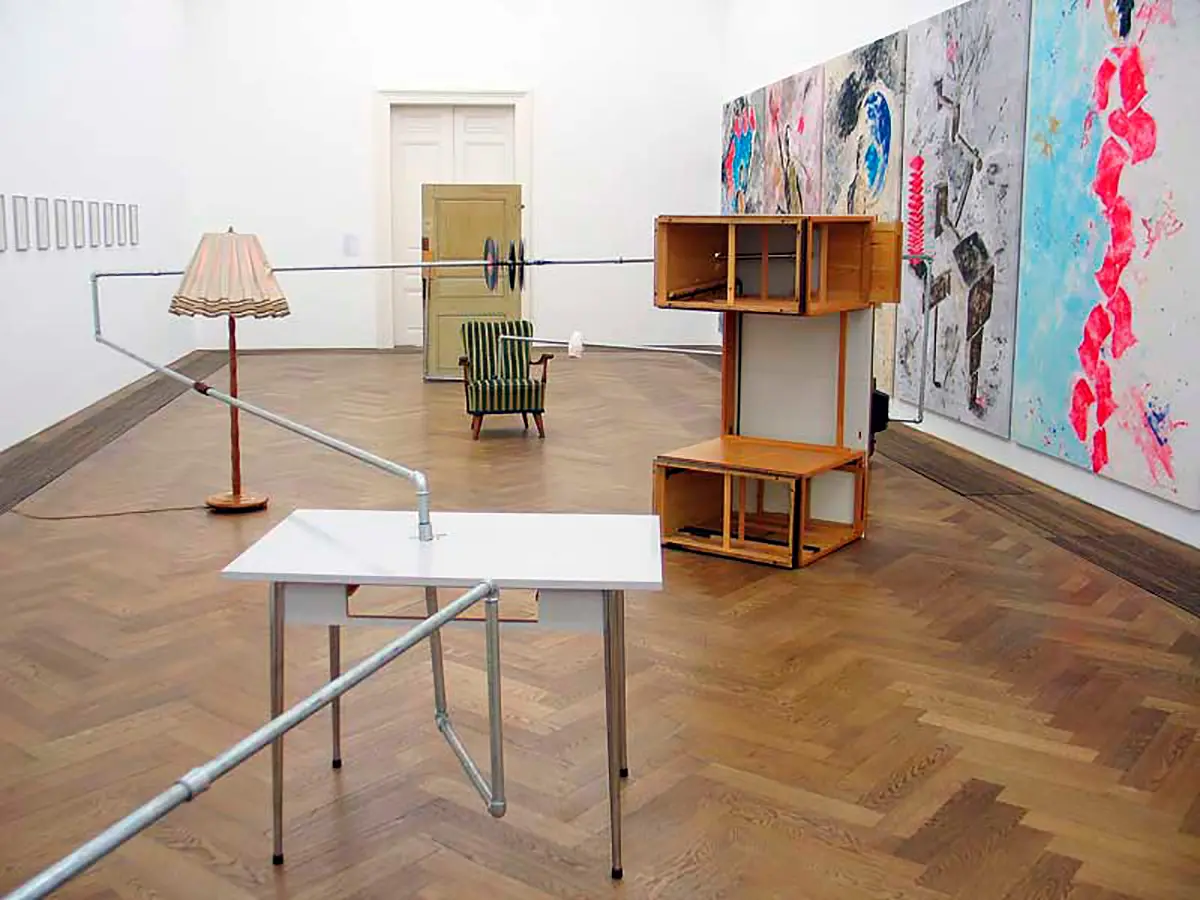
We must consider, first, Diango’s education at the Instituto Superior de Diseño—an institution that produced professionals used to blueprinting—drawing the idea of objects that rarely reached any materiality outside the paper. These future professionals trained under socialist ideals were given the task of building a material culture completely unconnected to the capitalist idea of consumption. After graduated, Diango was faced with the need to coexist with a world of provisional objects, objects designed by the ingenuity and necessity of amateur consumers as a response to scarcity and to the unresponsiveness of a utopian system that produced designers for a world devoid of materials and technology. These two ideas, projective drawing, and coexistence with provisional “design” objects are essential to understand Diango’s work. Drawing as a mental process, of course, acquires a status of priority as the definitive project is unmatched by material production or fails in its attempt to extend beyond or materialize the “blueprint ideal”.
Perfection in drawing always creates a tension with the suple, the slapped-together, unfinished, second-hand object. In his most recent exhibition, Line Dreamers, the final resolution is paradoxical in that it positions the design-drawing of the objects on the surface of unarticulated pieces that are assembled from parts of found furniture, used, and finally left in the street. One could ask whether disassembling the pieces and placing them in continuous planes correspond to the same logic that positions the object in a single plane on paper; or, to simplify, as the artist asserts, whether it responds to the fact that both are parallel and logic-based processes.
It must be noted, however, that objects have never ceased to be significant in Diango’s work, and it has never been just support for or an addition to drawing. On the contrary, objects have never been abandoned by the artist; they are the expression of that material culture that has informed the entire process of his development. It is interesting to note how, once taken from their everyday use and their utilitarian function, they are deconstructed and re-interpreted into new meanings in the context of art. And, moreover, how Diango has moved from “collecting” ramshackle Cuban suples to interesting himself in the second-hand home or office furniture items that in certain ways resemble those in use in Cuba or those proposed by the Bauhaus aesthetics, reproduced industrially for their functionality and low cost.
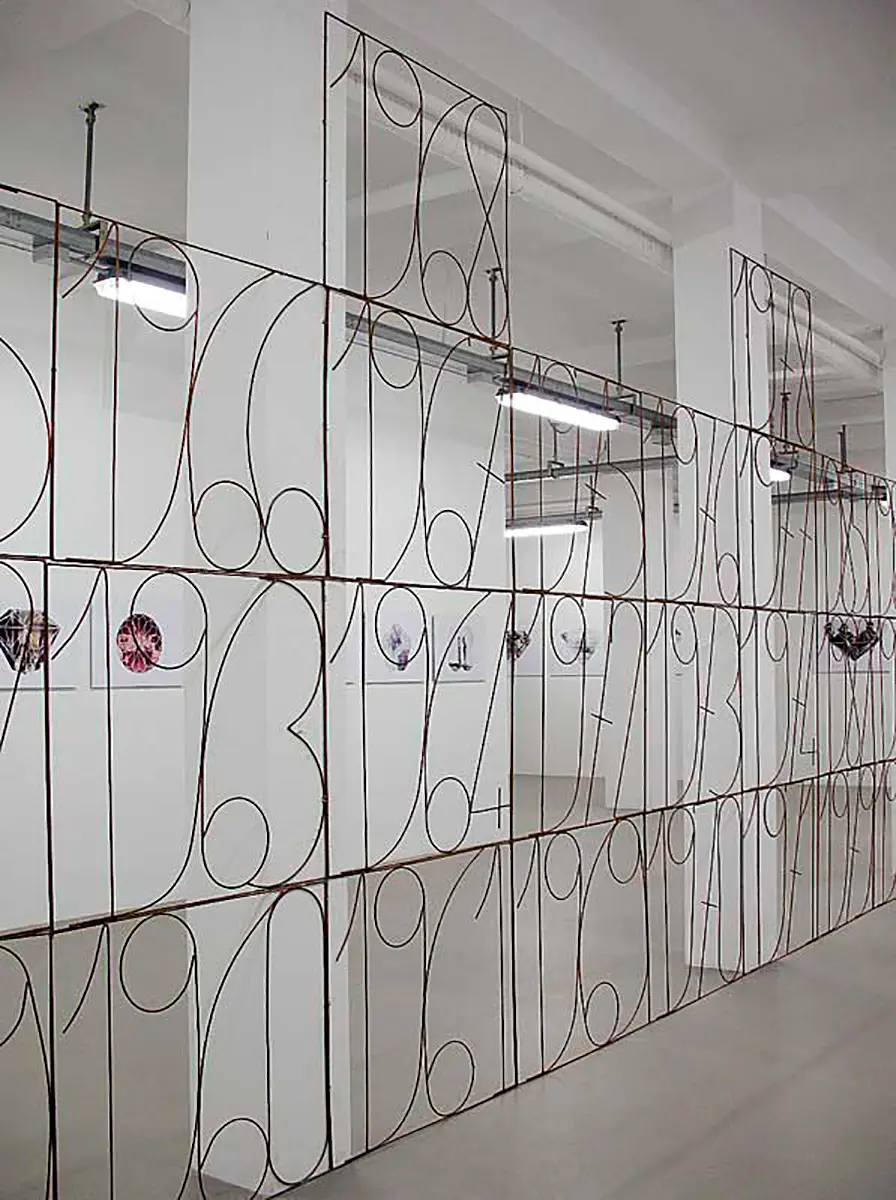
In his most recent exhibitions, objects and furniture have been disappearing as whole items, to be represented through fragments. Their different parts combined or mixed with elements of a different nature, such as paper, are articulated into elegant abstract shapes and generate other suggestive relationships. “(…) to understand an object means to use it properly, but for me to read an object is quite the opposite: it is to see the cultural implications that the object has, and in my case, it means to create a new form of fiction out of it — to articulate it physically or mentally in a new way.”7 Clearly, Diango infers that this new fiction is not the typical surrealist object or decollage that the Twentieth Century tradition has imposed on Latin American artistic practices. In the artist’s workshop, the various objects collected share a single space and create new communicational linkages where the flow of daily life, the accident, and the complexity of intercultural thinking, constitute new forms of the visual. If we also agree that over time memory only retains fragments and that all of these objects that at some point possessed a utilitarian function now live a different reality/fiction, this makes sense within the totality of an oeuvre that comes to us as an unfinished project, that of being part of a large-scale drawing in space, which shifts accordingly to its temporariness and provisionally.
Diango Hernández concludes the interview with Patrizia Dander cited before with the following words: “I often talk about memory as a large closet, which has many drawers that permanently change their order and size. There is a moment when this closet disappears and memories dissolve into every moment, every day. I have reached that point now; I have completed my ‘journey’ and I have arrived, but I honestly don’t know where I’ve arrived to”. 8 I wonder whether he has truly closed a cycle, leaving behind his exploration of “sentimental education” in Cuba and arriving on the port reserved for artists fully assimilated into the language of the global market. Are we ultimately the result of our training, mentally subject to the past? Or, are our history and personality molded by the condition of exile and the experience of our daily lives? In truth, there will always be more questions than answers regarding the work and development of any given artist, and such questions will change as time passes and as circumstances, locations, and the position of the speaker all shift.
NOTES
1. “Home means belonging – and vice versa” Diango Hernández in interview with Patrizia Dander. http://www.diango.net/?p=3548
2. Negrín, Javier, “ Pa´ir tirando. Lo provisional en la obra del Gabinete Ordo Amoris” In Nosotros los más infieles, narraciones críticas sobre el arte cubano (1993-2005). Andrés Isaac Santana, Comp. and Ed.,. CENDEC, Murcia, 2006-2007, p. 483
3. “Home means belonging – and vice versa”, http://www.diango.net/?p=3548, ibid.
4. León, Dermis. “Diango Hernández”, In ArtNexus 52 Volume 3, 2004, p. 136.
5. http://www.diango.net/?p=3548, ibid.
6. http://www.diango.net/?p=3548, ibid.
7. http://www.diango.net/?p=3548, ibid.
8. http://www.diango.net/?p=3548, ibid.
DERMIS PÉREZ LEÓN
Curator and Independent art critic. The Curatorial Bureau.