
Disillusions is first perceived from outside, through the large window of the Studio Theater gallery. It is a gender-based exhibition that brings into view twelve artists who are not commonly seen in these parts. Gender and diaspora are the articulating threads that connect in the majority of the works presented. Video and video-performance, performance, and installation as its record, collage, object, drawing, painting, photography, and mixed techniques are the range of expressions found through the forty-two works selected by curator Tatiana Flores, who says that “… through this art by women of Anglophone, Francophone, and Spanish-speaking origins, it becomes clear that common themes emerge from the experience of gender despite regional differences. The title of the show, Disillusions, refers to the tendency of the works on exhibit to break illusions—pictorial or of any other kind—to encompass formal fragmentation, incorporating discontinuity and blurring meaning. These artists refer to a disarticulated, subjective, and often incomprehensible contemporary female experience.”
Entering the exhibition, viewers encounter many paintings and videos to their right and a large column at the center. There—inside of which hides an elevator—Sofía Maldonado, born in Puerto Rico and active in the Eastern US, created an ephemeral large-format drawing-painting on the theme of the female figure. To the right, three artists share the space. Nicola Awai, hailing from Trinidad, plays with an impressive graphic language, always well received in the Caribbean. In the way of the color scales characteristic of 1970s conceptualism, that paper displays rectangles that refer not to the chromatic material of the visual arts but to cosmetics available in the local market. A guardrail—resembling spears, or crowns, or the friezes of medieval buildings, or signals—forms a space where halting pictorial references to “banana republics” appear.
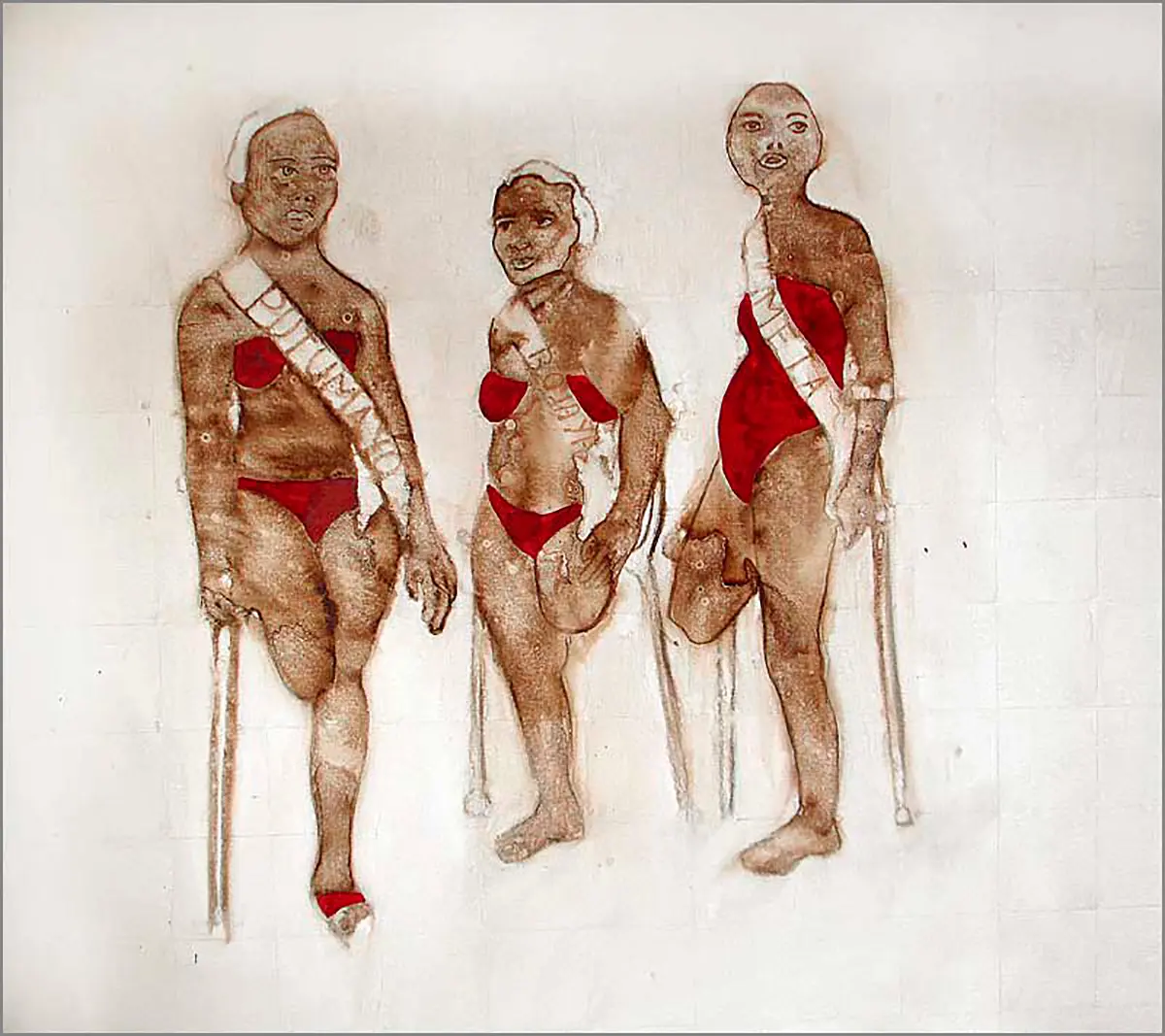
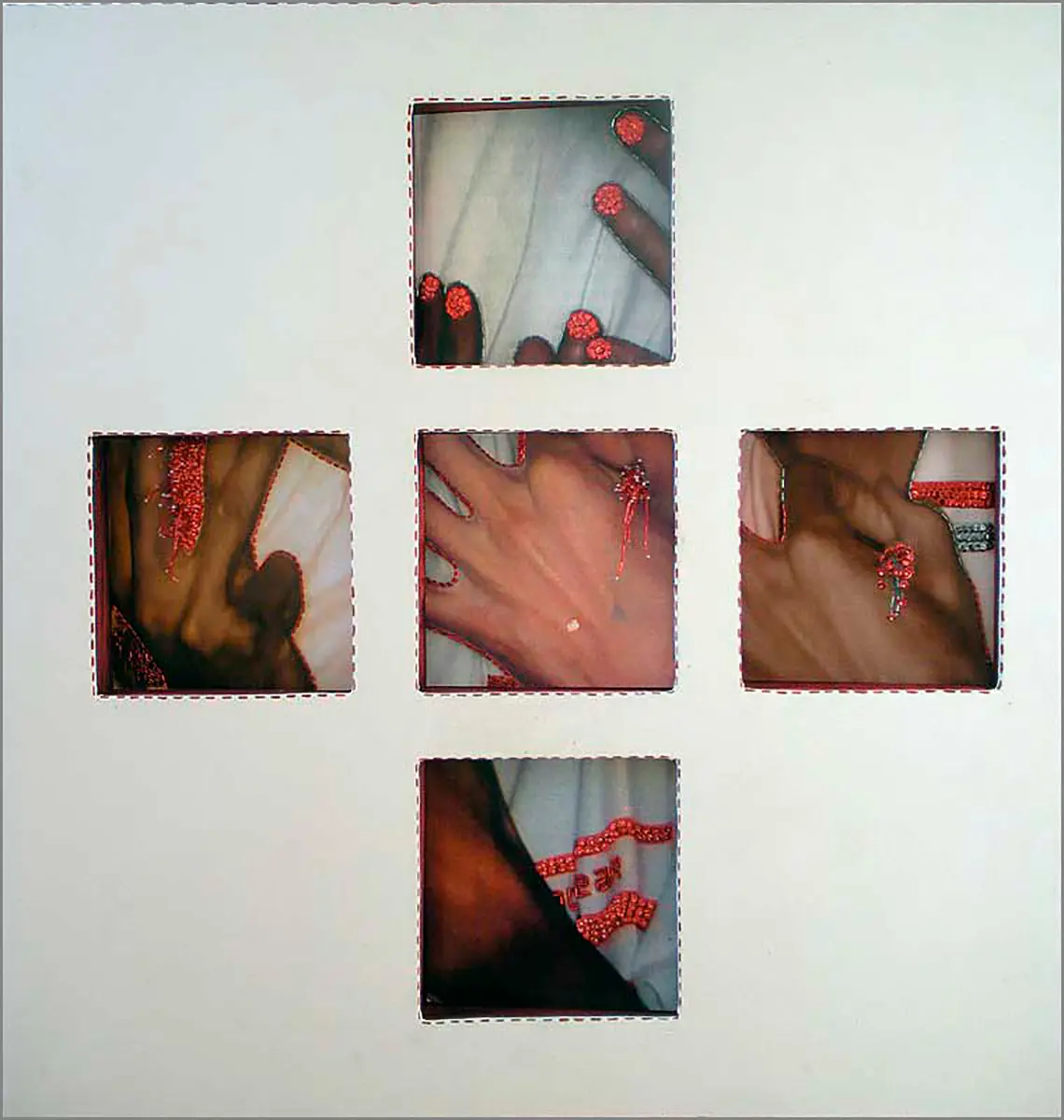
Next, three works by Haitian artist Vladimir Cybil Charlier are among the salient points of the show. She has four mixed-technique works, three on the first floor we are currently visiting and one in the lower level. In relief, with clearly narrative titles, Charlier depicts details of scenes that evoke the world of transvestite and homosexuality. These are references to her family, with sequins and beads embroidered on ink-jet and acrylic prints on fabric, representing male body figures. In three TV monitors from the 1970s, Jessica Lagunas brings back fragments of the Red Riding Hood story through the titles of her videos: Para besarte mejor, Para verte mejor, Para acariciarte mejor. The screen presents a reiterated painting of lips, eyes, and nails, in correspondence with these titles. A large figure suspended on the last wall of the gallery and the articulation of a hallway/balcony attend to the relationship between architectural features. A sequence of small works on paper opens alongside Laguna’s videos, like the pages of a book. These are interventions on antique floral publications. Ana Patricia Palacios adopts a tragic reference to the irony of always-active femininity: she refers to a beauty contest in Ghana for female war amputees. In acrylic and gouache, the Colombian artist intertwines the rigidity of military training with femininity and motion in space.
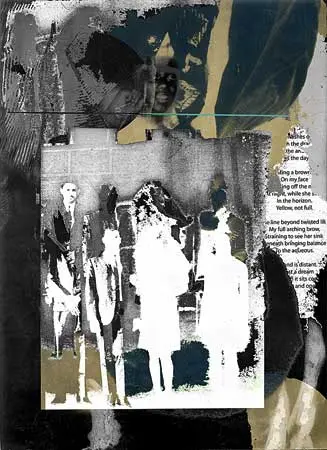
María Elena Álvarez, from Venezuela, participates with two mixed techniques on canvas. The collage sections introduce female figures in newsprint paper, like news items on the board of the game of life. With luggage and home items, she refers to aspects of the language of women in the diaspora. Firelei Báez is the author of the already mentioned giant female figure. In mixed technique, graphically fragmented is responds to the abundant physical proportions that are typical of Caribbean women, as well as their flirtiness and penchant for makeup. In vertical opposition, in the gallery’s lower level, we find three more works by the same artist. In acrylic on canvas, her gestures create original, evanescent embroideries. Contiguously in the lower level is Melissa Calderón’s installation: Calderón created Linger and deposited on it the fragments of paper that were part of the performance. The Puerto Rican artist brought forth organic materials—little twigs—as well as industrial ones. Holly Bynoe (from Bequia, St. Vincent, and the Grenadines) used ancestral figures and constructions to present in her three works a careful technique of graphic visual collage, with refined openings and interventions.
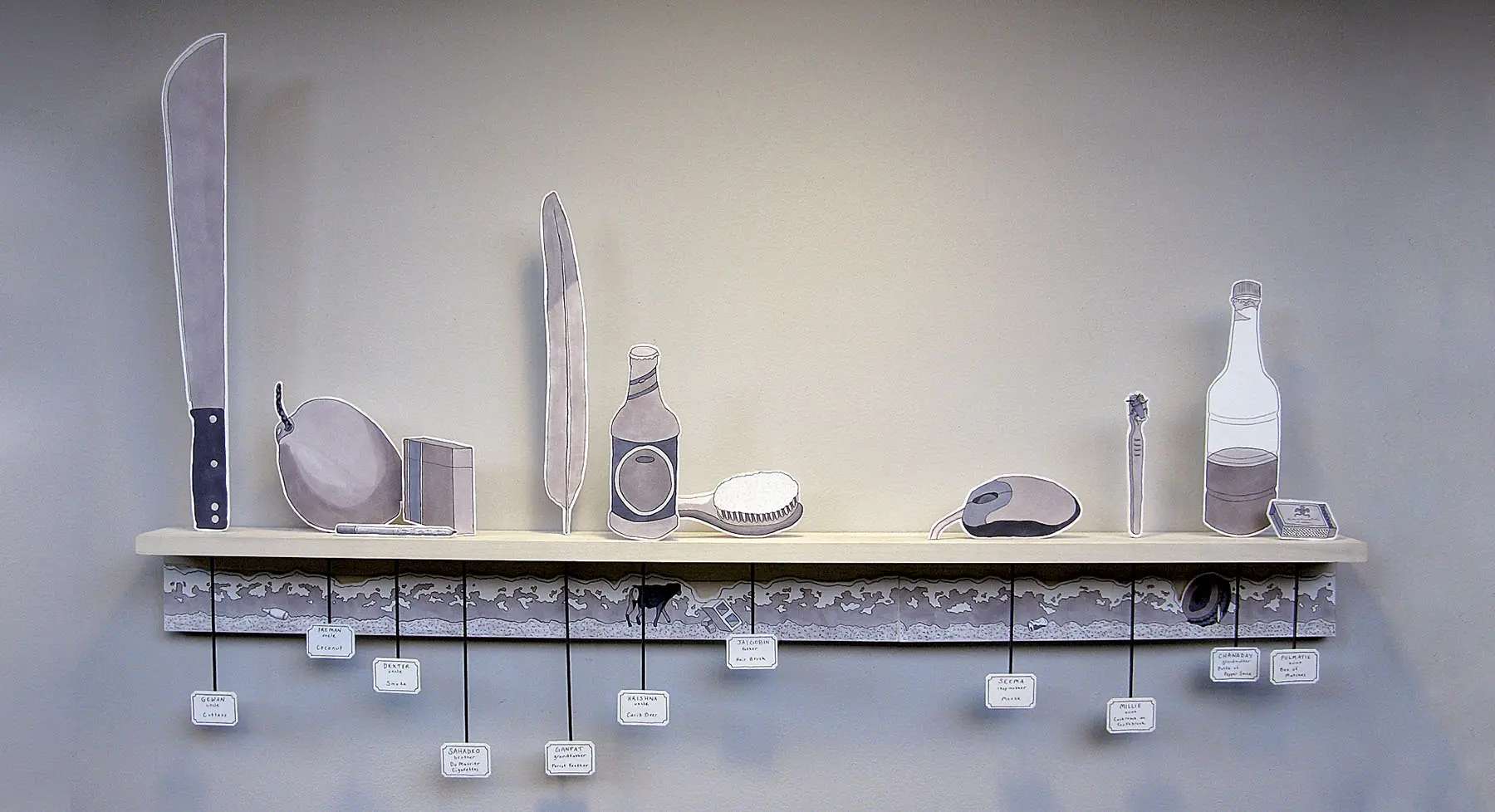
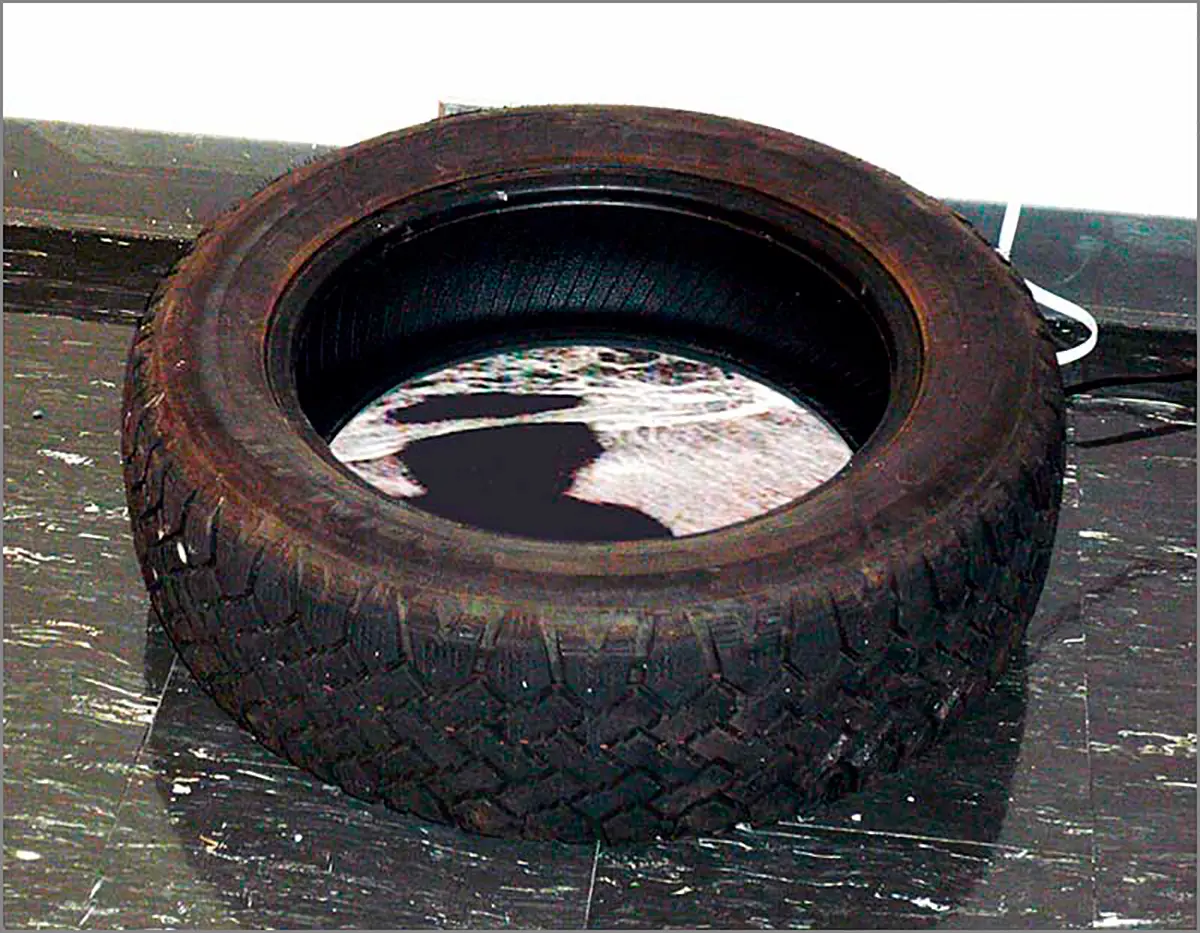
Asha Ganpat (Trinidad/USA) creates in Things an installation of everyday objects that represent a portrait of her family, constituted by a shelf with ink-on-paper drawings and cutouts. Her single work in this show is original in nature and resolution. Rejin Leys (Haiti/USA) exemplifies in 100 Drawings, Including Secrets the fragmentation and dispersion of tender organic disassemblies. Through three mono-channel videos, Sandra Stephens present several versions of Jamaican women and the diaspora. Hair, a repeated topic concerning personal grooming and the lack of acceptance of naturally curly hair. In collaboration with Allie Tery, Stephens presented Snow White Remixed, a video installation where a prepubescent girl symbolizes the realms of inherited and ratifies femininity. The installation is comprised of an armchair for the viewer, matching the baroque frameset for the projection, and headphones. Stephens’ other video installation, Intangibility, from 2009, emerges from the diaspora, the sea, and sand as the symbolic site of movement towards diaspora; here, a car tire set on the floor circumscribes the projection. These two solid interventions just mentioned complete the scene of the central thematic duet. In closing, a coincidence: The Caribbean is a unique, insular, labyrinthine geographic region that has found in this gallery an adequate physical space for the exhibition of its shapes.
GRACIELA KARTOFEL