
Fernando Pintado is a 29-year-old Puerto Rican artist who is essentially a young existential philosopher that happens to create art. His work is almost childlike, and innocent, tender, and playful. It conveys, in a subtle and yet powerful manner, the ethic and aesthetic preoccupations associated with contemporary life and to this artist’s own history: Carpe diem, Tempus fugit (seize the day, time flies), his personal highs and lows as an artist and as a man.
Seduced by literature—Baudelaire, Rimbaud, Whitman, and Hawking—and by music that contains intelligent and heartbreakingly realists messages—Bob Dylan—this young artist has lived his life intensely and has “seen plenty.” He is passionate about the learning process in the field of the visual arts and is very appreciative of what artists like José Lerma and Donald Baechler have taught him. Pintado confesses that in order to understand his artistic proposals—paintings, sculptures, three-dimensional pieces, watercolors, inks, and drawings—particularly the ones from this new exhibition entitled Where the Blue of the Night Meets the Gold of the Day, viewers must understand that, and I quote, “I have my foot in a different puddle.” He is candidly telling us that, while one of his feet is in the reality we all share, the other one is a different one; one that is his very own and secret. And this imaginary “puddle” of his could be the puddle left by a snowman that has melted and ceased to be that which once was (Heraclitus, Einstein, Neruda: "We, of that time, are no longer the same…").
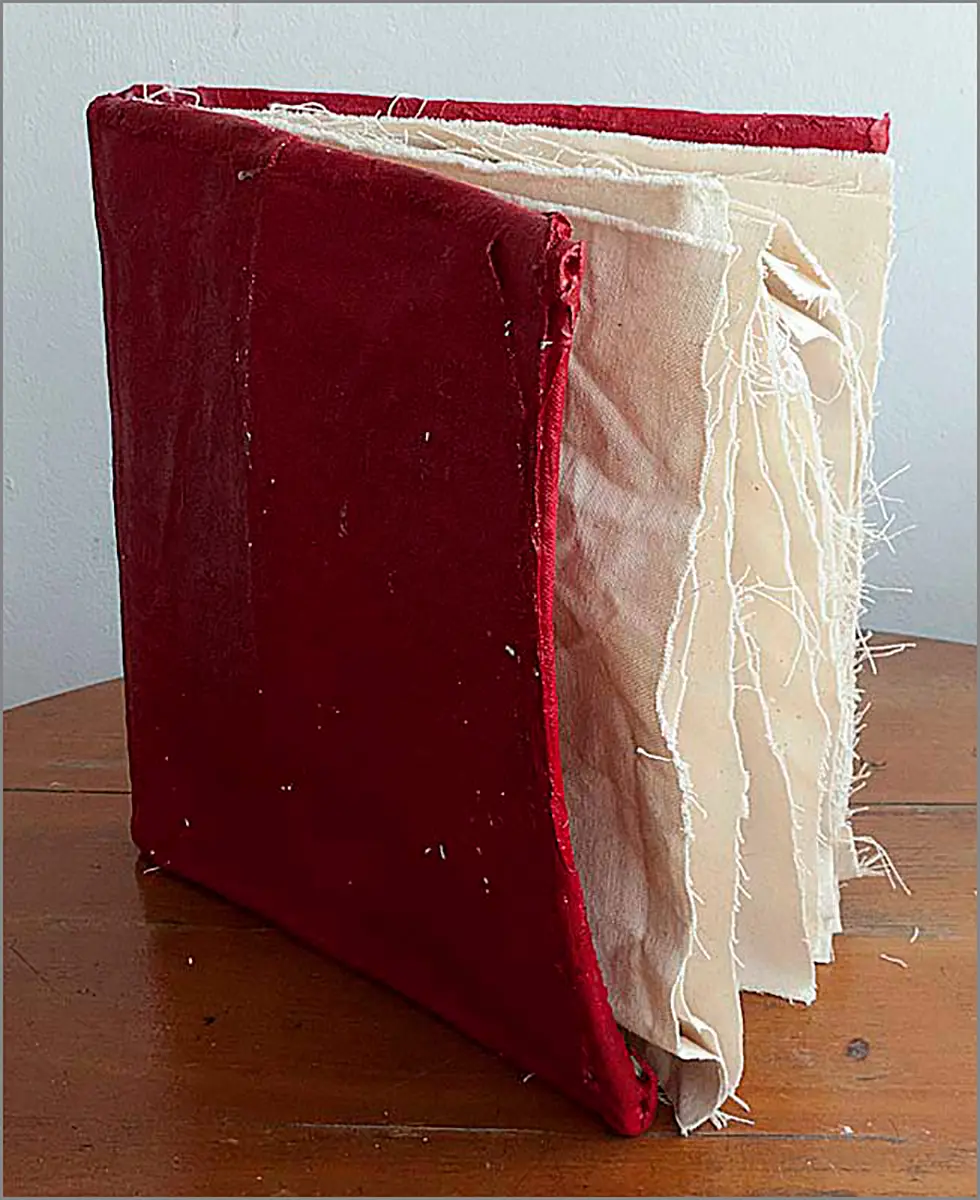
But, what is this all about? What is Pintado up to in this provocative exhibition (effectively and poetically showcased by Francisco Rovira at his new Galería Roberto Paradise)? Pintado’s paintings—oils—sculptures—wood, canvas, ceramic—ponder about, and dialogue with, the eternal rivalry between reason and emotion; the everlasting “struggle” between the realm of passions, impulses, impetus and momentary frenzy. This work is about a future and a maturity/old age that never arrive because they are for someone else; about the world of unreason—usually when young—versus a world of analysis and reason—Plato, Christianity. It is also about the artist venting to reveal the continuous struggle between the extremes. He conveys this narrative through proposals that are pleasant, childlike, and dreamlike—especially after the first reading—but that also elicit other lectures, some of which are sharply realistic and rather painful.
Since the beginning of his career and afterward, when he exhibited his work alongside Michael Linares, Radamés Figueroa, and Lerma—five years ago—he demonstrated an intelligent and appropriate combination between innocence-fantasy—framed with very unique humor—and an almost imperceptible but devastating existential/social criticism that ranges from the unjust and ephemeral nature of life to the physical and spiritual solitude in which we must survive the multiple tests, struggles, and falls that are thrown at us. His snowmen are not happy, nor are they beautiful. They “will die” because they are fragile and because, when winter is gone, spring will turn them into dirty puddles.
Pintado is not making fun of us through his aesthetic approach or message ("Even True Love Doth Die"). He only wants us to understand the way he sees the game: as a rat race in which the winner remains a rat. His “truth/message” has been constructed out of autobiographical material and the literature and music that he loves. He reaches us through amusing, naïve, and innocent images. With his witty/funny hearts, snowmen, and “take-offs” about “the reader of the school of Athens,” he wants us to “see further.” Because to throw oneself headfirst into a heart—a symbol of love, life, and happiness—that looks like a beautiful tart/pastry/cake without giving it a thought, could be construed as a suicidal act, in the physical, metaphorical, or existential sense. Works such as The Sky Belongs to the Stars, The Universe is Expanding, and The Anxiety of Possibilities (“hearts”), as well as No One to Defeat You Except the Thoughts of Yourself Feeling Bad, and Perhaps it’s the Color of the Sun—all of these created in 2011 and rendered through the combination of figurative expressionism and primitivism that is very much his own—reveal the philosophy of the young and shy Pintado when it comes to the visual arts: “I create art for me. It reflects that which provokes me in a specific moment, the important things in life that should be equally relevant for those persons out there that look at my work.” His goal is to share something with us that is very dear to him. And he does not solely share with us our human frailty in a funny and tender manner, but also the fact that our lives, whether brief or long-lasting—Seneca—will unavoidably come to an end at some point. Thus the reason for the comical snowmen that break apart, melt, and vanish, or for the delectable hearts that ate/swallowed those passionate people—the non-thinkers—that live through raw emotions. Through his work, we are able to see traces of his personal history: that of a young man who has lived intensely experienced many painful things and has learned from the ups and downs of his life. And this is the existential challenge proposed in Pintado’s work: acknowledging the difference, in this mysterious journey that is life, between immediacy—that great friend of irrationality—and its rational counterpart “Give us this day our daily bread.”
MANUEL ÁLVAREZ LEZAMA