
Recognized throughout his career as a hyperrealist painter who creates large-scale effects similar to those found in photographs, Vitor presents his seventh personal exhibition titled Nocturnal Itineraries. According to Vitor, “the name of the exhibition literally corresponds to that which can be observed in the works. It represents my return to the city at the moment—not to say the only time—I most enjoy it, as I walk through its streets and avenues… its spaces, its emptiness, and the solitude I feel in it, with a distant…, almost detached gaze.”1 That loneliness Vitor speaks about addresses the empty streets at night, the absence of any human beings whose void is replaced with neon lights or moving vehicles. And because Vitor takes the photographs at night, it is possible to feel the prevalent solitude. It is only natural that all the pieces in this series have the color black as part of the background, as it makes the images colder. Yet, the neon lights confer life to the night and the images as it becomes a contrasting element. This means that the images are part of the artistic experience surrounding the city where Vitor lives, as he also demonstrates that photography is one of the tools he uses to create his work.
Vitor has also been a professor at an art school for eleven years. His work has gone through several periods, beginning with his images of social violence taken from newspapers and, later on, centering on psychological violence themes at the family and social levels. Subsequently, Vitor created works that addressed themes of sexuality and psychoanalysis that focused on mental disorders and alterations. Next, he went on to create works dealing with intimate spaces filled with everyday objects such as bricks, light bulbs, pillows, bed sheets, coffee mugs, etc. Finally, Vitor arrived to that period of nocturnal visions of neon advertisements and moving vehicles. His work is always transforming and we will have to wait to see what he will be showing us next.
To create this exhibition of 9 works Vitor used 3,000 photographs. Then, these images are sifted until I get the right amount of photographs for the exhibition. A digital edition process follows to alter the color, edit the shapes, as other elements are added or subtracted until I obtain the image I was looking for. 2 This tells us that instead of just copying the images he takes, Vitor actually creates new ones.
While Vitor used four photographs for the Interbank piece, he only used two for the work Avenida (Avenue). In the work Avenida—the image of a moving car—the only thing that can be observed are the flashes of light of various colors that give the impression of speed and movement. In this work, the viewer’s gaze is drawn toward the white lines that mark the area on the avenue where people can cross the street. This is the work in the exhibition that I like the most because it embodies the essence of Vito’s current work. In the work Interbank—the building where the central office of Interbank is located—this building shines with several colors of light that emanate from the 20-story building’s façade, as the lights are part of the architecture of the building during the night. Vitor transforms this nocturne architecture into a work of art.
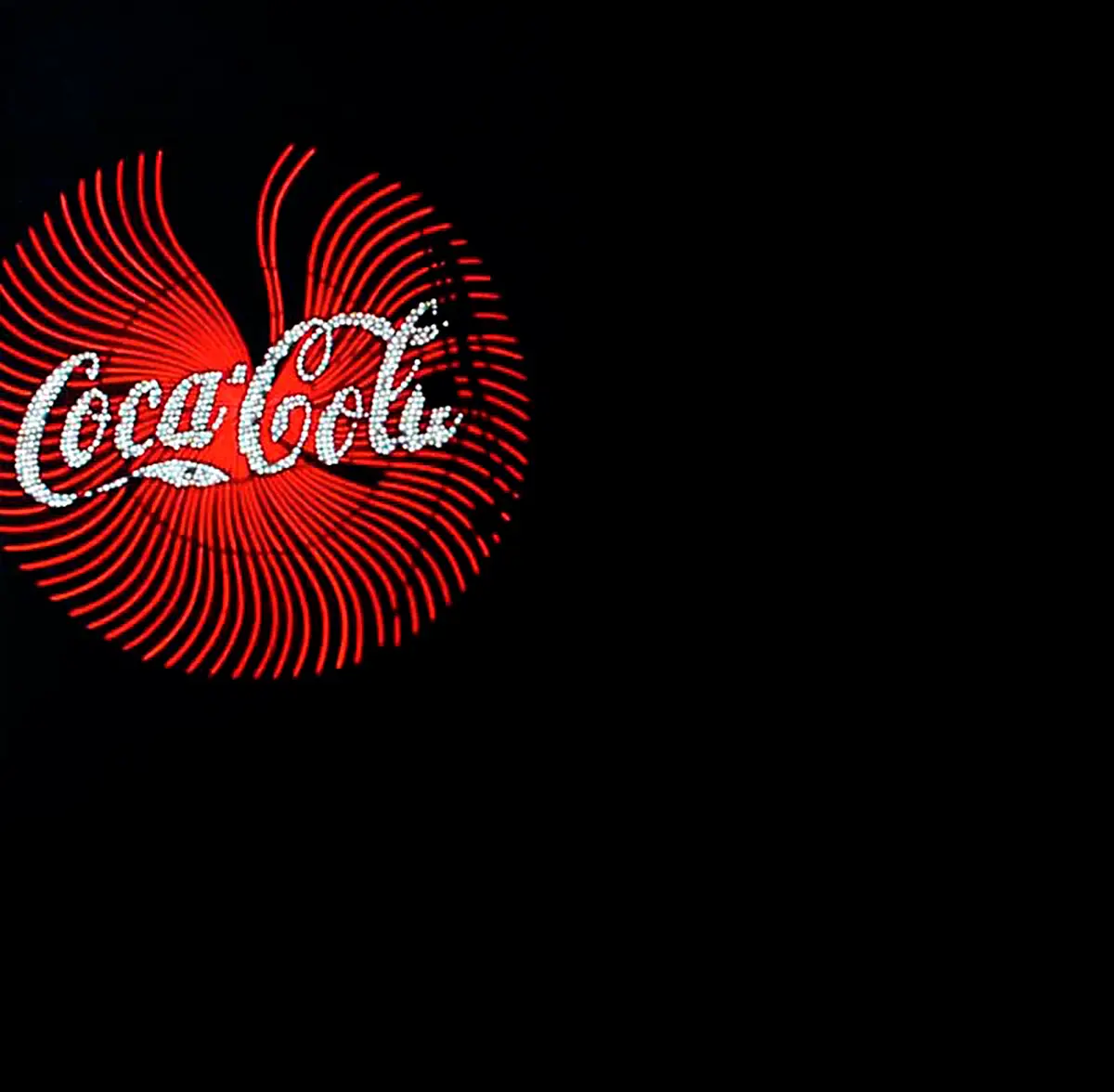
Another work that stands out is the image that depicts a glowing neon Coca-Cola sign on a building. This sign has been at that particular building for over 40 years. Its colorful presence is already part of the urban landscape of the area. It is also a part of Vitor’s everyday life experience, as he passes it often on his way to other places; and, therefore, it has acquired a deeper meaning than that of a mere object. The work is so appealing because of an almost overpowering black background that is only kept at bay by the white and red lights of the logo. The logo is not at the center of the image and is partially cut by the edge of the frame, something that turns it into much more interesting and conceptual work. In the work entitled Karaoke, a neon sign displays five stars at the bottom of the sign that confer the image its significance. It denotes that the place advertised is actually not very classy, otherwise, there would be no need to add the stars. The last three letters of the Spanish word discoteca (discotheque)—eca—in neon, can be read on one side of the stars. It is a detail that makes the work that much more interesting. And each work possesses such a detail that makes it more interesting and conceptual. The peculiar thing is that, according to Vitor, “all the works are untitled, but the gallery gave each one a name to make them more easily identifiable for commercial purposes.” 3 One thing that must be pointed out is that Vitor manages to find art where the eyes cannot see, but where the camera, and therefore photography, is able to capture it. This is an appealing thing about this exhibition.
With this exhibition, Vitor demonstrates that he is a world leader in photorealism, as no one else is doing what he does. To take photos of moving vehicles represents a first in the world of realism. This exhibition demonstrated that realism is still full of possibilities. Because of this exhibition, Vitor should be regarded as an innovator and a leader of Latin American and international photorealism.
NOTES
1. Interview with the artist, September 2011.
2. Idem.
3. Idem.
AUGUSTO CHIMPEN