
Organized by the Istanbul Kültür Sanat Vakf1 (Istanbul Foundation for Culture and Arts), of which it is one of the most prestigious events, the 12th Istanbul Biennial, inaugurated on September 15th (and open through November 13th), kept things in suspense up to the last minute. Indeed, while the general topic, the relationship between art and politics, had been previously advertised in the media, the roster of participating artists remained confidential until opening day. In choosing the title Untitled, the two guest curators, Adriano Pedrosa (Brazil 1965, independent curator, writer, and editor) and Jens Hoffmann (Costa Rica 1974, writer and curator), wanted to pay tribute to the work of Félix González-Torres (1957-1996). Indeed, the inspiration provided by this artist, whose oeuvre combines private experiences, reflections on language and art history, political engagement, and belonging to a variety of cultures and territories, was at the heart of the concept for this biennial,1 as the Cuban-American artist had also named most of his works untitled, which he complemented with a description between parentheses.2
There are strong discussions of the discourse of biennials as artistic events and about the connections they can establish with their host cities. Although the curators understand that there is no ideal model for Biennials, they are at least convinced that their usual dispersion in a variety of sites and the accumulation of annexed events (performances, film projections, symposia, lectures, pedagogical programs, various inaugurations, etc.) impede an appreciation of the show itself, its meaning and its true impact in the art world. It is for this reason that they opted for installing it in a single location, 3 with the intent of focusing attention on the event and avoiding dispersal. Distancing themselves from large-scale exhibitions, rejecting the proliferation of “spectacle”-type works of art, they proposed a spatially constrained, intellectually concise, and (despite the variety of expressions) aesthetically coherent alternative in order to reassert, in a well-controlled museographic discourse, the articulations between politics and aesthetics in contemporary art. 4
Museum architecture is another component of their reflection and its application in this biennial. The staging, 5 designed like a rhizome conjoining five collective theme-based exhibitions to the more than fifty individual shows, provided a solid identity to the event and contributed to its significance. Five works by Félix González-Torres were used as starting points for the museographic quest, 6 resulting in the following themes: Untitled (Abstraction); Untitled (Passport); Untitled (Ross); Untitled (History); and Untitled (Death by gun).
The biennial kept its doors wide open to Latin American artists. Of the fifty-four solo exhibitions, fifteen are by Latin American names, including two female artists who, although not born in the region, developed the core of their careers in Mexico: US-born Elizabeth Catlett and Italian Tina Modotti. In both the solo and the collective shows, the second most predominant presence was of Near Eastern artists, since the curators were mindful to give a voice to countries that are often relegated in other biennials. Thus we encountered unknown or little-known artists from Serbia, Romania, South Africa, Iran, Lebanon, Kuwait, Egypt, and Palestine. In truth, several of these artists do not reside in their native countries but concern themselves with issues of cultural and territorial belonging as well as political demands connected to their background. The United States and Turkey are widely represented, but there is the scant presence of France, England, Italy, Canada, or Australia.
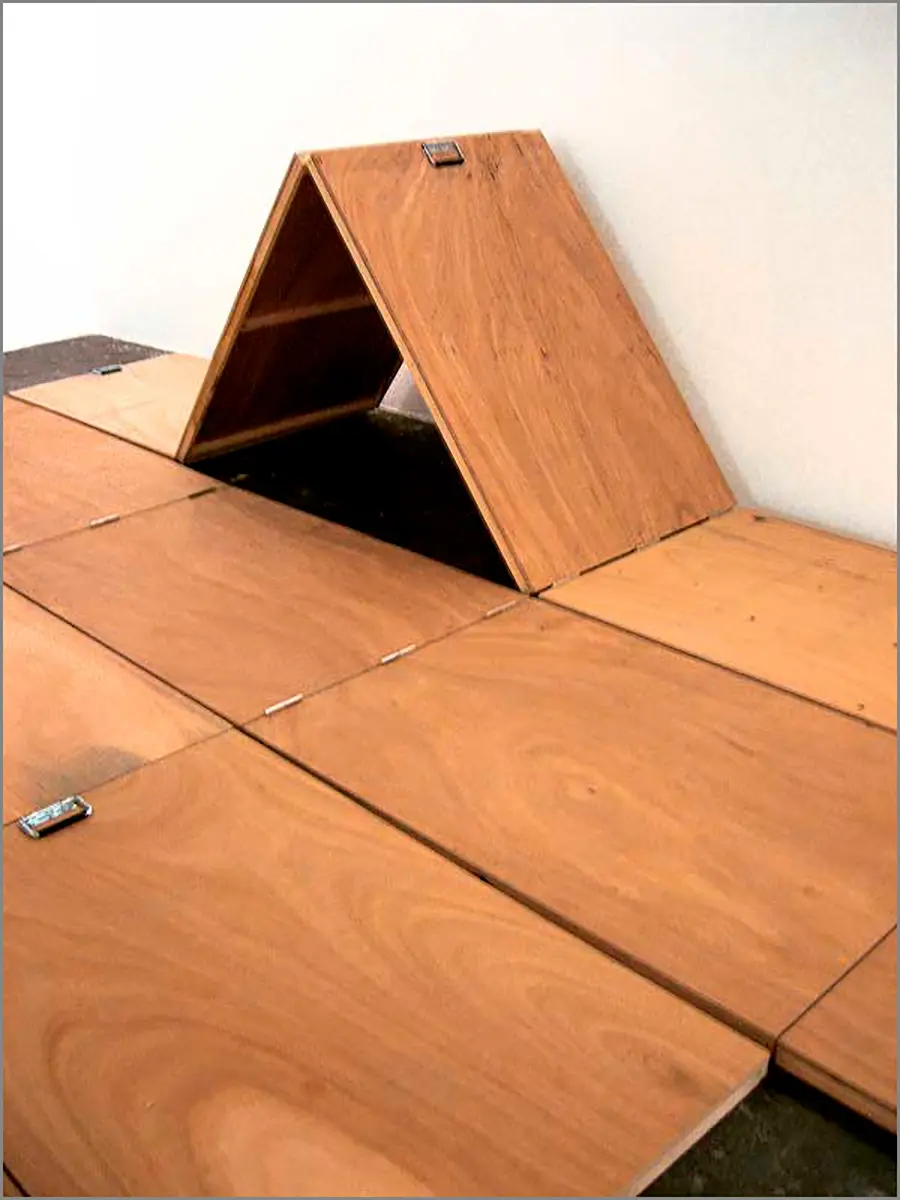
Inspired by Untitled (Bloodwork-Steady Decline) (1994), by Félix González-Torres, Untitled (Abstraction) wanted to bring together works that subvert simple abstraction and move towards political and body-based thematic proposals. From the entrance to the show, two Romanian artists, Mona Vatamanu (1968) and Florin Tudor (1974) invite us to a metaphorical experience of the (virtual) enclosure, forcing us in Land distribution (2010) to crouch in order to move through a “construction” of magnetic tape placed on metal pieces. Alessandro Balteo Yazbeck (Caracas, 1972) and Media Farzin (San Diego, 1979) present an ambitious, difficult to decipher installation, daring to propose a rather improbable approach between art and politics (a parallel history of the “creation” or Iraq and the “invention” of the mobile by Calder and Duchamp) that evokes the US-Iraq relationship after WWII and matters relative to oil production (from the series Cultural Diplomacy: an Art we neglect, 2010, objects, documents, sculptures, video, photography, and collage). The gallery devoted to Zarouhie Abdalian (New Orleans, 1982) is filled with a minimalistic (and efficient) installation created specifically for the Istanbul Biennial: a metallic thread is held vertically against a wall by means of a little plaque that vibrates to the dry, indeterminate sound; an object resembling a high-caliber bullet oscillates in one of its ends. In her installation Falha (2003), Renata Lucas (Brazil, 1971) created an articulated, portable, modifiable, and flexible floor made of wooden planks with metallic cranks, a playful metaphor—visitors could modify it at will—for the instability of artistic production.
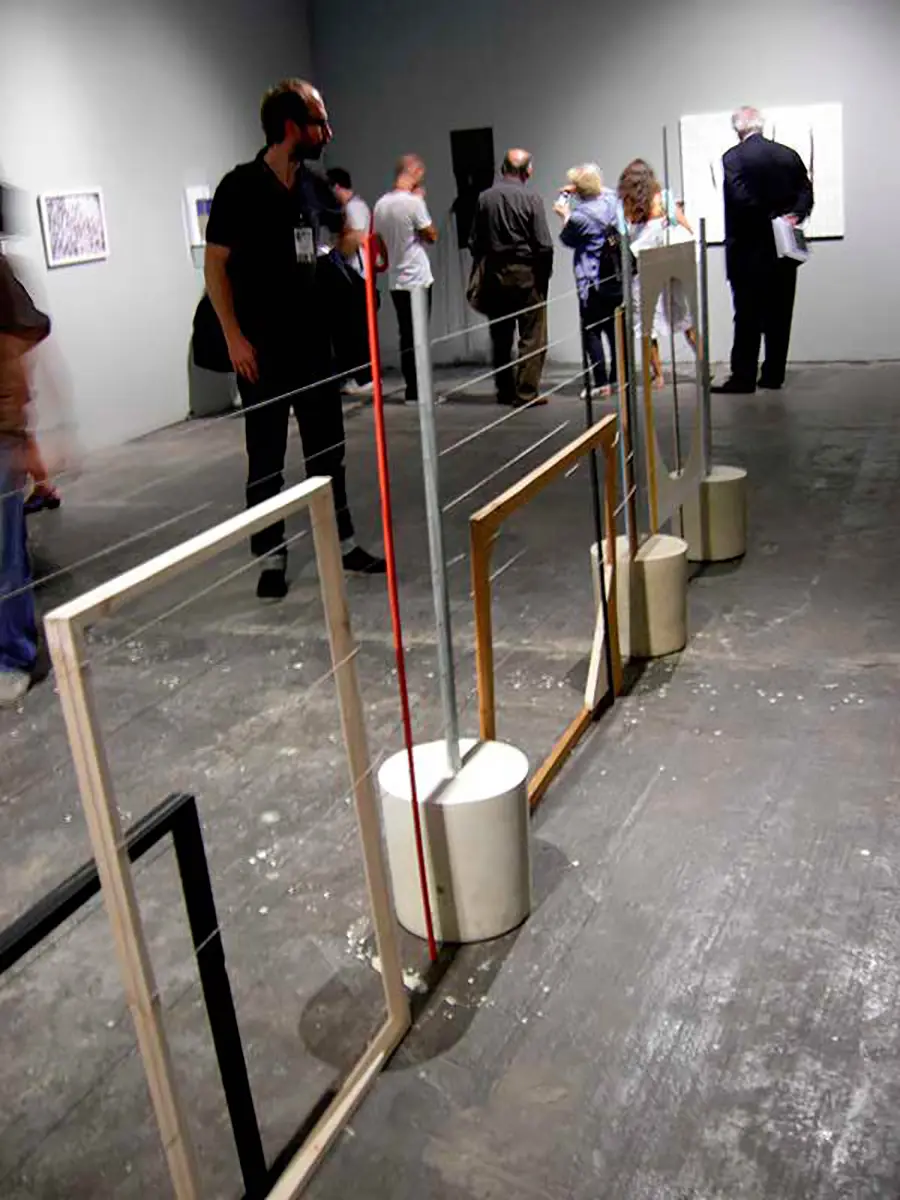
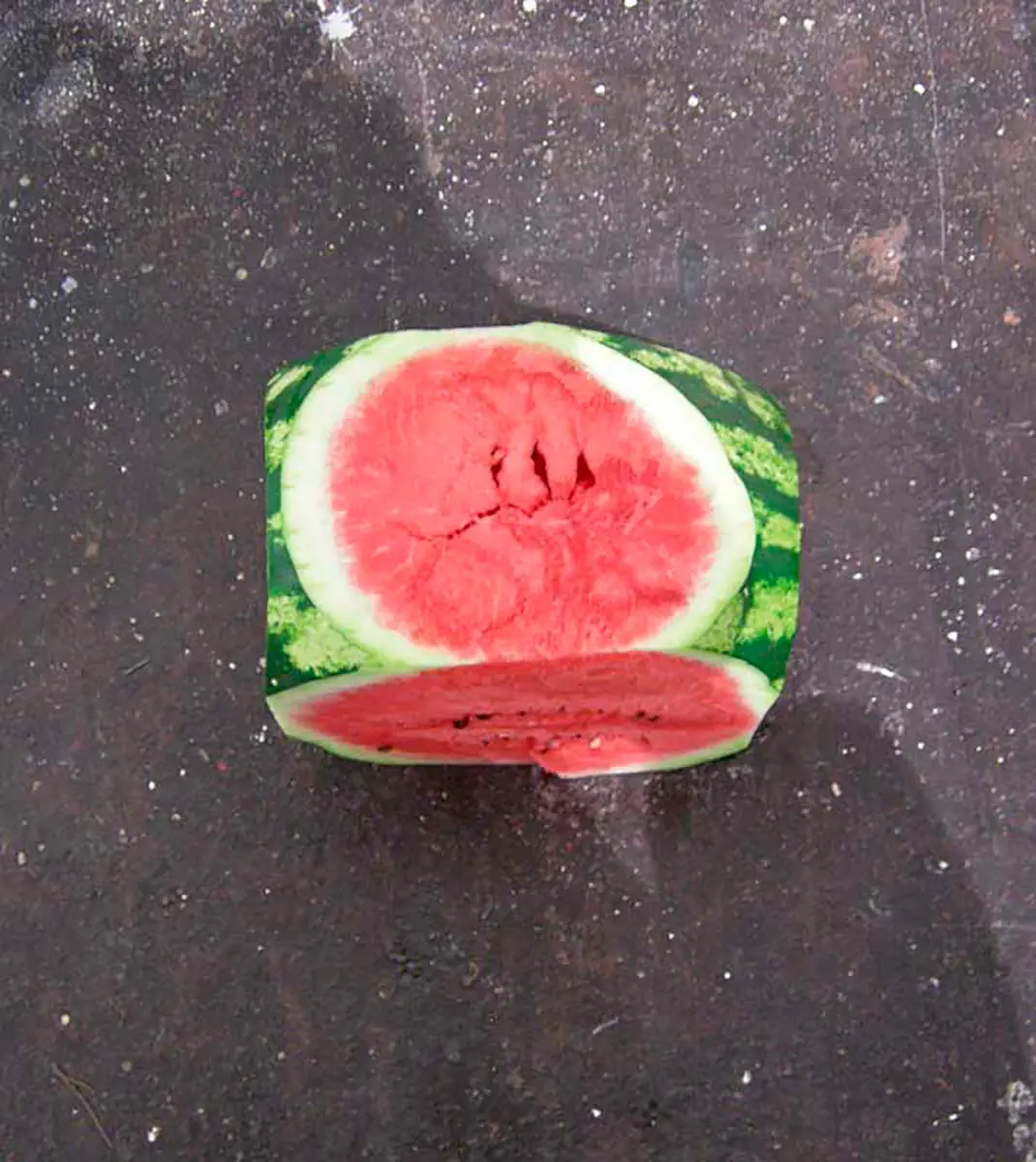
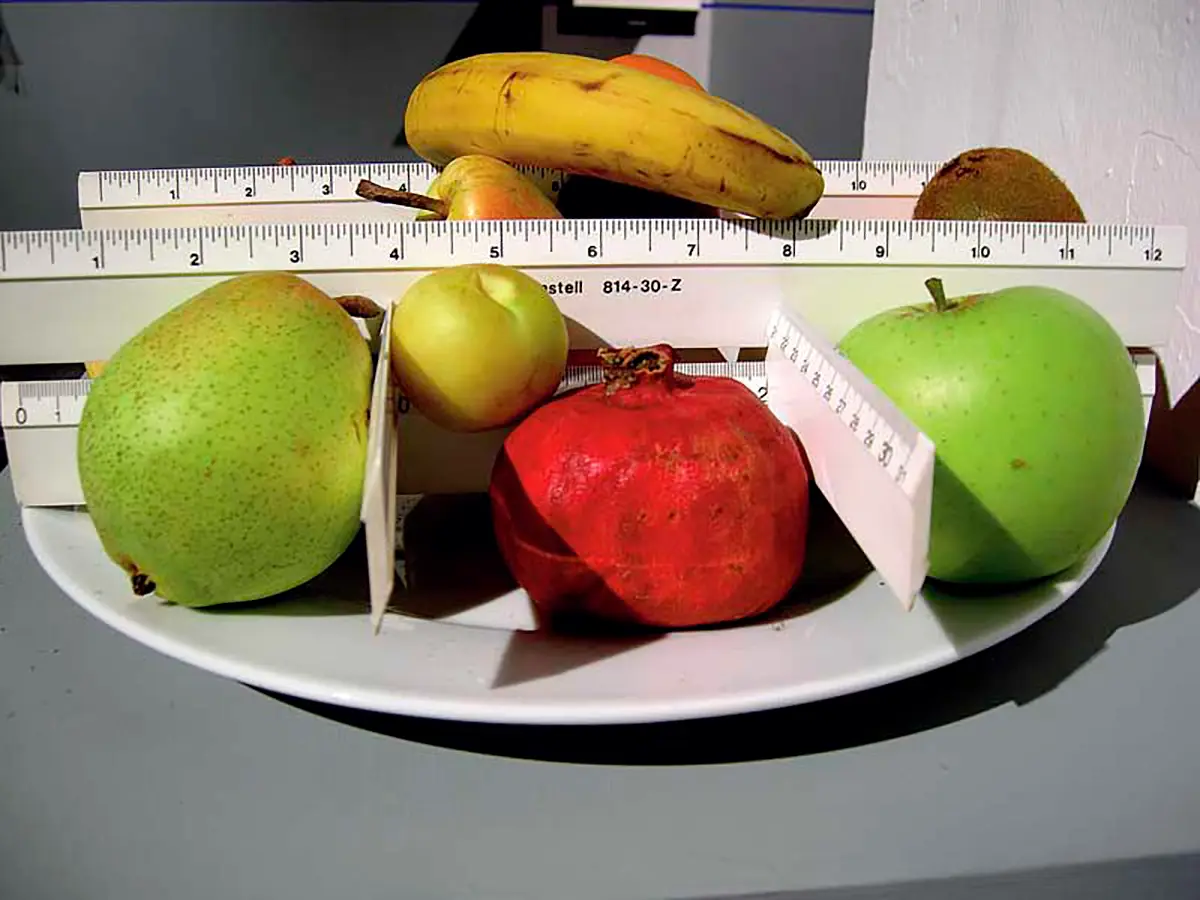
The group exhibition is an open space that allows our gaze to cover in a single swoop the entire set and thus capture the dialog and/or complicity generated between the works (by some thirty different artists.) Half the artists included hail from Latin America. None displays a full-blown abstraction, but rather a sense of humor, poetry, remembrance, or irony that permeates small-format works, such as the (real) watermelon presented by Wilfredo Prieto (Cuba-Barcelona, 1978) in his Politically Correct (2009), cut in its four sides; the two monochromes, textless red books by Yalma Carranza (Cuba-Amsterdam, 1981), Untitled (Two illustrated stories of the Great October Socialist Revolution); the real fruit tray traversed by graduated rulers exhibited by Gabriel Sierra (Colombia, 1975), Untitled (Support for Math Class) 2007 7; or the shovel with a square perforation presented by Clara Ianni (Brazil, 1987), (Abstract Work Labor, 2010). At times intimate, such as Bad Boy, Fragile Soul (1990), a small minimalistic oil work by José Leonilson 8 (Brazil, 1957-1993) or Processual Box # 1 (2008-2010), a delicate “constellation” (that brings Gego to mind) by Joanna Calle (Colombia, 1965), made with grids, mesh, small nails in groups, words that outline shapes on paper, in an allusion to Colombia’s political context. Close to a wall, space is traversed by the installation At a Certain Distance, Public Barriers, 2010, by Rivane Neuenschwander (Brazil, 1967), comprised of a series of objects, most of them found in Istanbul streets, attached by cables and based on concrete. 9 Adriana Varejao, Lygia Clark, Ernesto Neto, Magdalena Jitrik, Jac Leiner, Jorge Macchi, and Juan Capistran are also present with small-format works, all pertinent albeit some previously exhibited, in sets executed with excellence. We also note 180 Seconds of Lasting Images, 2006, a subtle, touching series of sepia-toned photographs by Joana Hadjithomas and Khalil Joreige (Lebanon, 1969), where the identification of faces is blurred at the center and on the margins.
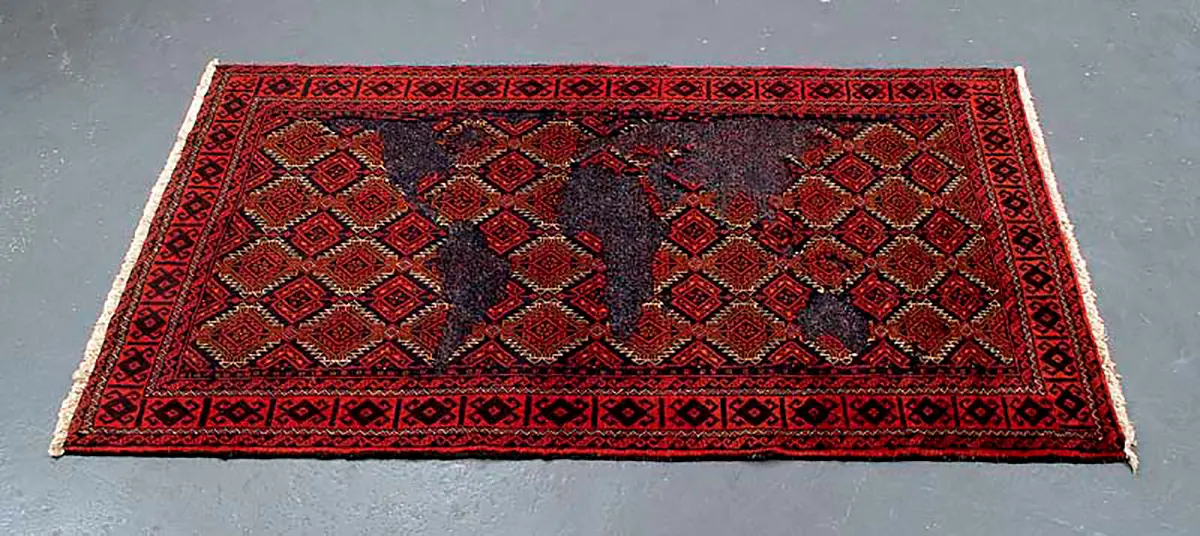
The second floor holds two group shows and their corresponding solos. Untitled (Passport) finds inspiration in González-Torres’ Untitled (Passport # II), from 1993. It deals with ideas related to the abolition of borders with uninterrupted journeys, emphasizing maps, infinite horizons, and passport problems. At the center of the group exhibition, Joaquín Torres García’s celebrated inverted map (Nuestro norte es el sur, 1943) and, on the floor, Do it Yourself: Freedom Territory (1968) the adhesive tape worked by Antonio Díaz (Brazil, 1944) to propose a kind of “grille” in allusion to an already-organized system that can nevertheless be transgressed. Two Eastern rugs by Mona Hatoum (Lebanon, 1953) reshape the world map (Afghan, 2009) by cutting out and darkening continents rather than countries. So does the series Map of the World (2003), two maps by Kirsten Pieroh (Germany, 1970) that trim and reorganize countries according to their size. Two artists engage with the difficult issue of Palestinian nationality: Baha Boukhari (Palestine, 1944), who presents a set of (real) Palestinian passports held by her father, and Dor Guez (Israel, 1980), who uses facsimiles. Kutlug Ataman (Turkey, 1961)—also present in Untitled (Ross)—exhibits a highly poetic video that is freighted with emotion (Su, 2009); Ataman’s is one of the most beautiful works in the biennial, superimposing in horizontal bands images of the Strait of the Bosphorus zebra-crossed with light.
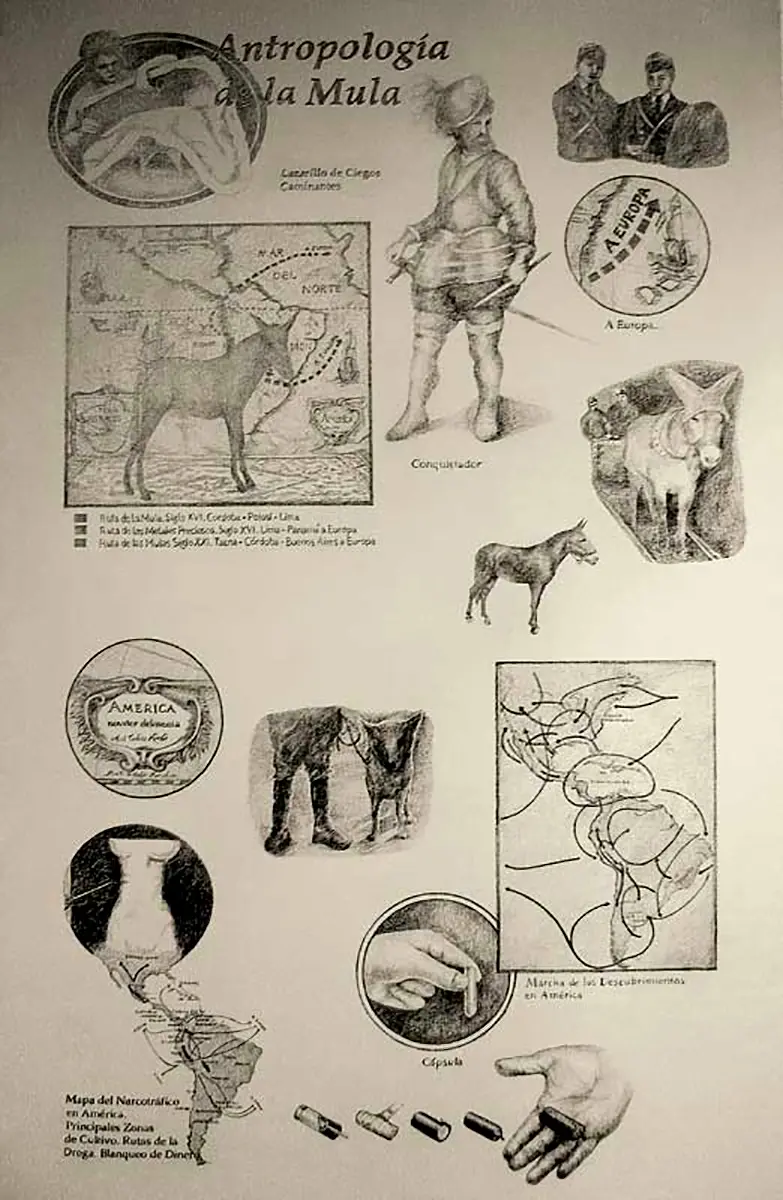
Three solo shows, three techniques, and three supports reinforce Adriana Bustos’ proposal (Argentina, 1965) and her series of large narrative drawings in black and white, pencil on canvas, that deal with the routes of drug trafficking and are based on old archival drawings, My Cocaine Museum, 2009 or La ruta de Anabella, 2009; Immemorial, 1994, a large installation by Rosângela Rennó (Brazil, 1962) with photographs of portraits of the workers who built the city of Brasilia set on the floor and the wall, and a list of names and images faded almost into illegibility; lastly, Newel Harry (Australia, 1972), with his traditional threaded rugs, inspired by those found in the Vanuatu islands, which include texts alluding to the intertwining and circulation of the different languages spoken in the archipelago Untitled (Gift Mat: Say No Go, 2011).
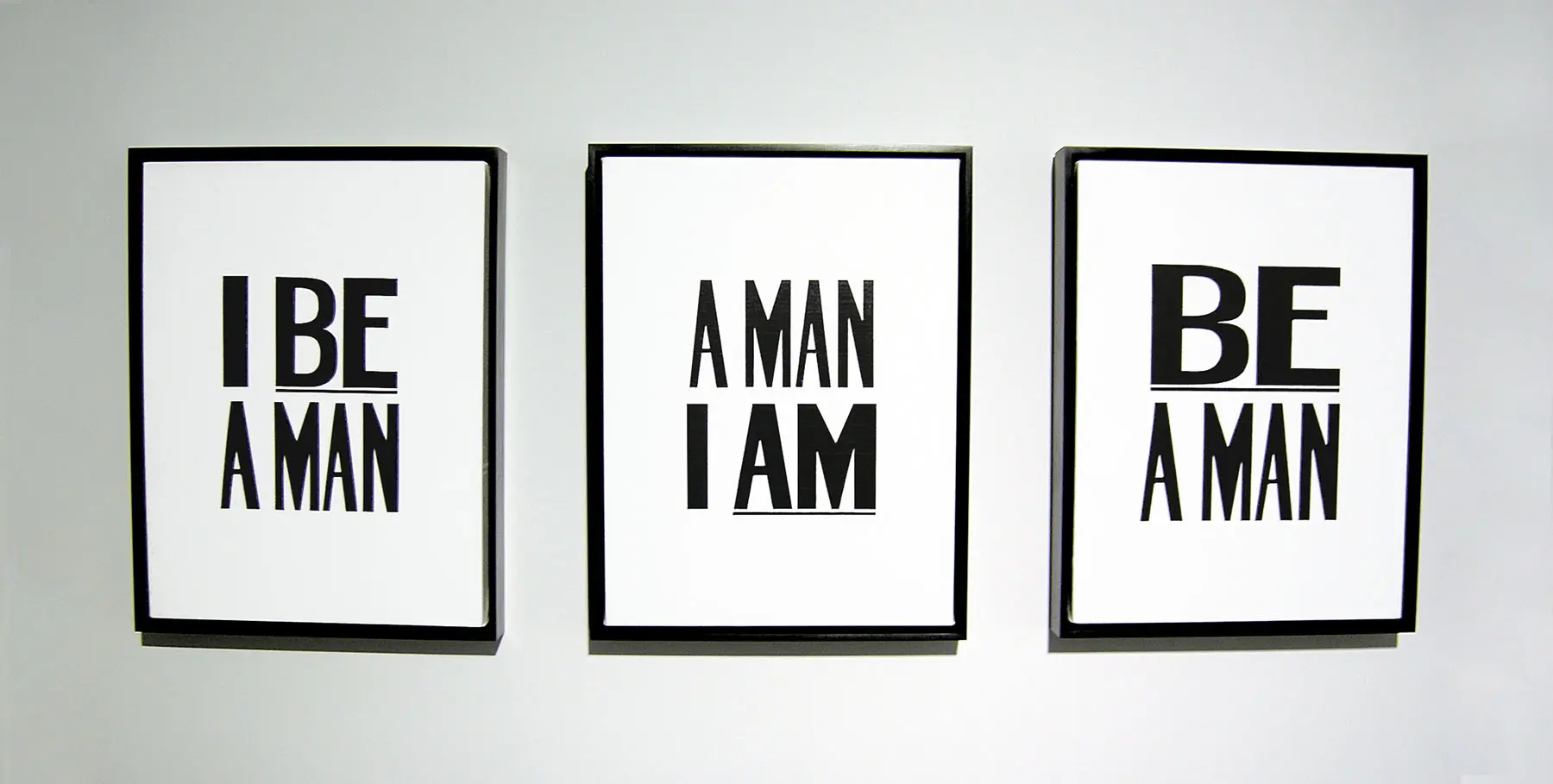
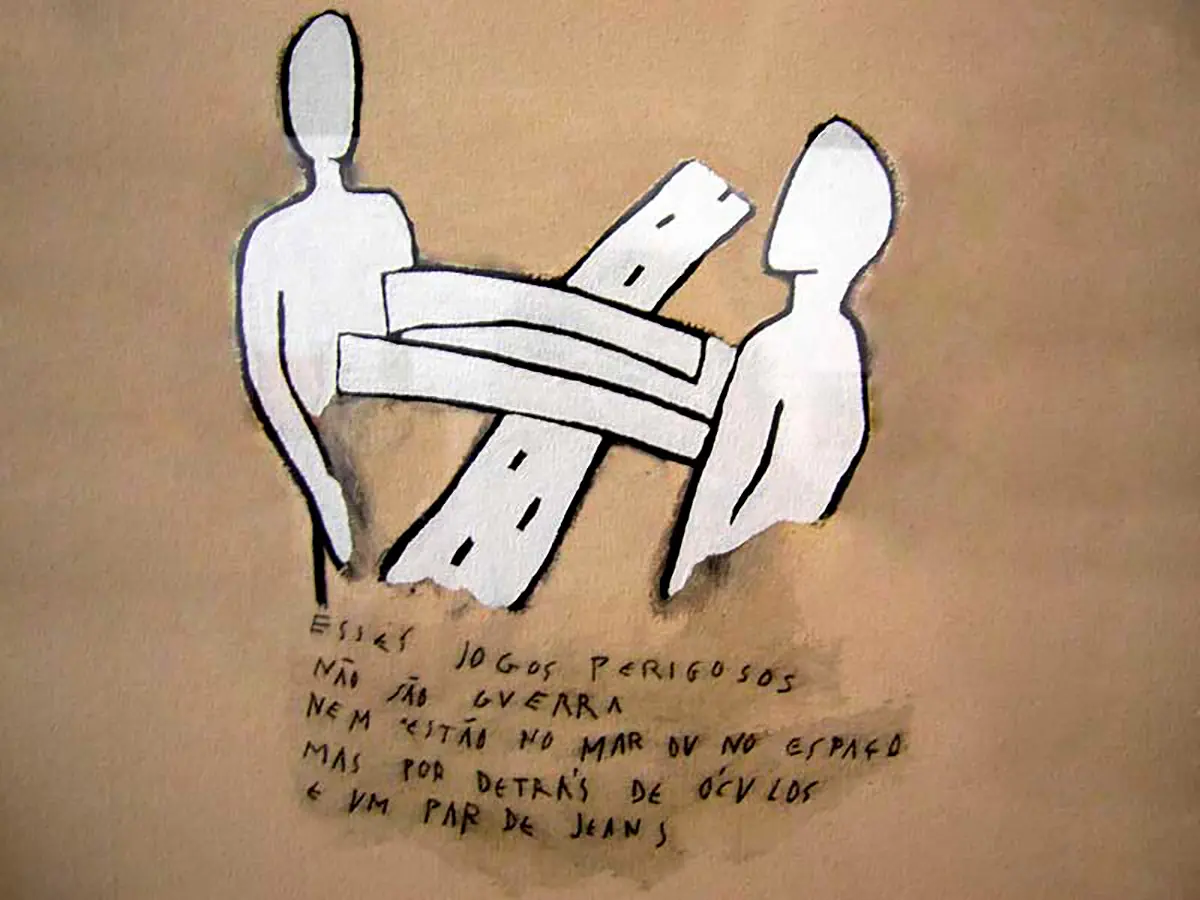
Untitled (Ross) takes as its point of departure a work by González-Torres that carries the name of his companion, Ross Laycock, who died of AIDS before the artist and appears in the titles of several of his works. The works included in this collective explore topics of homosexual love, family, desire, and death. Four solo exhibitions capture our attention. The entrance to the exhibition is through the wordplay of I am, Amen (2009), a series by Hank Willis Thomas (US, 1976), but it is the beautiful gallery devoted to Leonilson that wholly engages us with its works on paper, embroideries, texts on fabric (1989-1992) that speak of the fragile body and of sex, exile, and the fleetingness of time (Jogos perigosos, drawing, circa 1990). Peruvian Teresa Burga (1935) proposes an emotional medical-biometric journey in Self-portrait, Structure report, 09.6.72, to the sound of her own beating heart.
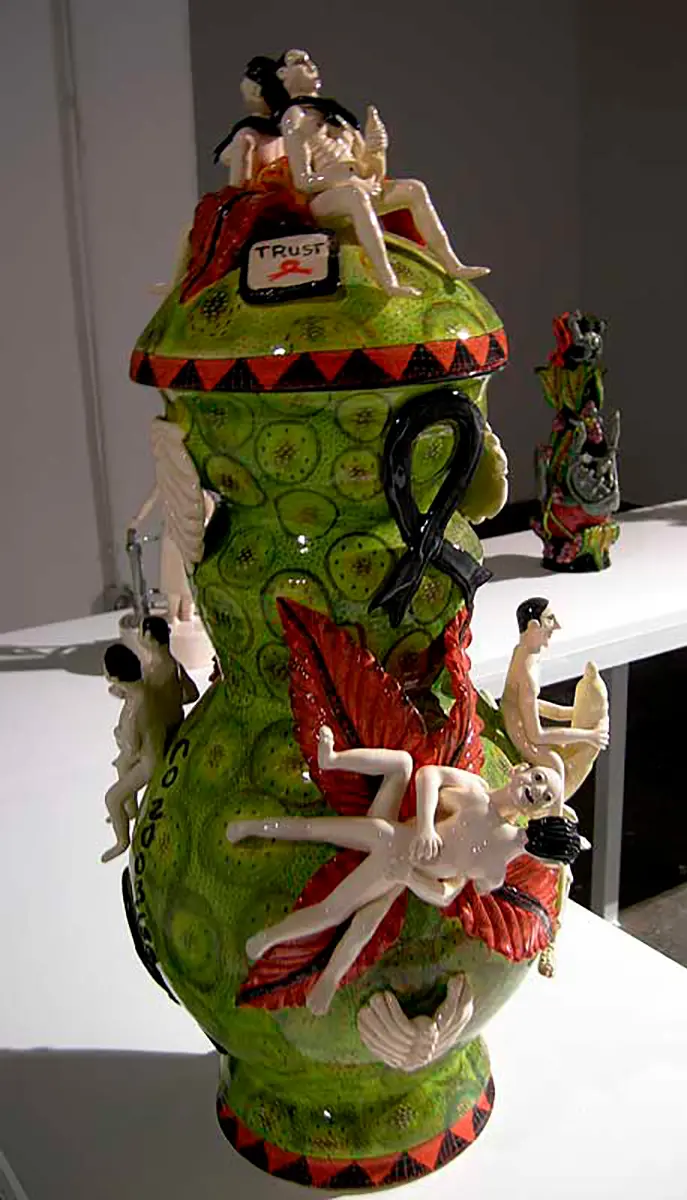
The recycling of Hashem el Madani’s photographic archives—photographs of couples in an old Lebanese studio, the Scheherazade Studio, active from the 1940s to the 1970s—in the work of Akram Zaatari (Lebanon, 1966), and the “fun” erotic ceramics dealing with AIDS, death, and safe sex produced by the South African artists collective Ardmore Ceramic Art Studio, take us to different times and customs.
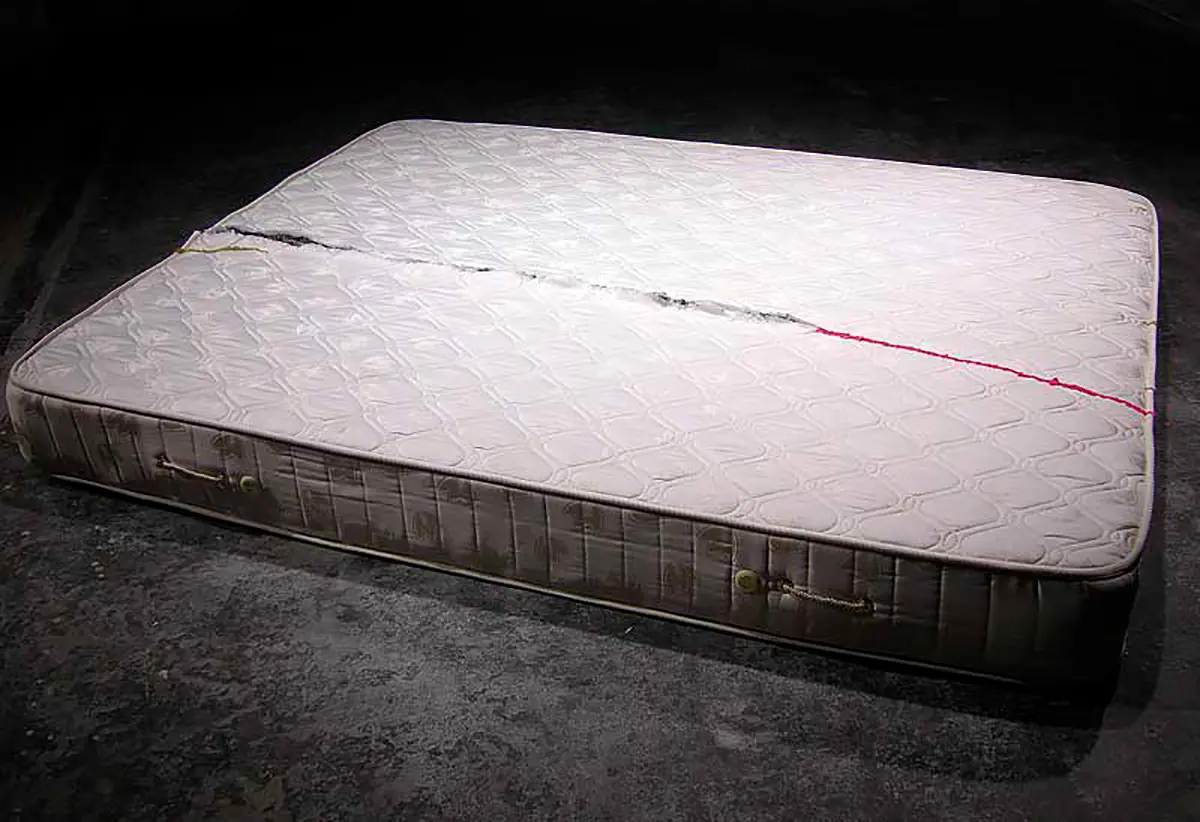
In the group show Untitled (Ross), young Brazilian artist Jonathas de Andrade (Recife, 1982)—we encounter him again, solo, in Untitled (History)—speaks, in his mural installation 2 in 1 (2010), of disappearance and death through the history of two beds that are to be transformed into one; another bed by Kutlug Ataman (Forever, 2011), very dramatic, with its mattress directly on the floor, is striated by an embroidered line.
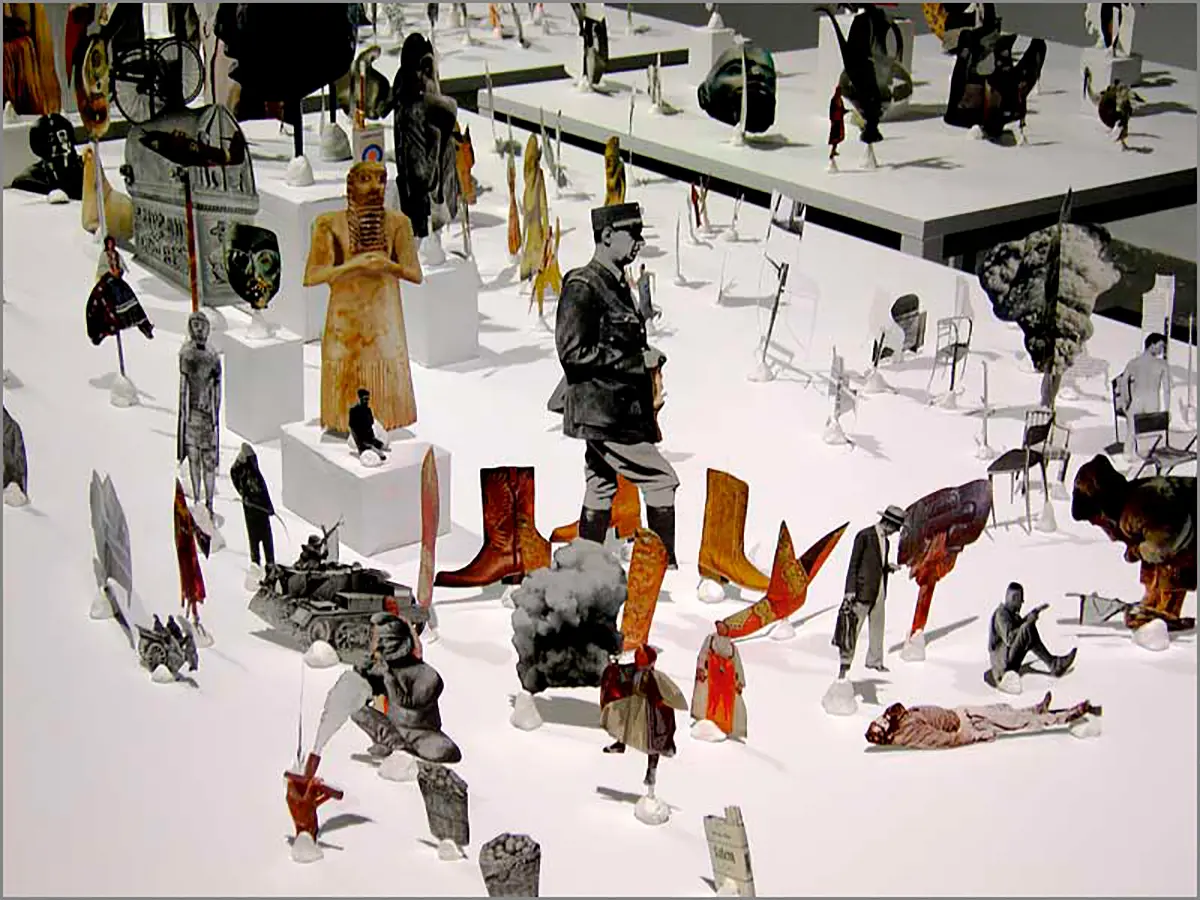
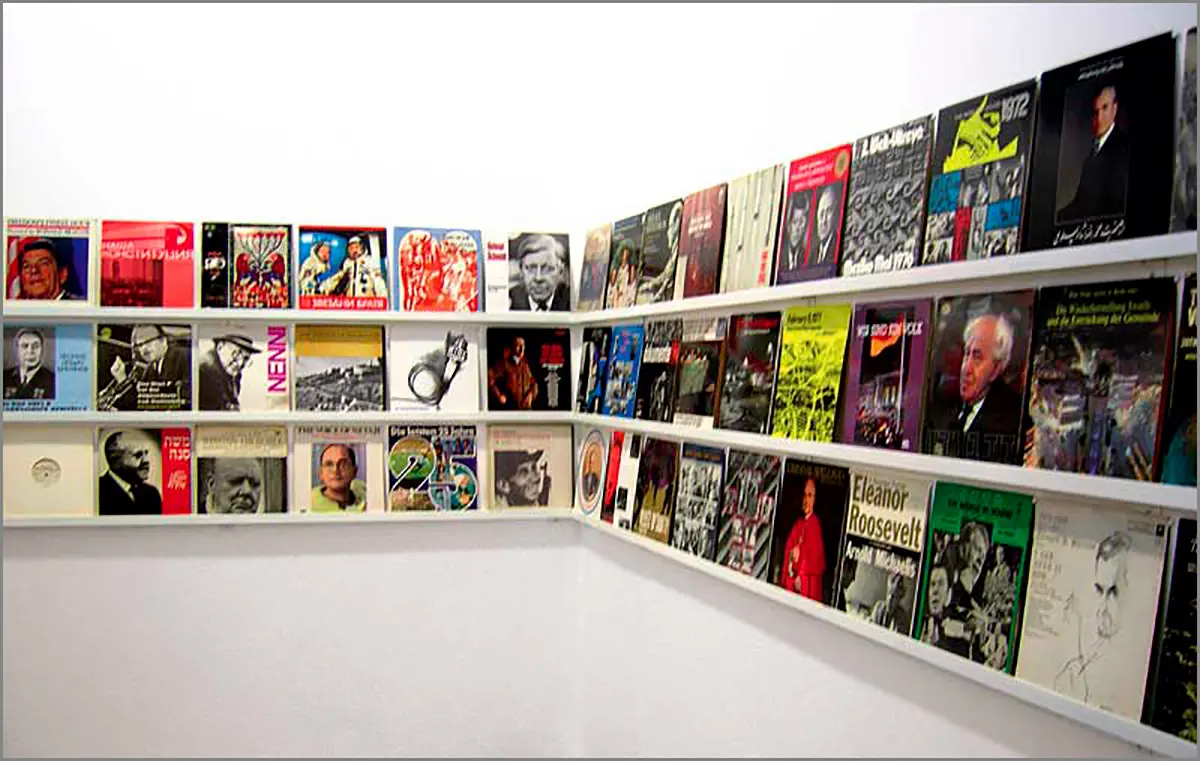
The other building, Untitled (History) starts from a 1988 work by González-Torres that is a chronological inventory of dates and names taken from history and popular culture. The exhibition deals with history and its different possible readings. With Marwa Arsanios (US-Lebanon, 1978), we enter the terrain of nostalgia. The installation All About Acapulco, 2010, tells us of the closing of a Lebanese discotheque in the 1950s. In Ressaca Tropical, 2009 (old and current photographs, archives, drawings, texts) Jonathas the Andrade uses a private journal found in the trash to build a dual history, articulating public and private life, destruction (of homes in Recife, due to real state speculation) and sensuality (evoked through the journal and the port, seaside setting), in a narrative that offers as much reading as visual material. Two magnificent galleries are devoted to two artists whose careers are closely associated with the history of art in Mexico: Elizabeth Catlett, still residing there (US-Cuernavaca, 1915), with a selection of graphic works, and Tina Modotti (1896-1942), with thirteen photographs, some very emblematic of her entire work. Amsterdam-based Colombian artist Milena Bonilla (1975) presents a comical installation (photography and video) about Karl Marx’s tomb, following the path of the ants and snails that occupy it (Stone Deaf, 2009). The relationship between music and politics is visually illuminated in The Historical record archive (2005), a huge installation by Dani Gal (Israel-Germany, 1975), by means of tens of record sleeves that evoke a multitude of historical events. Closing this section centered on history, Geoffroy Farmer (Canada, 1967) exhibits Sans Titre (2005-2011), a beautiful installation that connects objects, characters, animals from various eras and different cultures, and presents them in the shape of cut-out outlines set in disarray, evoking the world’s cultural and political diversity.
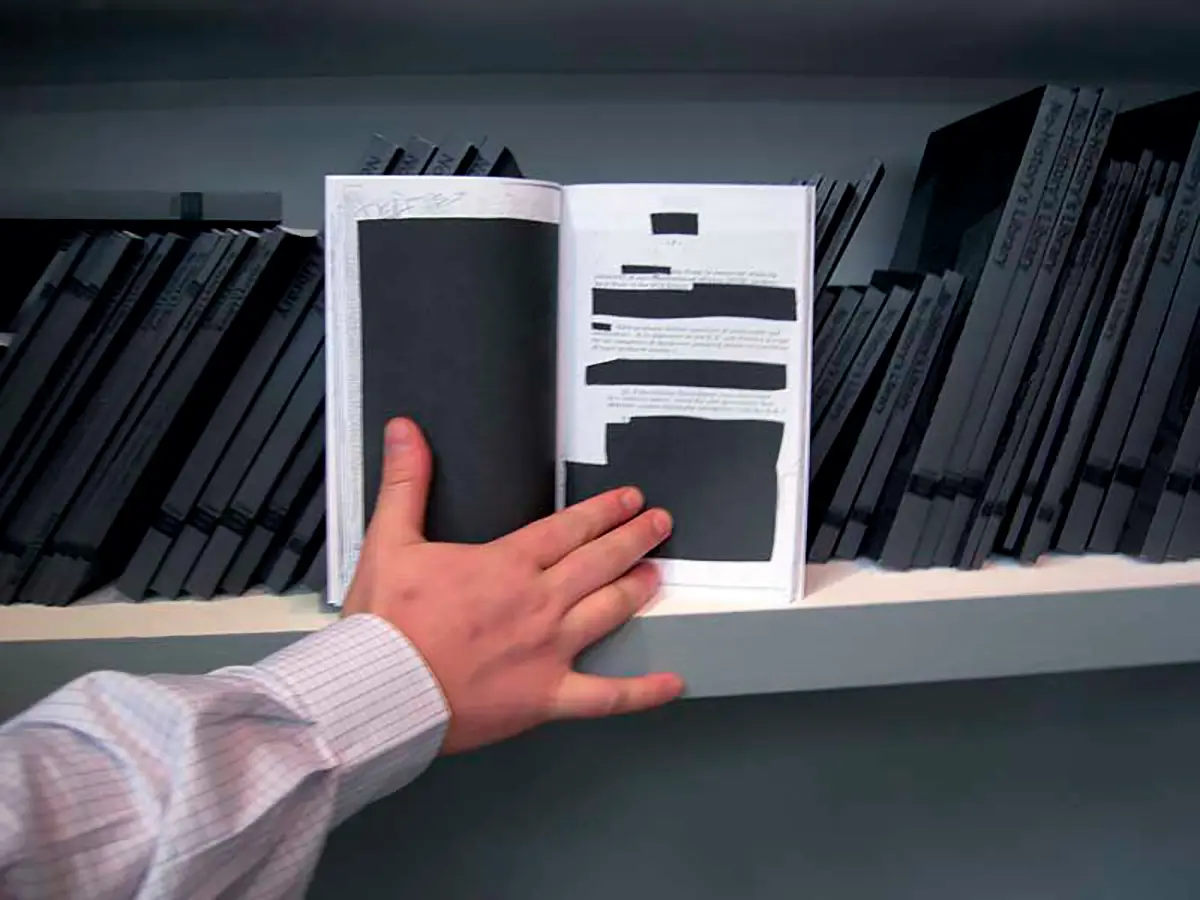
The book is at the center of the group show Untitled (History). A number of artists engage the concept of the official book, for instance, Voluspa Jarpa (Chile, 1971) in Biblioteca de la No-Historia, 2010, where books partially redacted with black tape pile up on a shelf (200 copies of official books on the Chilean dictatorship that were declassified by the US government).
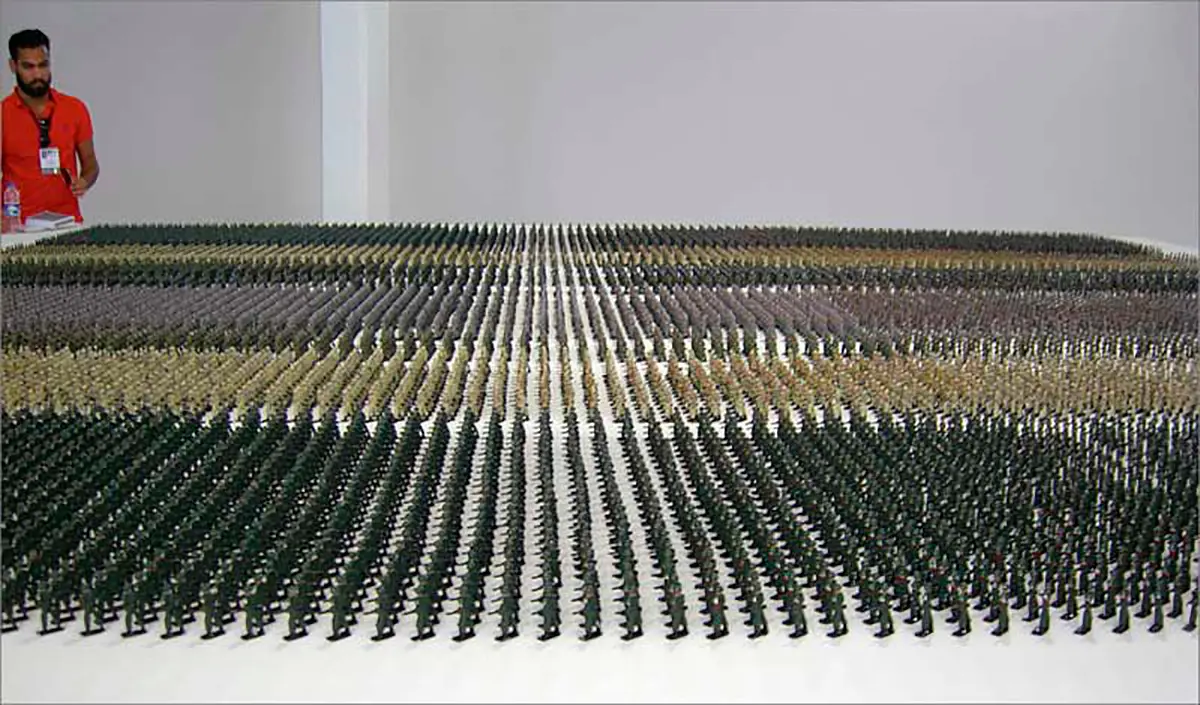
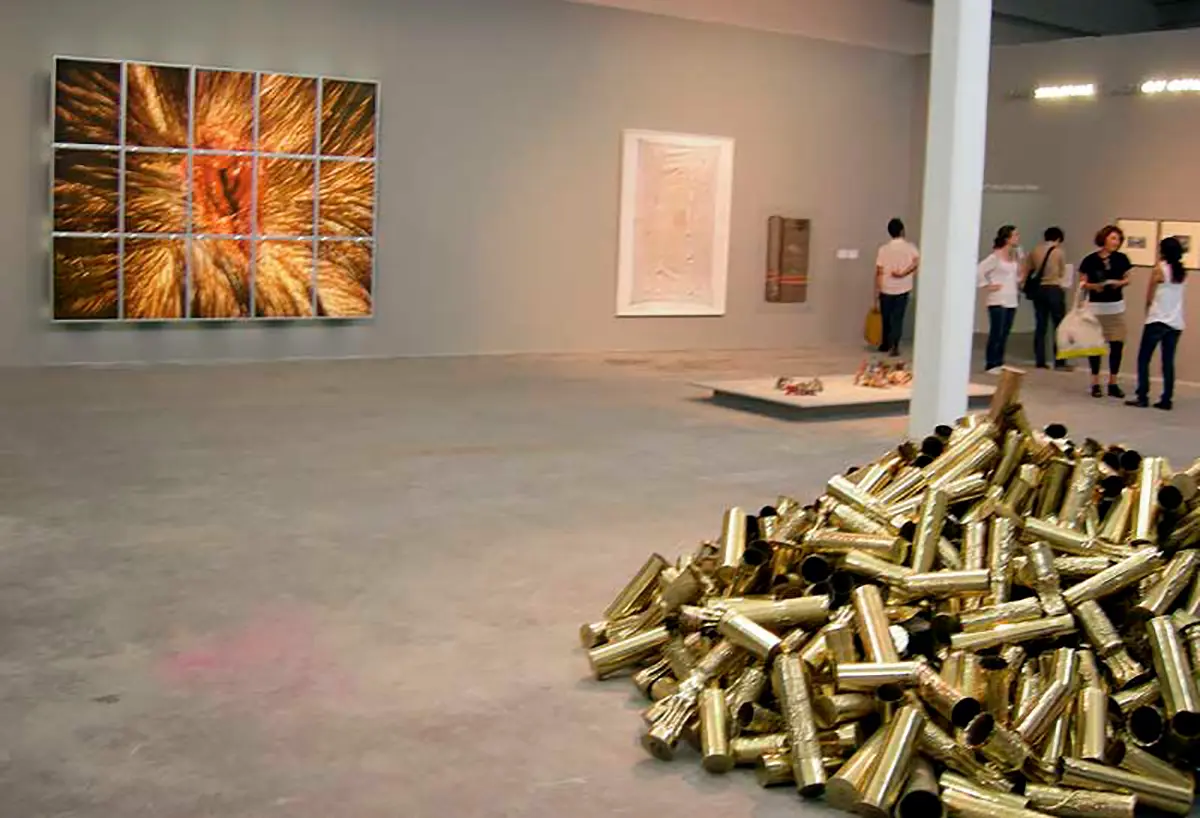
Untitled (Death by gun)—inspired by a 1990 work by González-Torres that lists the 460 murder victims registered in the United States between May 1st and May 7th, 1989—revisits the topic of the preceding selection in a complementary, dialoguing way. In the individual presentations, we are dazzled by an extraordinary video by Wael Shawsky (Egypt, 1971), titled Cabaret Crusades: The Horror Show File (2010, 31’ 49’’). This is probably one of the most forceful works in the biennial thanks to inventiveness, its visual power, and its historical discourse. In fact, the artist used old Italian marionettes from the Lupi collection, in Turin (dating from 200 years ago) to tell, in the shape of a chronicle with sound and intertitles, the story of the crusades over the course of four years (1096-99); it was inspired by Amin Maalouf’s 1986 study the Crusades Through Arab Eyes. Abraham Cruzvillegas (Mexico, 1968) reproduced in various types of paper and formats a selection of political stencils connected to revolutions and revolts in Latin America (Ink and Blood, 1968-2009), while Camilo Yáñez (Chile, 1974) evokes, in his lacerating video of an empty stadium (Estadio Nacional 11.09.09, Santiago de Chile, 2010), the drama of Santiago’s National Stadium, used as a detention camp after the 1973 coup. An impressive formation of tin soldiers from the armies involved in Middle Eastern conflicts awaits us a little further into the show, in Tin Soldiers, 2010-11, by Ala Younis (Kuwait-Jordan, 1974). Letizia Battaglia (Italy, 1935) explores, in her photographs of Mafia killings in Palermo in the 1970s, everyday violence in Sicily. The absence of sculptures in the exhibition is compensated by a spectacular group by Eylem Aladogan (The Netherlands, 1974), comprised of pre-fabricated wooden rifles and folded canvases representing bird wings (Listen to Your Soul, My Blood is Singing Iron Triggers That Could be Released, 2009-2011). In the group exhibition, Edgardo Aragón (Mexico City, 1985)—already present in a solo show with a video that theatricalizes violence in Mexico—offers a bunch of WWI-era Howitzer Ordnance in copper or tin, collected by André Breton. Bullet Hole, 1988, a 12-piece photograph by Mat Collishaw (England, 1966), foregrounds the orifice caused by a bullet on a human skull. Akram Zaatari once again revisited the archives of Lebanese photographer Hashem El Madani, seen in Untitled (Ross), to cull black and white photographs of men and women in military garb who pose unafraid and proud of their uniforms and weapons. The dramatic tension and violence of these last works are ameliorated by the always delectable black and white drawings (1985 through 1998) by Raymond Pettibon (US, 1957).
A crossroads of peoples and cultures, beachhead and bridge into Asia, the city of Istanbul is also an in-between in its origins, as brilliantly illustrated by a biennial that takes us, swaying, from the public to the private, from art to politics, from the West to the East
NOTES
1. The curators point out that one doesn’t need to be familiar with González-Torre's work to visit the show.
2. The latter was not unknown in Istanbul, having been exhibited in a previous Biennial (1997) and also the subject of a study cycle devoted to Untitled, which brought together curators, artists, and critics in the summer of 2011.
3. Two old port warehouses in the Karaköy neighborhood (European side of the Bosphorus), in the vicinity of the Modern Art Museum.
4. Biennial Catalog, Introduction by Jens Hoffmann and Adriano Pedrosa, p. 25.
5. For the conditioning and design of the site, the curators were supported by Japanese architect Ryue Nishizawa, winner of the Pritzker Prize.
6. These are not physically present in the exhibition.
7. The artist is also presented individually in this section, with the installation Untitled (Postponed Still Life), 2011.
8. The artist is also present individually in Untitled (Ross).
9. We encounter the Brazilian artist again in Untitled (Passport).
CHRISTINE FRÈROT
Art historian and art critic. AICA member.