
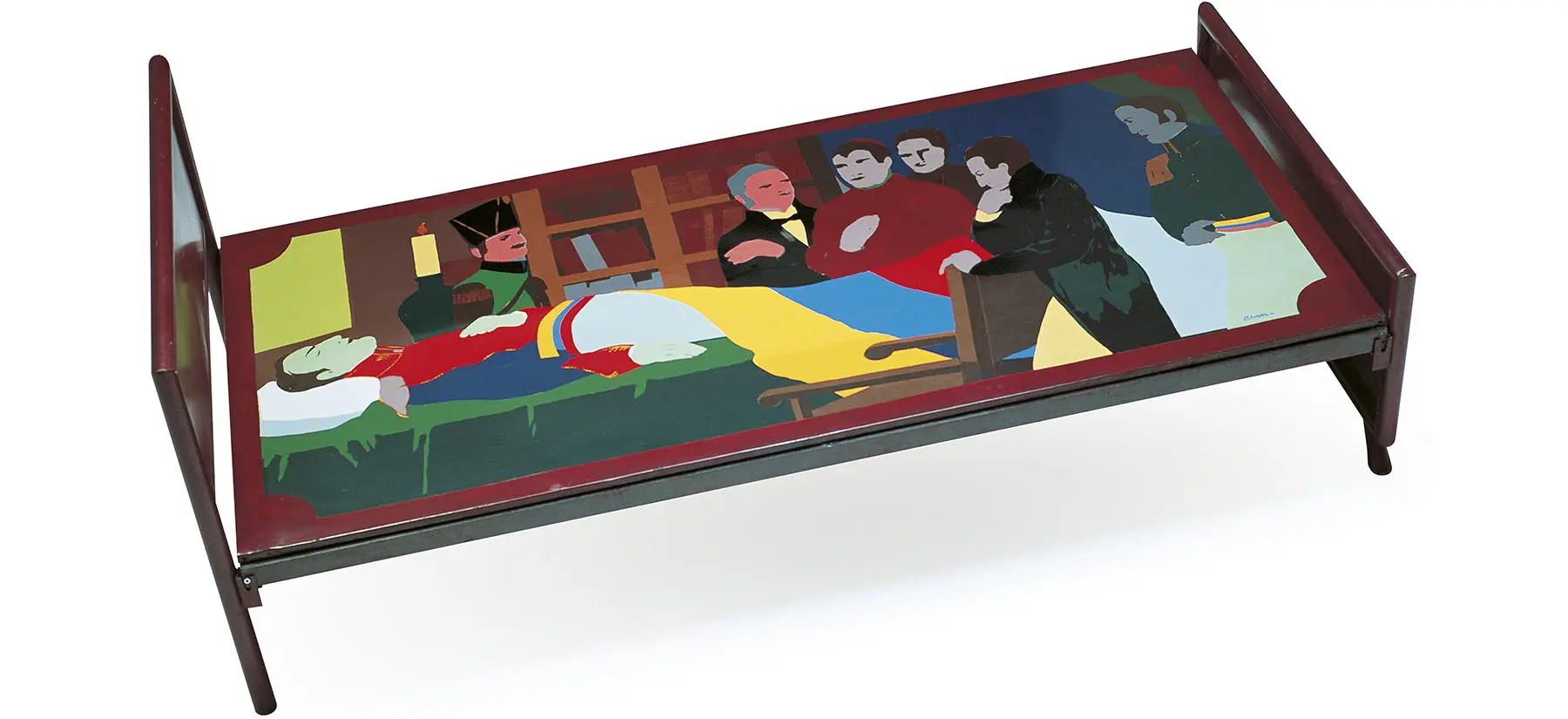
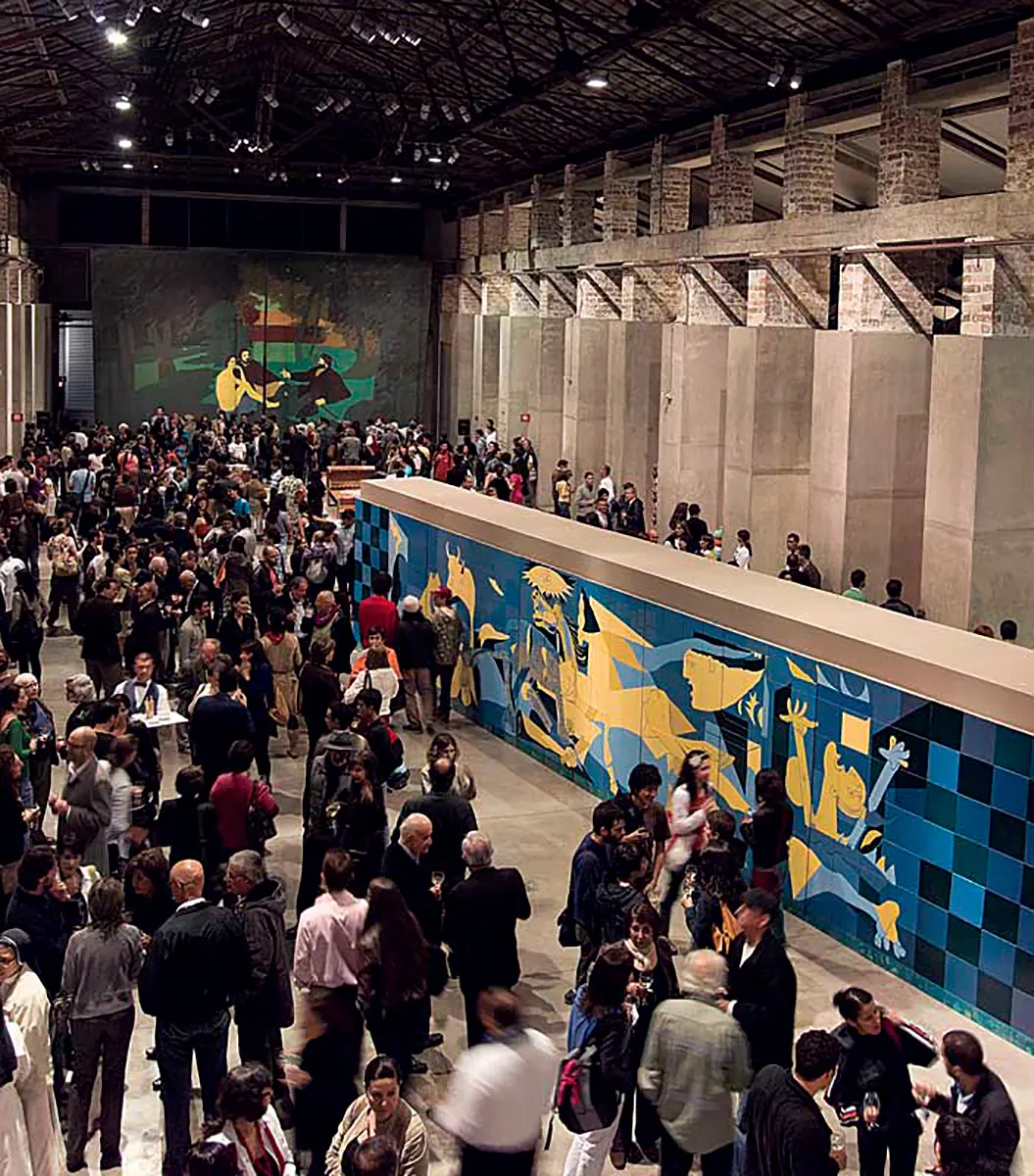
A good curatorship and a superbly mounted exhibition permitted the critical objectification of González’s artistic trajectory of recent decades. The show also succeeded in conveying the importance of her proposals, and those by other artists of her generation, in the way they relate to the generation of Obregón, Botero, Roda, and Negret. The first thing the exhibition makes clear is the decisive influence of Pop Art in her work and in the works of some of her peers. Beginning in 1964, the international projection of Pop Art signaled the end of the so-called modern avant-gardes and the legitimization of local aesthetic experiences: the visual supremacy of advertising, the new urban landscape, the predominance of objects, and the preference for the iconic over the visual.
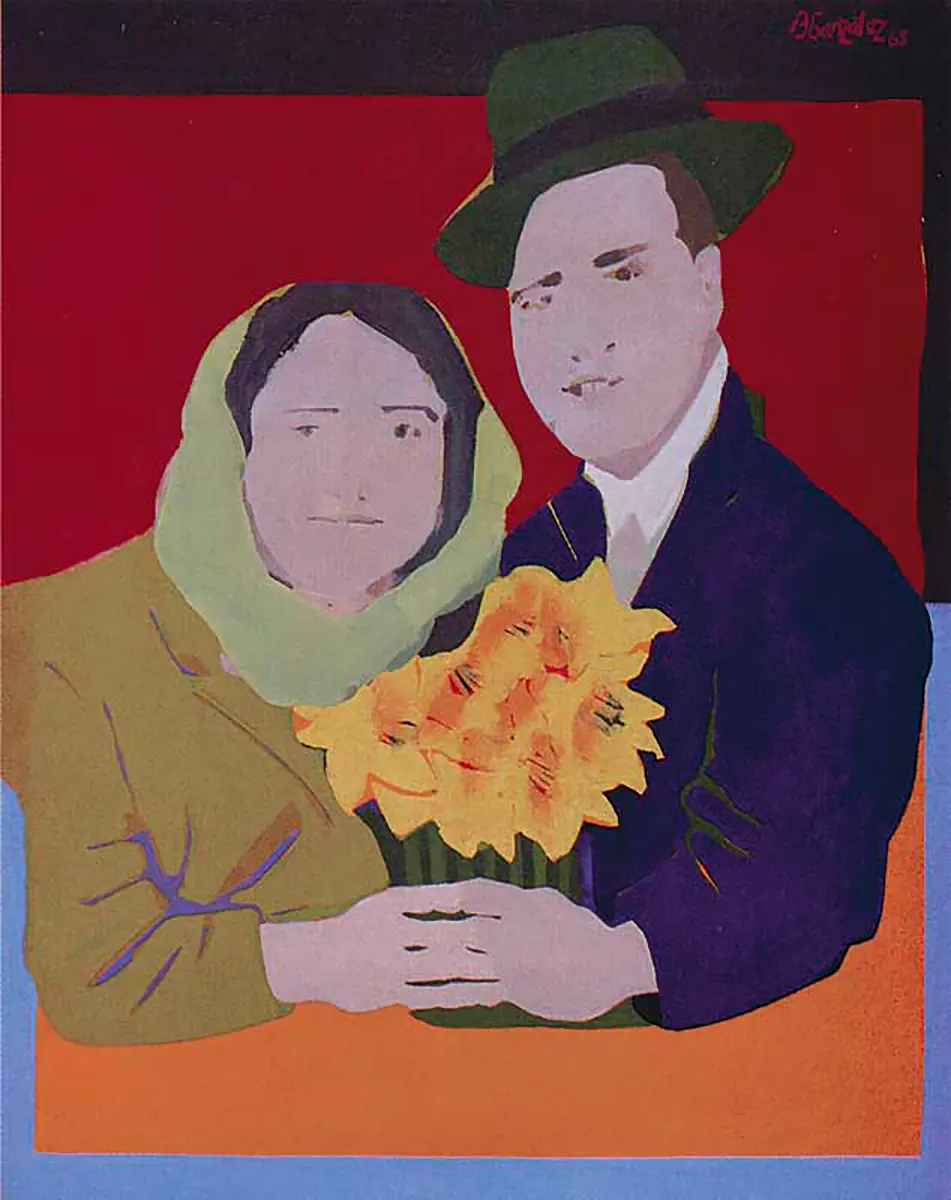
While Rosenquist incorporated the effects of the stroke in advertising images, and Rauschenberg renovated the Dada concept of the readymade, in Los Amantes del Sisga (The Lovers of Sisga, 1964), Beatriz González relied on the documental effect of the photograph, but transcended its purely informative nature to construct with the colors of reality—rather than with an academic palette—a measurement of sensibility before a tragic event that she rescued from a journalistic scandal, in order to transform it into a reflection on love and death based on the premises that offered her that which until then was a neglected sentimentality; one that González was able to recover with the visual codices of a narrative which, in a very specific manner, arranges and defines sentimentalities found outside the parameters of that which we continue to call high culture—as opposed to the so-called popular cultures.
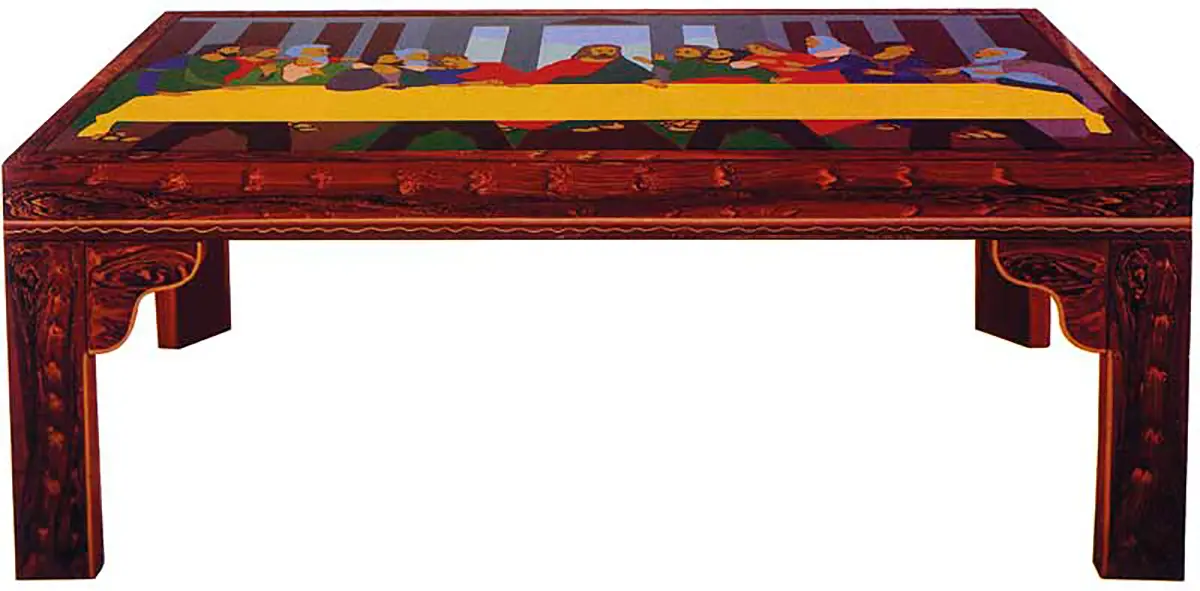
Popular imagery was central to Berni. The same occurs with Juan Camilo Uribe’s work: ways of life transformed into new visual languages. The techne in academic art gave way to a manual approach that rescued the artisanal dimension of the trade. This is the transition that Beatríz González introduced in Colombian art, as she developed an aesthetic similar to that one issued to create objects and press photograms, underground narratives of individuals, and specific ways of life.
In breaking with the academic dogma pertaining to modernism, González positions her work in the wide-ranging contemporary art scene; in the event and not in history, in the real-real rather than in the formulas of the so-called social and ethnic realism; that is to say, under the perverse spell of the politically manipulated “Latin American Identity.” The practice of revisiting some of the consecrated works of modern painting leads her to disarticulate a system of visual signs that are turned into recipes for everyday use. Thus the search for a beginning through an immersion into the local color, the terms of authorless designs, the atmosphere of extreme street tension, the colors of popular illustrations—with the objective of legitimizing them, rescuing a stigmatized tradition, and transforming them into exploratory premises.
Those who delve into the development of premises open themselves to new opportunities without fear of being deemed repetitive. Reading a drawing by Ingres could have very well led to the strokes of a drawing that today we identify as Hockney’s. The sanitization based on these premises does not result in kitsch but in that which Susan Sontag defined as Camp: a rich and unforeseen tradition where beds, objects, and televisions—thanks to the color that appropriates them—acquire new and unexpected meanings; as these objects become more than ready-mades or anthropological references and therefore avoid the capricious epithet of corny. Nonetheless, they approach the realm of the corny as the reality of a specific aesthetic belonging to certain social groups that have been kept away from the so-called exclusive taste of design. Amid something as unavoidable as the industrialization of objects, their reinterpretation saved them from the indifference of the mass-produced products; through interventions with never before seen colors and assemblages that represented a true aesthetic appropriation and the construction and transformation of other meanings.
To incorporate enamel on a metallic sheet or to transform beds from working-class markets into aesthetic manifestations allowed González, in 1972, to develop inquiries that ran the obvious risk of falling prey to folklorism. The curtains and religious terracottas that became her new supports permitted her to enter the realm of anesthetic in a constant process of renovation; one that included a society that marched on forward, despite not being recognized—or turned into a cultural caricature—by the official art world. The description of scenes that involved the political class, social events of the elites, as well as events that were deliberately trivialized by the media—street crime, peasant massacres, etc.—enable Beatriz González to establish an esthetic territory in which painting, sculpture, and objects, transcended through the poiesis of this rescued tecnés, have stopped being drawings or paintings, to become part of a different sort of visual realm that is recognized within the landscape of contemporary Colombian art.
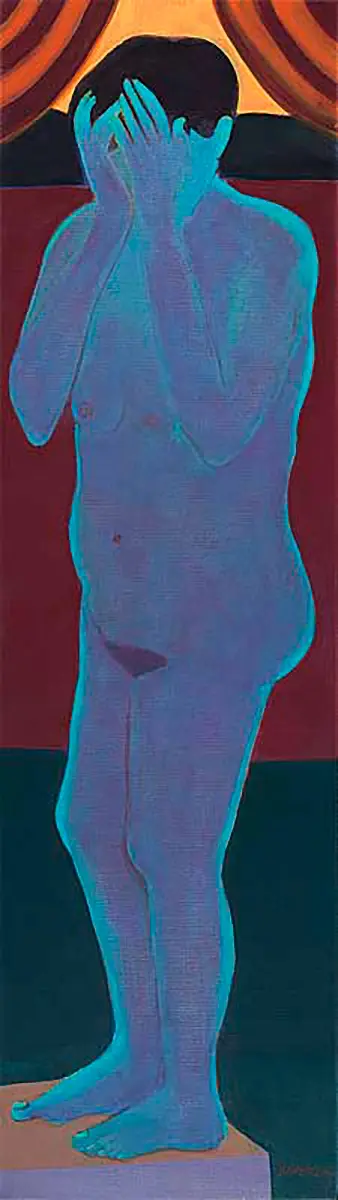
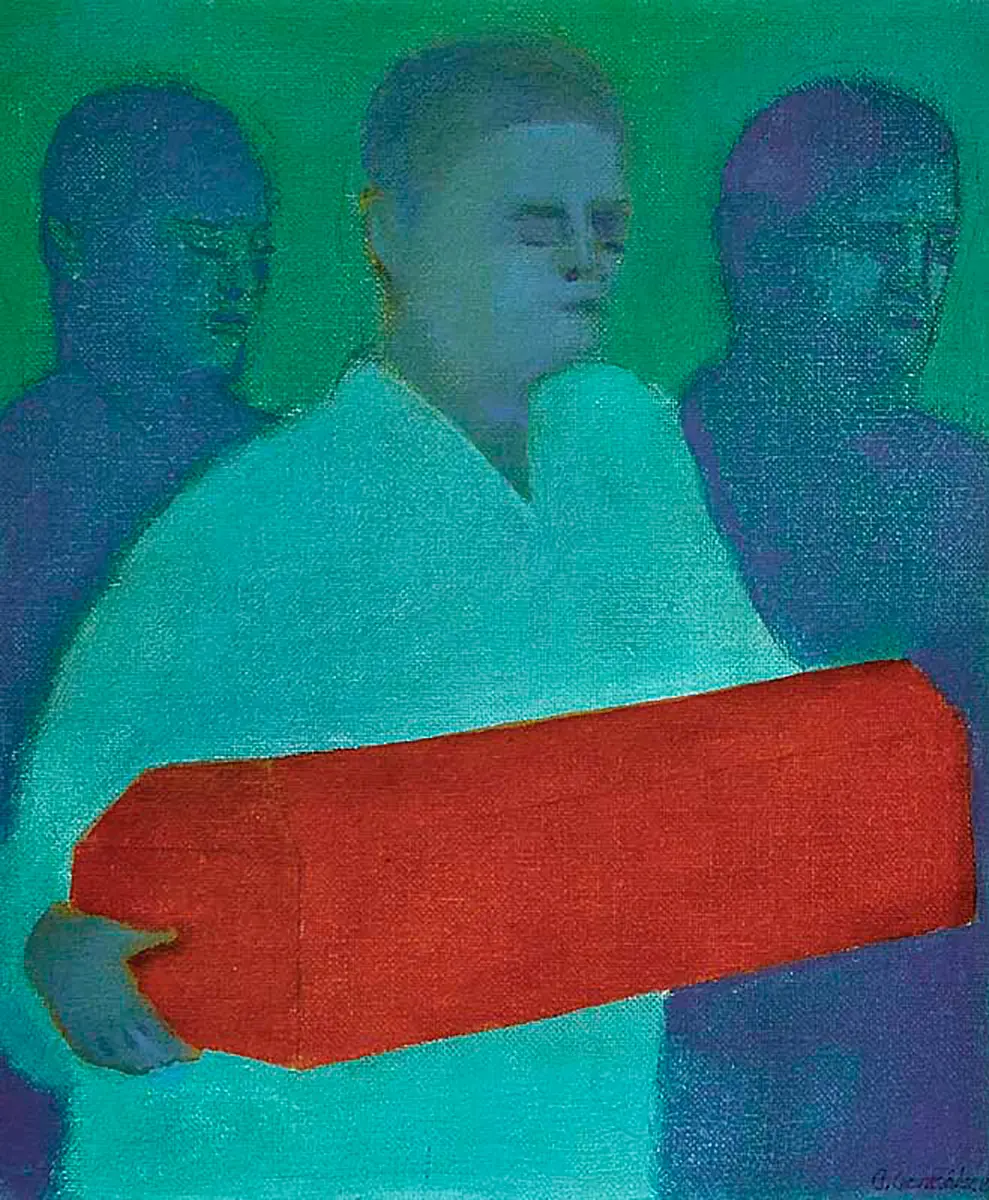
This retrospective has accomplished that which should be the goal of any museum of modern art. It is something that can only be attained when institutions are willing to go beyond just offering solo or group exhibitions by contemporary artists, or international art exhibitions—central to avoid cultural isolation—and decide to include retrospectives that, like this one, showcase a selection of works that are more personal; works that when subjected to formal and historiographical research, offer the opportunity to reflect on the relevance of the aesthetic proposals through time, their standing when compared to works from other generations, in order to establish important references. I believe that it is urgent to stop our one-dimensional way of talking about art, and instead, I favor the creation of spaces that promote a formal and historic analysis that offers a fresh approach to the history of contemporary art; in order to redefine aesthetic predicates like modernity and postmodernity that, in many instances, have become clichés.
Partially known through national salons, group exhibitions, and solo shows at some commercial galleries, Beatríz González’s work—just like the works of so many other important artists from her and other generations of Colombian artists—has been a victim, it must be admitted, of the invisibility caused by the inexistence of any real official policy that promotes Colombian art, and by the absence of a true pedagogy of art criticism with which to assess the relevance of proposals like hers. A curatorial approach like the one proposed in this exhibition also reminds us of the extremely difficult historical and political conditions in which art in Colombia has been, and continues to be, created.
Photos by Andrés Sampedro
DARÍO RUIZ- GÓMEZ
History Professor of Architecture and the City. He is also an art and literature critic, writer, and essayist.