
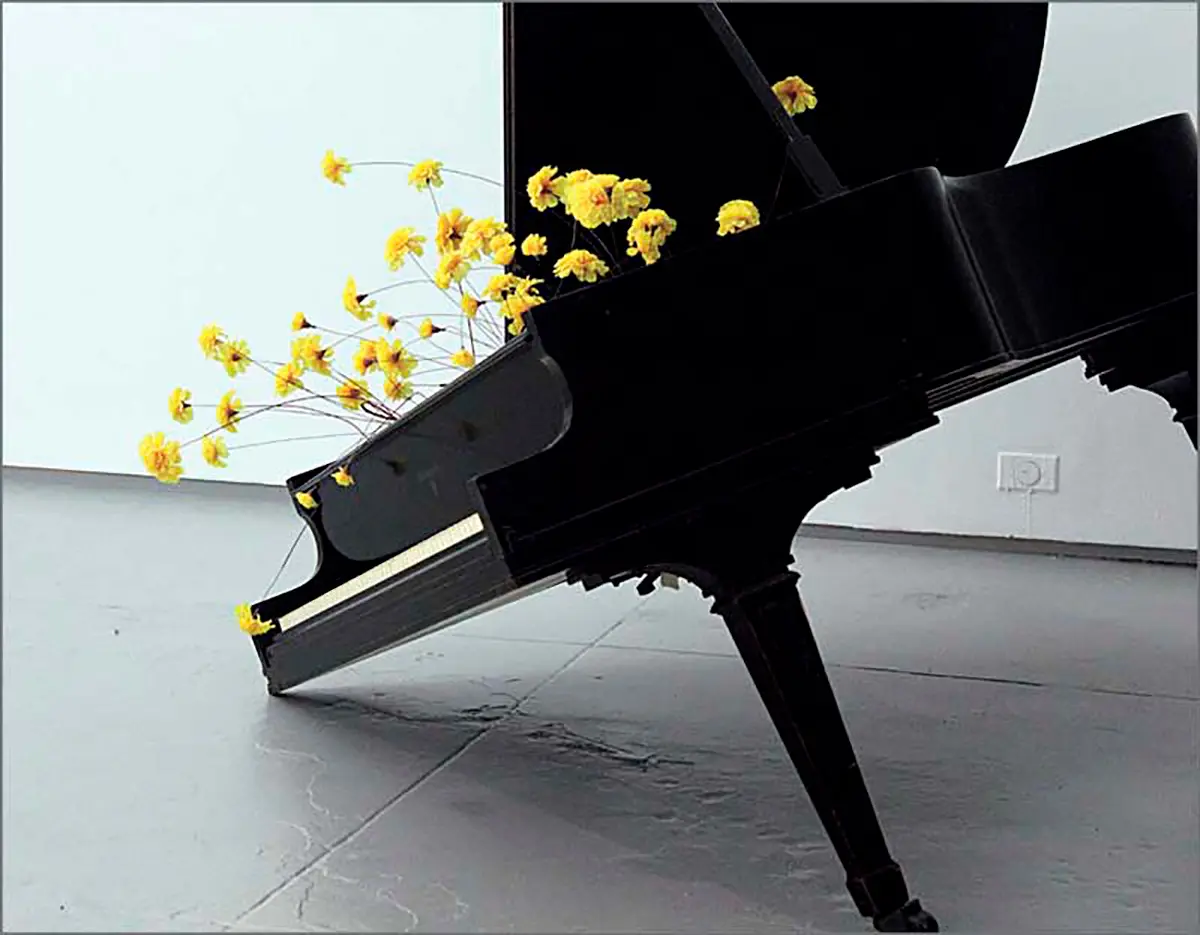
A huge piano lies sideways sprouting flowers in the middle of the main gallery at Magnan Metz Gallery in Chelsea. The visual impact is very strong for this vehicle of Glenda León’s dialogue with music, which is the theme of the entire exhibition. This object, in particular, is designated as a “found object", which adds to the allure of the piece; but we are more directly engaged with the image of the intervention of nature upon the man-made musical instrument, the unexpected beauty of contrast and its suggestive, evocative projection that captures our visual space and takes a firm hold of our mind with numerous suggested possibilities of interpretation or discourse.
A definite relationship to sound is given visual expression in the works presented, which range in size from small drawings to the one-room-sized video installation in the back of the gallery that projects a view of the stars accompanied by an uncanny melody coming out of an old-fashioned music box. Yet the representation had nothing of the ridiculous, kitsch, or outright representational, and instead of an interpretation, or more accurately, a poetic translation of the visual image into sound.
Glenda León’s world of musical representation and allegory poignantly underlines the silence that involves the observation of artworks in a gallery. Conceptually, the artist is using this silence to direct the attention to the possibilities of sound and music that are evoked in the pieces. Her artwork often depicts the musical scales, but with integrated images that project a mood very similar to what is experienced while listening to a musical piece. There was one piece that illustrates the above: fallen leaves trapped in the lines of music, was aptly entitled Listening to Autumn; in another, the scale lines are covered with water drops and we see a cloudy landscape in the background, evoking a similarly melancholy textured message.
There is another aspect in which the artwork recalls the power of music that comes from its emphasis on meditation. By focusing on the possibilities of something that is suggested—but never actually heard—the artist is making us aware of the possibilities of visually imagining an added connection/perception through the sense of hearing. This also reminds us of the importance of taking time to listen, comprehend and absorb, underlining the rushed circumstances that accompany most listening or viewing experiences of contemporary life that are too often heavily charged with subtexts and competing discourses from other sources in the sidelines, and that oftentimes are heavily derived from the cacophonic world of the Internet.
Glenda’s meditation on musical possibilities for the eyes is a welcoming opener to alternative appreciation and the enduring rewards of meditated purpose.
ALBERTO BARRAL