
And I evoke him from the perspective of nostalgia and of pertinence: the nostalgic feeling of not having with us his lucid presence, and the pertinence for Latin American art of an artist who was also teacher and guide, a beam of light for new generations who, disconcerted, search for his signals. It was, and not by chance, the whole of Bernal’s oeuvre that motivated José Roca in 2005—invited by the Museo de Antioquia to launch a wide-scope event in the context of contemporary visual arts—to define thusly the governing concept for the Encuentro under the abbreviation of MDE,1 which situates and refers Medellin on the international map as a place of arrival or origin.
Under the concept of hospitality in all of its senses, the 2007 Encuentro fulfilled its purpose. The long-duration, low-intensity event (it lasted 6 months), extended in time and space throughout the city with the Museo de Antioquia and the Casa del Encuentro as exhibition foci, brought Medellin back into the international art circuit and fostered important reflections around the conflicting urban realities, both local and global, that confront citizens in their modes of cohabitation with and acceptance of others.
Comparisons are always odious, as it is commonly said, but a balance of the Encuentro de Medellín MDE11 requires us to look back at the preceding event and to build with that data, through an austere analysis, a mapping of trajectories and detours. From that perspective, some questions arise.
The place or pertinence of pedagogies as the axis for an exhibition component? Should art be valued as an autonomous aesthetic experience, or must it be necessarily assisted by a didactic protocol that ensures its interpretation? What does the museum institution or local institutionality seek by launching an event of artistic and civic education where the desire to achieve massive participation crowds out the pertinence of an effective appropriation? Was the curatorial team able to seduce the academic community, the focus of the reflection, into participating directly and substantively in the event? Was the challenge of establishing a direct, non-hierarchical, reciprocal dialogue between expert knowledge and neighborhood knowledge solved? Was the challenge of using art and education to “foster a critical awareness of their situation among the oppressed”, as demanded by Paulo Freire in his understanding of responsible social transformation through art? These are some of the questions left in the air by the latest Encuentro Internacional de Medellín MDE11, and they propose a more attentive, deeper national reflection on the curatorial concept and the reach of the most important visual arts event in Colombia.
While the art itself is thought, and as such it becomes knowledge, its essence resides on its being apprehended and instructed, serving as a mechanism for the understanding of the realities inhabited by the subject and his or her community. To teach and learn, in sum, implied not only a method of curatorial work but also a civic-interest conceptual structure that explored the potential of an event like this, which convoked all academic and non-academic strata to add their perspective to such knowledge-building process.
But, to what degree and at what level—to make a simile with the cooking of a pot of soup—must this idea be boiled by the curators before the recipe is ruined? That is the point.
Without detriment of their knowledge of the field and their enthusiastic attitude in throughout the almost two years of planning, the four co-curators—NuriaEngüita, Eva Grinstein, Bill Kelley, Jr., and Conrado Uribe, with the shadow of a José Roca distracted from the beginning by his role in the Mercosur Biennial— attempted to hold the pan by the handle, and ended up burning it. My interest here is not to criticize the structure proposed by the curators in itself, because it was clear in its components and pertinent in its desire to articulate the local field though its axes: Laboratory, Studio, and Exhibition. The impeccable exhibition montage, the dynamization of the hosting sites—a circuit of self-managed art spaces—and some of the public-space proposals were able to capture the attention of the city.
My observation goes to the concept, not the form, even if the latter ended up irretrievably subjected to the rigidity of the former. The conceptualization of an art event based on pedagogy as a proposal for social transformation is not decentered from contemporary logic, but to burden a public art event with the pretension of making it a pedagogical model contradicts a pluralistic view of the arts and walks the dangerous edge of a behavioristic, self-centered discourse.
The problem is the curatorships’ desire to control everything: protocols, images, panels, direct invitation, didactics, media, space, time, personnel, the museum institution, sponsors, and even the reflection around the event. Some may say that even artists. I don’t go that far, valuing as I do the work of both, their autonomy and independence. But that is the crux of the matter. Despite having the same financial muscle and institutional support of mDE07, the MDE11 did not achieve the same resonance, social articulation, and audience as its predecessor.2 Something is amiss with the most important visual arts event in Colombia—more important even than the struggling National Artists Salon—when the public didn’t flock to it as its sponsors and investors expected.
The curatorial exercise should be (we are not insisting on a univocal position) a transparent, silent, respectful act, and at the same time, I should foster the artist’s discourse and work, dialoguing in a coherent way with the strategies of the museums and institutions acting as hosts, autonomous in its global project but aware of local logics. What was it, then, that didn’t work at ME11?
While José Roca and his team wanted to invest MDE11 with a formative criterion, anchoring the elements of artistic thought and creation to the most fertile terrain in order to strengthen the local art field (and to a degree the national one also), privileging an academic sector3 that in the 1007 event was apathetic of absent from the menus on offer, under a specific concept such as Teaching and Learning: Places of Knowledge in Art and as invited agents, it is not clear why, even with a feast designed to appeal to people from art schools and similarly interested parties, they were not captivated—they, who have always been and remain the first audience of an agenda that is attractive and coherent with their project for updating and reflection. It seems contradictory that when a concept, and in consequence its architecture, which is to say its mold, are tailored to the needs of focal communities or in favor of the education of specific audiences, the result is a generalized indifference. In the attempt of bringing the public closer through pedagogical strategies, MDE11 ended up scaring them away. Shouldn’t the critique of such disdain be directed also at the leadership of universities, professors, and students (future artists)?
As in any curatorial gambit, such as the risk that is run, but at the bottom, the event was equally conceived as an articulation for Medellin into the international art circuit and a platform for programs that were attractive to culture-world citizens, and it didn’t achieve those goals, either. In these last two strategies, the fault lies not only with the co-curatorial team but also with the Museo de Antioquia as the convoking party, responsible also for the public and inter-institutional communication apparatus. The museum remained reticent to the curators’ anguished pleas to bring the event to the attention of the international media, bringing through the Medellin Investment and Cooperation Agency or the country’s Ministry of Exterior Commerce and Industry, journalists or specialists from key cultural-production centers for the projection of the process, the city, and the nation.
To that point, I want to emphasize and clarify that the Museo de Antioquia led a major project since 2007, when Medellin was isolated and aimless and was able to position—despite its avocation as a history-focused, regional institution—a risky initiative coherent with contemporary artistic practices, to emulate the pioneering Coltejer biennials, and to gamble for the redefinition of that model for the international biennial.
My analysis is not intended to condemn the museum’s communications team, much less to undervalue it. As a common citizen, I received periodically and through various channels information about each activity or action programmed for MDE11. There was a generous and regularly updated website, 4 as well and printed communications and important media reports, a logistical team well set for the task, and the support of the local government and, albeit to a lesser degree, local firms. Yet, the event did not attract as big an audience as expected. Something is happening and it is important that a third edition, for the expansion or reformulation of the model, leans on the support of the Museo de Arte Moderno de Medellin, who is undergoing rebirth long-awaited and demanded by all actors in the art field.
Beyond these disquisitions around the pertinence or otherwise of an event of such magnitude, I have been asked to provide for the reader description and illustration of what happened with the mise-en-scene of MSE11, held between September 1 and December 10, 2011, with 140 events in twenty-five spaces and the participation of 104 individual artists, collectives, and academics invited from 24 countries.
As mentioned before, MDE11 proposed three nuclei: Laboratory, Studio, and Exhibition, which in turn were subdivided and boosted through activation zones not only at the Museo de Antioquia and Casa del Encuentro, but in a variety of locations throughout Medellin’s metropolitan area, according to the following logic: the Laboratory nucleus invited collective and diverse actors, from academia to community work context, to integrate and reinforce future exchanges, underscored by the hospitality and the activism of the Host Spaces—self-managed artist spaces that received pairs of colleagues from other cities—with a permanent program of exhibitions, debates, workshops, films, and community-building activities. Here, Casa Imago received L’Apartament 22 for Morocco and La Mutante gallery from Bucaramanga; Casa Taller Sitio (Plazarte) was the host for Lugar a Dudas, from Cali, and Proyectos Ultravioleta from Guatemala City; Casa Tres Patios had San Art, from Laos, and Antimuseo, from Madrid; Taller 7 received Rosario’s Club de Dibujo and Estación Tijuana; and the Centro de Desarrollo Cultural de Moravia—the sole institutionally-structured member of this group—received Slanguage Studio, from Los Angeles, and Tranvía Cero, from Quito.
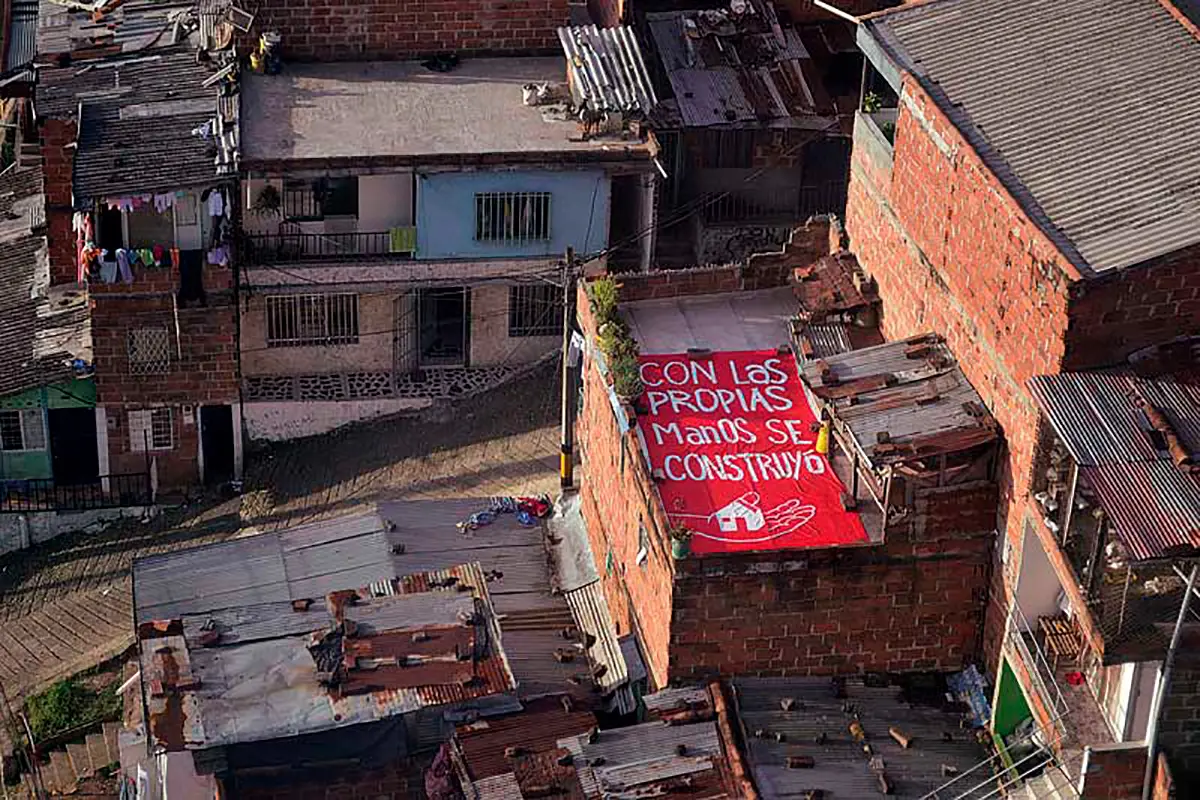
The Laboratorio nucleus also included the components Trabajo de campo and Medialab. The former operated under the same logic as the host spaces, with the difference that the receivers are community-work platforms that not in every case were artistic in nature, and as a consequence, it provided grounds for fertile feedback coherent with the purpose of integrating a variety of interests for future exchanges: spaces like Corporación Nuestra Gente, Territorio Sonoro, Comuna 8/ Ciudad Comuna, Red de Hip Hop La Élite, Casa de Integración Afro, Toke de Salida, Plathoedro, among others, were working stations for international collectives like Ala Plástica, Eloísa Cartonera, Frente 3 de Fevreiro, and theorist of social urbanism like Teddy Cruz.
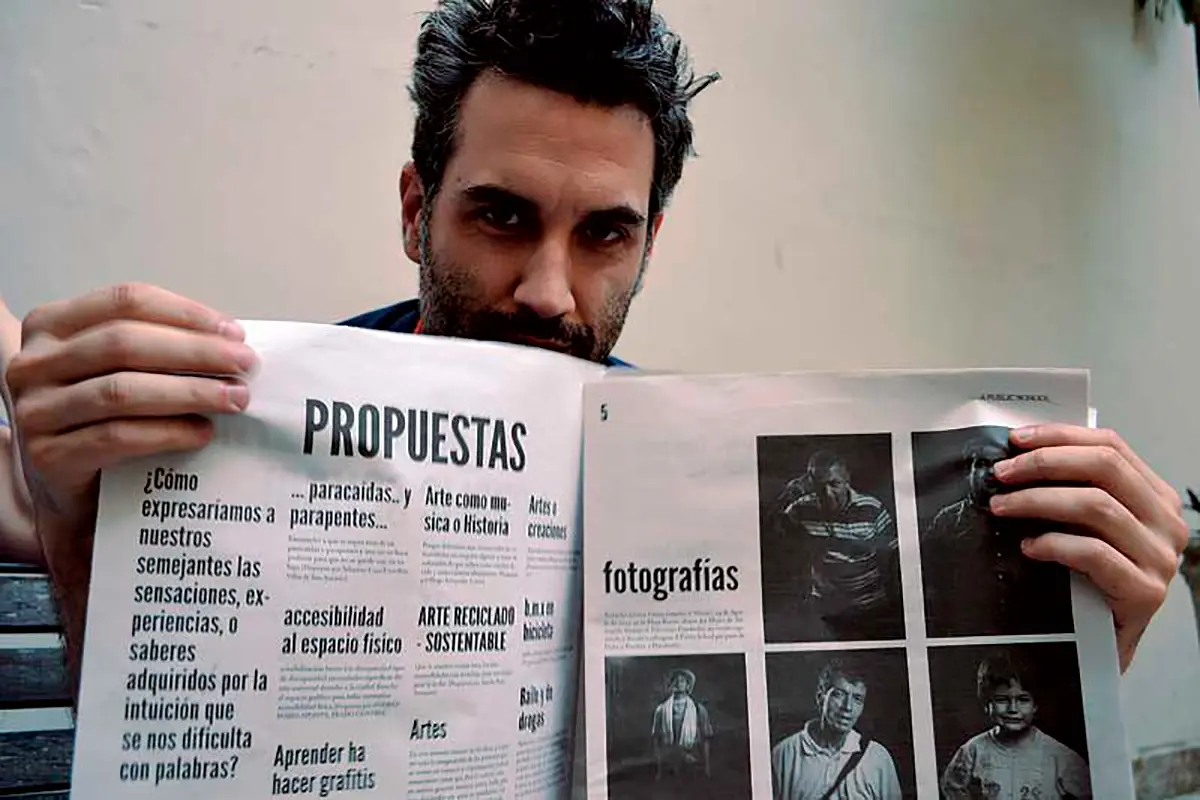
Based at Casa del Encuentro, the Medialab was activated as a media laboratory charged with recording, editing in real-time, and communicating the activities through MSE11’s official web page (www.mde11.org); in its dynamic, it hosted four collectives specializing in media production: Escuelab, from Peru; HiperBarrio, from Medellin; Medialab, from Bogotá; and Nicolás Malevé/Rafaela Houlstan-Hasaerts, from Belgium. Each one of these groups had a three-to-four-week program of workshops, conferences, debates, and meetings on matters related to the role of technology in the development of common knowledge, which generated great interest among the younger audience.
In turn, the nucleus Studio established four components for activation: the Construction Workshop, which selected, via a public call for participants, 12 young artists from art schools, for an intensive workshop with the curatorial team during the month of November; the Transductors project, led by Spanish artists Jorge Rodrigo and Antonio Collados, who have researched and articulated several educational fields in cities like Chicago (with their project Temporary Services), Istanbul (with DDA Projesi), Dublin (with CYMArts + Fatime Group United), Buenos Aires (with Ala Plástica), the UK (with Platform), and Granada, Spain (with Aula Abierta), mechanisms that explore and activate initiatives for the flexible linkage of artistic practices, political intervention, and education, on the basis of the action of interdisciplinary collectives that generated a variety of mappings of the state of art education in Medellín and the proliferation of processes in different education centers and schools. Finally, the launching of a successful and well-attended Diploma in Street Music Culture as a platform for the dialog between diverse, self-exclusionary communities like Punk, hip-hop, metal, and others—which often held each other at a distant remove—as well as between them and the formal knowledge of academia.
The most ambitious presentation in the Studio nucleus was the Aula Dialógica, the name given here to the traditional academic agenda that accompanies this type of event, focusing on two central topics: Pedagogy, art, and academia, and Pedagogy and communities, with the presence of recognized theorists and experts such as Carmen Mörsch, Don Baron Cohen, Grant Kester, Juan Luis Moraza, Luis Camnitzer, María Lind, Rolf Abderhalden, Sara Diamond, Víctor Laignelet, Gustavo Buntinx, and William Ospina, among others. Nevertheless, despite the appeal of the participants, attendance was irregular and there were no events filled to capacity as seen in previous occasions, and some miscoordinations in the program caused even the most deeply interested members of the audience to give up.
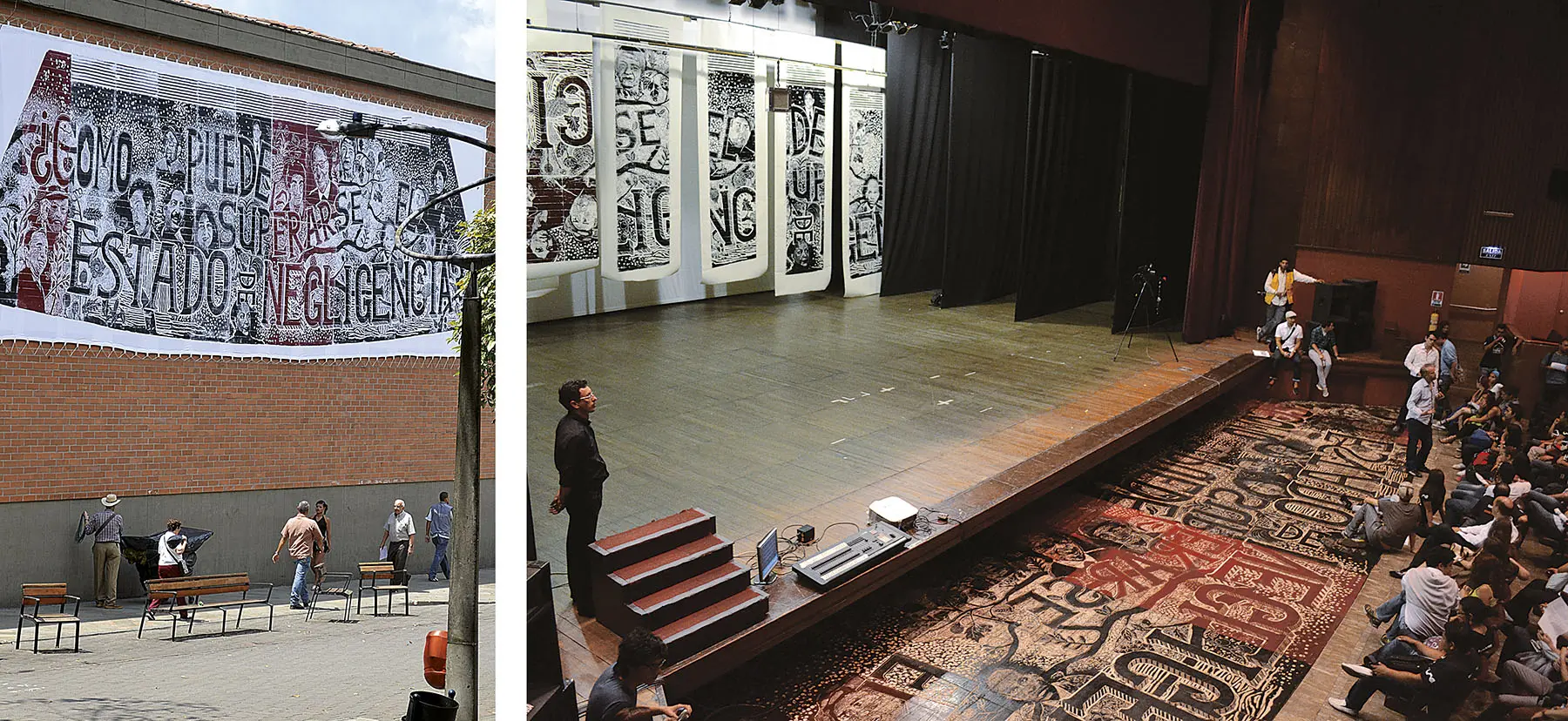
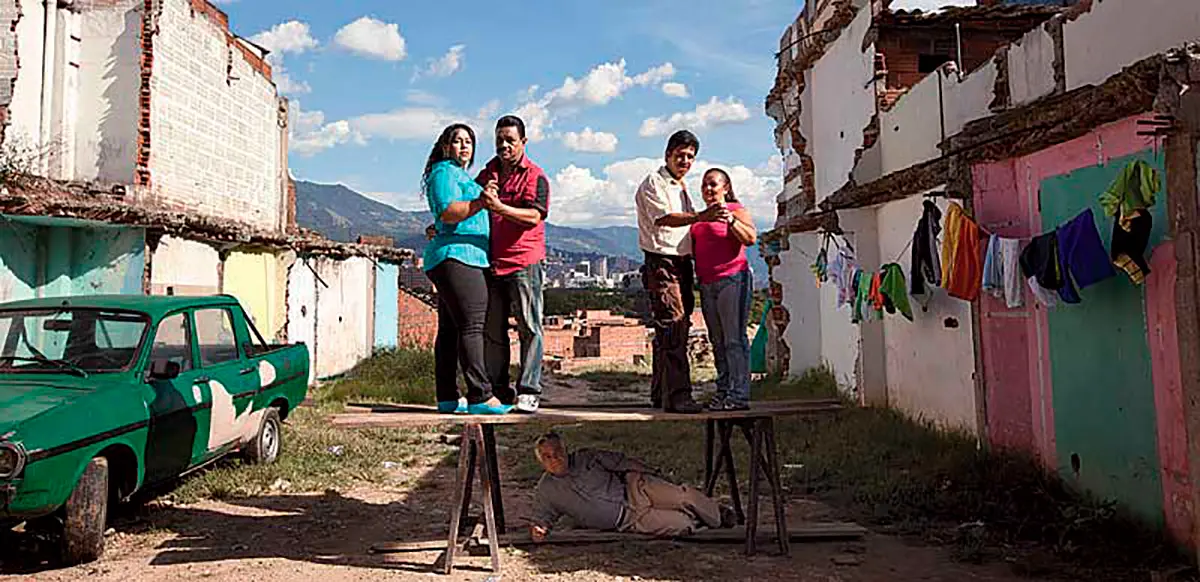
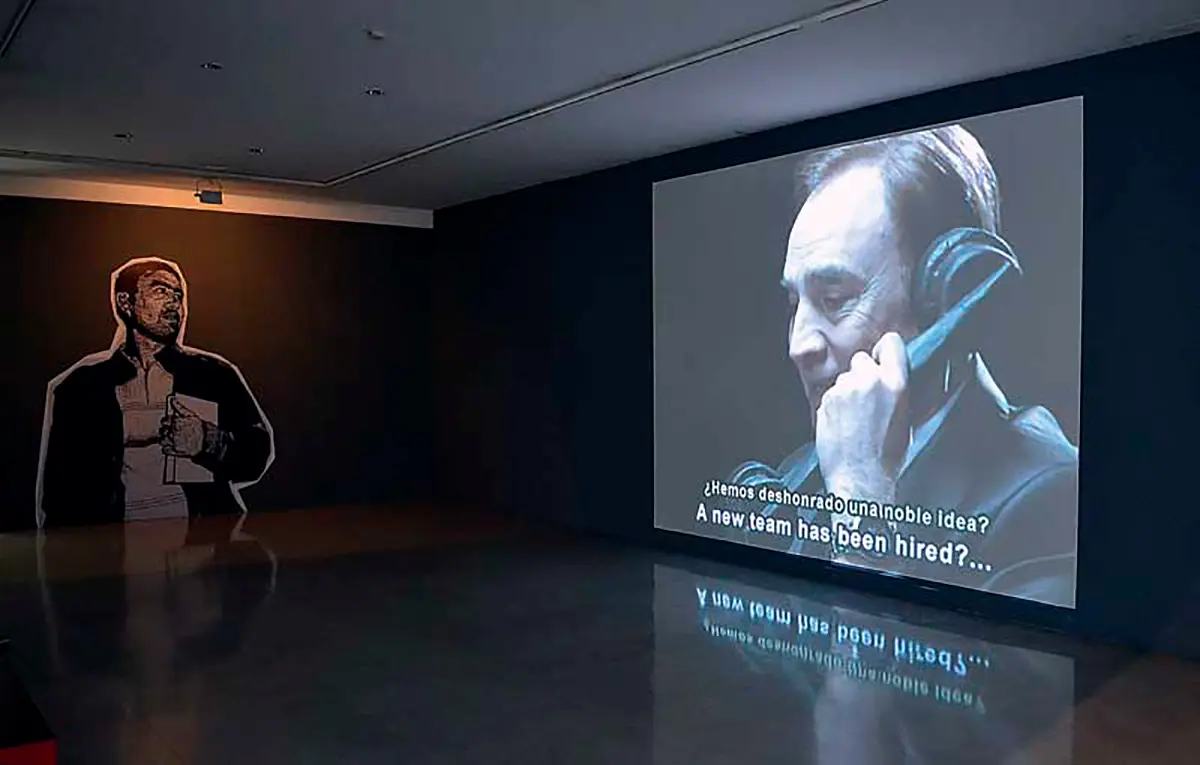
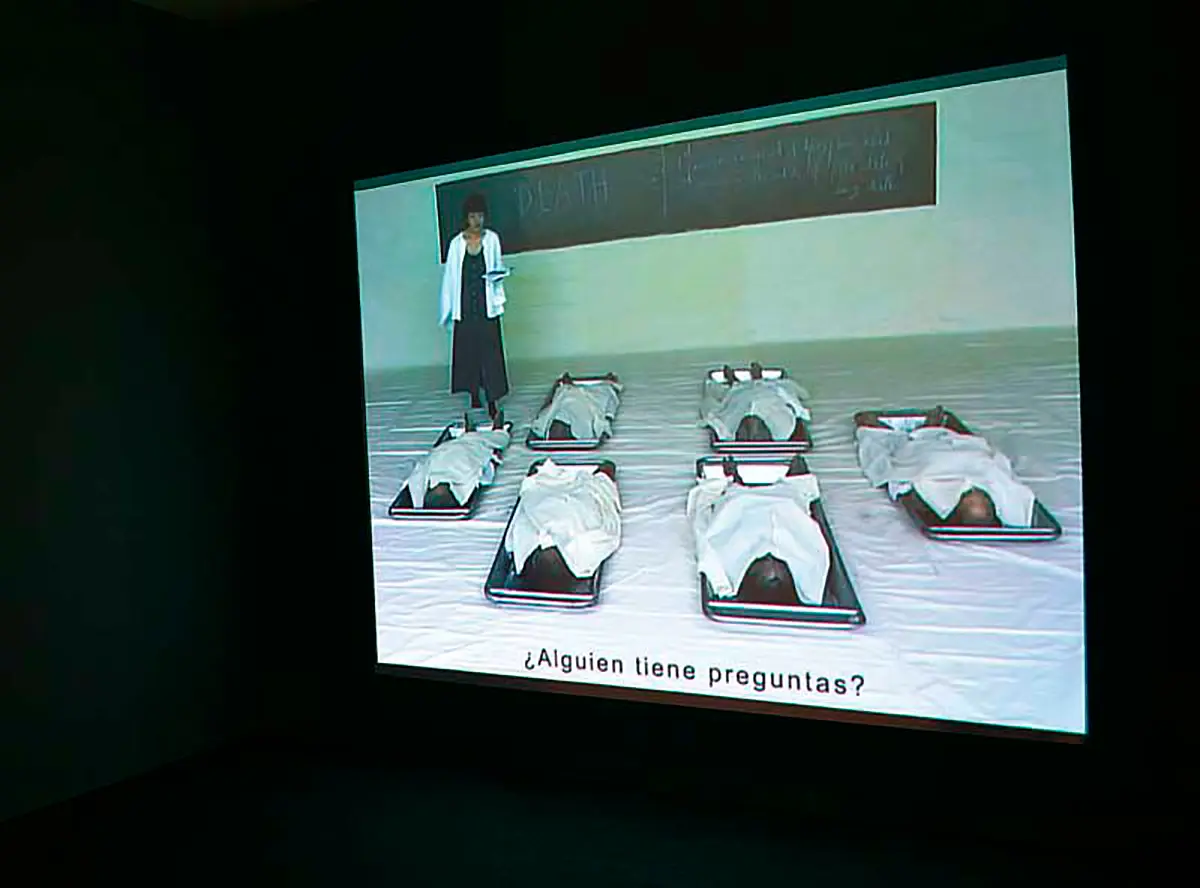
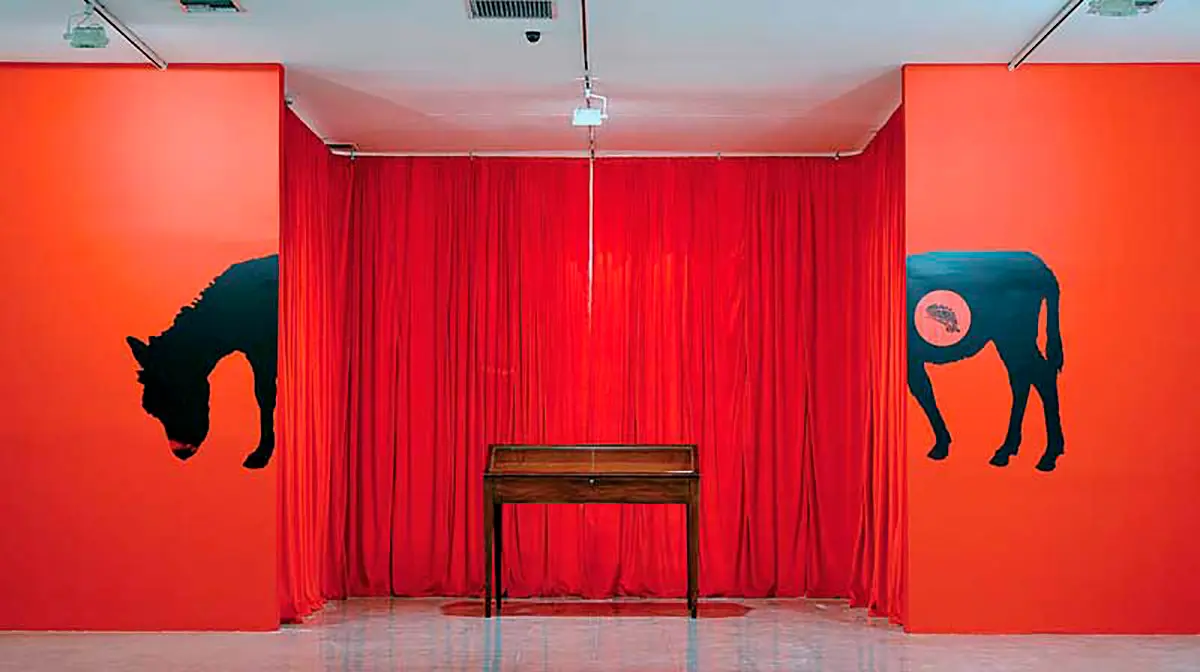
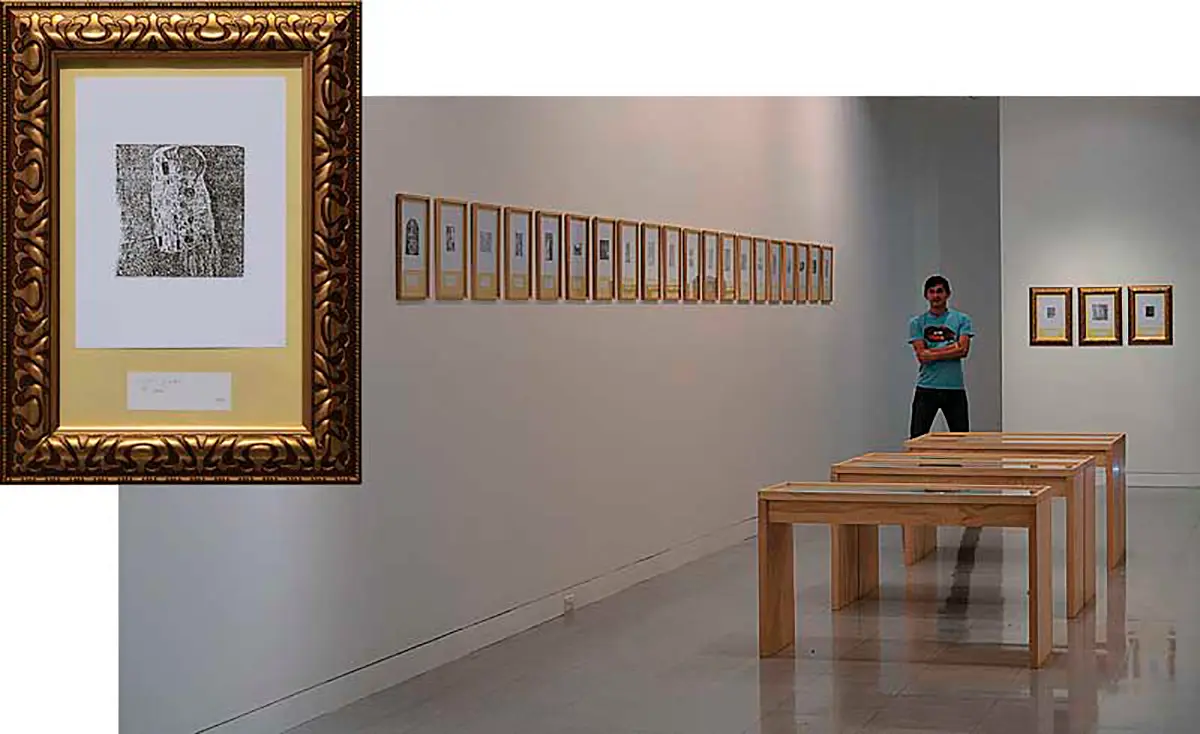
The Exhibition nucleus presented two exhibition platforms: Central Workshop and Foundry Workshop. The former included most of the local and international artists and took its name from the pedagogical mechanism created at the Escuela de Artes de la Universidad Nacional de Colombia, Medellín section, from its beginnings; the mise-en-scene was mostly at the Museo de Antioquia, although it activated several specific projects in other public spaces in the city. Among the most impressive such projects is Thomas Kilpper’s—both his large-format xylography at the Pablo Tobón Uribe Theater and its stamp displayed on the external façade of the Casa del Encuentro, as a challenge to the indifference of an indolent country; Susan Lacy’s, which literally gave new life to a project already advanced along with Pilar Reaño and a group of artists and social sciences professionals in Medellín in 1998, titled La Piel de la Memoria; speaking of memory, it is important to note the Russian collective Chto Delat’s satirical opera in their documentary Partisan Songspiel. A Belgrade Story, about the ravages of war and violence, a shocking topic for Colombian society; another forceful work was the audiovisual proposal, at once sublime and paradoxical, presented by Araya Rasdjarmrearnsook, from Thailand. Her works Dos Planetas and La Siesta de Van Gogh and aldeanos tailandeses, along with Seminario sobre la muerte will remain in the memory of those who visited the Museo de Antioquia; Juan Fernando Herrán’s installation Papaver somniferum fit perfectly with the exhibition script. Finally, it is important to mention the work of Carla Herrera-Prats, Edwin Monsalve y Esteban Peña, which contributed to the quality and seriousness of the event.
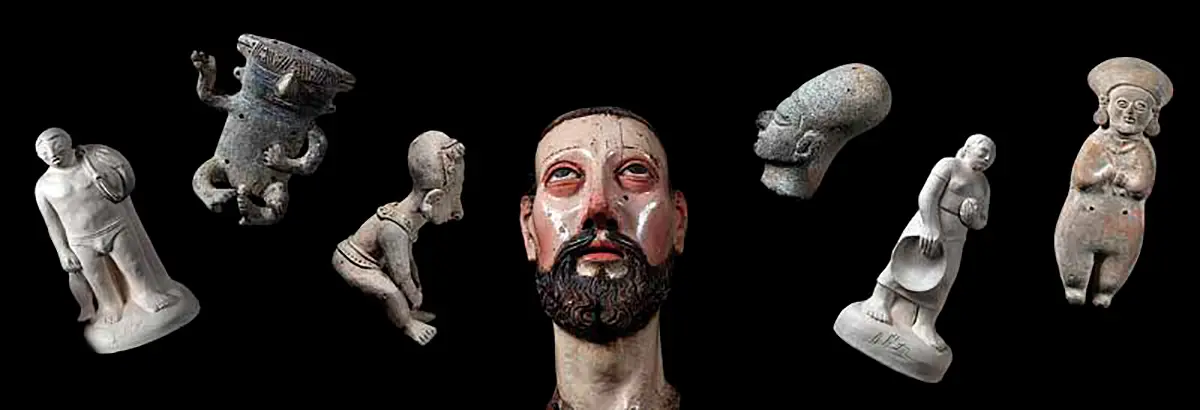
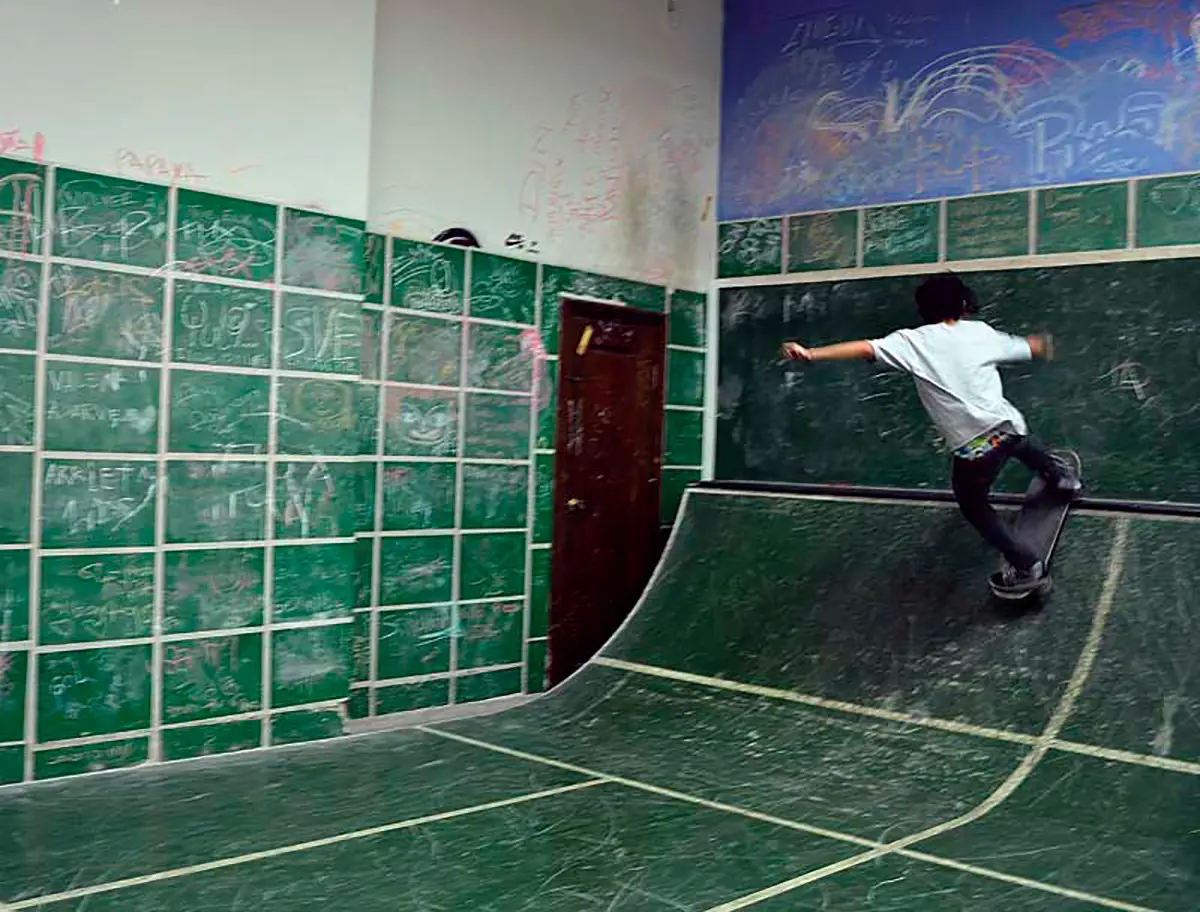
Among the most challenging and riskiest proposals to activate public spaces and generate interactions with focal communities, a highlight was Escuelita del mal, by Colombian artist Paulo Licona, which was able to attract young skaters and other audiences with a forceful and playful proposal that questioned educational platforms and their behaviorist strategies for learning. Also, the Provisions Library collective, with Casa Blanda, captivated everyday users of the Plaza Botero, adjacent to the Museo de Antioquia, with a gentle, welcoming house that included various activities for citizen education, a parody of power and of impossibility.
The Foundry Workshop was the exhibition platform contributed by the Museo de Arte Moderno de Medellín to MDE11. A site-specific project by Colombian artist Oswaldo Maciá was activated in the central wing of the new museum, proposing an interaction with shapes and sounds to the various publics, with a continued two-month duration, as a pedagogical platform.
One question is left, then, as a conclusion and input for the event’s continuity. What was the reach of the Encuentro MDE11 in the formation of civilian publics and the reinforcement of learning spaces? Who was able to take advantage of these pedagogical proposals? What is the role of museums and cultural centers in these massive structures where artists and audiences are situated? The reformulation of the model of international biennial has Medellin and the Museo de Antioquia among its precursors. Yet, a successful formula can devolve into a disappointment. The experiment can blow up the laboratory.
NOTES
1. Bernal’s use of posters printed on rudimentary type-based machines, the reiteration of many analogies of the MDE acronym, the systematic intervention of walls and façades with the word MEDELLÍN, and the broadcasting in Morse code of the message “MDE S.O.S,” were the premises for curator José Roca to define MDE07 a desperate and appealing call, and to transform it into a point of reference for artists, curators, academics, institutions, and general public in a reflection around expanded artistic practices.
2. The 2011 version received 60,000 visitors in the 25 activated spaces, while in 2007 there were 125,000 visitors in 41 spaces. In 2011, 140 activities were held, between exhibitions, actions, roundtable discussions, conferences, and workshops; in 2007, the number of activities was 312. In terms of the number of artists, artistic collectives, and invited or programmed presenters, the differences are also substantive: MDE11 had 104 invitees; MDE07, 248, 75 of them from abroad.
3. Medellín, Colombia’s second-largest city in terms of population, has three art schools offering degrees in the visual arts; a technical program in art and new technologies; a specialized visual-arts bachelor’s program; a fine-arts institute; six informal schools for art pedagogy; nine degree-granting programs in graphic design, industrial design, or design-production engineering; and five architecture schools, to mention only related fields; this without an account of private schools devoted to education in the arts and developments in educational institutions, both public and private, at the primary and secondary levels, with Art Education as a mandatory subject.
4. According to post-event reports from the Museo de Antioquia’s press office, the number of visits to the web page by December 30th, 2011, was 114,000.
CARLOS URIBE
Artist and independent curator