
Born in Popayán in 1951, Óscar Muñoz has lived in Cali since the late 1950s. His work, rich in vital reflections and visual innovations developed over the course of more than four decades, has been exhibited in numerous individual and group exhibitions in Colombia as well as the United States and other countries in the Americas, Europe, and Asia. Recently, in 2006, Muñoz established the cultural center Lugar a dudas in Cali, a space devoted to bringing together artists, thinkers, and the general public.
The show Óscar Muñoz/Protografías, currently on exhibit at the Museo de Arte del Banco de la República in Bogotá, was curated by José Roca and María Wills (adjunct curator). A retrospective, it includes more than thirty-five works produced since the early 1970s. The precedents in Colombia are two previous exhibitions, also retrospective in character and curated by Miguel González: the first one at Museo La Tertulia in Cali, in 1987,1 and the second one at Museo de Arte Moderno de Bogotá, in 1996.2
Fifteen years later, Roca’s and Wills’ curatorial approach offers a unique opportunity to explore Muñoz’s work almost in its entirety (the exceptions are a few items such as Dibujos morbosos, Eclipse, and Lacrimarios), and to once again recognize it is profound artistic, philosophical, and social value. The generous space devoted to the works arranged through the museum’s two levels, as well as the meditative atmosphere of the building —without windows to the exterior and with selective lighting in each gallery in response to the character of the group of works they house—, are particularly apt for bringing forth the contemplative and interactive aspects of Muñoz’s art. Repeated visits enrich even more such experiences, allowing the viewer to discover the changes undergone by works like Simulacros, the Narcisos, Ambulatorio, and even Aliento, through physical processes such as the evaporation of water, the distortion of the images of charcoal dust floating in it, and the deterioration of some supports.
The show’s structure is based on the dialog proposed by the curators between a mainly chronological organization and a thematic perspective that gives cohesion and meaning to each gallery. The concept of protografía (“Protograph”), the nucleus of the curatorial proposition, highlights Muñoz’s insistence on the exploration of those instants before and after an image is fixed on given support —or, in other words, on the life process of an image. Muñoz’s intentional expansion of such moments makes us aware of the fact that while images —be it as drawings, photographs, videos, remembrances, or reminiscences— remain alive, they are subject to the passage of time and to interactions with surrounding elements that impact on them and, ultimately, produce their disappearance.

Each gallery is organized around a sub-topic, like modular sets that, considered in their totality, form a living, multiple, complex organism in the process of dissolving. Indeed, the works, grouped around the concepts of “Kaleidoscopes/City Fragments”; “The support, reconsidered”; “The unstable image”; “Antimonuments”; “Markings”; and “The image in flux”, allow for the recognition of profoundly meaningful continuities and ruptures in Muñoz’s career. Thus, for instance, it is possible to perceive the continuity of his concern for exploring —with the greatest possible degree of veracity— issues such as reflection, decay, oblivion, and identity, consciously breaking with procedures and results intended to stop or hide the relative and shifting character of any reality.
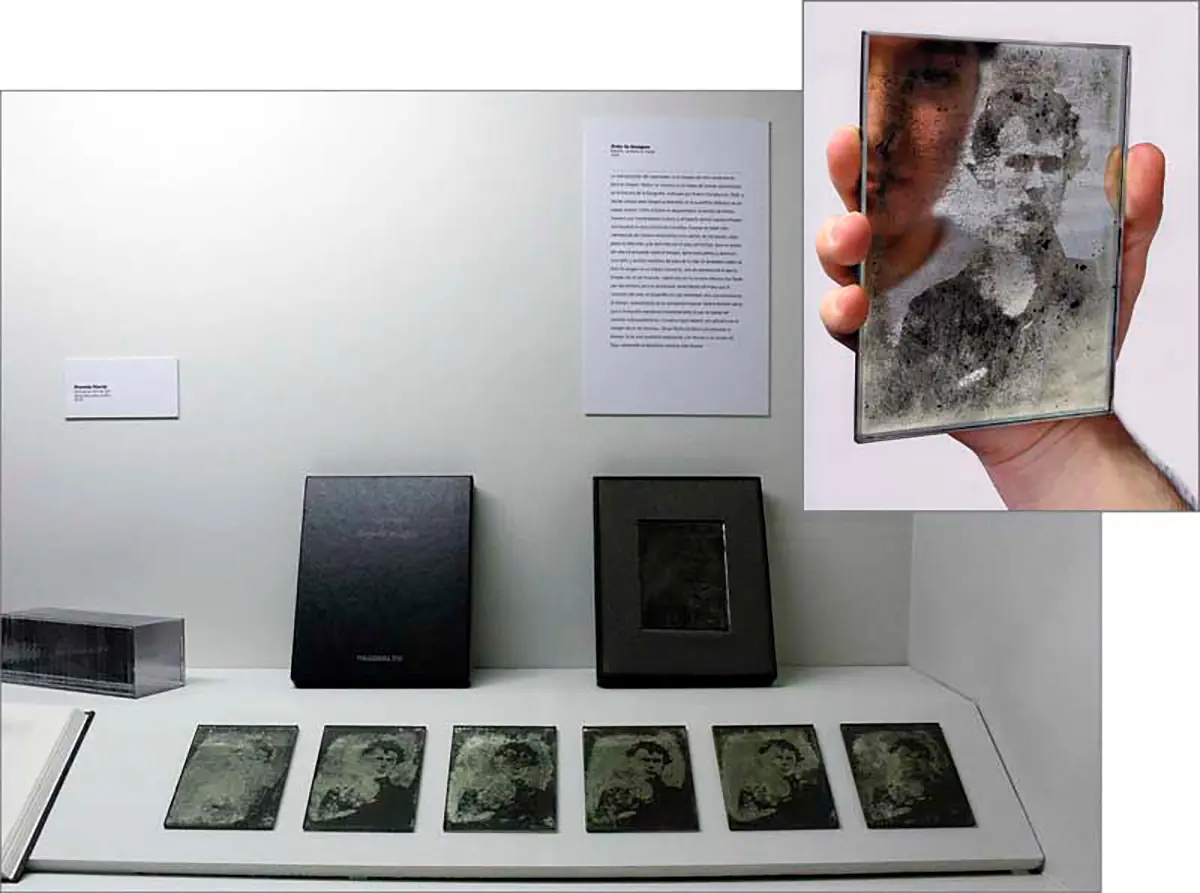
Among his recent works, presented in the last two galleries, it bears noting those unknown in Colombia. On the one hand, Ante la imagen (2009), made by Muñoz on the occasion of Philagraphica3, and, on the other, later items such as A través del cristal (2010), Fundido al blanco (2010), the series Impresiones débiles (2011), Cíclope (2011), and Sedimentaciones (2011). Ante la imagen makes reference to the first self-portrait fixed on durable support —a support that in this work has been replaced by a mirror where viewers can see their own reflection and on whose metallic surface the portrait of Robert Cornelius, who in 1839 made such durability possible, has been engraved. Unlike the original support, this one is exposed by Muñoz to interactions with the environment, fostering the change and decay both of the object itself and the images it contains.4
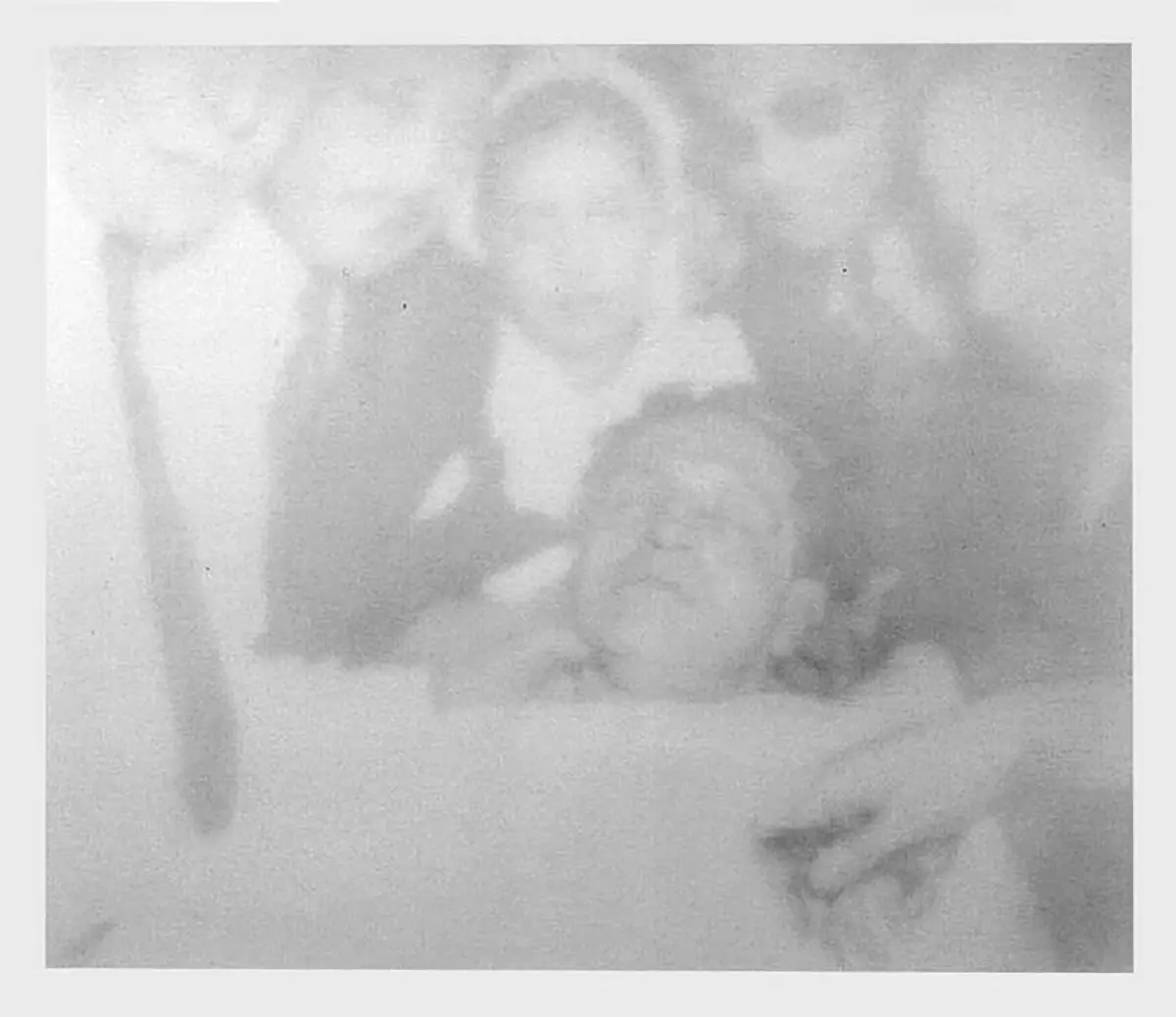
The relationship between images and their environment, and between the past and the present, are also explored in A través del cristal and Fundido al blanco. In the first instance, personal and family photographs, framed and exhibited in domestic spaces, are recorded by a video camera that manipulates the viewer’s attention by transiently focusing on the framed photographs and the reflections on their protecting glass cover. The vision that results is a combination of the fixed image and the shifting reflections of the surrounding world. Additionally, the sounds present at the time of the video recording complement our experience of images from the past and situate them in a continuous present —the present of the recording and of the viewer. A shifting, relative awareness of time and of memory is particularly intense in the “living portrait”5 Muñoz made of his own father in Fundido al blanco. During the video recording, made under shifting lighting conditions and including sounds such as breathing, the central character goes through moments of sleep and wakefulness, which coincide with the apparition and disappearance of the image of his wife towards the back of the room.
In turn, Impresiones débiles, comprised of several works made with charcoal dust on an acrylic surface, Muñoz revisits some of those themes from the perspective of Colombian history and of collective memory. In this series, Muñoz uses a serigraphic sieve to engrave, with different degrees of pressure, images of significant mid-twentieth Century events —like the funeral of Jorge Eliécer Gaitán—, taken from history books. The physical process of re-printing these images coincides with the emotional and psychological impression they leave on past and present viewers. In revitalizing those images, this work allows us to recognize aspects both of collective memory and of collective oblivion, and to that degree, they also make it possible for us to reinterpret them under the light not only of what happened in the past but also current events.
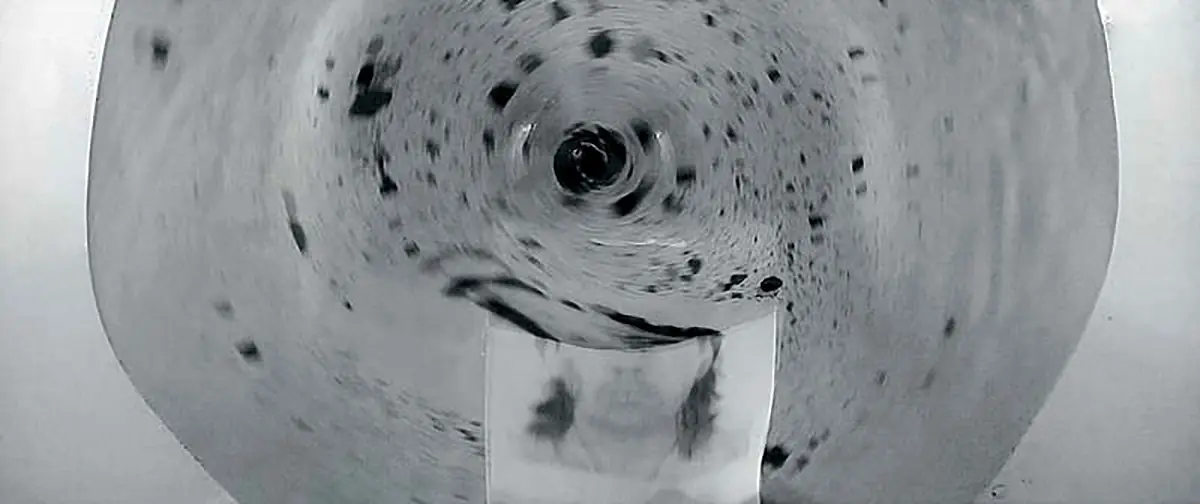
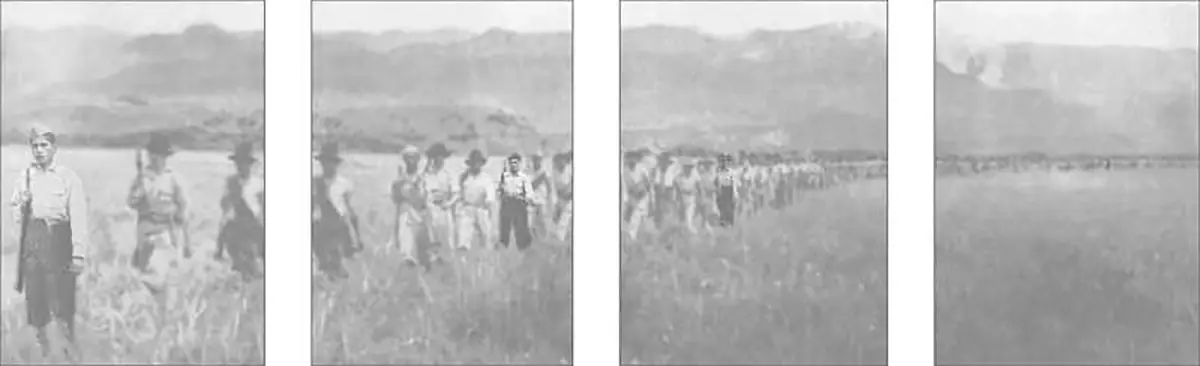
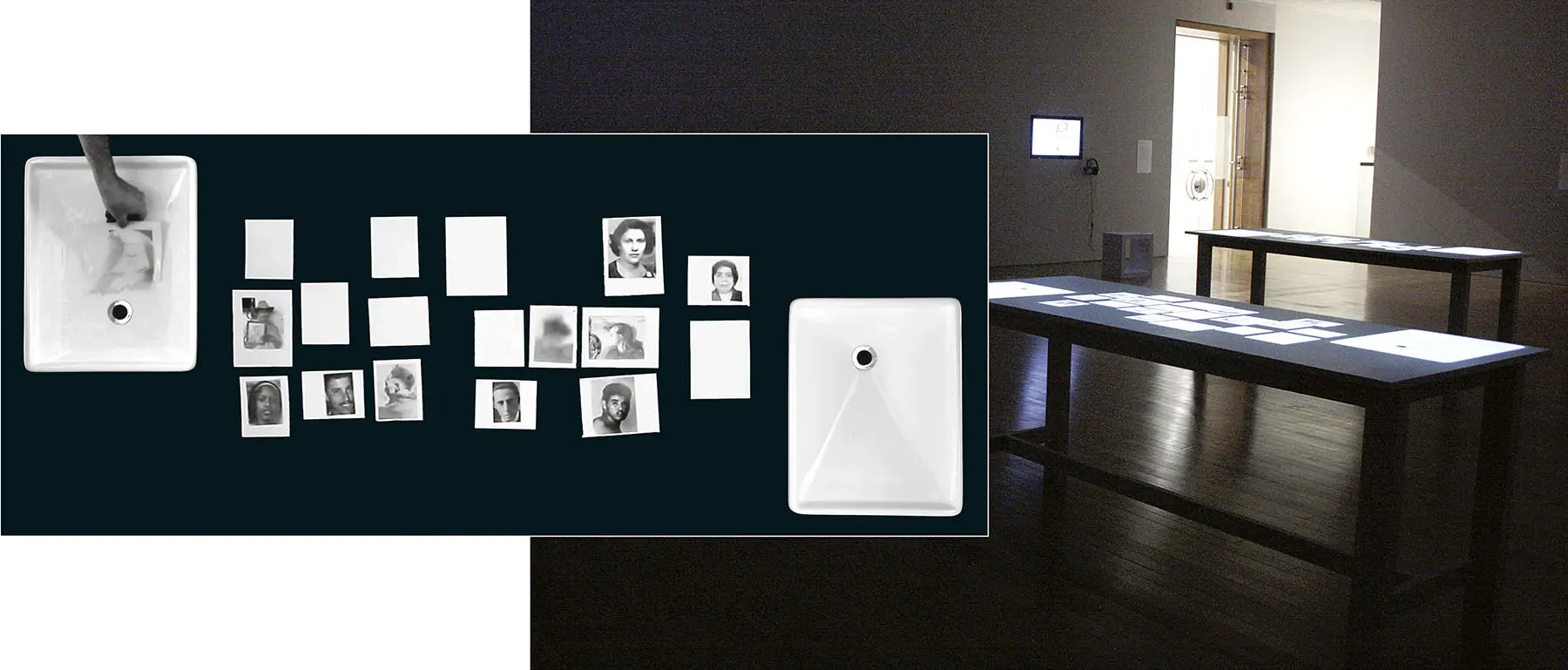
Lastly, in Cíclope and Sedimentaciones, Muñoz returns from new angles to key themes in his work: In the former, the fundamental cycle from nothingness to being and from being to nothingness —approached inversely in previous works like Biografías— is presented through a video recording where a water whirlpool intermittently produces and consumes portraits of people, the ink of which dissolves in the water and vanishes only to reappear later as a different image. The allusion to the process of analog photography development is even more clear in Sedimentaciones, comprised of three tables on which images of reams of paper are projected in a shifting rhythm, some blank and some printed with portraits of people close to the artist and also of strangers. As in Cíclope, on one of the tables, an anonymous hand soaks the pages on a liquid that in some cases reveals an image and in others erases it in its totality. In consequence, the upper section of the paper towers and the surface of the tables change constantly, at times offering images and at times remaining blank.
Despite the selectivity implicit in the curatorial proposal and the thematic structure given to the galleries, both the exhibition and the catalog6 respect and insist on the openness of Muñoz’s work. Besides Roca’s enlightening article presenting and developing his arguments about the protografías, the catalog includes texts devoted to specific works written by various experts who offer perspectives for interpretation from the standpoint of photography, history, sociology, philosophy, film, optics, psychoanalysis, and architecture, among others. Also, the extensive, rich interview with Muñoz by María Wills deals with biographical details, theoretical concepts, and artistic intuitions that complement and contribute new elements with respect to the previous interviews.7
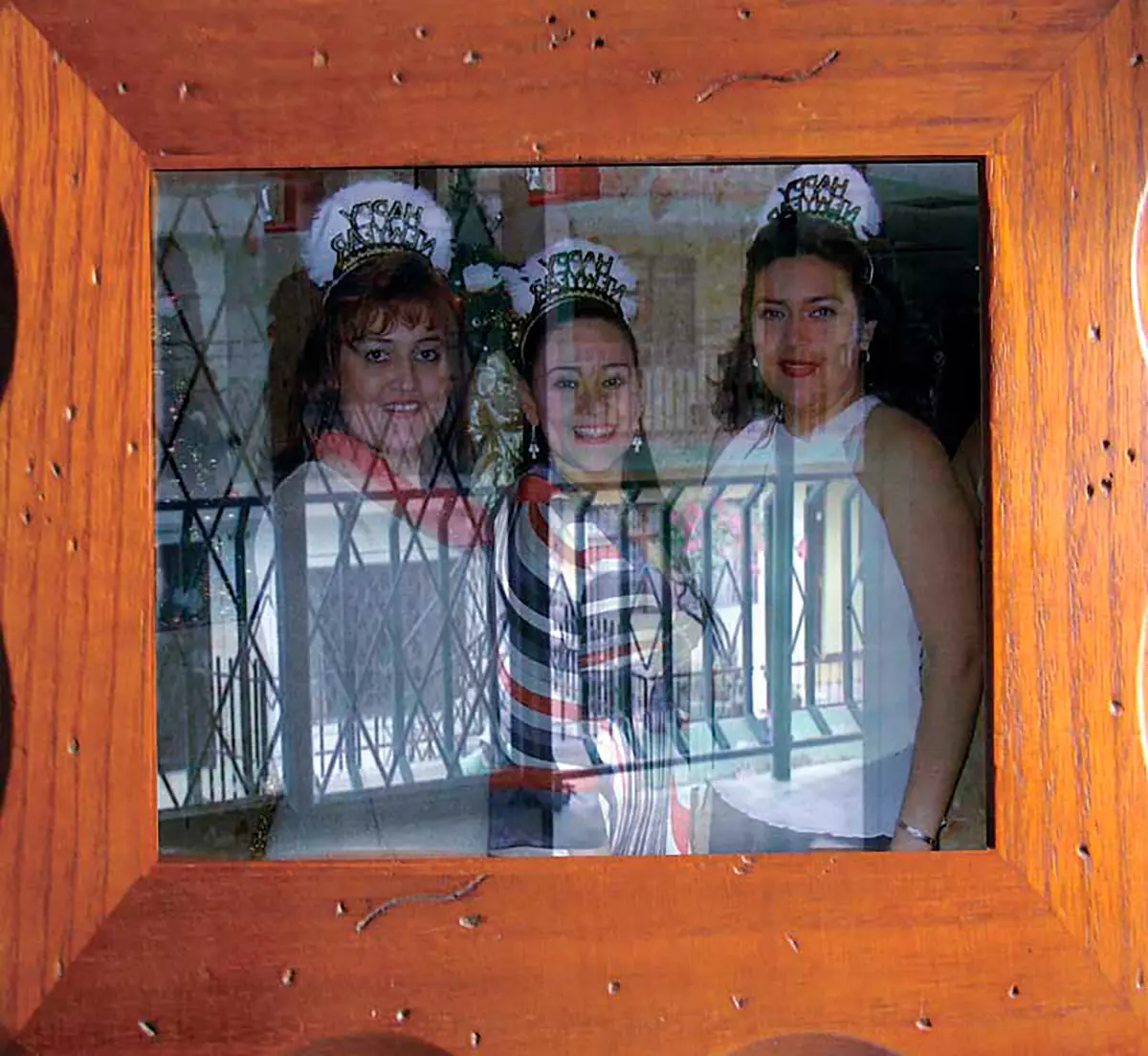
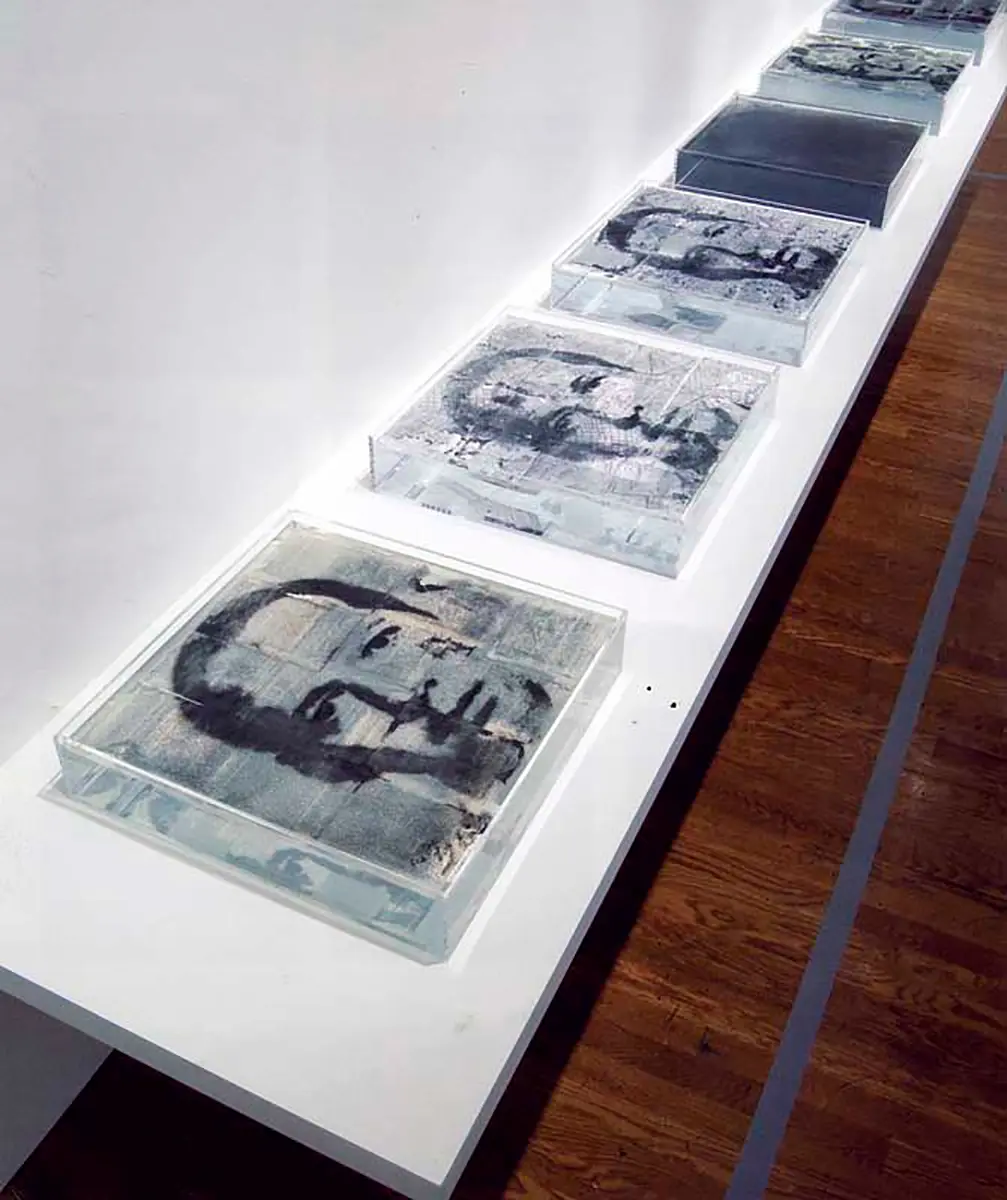
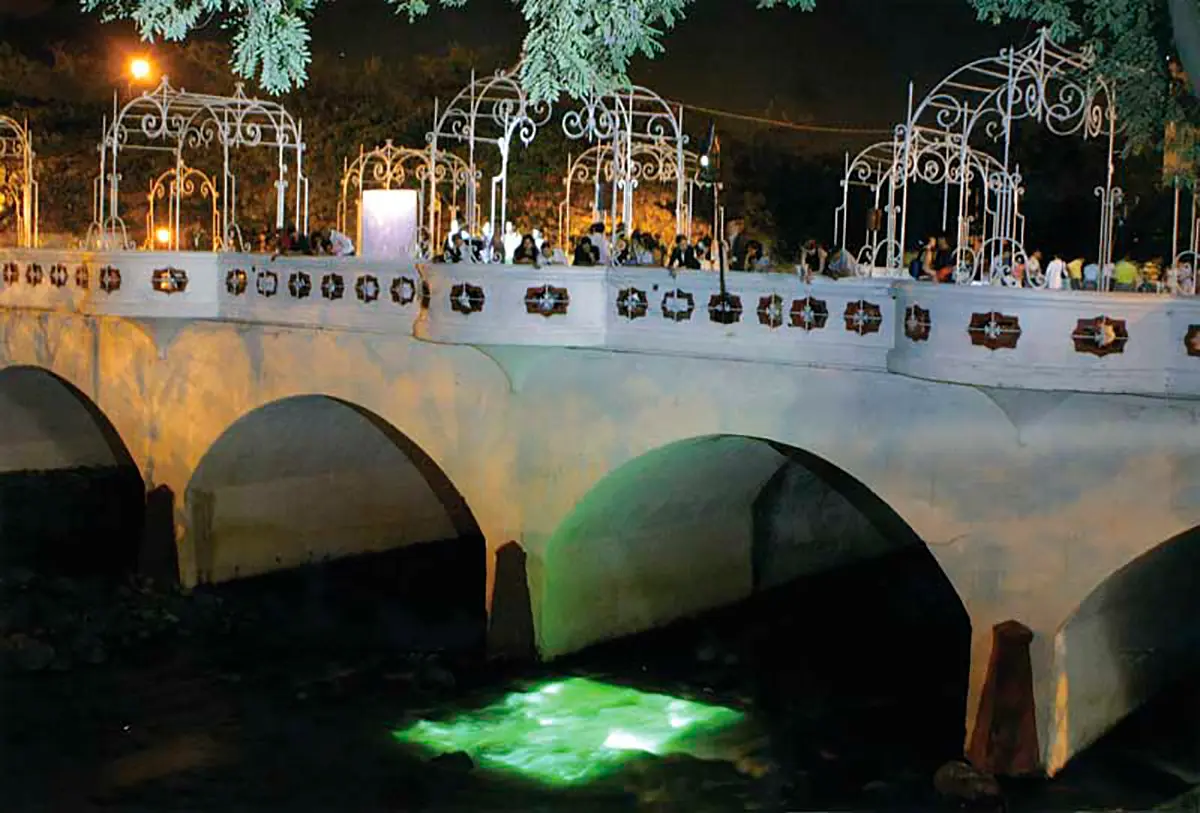
The tension between the chronological arrangement of the galleries and the thematic perspective proposed by the curators makes it possible to identify the changes that occur in Muñoz’s artistic process and at the same time the intricate relationship that exists between his explorations, and questions of an existential nature. This relationship requires that his works be interpreted not only physically and literally, but also, and above all, metaphorically, in their analogy to specific life processes —processes and questions that Muñoz confronts with a deep sense of ambivalence both concerning his own work and his perception of human existence. In fact, since he created the charcoal drawings that comprise the series Inquilinatos and Interiores, the drawings/silkscreens with acrylic and water of Cortinas de baño, those made with charcoal dust on plaster and later on the water in Superficies al carbón and Narcisos, his water-on-cement portraits in Re/Trato and Proyecto para un memorial, those projected onto the Cali river in El Puente, and those that appear and disappear in his most recent productions, Cíclope and Sedimentaciones, Muñoz has made clear the ambivalence that characterizes both his artistic efforts and the life processes in their permanent transience —frustrating and fascinating at once— between creation, change, and destruction. An ambivalence is also present in works like Ambulatorio, Tiznado, Pixeles, Paistiempo, and Impresiones débiles, where Muñoz works with images that allude to historical and social situations, taken from photographs, newspapers, and television broadcasts. Like all others, these images are manipulated so as to foreground their inherent duality on the basis of their ability/inability to capture reality, being at the same time informative and revealing, obscure, and insufficient. An ambivalence that is also based on the fact of their being subjected to the same physical and psychological conditions that make both attention and memory and indifference and oblivion, possible.
A retrospective exhibition like the one under review, in sum, allows us to identify at least three leitmotifs in Muñoz’s work: the exploration of processes —paradoxically generated by the artist himself— of definition/vanishing and construction/disappearance of the visual image; his interest on our relative and shifting perception of the later; and his emphasis on the ephemeral, mutable quality not only of the materials he uses and their supports but of life in general. Protografías underscores the fact that, like the images of our lives, Muñoz’s works, in their complexity, invite us to permanent re-reading and interpretation. The experiences made possible by the transformation of the images created, recovered, and blurred by the artist —analogous to those of our individual, social, and historical existence— allow us to perceive the unstoppable, intrinsic change, contingency, and alteration that characterizes any reality, while nevertheless reaffirming the inherent value and necessity of the incessant quest —ours and the artist’s— for definitions, re-creations, and permanence.
*Retrospective Exhibition, Museo de Arte del Banco de la República, Bogotá, Colombia, December 2011-March 2012. Museo de Arte de Lima (MALI), Museo de Arte Latinoamericano (MALBA, Buenos Aires, Argentina), Museo de Antioquia (Medellin, Colombia).
NOTES
1. Óscar Muñoz, Cali: Museo La Tertulia, 1987.
2. Óscar Muñoz, Bogotá: Museo de Arte Moderno, 1996.
3. A collective exhibition in which Muñoz participated, held in Philadelphia, USA, in 2010, and also curated by José Roca. Roca’s text about Muñoz’s work, written for the traveling exhibition that preceded Philagraphica, is titled “José Roca on Óscar Muñoz”, Working States, Philagraphica 2008, www.philagraphica.org
4. José I. Roca, “Protografías,” Exhibition Catalog, p. 30
5. Óscar Muñoz, Interview with María Wills, Exhibition Catalog, p. 122
6. Óscar Muñoz, Protografías. Bogotá: Museo de Arte del Banco de la República, 2011.
7. For example, Óscar Muñoz, interviewed by Hans-Michael Herzog, Cantos/cuentos colombianos. Arte colombiano contemporáneo (Contemporary Colombian Art), Zurich: Daros-Latinamerica AG (2004), 234-252, and by Diego Garzón in Otras voces, otro arte, Bogotá: Editorial Planeta Colombiana S. A., 2005.
MARÍA MARGARITA MALAGÓN KURKA
Art History Ph.D., University of Texas. Independent researcher.