
Approaching the collection of the Museo de Arte de Lima (MALI) at the Pinacoteca do São Paulo, viewers will be forgiven for expecting a passive show of artistic and diplomatic exchange. The feeling after the visit, however, will be poignant, and it will center on the way in which Peruvian artistic production accompanied the country’s difficult political situation over the past 50 years, without stable institutional support. And regardless of their nationality, as long as they are Latin American, viewers will wonder whether there is in their own societies a museum or institution so intent in relating their history, sharp-edged as it might be. One wonders where is it that reflection fits when it doesn’t fit at home, and whether things can be perceived better from a certain distance, from a city like São Paulo, with more solid platforms for the arts.
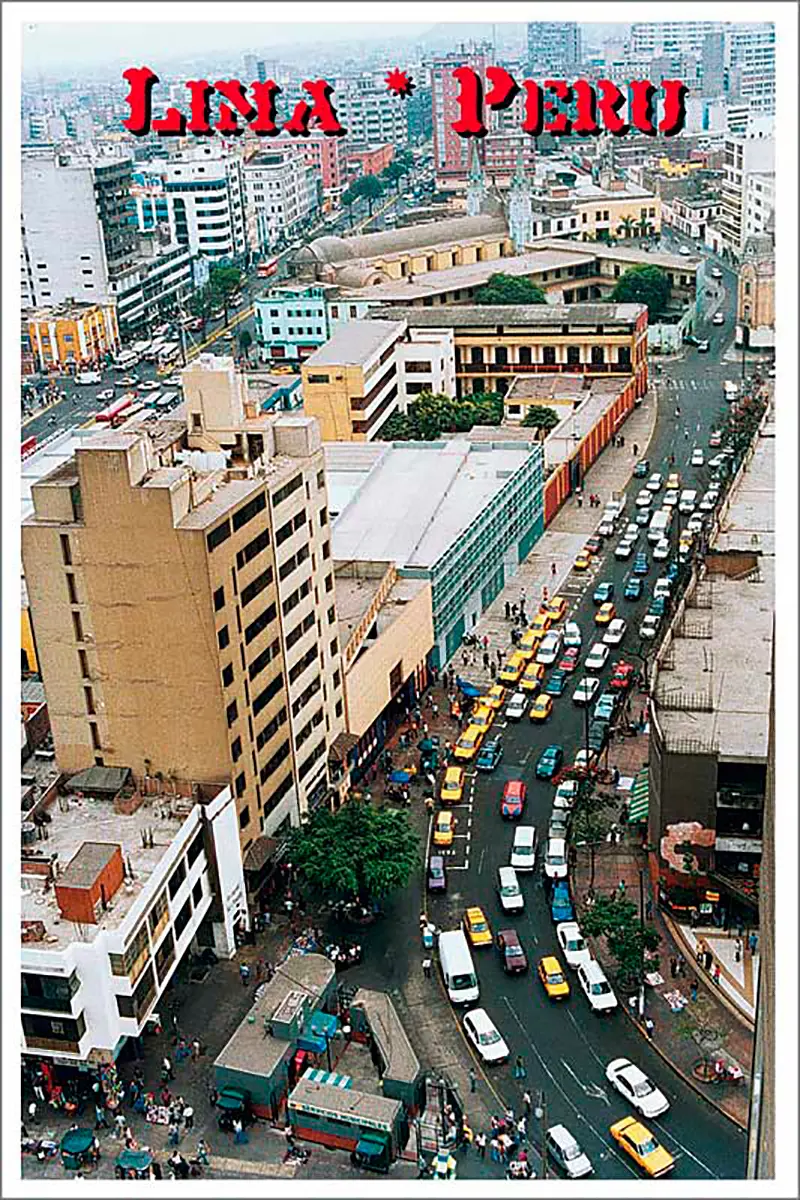
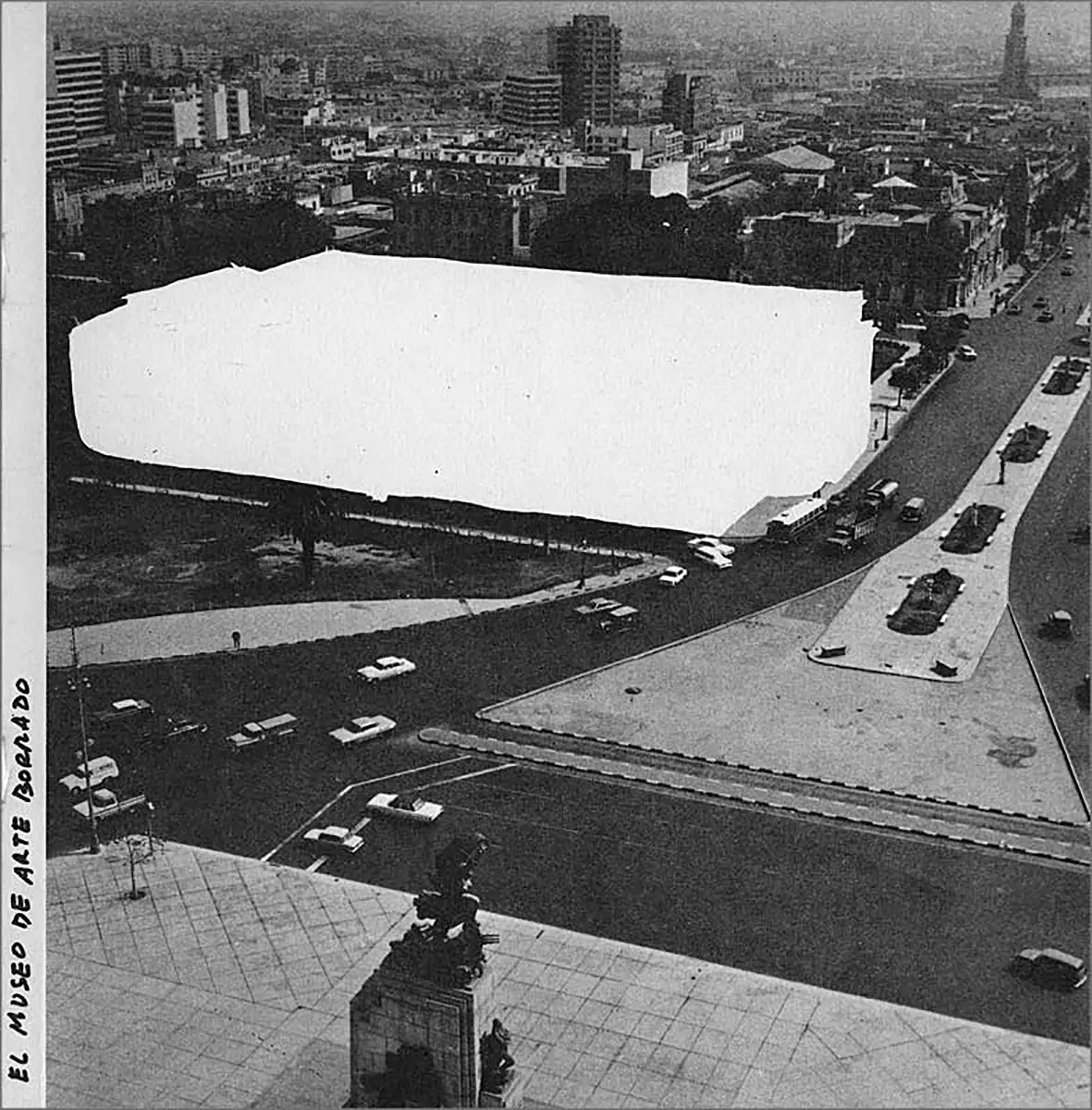
Arte al paso, curated by Tatiana Cuevas, brings together 36 Peruvian artists and almost 100 works in sculpture, photography, drawing, video, installation, and painting, transported from a supposedly empty museum to another one that is willing to receive its history. The premise is Emilio Hernández Saavedra’s El museo de arte borrado (1970), where the MALI is analogically deleted from an aerial view of Lima. At the time, this work signaled the museum’s inability to support emerging artistic practices. Today, the image is still valid given the critique of museums and their hundreds of square meters, which could perhaps be used for more beneficial enterprises. An associated question is about a collection’s responsibility.
The show begins with a situation focused on the non-existence of a stable platform for artistic production. The actions of the E.P.S. Huayco collective (formed by Francisco Mariotti, Luy Maria, Rosario Noriega, Herbert Rodríguez, Juan Javier Salazar, Armando Williams, and Mariela Zevallos) attempted to generate their own systems of distribution and investigations of images.
Their Arte al paso portfolio, from 1980, contained a series of silkscreens alluding to the gap between a Bourgeois public served by galleries and an ignored majority. Under a large shell, they printed the words “art, cook it, eat it, trash it” and distributed it in a corner of downtown Lima highly dense with informal commerce. At a different point, the station for informal artistic investigations was established by E.P.S. Huayco in the Miraflores central plaza conducted an informal survey among passers-by about their preference between two reproductions. In the three situations presented (religious, abstract, and figurative art), European productions were preferred over native ones.
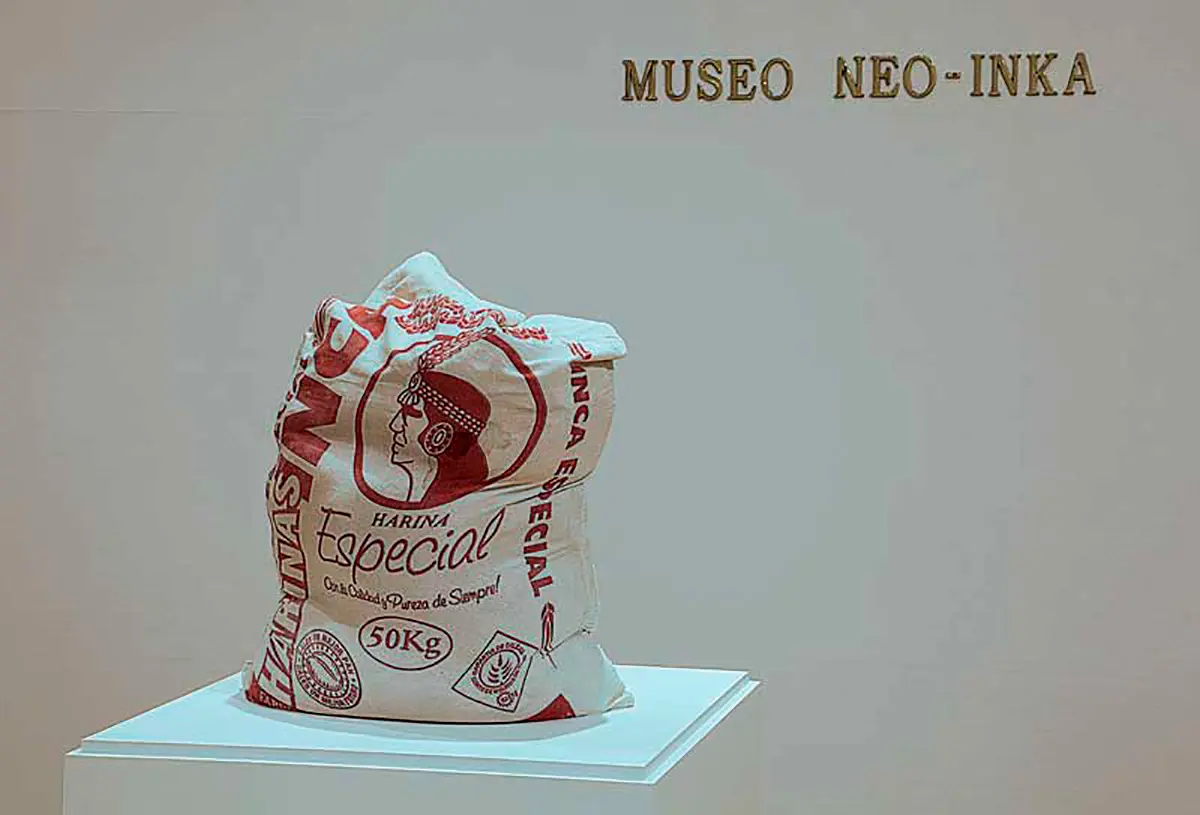
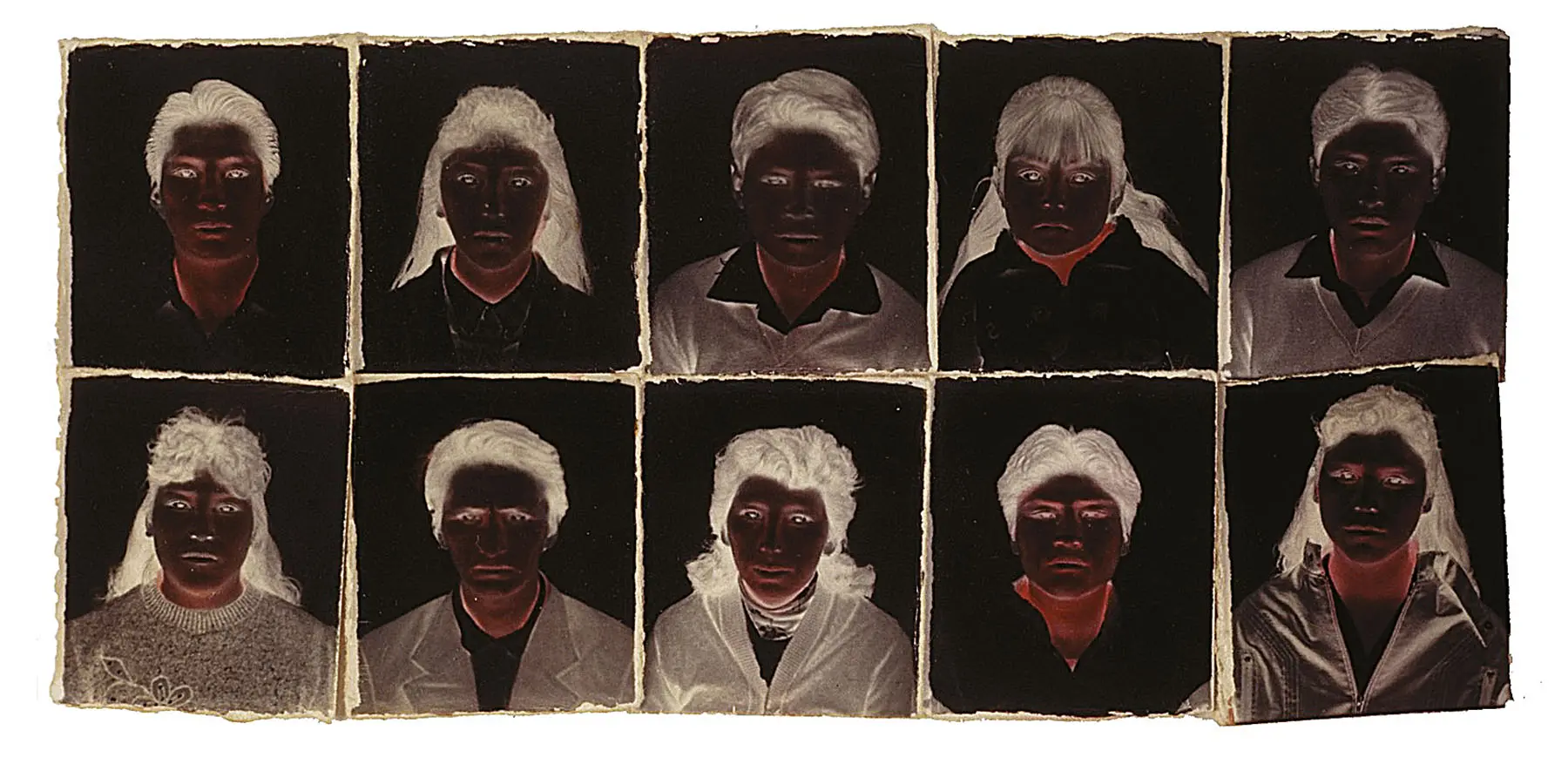
Local photographers in Cusco use a chemical during development to whiten the face of their portrait subjects. Milagros de la Torre reverses this process in the photographs of her series Bajo el sol negro (1991-1993), opening, like E.P.S. Huayco does, the debate about identity in triple conflict: an ancestral origin subordinated since the European conquest, glorified by modern history as a tool for patriotic discourse, and negated by a reality of segregation and displacement. Juan Javier Salazar’s action Pizarro, from 2001, where the artist covered the statue of conquistador Francisco Pizarro with an immense banner on which the image of an ancient Cusco wall has been printed, which renders the monument shapeless while an extinguished history, processed as consumerist iconography, blows in the wind. Inca Kola, Inka Pisco, Inkanola, Inca flour in a civilization where corn was the main staple, are all in Susana Torres’ Neo-Inka Museum. This parody of the museum makes us uncomfortable with the way in which history is classified, and especially how we are recording our present.
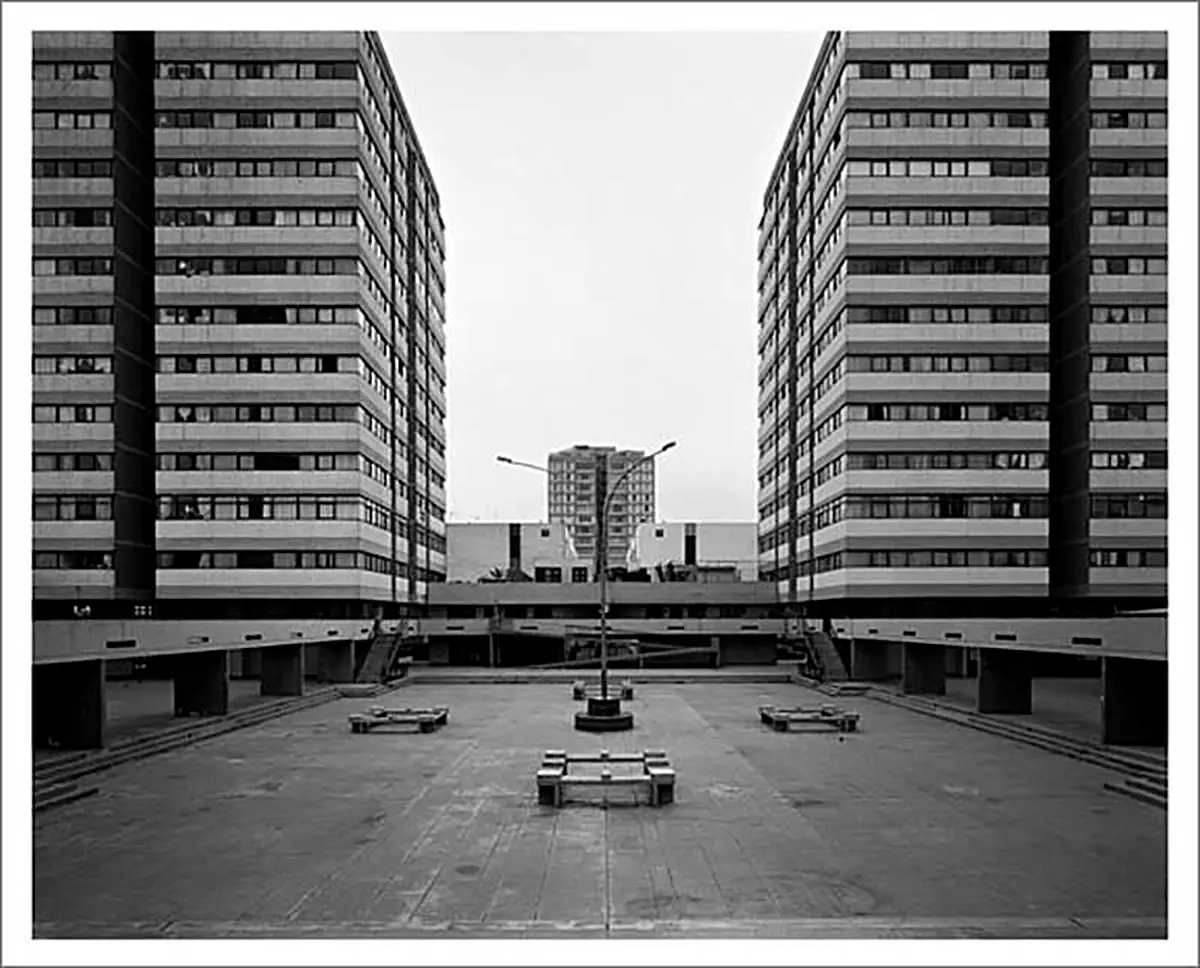
Perhaps the most prolific medium in Arte al paso is photography, which traverses the three galleries with works that start in the 1930s, such as the Cusco streets photographed by Martín Chambi, to the intimate life of Pozuzo, a German enclave in the Amazon river basin, by Eduardo Hirose. These works reflect a variety of concerns that are common to many Latin American societies and particularly acute in the case at hand, Peru. Longing for a borrowed modernity in the empty stores and apartments of Residencial San Felipe (2003-2008), by Philippe Gruenberg and Pablo Hare; precarious land invasions forming fragile urban grids in the desert and house walls transformed into political billboards in the work of Juan Enrique Bedoya, from 2006; unexpected postcards from Lima captured by Gilda Mantilla: forgotten constructions, arte povera signs, small rinky-dink restaurants, misshapen homes, images that are far from seductive for tourists but invaluable in the creation of meaning for the artistic practice of an entire generation.
Art is abducted from individual production to the privatization of a gallery, enters into our homes, and later projects itself from a museum in different perceptual configurations that respond to each specific moment. What are the strategies for a product that must pay attention to such diverging realities? Giancarlo Scaglia’s painting Perros Voladores (1984) resembles the still photograph from a film with a Richterian art direction. In truth, it is the pictorial version of an action by the artist that perhaps four years ago didn’t have the same poetic subtlety but retains the full force of its message: several dead dogs hanging from lampposts, with the inscription “Tseng-Siao Ping son of a bitch”, recapturing an action deployed by the Shining Path group to terrorize the people of Lima. Where fear reigns, what paths are open to art? What emerges from an aesthetic attitude that survives hostility? In what direction should museums and cultural institutions reorient themselves?
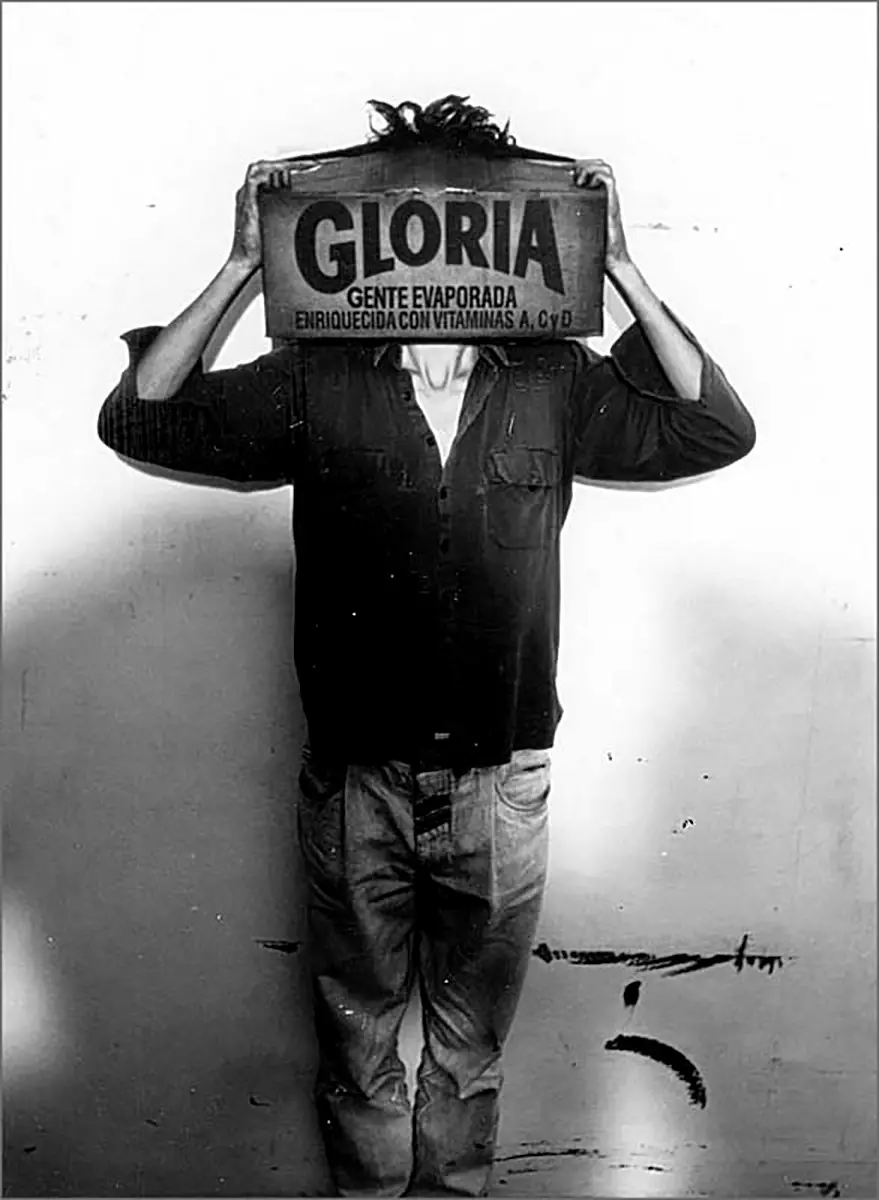
At a time of institutional lethargy, helped by an out-of-control political situation, the geographic and cultural landscape becomes the support for an urgent, direct, unmediated kind of art. As in the Diez cantutos en Cieneguilla drawn by Ricardo Wiesse with red pigments on the mountains, an objection to the Amnesty law for military officers involved in human rights violations approved in 1995, condemning to oblivion the corpses of nine students and one professor who had disappeared two years earlier. Also significant is Gloria Evaporada, an urban intervention, an act of protest, and happening promoted by Eduardo Villanés in 1994, using a cardboard box of Gloria evaporated milk in ways that reminded the absurdity seen just days prior, when the families of victims of the regime were given the burnt remains of their loved one inside similar boxes by way of urns. Scaglia simply carves a hole in his studio and disappears inside, as if a mere physical act could be the last attempt to sensitize a numb life. The title is simple: Hundiendo, Lima (1993).
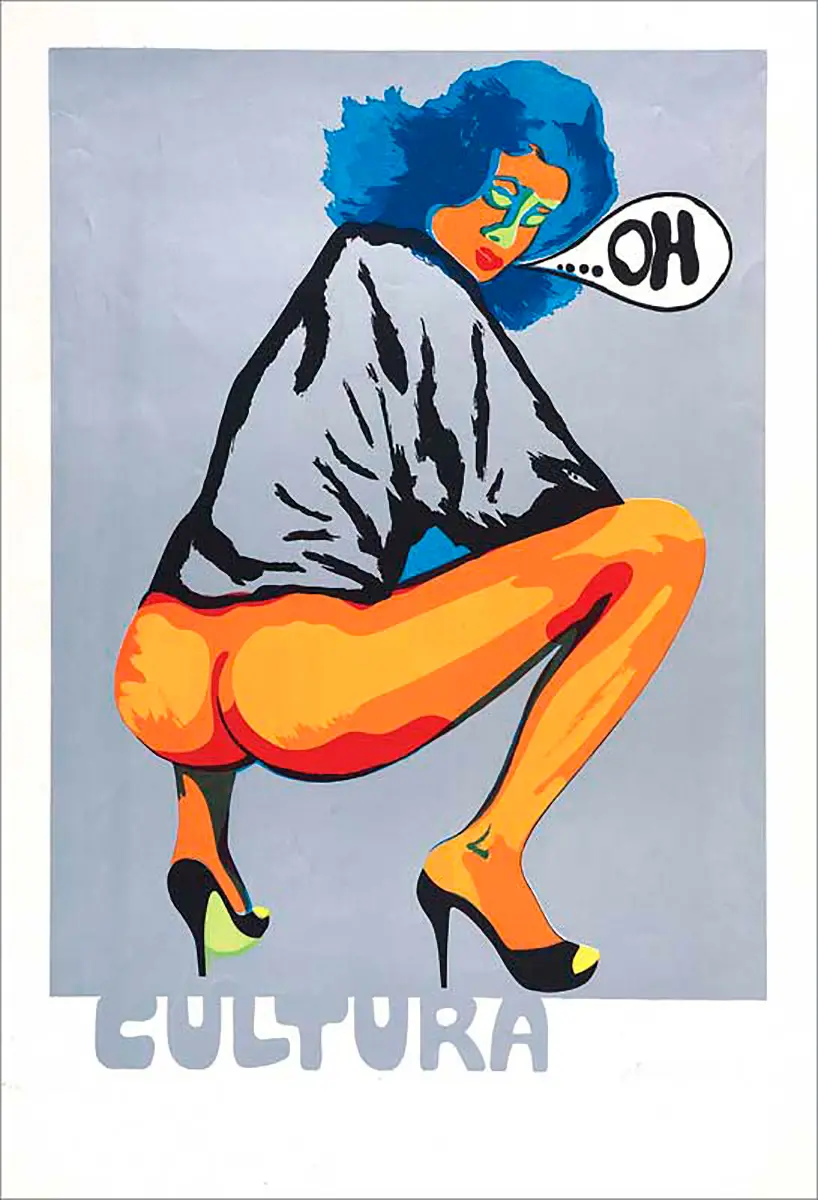
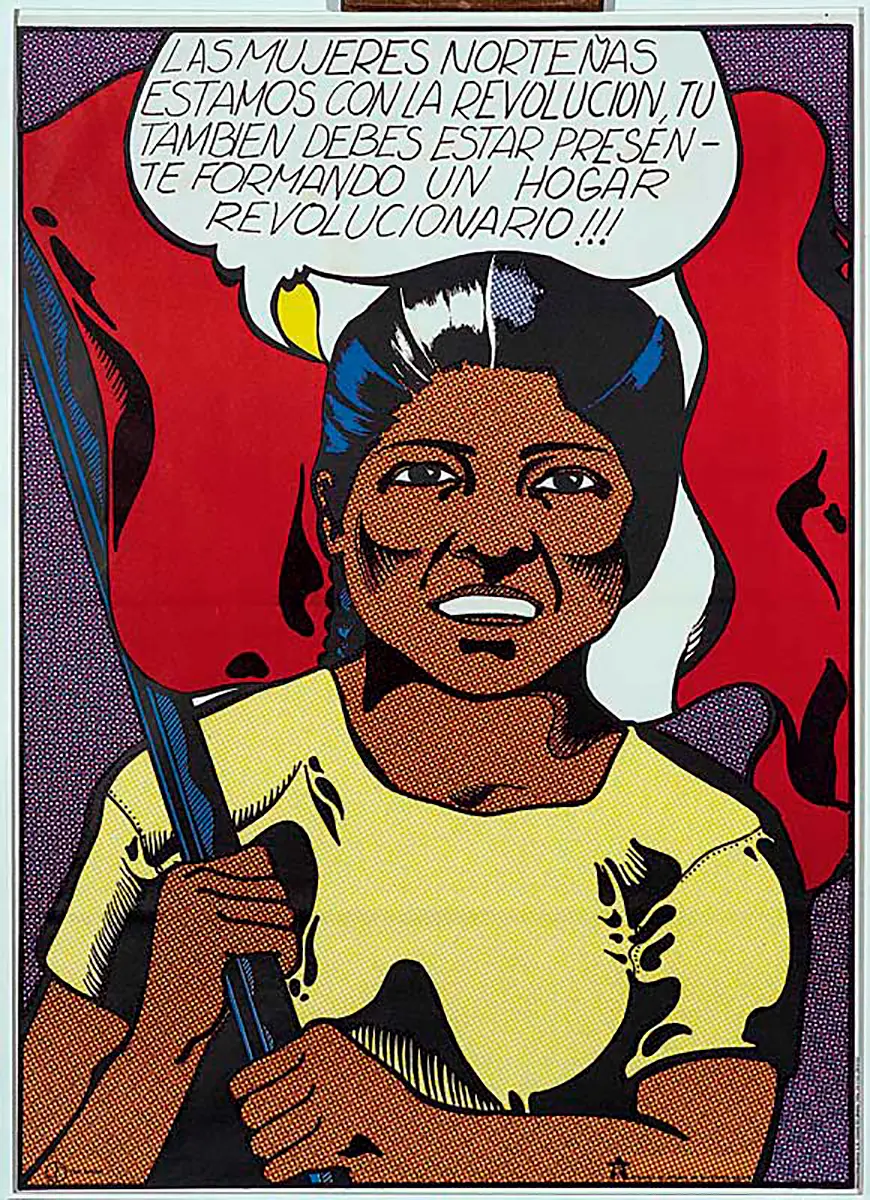
The show illustrates many topics such as identity, an official and fluctuating story, expanded production, displacements, and borderlines, with a slight chronological distinction. In 1969, Jesús Ruiz Durán participated in the creation of graphic propaganda for the Peruvian land reform with his posters of working-class characters represented in the style of Lichtenstein. In 1998, Fernando Bryce reproduced acrylic images from the TV: Fujimori, robberies, codes of public force, suspicious characters. In 2005, as part of the series Dibujando América, Raimond Chaves and Gilda Mantilla traveled through Venezuela, Colombia, Ecuador, and Peru, and found that one same word is widely used to name land features, rivers, restaurants, stores, and a great many places: El Placer (“Pleasure”). And it is in this way that borders such as those of the Amazon river is not divided but multiplied, cross-pollinated, fostering the emergence of new cultures that appear strange from the perspective of the center but are rich and authentic in their eclecticism. And if such communication arises in isolation, why can’t it exist even more forcefully between centers?
The MALI collection traveled from Lima to São Paulo to reside in another South American museum and from there tell the story of a country and a controversial, problematic institution through a fierce artistic production that was developed in urgency, on the fly, with the economy of materials but the strength of messages; it underscores the responsibility of a collection that went from being represented as a blank space in Emilio Hernandez Saavedra’s graphic work to becoming a committed space, one that brandishes art as the evidence of a complex reality not too different from those of other countries in Latin America, educated on high doses of mass-media.
And what sense is there in creating politically committed art, one could ask, if it offers no pragmatic solutions? It serves to activate memory, to erode the shield of indifference that ensures our survival but occludes our thinking. It serves a deeper purpose than the indifferent apologies offered by new regimes for their predecessors. It serves to synthesize a feeling of individual frustration and to once again sharpen the outlines of our blurry collective consciousness.
MARÍA QUIROGA
Art critic and consultant.