
MEX/LA: ‘Mexican’ Modernism(s) in Los Angeles, 1930-1985, organized as part of the Southern California Pacific Standard Time (PST) initiative, seeks to reveal the presence of multiple “Mexican Modernisms” in the greater Los Angeles area. The exhibition turns back to the 1930s when the Mexican muralists were painting in Southern California, rather than solely exhibiting work from the mid-forties through 1980, when PST identifies the rise of Los Angeles as a preeminent art center. The exhibition traces the different ways modern and contemporary Los Angeles artists, architects, animators, and others have been influenced by Mexican culture and Mexican artists have been inspired by Los Angeles. Exhibited is a wide range of media including, but not limited to, paintings, photographs, architectural renderings, films, animation, and music. The exhibition moves in a rough chronology and the decades are exposed through the works on view. Curator Rubén Ortiz-Torres best described the exhibition when he compared it to a modern collage “full of fragments of simultaneous, clashing, and contesting representation and misrepresentations that do not quite integrate but talk to each other and together form a whole.”1
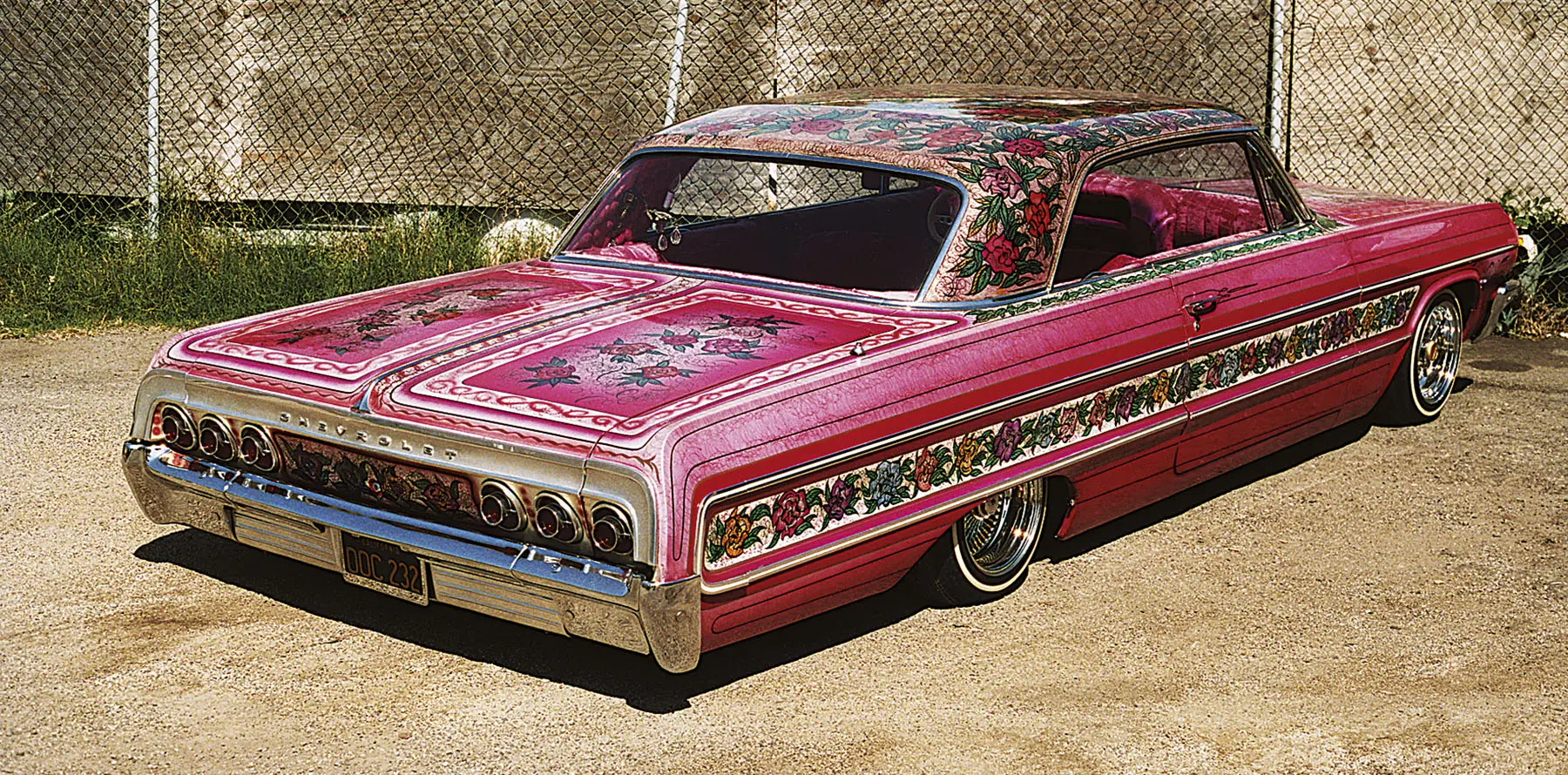
The exhibition begins in the museum foyer with the legendary low rider Gypsy Rose, customized by Jesse Valdez, a founding member of the Imperial Car Club. It is fitting to introduce the exhibition through low-rider as it is a formidable type of vernacular art that emerged from Los Angeles’ Chicano community with origins in the Mexican Paseo and Los Angeles car culture. The lowered pink 1964 Chevy Impala adorned with roses, a pink crushed velvet interior, chandelier lighting, and a bar is meant to be driven slow and low (or exhibited) so that it can be appreciated as a work of art. Low riding gave a face to a community that was subject to constant scrutiny from the police and provided a safe and positive way for Chicanos to reclaim the streets. Low riders, such as Gypsy Rose, have also served as muses to artists as evidenced by Ricardo Valaverde’s Untitled photographs, 1975, later exhibited. Low riders being quite literally examples of “low” art present and challenge this category as do a number of objects throughout the exhibition.
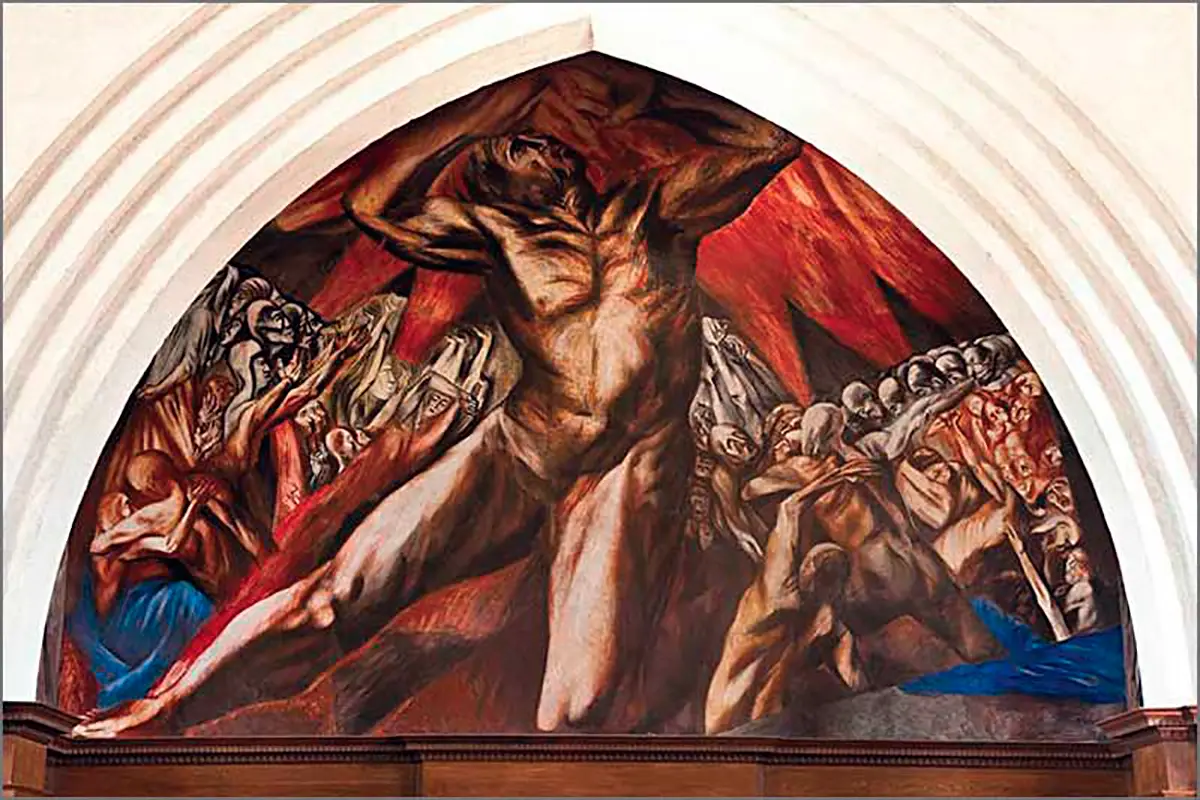
The galleries open with Mexican muralist David Alfaro Siqueiros’ study for his controversial mural La América Tropical, 1932. Rather than painting a kitschy market scene, as commissioned for a wall on present-day Olvera Street, Siqueiros painted an indigenous figure crucified beneath an imperial Eagle, with two armed revolutionary figures standing guard. Nearby are Mexican muralist José Clemente Orozco’s studies for Prometheus, 1930, painted at Pomona College. The mural fittingly depicts Prometheus stealing fire, an allegory for the pursuit of knowledge. Hung alongside Orozco’s works are Italian-born Los Angeles-based Rico Lubrun’s 1960 studies for his mural Genesis, also at Pomona, which were clearly influenced by Orozco’s sweeping diagonals. Although Diego Rivera never painted a mural in Southern California, reproductions of The Flower Carrier, 1935, are seen in the background of film clips from the forties and fifties and serve as an interesting way of including Rivera in the exhibition.
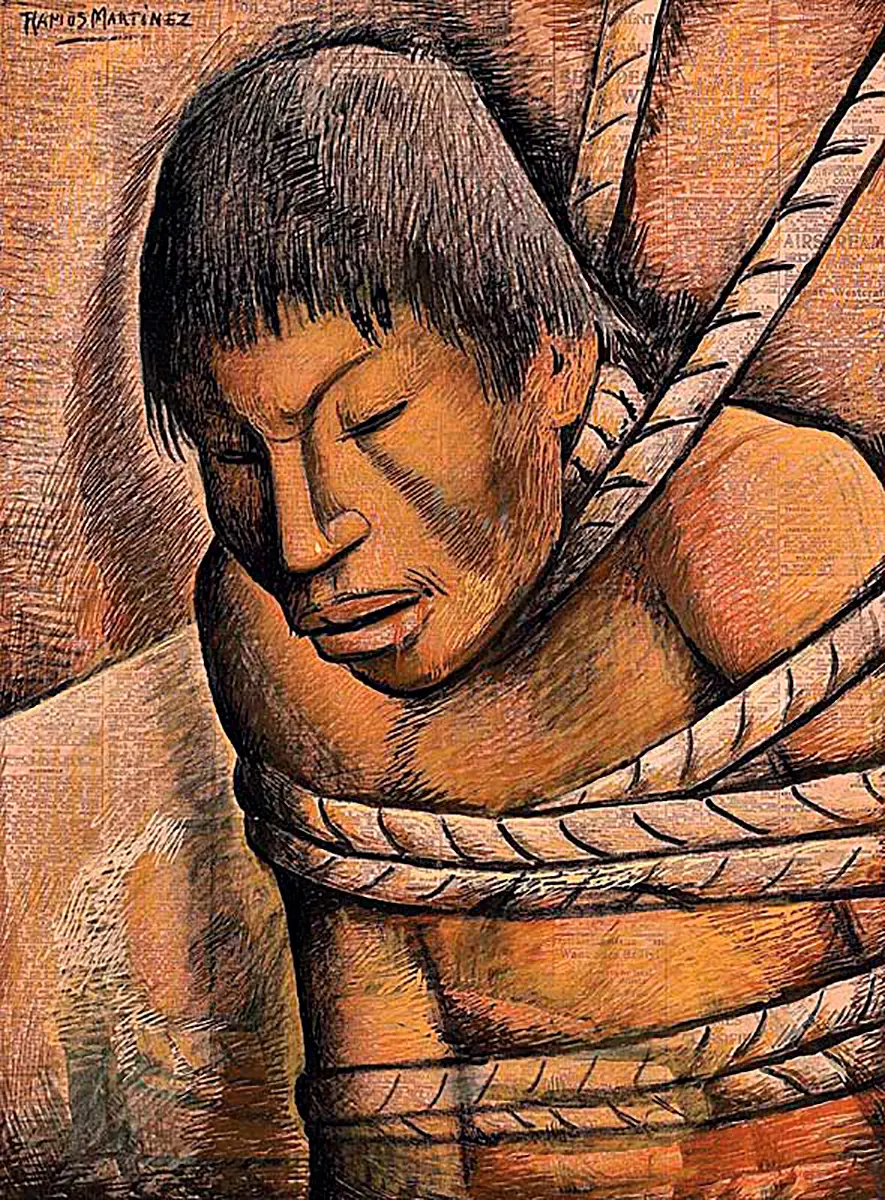
The Mexican muralists’ influence on their contemporaries is seen in five works by Mexican artist Alfredo Ramos Martínez, created in the 1930s. For this series, which followed time spent with Siqueiros in Los Angeles, Ramos Martínez broke from his more bucolic images of indigenous figures. His paintings and drawings of bound or insurgent indigenous figures on the classified pages of the Los Angeles Times expose their unjust treatment.
Photographers Edward Weston and Tina Modotti fled to Mexico in 1923, where they established a photography studio and fraternized with the muralists. On display, Weston’s photographs include the portraits José Clemente Orozco, 1930, and Tina [Modotti], Glendale, 1922. Before moving to Mexico, Italian-born Modotti had ironically starred in the film The Tiger’s Coat, 1920, as a Mexican posing as Anglo. This film, on view, divulges Hollywood’s degrading depiction of a Mexican woman as a femme fatal.
Stereotypes of Mexico and Mexicans are also seen in animation as evidenced by clips of Looney Tunes’ Speedy Gonzalez, the fastest mouse in Mexico, the 1950s and 60s, and Disney’s The Three Caballeros, 1945, where Donald Duck, at times drunk and lustful, explores Latin America with a Mexican Rooster and a Brazilian parrot. The exhibition emphasizes the relationship between Walt Disney and Mexico, especially as it pertained to the “Good Neighbor Policy,” where cultural production was used to foster pan-American unity. Animation stills and story sketches from Don Donald, 1934, and The Grain that Built a Hemisphere, 1943, accompany those from The Three Caballeros. Disney’s involvement in foreign policy is mocked in Miguel Covarrubias’ gouache Disney’s Light-Hearted Ark, Afloat in a Wild World, 1937, where Walt Disney and his beloved characters stand precariously in a boat as it weathers stormy seas.
The exhibition then explores the impact of pre-Columbian and contemporary Mexican culture on mid-century architects and designers. English architect Robert Stacy-Judd drew on Mayan architecture, which he at times combined with Art Deco when designing structures such as the Aztec Hotel, Monrovia, California, 1924-25 and his never realized Enchanted Boundary Resort Complex, c. 1950. Stacy-Judd also documented Frank Lloyd Wright’s concrete Ennis Residence in Los Angeles that is likewise exemplary of Mayan revival architecture. Mexican practices and iconography associated with Day of the Dead captured the imagination of Los Angeles-based Ray and Charles Eames who photo-documented them while in Mexico in 1957. London-trained architect Po Shun Leong lived in Mexico during the 1960s and 70s, and Southern California from the 1980s on, where he designed furniture influenced by Pre-Columbian and modernist values. His simple wood, canvas, and leather Tulúm Folding Chair are named for the source of his inspiration. Also exhibited from the mid-century is a sampling of Mexican music, played and/or recorded in Southern California. The presence of music added breadth to the exhibition and merited a more inviting and prominent listening station.
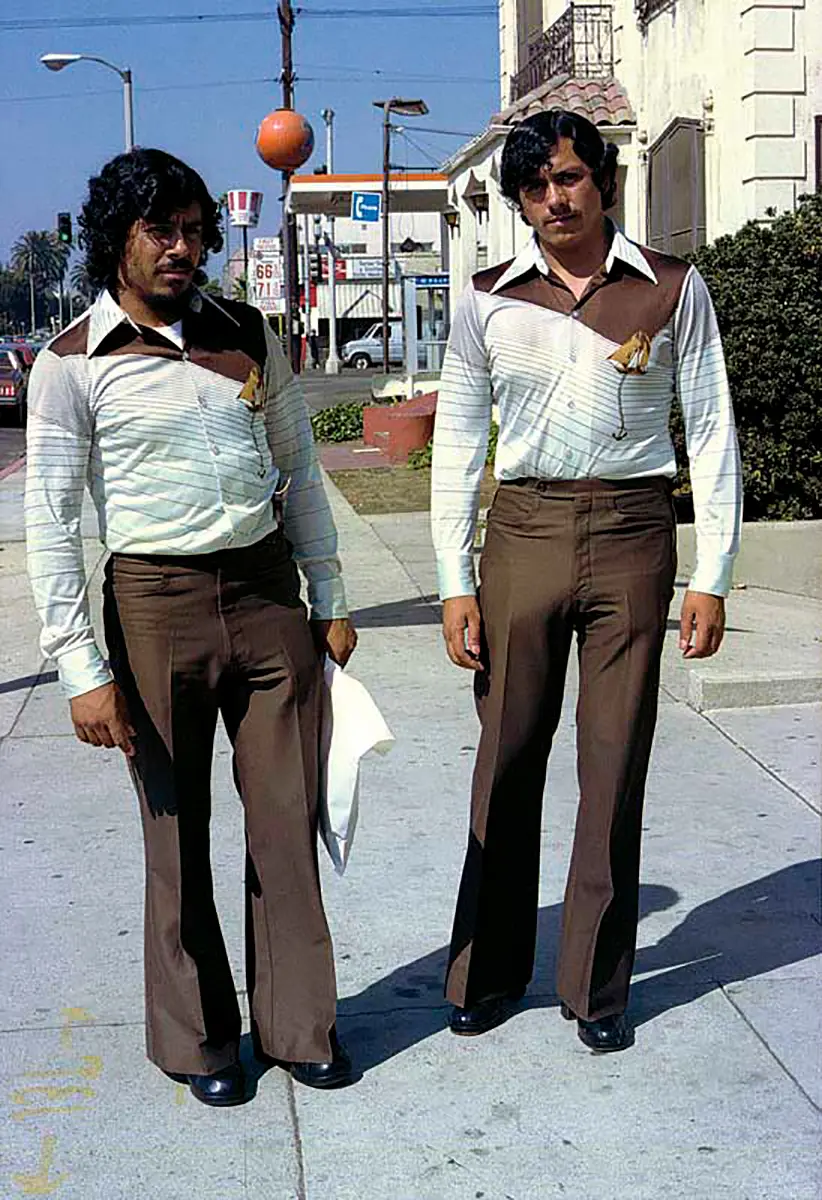
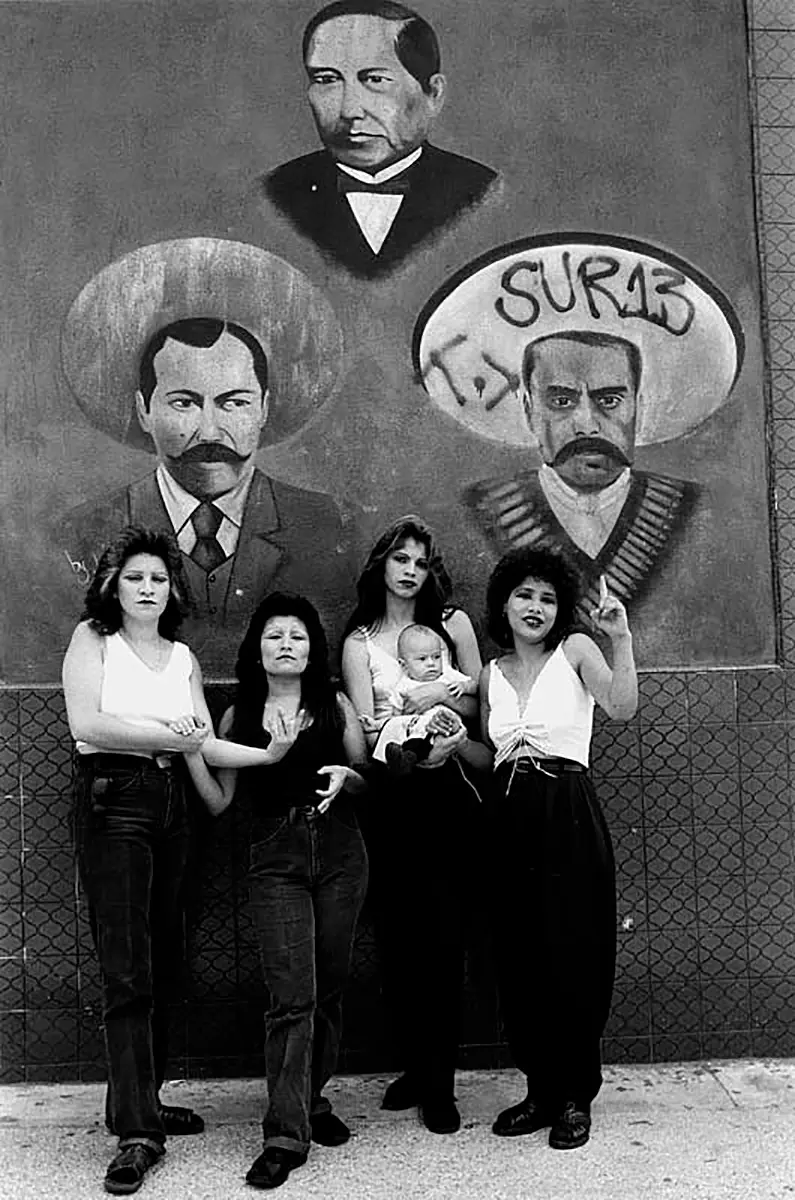
Continuing into the next gallery, paraphernalia related to the Sleepy Lagoon trials, 1942, and Zoot Suit Riots, c. 1943, document the rampant racism that persisted despite the best efforts of the “Good Neighbor Policy.” Close by beat generation ephemera, such as Wallace Berman’s hand-printed publication Semina 5, showcased artists’ and writers’ creations while under the influence of peyote in Mexico. An image of Sor Juana Inés de la Cruz is featured on one cover and après-Columbian phallic sculpture on the other, juxtaposing two stereotypical ideas of Mexico—virtuous and erudite/savage and sexual. Numerous photographs of Mexican-American Angelinos taken by Mexican and Chicano photographers line the walls, bringing the gallery full circle from exhibiting evidence of discrimination to strength and pride. Chicano John Valdez’s East L.A. Portraits from the 1970s and 1980s highlight retro and cholo culture. Mexican Graciela Iturbide’s photographs of cholas from her White Fence, East L.A. series, 1986, uncover their domestic and maternal side.
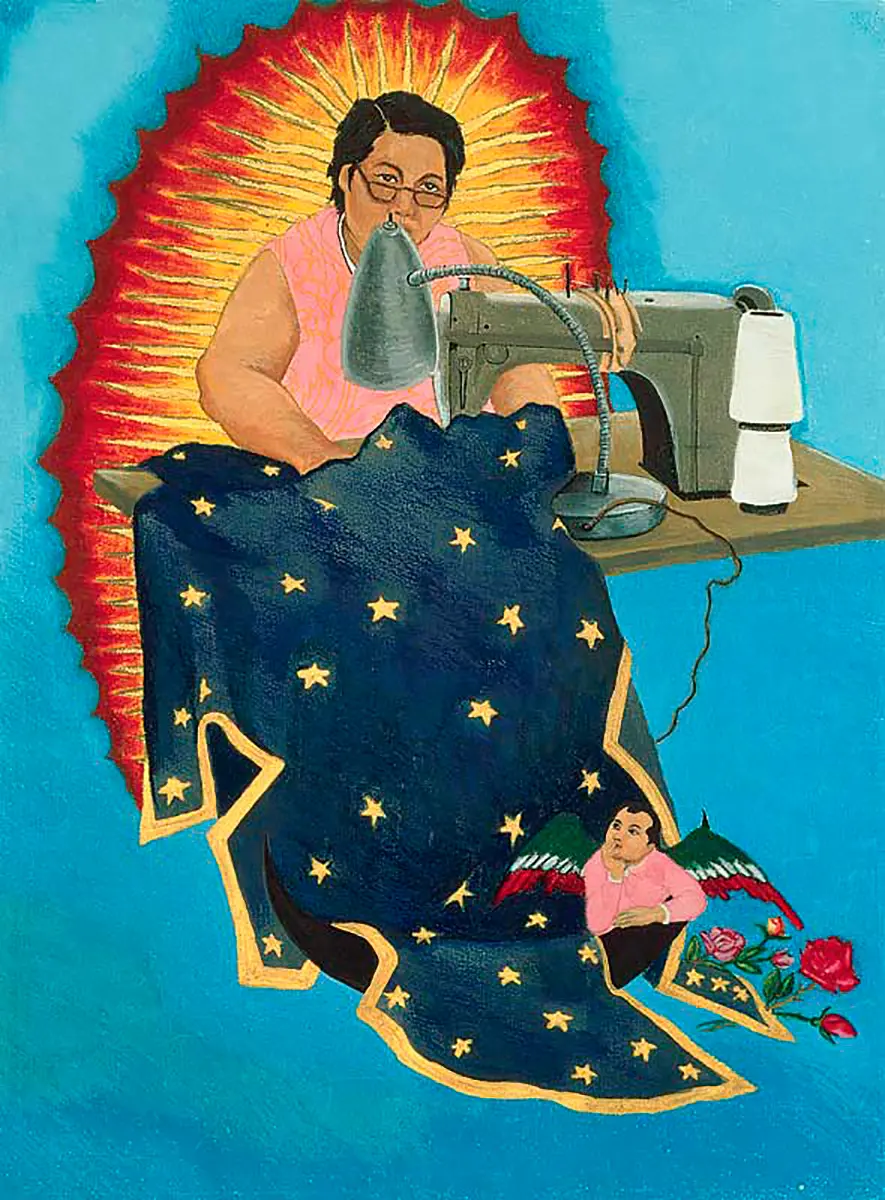
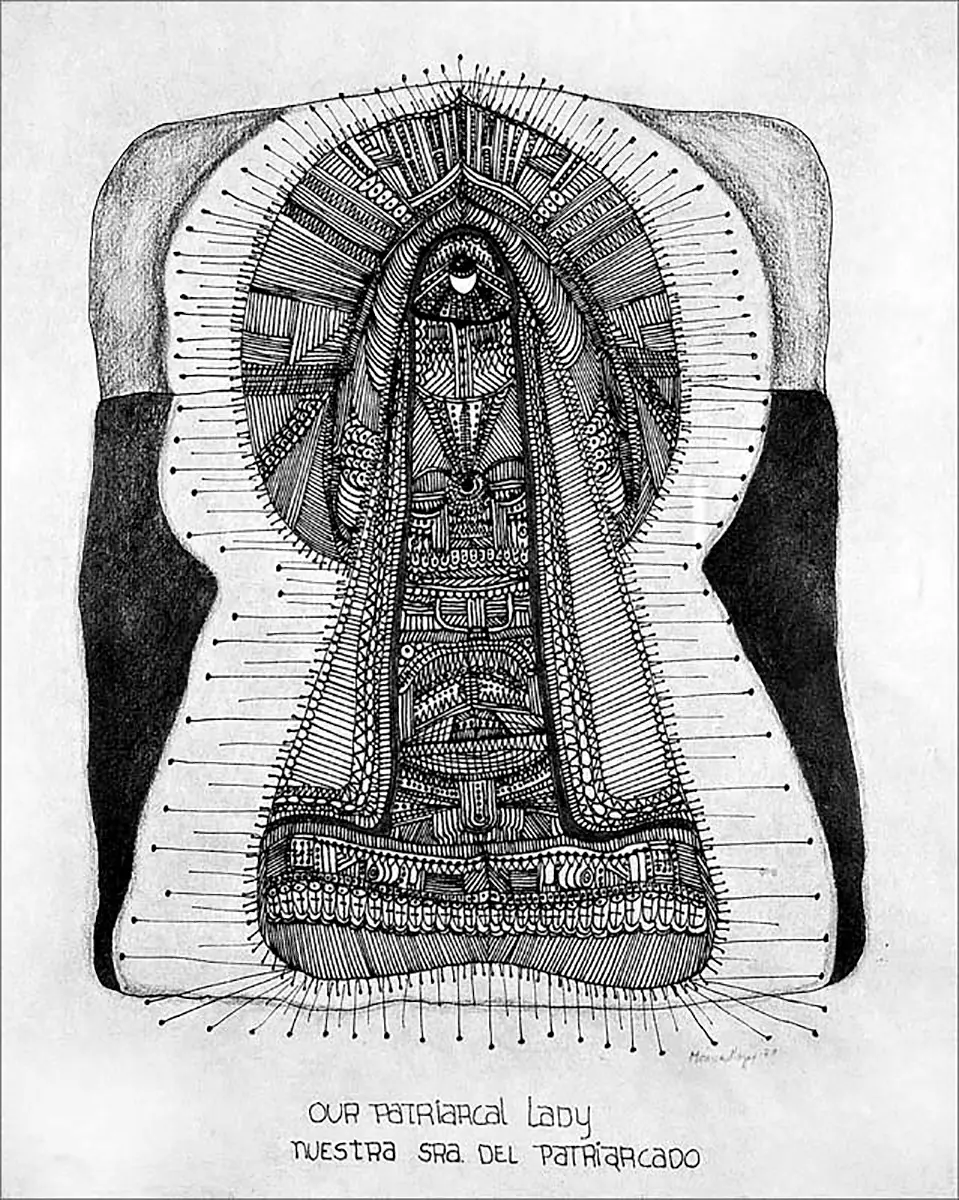
In the final and most contemporary gallery, many artists explore issues of nationalism, race, and gender using the image of the Virgin of Guadalupe. For Mexico City artist Monica Mayer the Virgin symbolized oppression, which she equated with her experience as a female artist in 1970s Mexico City. Her feminist leanings led her to Los Angeles where she joined the Feminist Studio Workshop in 1978 and produced her Mother of Sorrows pen-and-ink drawings. Here she transformed the triangular shape of the Virgin’s mantle to one resembling a phallus penetrating the aureole making the images about spiritual and sexual exploration as opposed to sorrow and oppression. Mexican artist Adolfo Patiño, who lived in Los Angeles during the 1980s, created a large tapestry Project for the Flag of a Mexican Colony in 1987. It bears the red and white stripes of the United States flag, with the Virgin of Guadalupe repeated three times in place of the stars. It is a hybrid flag that represents the intertwined histories of the two countries. Yolanda López’s biographical pastel triptych explores the differences between three generations of women—her Mexican grandmother, Mexican-American mother, and herself, Chicana—by reinterpreting the Virgin’s iconography.
Also on view is Lopez’s installation Things I Never Told my Son about Being Mexican, 1985, where food packaging, kitchenware, children’s clothing, and toys reveal the sleeping Mexican alongside a cactus, and other equally degrading and nonsensical stereotypes present on Mexican-inspired products sold in the U.S. Tabletop display cases contain ephemera pertaining to the gender-bending and identity shifting performance practices of Chicano Cyclona (Roberto Legorreta) and Mexican Guillermo Gómez-Peña. Video documentation of Gómez-Peña and the conceptual Chicano collective Asco’s performances play nearby. Harry GamboaJr.’s photographs reveal his work produced independently of Asco and include one of César Chávez from 1979, the only reference to the Chicano organizer. Chaz Bojórquez’s graffiti-like paintings of roll call directly reference gang culture, although their format makes them both palatable and collectible. As evidenced by the work on view, Mexican culture has played a prominent role in inspiring artistic production in and about Los Angeles—for better or for worse. Fortunately, PST has provided a forum for the relationship between the two locales to be explored.
NOTE
1. “Does L.A. Stand for Los Angeles or Latin America,” MEX/L.A.: ‘Mexican’ Modernism(s) in Los Angeles, 1930-1985, Museum of Latin American Art, Long Beach and Hatje Cantz Verlag, 2011.
BETH ROSENBLUM