
Although the work of Roberto Jacoby (Buenos Aires, 1944) has been a significant point of reference in the development of conceptual art in Argentina, his visibility as an artist in the local scene is rather thin, in contrast with his wide international recognition. As example, let’s mention his participation in the 29th São Paulo Biennial (2010) and the anthology show Jacoby, El deseo nace del derrumbe presented at the Museo Nacional Centro de Arte Reina Sofía from February 25th through May 30th, 2011.
Jacoby’s erratic conduct within the “art institution” has meant that not only his art but also his behavior, breaks with established paradigms. Perhaps his systematic distance from all “mandatory” sites is due to the fact that he “bores rather easily,” as he acknowledges. His “cultivated” invisibility in recent decades marks a significant contrast with the effervescence of the 1960s when he was a central character in a widely discussed avant-garde.
Today, the central role of the individual “author” vanished into group projects. Diffuse authorship is an aesthetic choice, although—as Jacoby admits—it presents the inconvenience of making it difficult to accept new projects. Yet, while immersed in collective works, Jacoby has not ceased to create. This is what the book-catalog El deseo nace del derrumbe. Roberto Jacoby. Acciones, conceptos, escritos, which accompanied his recent show at the Reina Sofía museum,1 records. Edited by researcher Ana Longoni, this powerful publication attests, in its more than 500 pages, to Jacoby’s importance in the history of Latin American art. The book opens with de-materialized works from the 1960s and ends with his actions of recent years. While the earliest works included are dated in 1966, one must remember that Jacoby’s first show took place two years earlier at Lirolay, the emblematic gallery that hosted many young artists who would later shine as “stars” at the Instituto Di Tella. A recent book by Nelly Perazzo, Galería Lirolay 1960 -1981—a great contribution to our appreciation of art spaces of the 1960s—abundantly documents the gallery’s importance.
Dissemination
An artist and a sociologist, Jacoby disassembles stereotypes of identity through an oeuvre that is disseminated through different fields. His way is that of indiscipline, the methodological contradiction because he rejects repetition, the attitude of an artist who concentrates on a given finding and turns it into a seal of identity.
In the domain of art, Jacoby presented installations, ambients, performances, happenings, book objects, drawings, comics, photographs, and videos. He also published Moncada, a novel co-written with Jorge Di Pala, and wrote manifestoes and essays, promoted journals, and participated in the creation of the still-active Centro de Investigaciones Artísticas. The CIA is managed by artists and has as its purpose the investigation and education in contemporary art.
Jacoby also gained institutional recognition as a writer in the field of political philosophy. His essay El asalto al cielo is mandated reading in the Sociology of War program at the Universidad de Buenos Aires’ Sociology Department.
It is difficult to reconcile Jacoby the artist and Jacoby the thinker with Jacoby the lyricist for the rock band Virus. But Virus was for him a political project that staged a “strategy of joy.” It was a concrete way to counteract the fear and depression that enveloped Argentina during its most recent military dictatorship. Participating in the group was a way of retaining his radical political and ethical position, forged in the 1960s under the influence of philosophers like Herbert Marcuse, who believed that art needed to be inserted into everyday life.
Regarding the dispersal of his production, Jacoby says: “I would like to be able to read everything I do in my life as following a path, which is difficult because I have always jumped abruptly from one thing to the next. Often, people who see, read, or hear something of mine are surprised: ‘I didn’t think you did or do that type of thing. Are you the same person who did this or that?’ A general reading of my activity is problematic, because I intervened in very different, unconnected worlds.”
While up to this point Jacoby’s work has been read in a fragmented way, perhaps the publication of the book associated with his show at the Reina Sofía museum will drive a reception of his art as a “body of work,” a heterogeneous set that nevertheless responds to a central idea: the politization of art, opposed to an aesthetization of politics (according to Benjamin’s distinction.)
Art and Politics
The period when Jacoby began his career as an artist was certainly one of upheaval. Those were the years following the constitutional regime of Arturo Frondizi, the ideology of economic developmentalism, and the Cuban Revolution model. In June of 1966, a military coup brought General Juan Carlos Onganía to power; it was the beginning of an authoritarian system characterized by the persecution of ideologies that were deemed corrosive of hierarchy. Cultural activity was subjected to hard controls. Art, on its part, could not avoid expressing a forceful opposition. It was impossible to separate art from revolution, which was seen as an authentic form of culture.
A pioneer of political art in Latin America, Jacoby participated in the emblematic Homenaje a Vietnam exhibition (1966), organized by León Ferrari and Carlos Gorriarena at the Van Riel Gallery. Almost 200 artists from a variety of aesthetic and political positions also took part. The Vietnam War was also the topic of Jacoby’s installation Las bombas cayeron en la pradera, presented to the Braque Prize in 1966.
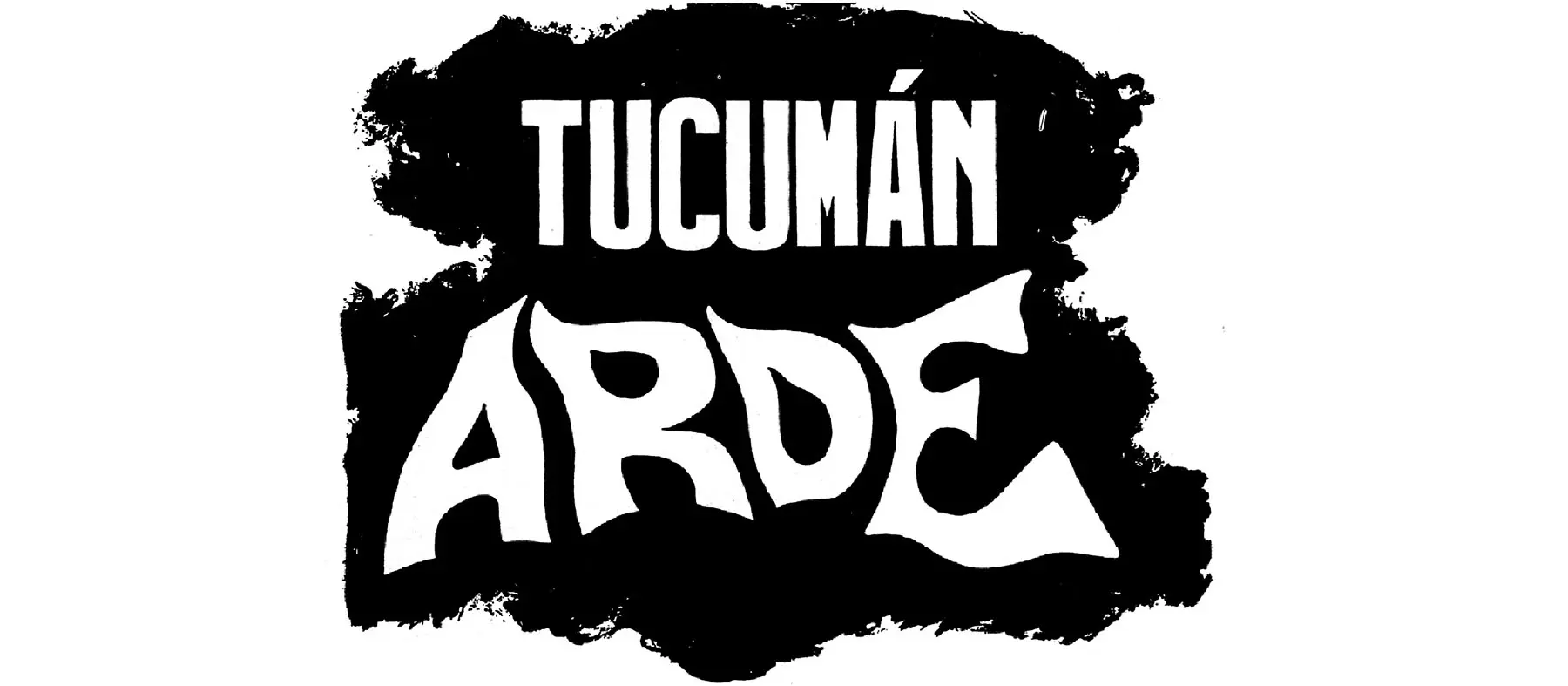
Jacoby was a member of the group driving a key work in critical conceptualism: Tucumán Arde (1968), along with León Ferrari, Ricardo Carreira, and Pablo Suárez, among others. The goal was to lay the ground for a new aesthetic oriented towards social transformation, outside the art institution.
Tucumán Arde was a work of counter-information that contradicted official statistics and laid bare the oppression, exploitation, and extreme poverty in the Tucumán province. The show opened at the CGT headquarters in Rosario and later traveled to Buenos Aires, where it was closed down under strong pressure by the government after a few hours of its debut.
In Experiencias 68 at the Instituto Di Tella, art’s corrosive potency was made evident in works like Oscar Bony’s La familia obrera and in a text by Jacoby that read: “This message is addressed to the small number of creators, simulators, critics, and promoters; this is to say, those who are committed by their talent, their intelligence, their economic interest, their search for prestige, or their stupidity, to what is known as ‘avant-garde art’. To those who methodically seek a ‘culture shower’ at the Di Tella, to the general public (…). Aesthetic contemplation is over because aesthetics is dissolved into social life. The work of art is also over because life and the planet itself are beginning to become one (…).” Jacoby understands that in participations such as those he places himself “more on the side of revolution than on the side of art.” A turn that is reasserted with the semi-clandestine publication of the journal Sobre and his incorporation into the team of Marxist sociologists of CICSO (Centro de Investigaciones en Ciencias Sociales).
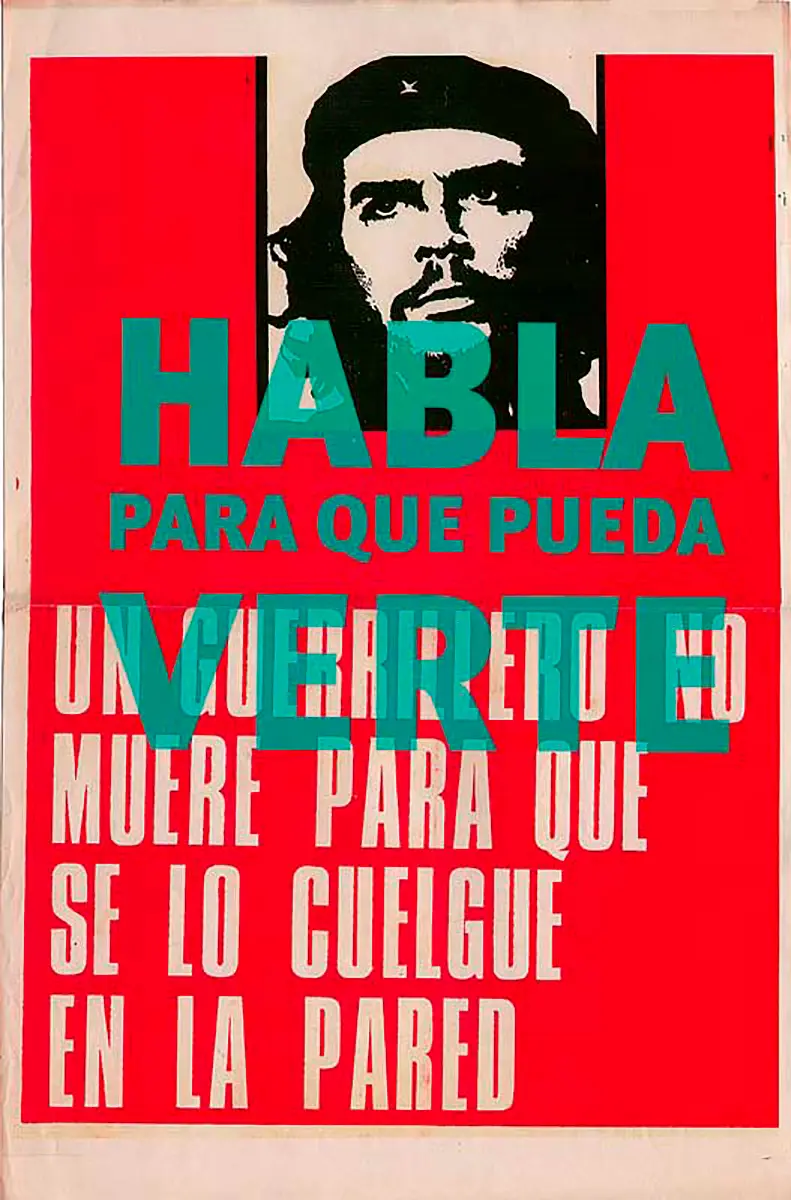
With the provocative title of 1968, el culo te abrocho (2008), Jacoby exhibited intervened documents in a sarcastically de-mystifying reading of that revolutionary year. Among them was the 1969 anti-poster where he reproduced one of Che Guevara’s best-known images alongside the sentence “A guerilla doesn’t die to be hanged on a wall.” Consumerist banalization mutes the voice of the hero, and so the new version carries the phrase “Speak so that I can see you.”
A conflict between the Cristina Kirchner administration and rural producers in 2008 helped Jacoby imagine strategies for participation. He presented himself in front of the National Congress riding a toy tractor and designed t-shirts with the slogan “Hasta la Victoria Oh Campo” accompanying the image of writer Victoria Ocampo, a member of a wealthy landowning family known for its anti-peronism, wearing a Che Guevara beret.
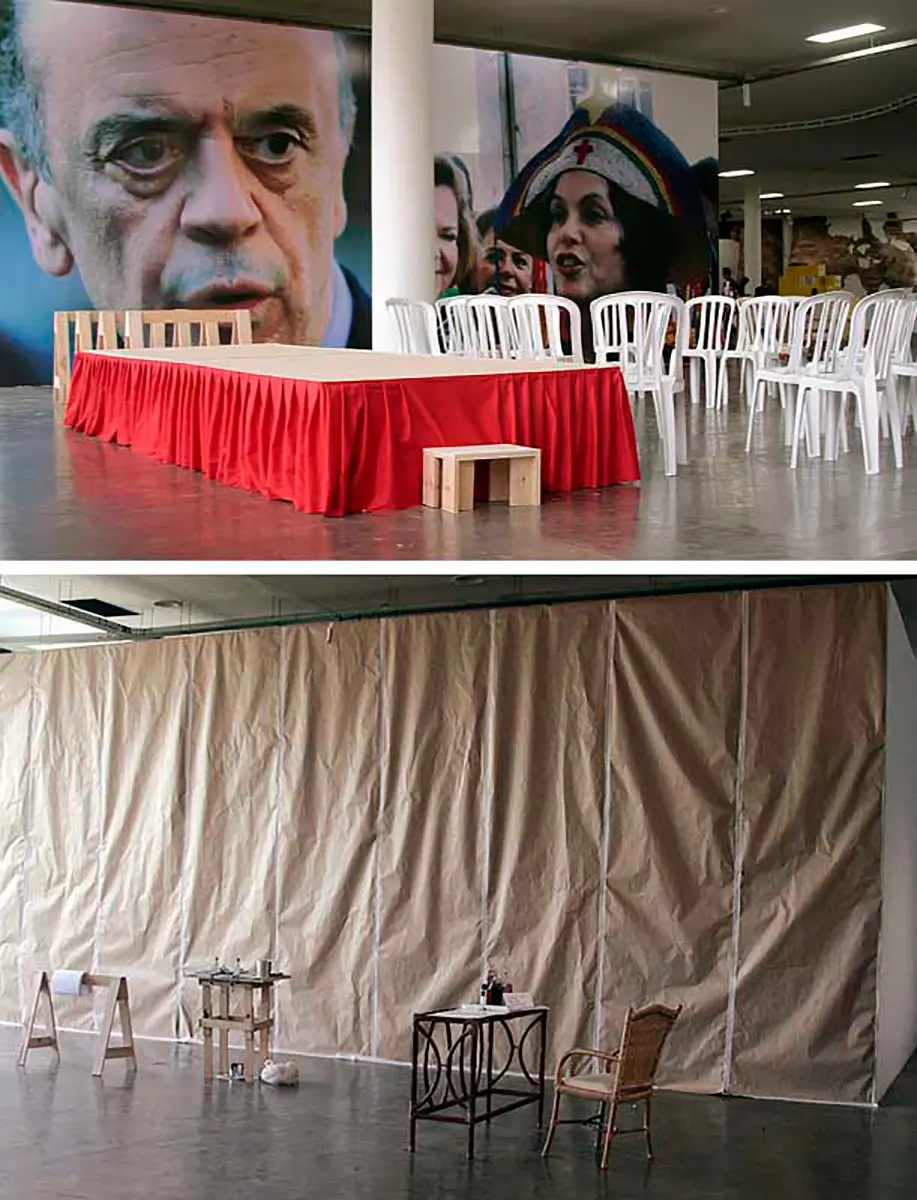
The central topic of the 29th São Paulo Biennial (2010) was “Art and Politics,” and Jacoby was one of the artists who most accurately brought it home by promoting the Worker’s Party candidacy of Dilma Roussef. In the installation El alma nunca piensa sin imagen—with two giant billboards featuring the images of Roussef and her opponent, Serra—Jacoby introduces himself as a member of the Argentine Brigade for Dilma. “This election,” he says, “is absolutely decisive for our lives: if Brazil falls in the hands of the Right [i.e., Serra], bye-bye Latin America, bye-bye Argentina. The future will be left for later.”
Jacoby’s installation caused a heated debate and ended up being partially closed for violating Brazilian electoral regulations, which ban pre-electoral propaganda that is not on radio or TV. The contrasting images of the two candidates were covered and all materials referring to the campaign were embargoed; nevertheless, space continued to operate as a site of open participation, stimulated by the imposed silence of Jacoby’s work.
Laboratories of perception
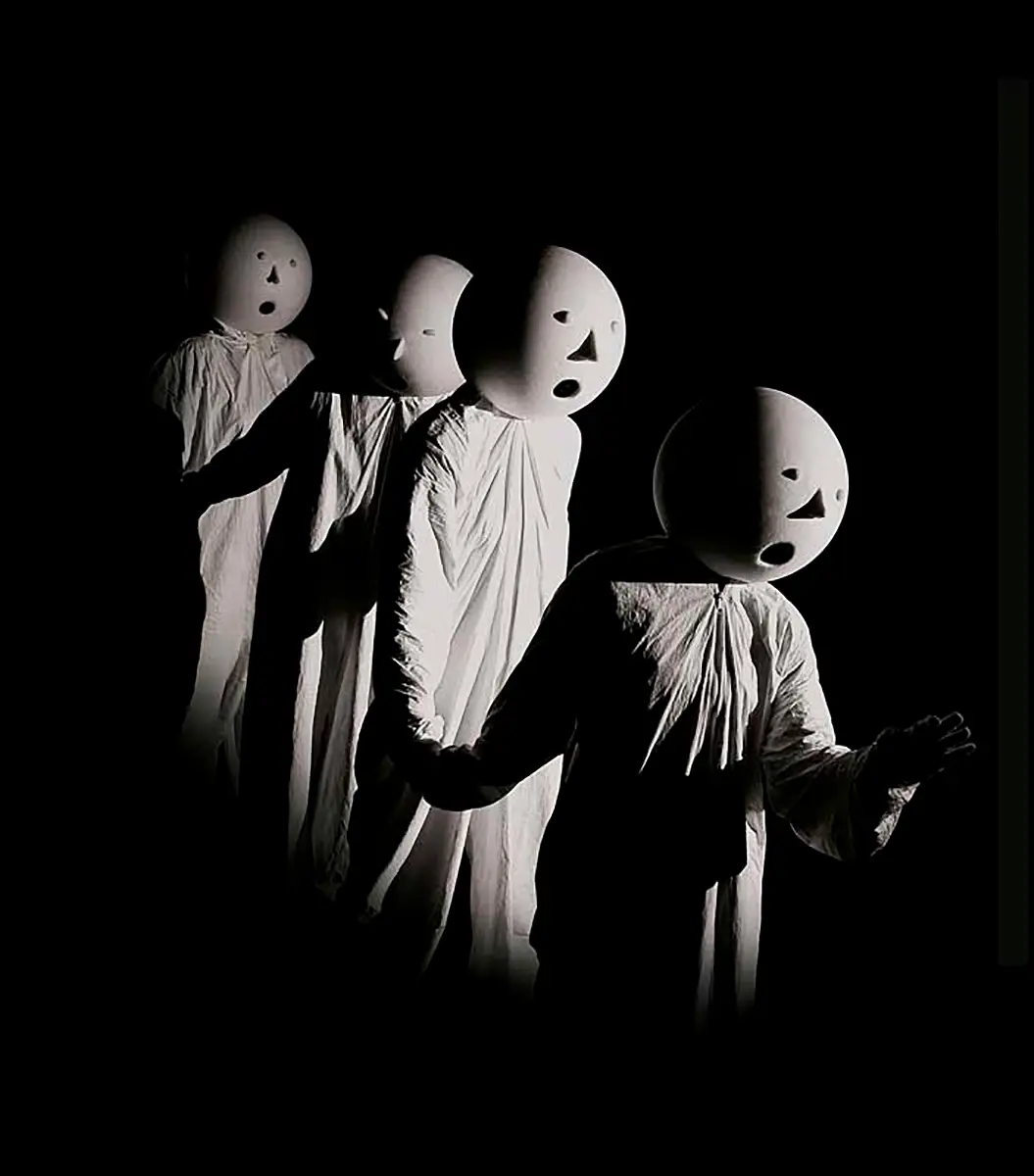
Jacoby’s investigation of the phenomenology of perception is connected with his desire to dislocate, to force things out of their usual place, and to separate the subject from common sensorial experiences. This is what Darkroom accomplishes. This installation accepts one viewer at a time, someone capable of overcoming our aural fear to the absence of light and willing to walk around in absolute darkness. The goal of this laboratory of darkness was to dislodge perception by taking it to extremes. Our site, the most important sensorial organ for our ordering of the world, is suspended until the presence of performers is revealed through the use of an infra-red camera. They wear masks in the shape of balloons and move around blindly among everyday objects that are nonetheless strange: a two-meter ironing board, cinema seats, salon-style hair dryers, etc.
Ana Longoni finds in these performers an echo of the experience of people kidnapped by the military dictatorship in Argentina between 1976 and 1983. In the regime’s concentration camps, prisoners were often held blindfolded or with their heads covered by hoods; “entering Darkroom takes us back to the fear, the dehumanization, the desolation, the altered perception, space and time dislocated by the absence of clarity.”
Darkroom has a precedent in the installation Yo no soy un clown (2001), where Jacoby also experimented with the elimination of light, the reduction of perceptual elements, and the confusion of time and space. Viewers moved tentatively inside a small, dark room, barely oriented by the few lights that shone locally on a series of portraits in minimal format, photographs of the artist dressed as a clown.
Technologies of Friendship
Jacoby has coined the expression “technologies of friendship” to identify actions of his that are open to the participation of others. He is convinced that “there is no better technology than people, their brains, their hands, bodies, and relationships.” An early example of his “relational aesthetics” was Vivir aquí (1965), an installation that included elements of his home and workshop (bed, television, works in progress, mate cups, among others.) For 24 hours he carried out his everyday activities alongside friends, blurring the border between the private and the public.
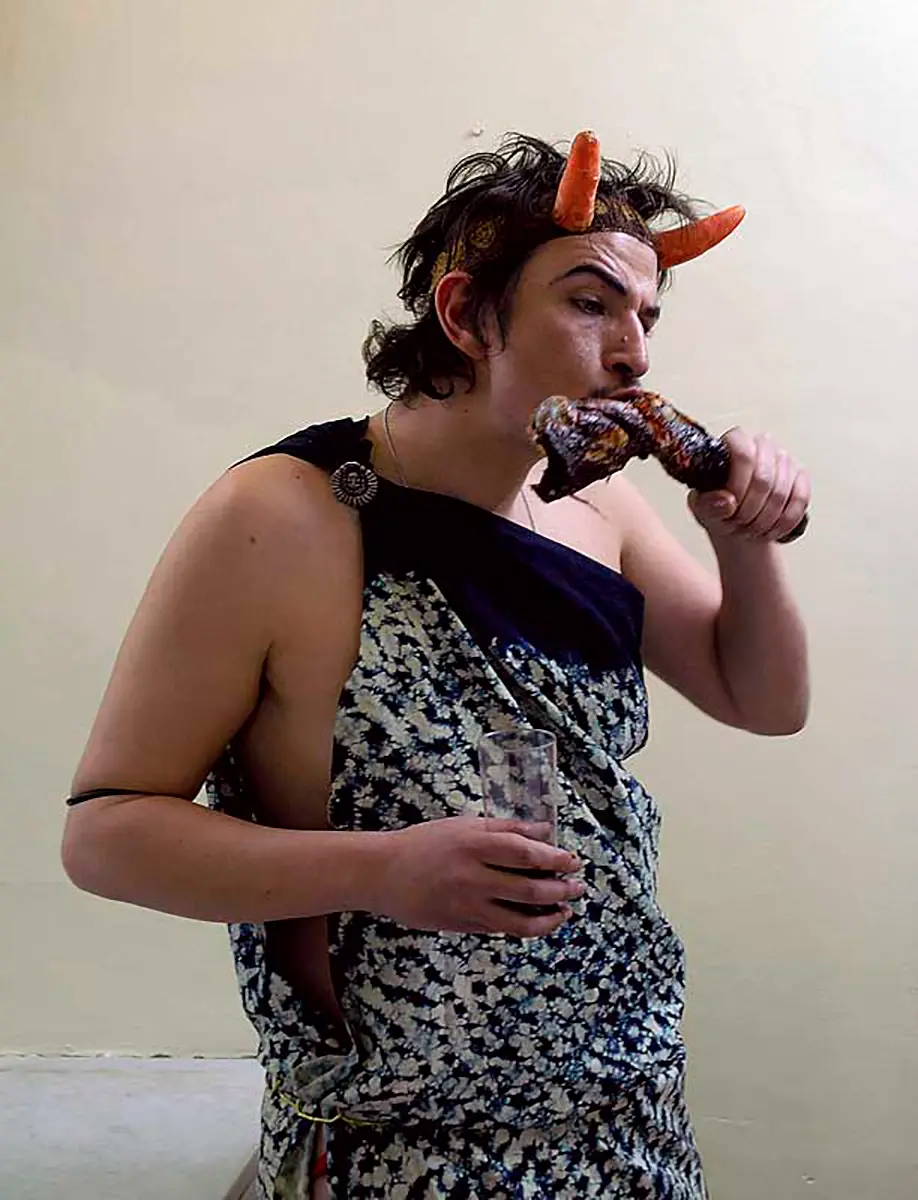
Mostly, Jacoby’s production is the fruit not of the individual but of group efforts. We see this in the Happening para un jabalí difunto (1966), a landmark in the history of conceptual art conceived in collaboration with Raúl Escari and Eduardo Costa. This “false” happening dealt with the construction of reality by the mass media, as the latter informed about the event even though it had not taken place. The work was reduced entirely to information about itself, highlighting McLuhan’s idea that “the medium is the message,” and also the idea of dematerialization introduced by Oscar Masotta—a theorist of the 1960s avant-garde—in the debates of the period. In 2010, the hundred-year-old Colmegna bathhouse (Buenos Aires) lent itself to the materialization of the happening; thus, the wild boar was finally consumed by hand, along with Mediterranean delicacies, by a group of feasting friends.
Unlike Chacra99—an experiment in living together with visual artists, musicians, photographers, poets, and designers, carried out at a farm outside Buenos Aires during the 1998-99 summer—Bola de nieve is a long-lasting experimental community intended to be self-managed by artists without the mediation of critics or curators. Established in 1998, it consists of a database organized according to affinities and free choices by the artists. It works on the logic of the “snowball”: each artist mentions two others, who in turn mentioned to more, and so forth. The site grows with the addition of new names and C.V.s, and it offers itself as a research resource on Argentinean artists. Bola de Nieve is still active, as is the START Foundation (Society, Technology, and Art), helmed by Jacoby and established in 1999. It focuses on the connection of knowledge into a kind of “laboratory of emerging culture” where artists and non-artists interact and open up their investigations to different disciplines.
One of the most resounding projects within what Jacoby calls “technologies of friendship” was Venus. This micropolitical experiment was funded by Jacoby himself, using the monies provided by a Guggenheim Foundation fellowship (2002). In this, he resembles Federico Peralta Ramos, who in 1971 spent his fellowship funds on “living”. Peralta Ramos’ gesture was justified on the idea that life itself is a work of art. A portion of the money was used to organize a 25-person banquet at the Alvear Palace Hotel in Buenos Aires. “Instead of painting a banquet, I gave a banquet,” the artist explained to the Foundation managers.
As a self-managed society, at its peak, Venus brought together 550 associates ready to exchange goods and services (material or immaterial). To join the micro-society one had to offer something on the Web, and it was through the Web that most of the life of the group articulated, although it also had a physical space.
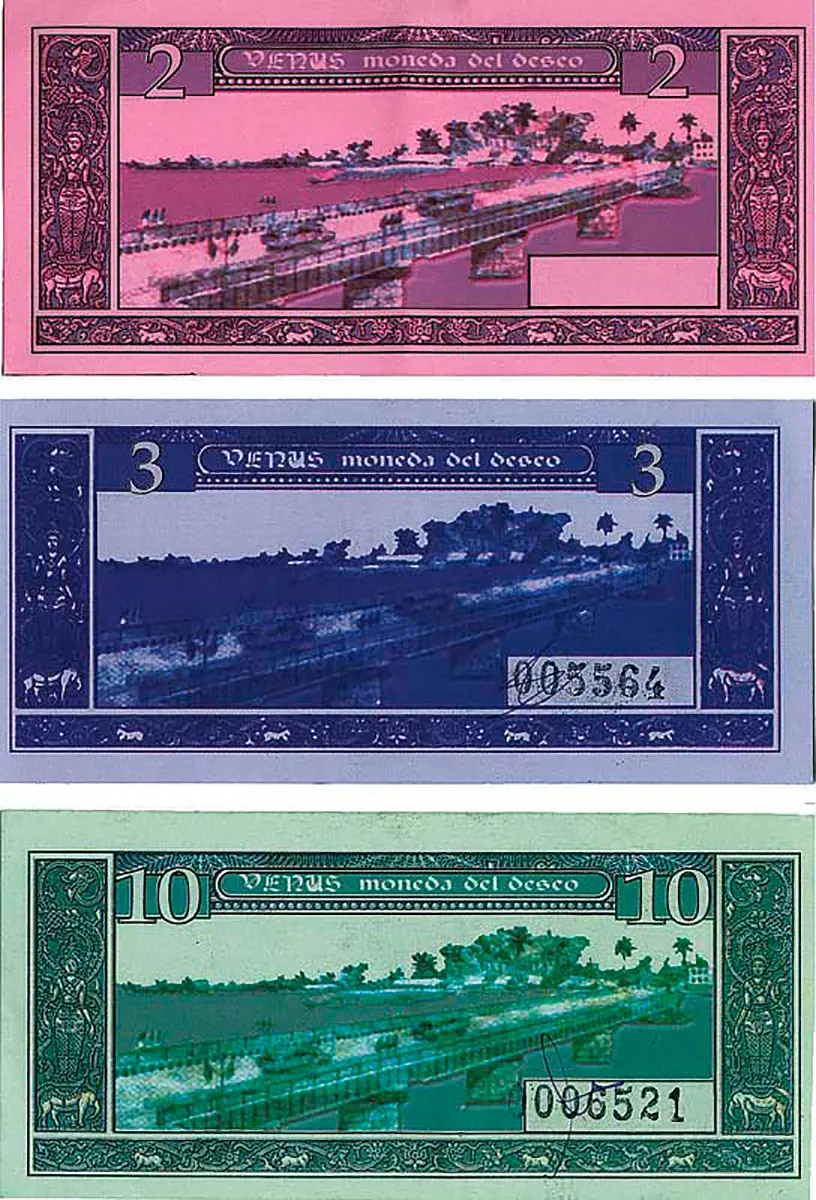
Started in 2001-2002 and active through 2006, Venus was a sort of barter club. Its beginnings coincided with a deep economic and political crisis in Argentina, a time when the corralito was imposed on the population: that was the metaphorical name given to the restrictions on the movement of funds deposited in banks. Outside the institutional markets, the Venusians exchanged goods and services using an “artistic” currency called Venus, the currency of desire.
Artistic production is the only one that can acquire immeasurable value. It wasn’t by chance, then, that the Venus project attracted the attention of Carlos Basualdo. Invited by the Argentinean curator, Jacoby presented the project at the Moderna Galerija in Ljubljana as part of the show Individual/Worthless (1999).
The current moment of Argentinean art and debates around contemporary arts were recorded in another one of Jacoby’s group projects: the journal ramona, which circulated in print between 2000 and 2010, putting out 101 issues (it continues to circulate electronically). Jacoby’s concept was to produce an inexpensive journal without images, with a polemic and confrontational bent. Artists were the authors of the notes, momentarily replacing critics in their usual function as writers.
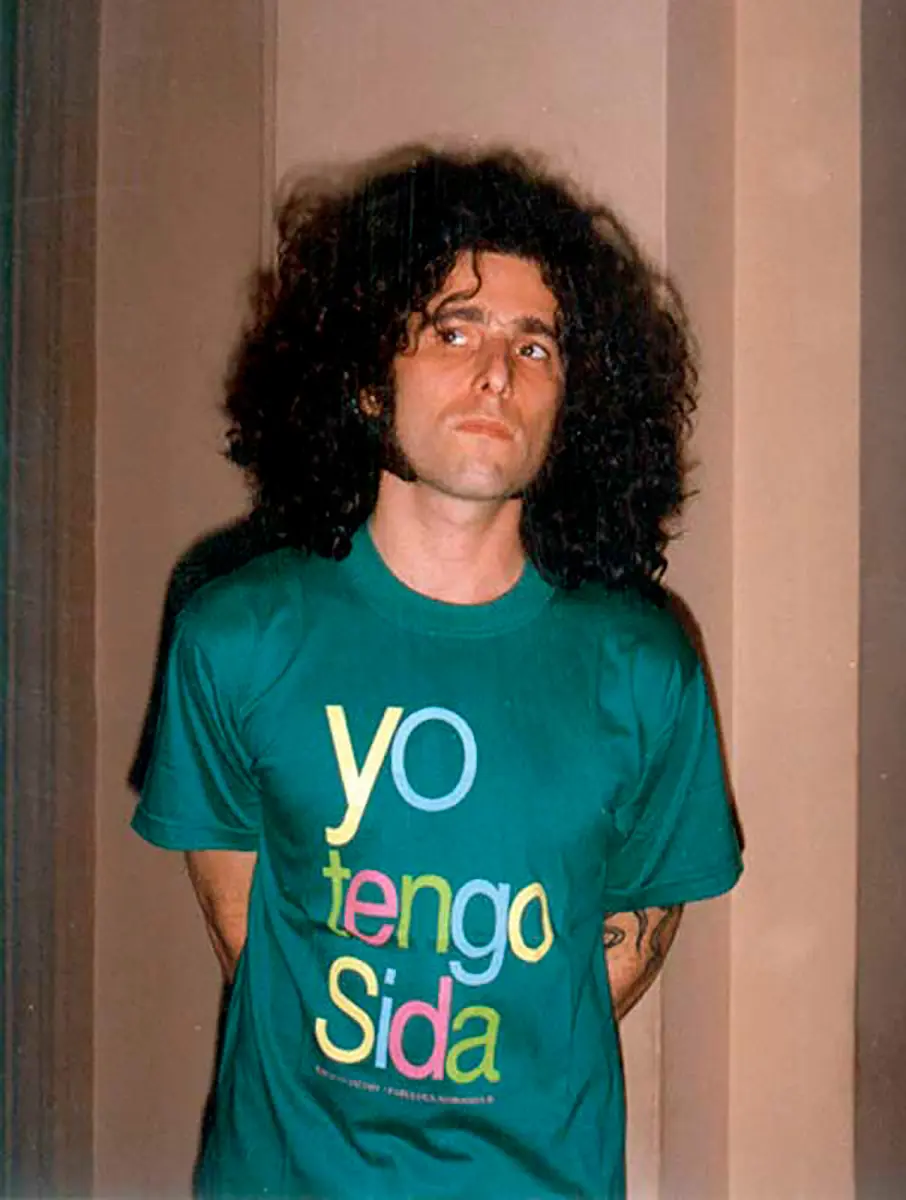
The Yo tengo Sida campaign, carried out in 2004-2005, also emerged from the path of friendship, understood as non-discrimination. The campaign consisted of the printing of that slogan on colorful t-shirts and was produced by Fabulous Nobodies, a creative agency formed by Jacoby and Mariana “Kiwi: Sainz.
LMdB (“La Movida del Diablo”), started in 2010, is also against discrimination. The title was taken from a letter addressed by the Archbishop of Buenos Aires, Cardinal Bergoglio, to the (cloistered) Carmelite nuns as part of a debate around the Marriage Equality Act, which for the first time in Latin America legalizes same-sex marriages. Targeting the Catholic Church, Jacoby unfurled in front of the National Congress, where the law was passed, placards reading “Satan, Satan, take off your cassock” and “Kids, they are crazy, beware of priests,” the latter a direct allusion to accusations of sexual abuse of minors raised against priests.
Continuing with the topic of friendship, Jacoby’s video-installation La castidad (2007) represents a co-living pact between himself and Syd Krochmalny, also a sociologist and artist. This work explores a basic social connection different from the sexual couple and from common friendship. “For a year, we put all of our resources together in order to live, study, collaborate in art, and establish reciprocity and mutual assistance in a variety of matters, within a framework of chastity,” Jacoby says.
The Strategy of Joy
Jacoby’s collaborative actions recall what Gadamer said: that art is, metaphorically, a “feast”, because it makes evident the need to be in contact with others. “A feast is a community, a presentation of the community itself at its most complete,” Gadamer says. Nietzsche had also emphasized the fact that art is the highest point of communicability between human beings. This is what Jacoby presents, in various ways, in each one of his experimental communities.
The idea of the feast in a less metaphorical sense appears in the organization of itinerant festive meetings like those of the Eros club and in his incorporation as lyricist into the rock band Virus in the late 1970s. “That was the only time I took part in something with great popular appeal. Never before and never afterward did I do anything with such massive repercussions,” Jacoby says.
Virus is part of what he calls a “strategy of joy.” There is nothing in such a strategy resembling banality or intranscendence. It was a means to get youth on the move, to have them communicate, and to overcome the paralysis provoked by the military dictatorship and its abuses. The goal was political, inasmuch as joy helps preserve our mental state in the face of inaction provoked by external violence. If the Mothers and Grandmothers of Plaza de Mayo was an undisputed example of opposition to such violence, the underground culture also contributed to subterranean exchanges in concerts and rock festivals. In synthesis, mothers, grandmothers, and youths attempted through different means to reconstitute social connections destroyed by terror. The pleasure of being together, of being active parts in a shared experience, was in itself a strongly transgressive political act, as it enhanced vital potency. This is reflected in Superficies de placer, the title song (with lyrics by Jacoby) of one of Virus’ records.
Disutopias
More than a body of work, we need to find in Jacoby a “body of thought” that spreads itself across the borders of the art institution. The artist no longer creates works, necessarily, but imagines and guides processes that are completed by others. “Making happen” is more important than making things.
In the manifesto presented in 1968 at the Instituto Di Tella Jacoby wrote that “the future of art is not linked to the creation of works but to the definition of new conceptions of life, and the artist becomes the propagandist of those conceptions.” What matters, beyond forms, disciplines, techniques, or supports is the conceptual ferment of proposals that reveal the state of the world with the greatest lucidity. This objective connects the experiences of the 1960s and the most recent ones, as all of them tend towards fusing into life itself; concretely, into life in the polis, taking this term in the Greek sense of an active environment that shapes the mind. All art is political inasmuch as it points towards a transformation of consciousness.
“The establishment of links of trust, of friendship, of giving, of exchange, of affinity seems to me,” Jacoby says, “the more genuinely political phenomenon in the Argentinean art scene of recent years.”
Attuned to his time, Jacoby uses social networks and experimental communities to create new social spaces, founded on an economy of desire and freedom to better human relationships. A betterment that can be made concrete, so that utopia morphs into what he calls “disutopia”: doable, accessible, real. He defines the Venus Project as a “reasonable phalanstère”, a community that does not appeal to impossible concepts but can realize programs for action while inventing itself.
NOTE
1. Roberto Jacoby, El deseo nace del derrumbe. Roberto Jacoby. Acciones, conceptos, escritos. Edited by Ana Longoni. Barcelona: Ediciones de La Central in collaboration with the Museo Nacional Centro de Arte Reina Sofía, Madrid, and Adriana Hidalgo editora, Buenos Aires, 2011.
ELENA OLIVERAS
PhD. in Aesthetics from the University of Paris. Aesthetics Professor at Universidad de Buenos Aires. Member of the International Association of Art Critics. Numerary Scholar at Academia Nacional de Bellas Artes, Argentina.