
New Production Structures, the first solo exhibition by artist Adrian Melis (Havana, 1985) in Spain, addresses the failures of Cuba’s system of production from an artistic perspective. A total of seven works—including installations, photographs, and videos—reflect the paradoxes of an unproductive work environment, as Melis proposes new production mechanisms generated through occasional unproductive states.
For one of the central works in the exhibition, Melis collected for four months the dreams of workers who would fall asleep during working hours in several government centers in Havana and other towns across Cuba. Plan de Producción de Sueños de las Empresas Estatales de Cuba (Dreams Production Plan in Government-Owned Businesses in Cuba, 2010-1212) shows a total of 300 dreams individually packaged in small wooden boxes. During another period of time, the artist bought the “excuses” workers would offer for not showing up to work. Each excuse was worth the equivalent of the amount of money deducted from the absent worker’s monthly salary, so the workers earned the same money whether or not they had gone to work. This later work titled El Valor de la Ausencia (The Value of Absence, 2009-2010) implied 114 collaborators who collectively missed work on several dates until the total days missed added up to 327. Both projects showcase the implausible work dynamic that is unimaginable anywhere else outside the reality of the Island, as they also inscribe Melis’ work within the framework of useful, social, and, therefore, political art.
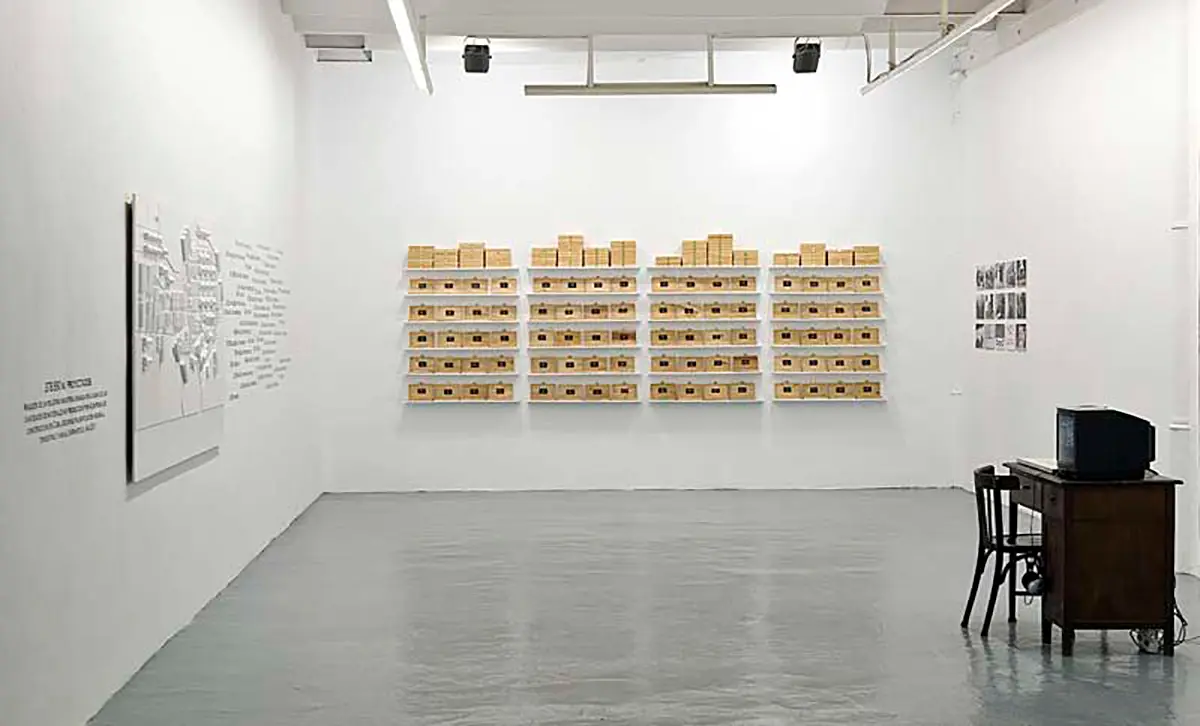
An integral aspect of Melis’ projects is the participation of collaborators that contribute to the collective creation of the content; one of the central aspects of that which Nicolas Bourriaud defined as relational art—although, fortunately, not sufficiently central in this Cuban artist’s work to be regarded as part of this current. In Plan de Producción… the collaborators assume their dreams as a form of production, as they selflessly commit themselves to work with Melis to share and describe the dreams they have during their naps at work. One of the collaborators, Jessica, an economist, shares her thoughts—in dream number 245—about why she sleeps during work: “… most of the time I have nothing to do, so I use the opportunity to take a nap….” Ironically, the result of boredom, lack of interest or incentive—or simply the consequence of feeling tired—300 numbered dreams are transformed into concrete productive performances by these workers, who are otherwise part of a highly unproductive environment, defined by uncommitted attitudes toward the workplace. Unlike other projects in which collaborators do not receive payment, in El Valor de la Ausencia, monetary remuneration is established not solely for financial gain but also for symbolic purposes. The project cost 3065,65 Cuban pesos to complete—the equivalent of 127,70 USD. This fact somehow reveals the creative methodology behind Melis’ projects: to create through the unproductiveness of others; or, in other words, to find positive results in an error. The social dimension attained by both proposals is corroborated by the fact that they occur within, and immediately have a bearing on, the social structure that generates them—independently of the resulting narratives that will eventually be presented to viewers.
Another work in the exhibition that also manages to cleverly address the theme of unproductivity turned productive is the piece titled 378,890 m2 proyectados (378,890 Projected m2, 2012). It consists of the design or mockup of an industrial park rendered with numbers that represent the materials that have not been produced by four construction companies in Cuba during 2011. The fact that it represents the design of an industrial park and not any other kind of construction, sharpens the critical commentary about the notion of progress that Cuba’s revolutionary model is based on. On the other hand, the work Stock (2012) suggests one reason—among others—behind the unproductive nature of government-owned businesses in Cuba. Twenty or so photographs depict abandoned warehouses and other industrial storage spaces. The title of each image speaks of the amount of materials that have been stolen from there. The paradoxical aspect of this work is that the images were taken by the very employees who ransacked these businesses. In this sense, the inclusion in the exhibition of the video titled Aquí Todos Me Cuidan (Here Everybody Looks after Me, 2007) is quite pertinent. An undercover video shows the director of a business who appears to suffer from schizophrenia and pretends not to notice the disappearance of materials. The monologue of the director becomes the other side to the story that showcases the convened condescendence and megalomaniacal attitudes found in these levels of power; thus completing the narrative of unproductivity of this exhibition.
I have saved for last the work that inaugurates the exhibition: Importación-Lote No. 1 (Batch #1 Import, 2012), precisely because it subverts the workings of the other pieces in the show. A work that could very well be the introduction to a new line of artistic inquiry, it presents a container with useless objects including a microwave and an air conditioner. The purpose of the project is to send these objects as scrap metal to Cuba—notwithstanding that by law the island restricts their entrance into the country. In this instance, the project does not include—as it does in other pieces—the participation of collaborators as the content of the work. It sets in motion an operation that pretends to disregard a prohibition to the fullest extent, no matter the absurdity of the gesture.
New Structures of Production conceptualizes the contradiction of the Cuban context through interactive and subversive methodologies, solid poetic, and generous doses of absurd humor. It is an exhibition that, while not completely able to elude the paradoxes of the current Cuban context, it is associated with themes that are universally understood and experienced. As a whole, the show reaffirms the artistic practice of Adrian Melis, as one of the most interesting works among the young generation of Cuban artists.
DIRELIA LAZO