
Latin America still suffers from a kind of Stockholm Syndrome. Enamored as we are with our former kidnappers, it is difficult for us to let go of our forebears’ aspirations to turn those tropical horizons into a reflection of the Old World. This sly, almost imperceptible distortion has survived as part of the region’s identity; it shapes our psychology and is present in our cultural expressions, our education, and our philosophy, especially among our countries’ ruling classes.
In that context, the show Edificio Metálico proposes itself as an examination of such fragile relationships. After a few month’s hiatus, TEOR/éTica reopens its doors to present this exhibition curated by Inti Guerrero, its recently named Artistic Director. The exhibition explores the (de)construction of the modernist ideal in Costa Rica, connecting at the same time the country’s situation to a condition with global repercussions. The starting point is the Metallic Building, an emblematic architectural staple in San José. Manufactured in Belgium in 1890 and transported to Costa Rica in 1892, it belongs to an era dominated by construction in iron and metal. The Metallic Building is a tangible symbol of the nationalistic pride of a coffee oligarchy that sought to mingle with European elites, which is viewed as an archetype.
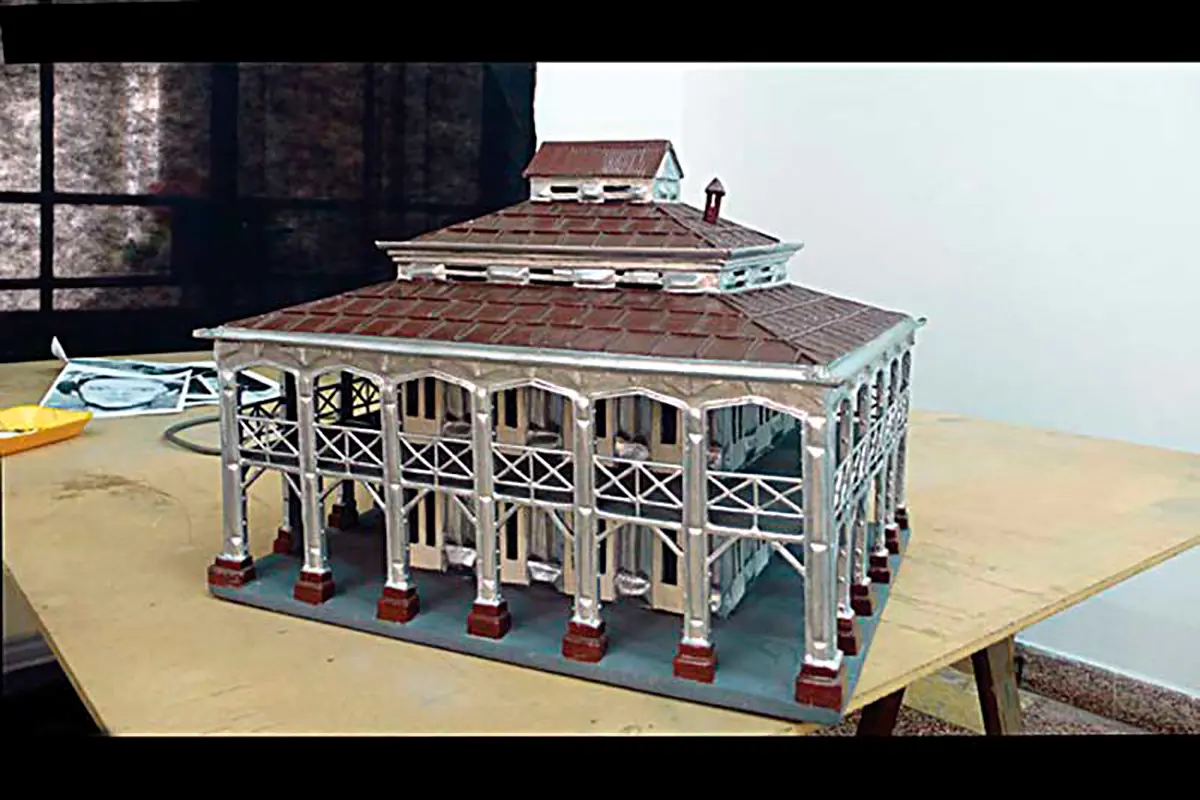
The show connects this to the Iron House, designed by Gustave Eiffel in 1889, the assembly of which in Iquitos, Peru, is a story almost identical to that of the Metallic Building. Gilda Mantilla and Raimond Chaves present images, sketches, drawings, and transparencies based on their research at the Amazonian Library in Iquitos, located right next to the Iron House. The artists even found an architectural model of the house, seen here in transparency. Complementarily, their drawings showcase an abstract transcription of past and present strategies for economic development in the Amazon River basin.
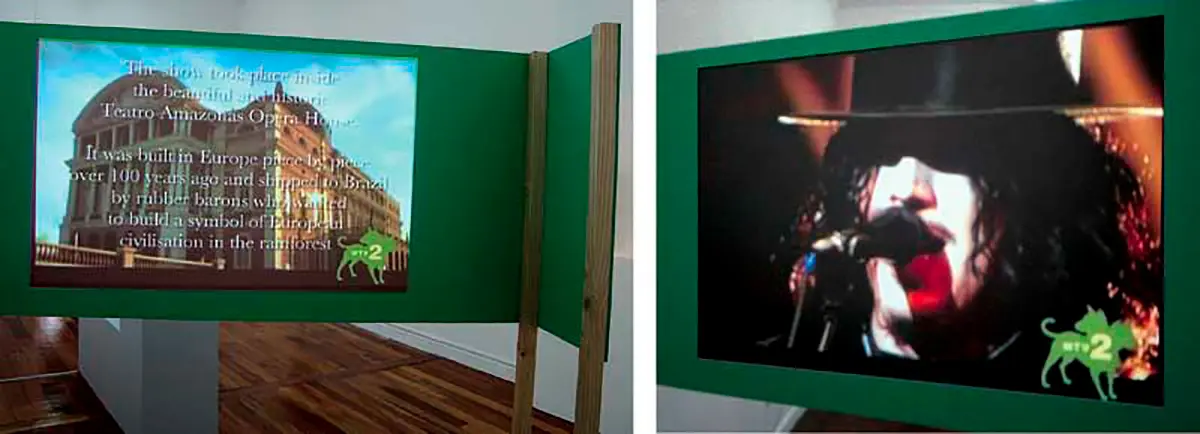
Another example comes from Manaus, Brazil, wherein in 1896 the Amazonas Theatre—a vast opera hall that emulated its Parisian counterparts—was built. In 2005, in an unprecedented event, MTV Brazil produced a concert of the rock band The White Stripes at that theater. In the DVD of this show, included in the exhibition, it is possible to appreciate the contrast between the subversive attitudes of a euphoric youth with the architecture symbolizing a hierarchical assumption of the self-restrained habits of the European bourgeoisie. The music and the young audience’s reactions disarticulate the project of enculturation as it was posited in the Nineteenth Century, letting us see how the so-called “savagery” of Amazonia’s natural environment seeps through into an institution established under the aegis of an authoritarian aristocracy.
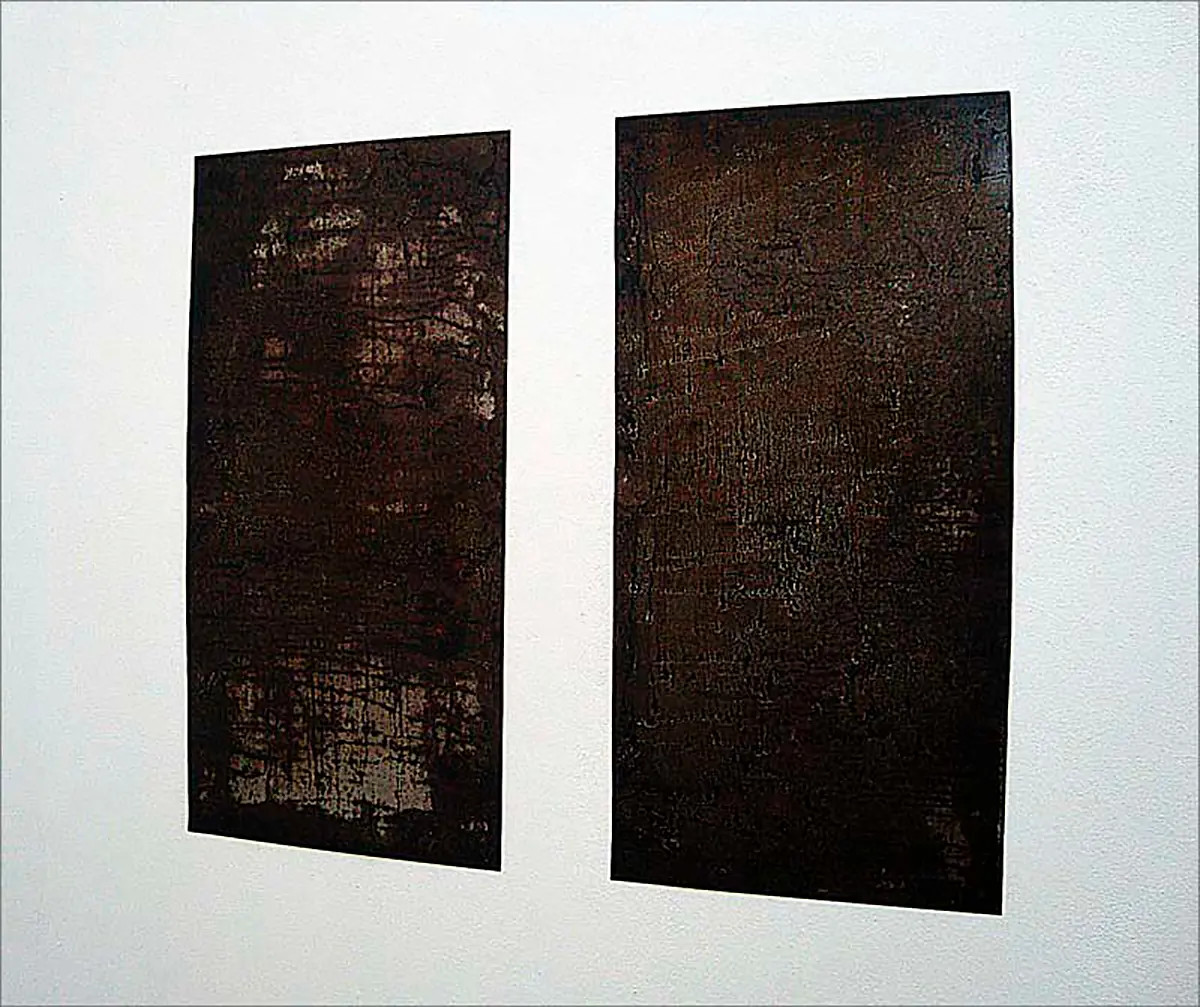
Francesco Bracci’s work rests with paradoxical placidity in the same gallery. His work consists of several metal sheets exposed to various weather and atmospheric conditions in Costa Rica. Rusting and different colorations are achieved through the effects of exposure to the sea and to volcanic gases. The artist comments that a good part of the success of his works is based on his relinquishing control over the result, in steadfast opposition to any attempt to dominate nature and exercise control over it, including human nature.” The process allows for a multitude of variations in terms of final results, without any need to force an aesthetic. Valuable in Ricci’s art is the use of Costa Rica’s own natural resources to achieve these effects. In turn, its inclusion in this show forces us to question the viability of using metal in tropical architecture. Both the physical construction of the Metallic Building and the control it represents are confronted in this critique.
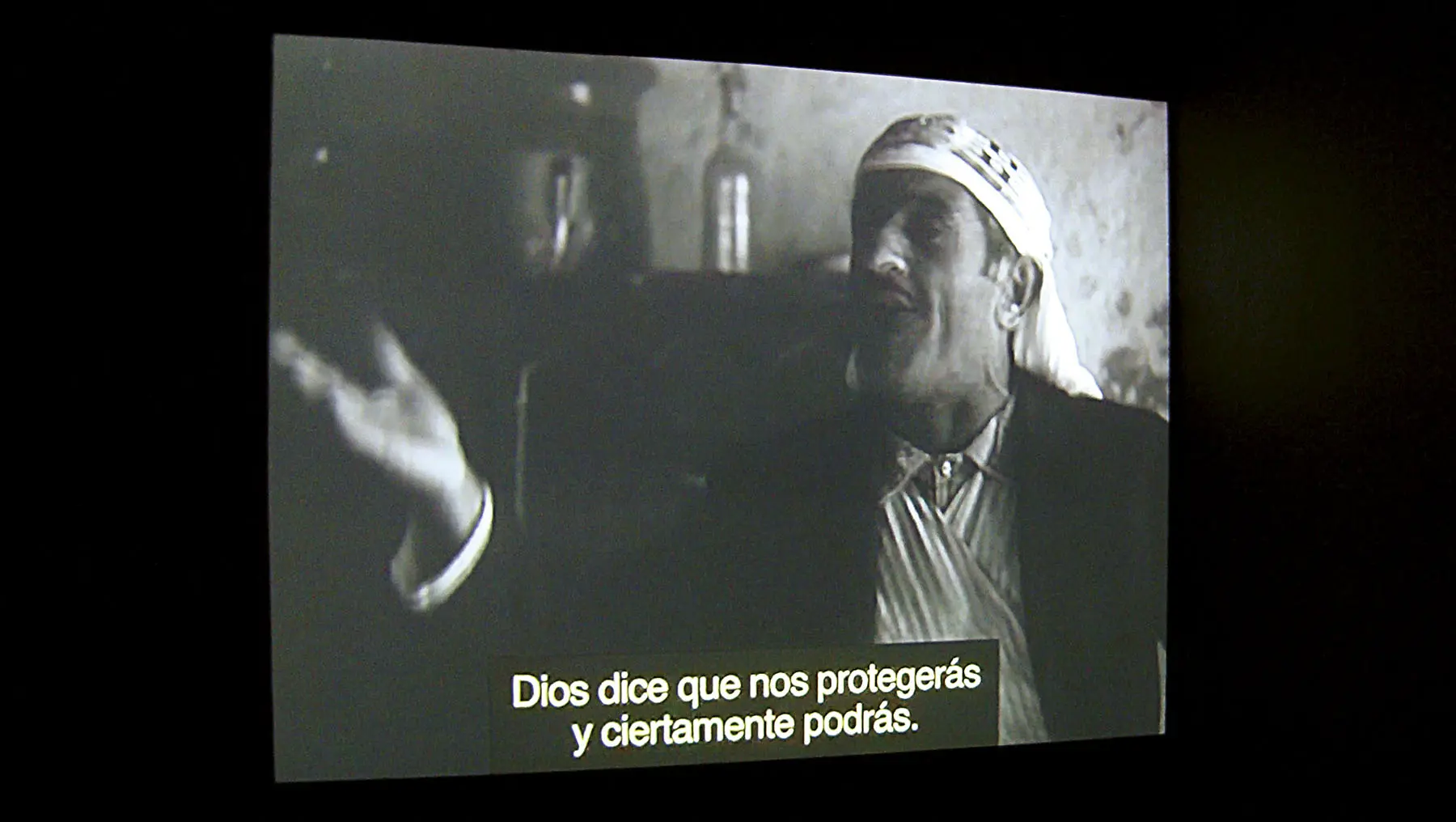
As the site of a pedagogical institution, the Metallic Building contributed to the establishment of European Modernist ideals in Costa Rica. Clearly, the European-imported educational system played a central role in the molding of generations of Costa Ricans, who assimilated an education-for-exclusion that argued for a homogeneous, controlled kind of society. Thus the country’s difficulties in shedding old attitudes. Ossama Mohammed’s short film Step by Step (1977) illustrates this in a different geopolitical context and for a different period. Using testimonials, the film, projected in a dark space inside TEOR/éTica’s main gallery, underlines the ramifications of an education linked to State and religious ideology. The intimate setting results in emotional assimilation, as the stories visually narrated by Mohammed, are harsh revelations about the Syrian context in the late 1970s. Although it focuses on the case of a Middle Eastern nation, the situation is comparable to that of Costa Rica in the Nineteenth Century.
This small Central American nation is still struggling with the paradox of a strong European influence against a muted pre-Columbian legacy that is rendered invisible, and the pressures of the search for a cultural niche of its own. Speaking of “Costa Rica’s own” opens up a tangled web of contradictory references that stretch and tense up the cultural matrix of a country perceived as “white” (read, European) within its sphere of influence, and which has contented itself with its “homogeneous” self-image. As Virginia Pérez-Ratton correctly explains, “Costa Rica has a peculiar relationship with its own identity, a topic it rather avoids, as it assumed it has none.” 1 After the independence movements that liberated Central America from the Spanish crown, such transformation resulted in autonomous governments but not in emancipation from the utopian desire to belong to the so-called “civilized” world. Devoid of significant pre-Columbian past, those who assumed power in the new republics chose to import the traditions of their former colonial masters.
In this way, the exhibition Edificio Metálico, perhaps unwittingly but in a clear and loud way, posits a question: Who kidnaps whom? In this story, are we limited to being the victims of the kidnapping, or do we also have a role as kidnappers? In the case of Costa Rica, while it is true that the theft of our resources and the imposition of foreign habits were part of what reached our shores with the first wave of colonizers, centuries later it was we (and perhaps we still are) who imposed alien aesthetic conceptions, adopting and taking from European thinking selected products for the construction of a “new” identity. It could be argued that this situation is due to the involuntary indoctrination mentioned above, which makes it difficult to understand from where is it that such an “affect” comes, whether from the stimuli inserted as guidelines to follow or from an attitude so entrenched that we promote it ourselves.
In that respect, Costa Rica and Latin America are not isolated cases, and Edificio Metálico alludes to events that are geographically distant but in other ways close to the region’s situation. The DVD of Leon Gasde’s film of a concert held in 1974 in Zaire (now the Democratic Republic of Congo) shows, in images of a recently-liberated people happily dancing in Kinshasa Stadium, the government’s efforts to project the image of a solid and progressive nation. As part of the legendary ensemble Fania All-Stars, Celia Cruz and Héctor Lavoe were present at that event, set against a Nineteenth-Century European modernist architecture. The connection is dual: salsa music comes to Africa and Latin America makes an appearance, while at the same time a shared identity is discovered by those in charge of promoting public policies, who in both regions used architecture to create material evidence of their ideals and their desire to be associated with a supposedly more “developed” civilization.
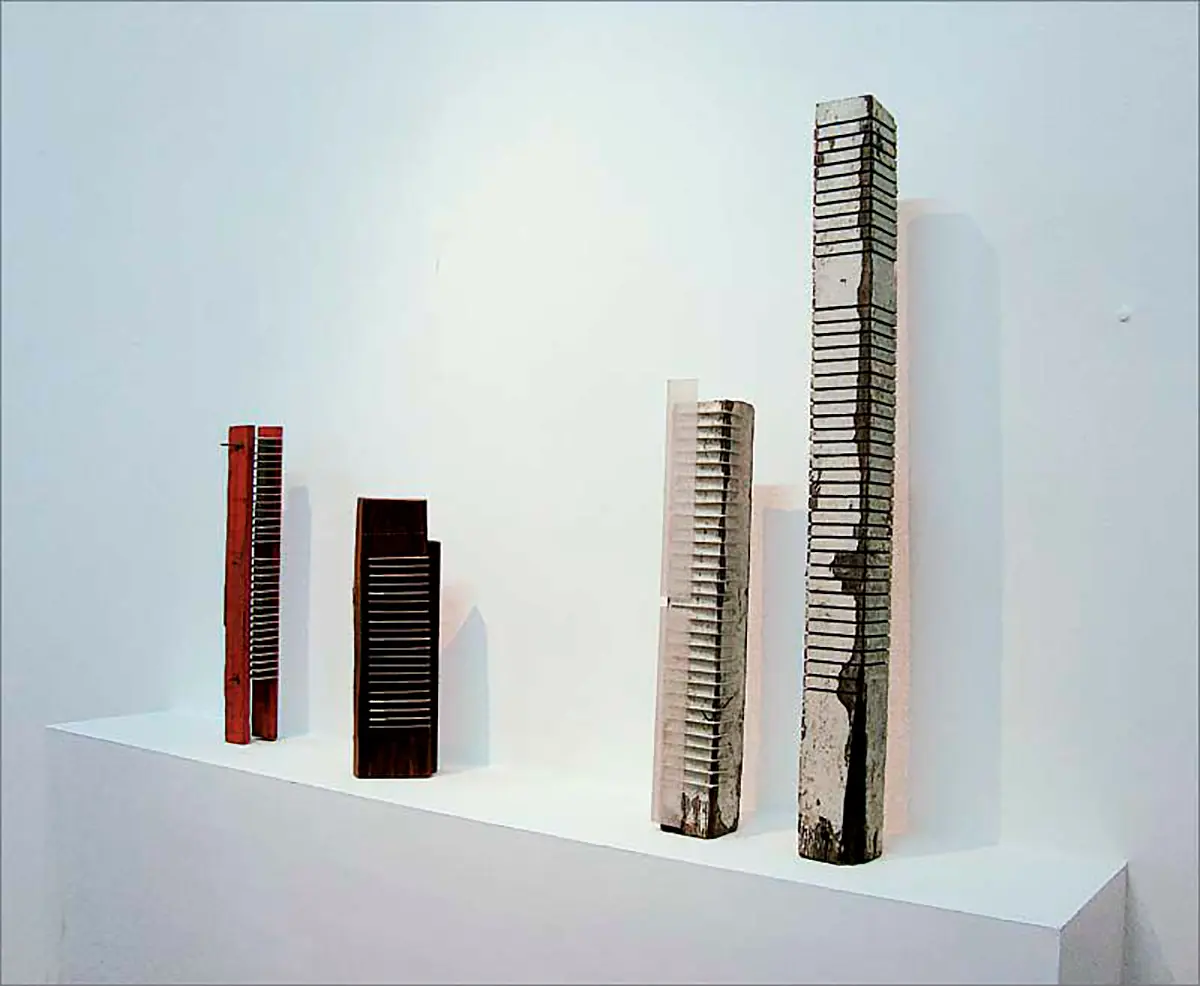
Edificio Metálico alludes, precisely, to the uses of architecture as a material symbol of development, or, from a different perspective, as the propaganda of nation-states seeking to project the image of progress connected to the “first world”. At the same time, the exhibition brings to the fore the failure of such a concept. Ramón Zafrani comments on this in regards to the current situation in Panama. His architectural models are made from wood that has been salvaged from American homes in the Canal Zone, which are being torn down. The installation of these models refers to Panama City’s urban landscape, to a Punta Paitilla that could very well be compared to the skyline of Miami or Atlanta, or even Dubai and Singapore. Zafrani builds in this way a beautiful metaphor, revealing the loss of a good portion of Panama’s history as buildings are erected following aesthetic principles that, once again, seek to connect with the first world’s great financial and urban centers.
The tight connections between Panama and the United States are visible in those two aspects. On the one hand, the history of the country can not be understood without North American interventionism yet, on the other, with the demolition of those houses there is an attempt to relegate, and even to erase, that presence. In contrast, Panama City’s skyscrapers are the ineluctable legacy of North American hegemony, which in turn was perhaps the cause of that desire to belong. If, for many, Europe was the aspirational ideal in the Nineteenth Century, the Panamanian case is an example of those countries that seek, by means of material expressions, to establish links with current economic powers, revealing in the process the reach of a Stockholm Syndrome that in this century has only changed the object of its affection, but not its nature.
Taking this into account, and without intending to censure the process of Westernization that founded our society, Edificio Metálico makes viewers aware of how deeply rooted is that presence. It does so from a standpoint that promotes acceptance in order to overcome the Stockholm Syndrome, without arguing for the need to extirpate it painfully, which would constitute an affront to memory. It presents as an examination of the past, both local and global, intended to promote reconciliation and the achievement of new socio-political formations in the future.
The exhibition understands that the Metallic Building is not solely a feature of San José’s cityscape or a legacy of the Nineteenth Century, but a local element that transcends its history and origin. Its appreciation resides in the intangible values that the passage of time and its many uses have given it. Nevertheless, this transformative process occurs in the appropriation of what many would consider external, by thinking of identity as something that lies beyond a given cultural legacy and is more an open denomination built on the basis of the appropriation and reconstruction of the concept of a place and its identifiers. It is then a question of examining the concrete situation with this re-conditioning as our starting point, assessing links to the process of colonization and modernization, but making sure not to fall into the pitfall of idealizing “the foreign” and at the same time taking into account the many parts that give shape to “what is ours.”
NOTE
1. Virginia Pérez-Ratton, “Interview, 2002”, en On Curating: Interviews with Ten International Curators. Ed. Carolee Thea and Thomas Micchelli (New York: Distributed Art Publishers, Inc., 2009), p. 109. Free traduction.
LEÓN MALAVASI LACHNER