
Once again a New Museum exhibition is more important for its intentionality than for its accomplishments, which is to say it continues to fulfill its long-standing promise to the public of pushing the edges, whether in fact an edge even exists. So I am puzzled as to why the NY critics criticized this second (as well as the first in 2009) “Generational” Triennial for what was not achieved rather than in opening up the successes and failures to disclose the insights provided—by which I do not mean only the art!
At the center of a curatorial selection process, especially among younger artists, is the ability to correlate intentions, themes, and even rhetoric, to the objects selected. And here I do agree with the overall judgment of NY critics; that curatorial ability was lacking when it came to much of, but certainly not all of, the art selected and especially for the rhetorical claims made for it. Little news there! I only wish the New Museum fully realized their consistent pattern and pitched fewer hyperbolic claims at us, or at least grinned or winked at us a little. But neither should their overreach obscure the strengths that are here and within the museum pedagogical structure, one which has much influence because Eugenie Joo is a curator who evolved from roots in literature and is the museum’s Director of Public Programs.
One accomplishment to celebrate is that nine individual artists from the thirty-four artists, groups, and collectives chosen to represent a global orientation are from Latin America. That said, we also learn that geographic and ethnic markers are not as much in evidence here as would have been found in the global art of the late 1990s and the first few years of the 21st Century. For instance, specifically declared issues of global identity are fewer, and when they are the specified center they do not work as well as those where global theory forms the background understanding and functions as a vehicle into larger concerns.
Unfortunately, one consequence of that situation is that as art addresses a more generalized human condition it often drifts into worn strategies claimed as new and somehow, rather nebulously, to be of a more current social relevance. That’s where many of the fissures occur here, between claims and results, gaps that are compounded by the post-semiotic belief that words stated somehow have meaning through mere declaration even when unhinged from actualities. The exhibition press release and catalog—documents of public desire and self-understanding—are filled with such unsubstantiated claims. This is not merely academic nit-picking on my part. When such disconnects exist, the rationale inadvertently defaults to taste and power substituted for discourse. Ironically, the exhibition proudly advertises its emergence from a distributed network of worldwide dialogues and people. Apparently, we still have much to learn in managing our shifts to less hierarchical structures in relation to our other professional needs.
Both works by Brazilian Jonathas de Andrade use images from specific places and geographically grounded projects but speak to a general sense of historical amnesia and displacement. The background global theory is the “glocal”, the intersection of specific localities with generalized global concerns such as borders, urbanism, communication, identity, and immigration. But what is interesting are the ways this both succeeds and fails, often at the same time across two different works and strategies and the rhetorical fissures that frame each project.
His 4000 single-frame pictures of 4000 men from the streets of Buenos Aires (4000 Shots) with each bust shot appearing for a second or less and merged into a 60-minute loop, has little to do with being on or from the streets of Buenos Aires. The discontinuity created by the crazed pacing does correlate to the title of his larger project of which this is but one part: Documentolatinamerica—Conduçao à Deriva (Driving Adrift—Latinamerica Document). We are neither located nor relocated and the work succeeds at the level he desires. But the same effect is achieved in his larger work Ressaca Tropical (Tropical Hangover) through a different strategy. Here he mounted 100 plus photos of his hometown, Recife, Brazil, gathered from different time periods and installed them along 20 meters of wall space with pages from a found journal hung indiscriminately and bearing no relation to the photos. However, the strategies and success for dislocation run very counter to the curatorial claims that the work celebrates such specificity as “the soul of the city” and “the power of the city to remake itself.”
Both projects are of a generalized dislocation, archives of memory that never rise to existential angst, established through tried and true strategies that remain effective. (Old does not mean irrelevant.) The difference is in the intention; the first work holds the weight of the claims from the artist, while in the second the curatorial claim for specificity, or even tension between specific locale and archival fever, is overwhelmed by a successful generalized meaning.
One of the most interesting projects—and here we begin to see and feel the strength of Joo’s curatorial interest emerge—was the exchange project established by the Mexican artist José Antonio Vega Macotela under the generic title of Time Divisa, 2006-10. All his projects deal with value and exchange and often involve participatory barter between himself and some community within which he negotiates trades. Here he performs tasks requested of him by prisoners of a famous Mexican jail in exchange for conceptual assignments he gave them and whose physical record he then displays as objects. His actions were direct and with specific geographic and social location and unique individuals who controlled half of each separate project in time, yet they opened up into general conditions that were both personal and universal/global. I was most touched by two very personal requests: that of one prisoner for a glimpse of a blond-haired woman, and another to witness the first steps of his son. In return “El Güero” stole pieces of clothing from men being released, while “El Superaton” collected and cataloged the cigarette butts in his cell, both archives on display in the museum.
Yet Vega Mocatela’s assemblage of jars, buckets and plastic hose used to construct a symbolic tequila distillery with oblique references to Mexican oil production (We Have Gasoline) failed to summon the necessary visual and intellectual strength to make the connection effective. And here, as in so many places in the exhibition, we’ve seen it all before, for many years. In such cases, this targeted group of youthful “Generational” ungovernables became, in places, governed by the straight-jackets of prior art history.
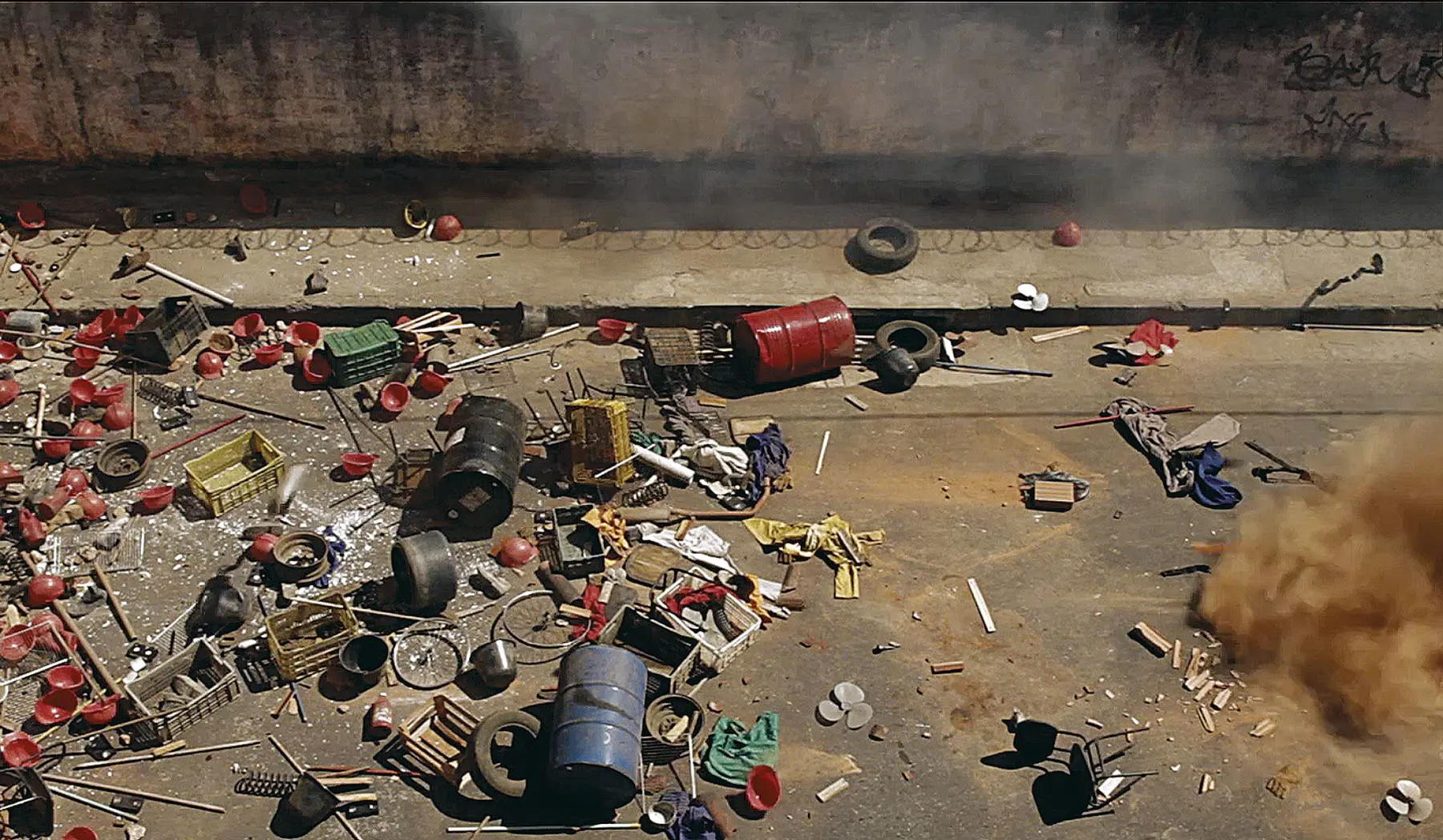
One of the most oblique works held everyone’s attention throughout. Cinthia Marcella’s The Century (2011), done with Tiago Mata Machado, is a nine-and-a-half-minute color video created through a lock-shot on a section of the street from a bird’s eye view. For half the time people, unseen off-stage vehemently and noisily hurled and crashed a huge amount of materials into the street, to the opposite side of the camera frame, as smoke made its way slowly across the screen. The second half of the video reversed the direction. The oblique and entirely open field of reference allowed all of us our own stories, whether or not we recognized the possible references to work via the construction materials and an excessive number of construction worker’s hard hats.
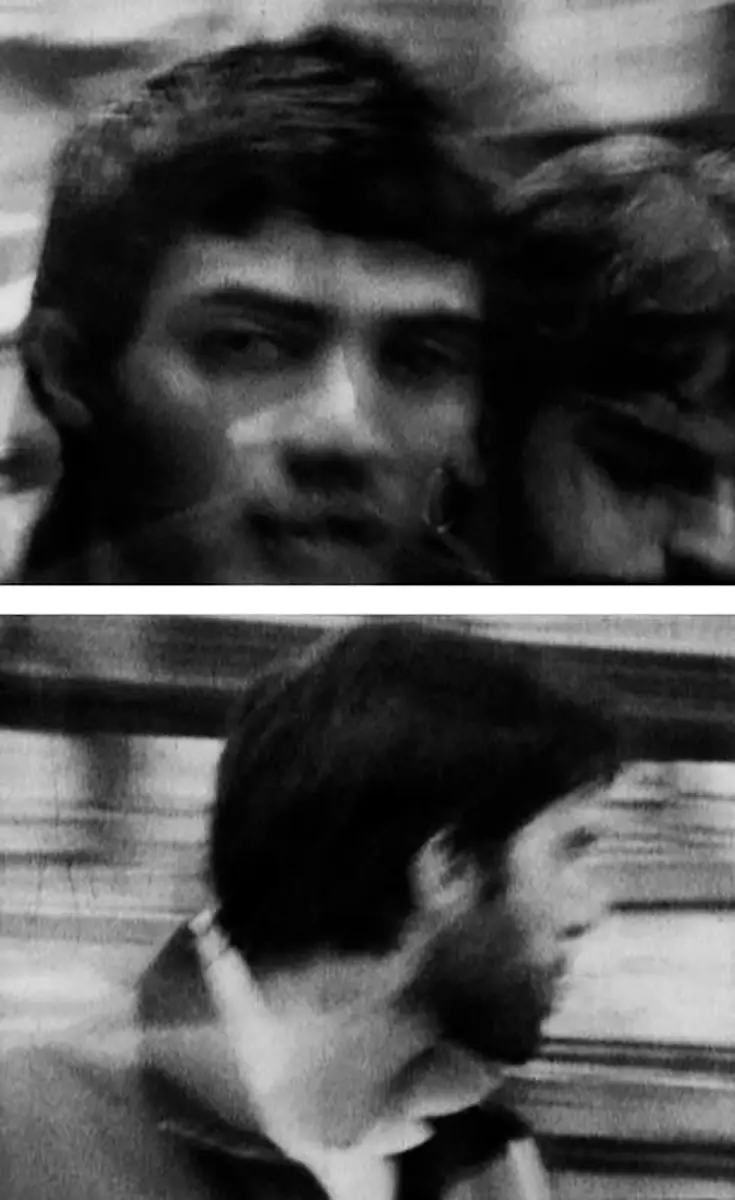
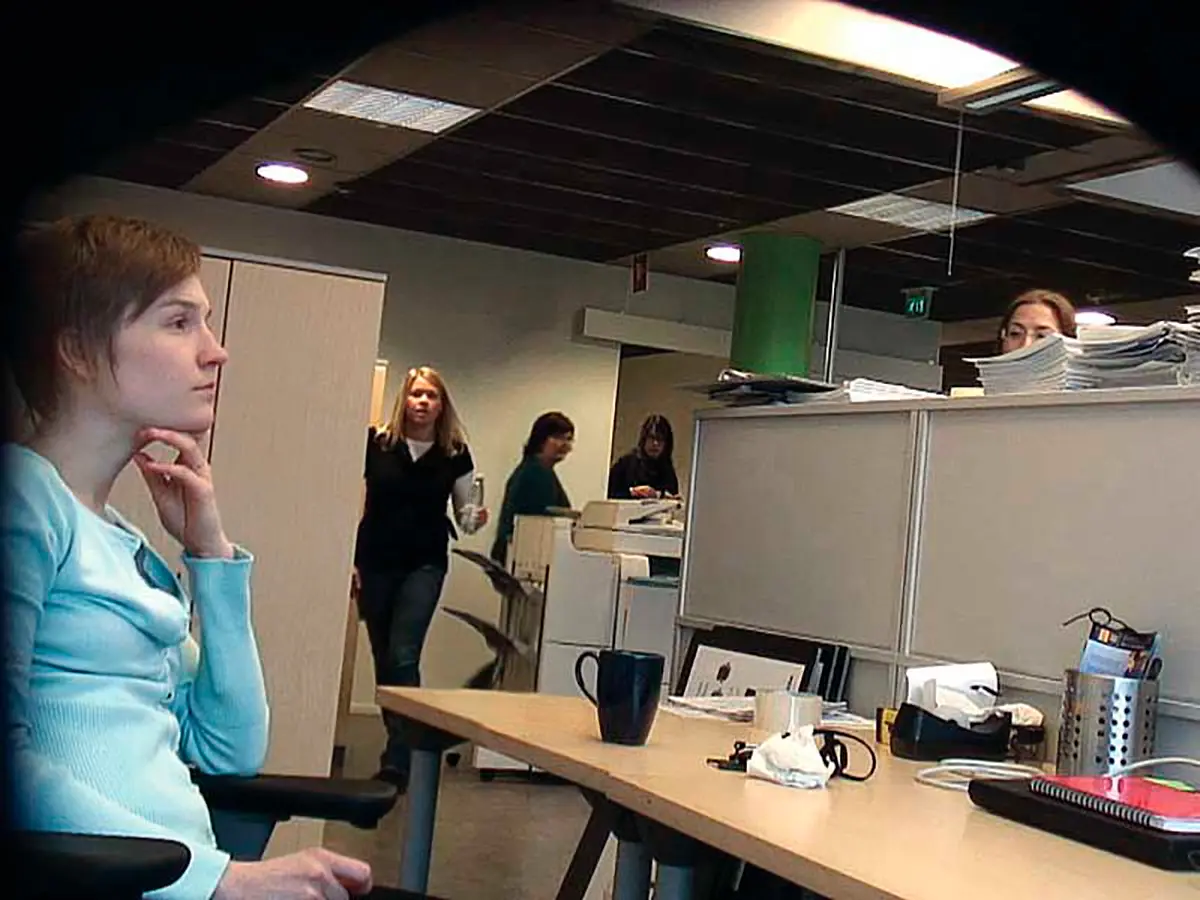
But the specificity of place could also work well. Enthralling was the video documentary of the Helsinki-born PilvaTakala whose interventionism relies completely on disrupting specific work locations to expose boundaries and the threat such exposure poses to what passes as normal social order. The unfolding drama of eventual fear and anger by fellow employees over her doing nothing for thirty days as a new employee in an accounting office (Trainee, 2008) was mesmerizing and revealing.
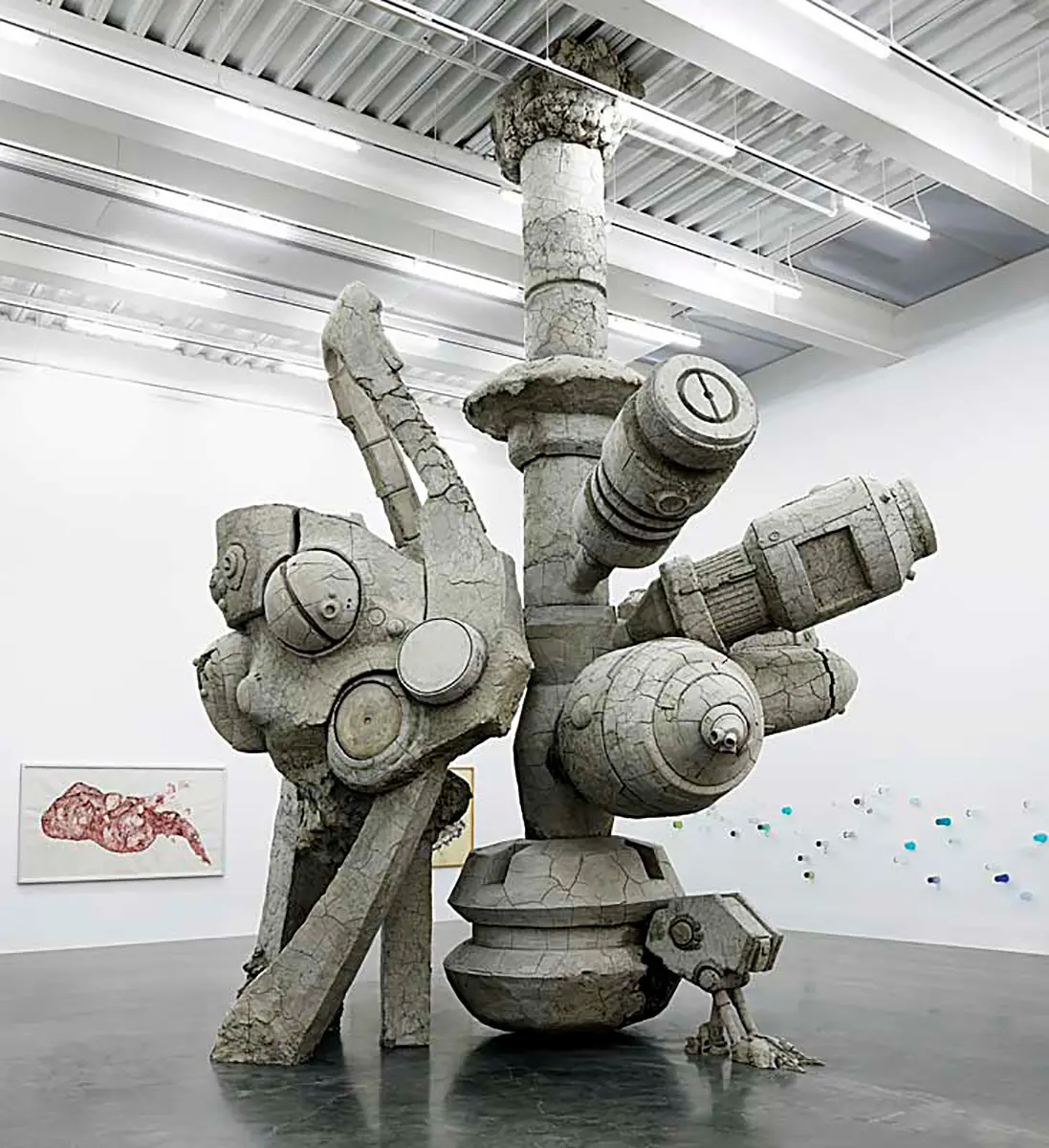
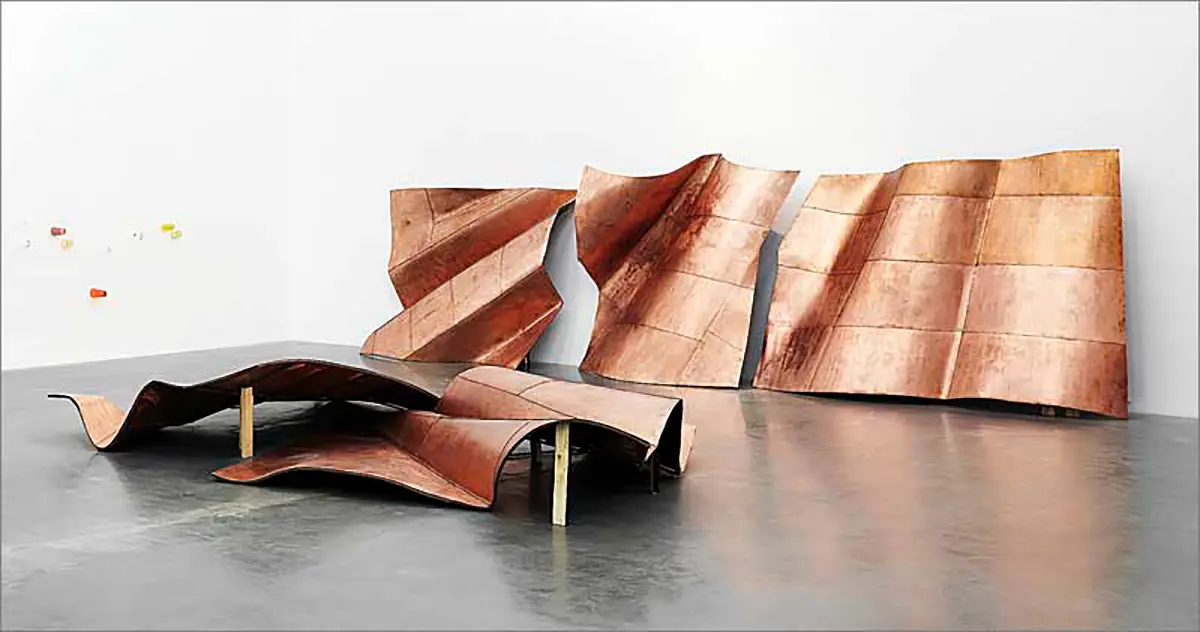
The real strength of the exhibition, as well as its weakness, seems to stem from the curatorial orientation to the didactic. There were startling exceptions but usually, the impact of the objective quality relied more on the informational association. The five large copper pieces of seemingly abstract sculpture by the Vietnamese-born Berlin-based DahnVo became significant when you knew that We the People are scattered fragments for a full-sized piecemeal casting of the Statue of Liberty made in China. What really works here are not the monumental, floor-to-ceiling clay abstract forms by the Argentine Adrian Villar Rojas because vague evocations seem too weak, too removed from the human condition. Even the Invisible Borders Trans-African Photography Project, ostensibly centered on artists challenging borders, degenerates into global tourism without the operation of historical knowledge and sufficient criticality.
Ironically it was some of the almost invisible and governing elements of year-long residencies, workshops, and salons by collectives and artists that seemed more useful and clear in their functional negotiations between specific issues and non-hierarchical processes. The action-research group “Public Movement” of Tel Aviv ran a salon series based on the relations and personal feelings towards Israel and Palestine in such ways as to engage and open dialogue, letting people establish their own process and position. The New Museum and Eugenie Joo are at their strongest by recognizing the limits to museum space as they teach themselves and us to function as a platform, or in their words, “Museum as Hub” in light of the newly emerging social powers of art. In this new environment, the shifting lines between powerful, even beautiful, objects, participatory actions, and necessary critical judgment will continue to elude and elide as much as it presents. But that’s really what should be “ungovernable” isn’t it, the dialogue?
RICHARD LESLIE