Among the most cosmopolitan artists to emerge from Cuba’s final Vanguardia generation, Agustín Fernández (1928-2006) ranks as one of Surrealism’s most discerning latter-day interpreters. Fernández cultivated an idiosyncratic visual language distilled through the erotics of desire and vulnerability, provocatively ratcheted up through contact first with the post-war Surrealist circle in Paris and, starting in 1972, with the gritty counterculture of downtown New York. The trajectory of his career, from the lyrical exuberance of his early work in pre-Revolutionary Havana to the coolly sadistic armored plates of later years, suggests rich assimilation of the artist’s Cuban inheritance and identity with the conceptual sophistication of the contemporary art world. Working betwixt and between more familiar currents of Latin American abstraction and nationalist paradigms, Fernández charted a sui generis course, and his oeuvre speaks subtly both to the condition of exile and to the canny perseverance of Surrealist tropes into the postmodern landscape. An artist who defies simple categorization, Fernández merits a closer look.
Havana: 1928-59
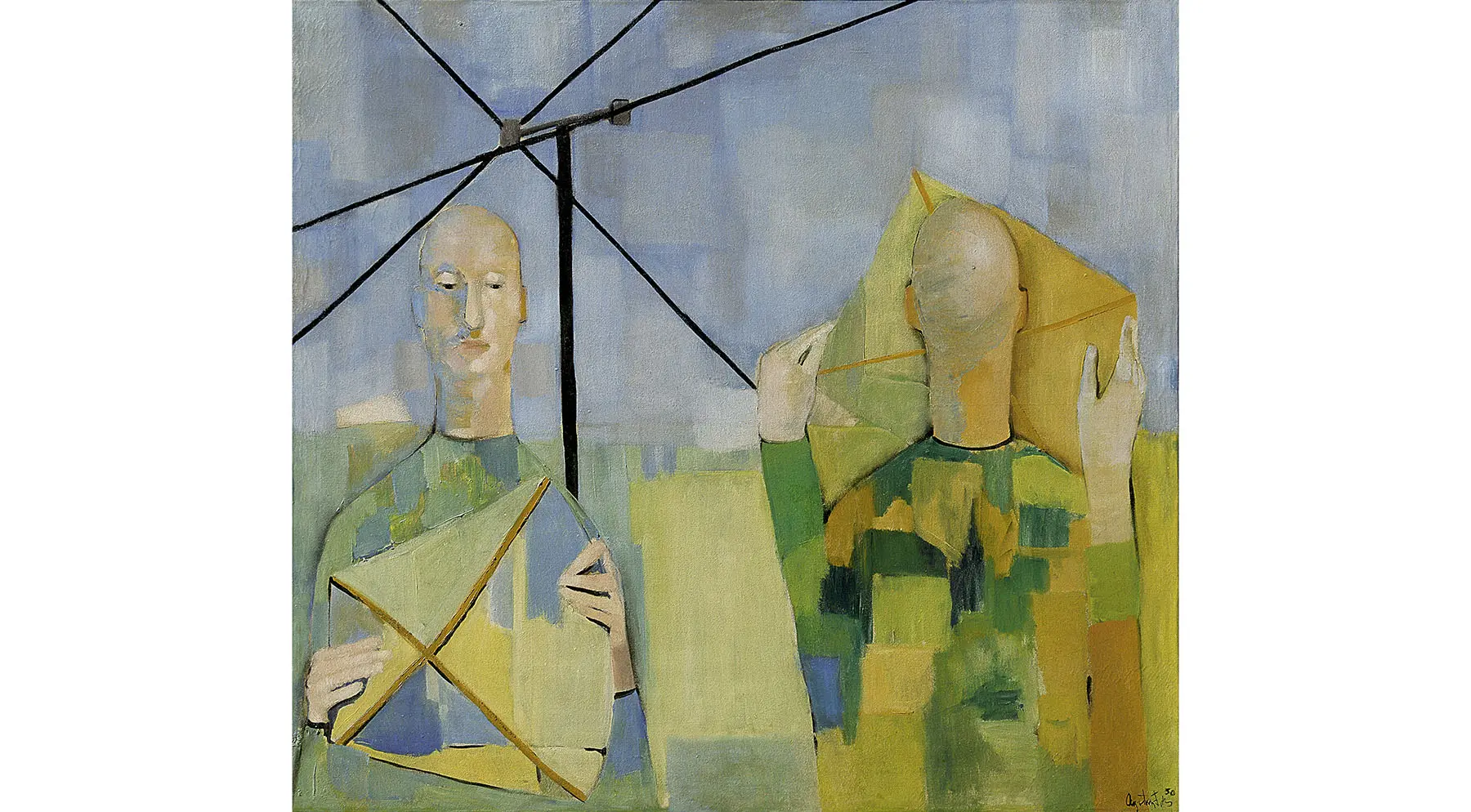
Born in Havana in 1928, Fernández enrolled at the city’s venerable Academia de San Alejandro in 1946, following the traditional path taken by many of Cuba’s historical vanguardia, from Amelia Peláez and Víctor Manuel to Mario Carreño and others of the Havana School. His four years at San Alejandro included a six-month period of study at New York’s Art Students League, where he enrolled in “Life Drawing, Painting and Composition” courses under the direction of George Grosz and Yasuo Kuniyoshi in 1949. “Kuniyoshi opened my mind to a new and exciting art world,” Fernández later explained, noting too the early revelation of seeing Willem De Kooning and Robert Rauschenberg at Charles Egan Gallery in New York.1 He would not cycle back to Rauschenberg until the next decade, but shades of Kuniyoshi’s pensive circus performers appear already in the early paintings of the 1950s, in which lush tonalities are ordered within a shallow, post-Cubist space. Flat-patterned planes of color create a rich, painterly surface in the elegant Los papalotes (1950) and Frutas tropicales (1953), characteristic works from the artist’s figurative period in Havana.
Much like the first-generation vanguardia in 1927, Fernández met with critical resistance from the Academy upon his return to Havana in 1950, his work rebuked for its essential modernity and rejected by San Alejandro.2 One-man exhibitions at the progressive Lyceum (1951, 1954) and the leftist cultural organization, Nuestro Tiempo (1952), nevertheless situated him amongst Havana’s newest vanguardia generation. Indeed, he shared his avowal of modernist principles with a critical mass of young artists and intellectuals in Cuba who similarly rejected the palm-tree tropicalismo of the past, notable among them the group Los Once (1953-55), who advanced gestural abstraction as an ideological tool. With Los Once and others from Cuba’s earlier vanguardia generations, Fernández participated in two of the bellwether group exhibitions of the decade: Plástica cubana contemporánea: homenaje a José Martí (Lyceum, 1954), also known as the “Anti-Biennial,” and the Exposición homenaje a Guy Pérez Cisneros (Lyceum, 1956).3 Yet although Fernández held the cosmopolitan horizons and the appetite for the contemporary art of his generational cohort, he largely eschewed the politicized climate of Havana’s art world, preferring from the beginning to chart a path independent of style or ideology. To a greater degree than many of his peers, Fernández strove to establish an international reputation, plotting out an ambitious exhibition schedule across Europe and the Americas. He was included in the Cuban delegation to the IV and V São Paulo Biennials, earning an Honorable Mention in 1957, and had solo shows in Madrid (Galería Buchholz), Washington, D.C. (Pan-American Union), New York (Duveen-Graham, Condon Riley, Bodley), and Caracas (Museo de Bellas Artes) between 1953 and 1959.
By mid-decade, Fernández had evolved an increasingly sophisticated color sensibility, and his paintings began to abstract from familiar subjects, often with erotic undertones and a more intense palette. Characteristic early works such as Jardín del cerro a mediodía (1953) and La silla (1954), for example, show attenuated vegetal forms reminiscent of the earlier work of Wifredo Lam in their proliferation of sensual, bulbous forms and lushly tropical iconography. As his work matured, Fernández began to temper the decorative organicism of such early works, further distilling his forms and evoking a more hermetic space. A masterpiece from this period is Landscape and Still Life (1956), in which luminous swaths of blues and greens describe a richly sensory, Matissean setting. Exquisitely rendered in vibrant washes of color, the chain of still-life components establishes a rhythmic passage through space echoed in the graceful forms of the enveloping landscape. In many ways, Landscape and Still Life marks the culmination of Fernández’s Havana years: the confident assimilation of a universal, modern language suggests his maturation as an artist, and the subjectivity of the landscape may in a general way anticipate the intense internalization of his work over the following decades.

Paris and Puerto Rico: 1959-72
In 1959, Fernández accepted a scholarship to study painting in Europe from the Castro government, precipitating his move to Paris at the end of the year and decision to remain in exile for the balance of his life. Neither a Batista partisan nor a Marxist revolutionary, Fernández was estranged from the new political order following the Revolution and took advantage of an early opportunity to leave, removing himself from the intellectual and ideological fallout of the early 1960s. Although he would retain an enduring sense of his Cuban identity, the condition of exile shaped the reception of his work much less in Paris than it would in the United States, a generation later. Like Angel Acosta-León and Agustín Cárdenas, fellow Cubans working in postwar Paris, Fernández distanced himself from the conventionalized tropicalia of his native country, re-orienting his work instead within historical and contemporary European paradigms. An adventitious early acquaintance with Simone Collinet, the first wife of André Breton and director of the Galerie Fürstenberg, initiated him within the remaining Surrealist circle; and he came to know not only artists, including Roberto Matta, Joan Miró, and Max Ernst but also writers such as Alain Bosquet and Richard Wright, then linked to the existentialist movement. Adopted by the latter-day Surrealists, Fernández showed with Francis Picabia at Fürstenberg (1965) and with Yves Tanguy, Salvador Dalí, Hans Bellmer, and Pierre Roy at the Galerie André François Petit (1966), aligning his maturing practice within an international and genuinely cosmopolitan field. The move to Paris coincided with a deeply introspective turn in Fernández’s work, and his deft movement through Surrealism’s visual and erotic repertoire provided clear direction to work that had become increasingly abstract by the end of the 1950s. As he turned away from the lyrical expression of his Cuban period, the elliptical erotics and sexual innuendo of the Surrealist tradition provided a ready medium through which to channel and intensify, his erotic vision.
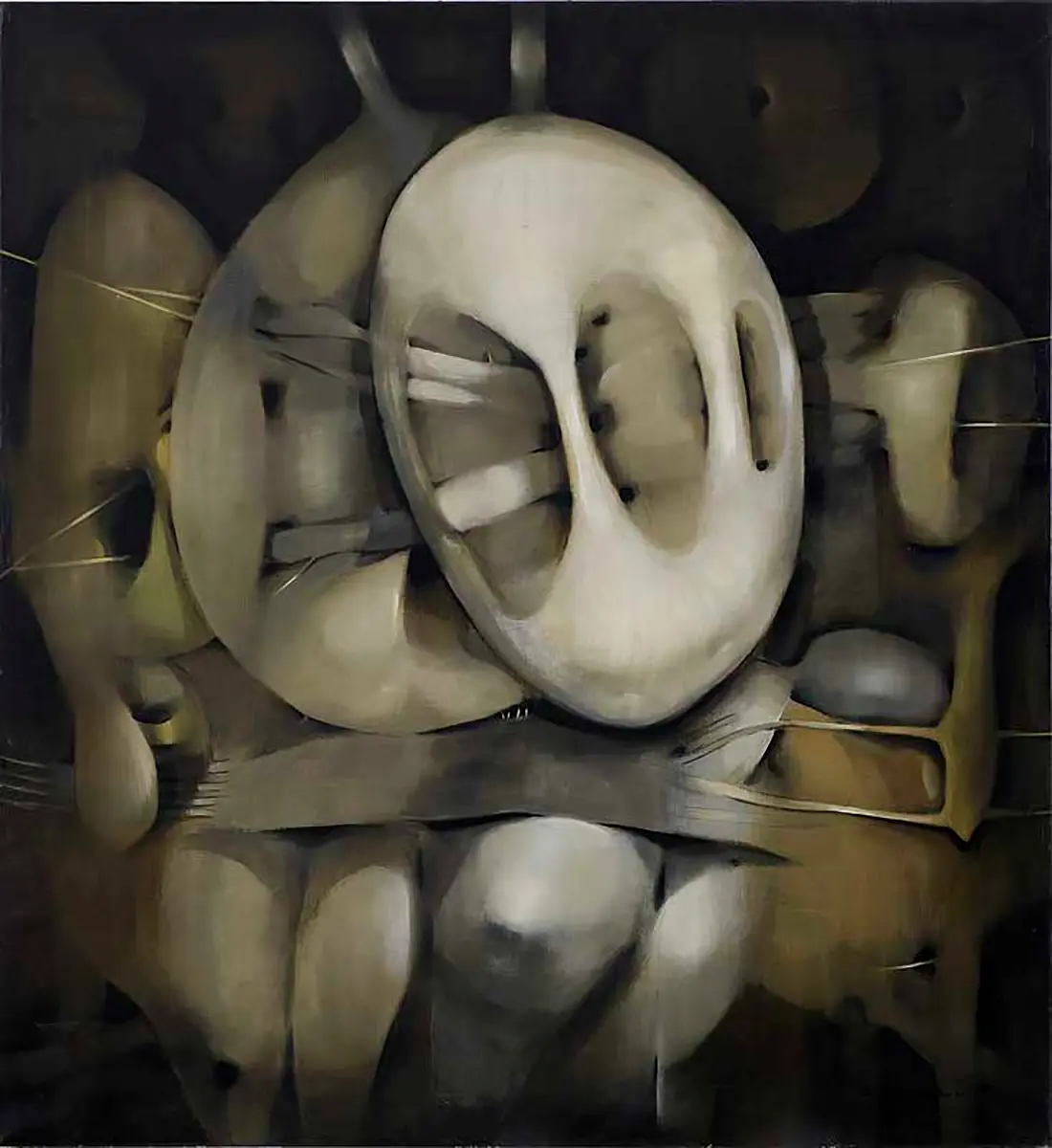
Yet Fernández’s proximity to the Surrealist circle predated his arrival in Paris, and works from 1959 already show a preoccupation with germinal imagery and a contraction of his palette into tonal shades of grey and beige. Fernández stopped in New York on his way to Paris and exhibited in October 1959 at Bodley Gallery, run by a protégé of the Surrealist dealer Alexander Iolas and at the time championing established figures such as Tanguy, Ernst, and Victor Brauner. Characteristic works from this time such as Untitled (1959) and the numinous Coquille-nu-espace (1960) still abstract from the natural world, but the suggestively gelatinous space and sensually organic forms anticipate the more explicit erotics of later years. The apogee of this interim stage, in which Fernández shed the literal figuration of his earlier career for more metaphoric and psychological imagery, is the monumental Développement d’un délire (1961), among the most widely known of his paintings since its cameo appearance in Brian De Palma’s erotic thriller, Dressed to Kill (1980). An abundance of free-form shapes vaguely evocative of a female body in pieces, inside and out, float in the painting’s shadowy ground, their darkened cavities offset by warmly illuminated flesh tones in shades that range from silvery beige to yellow ochre. Surrealist in its associative connotations of visceral desire and haunting, enigmatic subjectivity, Développement d’un délire exemplifies the nature of Fernández’s engagement with arrière-garde Surrealism, which he took not as a creative method or revolutionary ideology but simply as a permissive, visual trope. He would persistently reclaim this imagery of interpenetrating forms and sinewy threads throughout his career, often in close-ups and shielded by more protective armatures, but Développement d’un délire ranks among the earliest and best of its mature manifestations.
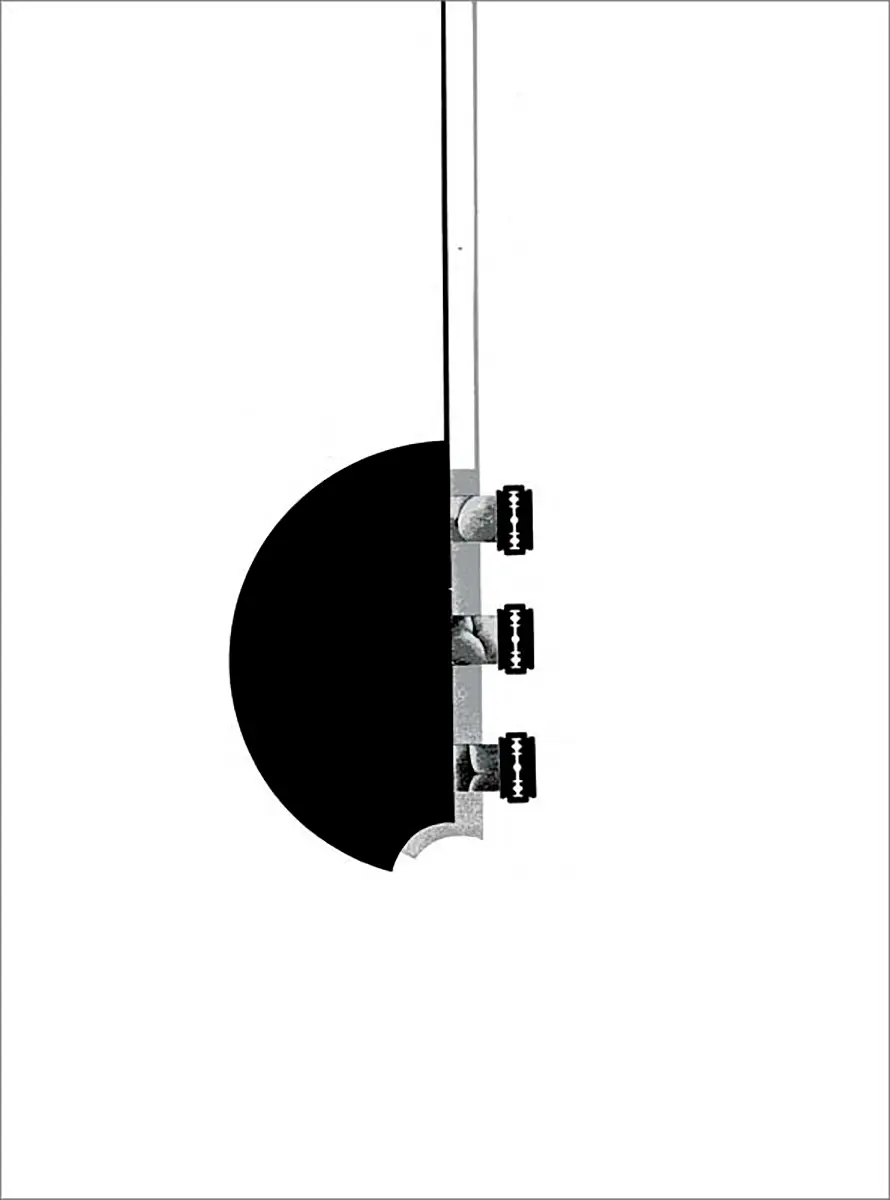
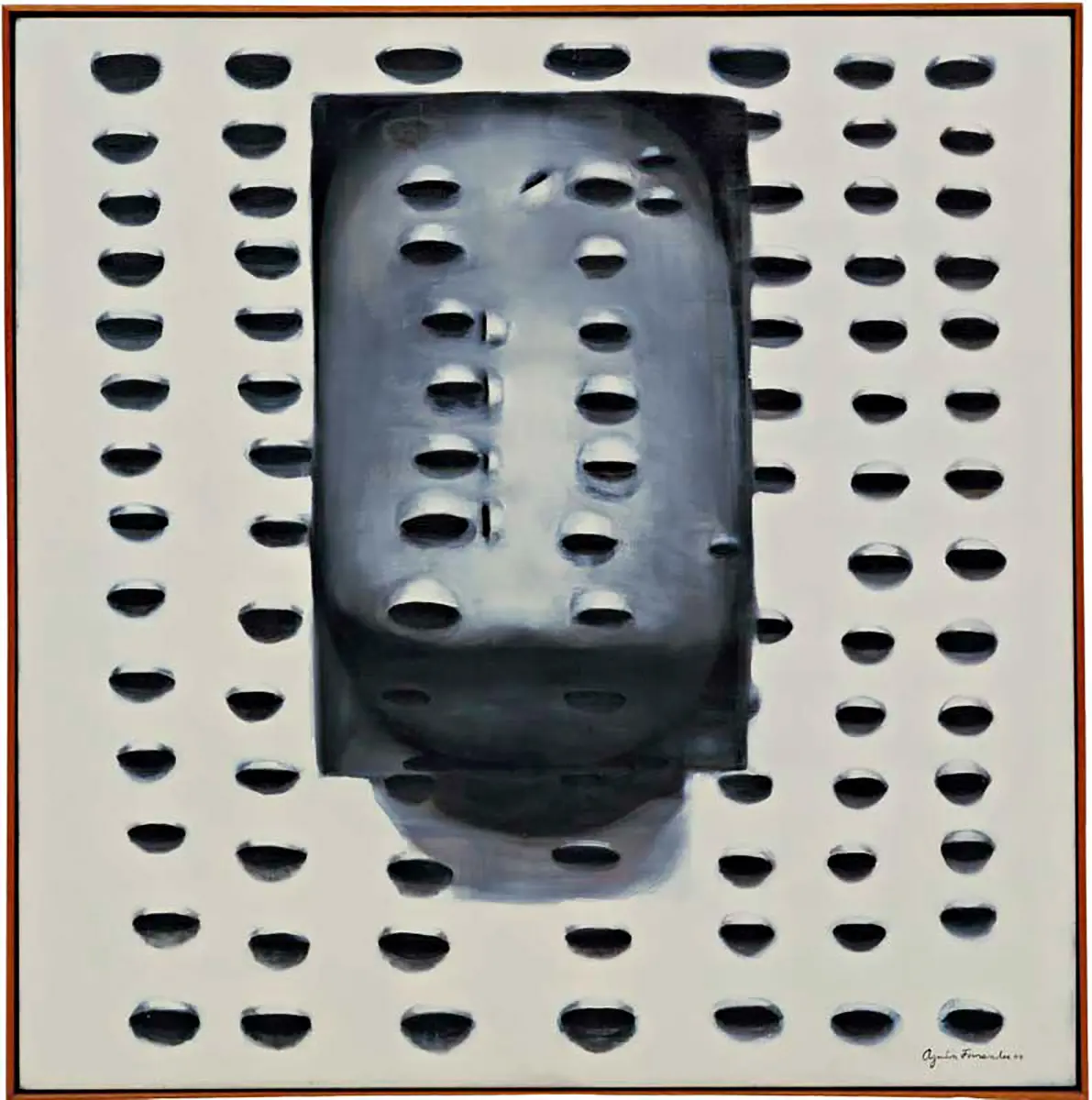
A second trajectory of work, described by stark, black-and-white forms in comparatively minimalist compositions, began to develop by mid-decade and marked a new, serial approach to painting. As a group, these works largely forgo the painterly chromaticism and greater vulnerability of works from the earlier 1960s, instead of deploying a harder edge to explore motifs that include gunshots, razor blades, hooks, pills, cherries, and flies. The passive aggression of works such as Développement d’un délire becomes more provocatively perverse in these paintings, which eroticize – aestheticize, even – images of latent violence and decay. Exemplary of his work from this period is the stark Untitled (1964), in which a punctured phallus protrudes from the deep space of the painting, an uncanny part-object standing in for the body in pieces. The grid of gaping, slit-like incisions has lurking sadistic undertones, amplified by incessant repetition and echoed in a number of works. Even as his works became more geometric toward the end of the decade, the erotic subtext persisted, though generally abstracted through cut-out shapes and partial images – as in a winking invitation to a solo show at London’s Walton Gallery (1969).
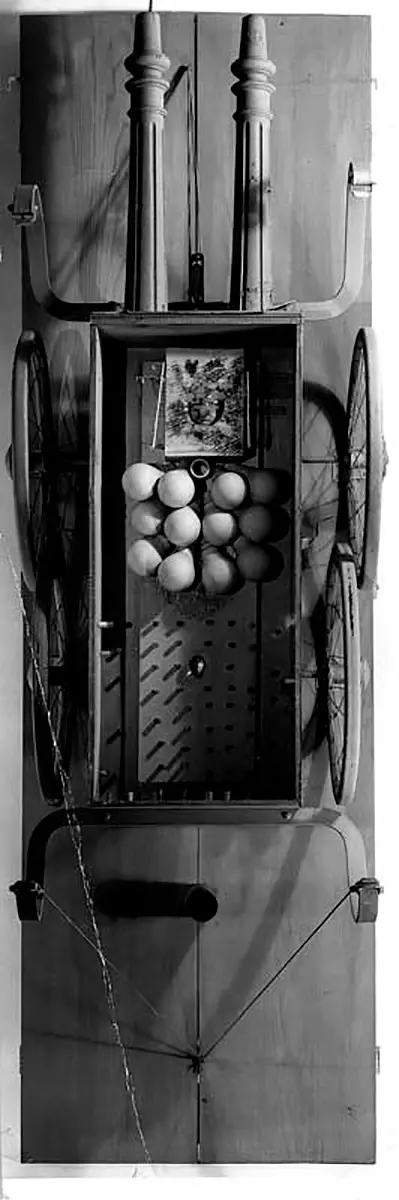
Somewhat lesser-known, Fernández’s various objets-tableaux and works on paper constitute an important analog to his paintings, and they both affirm the Surrealist imprint and suggest a parallel engagement with neo-Dada practices. Though distantly informed by early encounters with Grosz and Rauschenberg, Fernández’s objects generally decline their anti-art radicality, drawing more on the aesthetics of collaged objects claimed from the remnants of everyday life. Not unlike the contemporary work of Joseph Cornell, Fernández’s assemblages subtly undermine states of vulnerability and childlike ingenuity, insinuating fragmented images of violence, erotic desire, and modern malaise. In this regard his son, Clodio’s (b. 1961) baby carriage was a particularly stimulating find, its pieces redeployed in multiple arrangements. Here in the depths of the cradle, Fernández juxtaposes a cluster of light bulbs, deprived of their customary use-value, against a field of nails topped by a gleaming rubber egg, a universal symbol of genesis made strangely unnatural. Twin hoods sheath the carriage in a different iteration, the space left open to reveal a cryptic eye-breast emerging out of a broken pane of glass. Many of these early objects were destroyed on the eve of his departure for Puerto Rico – possibly, in reaction to a stinging critique by Bosquet – and Fernández would not take up sculpture in a deliberate way again until the 1990s.4
Fernández also began to experiment with a range of media during his Paris period, and his work on paper encompassed collages, drawings, drypoints, and a number of portfolios and book projects. Of more sustained interest than the objets-tableaux, the work on paper evolved through the 1960s and ‘70s as a closer compliment to his paintings; many of the best examples isolate a single motif, often fetishized part-objects drawn from the Surrealist body. Among the most interesting portfolios is Collages, a series of 20 silkscreens that, although published in Puerto Rico, distills the thematic breadth of the Paris period, reprising familiar series (cobs, cherries, paper cut-outs) and sundry erotica. A particularly striking image suspends a phallus against Op-inspired concentric circles; the juxtaposition between tautly eroticized flesh and pure visual sensation is an elegant riposte to contemporary abstraction-figuration binaries and a mesmerizing mise-en-page. Other projects from the Paris period include collaborations with Bosquet (Lettre à un genou, 1964) and Yvon Taillandier (Le Mille Pattes, 1965), to which he contributed seven drypoints each. Fernández drew continuously throughout his career, and his later works show a masterful fluency in the graphic medium and continued, obsessive engagement with manifestations of desire, virility, and masochistic pleasure.
Fernández left Paris soon after the events of May 1968, wary of the political situation in light of his first-hand experience of Havana in 1959. Mindful of his family, which would soon grow to three children, he moved to Puerto Rico, drawn by the security of a contract with the Galería La Casa del Arte in San Juan. His work over the following four years would largely continue the trajectory of the Paris period, further evolving the black-and-white abstractions in both painting and print media and, in effect, consolidating the cosmopolitan horizons that had shaped his practice over the past decade. To a new degree, his work was received within a “Latin American” context, in venues from the New York’s Center for Inter-American Relations (1969) to the Instituto de Cultura Puertorriqueña (1970) and the new Cuban Museum of Art and Culture in Miami (1972). The condition of exile appeared more and more a permanent situation by this time, for Fernández and for many of his generational cohorts; the notorious Padilla affair (1971), which turned many intellectuals against the Castro regime, only strengthened their position against the Castro state.5 However, unlike many of his peers, Fernández mostly uncoupled his outspoken political dissidents from his artistic practice, and as throughout his career, he would only very exceptionally make Cuba the explicit subject of his work. “San Juan, unfortunately, lacked the cultural life of New York or Paris,” Fernández later noted, and within a couple of years, he left for New York and its promise of new artistic experience.6
New York: 1972-2006
Fernández settled into Manhattan’s Greenwich Village in 1972, a move that would mark a decisive final chapter in his career and introduce new complexities into his evolving, post-Surrealist practice. “The East Village scene was a model of a multicultural art world,” artist-participants Alan Moore and Jim Cornwell later recollected the period, and it was into its punk-bohemian counterculture that Fernández – conventionally middle-aged by this time – unflinchingly sited his practice.7 The allusive eroticism veiled in the geometries of the past decade took on a harder edge through the later 1970s and early ‘80s, and his motifs suggest an engagement with the city’s alternative scene and its rebellious sexual politics. Bodies and part-bodies bound by leather straps and metal armatures would repeatedly populate his work over the next three decades, characteristically in sadomasochistic images of bondage and penetration that probe the vagaries of human desire. More sublimated than hard-core, this late-career imagery marks a thoughtful reinscription of the familiar Surrealist codes, whose psychoanalytic and pictorial language remained a persistent point of departure.
Fernández appeared an unlikely entrant into the Lower Manhattan scene in the early 1970s, but he responded intuitively to its radical body politics, quickly integrating its subaltern sexualities within a loosely Surrealist frame. Early works such as Armadura (1973) portray a fetishized and vulnerable body, eroticized through gleaming breasts and suggestively tactile folds of metallic skin. Like his friend Robert Mapplethorpe, though less explicitly, Fernández explored sexual taboos and constraints, introducing new, serial motifs (armors, anacondas, belts, butterflies, flowers) that obsessively pry at the darker anima of desire. Fernández devoted a sizable portion of his unpublished memoir to the experience of losing Mapplethorpe to AIDS in the 1980s, and the familial friendship between the two not only brought Fernández into the orbit of the downtown scene but also manifested in occasional collaborative projects, in which Mapplethorpe’s photographs became material for Fernández’s collaged objects (e.g., Robert’s Box). Fernández had a well-received solo exhibition in 1980 at Robert Samuel Gallery, a self-described home to “male image art,” but ultimately his imagery owed less to gay erotica, as reviewers Dennis Anderson and Graeme Bowler astutely noted at the time, than to his progression through various modes of postwar painting.8
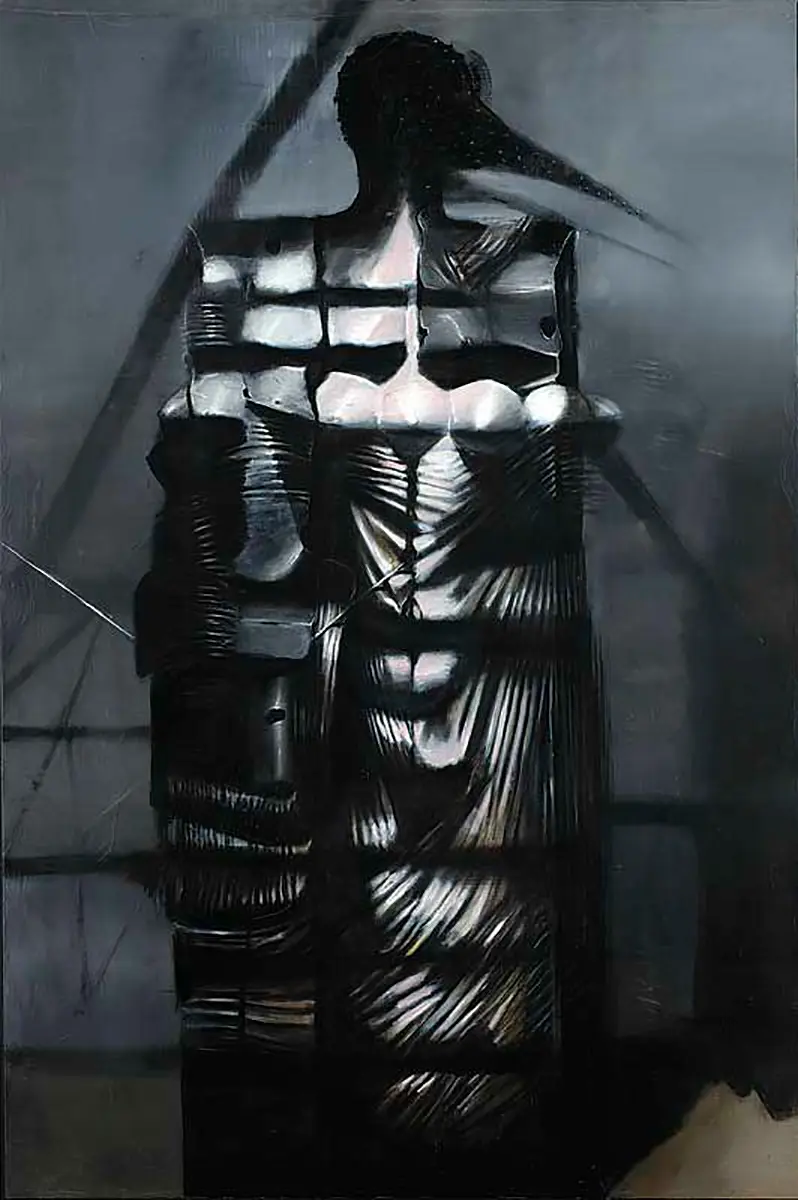
In that sense, Fernández’s work through the 1980s and ‘90s may be understood as a reprise, or consummation of the essential themes that had long defined his practice: Surrealist metaphor, lyrical and geometric abstraction, and in a subtle way, the condition of exile. Serial motifs from throughout his career sometimes blend together, as in a related series of works. Here, the material disjunction of hard and soft surfaces is echoed in the allusive eroticism of the image, the phallic stem piercing pliant folds of organic flesh. The enigmatic femme-oiseau series similarly conflates richly allegoric imagery, attaching sleek avian heads – symbols of freedom and transcendence – to hyper-sexualized female bodies, culled from the artist’s recurrent Atenea Polimastia series. Nodding to Cornell’s bird boxes and Lam’s femmes-cheval, the femmes-oiseau posit a postmodern warrior; swathed in classical drapery, elegant swags wrapping around a punctured metal armor and bared breasts, his goddess is a sublime riff on a punishing dominatrix.
Although his work was increasingly and predominantly received within the context of his Cuban heritage, Fernández kept conceptual company with latter-day Surrealists through his later career. He maintained a cosmopolitan presence, returning for instance to the Galerie Fürstenberg for a solo show in 1989, and exhibited in Mexico City (Galería Nina Menocal, 1994) and regularly in New York, in a remarkably diverse array of group shows at Anita Shapolsky (1992-2004), 123 Watts (1997-1998), and Mitchell Algus (2005-2006), among others. Fernández also cultivated an enthusiastic audience in Miami, where he had a major retrospective in 1992 (Florida International University) and where he continues to be exhibited amongst Cuba’s historical vanguardia artists. Fernández rejected an essentializing view of exile in his work, however, and while his post-1959 work is rarely explicit in addressing his Cuban identity, its thematics of brute desire and unmitigated pain may subtly insinuate sociological, as well as a sexual experience.
At the time of his death in 2006, Fernández ranked among Cuba’s most inimitable artists, a member of the historic vanguardia who radically reinvented himself, moving seamlessly between lyrical and geometric abstraction and realist figuration. He brought fresh visibility and contemporary social valence to the Surrealist idiom, deftly recasting its erotics through highly idiosyncratic, relentlessly provocative works. His works have entered important public collections of Cuban and Latin American art (Americas Society; Blanton Museum of Art; Frost Art Museum; Museum of Latin American Art; Museum of Modern Art), and he is lately gaining recognition as one of the most significant artists of his generation. However, the corpus of his work has yet to be thoroughly examined within its rich, intercultural context – no less, within Surrealist circles – and the full extent of Fernández’s legacy remains yet to be discovered.
*The Agustín Fernández Foundation, established by the artist’s children in 2006, is dedicated to the study and preservation of his artwork and is currently at work on a catalog raisonné. More information is available at www.agustinfernandez.net
NOTES
1. Agustín Fernández, “Curriculum Vitae” (c.1970s), Agustin Fernández Foundation Archive.
2. See Esteban Valderrama, quoted in Agustín Fernández (Havana: Galería Sociedad Nuestro Tiempo, 1952), n.p. “Traiga sus obras para yo verlas…Ahora bien, si es moderno o vanguardista ni piense en exponerse aquí, porque yo considero eso obra de idiotas y aunque usted me vea tratar a alguno de ellos, no hago más que reírme de los mismos, por lo que ese tipo de pintura no entrará en la E. S. A. [Escuela Nacional de Bellas Artes ‘San Alejandro’].”
3. Celebrations of modern art, these exhibitions were also powerful declarations of artistic freedom at a time of rising censorship and repression, epitomized by the controversial II Hispanoamerican Biennial (1954), to which the so-called “Anti-Biennial” responded. Exported from Francoist Spain under Cuba’s then-dictator, Fulgencio Batista, the Biennial was condemned by many of the vanguardia as a frank affront to the values of Martí and his republican legacy.
4. Letter from Bosquet to Fernández, Agustin Fernández Foundation Archive.
5. Heberto Padilla (1932-2000), a poet and early supporter of the Castro government, was forced to confess to “counter-revolutionary” crimes in 1971 following the publication of Fuera del juego, an anthology plainly critical of the regime. His house arrest and public interrogation, during which he was made to accuse other writers, provoked an international outcry and divided intellectuals on the Left. Jean-Paul Sartre, Mario Vargas Llosa and Octavio Paz, for instance, turned against the Castro regime; other, most notably Gabriel García Márquez, defended Castro's actions as essential for the preservation of the Revolution.
6. Fernández, "Curriculum Vitae".
7. Alan Moore and Jim Cornwell, "Local History: The Art Battle for Bohemian in New York," in Julie Ault, ed., Alternative Art New York, 1965-1985 (Minneapolis: University of Minnesota Press, 2002), 321.
8. Patricia Morrisroe, Mapplethorpe: A Biography (New York: Da Capo Press, 1997), 216-17; Dennis Anderson and Graeme Bowler, "Agustin Fernández," Arts Magazine 54, no. 10 (June 1980): 24).
ABIGAIL MCEWEN
Assistant Professor of Latin American art, Department of Art History & Archeology, University of Maryland, College Park.