
Four years ago the focus of FotoFest was China; in 2012 it was Russia’s turn. In both cases, the actual biennial exhibits were preceded by the export to those countries of the Meeting Place, the portfolio review arm of FotoFest. Russia and China were both central players in the Cold War games, and until recently much of their cultural life during those years of pax frigida was not well known. FotoFest has partially corrected that omission. Photography usually projects beyond the confines of the medium and ends up involving politics, ideas, other media, historical events, individuals, disasters, etc. Thus, when FotoFest focuses on a particular country a very rich intellectual dialogue ensues as a natural consequence of interpreting photographic works.
It is not the first time FotoFest shows photography from Russia. Irina Chmyreva, Evgeny Berezner, and Natalia Tarasova, this year’s main three chief curators, summarize their country’s involvement with FotoFest this way: “In 1989, FotoFest organized an international exchange between the Houston Post and Fotokhronika TASS in Moscow, and the exhibit resulting from this exchange was displayed at the FotoFest 1990 Biennial. In 1992, the FotoFest Biennial presented Photo Manifesto, one of the most ambitious projects on modern Russian photography to be presented during the 1980s-1990s. (...) At the same Biennial in 1992, FotoFest presented an exhibition of original editions of the magazine USSR in Construction, which is recognized as one of the finest illustrated publications of the twentieth century. (...) Ten years later, FotoFest dedicated its 2002 Biennial in Houston to the theme Classicism and Beyond. This was the first Biennial to conceptually legitimize digital technology as one of the accepted genres employed by photo-graphy [sic]. In the classical part of the Biennial program, one of the main exhibitions was Russian Pictorialism, 1890s-1990s.” This year the Russian exhibits focused on the period that starts at the end of World War II and ends in 2012.
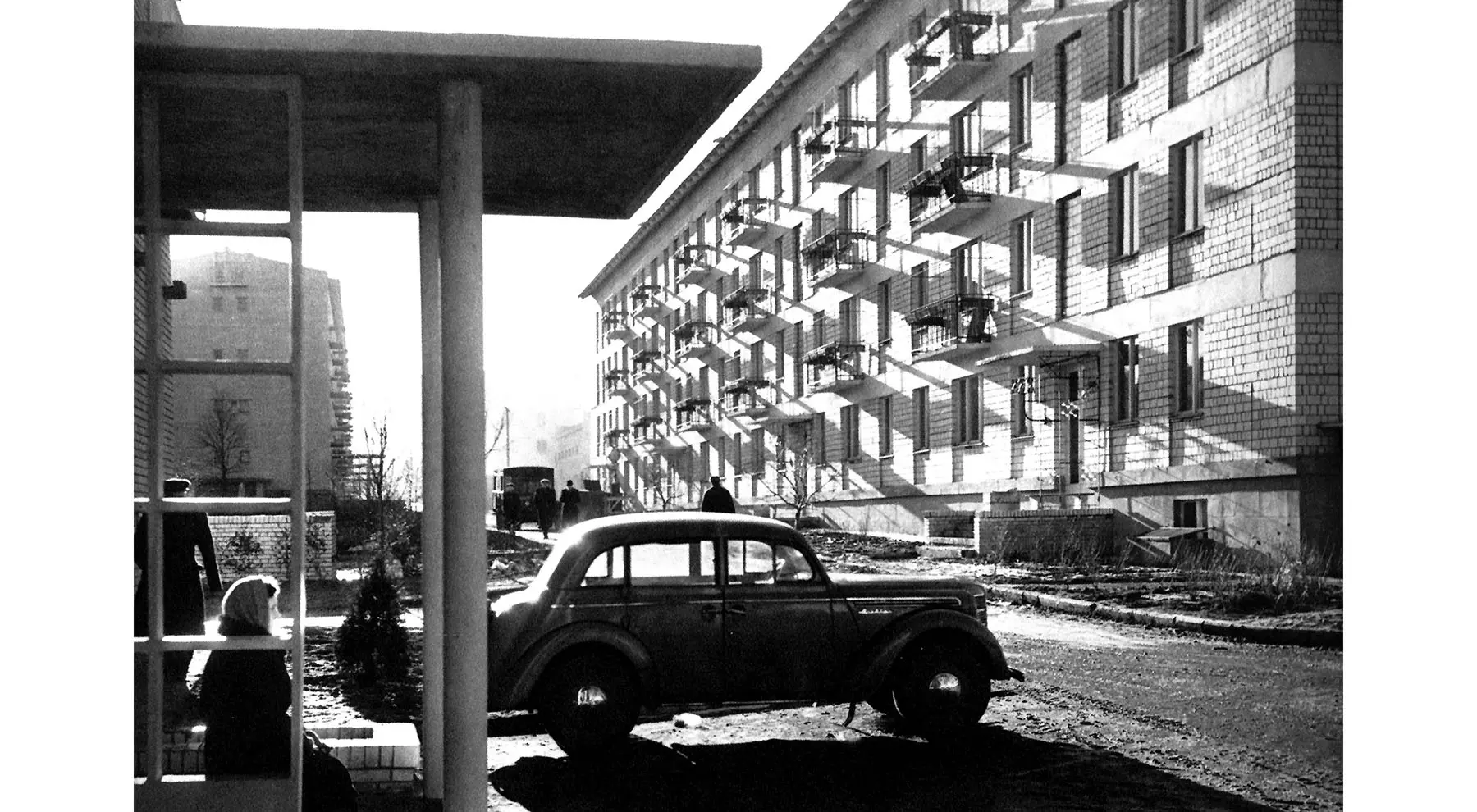
The Russian exhibits were chronologically and spatially divided throughout Houston. The starting point was the exhibit After Stalin and “The Thaw”: The Re-emergence of the Personal Voice. It was shown at the Williams Tower, the 1983 iconic Philip Johnson, and John Burgee skyscraper. According to curators Chmyreva, Berezner, and Tarasova, during the period immediately following World War II, “photography in the USSR closely followed Soviet painting, which was based on the dogmas of Socialist Realism (...) The works and styles of the avant-garde photography of the 1920s and early 1930s seemed to have been forgotten.” However, certain events began to corrode the hegemony of official photography: an unprecedented internal migration, the visit to the Soviet Union of John Steinbeck, Robert Capa, and Henri Cartier-Bresson, and the humanism inherent in their work. The war itself, the curators, point out, “was a breeding ground for personal self-consciousness. The period of “liberation through war” brought with it the appearance of a new and unstaged lyrical photography.” After the death of Joseph Stalin, the 1957 World Festival of Youth and Students that took place in Moscow heralded definitive changes. The press itself began to change, and photo clubs, like the Novator, started a fruitful exchange of ideas among its members. Street photography appeared—like The First Bikers (1974) of Lithuanian photographer Antanas Sutkus—and began to show a spontaneity that was absent in the heroic formulas of Socialist Realism. It was not necessarily an expression of dissidence. Naum Granovsky’s piece In Novie Cheremushki (1960) depicts a modern city neighborhood that breathes confidently the benevolence of the Soviet system that permeated that era.
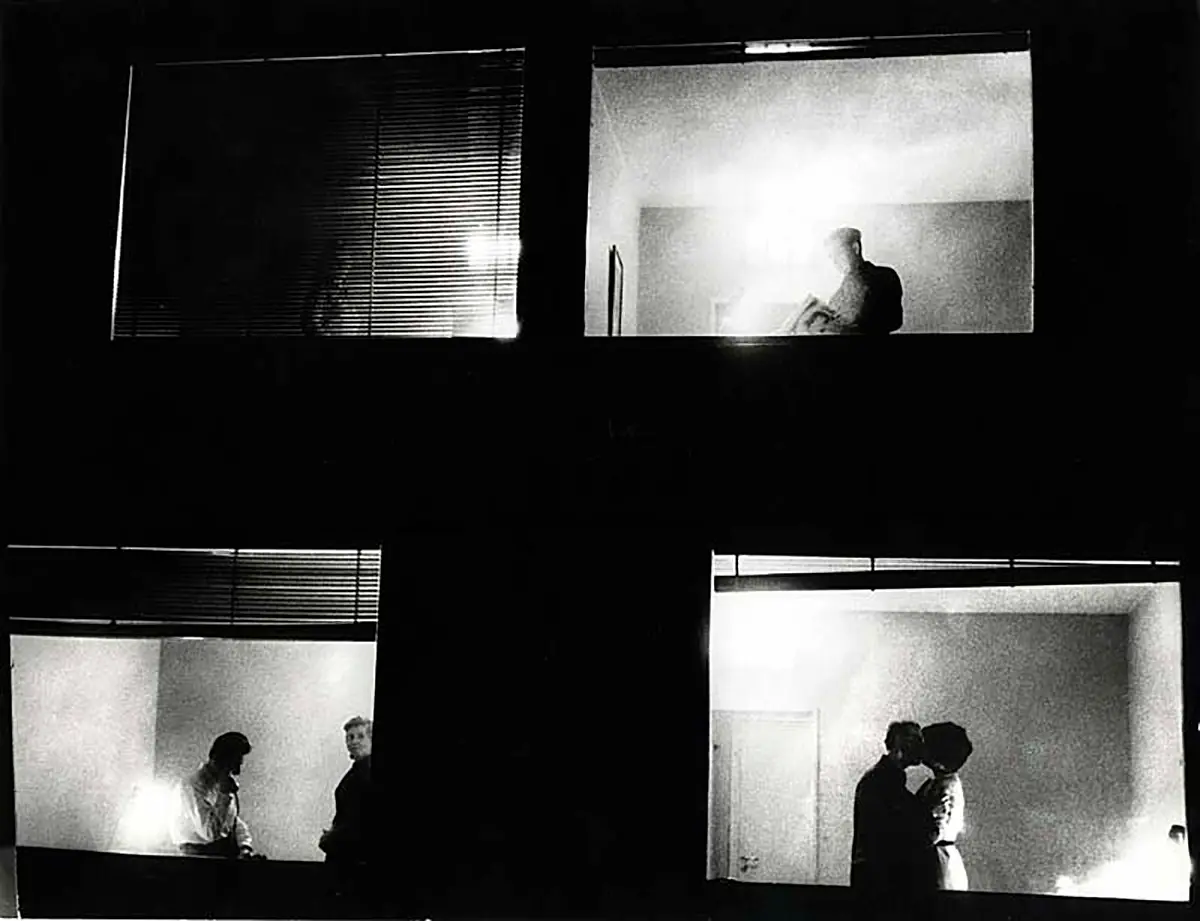
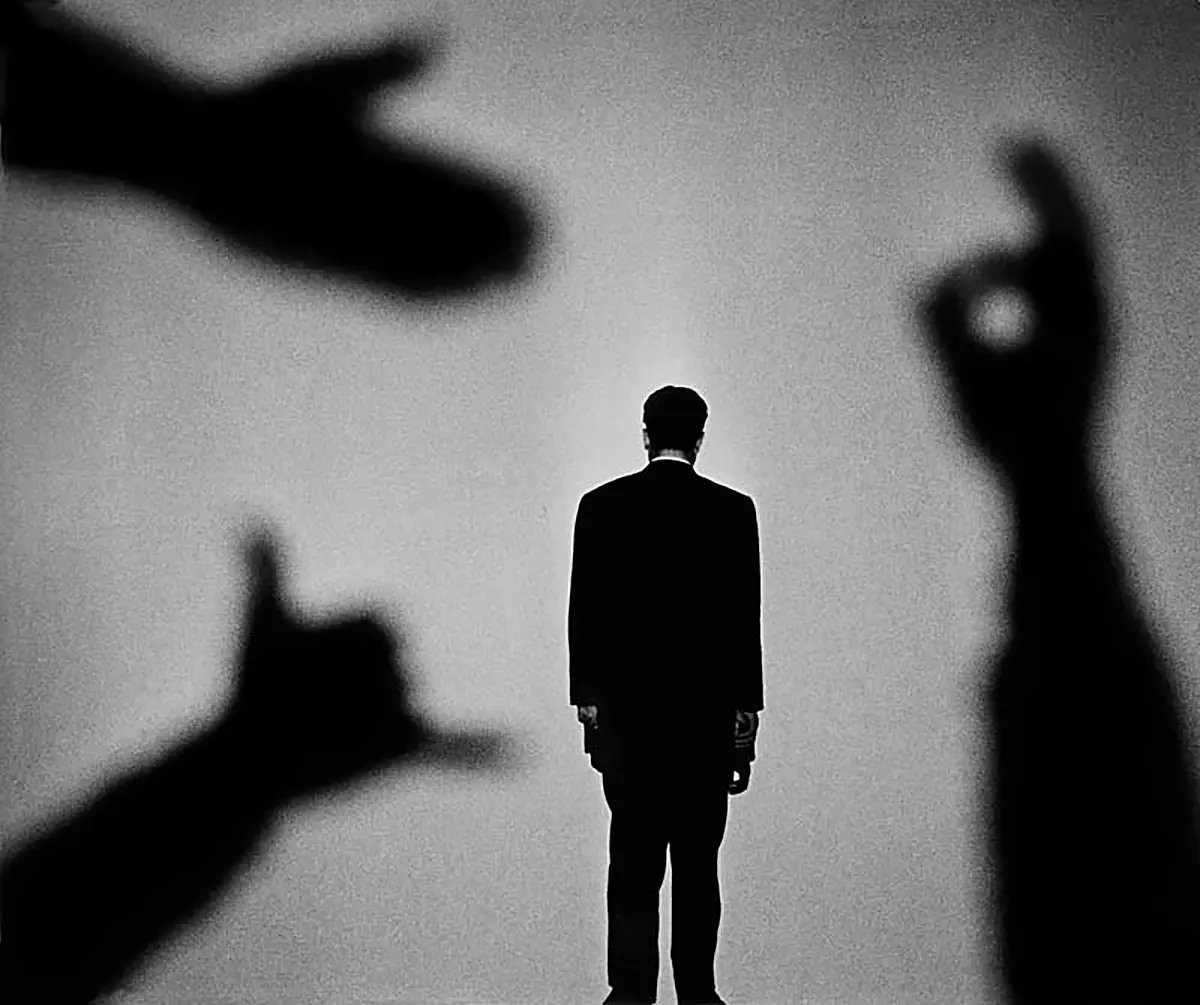
In spite of the little wiggle-room the political system allowed, there are some memorable pictures from this era. In Lew Porter’s Moscow Windows (1960) the viewer is uncertain of whether looking at the image he is doing political surveillance or voyeuristic delectation. One very soon learns that in order to understand these works it is not only important to know the context but also the hidden meanings. Vladimir Lagrange’s psychological The Alphabet of the Deaf (1960) may very well have a political subtext. The voyeurism, humor, parody, irony, and irreverence of these images are the stuff the art of life liberated from oppressive ideology is made of.
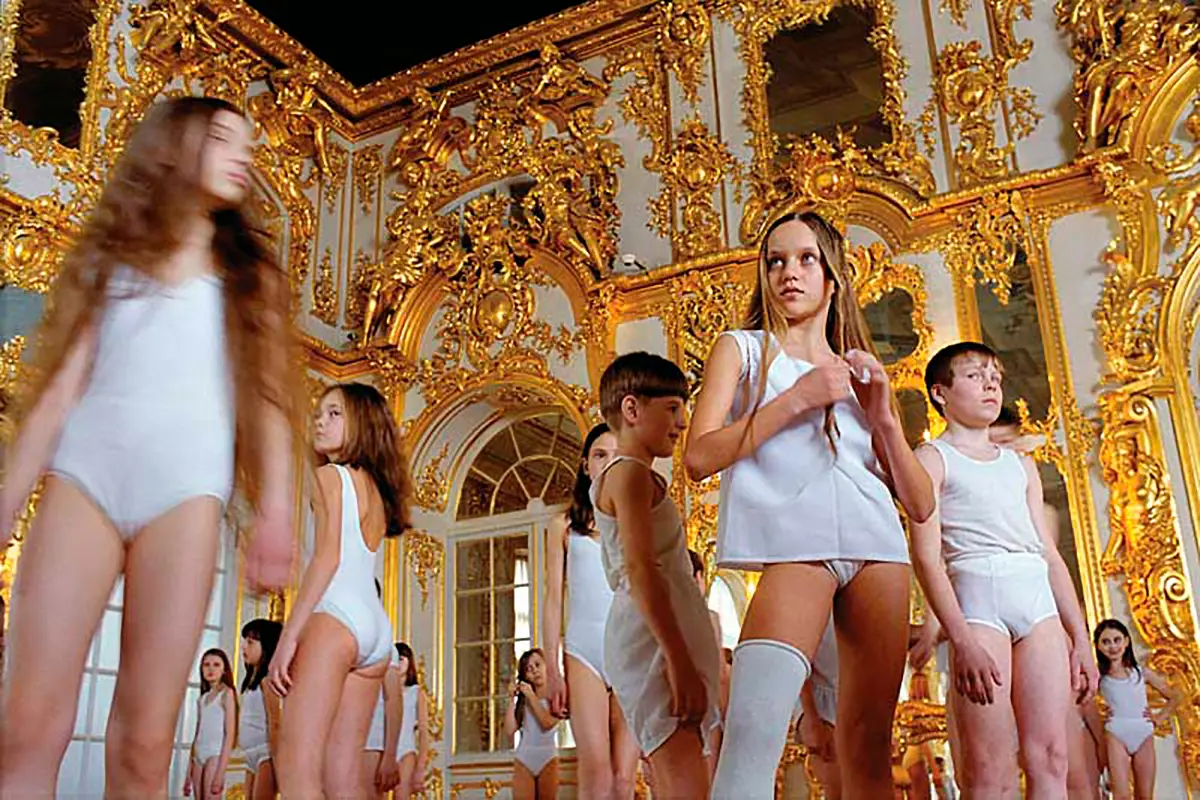
A second Russian exhibit called Perestroika / Liberalization and Experimentation takes us from 1980 to 2010. These are works by artists who were alive and productive at the end of the Soviet era. “Perestroika,” Mikhail Gorbachev’s policy of re-structuring the Soviet system under the tenet of “glasnost” (openness) played a major role in the collapse of the Soviet system. The sudden cessation of the oppressive regime “shaped a new generation of incredibly diverse and profound artists. At the start of Perestroika, after artists had seen exhibitions of works of the masters from the photo avant-garde of the 1920s and 1930s, they instantly declared themselves their immediate successors.” After the dissolution of the Soviet Union in 1991 rapid changes occurred in the world of Russian photography. Private galleries and collectors emerged, new publications appeared, Russian and Soviet archives opened, museums began to show photography and include it in their collections, the works of foreign and Russian masters like August Sander, Ansel Adams, Edward Weston, Alexander Rodchenko, and El Lissitzky were seen for the first time. In addition, landmark exhibits like 150 Years of Photography and Say Cheese helped photography carve out a permanent place in the Russian art world.
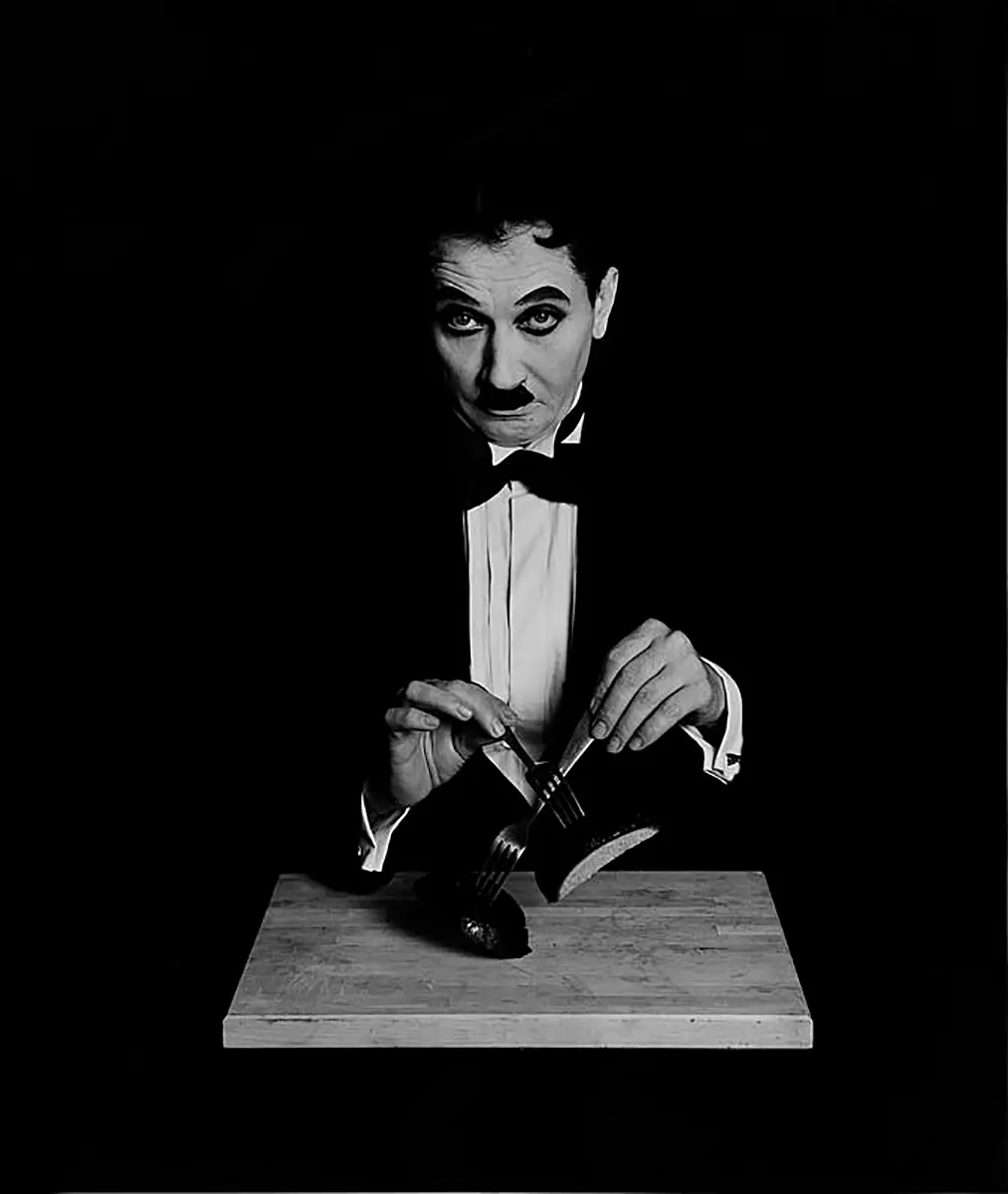
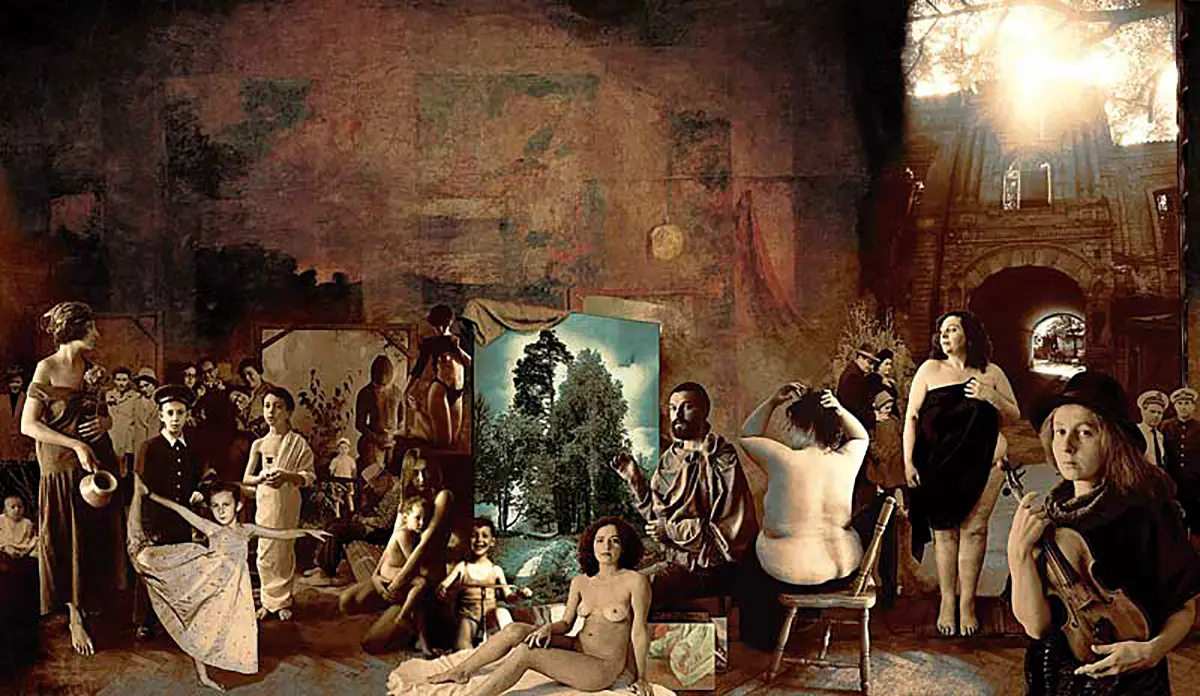
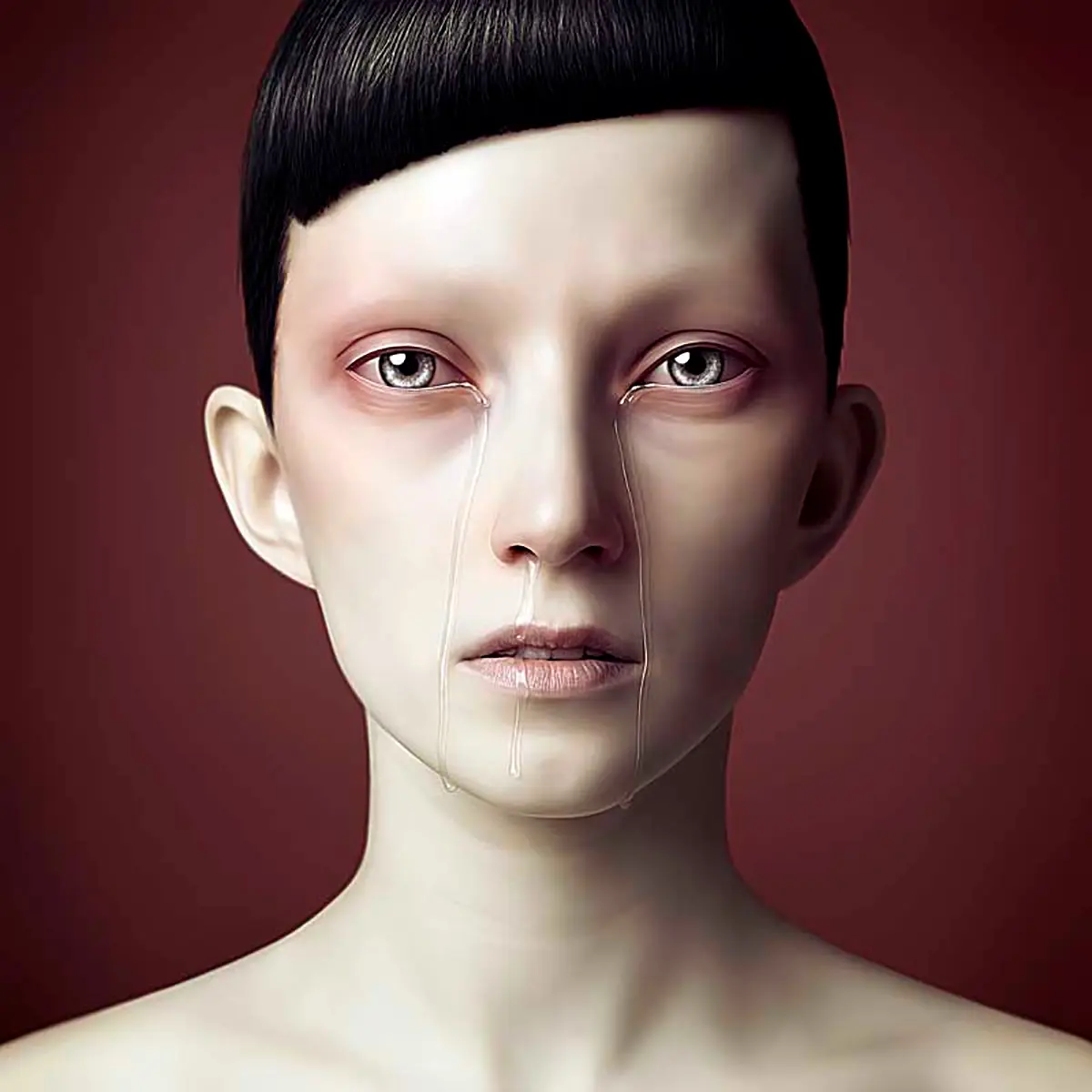
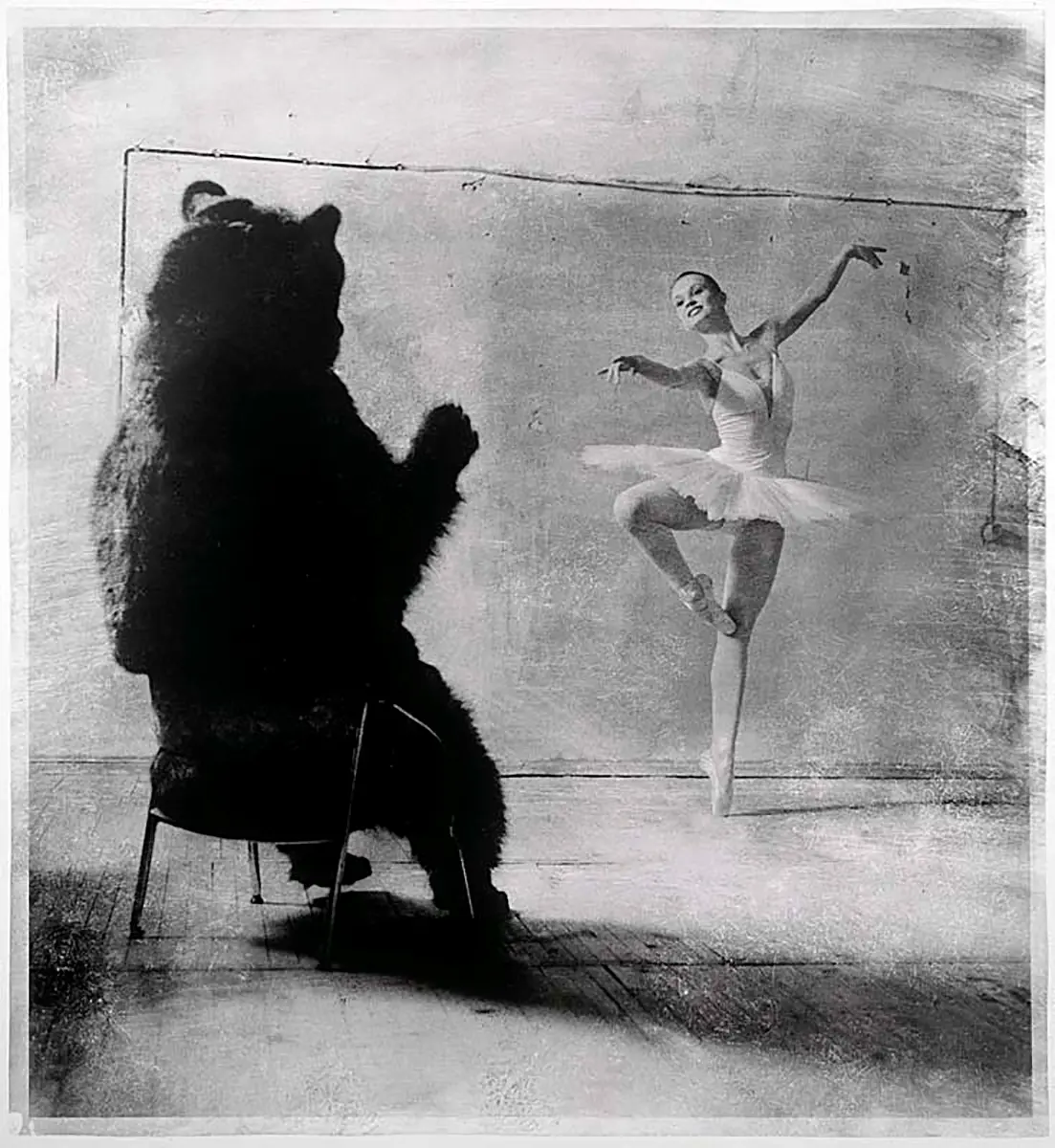
These political changes are reflected in a very diverse photographic production that during Fotofest was shown at the Spring Street and Winter Street Studios. The very Constructivist work by Andrey Chezhin Dedication to Marcel Duchamp (1999) re-establishes the lost link to the Russian avant-garde. The staged video by AES+F The King of the Forest, Le Roi des Aulnes (2001-2003) is a re-actualization of the myth of the medieval creature that kidnapped beautiful young children. The work is a metaphor for the way many children in sports, media, and ballet are sequestered in order to shape them into those industries’ exemplars. In this exhibit, we also find strategies that are well-known in contemporary photography like impersonation, appropriation, and digital manipulation. Vladislav Mamyshev-Monroe is Chaplin (2004). The digital collage of Mark Rozov L’Atelier du peintre, after Gustave Courbet (1994-1999) imaginatively recreates the French painter’s atelier. A separate mention needs to be made of the intriguing oeuvre of Gregory Maiofis—like Taste for Russian Ballet (2008)—the painterly oeuvre of Oleg Dou like Ira’s Tears (2008); and the exquisitely minimal works of Vadim Gushchin such as Envelope 2 (2010).
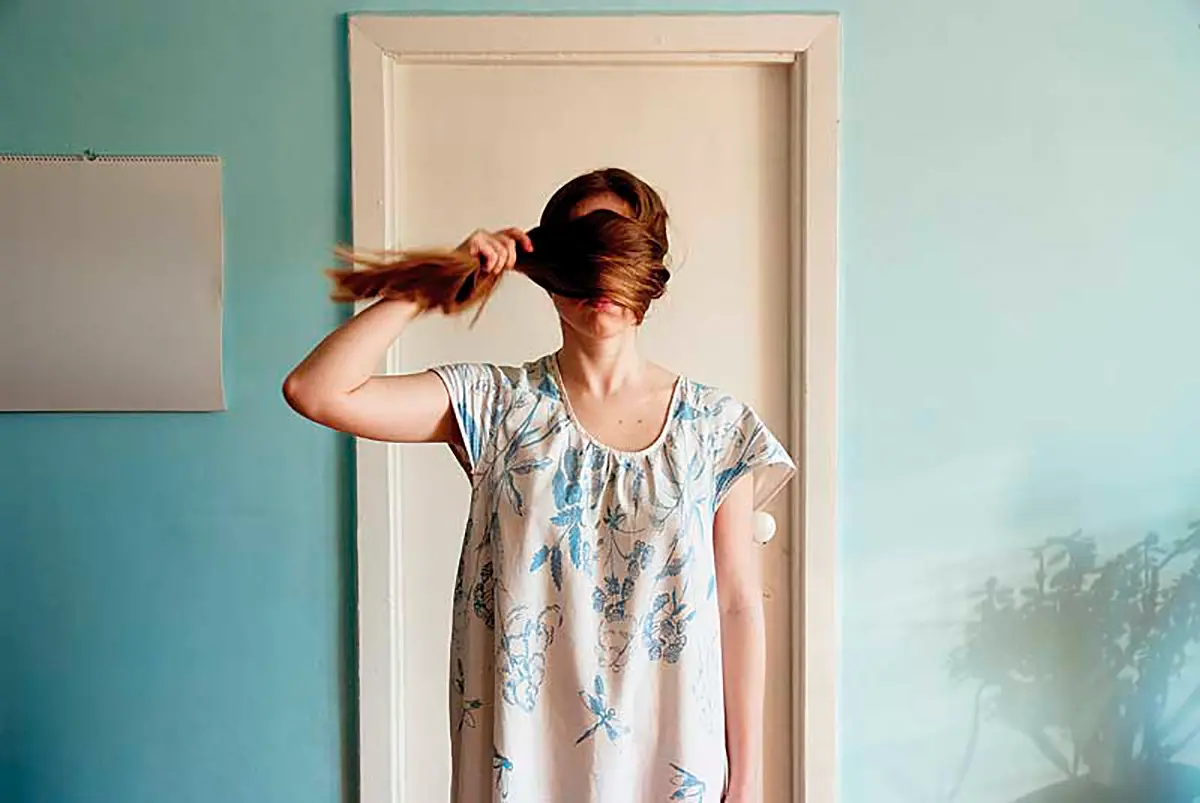
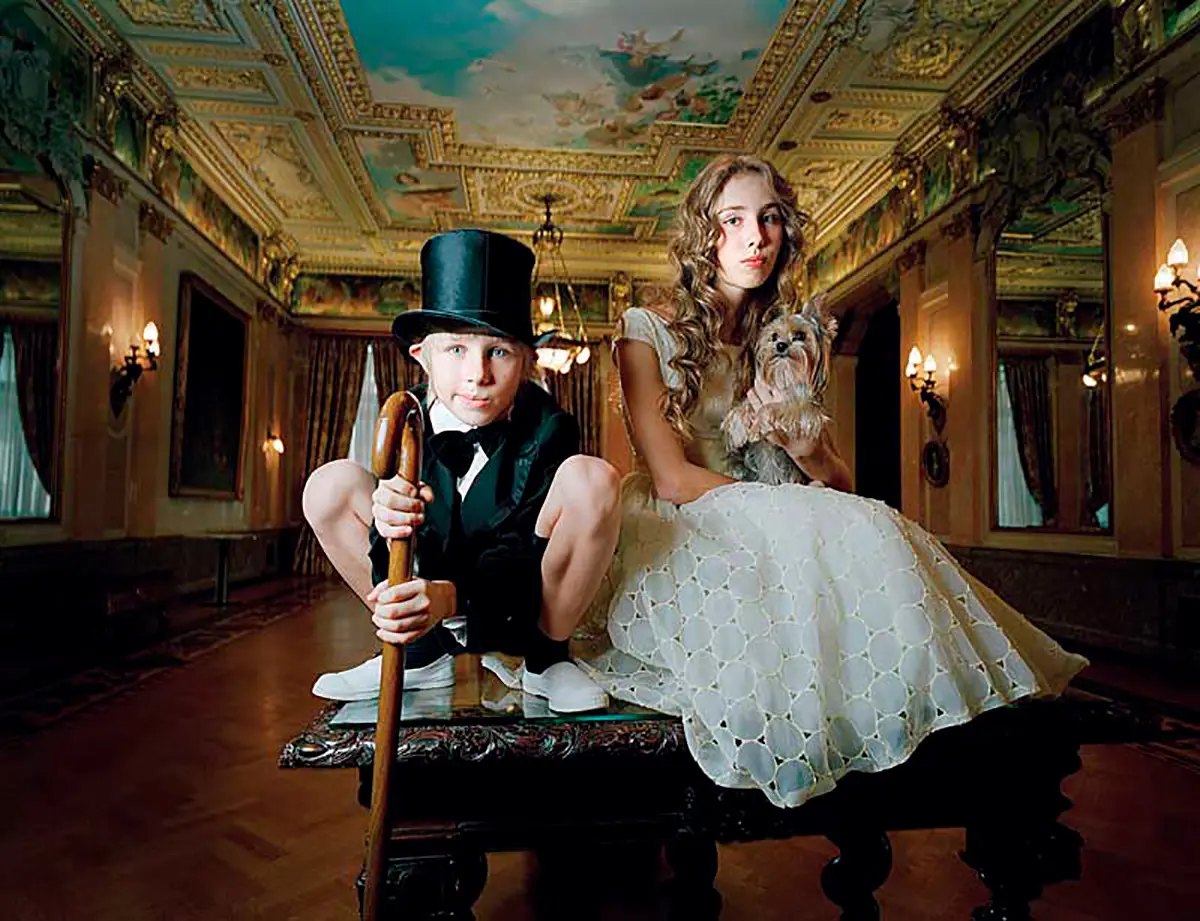
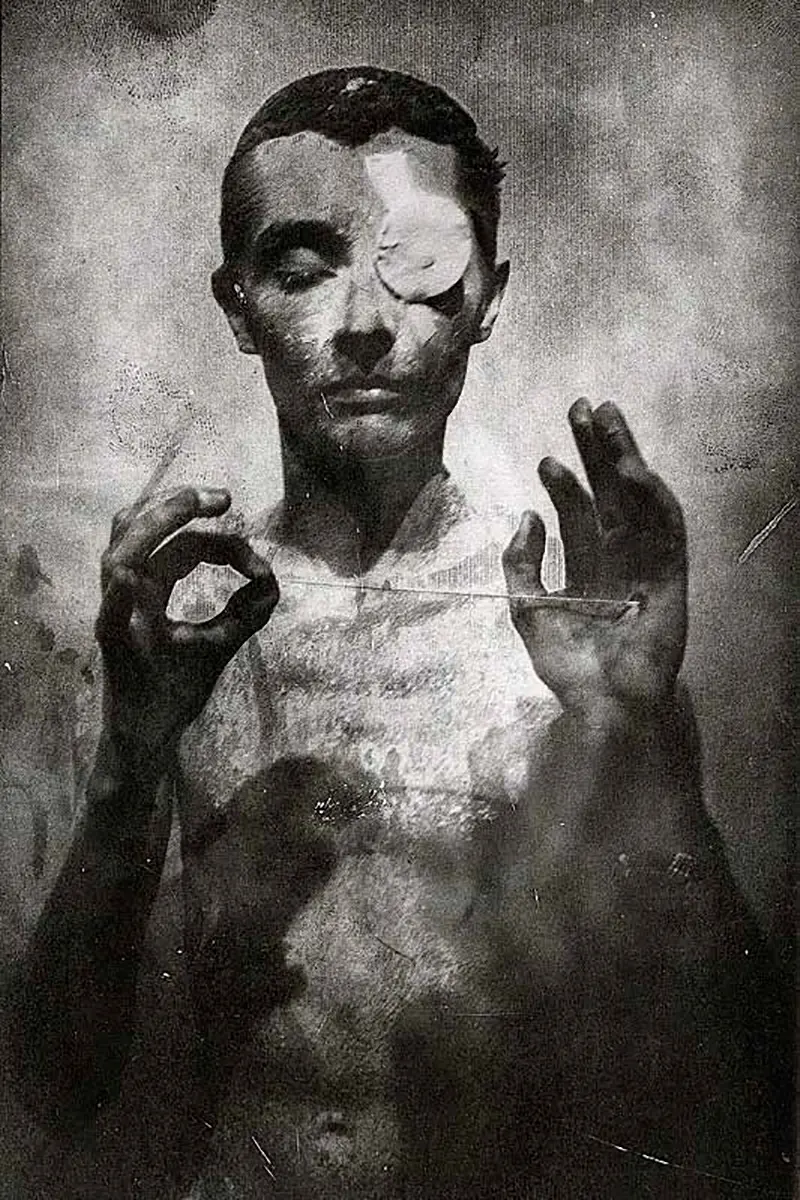
The third exhibit The Young Generation / A Collective Portrait has a range that overlaps the previous exhibit in production dates but not in the age of the artists. It covers the brief period 2000 to 2012 and many of the works were picked at the Meeting Place portfolio reviews that were held in Moscow in 2011. The works in this exhibit are easier to see and interpret because they follow tropes in international circulation. Anna Skladmann’s large prints of the series Little Adults (2009) are portraits of children in the opulent settings of pre-Soviet czarist Russia. Such contraposition is particularly astounding for a generation of young Russians for whom the Soviet era may be distant and almost unreal. Tatiana Antonuk’s Alienation series reflect upon the ways modern society isolates helpless individuals. One of the most intriguing bodies of works is Kir Esadov’s Private Diary of a Nerd (2010): A man with an eye patch pulls with his right hand the thread that appears to be attached to his left hand. We do not venture to say this work follows the style of Joel-Peter Witkin or that Skladmann’s work echoes Daniela Rossell’s Ricas y Famosas, but rather, all of these works have become part of an international repertoire. We cannot leave this exhibit without pointing out the poetic works of Alisa Nikulina. Her black-and-white diptychs explore subtle natural and artificial patterns. They play one visual idea against the other as if they were verses of a haiku.
FotoFest is not only about the officially sponsored exhibits. Museums, universities, non-profit exhibition spaces, and commercial galleries also have their own ideas about what is show-worthy during the spring of any even year. 2012 is a year in which a plethora of worthy exhibits spread within a fifty-mile radius from the FotoFest epicenter at Vine Street Studios. At the most distant end, the Galveston Arts Center, photographer Scott Dalton’s So Close, So Far: Daily Life and Cartel Violence in Ciudad Juárez, showed that documentary photography still holds the important role in revealing what we would rather not believe. Juárez is one of the most dangerous cities on the planet and 3.3 miles from El Paso, Texas. The title of the exhibition alludes to a phrase attributed to Mexican president Porfirio Díaz (1830-1915), “Poor Mexico, so far from God and so close to the United States!”
The Museum of Fine Arts Houston showed the exhibit: Utopia / Dystopia: Construction and Destruction in Photography and Collage. Its curatorial premise was that the exhibit “examines an illuminating aspect of photography by revealing the medium’s surrogate nature that has enabled artists to construct and project, in a nuanced, complex, and often ambiguous fashion their dialectical visions of utopia and dystopia.” It is certainly a premise that needs to be understood considering the works of some of the artists included: Laszlo Moholy-Nagy, John Baldessari, Thomas Demand, John Heartfield, Robert Heinecken, El Lissitzky, Dora Maar, Man Ray, Vik Muniz, Okanoue Toshiko, Robert Rauschenberg, Christian Schad, to name only a dozen of the nearly sixty artists in the show.
The Houston Center for Photography hosted an exhibit of a trio of artists who dealt with the theme of domesticity. Indian-born Priya Kambli’s works titled Color Falls Down use diptychs and triptychs to build pairings of culturally-telling objects with images of self and family members. Greek-born ethnically German Long-Island resident Bastienne Schmidt’s Home Stills have that northeast aura of gently alienating domesticity that one could arrive at through an Edward Hopper painting. Take, for example, The Red Daybed (2004) which echoes without resembling at least six of Hopper’s paintings. Julie Blackmon’s The Power of Now and Other Tales from Home are unabashedly digitally constructed tableaux that explore the joys and fears of American homes—from mobile homes to houses-with-a-pool.
The Station Museum of Contemporary Art presented the group exhibit Artifactual Realities. Most of the eleven artists in the show use the medium of photography. August Bradley (“99 Faces of Occupy Wall St.,” 2011) and Vanessa Bahmani (We are the 99 percent, 2011) debunk the idea that photography is only to remember and propound that it is also to participate, even if vicariously, in the recent protests against the callous financial unscrupulousness of Wall Street. Curiously, the most enthralling section of the Artifactuals exhibit was Mel Chin’s low-tech non-photographic installation The Funk and Wag From A to Z which covered the walls from the floor to the ceiling. Chin meticulously cut the drawings of a set of a 1954 edition of The Universal Standard Encyclopedia by Wilfred Funk, Inc. and pasted them on black paper. He thus created a sanctuary of Dada filigree the viewer could muse over for days.
Some of the most interesting bodies of work this year were shown at commercial galleries. Dornith Doherty’s exhibit Cache at McMurtrey Gallery was the right mix of science, aesthetics, and ecological concerns. The cache she refers to is the seed banks that “have begun preservation efforts to prevent the extinction of natural species and to support agricultural diversity.” Doherty used x-ray equipment to photograph the whimsical structure of seeds that is normally invisible to us. Shelley Calton’s Licensed to Carry: Ladies of Caliber at De Santos Gallery engaged a very Texan theme: guns. Calton photographs women with their firearms in a series that oscillates between fetishism and crude reality.
Libbie Masterson’s exhibit Nuit at Wade Wilson gallery consisted of night photographs in a very Pictorialist style. Masterson used a combination of analog and digital means to produce mysterious blue-toned landscapes of Paris and Southern France. At Poissant Gallery, Jawshing Arthur Liou’s Kora (2011-2012) showed a hypnotic 14-minute video of his own pilgrimage to Mount Kailash, a sacred mountain for Buddhism, Hinduism, Bön, and Jainism. At the same gallery, Osamu James Nakagawa’s panoramic photographs of the awe-inspiring Banta cliffs of Okinawa were what Kant called “sublime.” He also photographed the caves right below them. Both cliffs and caves have a history you cannot see in the pictures. Writes Nakagawa, “Thousands of civilians were driven to commit suicide during the battle of Okinawa, WWII by jumping from the island’s precipitous banta cliffs. Thousands more died in the island’s gama caves—either at their own hands, those of their neighbors, or at the hands of either of the military forces fighting over the island.”
In 2010 the FotoFest catalog became a two-volume set. One would have thought that in a year of modest GNP said catalog would have followed suit. In fact, the 2012 two-volume catalog reached 660 pages. That bibliographical girth is directly proportional to the number of works on display. Does the law of diminishing returns apply here? True devotees manage to see it all, but the run-of-the-mill enthusiast cannot. Moreover, any review of the event must make severe omissions of names and works. But so was FotoFest 2012, an exuberant mix of historical, sociological, familiar, strange, political, psychological, beautiful, reportorial, humorous, and, sorrowful imagery.
FERNANDO CASTRO
Critic and artist.