María Evelia Marmolejo, (Cali, 1958) is one of the most radical and political artists of the 1980s in Latin America. Active primarily in the 1980s, her work remains unknown not only outside of Colombia but in her own country. Performance art in Latin America since the 1960s reflects the history of great experimentation and political action. Thorough historiography of the medium in Latin America still needs to be produced as many important artists continue to be obscured due to lack of research or interest, and sometimes prejudice.
The evolution and definition of performance in Latin America varies1; and in some countries such as Argentina, Brazil, Chile, and Venezuela performance began in the 1960s and flourished throughout the 1970s and 1980s. In other countries such as Mexico, performance started in the 1970s and thrived in the 1980s; in the case of Cuba, it started in 1979 throughout the 1980s, and in countries such as Colombia, performance began until the 1980s. There are of course important individual artists in countries such as Cuba, Guatemala, Puerto Rico, Uruguay and Peru who developed an important practice in performance.2 It goes without saying that performance continues to be a central practice today in Latin America
Born in Cali, Colombia, Marmolejo started working in the early 80s making performances and installations. Much of her work intertwined preoccupations that have pervaded throughout her production: the political oppression in Colombia in the 1970s and 1980s3, social and economic conditions in Colombia and Latin America, environmental issues, and the situation and role of women, including aspects related to the representation, functions and symbolic meanings of the woman’s body.
Marmolejo’s intense period of production was 1981 to 1985. The reasons for her virtually stopping to do artwork, and for history to erase her memory, are multiple and complex, and some are of personal nature; the main being that Marmolejo self-exiled herself to Madrid, Spain, while pregnant in 1985, and after this year, she only produced two performances, in 1992 and 2004. Another explanation is that not enough research has been done in this field and in recent historiography, María Teresa Hincapié (her importance is unquestioned) is presented as the first important performance artist in Colombia with work from the late 1980s, even though María Evelia Marmolejo—and other artists—was making performance years earlier. The second explanation to this erasure is that the best-known performance by the artist is 11 de marzo, 1981 which may have been remembered and interpreted in a prejudiced and limited fashion to be circumscribed to the “essentialist feminine” and the controversial, thus defining her in a limited fashion. For example, in the catalog Arte ≠ Vida from the Museo del Barrio, 2008, María Iovino describes 11 de marzo as the “(…) First feminist performance piece in Colombia in 1981” but remarked that this work (and that of 1984 performance by Antioquia artist María Teresa Cano) “remain circumscribed within the limitations of a feminine theme.” 4
Marmolejo studied law between 1976 and 78 but could not fathom herself as a lawyer and began studying art at the Escuela de Bellas Artes de Cali. With relatively little knowledge of art, and no support, Marmolejo was a strong and mature conceptual artist from the very beginning of her short and intense art career. Marmolejo was never interested in the conventions of art and was strongly engaged with finding a way of expressing her preoccupations in regards to the political oppression in Colombia during the time of Turbay Ayala, Colombia’s President, and also to her own condition as a woman in a male chauvinist society which was imposed on her since an early age through her education at an all-girls school, Catholic upbringing, and home life, where she was taught to serve men.
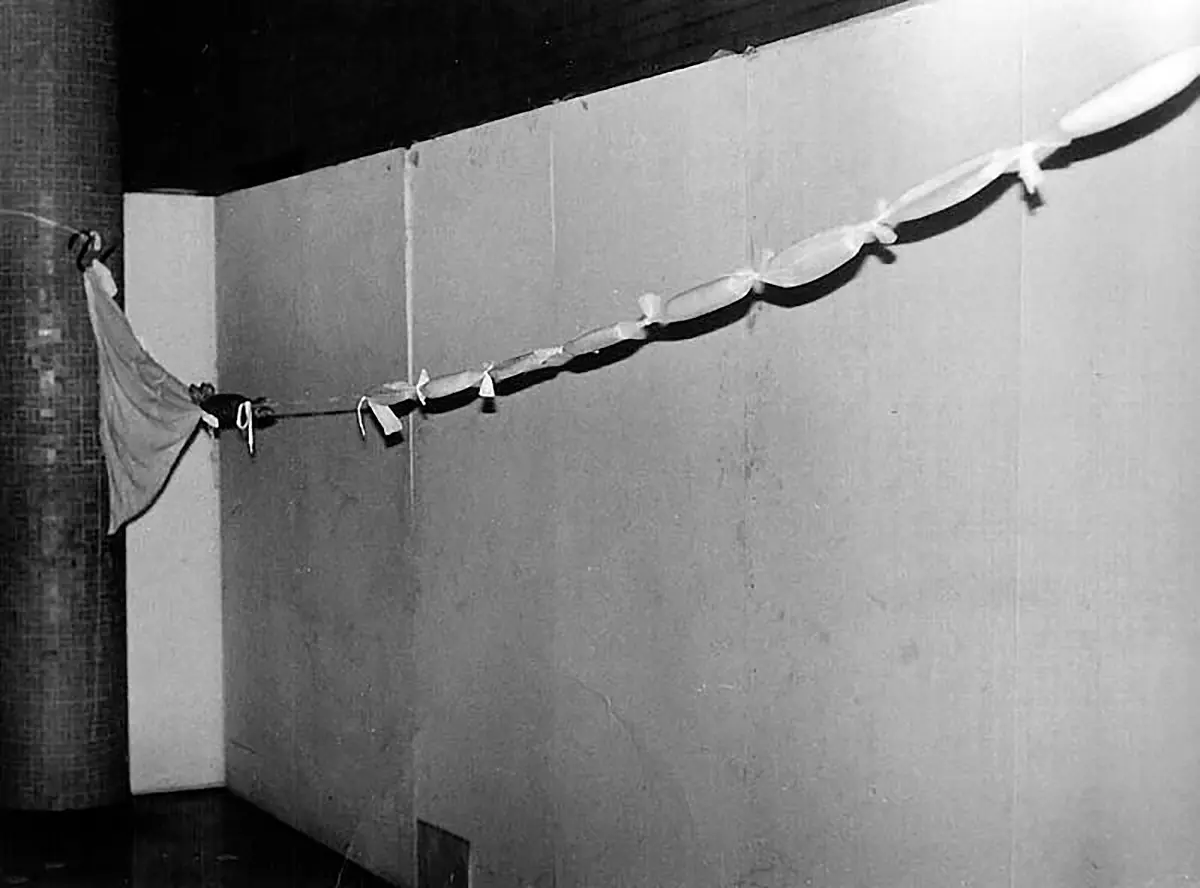
In 1979, for her final semester exam, she realized her first installation titled Tendidos, which consisted of a clothesline made of sanitary pads—some used and some clean—which were tied to one another. The end of the line was a cloth nappy and the whole line hung from a butcher’s hook. Marmolejo produced this work in protest for the brutal torture and rape—often with metal objects—of peasant and university women, sometimes pregnant, by the Colombian Army. From this early performance the artist started using blood, both as a common, normal bodily fluid—though rejected— and as a reflection on the violence of the country. The aggressiveness manifested in the butcher’s hook also refers to her refusal and difficulties she faced in her role as a woman in a macho society and at home, where she had to be subservient to four male brothers.
For her final drawing test, she made a triptych with poster boards where she drew a line with her own blood by cutting an incision on her index finger. Marmolejo did not believe that the only materials for working were the conventional pencil and brush, and was attempting to conceptualize that this was a “drawing” no matter the shape of the technique. She was also reflecting on the violence of Colombia through the use of her own blood and by drawing a line which was continuous though not straight, and which inevitably broke between one cardboard and the next, she represented the discontinuity and violence and repression during the Turbay Ayala regime in Colombia, and other military regimes in South America during the 1970s.5
Neither work, despite the artist explaining their conceptual nature, was accepted as sculpture or drawing, and Marmolejo was failed and was forced to quit art school. The only professor at art school who became a sort of mentor to her at the time was Miguel González, who was the professor of history of modern art at the Escuela de Bellas Artes in Cali, and curator of Museo de Arte Moderno la Tertulia de Cali. Marmolejo recalls that he traveled often and would discuss with her what he saw in galleries and museums and share books and magazines with the artist. Of lasting importance was that González introduced Marmolejo to the Vienna Situationists.
After Marmolejo left art school, she decided to focus on performance. Aside from the Situationists, Marmolejo recalls Lygia Clark’s Clothing-Body-Clothing Series, 1967. In contrast to the conservative nature of art school in Cali, two years later, in 1981, the 4ta Bienal de Arte de Medellín took place in parallel with the 1er Coloquio Latinoamericano de Arte No-Objetual y Arte Urbano. Here, she recalls, she saw for the first time the performances of Venezuelan Yeni y Nan and Carlos Zerpa. At the beginning of the 1980s in Colombia performance was little known, though some informed curators and artists were trying to promote performance such as: Miguel González, Eduardo Serrano, curator at the Museo de Arte Moderno in Bogota, Alberto Sierra curator at the Museo de Arte de Antioquia en Medellín and one of the organizers of the 1981 Bienal and Coloquio in Medellín, and the conceptual artist Álvaro Barrios, who was curator at the Museo de Arte Moderno de Barranquilla.
When Marmolejo was a child, she did children’s theatre in her neighborhood, under the direction of Fernando Silva. Also, while at art school she took a theatre workshop with Alejandro Buenaventura. Marmolejo has commented that theatre as a form of expression was seminal to her since childhood6. Performance became thus the ideal medium that allowed her to free and channel the anger, repression, and impotence she felt for her condition as a woman in her social context and for the political oppression in her country. As Marmolejo was an unconventional and challenging artist and given the issues she addressed in her works, in her performances she exposed her body in ways that either made her extremely vulnerable and/or involved actions such as cutting herself, or the contact with matter that may be seen as repulsive.
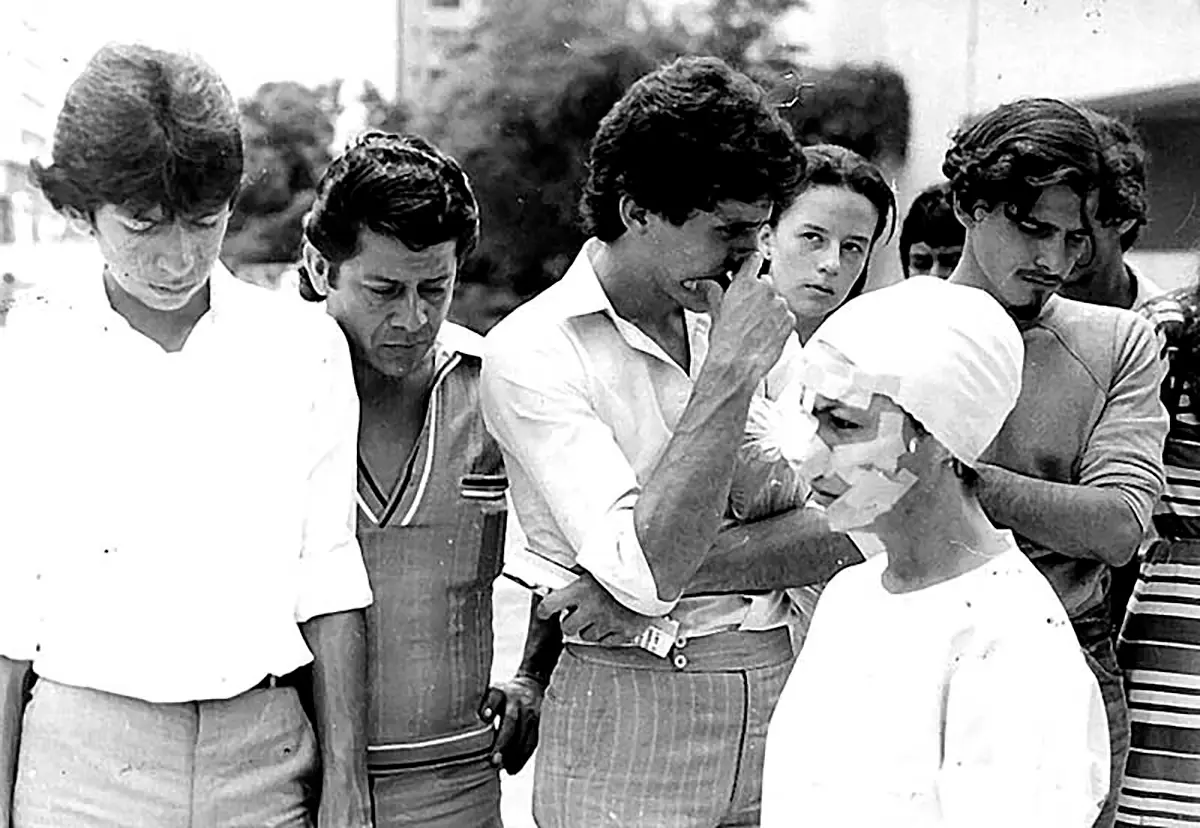
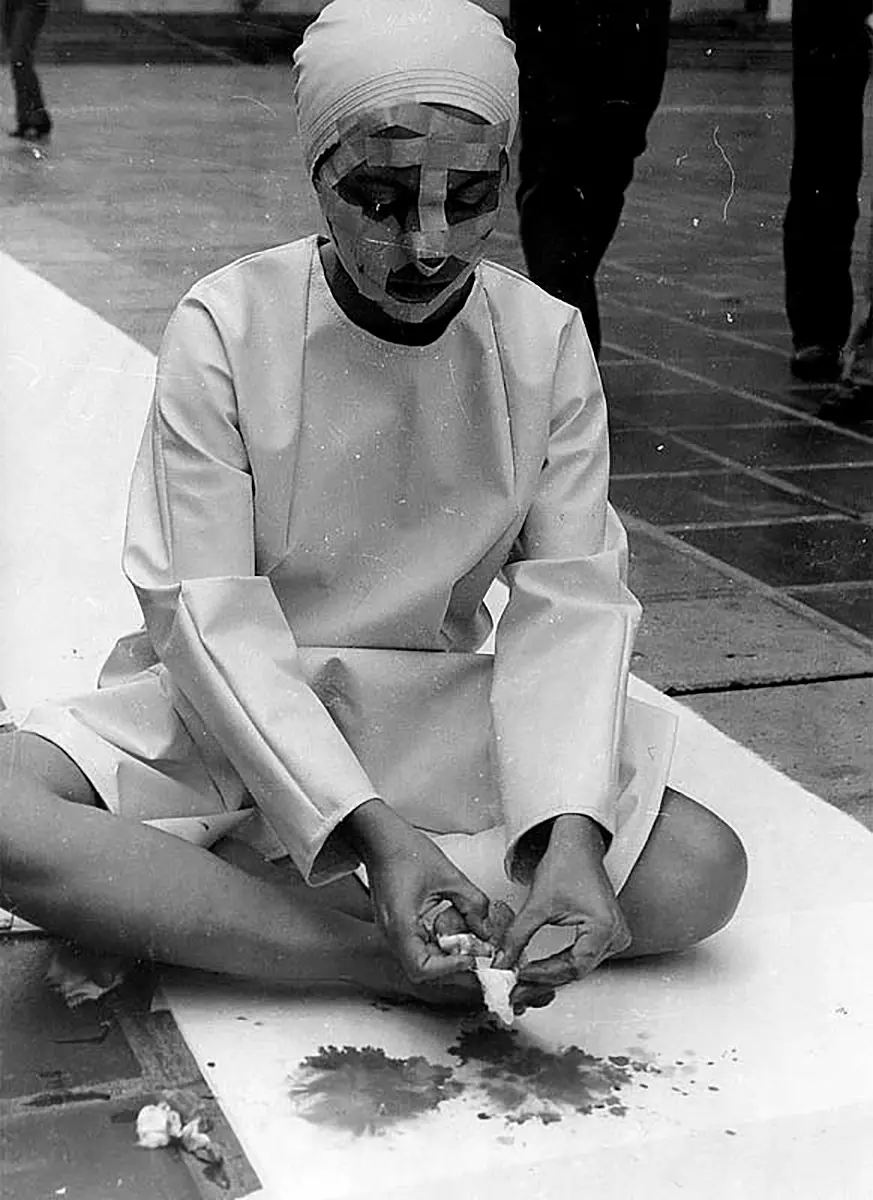
Her first performance was Anónimo 1, 1981 at the Plazoleta del Centro Administrativo Municipal in Cali. Marmolejo dressed in a white tunic and cap and the face covered in bandages to denote anonymity, walked silently over a walkway marked by a line of white paper. The area was guarded by police who stopped the public from getting too close. Shortly after the beginning of the performance, Marmolejo sat on the white line and made cuts under her toes and then continued walking leaving a blood trail behind her. The second stage of the performance consisted of curing her wounds and continuing to walk with bandaged toes. The artist had set a loud clock that ticked during the action and which went off after 20 minutes ending the performance, which the artist described as “waking up from a nightmare.”7
The artist has written that this performance was in homage to the tortured and disappeared during the Turbay Ayala regime. Marmolejo’s self-inflicted wounds and the subsequent process of healing was a way to bring to the public’s attention the violence that was taking place (the public, mostly male, during this performance, was both disturbed and touched, though according to the artist, were more impressed by the blood in the performance than by the daily violence in Colombia), but also to manifest the need to heal the pain resulting from the brutality inflicted on innocent people, and to put an end to the situation. Marmolejo’s self-infliction became a modus operandi for the artist, as her involvement with the issues she raised was not merely intellectual or artistic, but visceral, urgent, and compassionate.
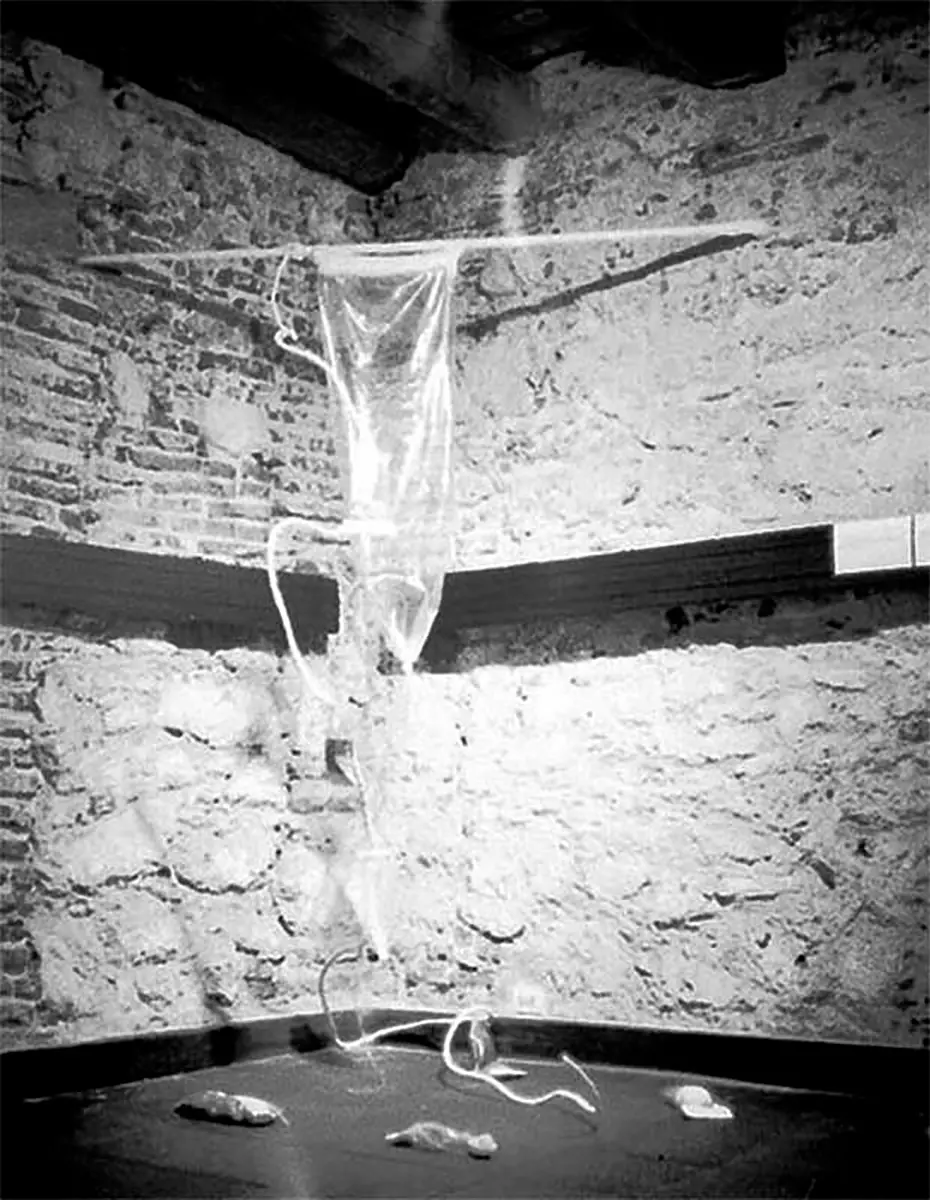
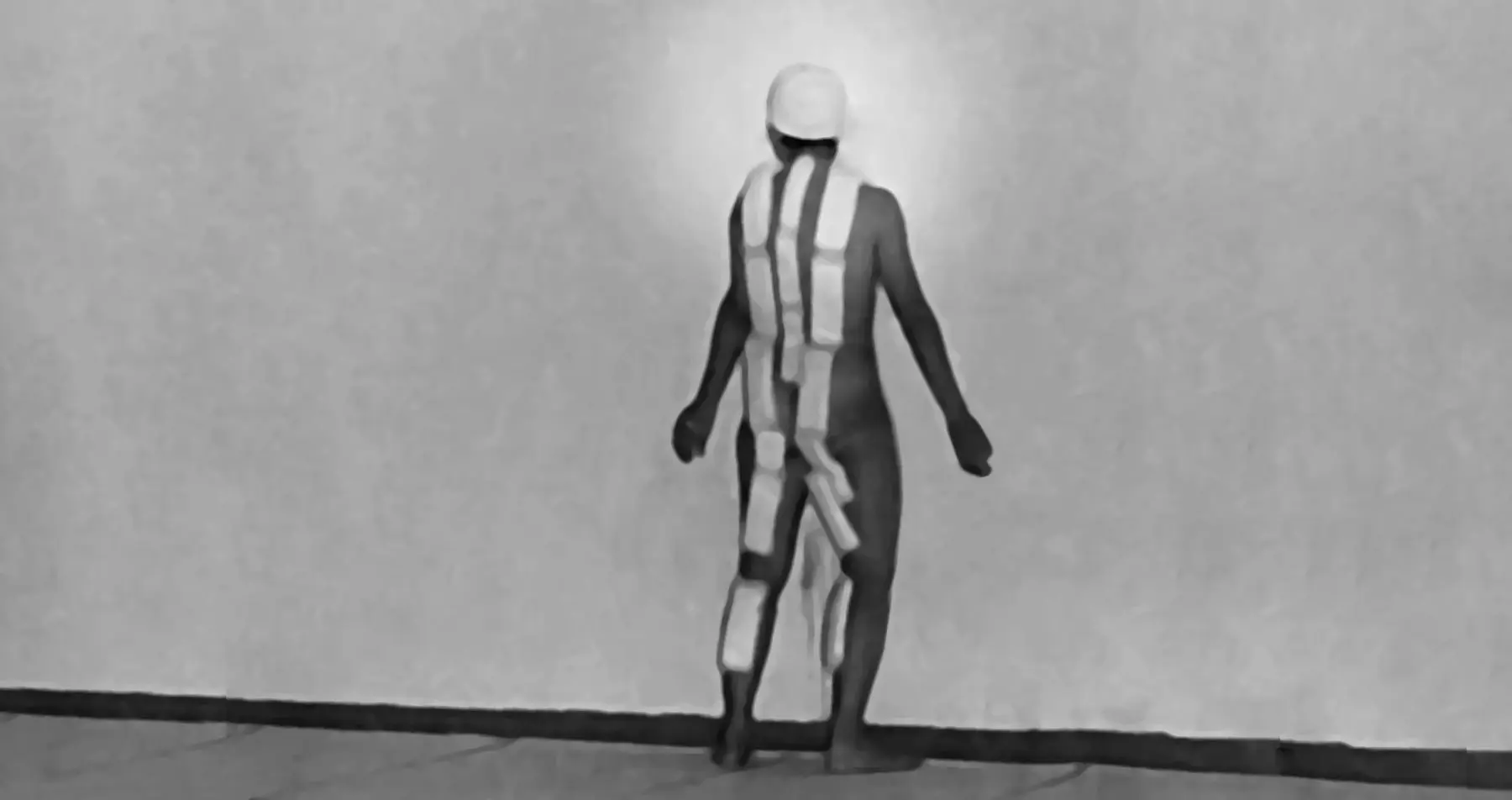
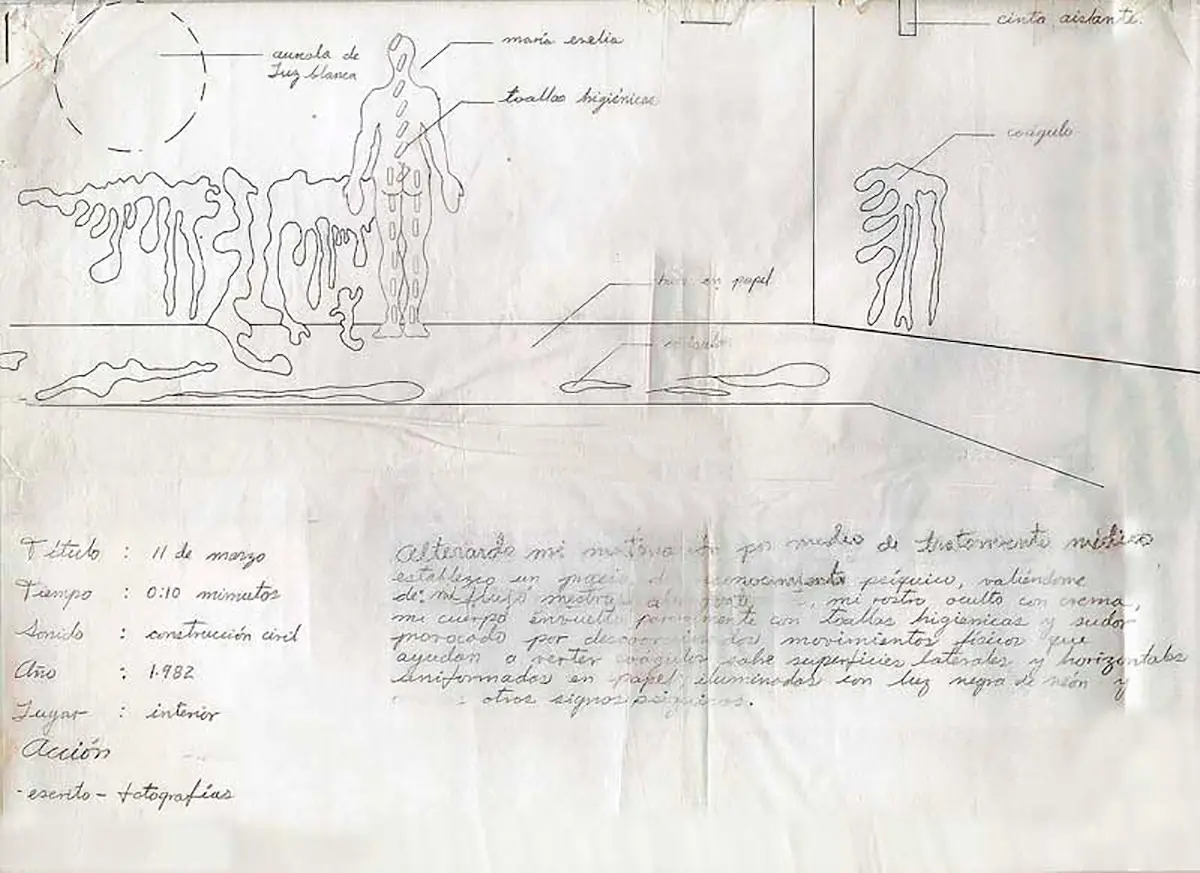
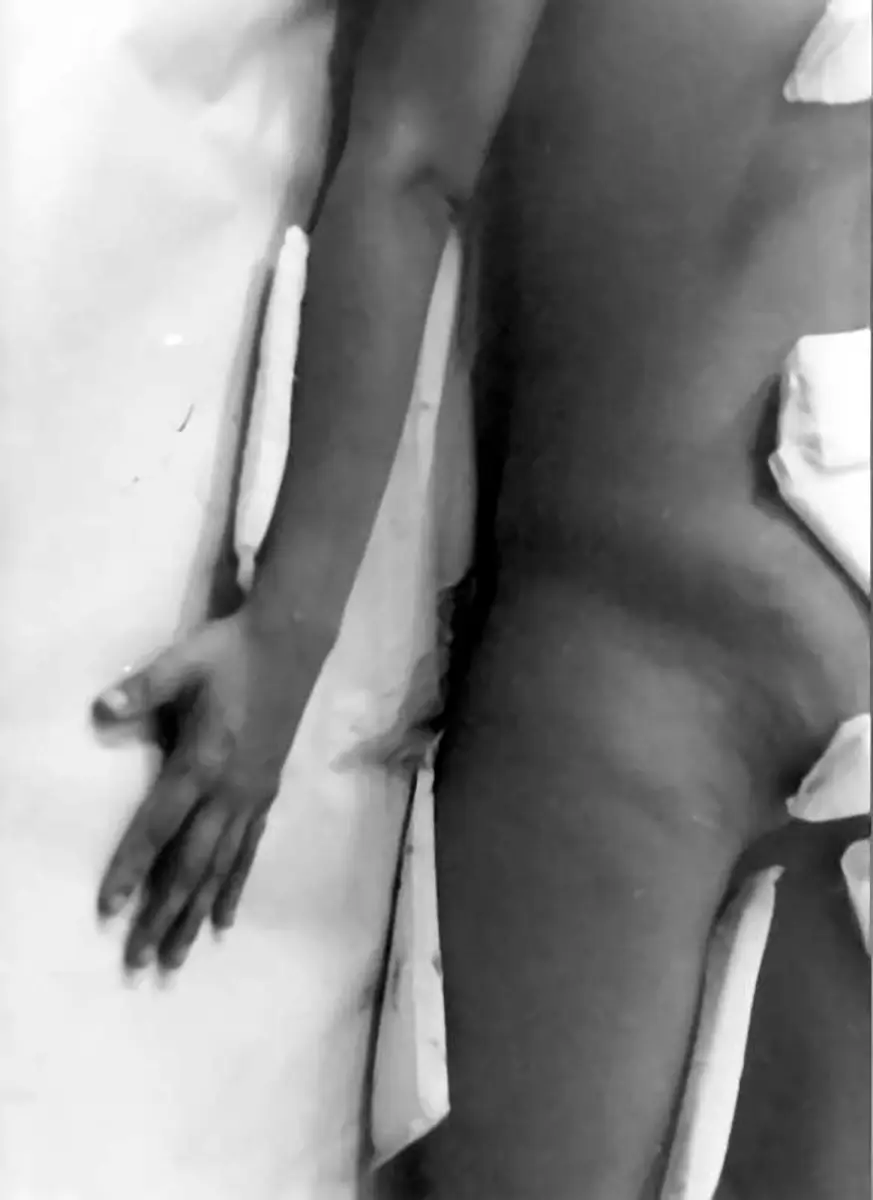
11 de marzo, 1982 took place at the Galería San Diego in Bogotá. Marmolejo decided on the date of the performance after she had her last period to be able to determine the date of the coming one. In preparation for the performance she took some herbal medicines to help induce her period and guarantee that it began on March 11th. The artist arranged paper on the floor in an L shape, lit the place with black light, and in the background played a soundtrack of a toilet flushing. She wore a white cap and large sections of her body were covered with sanitary pads excluding the genitals so that the blood when she walked would drip on the floor. She did a dance where she would rub her pubis against the wall leaving an imprint of her blood which dripped along the wall to the floor. Marmolejo had suffered all her life of very abundant periods and had experienced the trauma of constantly staining her clothes with blood and being teased by people, especially when she was a young student. This performance was partly a way to come to terms with her own body and its functions. This was a ritual to the menstruation, something considered shameful and repugnant, to celebrate it as something natural. Also, the artist, having been raised Catholic, repelled the Judeo-Christian conception of the genesis where the woman was born out of the rib of Adam, thus establishing the superiority and power of men over the women. Through this ritual, she wanted to celebrate women’s centrality in the origin of life. In contrast to the Christian tradition, in this performance she refers to ancestral indigenous mythology that establishes the origin of life in women, who created man by mixing menstrual blood with mud in the shape of a phallus and buried it. Man thus became her companion and together created new lives. 8
Reading Marmolejo’s work as circumscribed to an essentialist idea of the feminine is limited and misleading. In 11 de marzo, Marmolejo transforms the period—a weakness, something negative and traumatic—into a strength. Her radicalism is rooted in her frontal rebelliousness against the fragmentation of the feminine as a sanitized body from what is perceived as dirty. She is performing an anti-colonialist act by resorting to Indigenous beliefs, thus deconstructing the power of the Judeo-Christian religion which establishes woman’s inferiority, dependency, and essential weakness. Also, her action is freeing both of her anger and repression, to the extent that the artist has commented9 that she experienced a climax in the form of an orgasm at the conclusion of the performance.
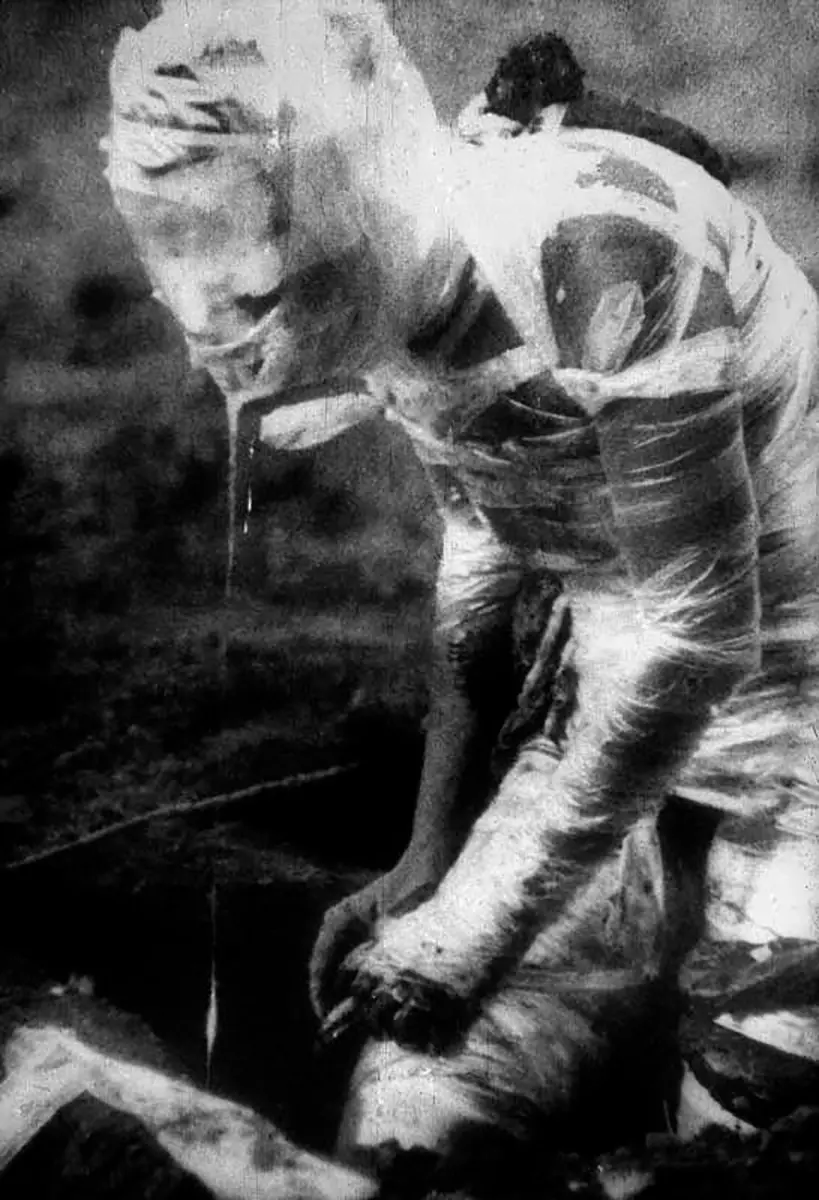
Following both a ritualistic aspect of her work and her political stance, Marmolejo produced Anónimo 4, 198210, a private performance at the edges of the Río Cauca, Valle del Cauca, Colombia,11 where she dug a triangle of 1.5 meters, the artist’s height, filled with layers of human placentas of births from that same day in Cali, that the artist had collected from public hospitals. Three adjacent smaller triangles were filled with sewage water. The artist tied placentas to her body with plastic strips and stood on the placentas in the larger triangle while reflecting and experiencing “the fear of coming to this world in a society where survival is not guaranteed.”12 The artist in the personal conversation has described that the pungent smell of the decaying placentas was overwhelming and this, combined with her reflections, produced strong reactions of vomiting and crying.
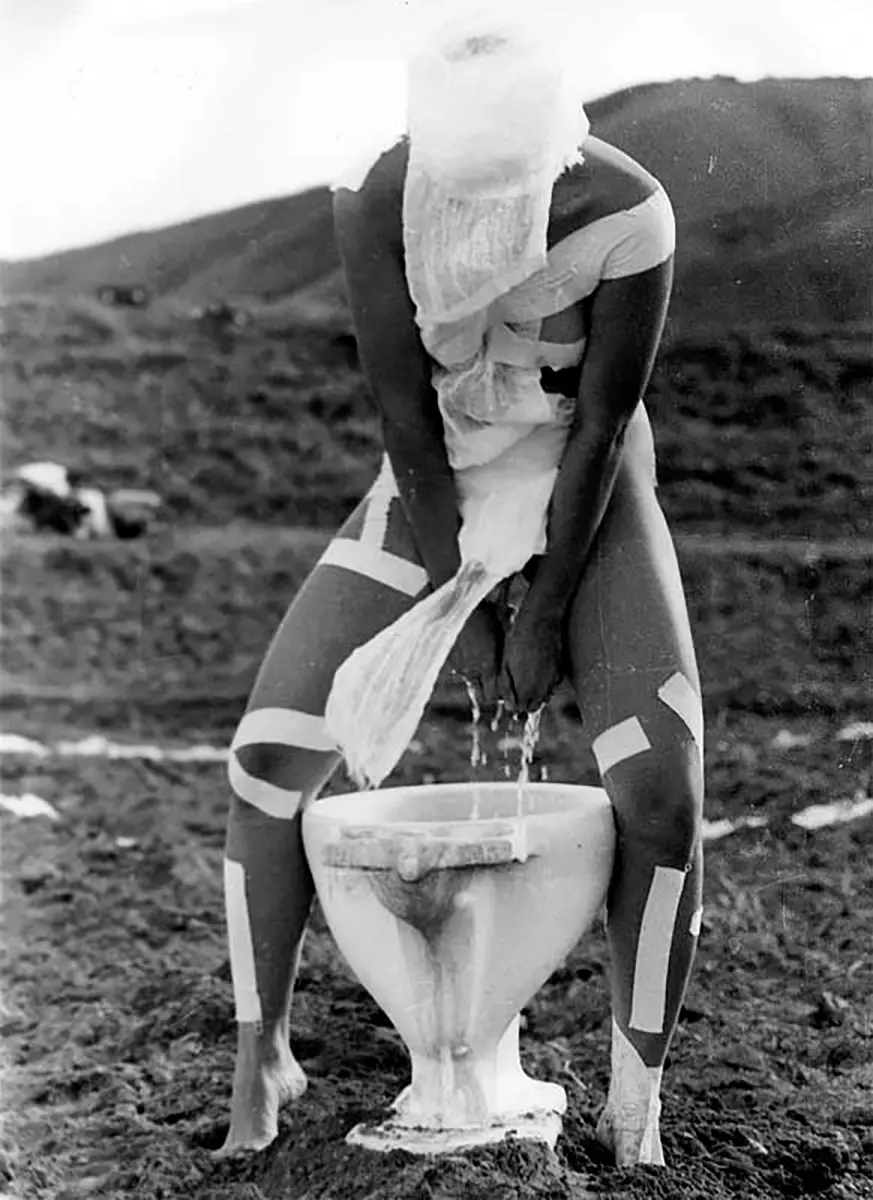
The issue of the environment is of great importance to the artist13. Anónimo 3, 1982 14 is another private performance Marmolejo did at the edges of the Río Cauca, for which she wrote: “A ritual to the Mother Earth was produced as an act of forgiveness for the pollution and destruction of the flora and fauna.”15 This contaminated river was emblematic of the pollution that industries are producing all over the world by throwing their chemicals in rivers, thus altering the biodiversity of the flora and fauna. The performance, which lasted 15 minutes, consisted of a healing ritual where she partially covered her body with surgical tape and gauze covered her face. Marmolejo drew a spiral with quicklime, and in the center placed a toilet bowl where she did a vaginal wash, letting her fluids fall to the ground, thus fertilizing the earth that had been polluted, and fragments of the soaked tape and gauze were arranged on the soil.
Performances such as Residuos I, 1983 and Residuos II, 198416, combine both her preoccupation for ecological destruction and violence resulting from the exploitation of oil. For these works, she created an installation of objects, containers and bags filled with organic matter such as urine, animal tripe, blood, and other matter. For Residuos II, the artist included a fetus in a compressed bag together with a used sanitary pad installed with other bags of organic matter. The fetus stood for a “discarded baby” in response to an article the artist read on child mortality before the age of 5. The artist wrote biographical information on her back and stood by the installation for 5 minutes for people to read the information.
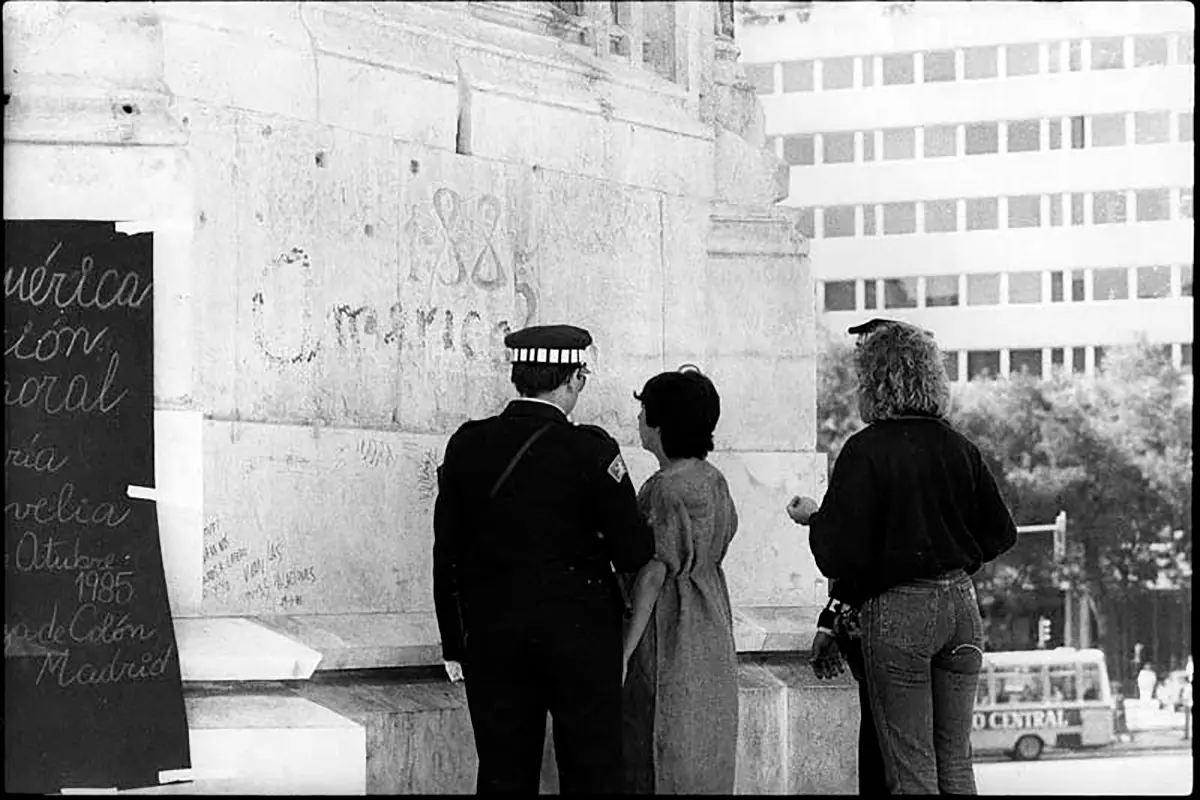
In 1985 when the artist was two months pregnant she self-exiled to Madrid. That same year, Marmolejo heard of the preparations for the celebrations of the 500 years of the discovery of America. As a result, the same year on October 12th, she did the performance América, at the Plaza Colón in Madrid, in protest to these coming celebrations. Marmolejo proposed that instead of a celebration, this date should be established as a day of mourning, because it marked the beginning of colonialism in America and the death of 67 million natives. For the action, Marmolejo distributed a sheet with excerpts from Fray Bartolomé de la Casas’, Breve Destrucción de las Indias, (written in 1542 and published in 1552) describing the destruction and violence of the Spaniards against the Indians. She wrote the word “América” on the pedestal of the Colón statue, with blood from cuts in her fingers, and then broke a mirror her size and placed the pieces in a basket and distributed them amongst the public, as a symbol of the return of the mirrors that were brought to America during the Conquest. The police arrested the artist for a few hours.
As we have observed throughout the performances described, Marmolejo is a radical and political artist; we may call her ‘feminist’, involved in compelling issues relating to her role as a woman, political crisis, oppression, colonialism, and ecology. It is not possible to dissect the gender issues from broader political concerns involving society as a whole or to establish some “essentialist” feminine and isolate it from, for example, the ideological oppression of religion that she so strongly opposes. Even the ritualistic aspects of the artist’s work have a political underpinning, whereas an anti-colonialist act, liberating from repression, or a healing vehicle, cannot be reduced to a form of essentialism.
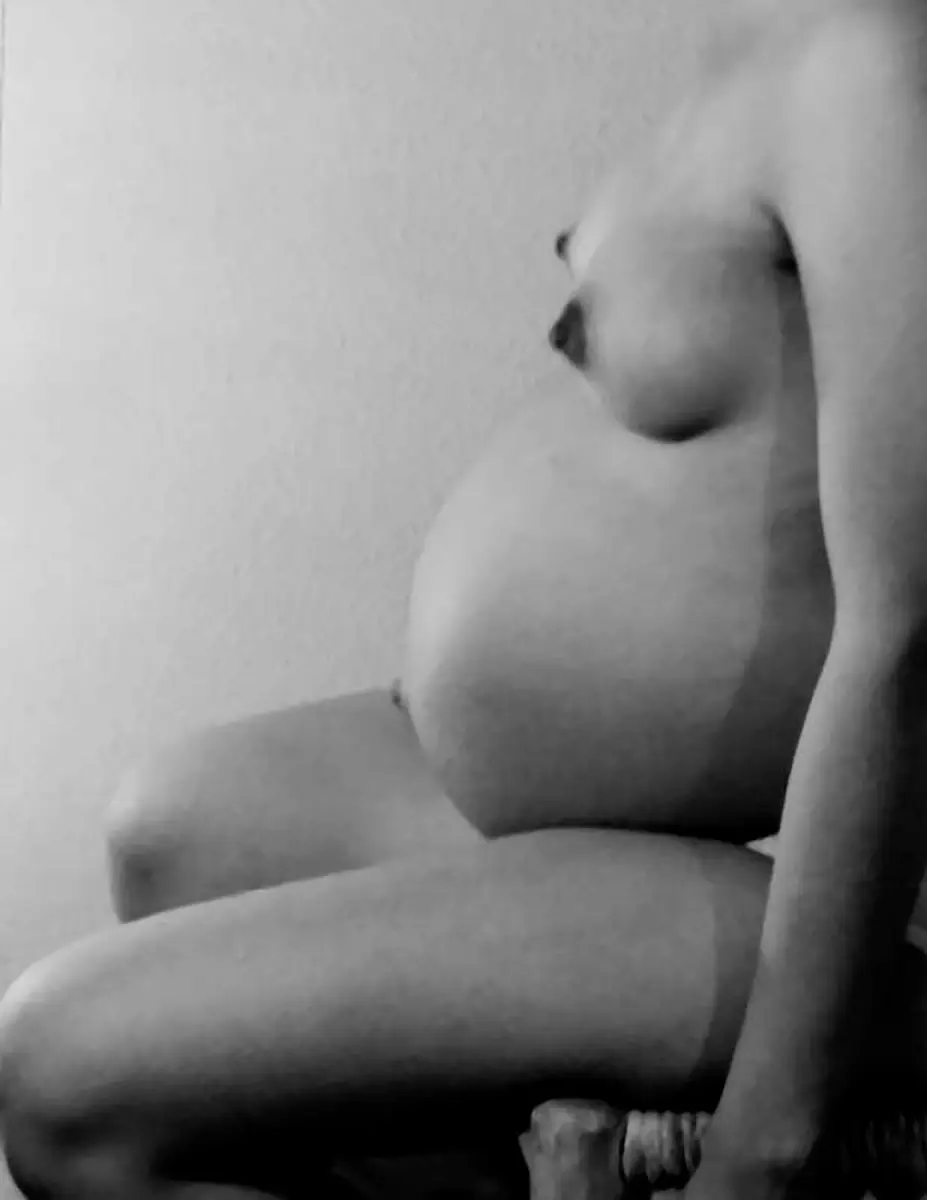
The ultimate performance the artist did is Sesquilé, December 5, 198517 where she proposed the birth of her child as a work of art. She invited several spectators and a photographer18 to witness the event, though she was so engrossed in the pain of childbirth that she became oblivious of the public. Marmolejo was atheistic at the time, nevertheless conceptualized that as an artist she was a “creator,” in this case the creator of a new life which was an extension of her being. She was, ironically and against the established patriarchal masculine ‘God’, her own ‘god.’
María Evelia Marmolejo’s work will be on view in the fall of 2013 at the Museum of Latin American Art, Long Beach, in the context of the historical exhibition The Political Body: Radical Women in Latin American Art: 1960-1985, which is curated by Cecilia Fajardo-Hill and Andrea Giunta.
NOTES
1. The definition of performance in this article is broad and may be based on Juan Acha’s term no-objetualismo (non-objectualism) and encompasses: performances, happenings, actions, and photo (Anna Maria Maiolino) and video performances (Sonia Andrade) and private meetings (Mónica Mayer Dinner Party, 1979) i.e., live art forms done in private. Marmolejo herself described her actions as arte corporal (body art) and it has been often the case in Latin América that artists, particularly in the 70s and 80s preferred not to use the term performance to define a practice that was not necessarily circumscribed by this imported term. A case in question is Mexican artist Maris Bustamante.
2. Some Latin American artists that produced actions, happenings and/or did performance between the 1960s and 1980s are listed below. In most cases the date only denotes when the artist started producing performances, as many continued active for decades: Argentina 1960s: Gloria Carnevali, Eduardo Costa, Alberto Greco, Roberto Jacoby, David Lamelas, Lea Lublin, Oscar Masotta, Marta Minujin, Margarita Paksa; 1970s: Victor Grippo. Brazil 1960s: Lygia Clark, Nelson Leirner, Helio Oiticica, Lygia Pape; 1970s: Sonia Andrade, Artur Barrio, Anna Bella Geiger, Anna Maria Maiolino, Antonio Manuel, Cildo Meireles, Teresina Soares, Celeida Tostes, Regina Vater. Chile 1960s: Cecilia Vicuña; 1970s: Grupo CADA, Diamela Eltit, Carlos Leppe, Lotte Rosenfeld, Raúl Zurita. Cuba: José Bedia, Flavio Garcilandia, Manuel Mendive, Aldito Menéndez, Glexis Novoa, Gustavo Pérez Monzón, Juan Francisco Elso Padilla, Ricardo Rodríguez Brey, Leandro Soto, Rubén Torres Llorca, and the collectives Arte Calle and Grupo Provisional. México 1970s: Maris Bustamante, Lourdes Grobet, Felipe Ehrenberg, Alejandro Jodorowsky (Chile), Mónica Mayer, Grupo Pentágono, No Grupo; 1980s: Guillermo Gómez-Peña, Polvo de Gallina Negra, Jesusa Rodríguez, Tlacuilas y Retrateras. Venezuela 1960s: Alberto Brandt, Rolando Peña, Techo de la Ballena; 1970s: Diego Barbosa, Antonieta Sosa, Pedro Terán, Yeni y Nan; 1980s: Teowald D’Arango, Marco Antonio Ettedgi, Héctor Fuenmayor, Alfred Wenemoser, Carlos Zerpa. Colombia 1980s: María Teresa Cano, María Teresa Hincapié, María Evelia Marmolejo, Sara Modiano, Rosemberg Sandoval. Singular artists that may be mentioned are: Margarita Azurdia (Guatemala), Felipe Buendía, Teresa Burga and Yvonne von Mollendorf (Peru), Ana Mendieta (Cuba), Rafael Montañez Ortiz (Puerto Rico/USA), Nelbia Romero (Uruguay) and many others.
3. The artist has explained that oppression, violence and political persecution had existed in Colombia since the 1940s. Her biological father was killed for being conservative and also they tried to kill her adoptive father because he was liberal. Personal Correspondence with the artist, January 25, 2012.
4. María Iovino “María Teresa Hincapié: Action, Corporeality, and the Realm of the Feminine in Colombia” in Arte Vida: Actions by Artists of the Americas 1960-2000. Deborah Cullen Ed., (New York: El Museo del Barrio, 2008) p. 216. Though, in personal conversation with the Colombian art critic Eduardo Serrano in Bogotá in 2010, he brought to my attention the importance and radicalism of this performance.
5. The artist has commented that she was informed and well aware of the political turmoil in other countries in Latin America and her work not only addressed the political situation in Colombia but also other countries.
6. Personal correspondence with the artist, January 19, 2012.
7. Artist written description of performance from 1981 and edited in 2010-2011.
8. She overheard the ancestral indigenous myth during her conversations with people that had contact with indigenous groups from Choco’s rainforest in Colombia.
9. Personal conversations with the artist in February 10th and November 11th of 2011.
10. Recorded on video and presented at the VIII Salón Atenas Bogotá in 1982, and at the Contemporary Art Museum and Art Gallery in Guayaquil, Ecuador, in 1984.
11. The artists wrote on this work: “According to UNICEF’s statistics, every year 11 thousand children die of starvation, thirst and cold in Latin America. I question how pleasant it is to come to a world where there is no aid nor comfort for a newborn?” This action was exhibited at VIII Salón Atenas, Museo de Arte Moderno de Bogotá, Colombia and in 1984 at the Museo de Arte Contemporáneo y Pinacoteca de Guayaquil, Ecuador. Artist written statement from 1982 and edited in 2010-2011.
12. Artist written statement from 1982 and edited in 2010-2011
13. In 2004, twelve years after producing her last performance, Marmolejo did the performance: Amazons, Fusarium, Oxysporum, Glyphosate at the Wilmer Jenning Gallery, with the cooperation of Latino Artists Round Table in New York. For this, she wrote with blood from her fingers the word Amazonas on a wall that projected the name of the toxic chemicals that were sent by the USA to fumigate against coca plantations which are destructive to the ecosystem.
14. Anónimo 3 was presented at VII Salón Atenas, Museo de Arte Moderno de Bogotá, Colombia as photo and video documentation.
15. Artist written statement from 1982 and edited in 2010-2011.
16. Performance that took place in the IV Salon Regional de Arte Visuales Colcultura, Pato, Colombia.
17. Though this is not her last performance as she did two more actions in 1992 and 2004.
18. The photographer got so nervous in observing the artist in labor pain that opened the camera and the film was destroyed. Only the photographer was saved. Amongst the spectators was the Spanish critic Carlos Jiménez who never divulged the event.
CECILIA FAJARDO-HILL
British/Venezuelan art historian and curator. She is currently chief curator at the Museum of Latin America Art, MOLAA, in Long Beach, California.