
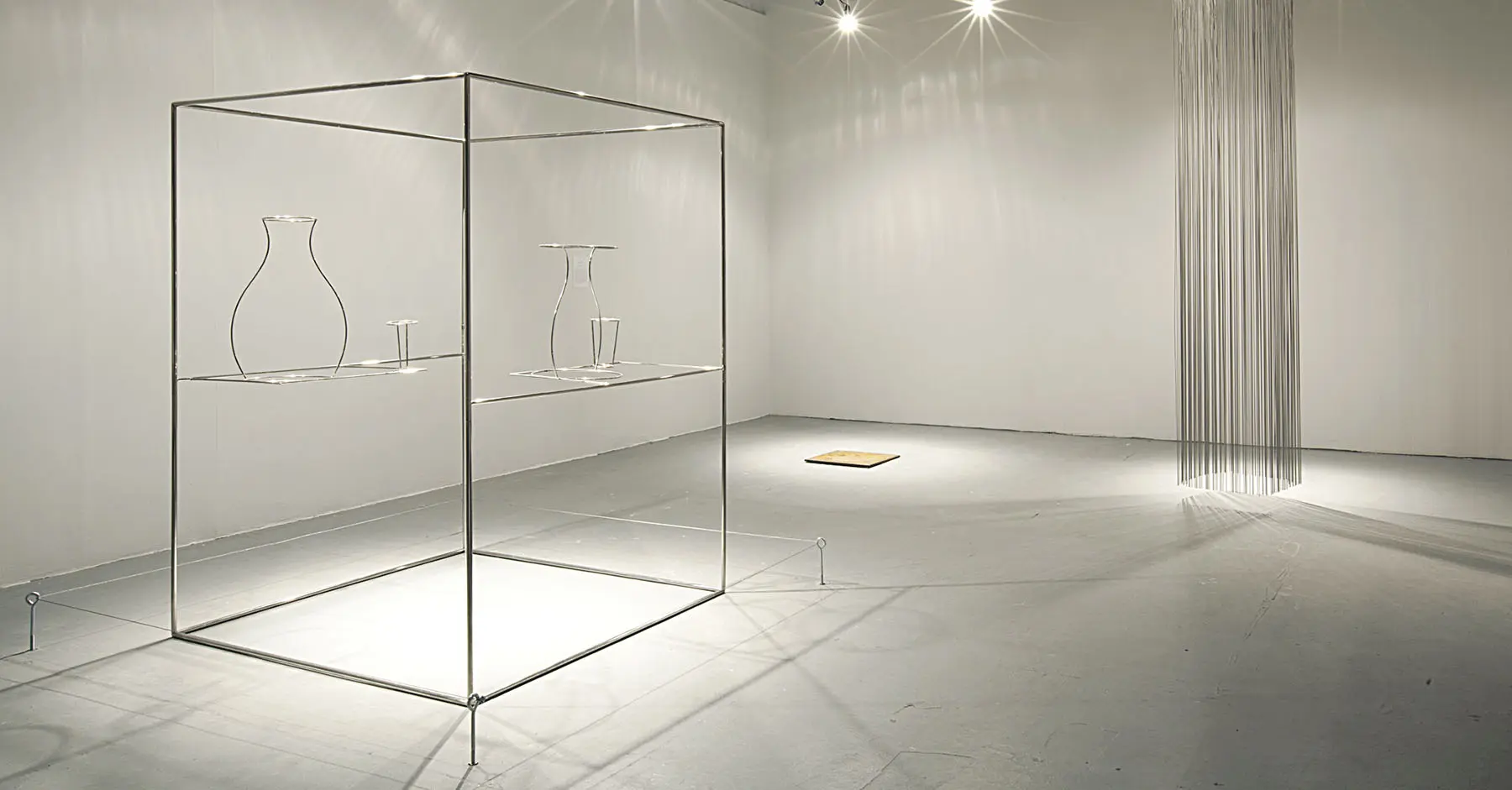
The words “effect” and “influence” are used often in the visual arts, as they are in all other arts. This show incorporates the concept into its title and brings to the fore several present-day situations that derive from the work of a key figure of the past. Remembering that John Cage, an author who continues to permeate through today’s creators and intellectuals, was born one hundred years ago is a well-deserved homage and an educational opportunity. There are several important keys to this exhibition. One of them is the convergence of the academic (teachers, students, and artists) and the aesthetic, provoking theoretical reflections that are pointed out throughout the text, reflections that come from Cage and retain their validity, as they coincide with current parameters. From a historical perspective, no need to determine whether Cage is the most important artist of the second half of the Twentieth Century, which is not conducive, is reductive and leaves aside others who illuminated different pathways and left strong traces. But yes, Cage influenced a large number of artists from several generations. His activities in various disciplines reveal the freedom of his creative impulse: with Merce Cunningham, he established a fertile, experimental dance company at Black Mountain College, later joined by Robert Rauschenberg. Other artists approached them and together they forged a New York avant-garde confronting the then-dominant school of abstract expressionism. Cage, who believed that the viewer’s mind should be pushed out of focus in order to produce a series of free meditations, was characterized by trans-disciplinary flexibility. He created objects, nontraditional musical compositions, and silences as musical values, non-systematic audience participation, and actions (performances), among many other expressions. This exhibition, Notations: The Cage Effect Today, brings together a number of contemporary artists who, without necessarily being Cagean, touch at least tangentially upon several of Cage’s ideas. Cage crossed borders and continues to motivate others to do so.
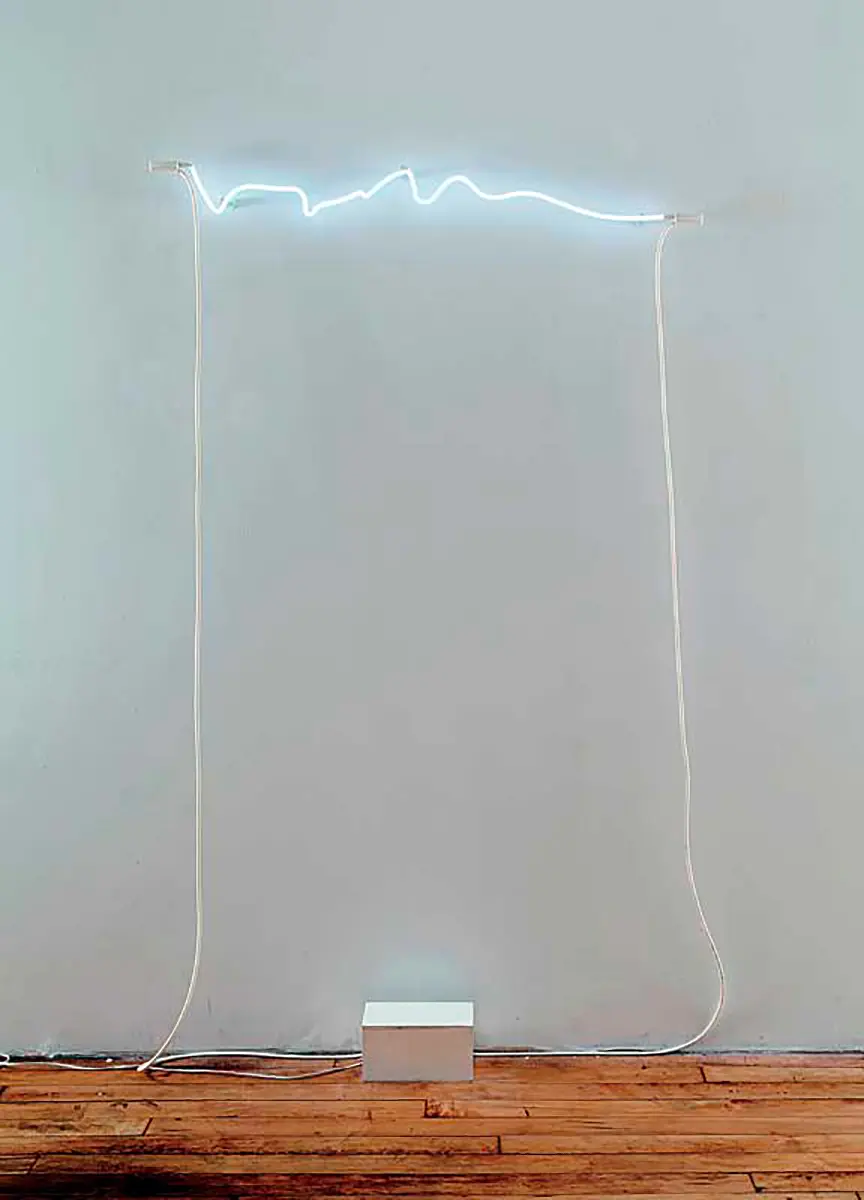
These are the twenty-eight participants, including Cage, the one of the “effect”: William Anastasi / Soledad Arias / Céleste Boursier-Mougenot / John Cage / Waltercio Caldas / José Damasceno / Hanne Darboven / Matthew Deleget / Liz Deschenes / Felipe Dulzaides / León Ferrari / Robert Filliou / Yukio Fujimoto / Nicolás Guagnini / Lynne Harlow / Douglas Huebler / Gareth James / David Lamelas / Reiner Leist / Jorge Macchi / Christian Marclay / Rivane Neuenschwander / Kaz Oshiro / Edgardo Rudnitzky / Fred Sandback / Frank Scheffer / Ushio Shinohara / Linda Stillman / Daniel Wurtzel. An illustrated catalog has been published, and the program includes complimentary interdisciplinary activities conceived with truly Cagean flexibility. In the catalog text, Joachim Pissarro says that “Cage, in order to do justice to his multifarious and daunting practices, forces us to think across disciplines, and across continents. The history of the arts (plural) is not used to thinking in this way; the discipline at large is still divided according to media—and according to continents (Africa, Asia, Latin America—and Europe, the only continent which, for some reason, continues to be divided up in countries). Cage merrily crossed all such borders—physically, intellectually, artistically.”
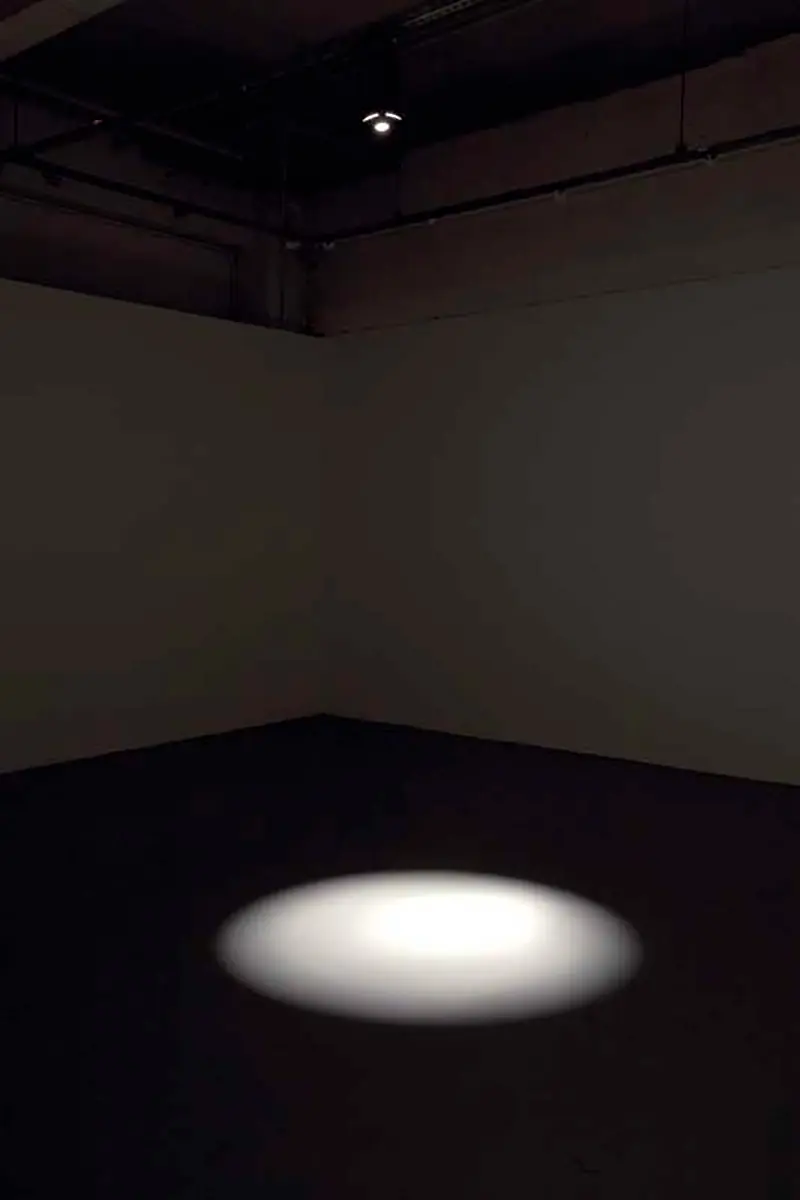
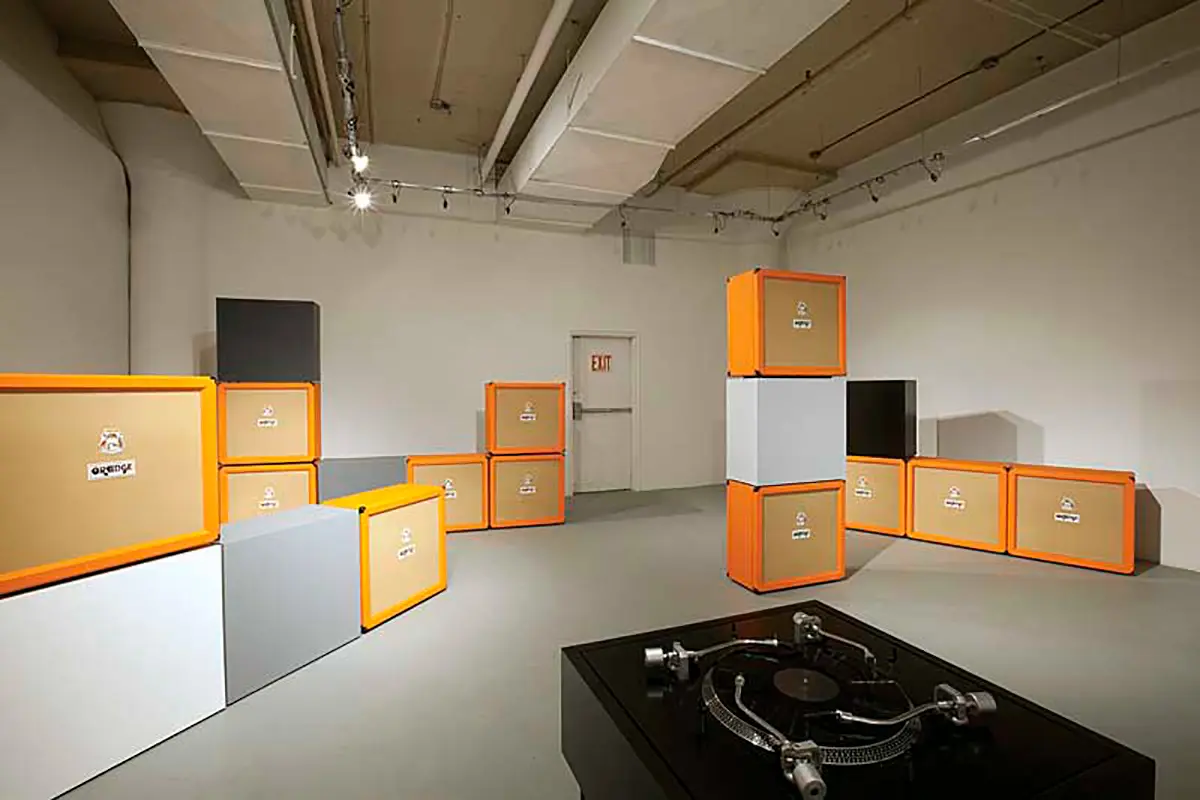
Once the viewer has been introduced to the celebrated artist’s world, we needed information about the curatorial process—obtained via Skype from Julio Grimblatt, a photographer and professor at Hunter—in answer to the following questions: How did it all begin? Were there conceptualization meetings between curators and artists? How was the selection of artists made? Is it important to clarify for our readers whether works were commissioned or selected from existing materials? How was the museography developed?
“The beginning was academic, with a class that Joachim Pissarro taught in 2008—with professor Geoffrey Burleson, director of Piano Studies—at Hunter, where he teaches and directs the 41st Street gallery. I took that class as part of my graduate degree, and it blew my mind. Pissarro invited me to co-curate this exhibition with him, and I, in turn, invited Bibi Calderaro. Last semester, Joachim Pissarro gave a curating class and with Michelle Yun we ended up being four co-curators. These unexpected academic twists and turns resulted in what is on exhibit here. I can answer for myself: I sought artists that provided me with experiences similar to those provoked by Cage: freedom with responsibility and a state of alertness, a state of wakefulness. For Cage, silence is the moment when one lets the world in. It wasn’t really a process of selecting artists but of selecting works. I even selected works by artists who are not Cagean, as in the case of Jorge Macchi. His work is in analog media and captures sounds from various cities. A university lacks the budget to commission works. We selected previously created works, except for Rivane’s, which had already been done in Brazil but was reformulated for New York. We have had loans from galleries in the city and only one work came from somewhere else: Lamelas came from the Walker Art Center. Having it was essential. Art offers unexpected connections. The museography was pure visual narrative. There are no chronological or geographic divisions; it was more a question of playing with the works and finding out how they communicated with each other. The beautiful thing of looking at a work by José Damasceno through a work by Samback is that it doesn’t require theory.”
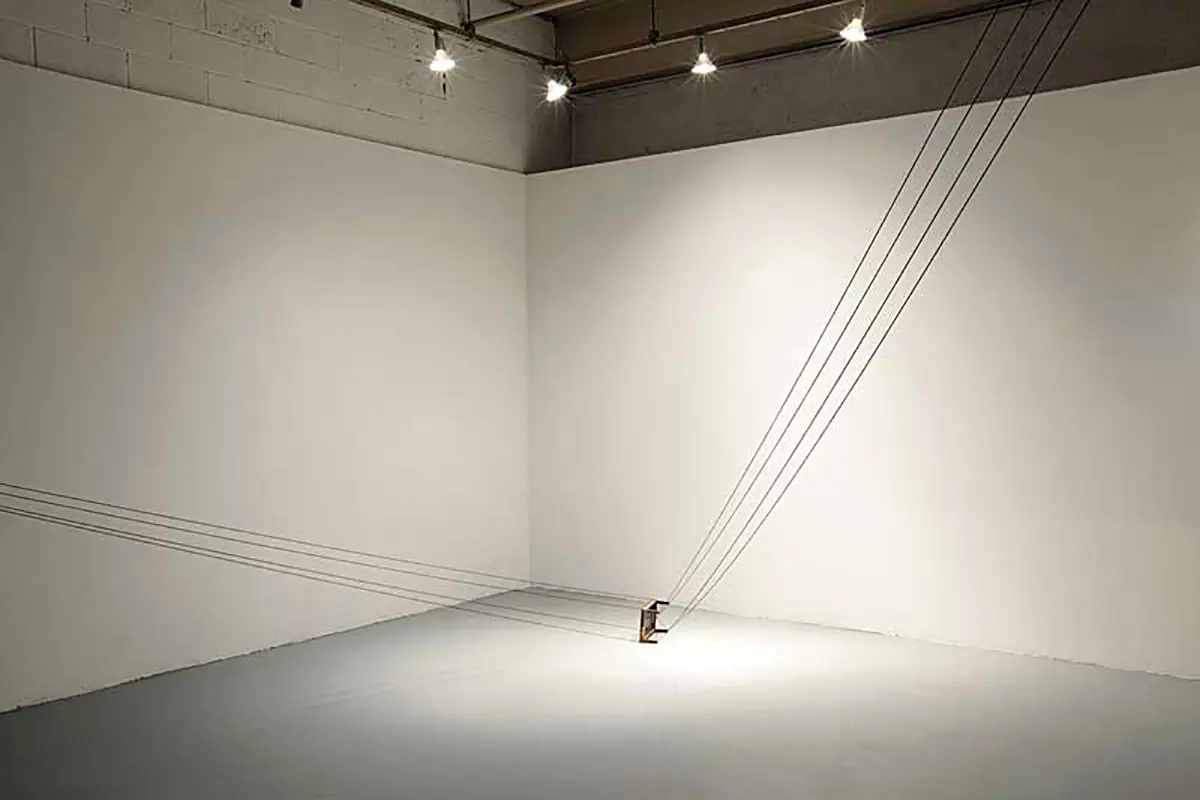
Kaz Oshiro’s installation is the most material; almost all the works are translucent and tend towards the intangible (“opening of the mind”), like those by Waltercio Caldas and Soledad Arias. Jorge Macchi unfurls “the globe” on the floor and manifests his annotations. Edgardo Rudnitzky’s Octopus refers to sound, musical composition, and only gives as the Cagean silence. As Cage once put it: "I have nothing to say. Nevertheless, I am saying it". Had it been given greater structure, the exhibition that emerges from that series of interactions would have turned out anti-Cagean. The Hunter College Gallery on 41st Street is located in a strongly urban setting, with broad streets, lots of traffic, and, of course, noise, a very Cage topic in itself. Cage, who lived in New York’s West Side, on Sixth Avenue and 18th Street, used to say that the best music in the street, the noise of cars, the sounds of the city. Readers who haven’t seen the exhibition must know that the gallery is ample and can present works in comfortably spacious arrangements. Those great empty spaces function here just like Cage’s valuable silences.
GRACIELA KARTOFEL