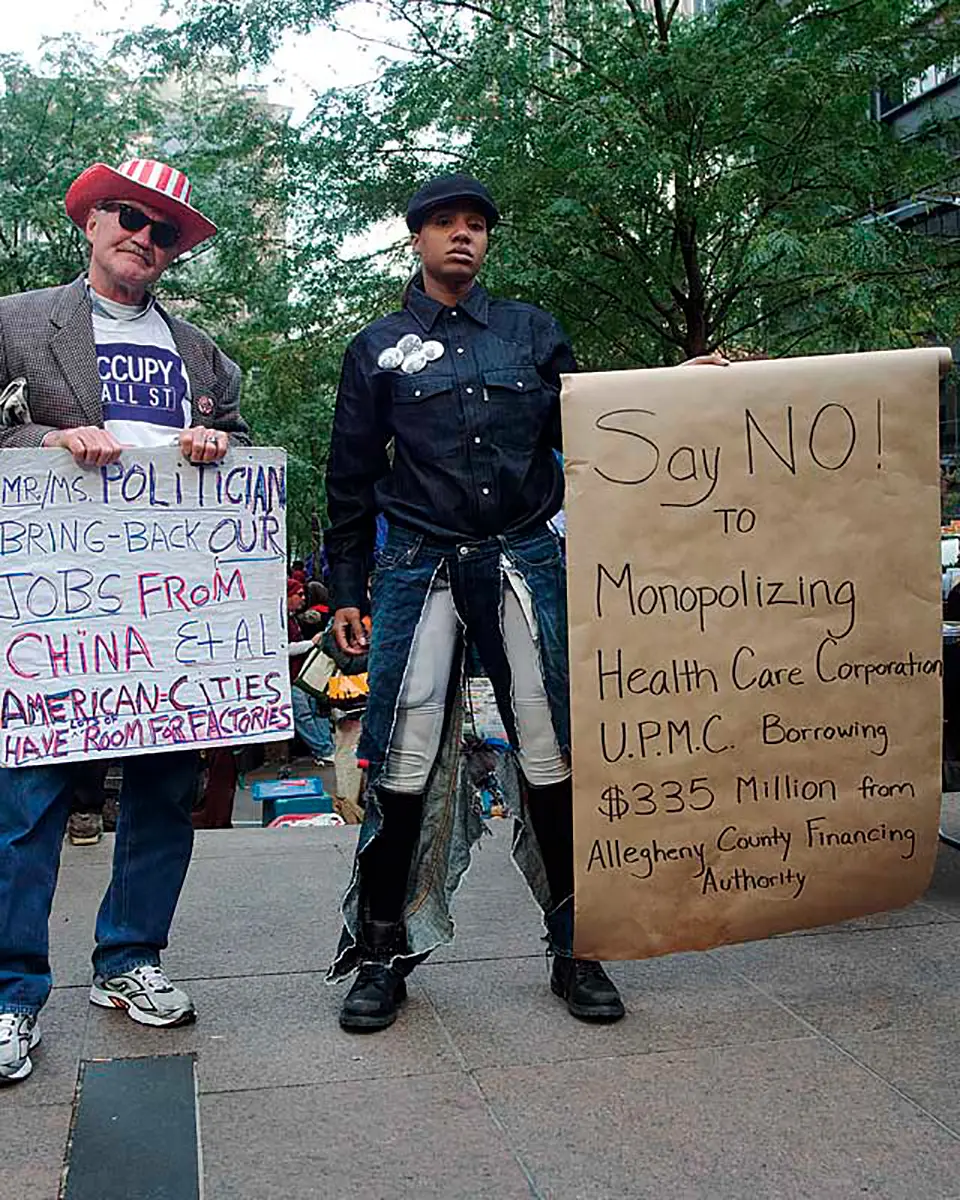
It is often said that the worst perception one can have about something is indifference, for it so clouds opinion that it then becomes difficult to be positional or even sincere. This was an initial impression upon viewing the 2012 Whitney Biennial, which arrived at a topical moment and not because 12/12/12 will mark the end of the Maya Long Count. Rather, because of what appeared to be the biennial’s eliding of events including the global economic crises; the Arab Spring; escalating Middle East turmoil including wars and occupation; the rise of the political right in the West; and, of course, the sociopolitical movement known as Occupy Wall St. What instead was substituted was a selection of artworks that seemed to articulate personal narratives executed with a formalism that was often not altogether successful. In eschewing what may have been the road less traveled, and by default an ambitious route at that, the 2012 Whitney Biennial felt less like it was adhering to the machinations of the art world with its careerism and market-driven pandering. While many works exhibited were by artists who have not been presented before, and this was one of the biennial’s redeeming factors, it was up to the viewer to decipher what it was all about beyond showcasing what ostensibly is the most interesting art being made in the U.S. today.
In an interview on the museum’s website the two curators, Elizabeth Sussman and Jay Sanders stated that it was basically up to the public to piecemeal any narrative connections in the 2012 Whitney Biennial. To be sure, the current rendition was an anticipated one with Ms. Sussman acting as its chief curator. After all, she was the author of the milestone exhibition Nan Goldin: I’ll be Your Mirror (1996), plus the excellent Eve Hesse retrospective, the exemplary William Eggleston show and numerous other memorable exhibitions. She was also the main curator of the (in) famous 1993 Whitney Biennial that reactive pundits used as an example of what happens when art and politics mix; which to them, the result is art’s succumbing to the pedantic. To consider this as axiomatic is overreacting if not demagogic, but political art can sometimes be overbearing in its didacticism and singularity. This, however, was hardly the case with the 1993 edition that was embodied with formal and conceptual ambitiousness. The 2012 version seemed almost one of atonement for Ms. Sussman, given that the watershed 1993 iteration was vehemently derided by the cultural rightwing for its criticality and visceral artworks that addressed social issues set against the backdrop of the AIDS epidemic, the 1992 L.A. riots, the NEA and censorship, identity politics, the waning of US influence abroad and subsequent rise of globalization. Regardless of the presumed incendiary content of the 1993 biennial, the 2012 edition was immediately distinguished from its predecessors in being pared down.
Consisting of 51 artists who worked in diverse media, limited selection not only meant more room for each artist to work in but also engendered diverse curatorial strategies that were not always cohesive. Knowing how curators today often leave nothing to chance, the biennial organizers’ placement of work cannot be solely relegated to one of logistics or theme. Regarding the former, presenting a relatively low number of artists hinted that spatial amplitude would create more curatorial options; and since the biennial lacked an overall concept, where work would be situated was about formal or aesthetic dialogue rather than a narrative one as the discussion below will occasionally highlight. The introductory work of the biennial was a large sculptural installation by Oscar Tuazon titled For Hire (2012). This greeted visitors at the entrance to the museum’s ground floor and consisted of a room-sized structure of wood and metal that evoked an overall industrial aesthetic whose function included serving as a fashion runaway. It was an interesting piece not so much for its purported use, but more so because of its ersatz guerrilla architecture that would later be dismantled and reinstalled in different configurations throughout the museum. It was paradoxically anti-site-specific in its site-specificity and reflected both an artistic and curatorial brilliance in its potential perpetual reinstallation. With its overtones of Minimalism and Arte Povera ciphered through a confluence of art, craft, and industrial design, Mr. Tuazon’s ontologically malleable work was generally strong though it was weakened by something that may have been beyond his control: a small framed work of outer space with attendant text. This piece was one of many more that were mounted throughout the biennial exhibition and was part of Lutz Bacher’s The Celestial Handbook (2012). Her work was made up of excised pages from a found astronomy book, which were taken out of context, framed, and dispersed in the museum. Ms. Bacher is generally an interesting and strong artist, but The Celestial Handbook seemed conceptually formulaic. And whereas it seemed a viable curatorial move to shift For Hire around the museum, foresight should have portended that Ms. Bacher’s piece of institutional intervention could backfire into a form of intrusion into another artist’s work. What metaphorically crash-landed The Celestial Handbook was that it inadvertently became a kind of Where’s Waldo game, as its appearance throughout the museum often decentered other works in its proximity.
As one entered the second floor there was a catalog on a sculptural pedestal that seemed like an odd museum didactic, but was, in fact, a work by Andrea Fraser. Ms. Fraser, who garnered merited importance with her signature genre of Institutional Critique, wrote a critical text in the biennial’s catalog that was displayed on a base that served to amplify the problematic relationship between museums, corporations, politics, and artistic production. How many people actually took the time to read it as a work of art in a museum was guesswork. Yet it did interrogate the system of which it was part as well as operating as a curatorial quirk, for it did convey texture via its idiosyncratic form of display. As one perused this work, however, one’s rumination of it was offset by a Bacher right above and to the side! Adjacent to these was a curious series of pieces by Joanna Malinowska that generally addressed the dearth of Native American art in the Whitney Museum’s collection. Although one did not doubt the artist’s integrity or inspiration in creating this body of work, the strongest piece of this corpus was an astute riff on Duchamp’s Bottle Rack (1914). Taking the iconic readymade as a model, Ms. Malinowska constructed a similarly shaped work from replicas of walrus tusks and mammoths native to the arctic region. Critically ironic and visually interesting if not poetic, it would have been savvier to continue the interrogation of Modernism’s icons by including others who indirectly appropriated signifiers of indigenous culture such as Henry Moore, Mark Rothko, Max Ernst, Georgia O’Keefe, and even Jackson Pollock’s so-called drip technique that he coopted from Navajo sand painting. This would have been a more fruitful critique rather than Whitney’s lack of indigenous art in their collection. Her other works included a painting by imprisoned AIM activist Leonard Peltier that was “smuggled” into the museum and a video installation where the artist conflated South American indigenous ritual with Hugo Ball and Joseph Beuys, which unfortunately reeked of twenty-first-century Orientalism. Other works on this same floor that seemed unresolved included Werner Herzog’s three-channel video installation and Richard Hawkins’ collages that felt slightly homogenous after seeing what appeared to be so many works without enough differentiation between them. The mounting of these works reflected another curatorial modus operandi in that on one wall was a row of collages in a horizontal line, and then on the opposite wall, there also appeared more works scattered here and there. This made no sense; however, it did not have to since there was no biennial theme or narrative, to begin with.
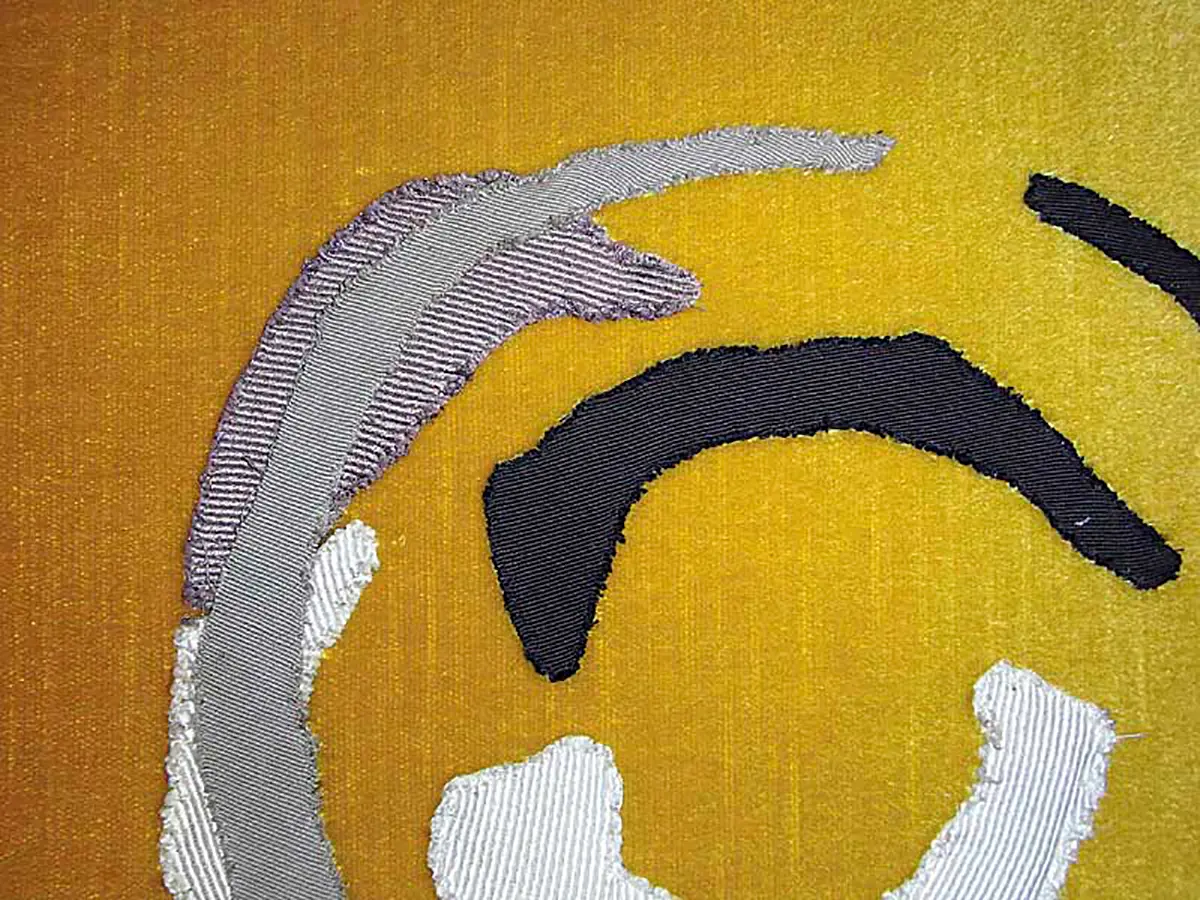
Works that did stand out on this floor were Latoya Ruby Frazier’s The Homebody (2012) series, which was a kind of ethnography consisting of self-portraits of her in pajamas and photographed in her step-great grandfather’s house. These lush yet tempered and demurred works were not only about his life in absentia and the neighborhood dehumanized by forces beyond his control, but they also became a metaphor of the general social malaise that transcends community and endemic to the world-at-large. Shot in black and white and in color, the works sustained themselves even without any context information, as they were a cross between Dorothea Lange, Carrie Mae Weems, and photojournalism. Another series of works that were quite strong was by the overlooked artist Forrest Bess. Mr. Bess was a painter whose outsider aesthetic was close to Henry Darger and Martin Ramirez, and coupled with this was an existential biography underscored by what the philosopher Judith Butler called “Gender Trouble.” An artist who at one time showed at the historically important Betty Parsons Gallery in New York with many an Abstract Expressionist, Bess cultivated a distinct, personal artistic vocabulary culled from disparate sources including the occult and Australian Aboriginal notions of hermaphroditism. Inspired by trying to achieve immortality through the “third sex,” he attempted to surgically alter his genitalia to include the anatomy of his opposite gender. Forrest Bess eventually died alone from alcoholism; and while he may be historically perceived tragically, the pursuit of his vision through complex if delusional yet unapologetic cosmology would situate him more as a hero than modern-day Icarus. And what about Bess’ paintings? As the antithesis of his peers in that he worked in a deliberate outsider aesthetic type of figuration with occasional detours into flat, pattern, and decoration abstraction, he was an excellent colorist as well as composer. One could delineate a lineage from him to Alice Neel who, in turn, can be seen as trailblazers to the slew of recent painters including Dana Schutz, Katherine Bernhardt, and Kim Dorland, among others. K8 Hardy, who was also exhibiting a series of wall works and floor pieces, would have created an interesting dialogue with Bess rather than appearing next to the work of Matt Hoyt. Hoyt’s contribution consisted of a series of objects that were intimate in scale and that appeared to be found materials but were, in fact, fabricated by him and then placed on shelves abutting the wall. One work that certainly merits mentioning was Kai Althoff’s rather large hanging painting that feigned sculpture via its appearance not dissimilar to a kind of trashy, yet highly aestheticized partition with an object here and there inserted into its expansive threading. Always an interesting artist in his handling of materials where painting becomes the point of formal as well as narrative departure, there was something impenetrable about his installation. It was visually arresting yet at the same time felt unintentionally unfinished. This trope of the deliberately unresolved, or deskilled, was not as prominent in the 2012 biennial as in previous editions, but there were many works that felt as if they were consciously cultivating a low-brow aesthetic.
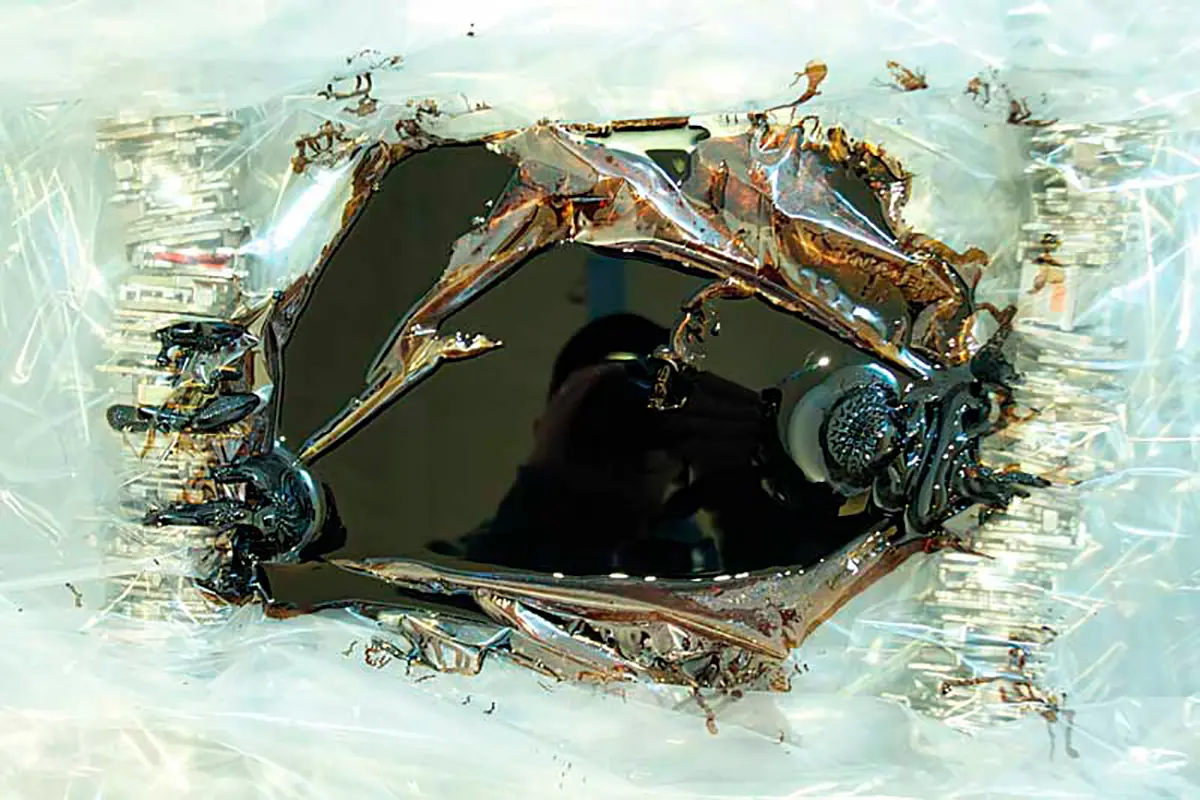
It is often worthwhile to take the elevator up to Whitney’s exhibition floors since more often than not there is a work prominently placed so that when the elevator doors open its initial presentation is heightened. In this case, it was an installation by Nick Mauss that was part funhouse meets fashion boutique and museum archive. Consisting of two white doors leading into the work, a Marsden Hartley painting, a reverse slide projection seen through a window of the structure, objects from the Whitney collection, plus an antechamber designed by Christian Bérard built-in 1939 for the French cosmetics company Guerlain, this pean to luxury and bourgeois excess linked the museum, history, and the commodity fetish similarly to Murakami’s conflation of Louis Vuitton and the Los Angeles Museum of Contemporary Art. Also of note were a series of “portraits” by Nicole Eisenman. Covering almost a wall with works in a broad range of colors and styles, these paintings funneled myriad sources, including German Expressionism, outsider art, printmaking, carnival masks, theatre, and even police mug shots. Creating tension between formal exuberance and meaning in the multiplicity of visages portrayed, Eisenman’s “portraits” became fictional surrogates of humanity’s denizens from a broad social spectrum. Another work that stood out was Sam Lewitt’s Fluid Employment (2012), which was a site-specific installation on the floor consisting of ferrofluid. This material is a mixture of magnetic particles suspended in a liquid. Poured on the floor, its coagulation was negated by a fan that dried the liquid as well as causing ripples. Creating a palpitating wave of feigned toxicity and environmental alarm, this sublime work was a poetic forewarning of what will happen globally if industries and companies are left to go amok in their pursuit of financial gain.
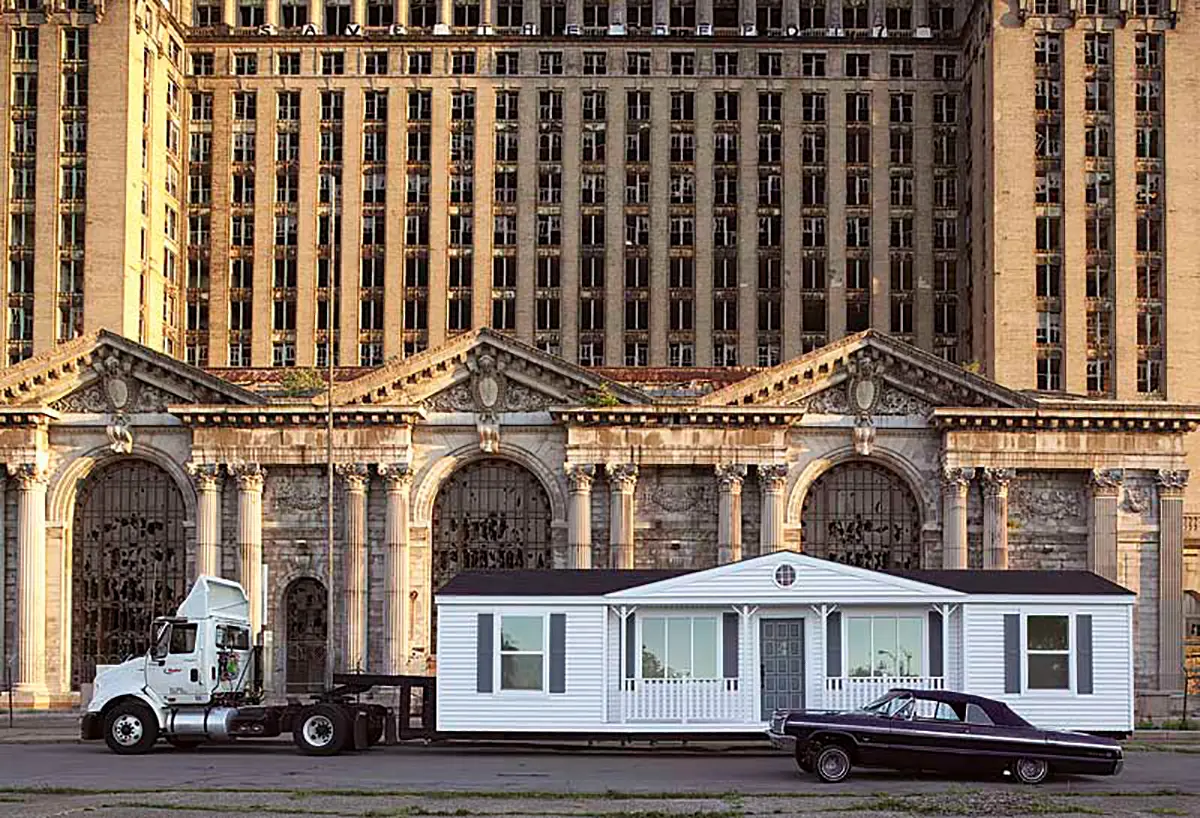
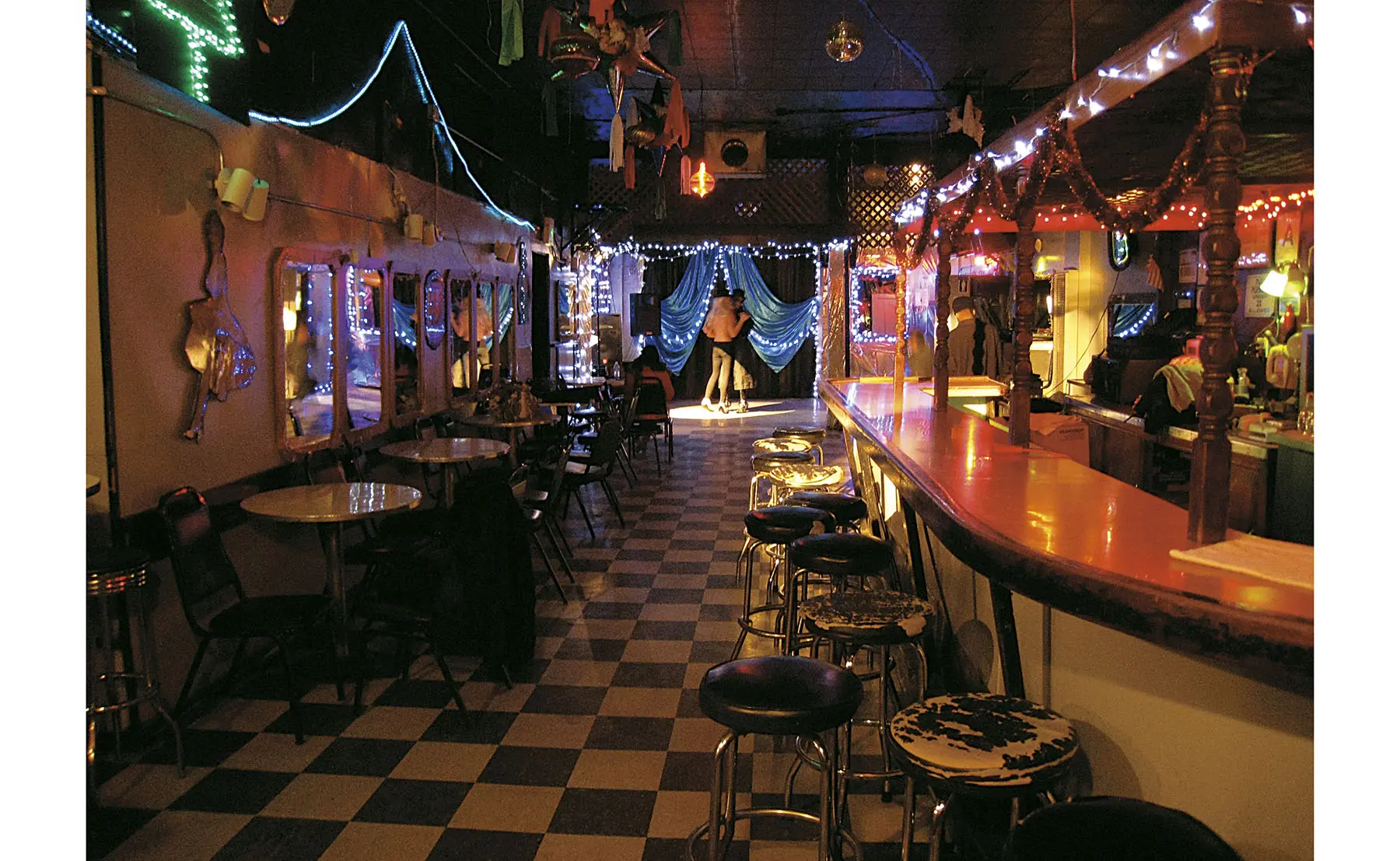
Maybe the most emblematic works of the biennial were by the late Mike Kelley and another Los Angeles-based artist named Wu Tsang. Mr. Tang’s contribution was work within a work; it consisted of a room-sized installation titled The Green Room (2012) that replicated a seedy lounge in Los Angeles’ underbelly, replete with bar, stools, linoleum, furniture, and carpet. It had two uses: one was for performers of an adjacent work; and when not in use by them, the public could enter and socialize as well as view a double-channel video titled Wildness (2012). One channel concerned a transgendered woman who left Honduras for Los Angeles and recounts her trials, travails, and tribulations. The other screen was also an ersatz documentary that told the story of the Silver Platter, a bar also in Downtown L. A. that became a refuge and general social space for the Gay, Lesbian, Bisexual, and Transgendered minority communities. I could not help but feel vestiges of Nan Godlin’s Ballad of Sexual Dependency as one could sense the societal exclusion of the GLBT community through the stories that were told, but these were also voices of affirmation in the midst of verbal and violent physical abuse by an intolerant world. Mike Kelley’s work for the biennial was also a kind of lamentation about the past that was embodied with intimacy and the personal. Mr. Kelley’s piece entailed three videos he produced in conjunction and based on a commission titled Mobile Homestead (2010). The public art piece revolved around his childhood home, whose exterior was built verbatim and mounted on a trailer so it could be moved around Detroit; wherever it parked, it would be used as a makeshift gallery. Its original point of departure and eventual destination would transform it into something more than a kind of pop-up exhibition space. For once it made full circle back to its original destination at the Museum of Contemporary Art in Detroit, the childhood home would be outfitted with tunnels leading to underground rooms that could be used for a variety of activities. The work, in one sense, truly embodies Sigmund Freud’s notion of the uncanny; especially in reference to its original German appellation, which means unheimlich or un-homely or unfamiliar. Heimlich or homely and familiar, and its opposite are thus apt descriptions of Mobile Homestead in which Mr. Kelley’s childhood home is the macrocosm to the microcosm of the artist’s unconscious.
Mike Kelley’s Mobile Homestead, with its tunnels, trapdoors, and phantasmagorical rooms, may be a fitting metaphor for the 2012 Whitney Biennial. Not only because of the biennial’s narrative porousness, spacious museology, and specious curatorial gaps but also more because of its unfamiliar familiarity. Or, maybe the 2012 Whitney Biennial was more like a Hollywood remake that has no original, which incidentally had only been seen for the first time.
RAÚL ZAMUDIO
New York-based curator and critic