
Two months have passed since the closing of the most recent edition of the Paiz Biennial in Guatemala. Paiz is one of the most important contemporary art events in the Central American nation, and one of the most storied biennials. With the perspective gained since, this seems a good time to bring forth the words of its last curator, Santiago Olmo. Our last encounter took place in the Historic Center, where he lived for over a month. I mention this because, since the late 1990s, that space has been highly coveted by artists who began to question the hegemony of museums, galleries, and the entire institutional or private structure. This is to say it was the most adequate locale for the launching of a project focused on the youngest generation of artists or the different twists of the country’s recent history.
Olmo began our interview saying: “We have taken one more step in the process of the biennial’s transformation, which opens up the possibility of building a new model. There are things that revealed themselves useful a posteriori. We were able to organize a circuit of sites in the Historic Center and to include new names. Of course, I am doubtful about the effectiveness of some projects, I don’t know that the art circuit has been sufficiently receptive.”
In truth, this was not an isolated conversation, but the continuation of one that has unfolded over many years. I have coincided with Santiago Olmo in several projects, generally derived from a common interest in contemporary art in Central America. In a continued dialog, there is no room for definitive judgments. Besides, for someone who has invested so much interest and time into thinking about the region’s art, curiosity is the best way to approach an extremely complex and volatile terrain, its past overloaded with infamy, a political and economic situation based on corruption, a territory traversed by the exodus of migrants and the chokehold of violence. From that perspective, it seems to me that Olmo’s project reflects many of the contradictions of our life. If the two previous editions were important transition projects—the first one curated by Nelson Herrera Ysla and the second one by José Roca, who were able to definitively establish what it means to present a contemporary biennial, from its management to the definition of conceptual assumptions—Olmo’s edition made it possible to focus on matters that may be less evident to the public, but are nonetheless essential for a critique of the Biennial management model.
I hasten to explain. What happens in Guatemala and Central America is not alien to that global debate. Here and there, biennials continue to convoke and multiply expectations to the point of making us forget how conflictive and exhausted they have become. This mode of exhibition is undergoing a crisis that requires us to question, by necessity, what its priorities have been up to now. Santiago Olmo is among the group of intellectuals who know this terrain well, and who know that the world-wide proliferation of biennials has fostered the consolidation of a kind of biennial-art and biennial-artist that respond to the logic of the spectacle and media-based resonance, the photogenic appeal of their works, and the permanent demand for the novelty of the part of the public and the market. As a personal counterproposal and in his role as curator of the Paiz Biennial’s 18th edition, Olmo notes his effort in the development of educational platforms rather than unquestioning altarpieces to art. Something that befuddles many observers, especially those who find no appeal in that way of doing things and expect a plan for personal entertainment. In that way, the selection of artists, works, workshops, and exhibition guides has responded, firstly, to their possible impact in their context and the potential for generating reflection about the way in which we construe ourselves as individuals and as citizens. In that sense, the idea of coexisting and sharing was the central topic and the most pertinent provocation for the times in which we live. Coexisting and sharing are two words that much reject-with characteristic cynicism and this biennial assumed the task of salvaging them as an urgent human exercise.
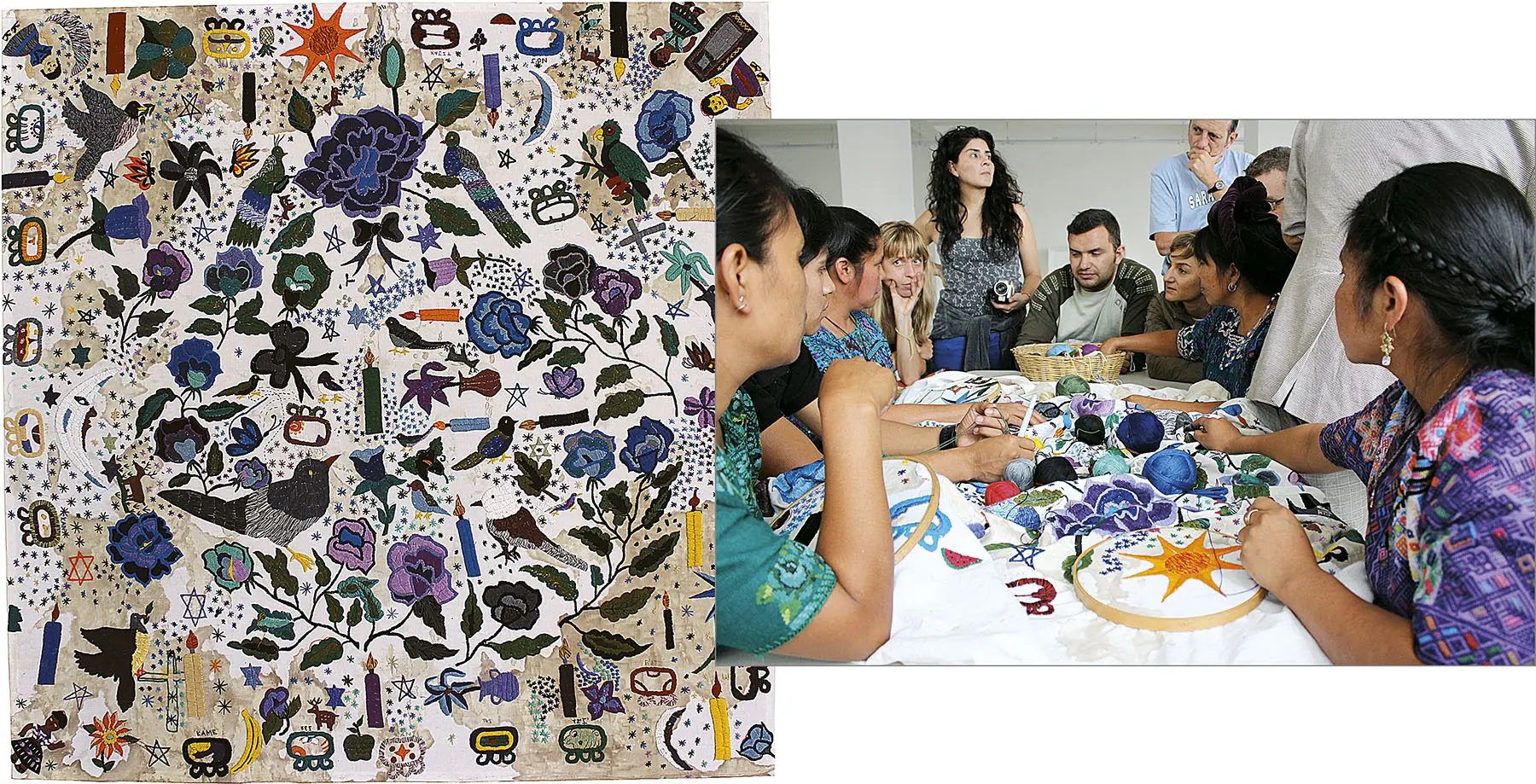
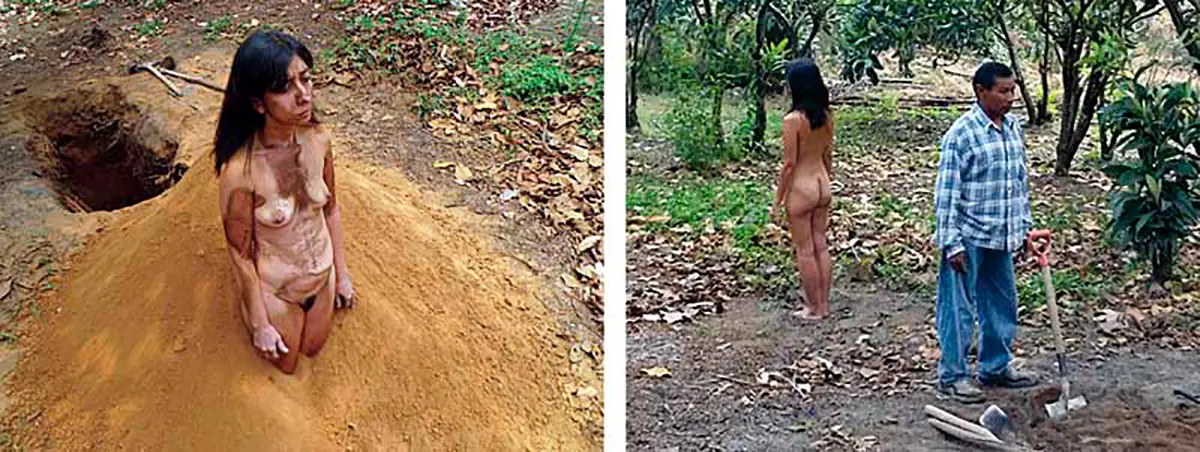
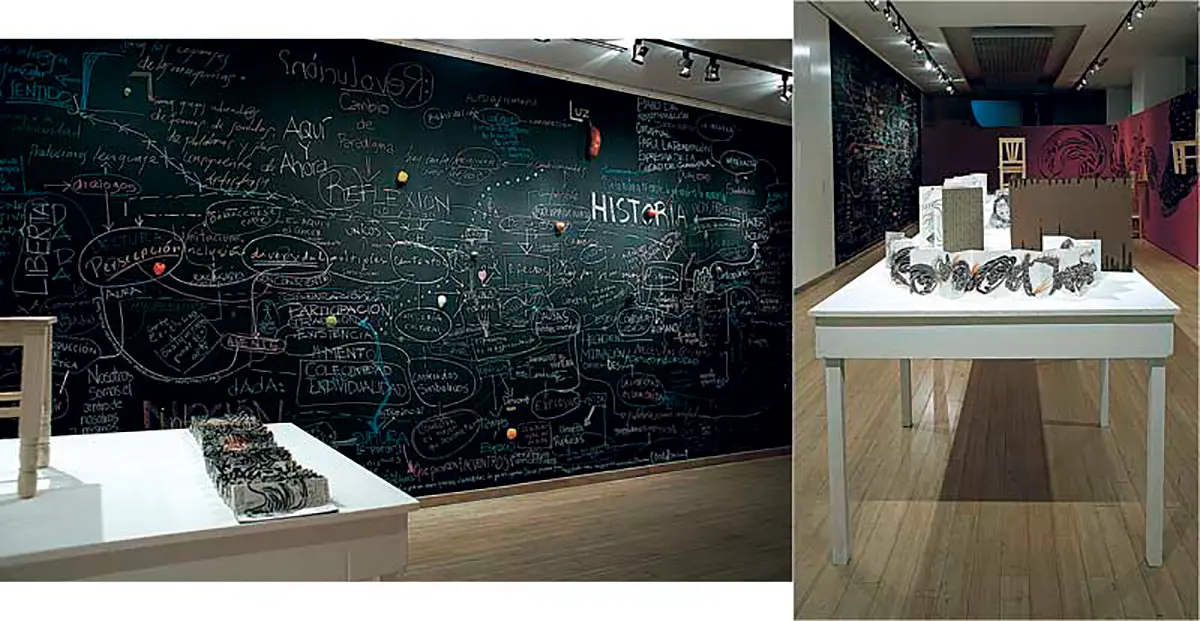
Along those lines, the work of Mexican artist Teresa Margolles was among the most moving. It is a collective project centered around violence against women and feminicide. On a blanket stained with the blood of an anonymous victim, male and female embroiderers from the Atitlán lake region traced a spontaneous and straightforward tribute, using traditional patterns. Known for her work with human fluids, in this piece Margolles expresses her commitment to issues of institutionalized violence. In the same vein, Regina Galindo’s action Paisaje expressed the dilemmas contained in the conflictive human relationships generated by political life and their effects on society and on individuals. The action is that of a man excavating a ditch, with the artist receiving the dirt dug out by the shovel until she is buried. While the man digs a hole and she remains kneeling at the edge, they have their backs to each other and their eyes never meet. Uruguayan artist Carlos Capelán convoked a working group for a workshop. His work was conceived as an installation in which a variety of elements interacted to establish oblique dialogs: images and drawing on a wall that connected with several unfolding books, where the drawing is the basic tool, arranged on tables inserted into space. A black wall, like a blackboard, registered the pathways of debate and the discussions generated during the workshop given by Capelán during the week prior to the biennial’s opening. Together these elements created an atmosphere where the process played a nuclear role.
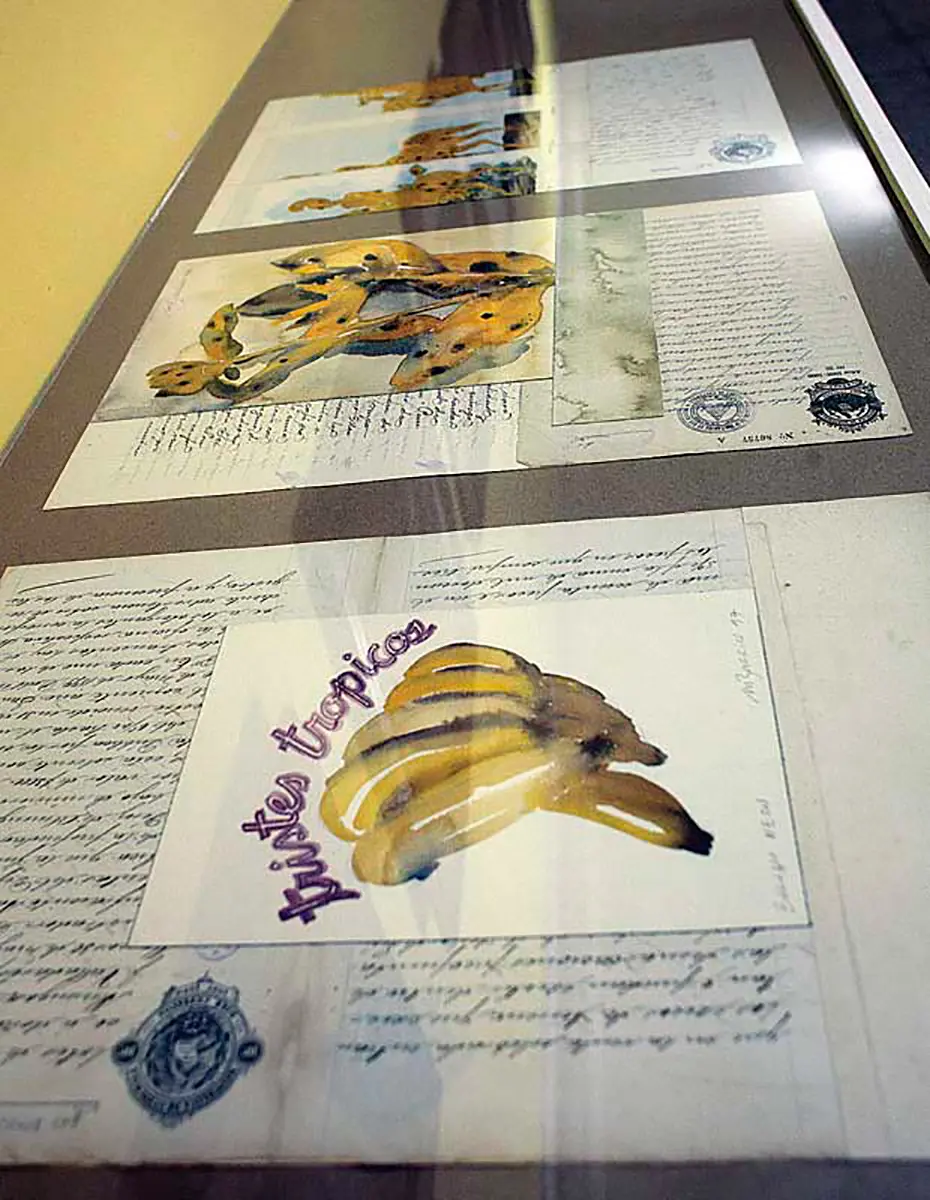
In the chain of responsibilities implied by thinking about contemporary society, one section of the biennial presented a series of works whose referents are in historical memory. Among them, a series of watercolors by Moisés Barrios, titled Banana Collages. They belong to a vast collection developed by the artist since the late 1990s, in response to his interest in modern colonization projects, the presence of banana companies in Guatemala, and the effects of the Cold War and counter-insurgency. As a whole, it is a kind of parody of the cabinet of curiosities that great museums across the world accumulated with such veracity.
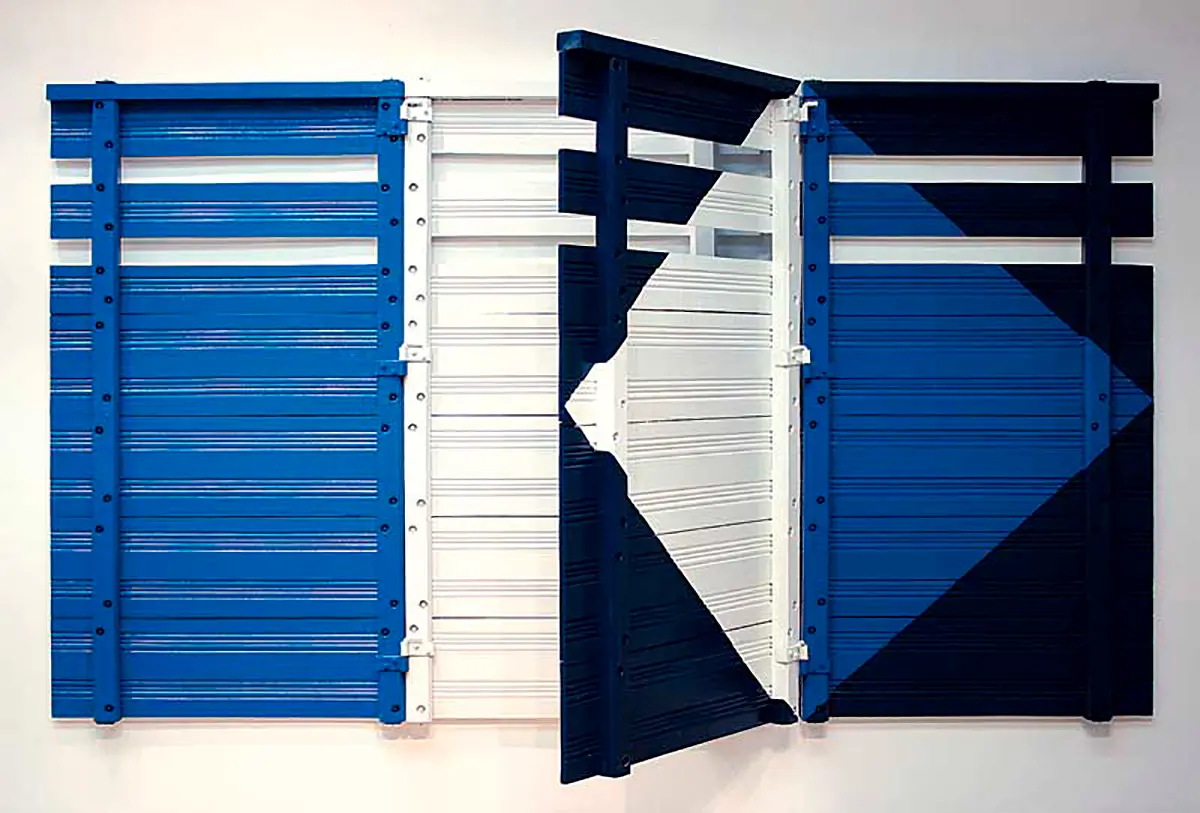
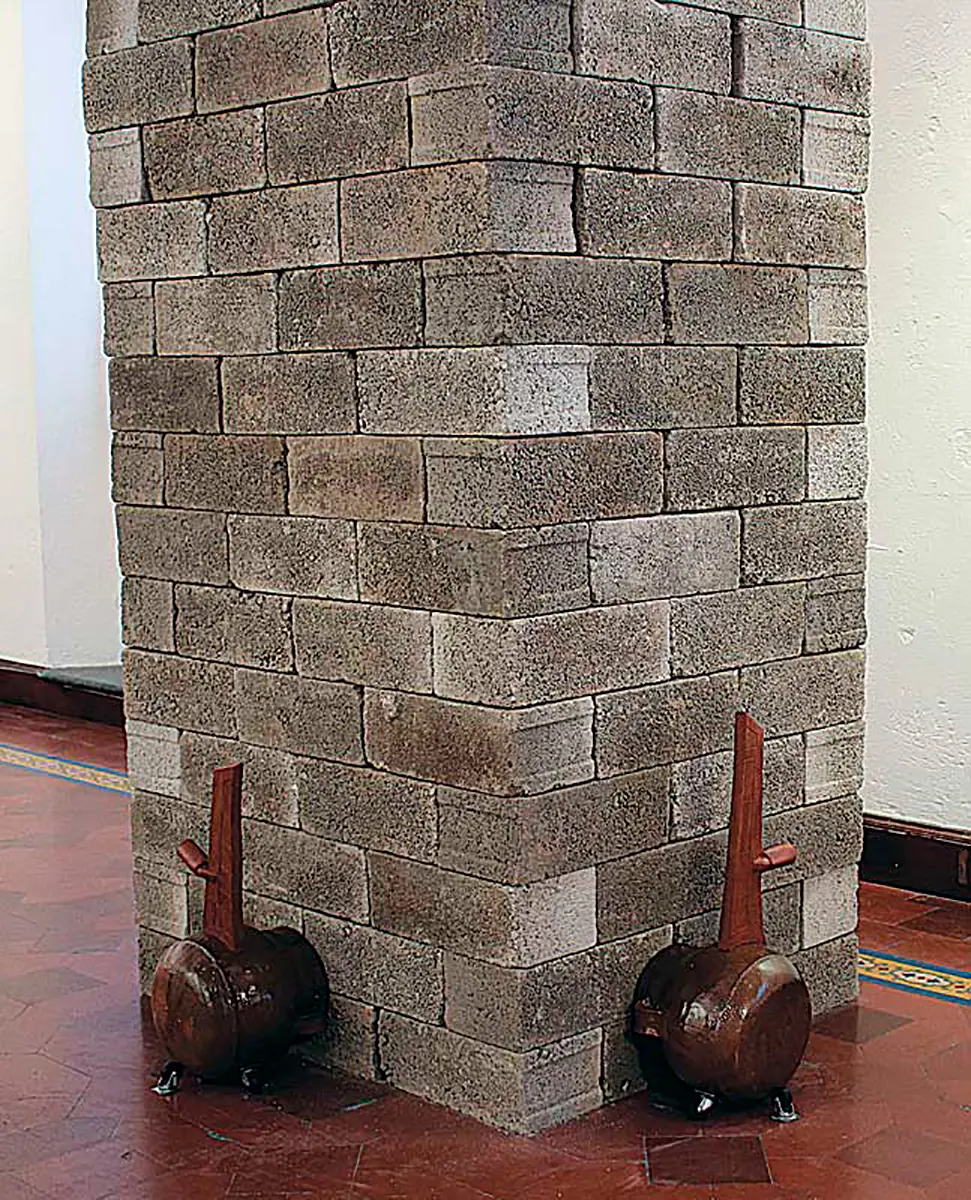
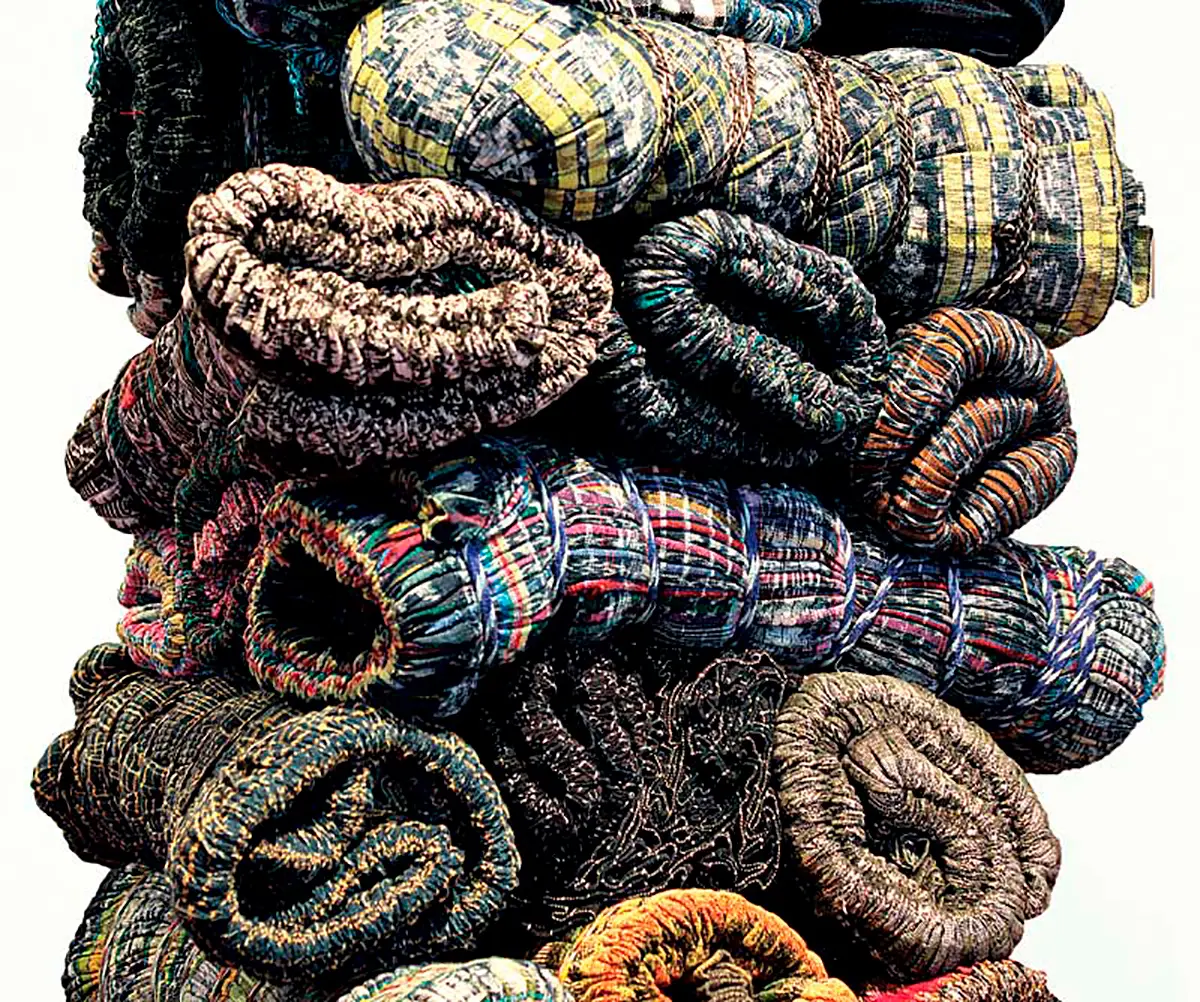
Benvenuto Chavajay, Sandra Monterroso, René Dionisio Chavajay, Angel Poyón, and other artists representing the country’s indigenous populations also played a significant role in this biennial. As a post-war generation, they have witnessed the processes of change undergone by towns, people, cultures, and environments. Through the use of humble materials and their fusion with plastics, cotton threads with acrylic, the installations of Benvenuto Chavajay, and Sandra Monterroso express the course of changes and economies. As a whole, the indigenous artists present in this biennial were, in my view, the most important presence. In Guatemala, cultural and identity conflicts permeate everything, from political life to the rituals of everyday existence. It is, then, one of the essential and most unavoidable topics for artistic creation. This is reflected in Monterroso’s work. Titled Columna vertebral, her installation is based on an accumulation of textiles that refer to artisanal traditions as opposed to industrialization. This can be compared or complemented with Darío Escobar’s work, which consists of a reinterpretation of wooden planks, painted in bright colors and geometric shapes, used in trucks transporting merchandise or products across the country. Although Escobar’s main interest is to establish a direct reference, from the space of everyday popular practices to geometric abstraction, an important artistic movement originated in the early Twentieth century and one of the peaks of modernity and of abstract ideas in Western art, in both we find a persistent reference to artisanal industries and the labor force.
One novelty in this edition of the biennial was the inclusion and presence of works based on musical experiences. The most interesting example was Tzutu Baktun Kan, by René Dionisio Chavajay, an audio presented as a tribute to Batzel, nahual of the artists, which represents thread, weaving, the line and is an example of contemporary Mayan music within a hip-hop view of the world. It is a combination of recorded and adapted pre-Hispanic sounds, with lyrics in the Tzutujil language written by the artist and arrangements for orchestra and marimba, all based on an investigation of knowledge encoded in the Mayab language.
Another work that uses a musical experience is Renato Maselli’s video De paso. It is the recording of the walk taken by a character carrying a hurdy-gurdy through the city center, representing nomadic street life. He walks in front of various public institutions and executes the emblematic melody that has accompanied since the 1970s public rallies in favor of democracy: El pueblo unido jamás sera vencido, composed by Sergio Ortega and Eduardo Carrasco, has been an icon calling for unity and collective effort in the struggle against oppression and the creation of a more just and equitable society. With an extremely melancholy rhythm and tone, Maselli’s work portrays the psychological state of an entire country.
Between works and experiences, exhibition circuits, and experiences, this new edition of the Paiz Biennial evinces the difficulties we have in seeing beyond the mere exhibition experience. Biennials are the product of a system that, for centuries, has privileged sight and visual representation. Only in recent decades has this begun to provoke the crisis we mentioned above and, above all, the impossibility of encountering that which lies beneath the work of art. I am referring here to the domain or ideas, something that is more abstract and hard to perceive when one lacks the patience, time, and conceptual resources to understand it. Ours is an era of such media noise that ideas tend to fade away, as instant entertainment and all that grabs the eye is emphasized. According to this, I believe that Santiago Olmo has given us more than one reason to rethink the biennial. Mainly, to reflect on the true contribution an event of this magnitude can make to a country and a society where ideas dilute, a country and a society so pressured by the struggle for survival that they find it difficult to think about themselves.
ROSINA CAZALI
Art curator. Lives and works in Guatemala.