
Zoológico, an exhibition by Alberto Baraya and Jonathan Hernández, was presented at La Central gallery.
Zoológico evolved from work that the artists developed in 2008, titled Testigos Inhábiles. This work consisted of a video made during a visit to the Nápoles hacienda in Antioquia, Colombia, recording African animals that remained there.
The project became an observation of that phenomenon and the changes imposed on the landscape by artificial presences. This is why interesting in the absurd history and the symbolism of these beasts from Africa, they traveled to what once was Colombia’s most exotic zoo, a place owned by a character known as a “boss,” a “drug lord,” the “almighty,” the “lord of money.” A place that over time became the “logical” destination for the nonsense that is to bring African animals to Colombia —animals that in turn became witnesses to the stories of drug trafficking in Colombia. Animals that carry the title of this work, Testigos Inhábiles (“unable witnesses”), which law defines those with a direct interest in the matter but are forced to remain silent for professional reasons or natural disability: the mentally ill, the blind, the deaf.
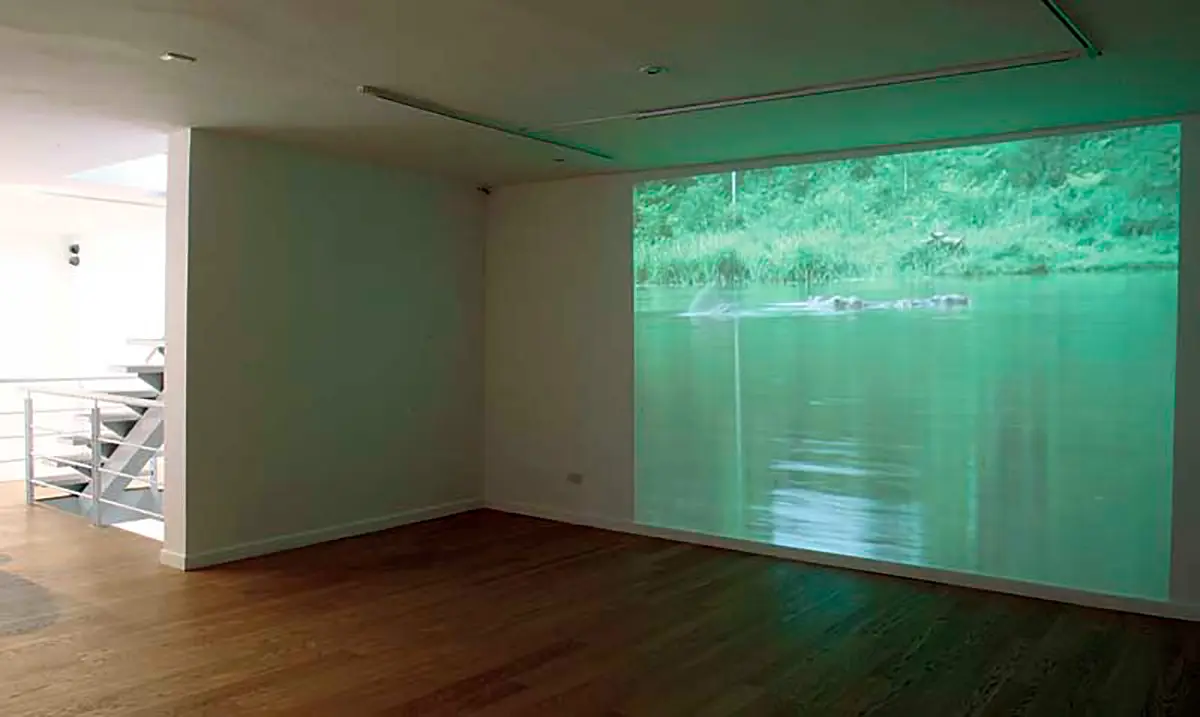
Four years later, the two artists reunite to continue their work and present Zoológico. The show’s central axis articulates the recent history of Colombia and Mexico in terms of drug trafficking and its socio-political implications, as well as the survival, reproduction, and fate of those animals, all in parallel with an interrogation of spaces such as jails, cages, zoos.
All the works exhibited in this show, which includes painting, collage, sculpture, and photography, evolve from and connect with Testigos Inhábiles; they are products of the research and observation into illuminations, transient ideas, or blockages that can be found between art, political society, the artificial, and the natural through such lonely yet visited spaces.
Through the study of natural, artificial space, a given society, and the figure of the potentate lording over the animals, what is revealed is how possession of exotic animals became, for Pablo Escobar and other such characters is a symbol of power and dominance. And the idea that these characters themselves become something exotic and artificial, as a kidnap victim transforming into a kidnapper, as he who exhibits becoming that which is exhibited.
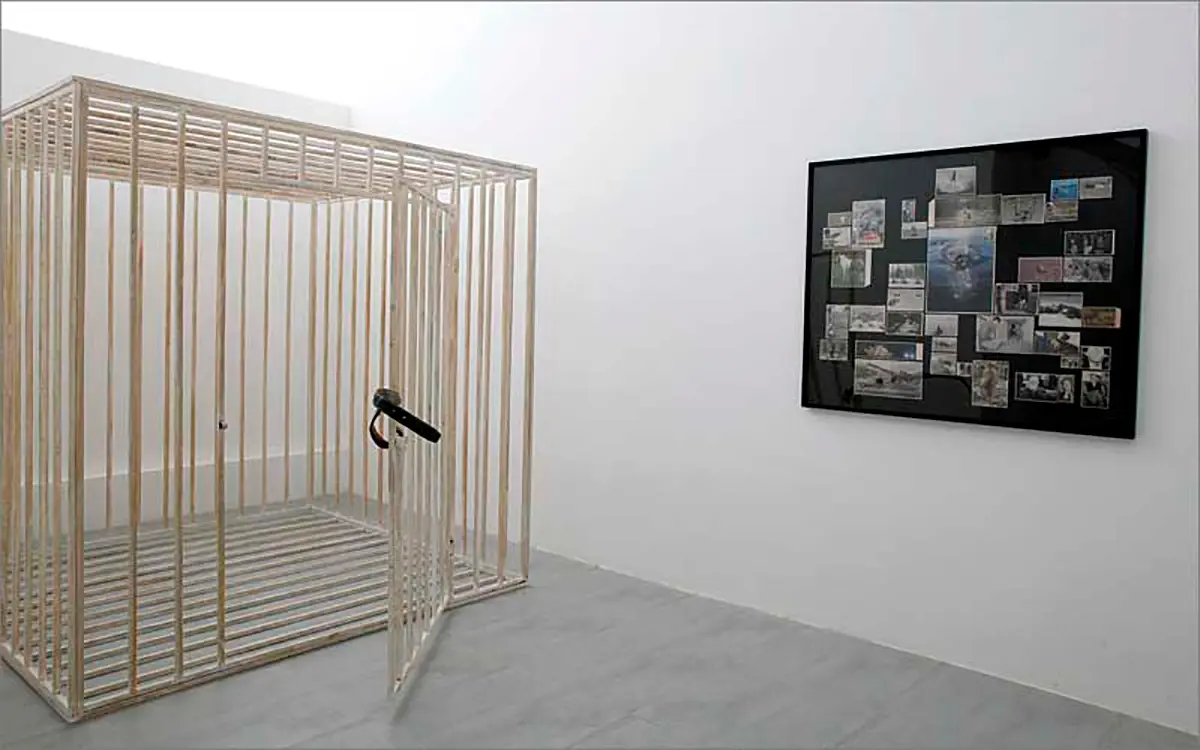
An instance of these reflections is the work of the Mexican artist, who presents a human-sized cage with its (also human-sized) door open —once again questioning the meaning of power, of caring, of protection, in contrast with the idea of constrained freedom. For his part, Baraya presents a painting connected to the Romantic contemplation of the landscape. A landscape that can interest the artist for its being artificial, but which ultimately also becomes a real site, as it has been altered with the presence of animals never before imagined in the Magdalena river area. A landscape that wavers between beauty and evil, hiding an apparent beauty—it would seem that what these animals hide from view is a metaphor of what their owner himself hides.
Zoológico intends to question sites of encounter and confinement, which in turn presuppose isolation between humans and animals, such as zoos and jails; around topics like power and freedom.
DIANA MARCELA CÁRDENAS