
Already in 1976 and in 1980, Asdrúbal Colmenárez had consolidated interesting interactive proposals with his series Psychomagnetic Tactiles (Museo de Bellas Artes, Caracas) and Polisensorial Alphabet (Galería de Arte Nacional, Caracas), respectively. As it occurred back then, the objective continues to be the activation of the perceptive ability of viewers and to turn artistic events into experiences that transcend the concept of contemplative work and that, instead, become objects in a process of constant transformation. The work-as-process is the criterion that Colmenárez has maintained since then, and one which he revisits today through drawing machines activated with electricity or through the viewer’s manipulation.
These two stages in the work by Asdrúbal Colmenárez were displayed in two cultural spaces in Caracas: the Galería Estudio 8 and Periférico Caracas / Arte Contemporáneo. Estudio 8 presented a selection of his Psychomagnetic Tactiles, works created with ferroflex and metal on wood—two-dimensional and abstract in appearance—whose images can change endlessly as viewers alter the elements contained in their compositions. These pieces were conceived by Colmenárez in 1969, a year after the artist moved to Paris. He settled in the French capital just as important socio-political changes were occurring in France and around the world that rocked the seemingly stable bases of reality and its circumstances. The French May demonstrated that collective action is able to generate important changes.
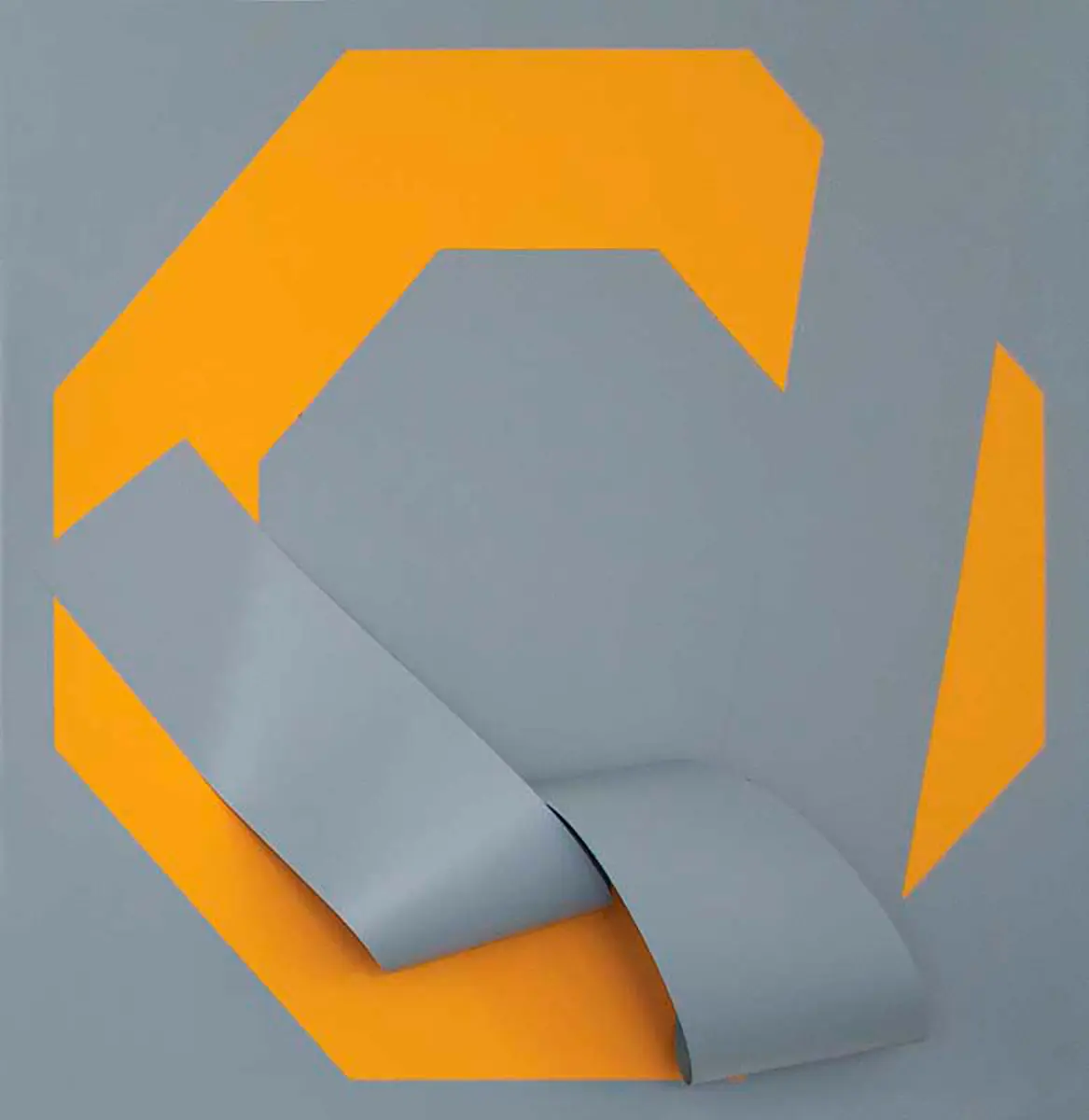
There were also important transformations in the art world about to take place. By the end of the 1950s, the kinetics had already introduced the notion of transformable artworks, as important reflections about movement in art were also being proposed. And Colmenárez was not impervious to these developments. Not only did he adopt some of these principles—the idea of transformation and of participation—but also took these reflections through several new directions as he deepened the experience into essential aspects of human interaction: art as a social occurrence that goes beyond an artist’s individual creations and that is under a process of constant change; and art as a communicational fact. These two principles have fueled the direction of all aspects of Asdrúbal Comenárez’s work.
In the exhibition presented at Periférico Caracas / Arte Contemporáneo in collaboration with Fundación Teléfonica through its Art and Technology Program, Colmenárez showed his new “inventions” based on these principles. His earlier Psychomagnetics, the Psychograffitiearths, and even his proposal of a Polisensorial Alphabet, are restated on this occasion through robots and works susceptible to transformation through a technology conceived almost as handcraft. The Psychomechanicals created in 2012, also called Drawintors, allow for the creation of horizontal and vertical lines on a surface, with the use of a motor and the viewer’s manipulation. According to Félix Suazo, curator of the exhibition: “These are literally machines designed to draw—with four hands—with the viewer’s help. The combination of automatic movements generated by the devices and the spontaneous movements of viewers results in a hybrid manifestation of machine impulses and the creative appropriation by visitors.”
The ludic component present in the various modalities of machines not solely sharpens the viewer’s sensorial perception, but also his/her ability to set things in motion. The diverse proposals seduce, provoke, and invite viewers to participate. Several light boxes placed on the wall and on game tables, invite viewers to enjoy color transformations elicited by the drawings or the viewer’s own movement across the space. Named Psychorelatives, in these works color is accentuated with light. Another great Psychograffitiearth—based on an earlier series created in 1978—seduced viewers through the tactile perception of the materials. Created with a magnetic steel sheet and metallic dust, the surface of this piece was designed to be continuously modified by viewers, as it permits them to create their own traces and leave their own marks. This work uses the gesture found in urban graffiti as a referent. Círculo en Levitación (Circle in Levitation, 2012), Colmenárez readopts the idea of art and language as he allows the chance to articulate new codices of communication. The work consists of a large Plexiglas disk superimposed by a circular sheet and plastic balls on a random rotation. This piece also contains a meaningful poem by Fernando Pessoa: To possess is to lose. To feel without possessing, is to preserve, as it consists of extracting the essence of each thing.”
These two exhibitions convey the restless and creative spirit that has always existed in Asdrúbal Colmenárez’s work. It is important to remember what the artist wrote for an exhibition in 1980: “I create my work thinking about a collective form of expression” … “During the learning process, we all need to interact and exchange perspectives, to develop our subjective knowledge, and to receive imaginative criticism. This is how we are able to reach beyond our spatial and temporal environments, as we attempt to find, built, and create new situations.” Thus, art is more than the sum of its material and contemplative attributes. It transcends limits and circumstances as it becomes a liberating act.
SUSANA BENKO