
Very often contemporary art tends to reflect the impact computer science and the Internet have in our lives. Many artists less inclined to collaborate with the public often opt to feign a devotion for and mastery of new technologies simply to satisfy their obsession to be “trendy.” Others have chosen instead to initiate a discussion about this new cybernetic landscape, as they establish fresh perspectives and discover new possibilities in collaboration with their publics. Somewhere in the middle of these two tendencies, there is Gonzalo Mezza. This Chilean artist is interested in the conceptual aspect of the new media, in using its methodology to interact with the person on the other side of the screen. He initially showed an inclination towards the disappearance of matter and in this rhetoric, he found that the virtual space was the nicest of all-natural habitats. Nonetheless, behind this intention of exchanging feedback with cybernauts and studying the consequences of technology, Mezza has not created work that yields enriching connections. Instead, he has developed an updated form of analog communication. 8 = ∞ The Virtual Museum Project is a selection of the cybernetic experiences that he began to develop during the mid-1990s. Sixteen "cyber-engravings"—as he calls them—consists of pieces created in earlier exhibitions that offer viewers/users the possibility of manipulating the images to their hearts’ content. Without any restrictions, the public could add or modify the images and then gave the results back to the artists. Thus, rather than generating a collective discussion about the manipulation of works of art through new means of communication—and I do not presume that that was Mezza’s main intention anyway—or altering the control of information online, the main objective was to create a two-way dialog in which little real—or virtual space—is left for the so-called democratic freedoms of the Internet. Although Mezza’s experiences during the 1980s and 1990s were indeed very enriching and ahead of his time; nonetheless, today they have already been surpassed by an abundant number of technological innovations. His most recent exhibitions have been very similar and have concentrated on reaping the benefits of earlier proposals, without updating the concepts; as such concepts are being updated online. Never falling into the chaos and disparity that this type of exhibition usually lead to, the show is complemented with screenings, documental materials, and biographical information centered on a C.V.—after all, Mezza is one of the few standard-bearers of digital art in Chile—that emphasizes the meaning of the works, and, thus, leaves these susceptible to the newly acquired preconceptions of viewers—who in turn find themselves in an exhibition that does not offer any curatorial guidance. Curiously, this argumentative deficit leaves Mezza looking like an advocate of “antimatteric” art, an exhibitor of objects, videos, and old catalogs kept in a showcase. Viewers are left with no tools to establish connections with the works, nor with any indications to legitimize the process behind the creation of the selected works. This inconvenience is made even worse by the fact that the creative process—and not the finished pieces—is the most interesting aspect of Mezza’s work.
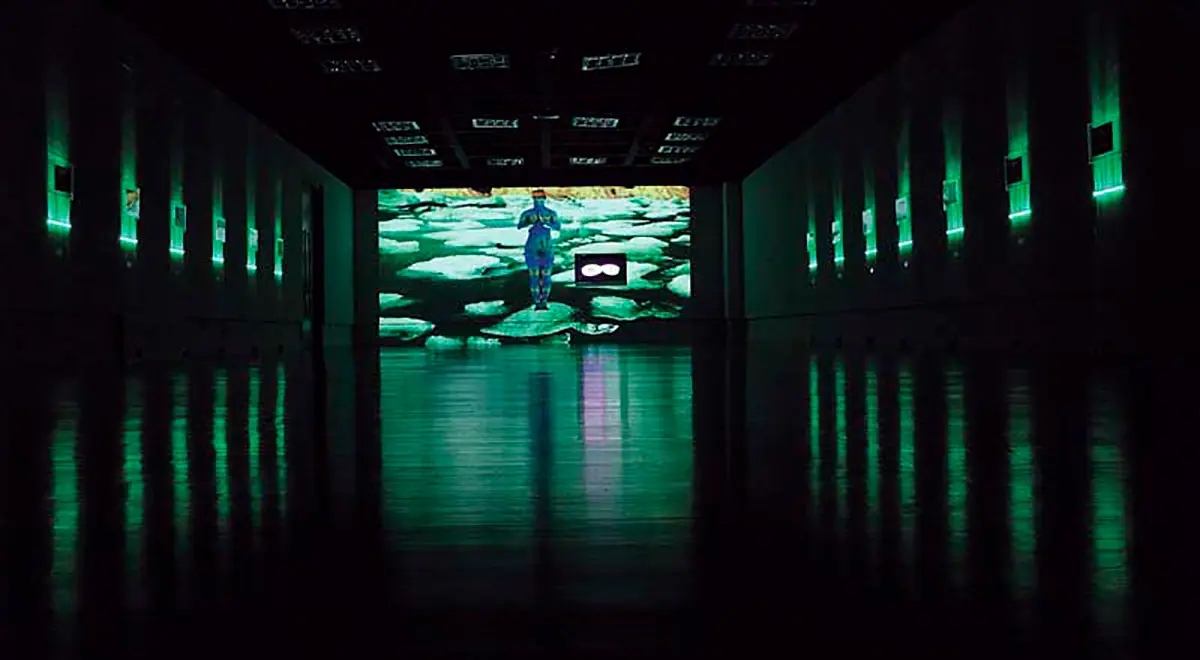
The virtual museum where Gonzalo Mezza works—after his earlier experiences alongside Antoni Muntadas was processed in the video—accumulates information that is made available with one objective in mind: to humanize technology. He does this by ensuring that the human figure is always present in the images, whether through his recreation of the classical Venus or through the use of Latin American indigenous icons. These creations are generated with the help of anonymous users who participate in various manners: by using mobile phones—going forward in time; the recent appearance of ciphered codices—digitally manipulating images returned via email—going backward in time; the creation of mail art by conceptual artists from the 1960s—or by editing videos that are later turned into moving public murals, among others. The signs that accompany a show represent an evolutionary development from early forms of communication. Through these, Mezza associates the 8 (8 bits equals one byte) with the infinitum symbol: ∞, a “horizontal 8.” He concludes then that we are experiencing the eighth art and that, through these reflections, he is able to sketch a philosophy based on new interactive networks. In this era of screens, users are captured by the flat surface. But there are multiple factors that impede knowing for sure that behind the looking-glass Alice’s wonderland actually exists, or that the phantasmagorical dimension that sequestered Carol-Anne in Poltergeist. Gonzalo Mezza offers tools to have a better mastery of these variables, although in this instance he does so in a cryptic and enigmatic manner, as he reduces the possible users of his work to the role of mere witnesses.
JUAN JOSÉ SANTOS