
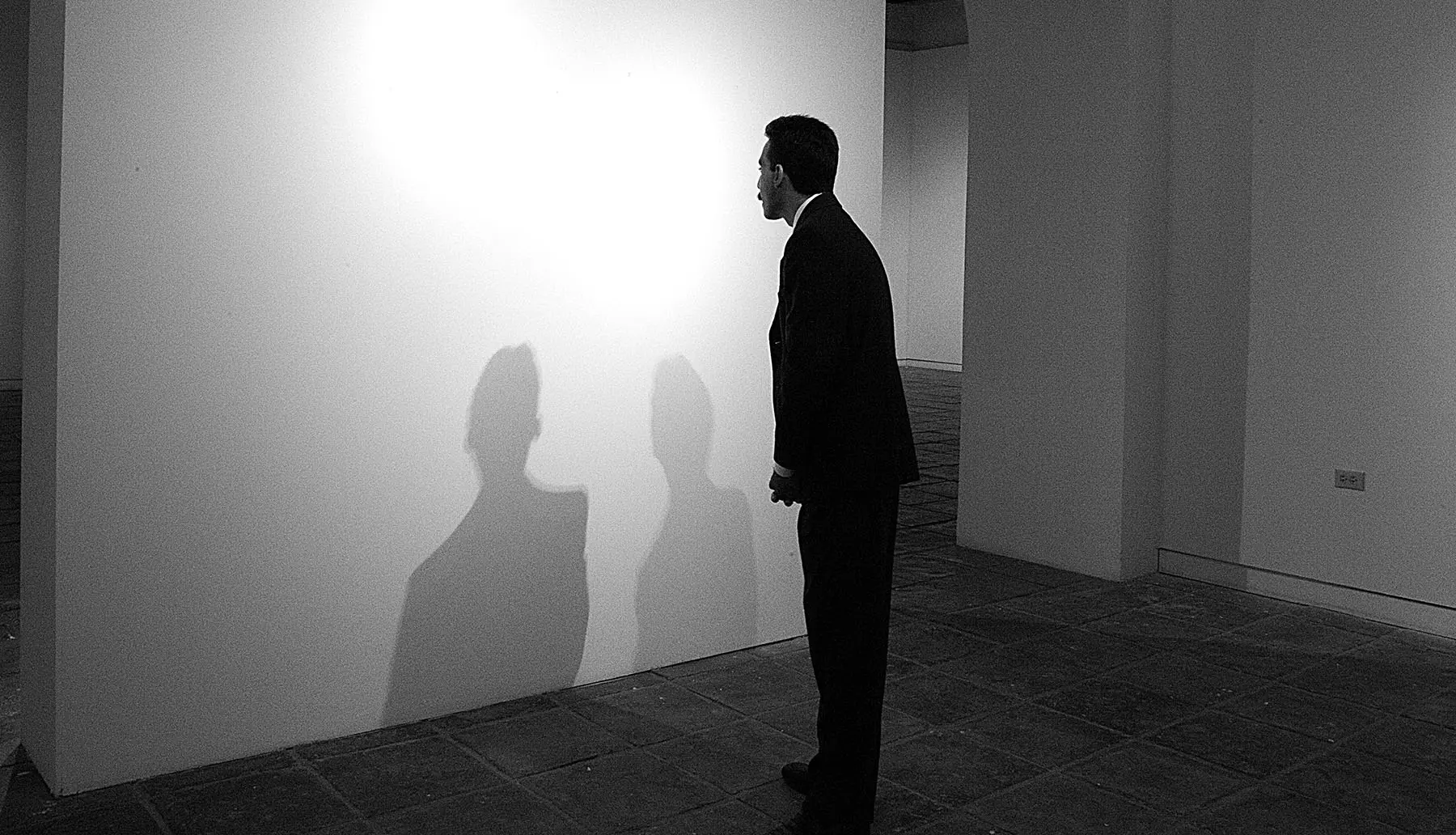
The third edition of Puerto Rico’s San Juan Poly/Graphic Triennial opened on April 27, 2012, in three locations of the Instituto de Cultura Puertorriqueña: the Galería Nacional, Casa Blanca, and the Antiguo Arsenal de la Marina Española. The selection of works, as explained in the show’s catalog, is guided by the topic of collaboration. The triennial includes works in any media by 150 artists from Latin America and the US. It was curated by Deborah Cullen, from New York; Antonio Sergio Bessa, from Brazil; Úrsula Dávila Villa, from Mexico; and Rebeca Noriega from Puerto Rico. The catalog was designed by Aarón Salabarrías, a recent finalist at the Mohawk Show with his graphic design.
The triennial organizers highlight collaboration and team effort in the graphic arts through both social and virtual networks. The topic is brought up often these days, in the context of a global economic crisis. The music, publishing, and film industries exemplify traditional nuclei of collaborative work, in contrast to the individualized efforts that have characterized the history of the visual arts. In one of her essays for the Triennial catalog, Deborah Cullen points out that “The history of art has in general underestimated shared experiences.” 1 I think this statement is at least partially accurate. Our lack of historical studies of the issue is not explained solely by disinterest, but also because since the beginning of the modern era conditions of possibility have made the individual, rather than the group, the axis, and center of artistic work and of the art market, as the figure of the solitary artist was enshrined starting in the Renaissance. A brief review of the history of art, on the other hand, will remind us of the reasons for the transition from the collective work of medieval painters and carvers and the collaboration on which the Renaissance workshop itself was based, with its artists, masters, and apprentices, to the central role of the individual artist in the society of that era. The activity of art-making was seen as equivalent to that of pharmacists, masons, and other members of artisanal guilds. In order to elevate the rank of the artist and change society’s perception of artistic work, in 1400 Filippo Villani wrote his Liber de origine cibitatis florentiae et eiusdem famosis civibus, including artists among Florence’s most illustrious names. With the same purpose, Leon Battista Alberti argued, among other things, for the mathematical knowledge and skill required of artists in their study of painting, sculpture, and architecture. Giorgio Vasari, following Villani and Alberti, also sought to raise the status of visual artists in a society that systematically undervalued their work in favor of students and practitioners of the liberal arts. In his seminal Lives of the Most Eminent Painters, Sculptors, and Architects, Vasari underscored an artist’s personality alongside his work and promoted the idea of the individual creator as the main agent and source of progress in art. These ideas endured, enthroned in the Nineteenth Century with the Romantic movement, and affirmed, in a variety of ways, even by the historical Avant-Garde. The institution of art has been (and remains) the most eloquent defender of the notion of the creative genius in the modern era—undoubtedly solid grounds for the profitability of the work of art.
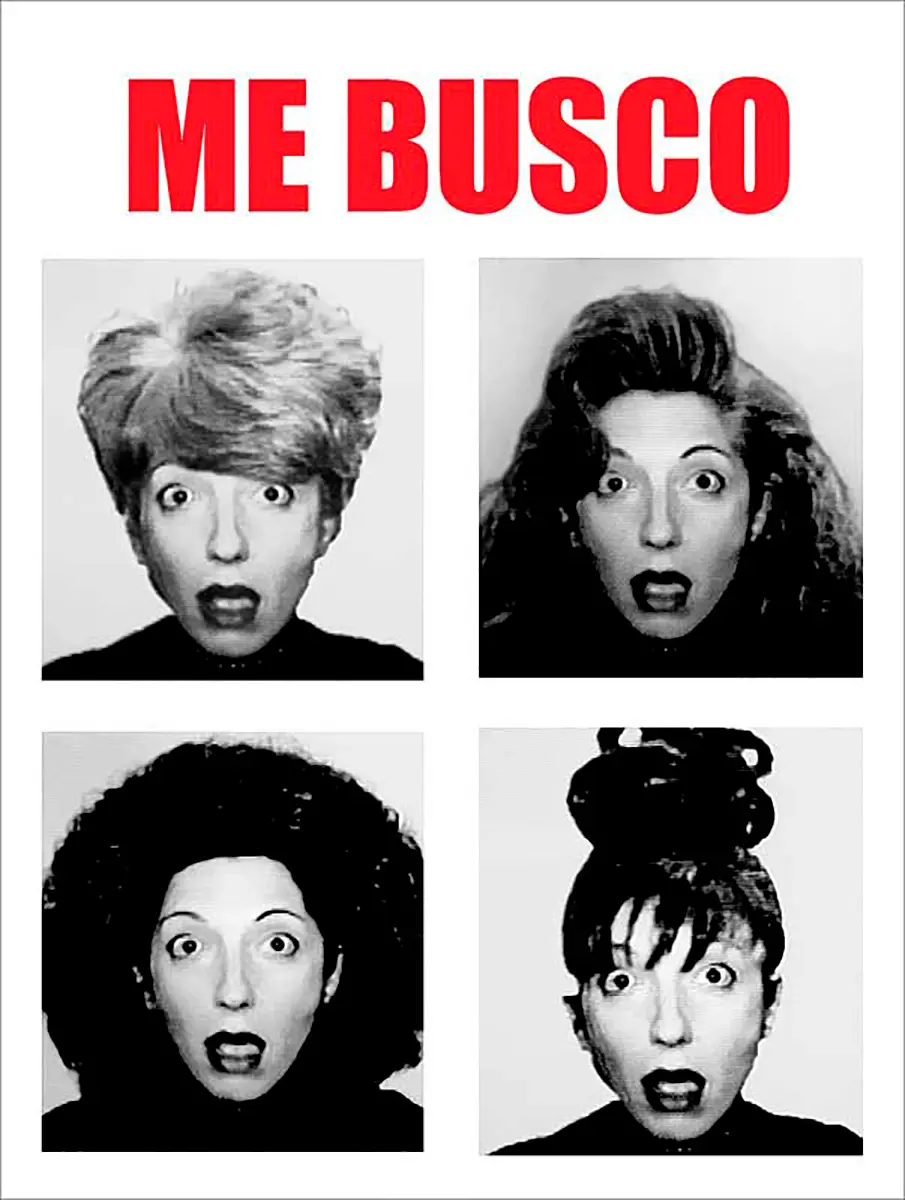
Individuality is strongly reasserted in the transit from modernity to post-modernity, through a process that the French sociologist and philosopher Gilles Lipovetsky has described as personalization. According to Lipovetsky, in this process, the individual is conceived as the axis or cult object of contemporary society. The preeminence of the individual subject’s needs and desires are the center of consumer society and of capital. As Lipovetsky has explained, the process of personalization is rooted in the fracture of the disciplinary mode of socialization that prevailed until the 1950s, and it is a feature of a flexible society that favors the satisfaction and stimulation of individual needs, fostering conviviality and humor within a homeopathic, cybernetic regime. 2 We could say that the artist is the paradigm of the free subject immersed in the process of personalization, directed towards total subjectivity. The artist, rather than the group, is enshrined by a society firmly in the hold of the values of liberty and equality put forward since the French Revolution (1789). The art market assumes such values in full. The driver of creation is mainly an artist’s need to express himself or herself, and this need is raised to the level of a priority. A work of art, be it an object or an event, is novel, among other things, because it is the achievement of a creator whose individual experience is the seed of inspiration. Art assumes banality, an admixture of high and low brow, and focuses on the possibilities of choice and diversity, the typical features of a society that understands itself as democratic and is guided by the process of personalization. It would be illuminating to explore the history of art to find out whether that process has also marked artist’s collaborative efforts and historical writing on the topic, which tends to spotlight a key figure as the driver behind a group’s activity or—like consumer society itself—values the product more than the activity of collaboration as such.
Yet, although in the modern era and in the context of the process of personalization collaborative activity is not the norm but the exception, there are many examples of it. The Arts & Crafts movement in England, The Four in Scotland, and Bauhaus in Germany are representative of group efforts in pursuit of the total work of art. The Nineteenth Century Avant Gardes also displayed a collaborative intent in the creation of communities of artists such as those in Pont Aven, France, or the one dreamed by Vincent Van Gogh in Southern France during the same period. The febrile activity around the Dada gatherings at Café Voltaire in Zürich, in 1916, is another example. Practically every medium known and used today as part of their group efforts, as the borders between media were constantly broken in their practice.

In the current context of Puerto Rican society, divided as it is by political and religious ideologies, threatened by deep economic and social problems, and devoid of solidarity, the topic of this show is undoubtedly relevant and important. The triennial’s display arrangements, nevertheless, are not sufficiently explicit about how is it that it intends to expand among the public awareness of collaborative work, particularly when what is being displayed in some instances as the result of the collaboration is a work of art produced by a famous artist. To me, the essays in the catalog are more effective in achieving this goal than some of the works included in this year’s show.
In the galleries housing more recent works, the triennial’s curators present the topic of collaboration emphasizing its Avant-Garde profile, while at the Galería Nacional, devoted mainly to old masters of the graphic arts, a historical view is underscored. This gives the impression that collaborative work is characteristic or graphic practitioners located more in the past as documented by the triennial. For an uninformed visitor, the mix of criteria for the organization of the galleries can be confusing, moreover since the event unfolds in a variety of far apart locations.
The San Juan Poly/Graphic Triennial presents modalities of collaborative effort and uses the metaphor of the beehive as its emblem. The hive, a natural creation, the product of labor by the queen and the workers; a metaphor for collaboration, it represents in nature a process whose final product is anonymous. Paradoxically, this modality—possibly the most radical, conjoining as it does the labor of unknown creators and, in consequence, leaving the origins of the work in the dark—is absent from the Triennial. This would be the modality least-favored by the process of personalization and the art market. And relatively close to it we would find that where the creative effort is made by a collective recognized under a group name. Examples of this latter modality in the Triennial are Atarraya Cartonera, Equia, Conboca, and Área.
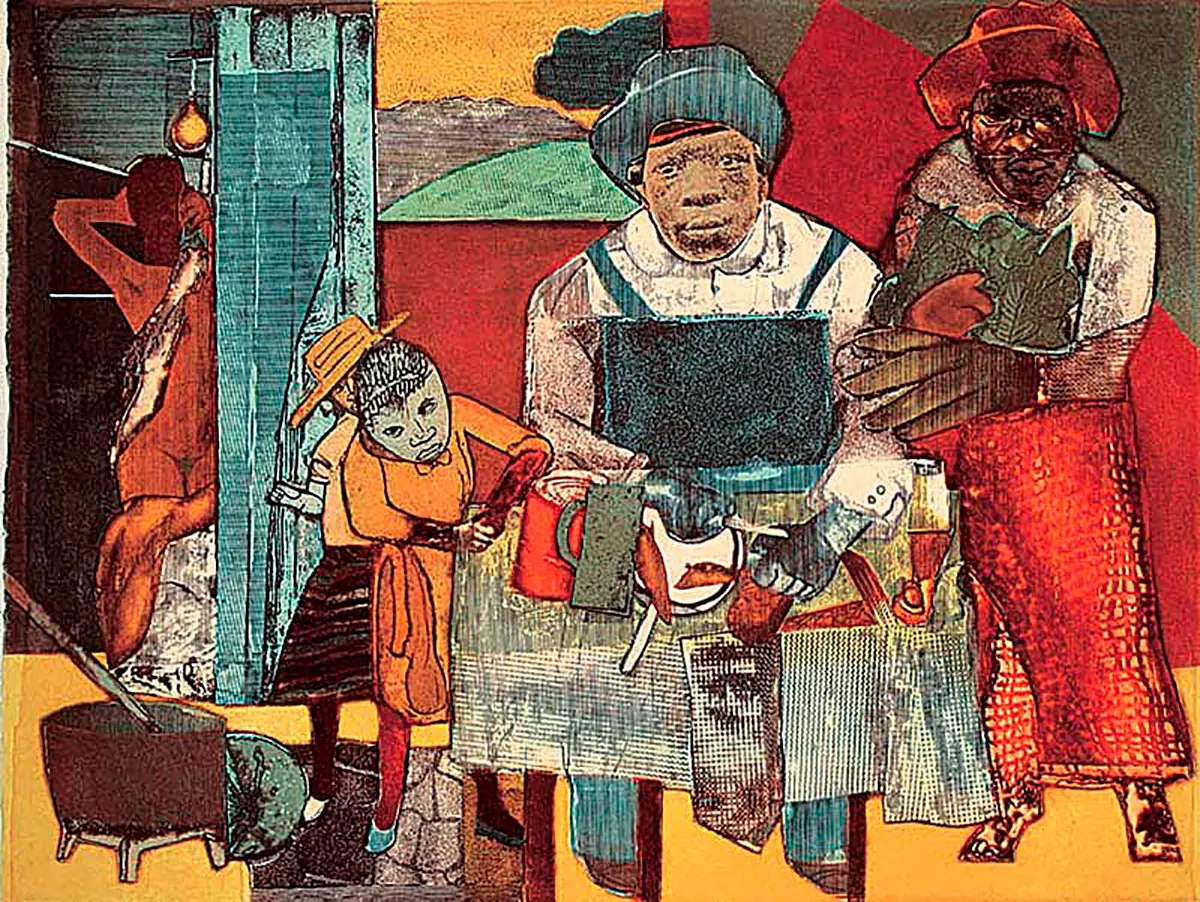
Another modality of collaboration is the production of individual works signed by their creators, which have been the result of conceptual and technical exchanges in a space shared by several artists. This model is the most widely represented in the Triennial. For example, the workshops by Printmaking Workshop in New York City, the one by the Community Education Division sponsored by the Government of Puerto Rico, established in 1949, or the new York Graphic Workshop in the 1960s. Other workshops whose works are on display at the Triennial are the Siqueiros Experimental Workshop and the Harlem Community Art Center, in New York.
In the Twentieth and Twenty-First centuries, collaboration admitted for the first time unique relationships such as that of the recipient transformed into a creator, with the activity of the artist limited to organizing a task or event and inverting roles. The case in question is Antonio Vega Macotela’s Intercambio. Here the artist carried out several tasks for a group of inmates in a Mexican prison, and in exchange, they performed a number of artistic activities. Omar Obdulio Peña Forty’s Herramientas/Atelier Intercambio proceeds in a similar vein. The artist trims the hair of visitors to the exhibition and prompts them to do it themselves following the instructions on the drawings of hairdos and illustrated clippings placed in the gallery.
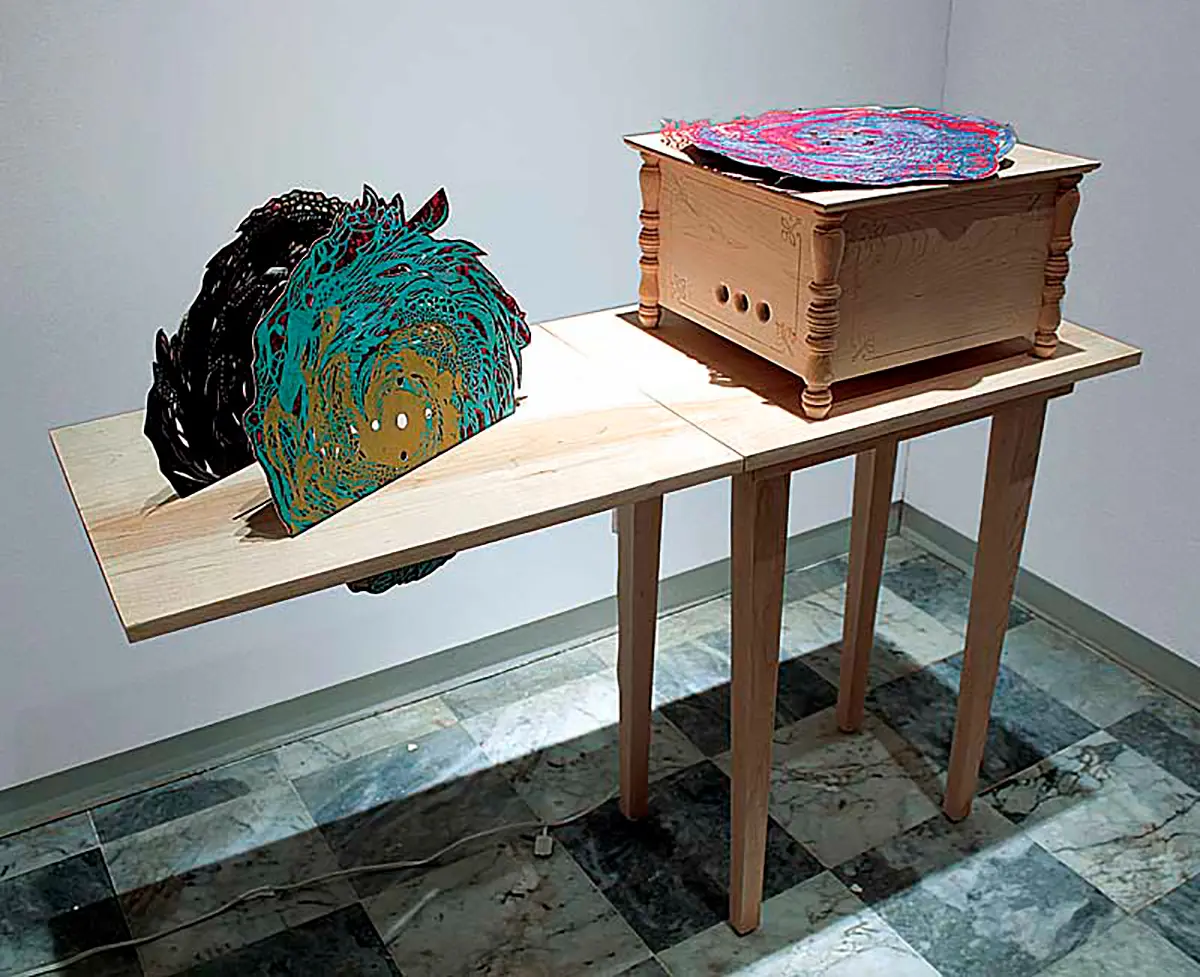
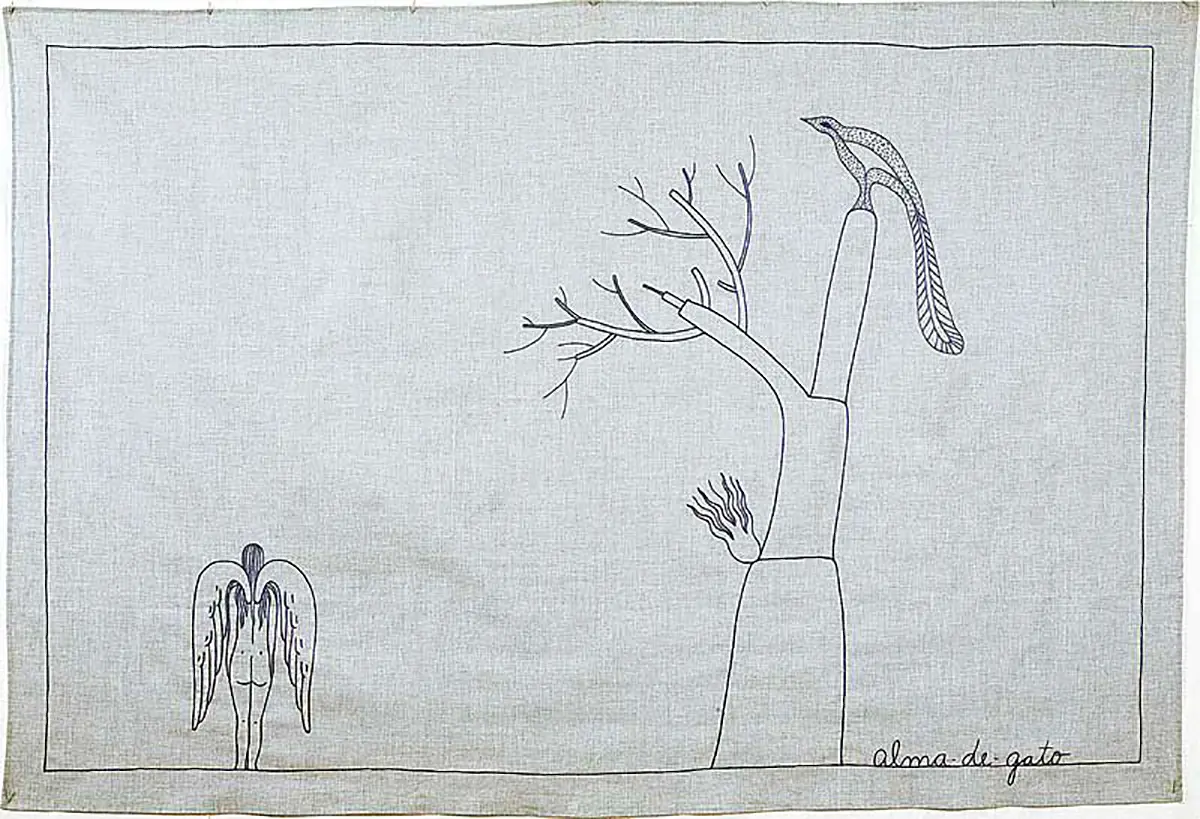
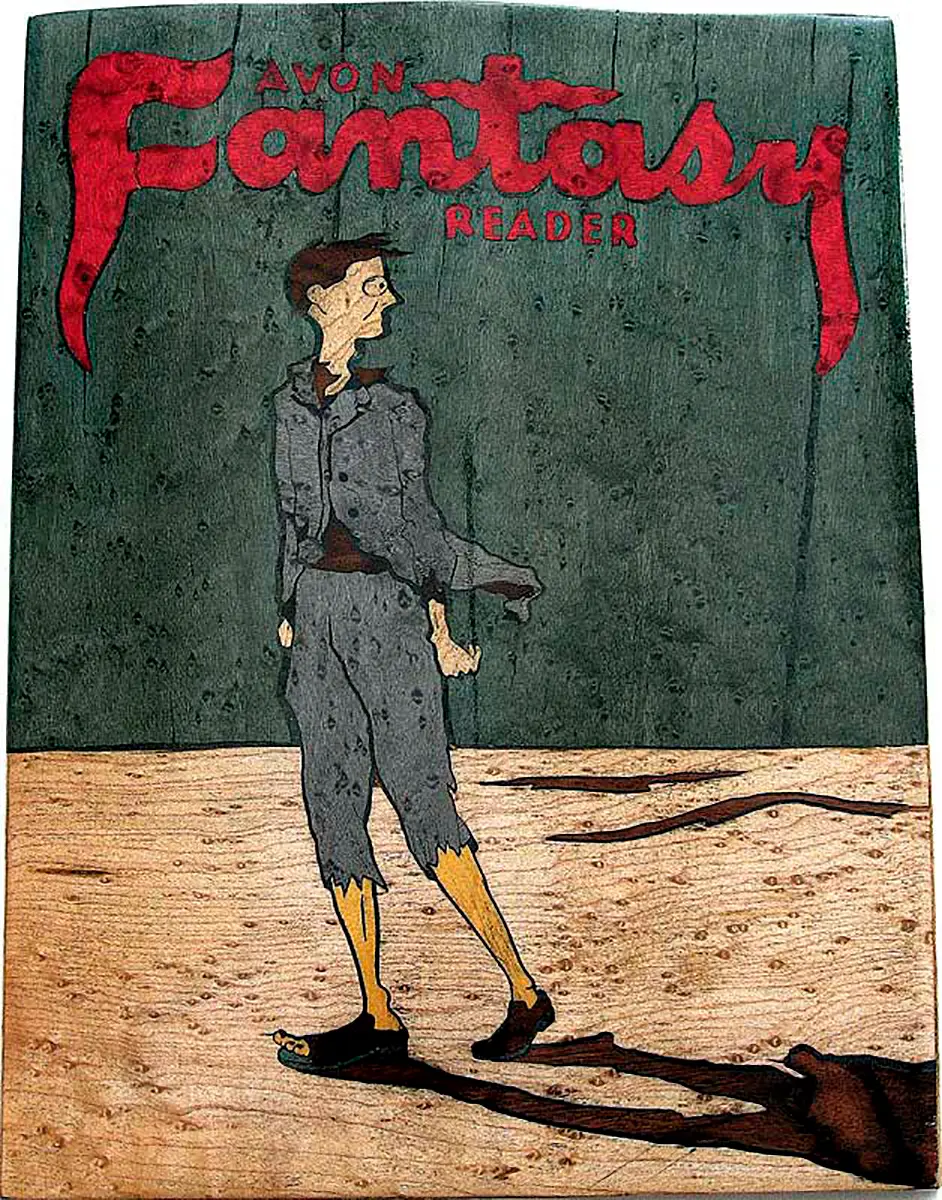
Collaboration can also be achieved when one artist asks another to create a section or an aspect of the work. Such is the case of works that require specialized knowledge or technique, prompting artists to seek assistance. For Huracán, Puerto Rican artist Frances Gallardo asked for help from a cabinet maker and a sound expert. Gallardo’s work, inspired by the Eighteenth Century organette, fuses the sound of records played on that instrument with those of a hurricane. The natural phenomenon is also suggested by the record carved on multicolored paper which, moving on the organette, brings to mind the hurricane’s motion. Teamwork is also present between Alex Cerveny, María Elita Alvez Birges, and Ana Claudia Bentos dos Santos, who create poetic images that combine the artist’s fantasy and the embroiderer’s technique.
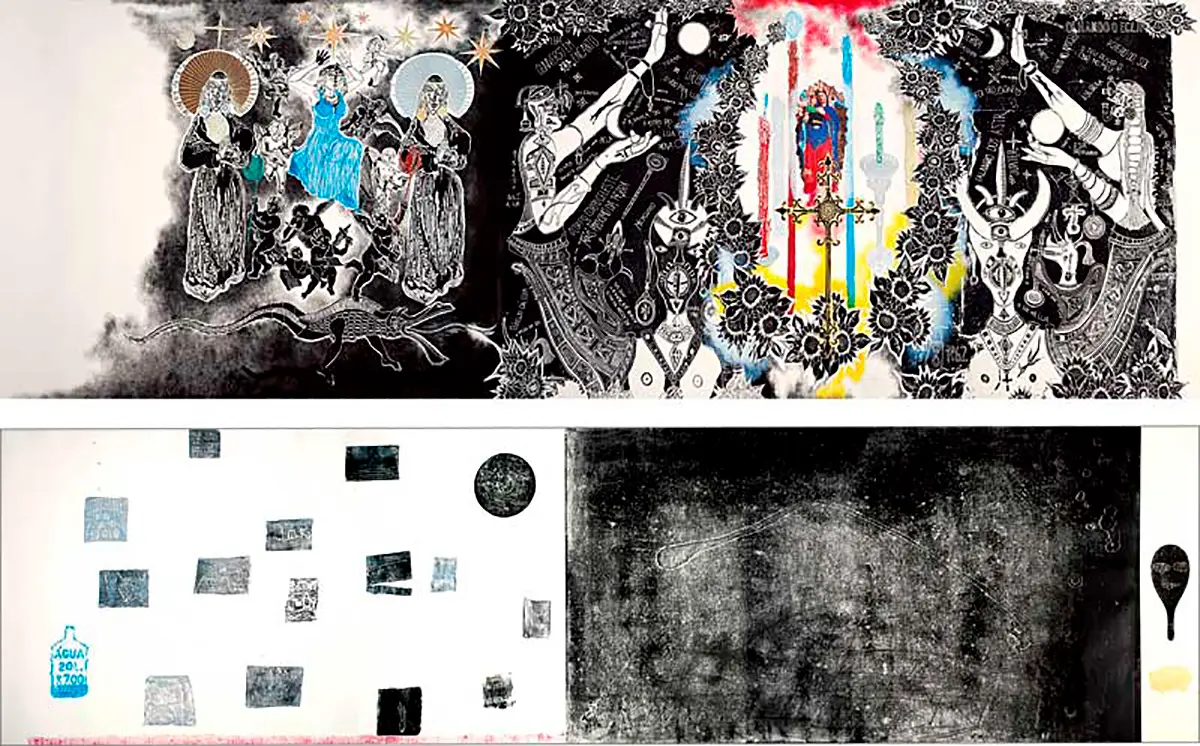
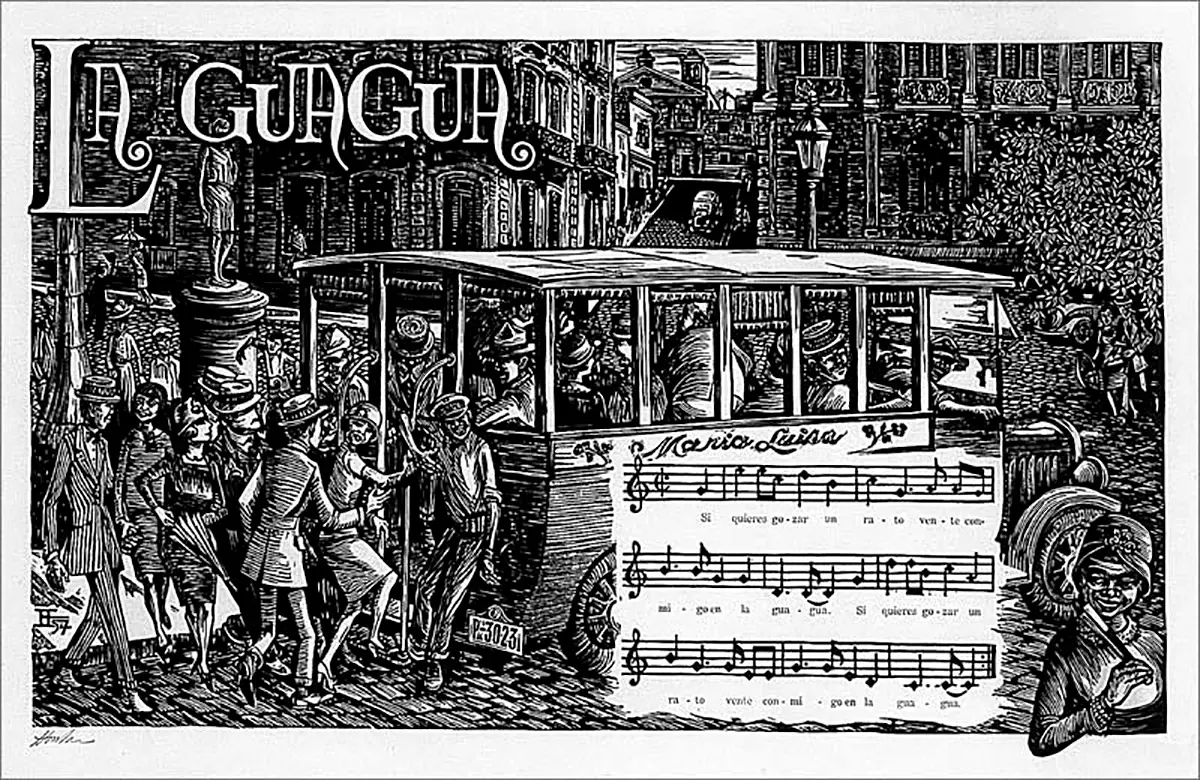
One outstanding example of technical mastery in the collaboration between two artists is the series La Plena, by Rafael Tufino and Lorenzo Homar, a renowned landmark in the history of Puerto Rican graphic arts. Equally notable is the large xylographic mural created by Francisco Almeida and Jarba Lopes, from Brazil, titled Cará-theus. An extraordinary “mural” that, like La Plena, contrasts with the postmodern tendency to reject discipline and craftsmanship on the part of artists who have naturalness as their ideal and affirm the primacy of the spontaneous and the improvised. Another feature of the process of personalization that tends towards the expression and intensive glorification of individual personality.
In their drive to be inclusive, the Triennial’s organizers have underscored collaboration in social media. One of the catalog essays reviews this kind of effort and presents examples of its history in Puerto Rico. Along the same lines, short videos are also presented, such as the video produced by Beatriz Santiago Muñoz, Carlos Torres López, and Beatriz Irizarry Gautier—a video that transforms the political into conceptual art.
A problem I believe that is not adequately solved in the Triennial, as it isn’t either in many contemporary exhibitions, is how to present digital art, digital magazines, and other works of the same nature. Many museums opt for placing displays and computers alongside works created in traditional media that are hanging on the walls. Yet, digital images are usually seen and appreciated in the intimacy of one’s home, by a user who is alone and sitting in a comfortable chair. Short and long video-art works require not a passing glance but sustained observation. In that sense, the video that can be best appreciated in the Triennial is Jan Henle’s, placed in a dark space that emphasizes the light-based image and includes a small bench for viewers to sit down and fully take in the content. Placed next to a painting or a print, screens, and computers make us feel as if we must contemplate the object, its surface, its material qualities. Another problem with the exhibition of video-art has to do with the audio. The low volume and the noise levels in the gallery make it very difficult to hear any music that may be part of the work.
Manufacture, by Camel Collective, is properly displayed. The work includes two silkscreens, 10 photographs, and a script; it is mounted on the wall by means of a hinge that allows viewers to see and read on both sides: the images and the script. This mechanism was previously used by Marcel Duchamp in 1913-15 for his Sleigh, made on a glass support.
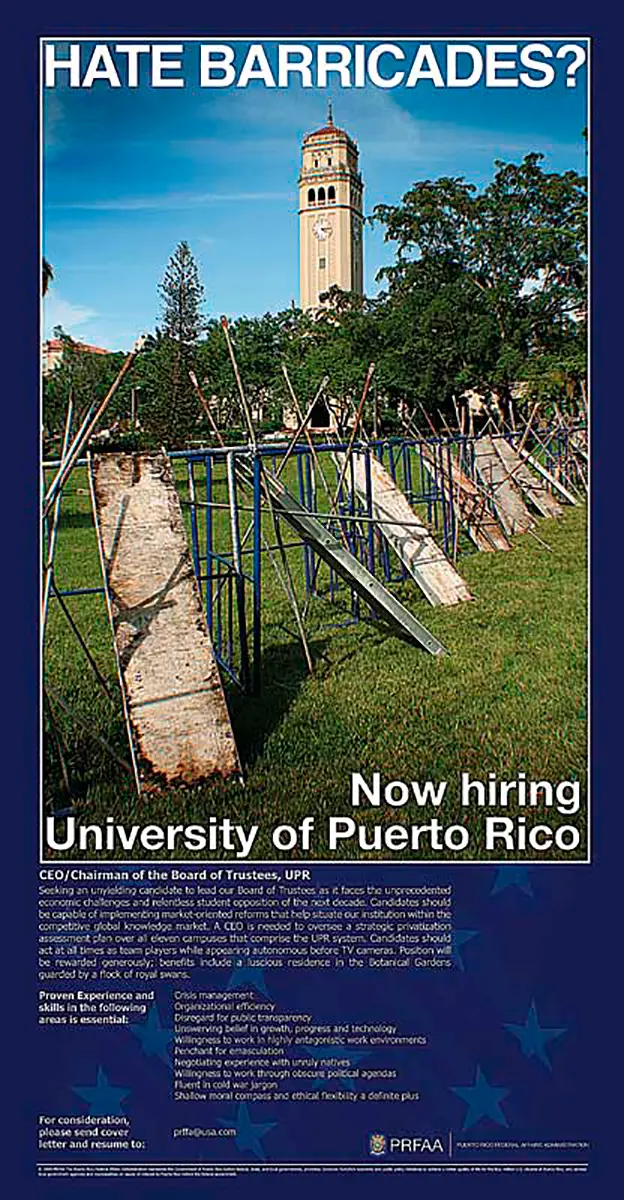
The advertisements designed by the Conboca and Área groups to promote their activities are less salient among the works mentioned above. Perhaps the difference is amplified by placing what are essentially documents on the topic of the Triennial alongside prints, paintings, or photographs.
Yet, regardless of the high quality of many of the works and the achievements of various groups in the promotion of collaborative work in the Twentieth and Twenty-First centuries as documented in the Triennial, the event leaves us with a general impression of déjà-vu. The work of some groups and artists that are not presented as of the Avant-Garde seem to be either repeating what has been previously expressed by others, or spinning in a vacuum, as Lipovetsky would put it. They seem more attentive to novelty for novelty’s sake, to shock as an end in itself, and to the eagerness of artists to express themselves in their work as one would in a televised reality show. The apparition of the ready-made in some of the works presented at the Triennial, for example, underscores what Octavio Paz said in his book Marcel Duchamp: Appearance Stripped Bare: “The repetition of the act brings about an immediate degradation, a falling back into taste.” The repetition of artistic strategies of the past, far from engendering a renewal, seems to be just an easy way out. It would seem that, like the nymph Echo, some works of art and events can only repeat what others have said. Emptiness is not just a general characteristic of our times, but one that is also specific to our art.
Besides documenting the collaborative efforts of groups, workshops, and artists associations, the Triennial confirms its transitory nature. The need to build self-sustaining models of collaboration in order to generate more solid communities, as expressed by Úrsula Dávila Villa in her catalog essay, is imperative 3. Models, I would add, that make us more aware of the solidarity required to forge a better life. The art-hive backs the social responsibility assumed by committed artists, but, will the committed artist be able to also assume the anonymity and self-sacrifice that collaboration often imposes, against the advances of a process of personalization geared towards satisfaction of the ego? The greatest achievement of this year’s San Juan Triennial has been to pose the question.
NOTES
1.Deborah Cullen. Zona de contacto. Lugares, espacios y otros laboratorios. Trienal Poligráfica de San Juan. El Panal. San Juan: Instituto de Cultura Puertorriqueña, 2012. Pp. 22.
2. Gilles Lipovetsky. L’ere du vide: Essais sur l’individualisme contemporain. Folio, 1989.
3. Úrsula Dávila Villa. El Panal. Trienal Poligráfica de San Juan. El Panal. San Juan: Instituto de Cultura Puertorriqueña, 2012. Pp. 216.
INGRID MARÍA JIMÉNEZ
Academical Professor of History and Theory of Contemporary Art. Universidad de Puerto Rico