
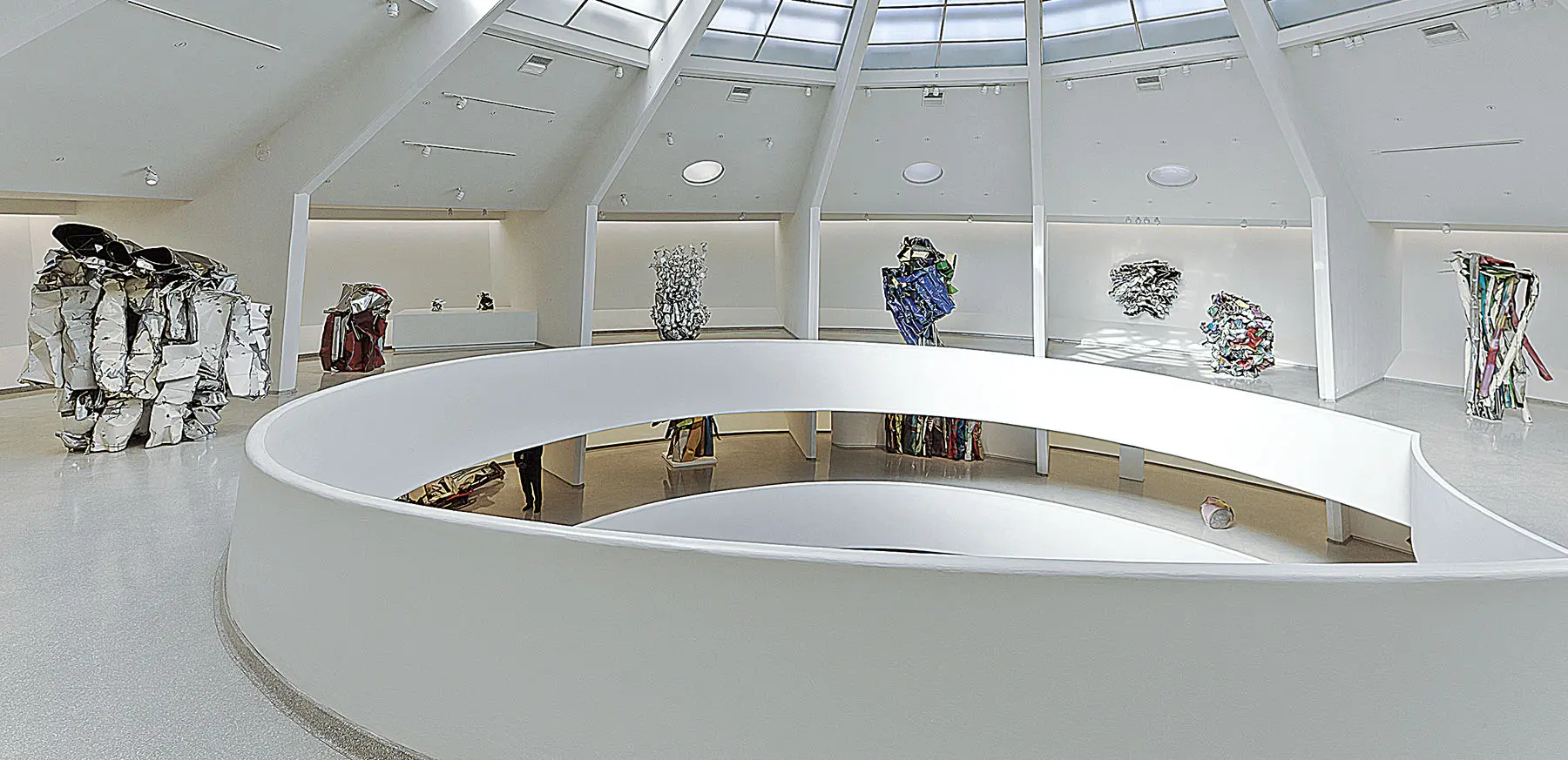
The Guggenheim Museum in NY presents three unrelated exhibitions that might have been strung together into one interesting curatorial project but weren’t. Yet together they create a context for speculations that probably wouldn’t occur were they in isolation. They are: an overview of the work of recently deceased sculptor John Chamberlain (1927-2011), a major retrospective of the photographs of Francesca Woodman (1958 – 1981), and a group show that under the title of Being Singular Plural includes The Torn First Pages, a piece by Amar Kanwar made between 2004 and 2008.
All three exhibits are excellent in their own way, but what is most interesting are the attitudes they reflect, or rather the implicit definitions of each about what an artist is supposed to do, and how they play against each other. The comparison of these points of view is not self-evident in the museum because the space is not conducive to doing it. Therefore they have to be seen as disconnected entities. One could say that the Guggenheim building in that sense is an example of totalitarian architecture: it tells the curators where the work is to be displayed rather than the other way around. Chamberlain’s big metal pieces only could go into the spiral galleries, Woodman demanded an intimate space that could not be built into any central part without committing serious blasphemy against Frank Lloyd Wright, and the same can be said about Kanwar’s work (all the artists in Being Singular Plural were confined into lateral spaces in different floors to allow video installations to function independently).
It would, therefore, be unwarranted to claim that the museum gave preference to Chamberlain’s approach, even though as an artist he was obviously chosen as the primary star and dominates the museum. The exhibitions were organized by different curators and had different origins. Woodman’s exhibit was initiated by the San Francisco Museum of Modern Art, the Being show was first seen in the Guggenheim Berlin, and John Chamberlain: Choices was organized for the Guggenheim in New York.1
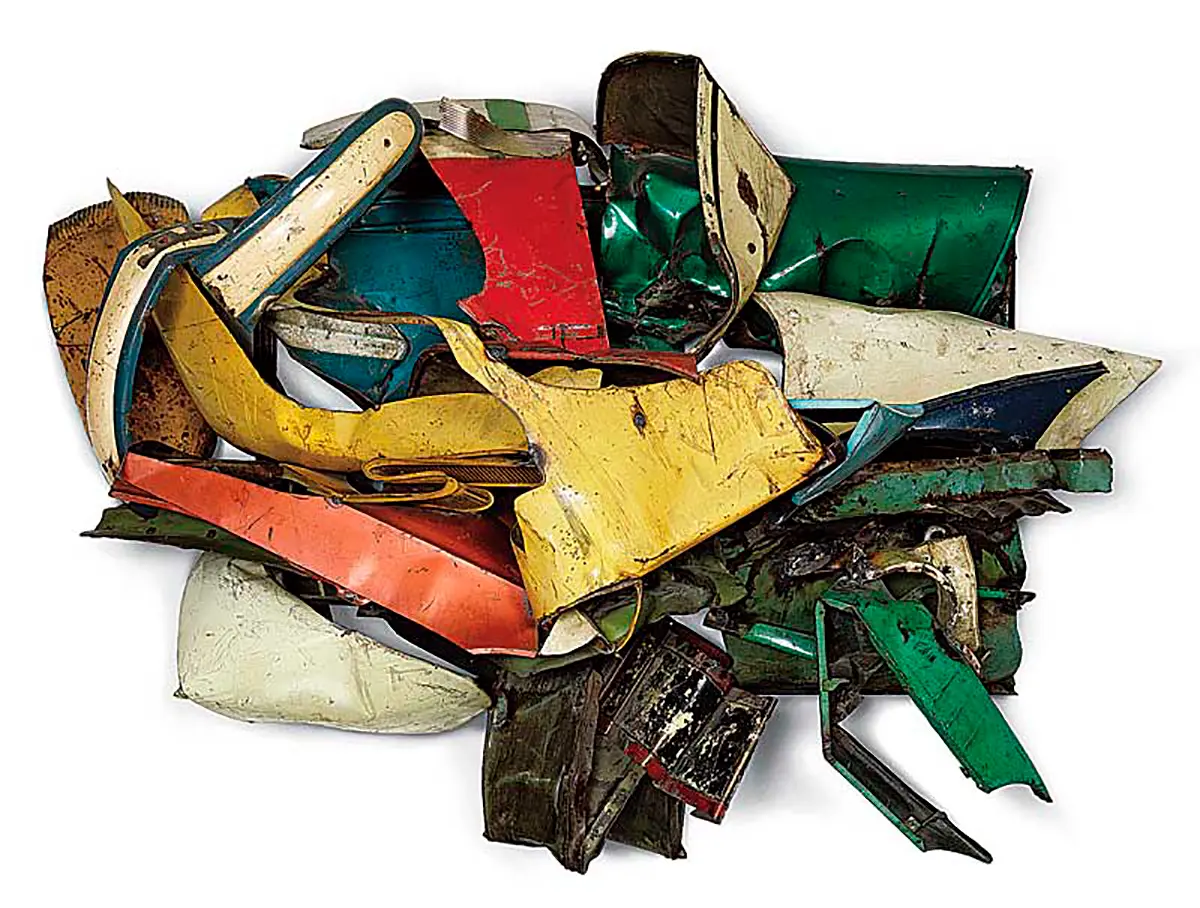
The Chamberlain exhibition covers his life as an artist from the late 1950s to 2011. As has often been noted, he fits somewhere between abstract expressionism and pop art. An admirer rather than a critic of the preceding generation –of Willem De Kooning, in particular– Chamberlain explores the expressive quality of forms and paint. On the other hand, his use of parts of crashed cars and the acceptance of pre-existing imagery produced by consumer society also relate him to those of his contemporaries who explored consumer icons.
At Chamberlain’s best, the power of his work lies in the symbiotic relationship of the violence evoked by crushed metal with his careful monumental composition and use of color. On the first view, his pieces may be seen as an aesthetic assembly of found pieces and one is tempted to compare them with the “compression sculptures” of César Baldaccini. César, as he is commonly known, occupies a similar position in art history to that of Chamberlain vis-à-vis abstract expressionism and pop art. The first piece in his compression series is from 1960. He went to the yards where cars are compressed into cubes and prisms to go to foundries for the recycling of the metal. He would then choose those he considered aesthetically pleasing and exhibit them as sculptures. Chamberlain, however, strongly intervened in the process, so that in his case considering them to have been “found” is deceptive. He made small models for his sculptures, planning the bigger scale pieces. He had a metal crusher in his studio with which he controlled the wrinkling of the metal.
Given the perfection of many of the chromed parts that are included in his pieces, one can presume that Chamberlain sometimes assembled his works, then dissembled them to chrome or paint them, and then reassembled them. All this makes them much more than just casual and pretty examples of assemblage. Generally, Chamberlain is powerful and consistent in his control.2
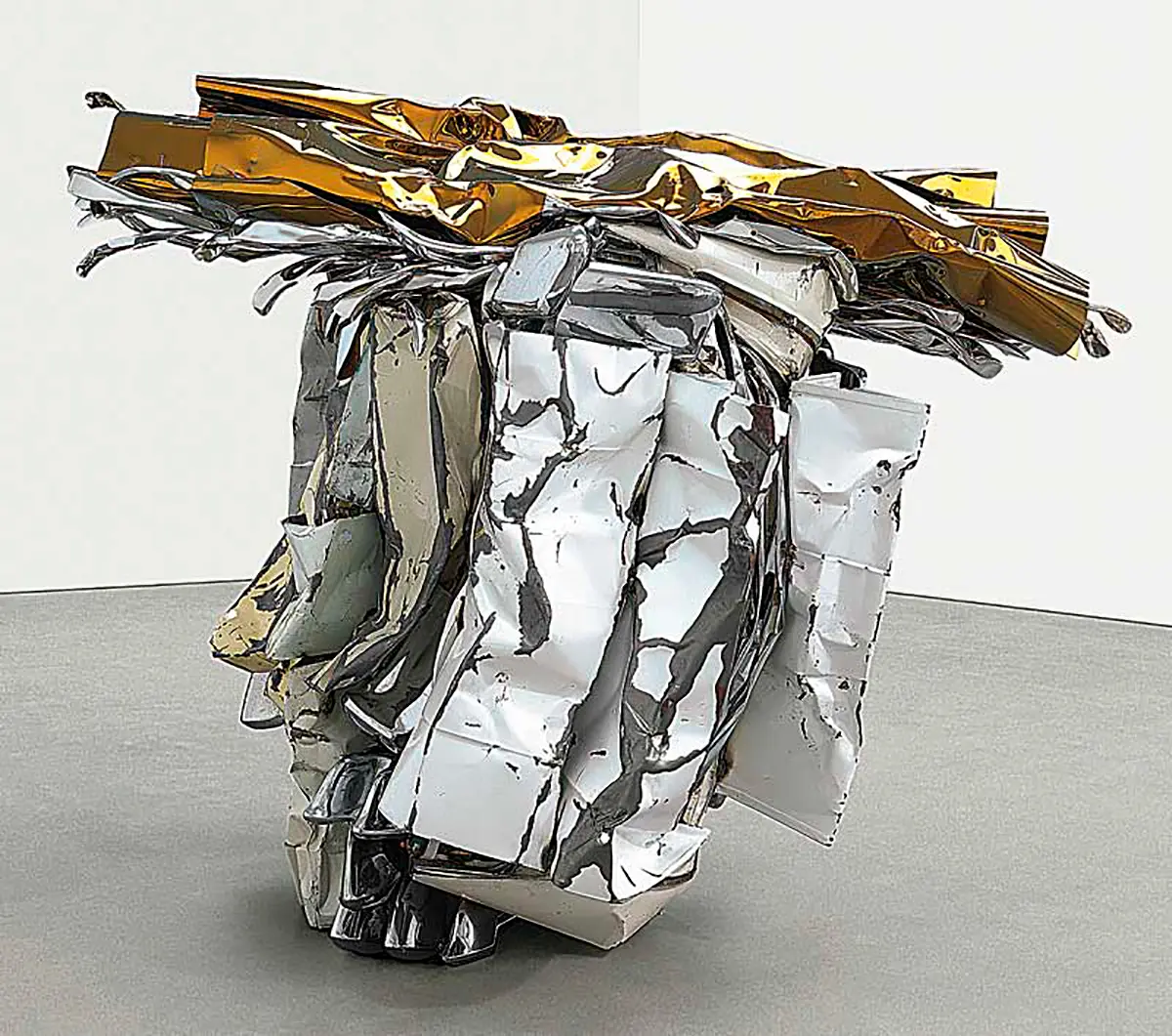
It is in this kind of exploration where Chamberlain becomes an example of one attitude towards art-making. As might be expected of someone working during a particularly formalist period in U.S. art, his focus is on the looks of his work. But his mission in art seems to be research into what can be done with scrap metal. It’s true that he also worked with plastic foam, cardboard, and plastic, but those pieces seem to be satellite experiments where he pursued or translated shape systems he had already discovered in metal.
As a painter would try to expand the limits of the brush or a sculptor might experiment with the possibilities of clay, Chamberlain ventured, systematically, into the question of how far one can go using the leftovers of destroyed cars. And yet he always maintained a freshness saving his work from formulaic repetition. His success in this is what makes him an interesting artist. Nevertheless, today, this kind of research looks like a dated proposition. Historically speaking it was important to claim materials outside the conventional art tradition in order to give them a rightful place in art-making. Today nobody can challenge Chamberlain’s position in the field of sculpture. He expanded and enriched the repertoire of the field and he performed an act of liberation. In retrospect, though, it was a liberation weighted towards issues of craft more than towards issues of art. His contribution has to do with how things can be made and how that “how” can be rich and even complex. His work is less about expanding knowledge in a more general sense.
Rather than researching a medium or a material, Francesca Woodman uses photography in a relatively orthodox way to explore private issues. With no major technical shifts, Woodman takes us through a trip of introspection that helps her cope with her own anxieties. One can say that she works within a definition of art that focuses on exploring the self. Therapy through visual expression seems to be the underlying project. At the same time, the work is powerful enough to be relevant to viewers.
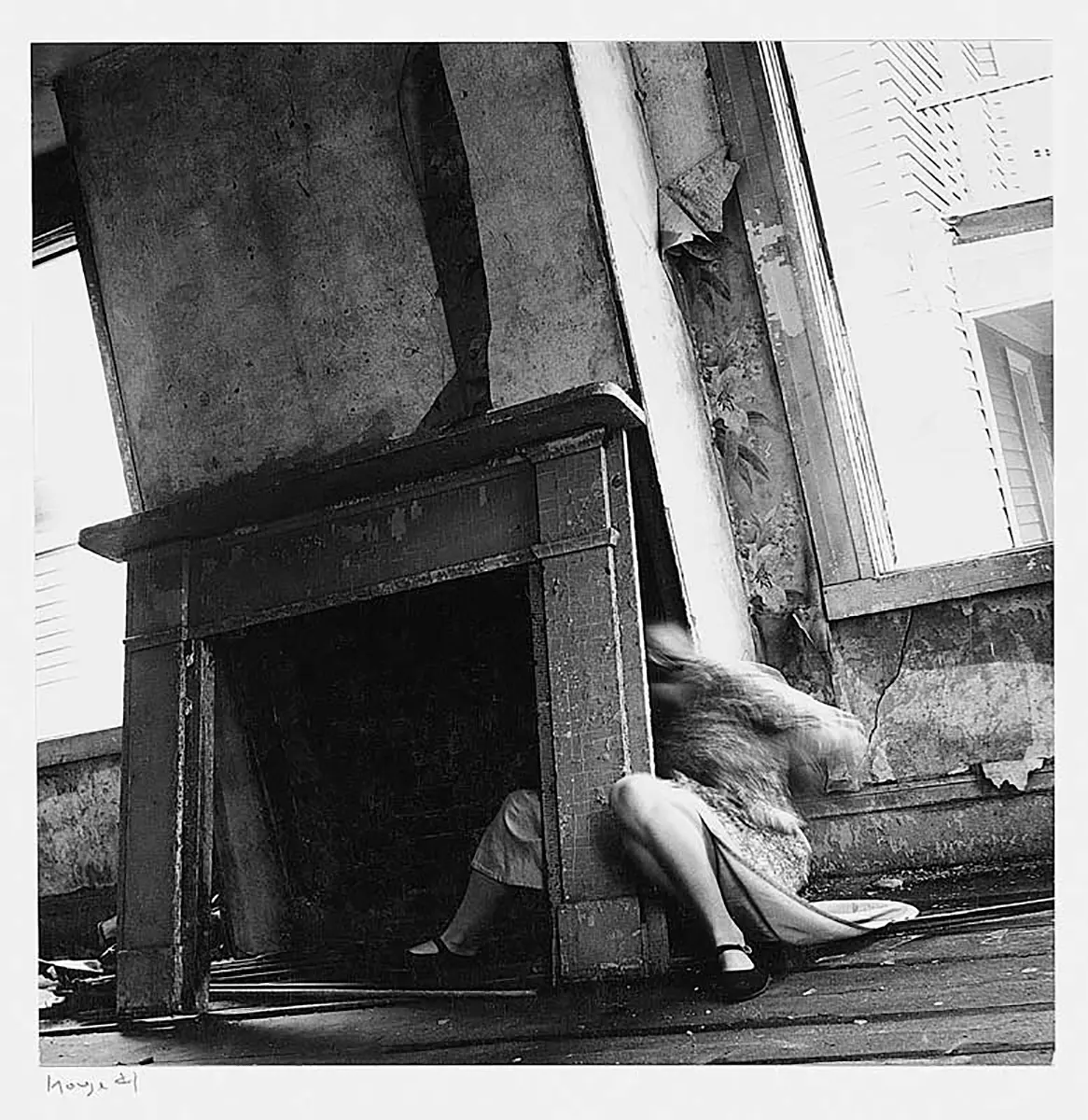
Woodman has been a somewhat mythical figure for several years now, someone who might be placed on the same shelf as Ana Mendieta. Like Mendieta, she used her body to discuss issues of womanhood. And like Mendieta she died much too early, committing suicide at the age of 22. The Guggenheim exhibition exhausts her five-year production with about 120 examples. The work produced during her first years in college, when she was still in her teens, is nothing short of breathtaking.
Mendieta proclaimed her silhouette as a placement for identity. Her poetry lied in the simplicity of this device and the unexpectedly rich evocations she achieves. Also precocious, while still in college she staged her well-known violent rape performance (1973). Her silhouette merges with water, sand, fire, and leaves.
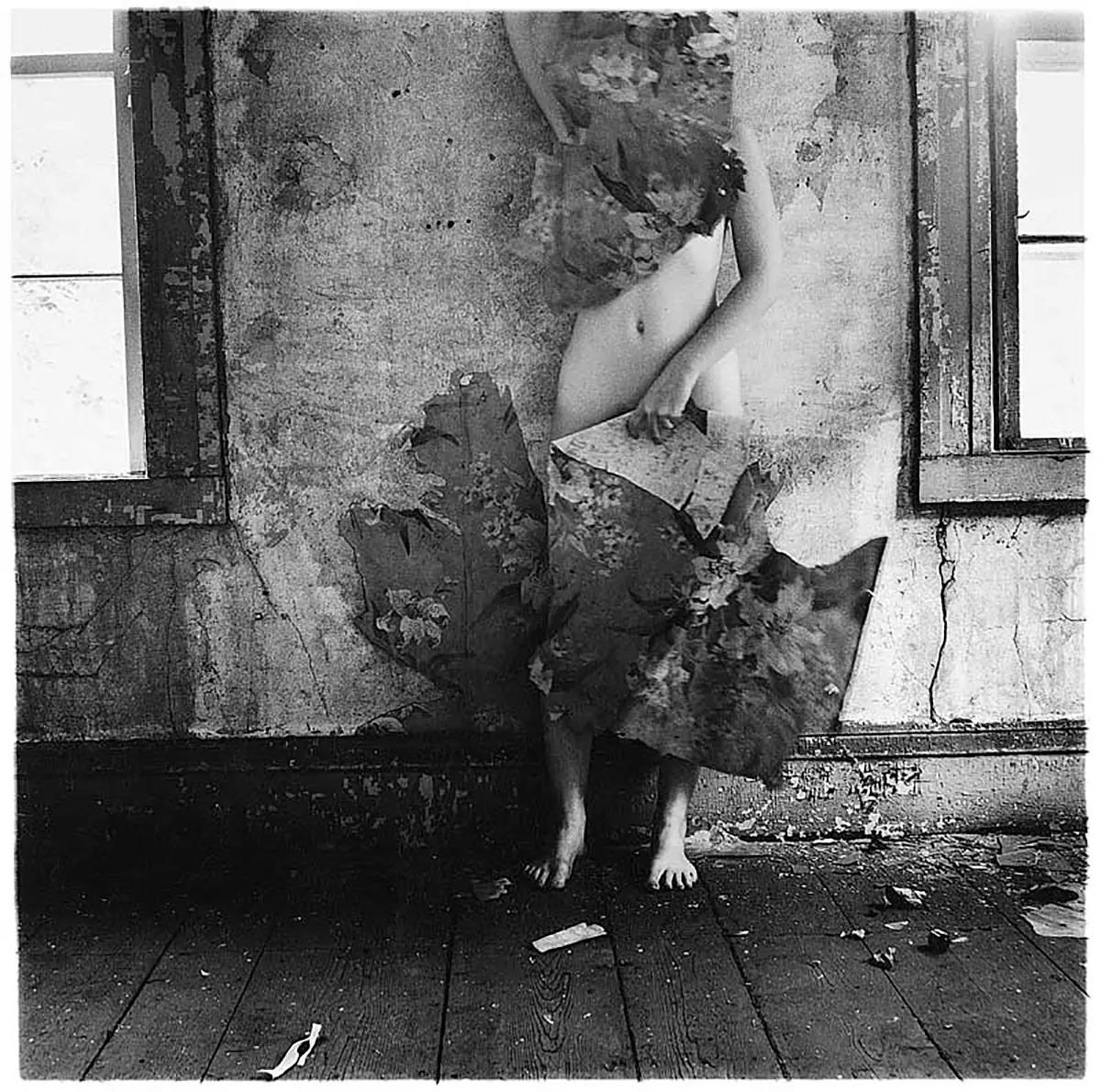
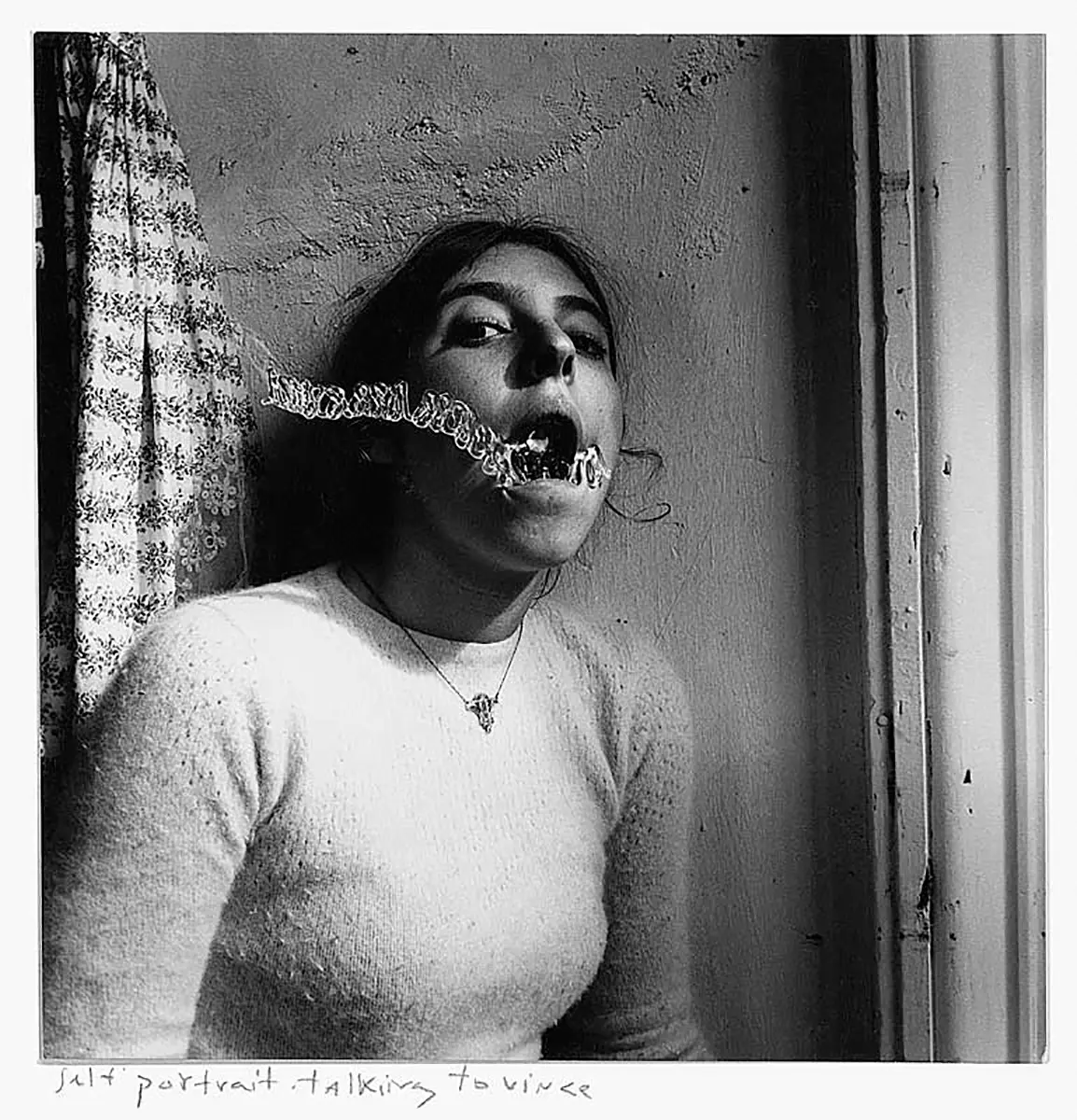
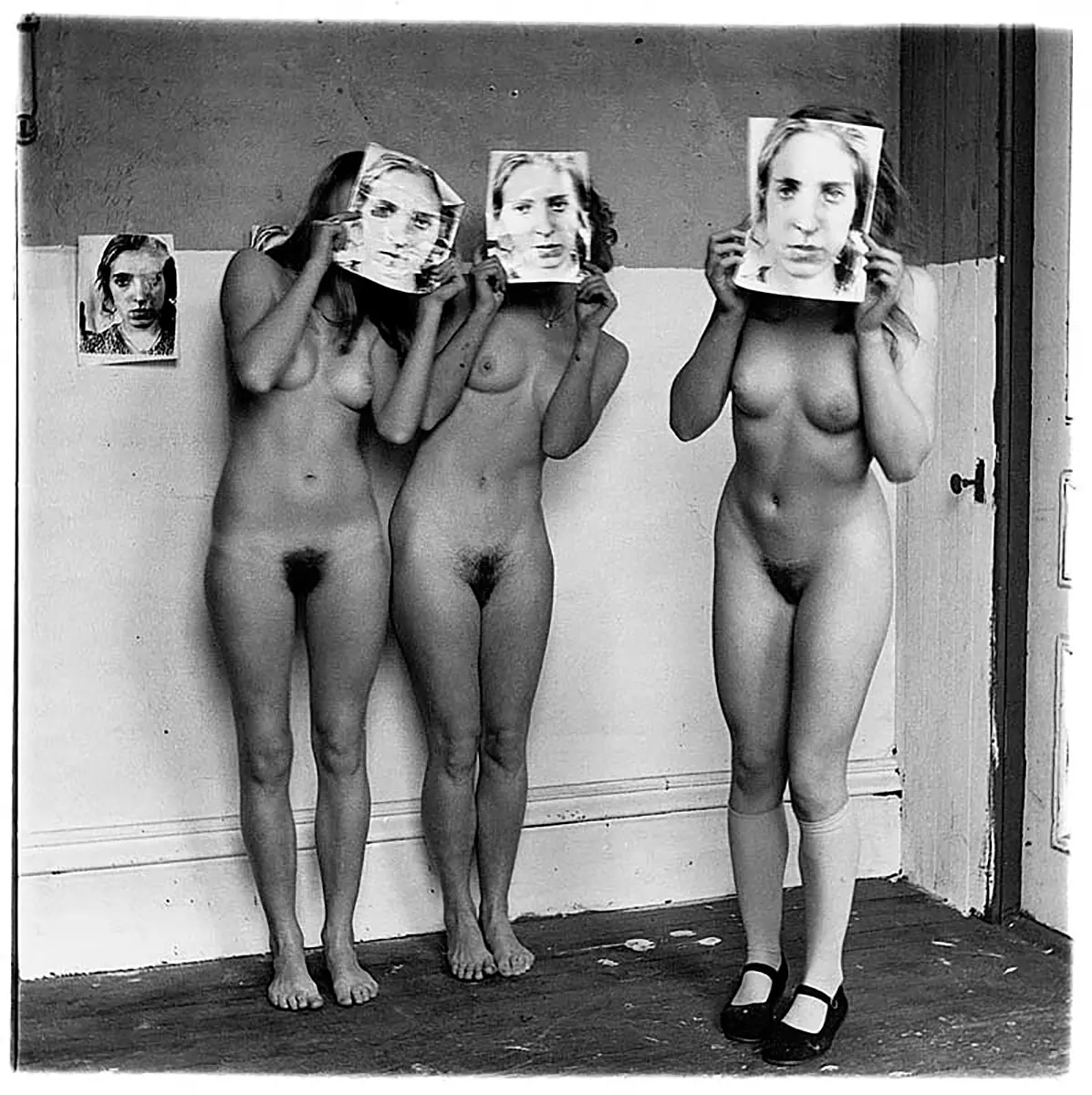
Woodman used her body simultaneously as both a hiding piece and a mirror, visualizing dialogues with herself. Her photographs are tortured whispers telling us of their presence, but nothing more. Rarely showing her face, she merges her naked body into the textures of decayed buildings or blurs her form into the dusty air of abandoned places. In one particularly memorable image, she manages to evoke an impression of hiding by pressing clear glass onto her breast (Untitled, 1976). The images don’t reveal her thoughts but manage to lead us to suffer with her.
As commentators wrote, Woodman’s work fits into a certain vein of surrealist photography, and there she may be seen as responding to Hans Bellmer’s misogynist images. Bellmer produced sadistic images by photographing tightly tied and distorted rubber dolls. Woodman answers and protests against this with dignity, once even literally. In Horizontale she shows her own body tied with masking tape directly alluding to Bellmer’s sausage evocations.
Woodman’s photographs derive some of their strength by being unassuming. Her strongest works are small in size, black, and white, more fit for a book than for big displays. Only for and after her graduation did she experiment with larger sizes and technical variations (e.g., diazo prints, as used in architectural plans) with results that are less successful.
As with Mendieta, Woodman has become an icon for feminist art. A common interpretation is that her work tries to escape the male gaze. This point seems valid and deserves the attention it’s gotten. But in the context of this review, what matters more is Woodman’s persuasiveness in suggesting that authorship based on individual anguish can still be a viable tool to make good art.
Amar Kanwar, an internationally known artist from India, represents the third attitude to be found in the Guggenheim display. It is one fraught with contradictions, for Kanwar, though an individualist artist making his mark, is primarily concerned with addressing issues of anonymity. He is not interested in making personal discoveries about formalist issues, nor does he engage in introspection. His art is about political power and its abuses, and his visual language—primarily video projections—follows the techno-anonymous style of the presentation shared by many contemporary installations. In certain ways, this approach to art is much more complex than either formalism or introspection because of the conundrums it carries with it. Portraying itself as an expression based on objective analysis, it nevertheless embodies a political commitment that is unavoidably the product of personal choice, necessarily reflecting introspection.
Art that is intended as political activism bears a tension at its core between its origin as the statement of a particular individual and its intention to denounce injustice in the world beyond the self. The “political” artist tries (or should try) to denounce and correct social injustice without shifting attention to him or herself.
Yet by exhibiting in a system that rewards authorship over collective causes, the spotlight invariably shines on the author. It points to the opinions he espouses, to how well he presents the case, or to how the celebrity power of the author gives credence to the opinion expressed. No matter how well-intentioned, individual artists remain victims of the system and their good intentions are dulled, at least to some degree.
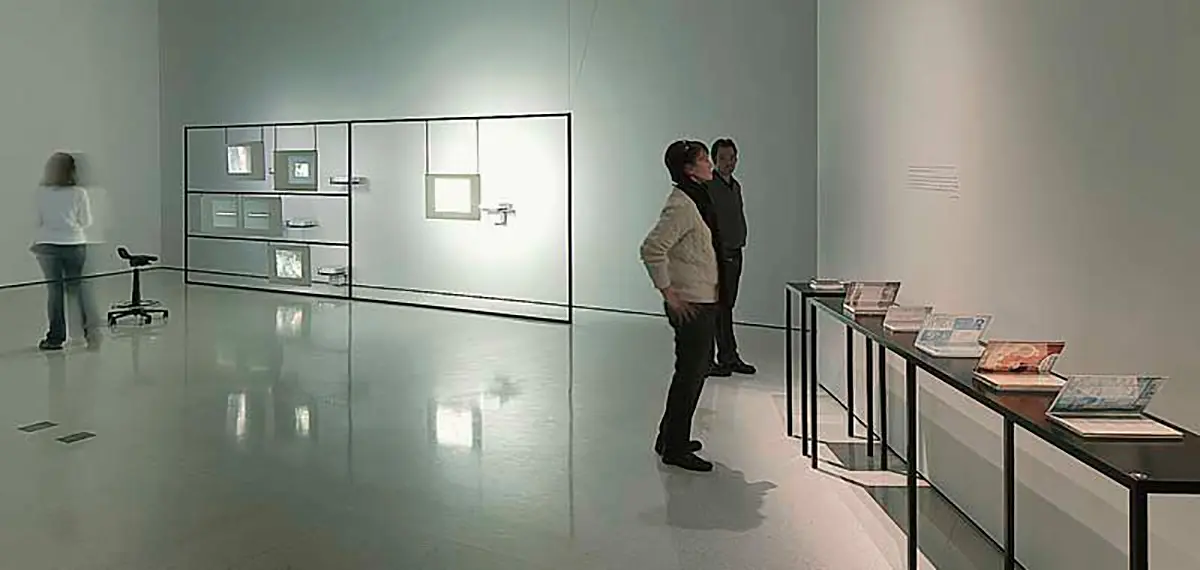
Kanwar, who lives in New Delhi and has many friends among the Burmese exile community, picked up on one occurrence that has a particular symbolic weight. The Burmese regime decreed that any publication in Myanmar had to have a first page bearing a Government manifesto.3 Ko Than Htay, the owner of a bookstore, found this act offensive and decided to remove those first pages from the books he sold in his store. Hence the title “The Torn First Pages” for Kanwar’s installation. Eventually discovered by military police, the bookstore owner was jailed for several years.
Kanwar was struck by the heroism of what was essentially a personal and anonymous dialogue between the bookstore owner, his books, and his consciousness in the face of arbitrary power. (Perhaps an excess of explicitness, one of the objects encountered in Kanwar’s installation is a table exhibiting plasticized books missing the officially mandated first page.)
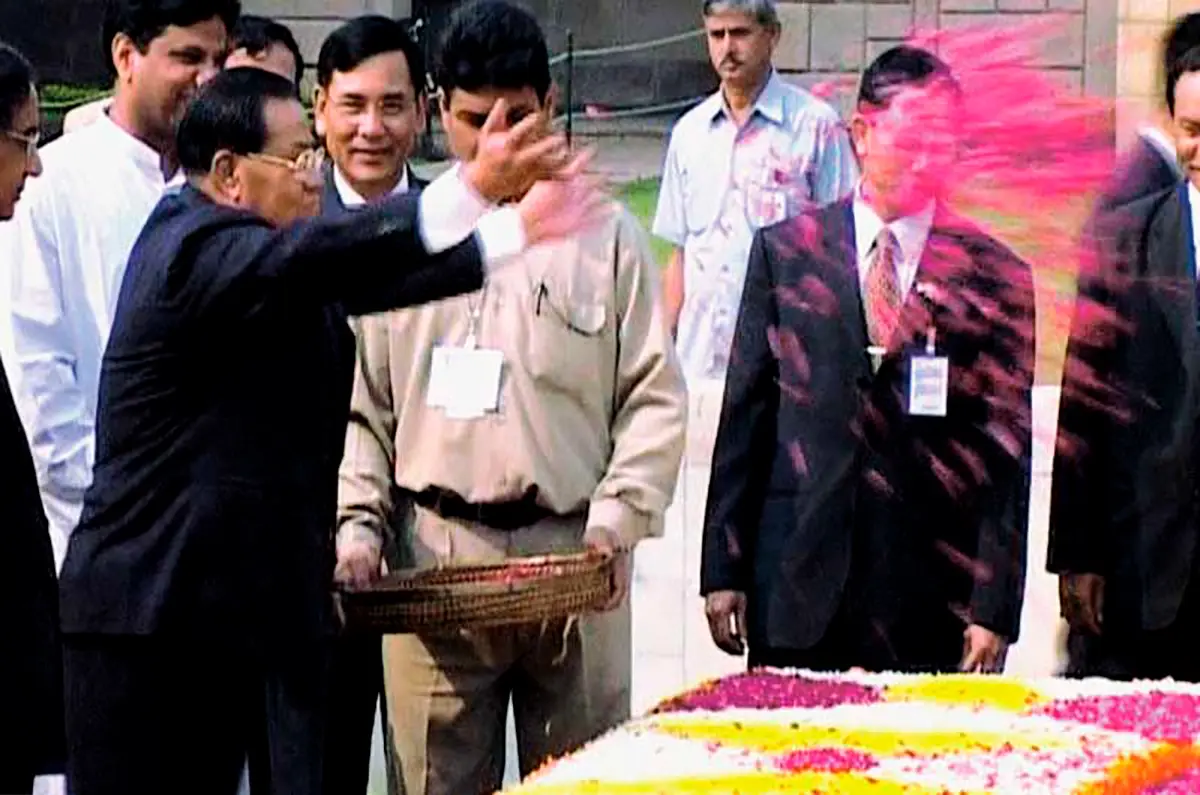
The main weight of the installation lies with documentary videos and photographs taken by anonymous members of the public using phone cameras. These are used as statements about the violence the regime applied against protesters during the Saffron Revolution (so-called after the color of the robes of the Buddhist monks who initiated the protest). The images are rear-projected onto sheets of paper, thus alluding to the torn pages. One of the more memorable images is that of dictator Than Shwe during a visit to India, in the act of throwing rose petals onto Gandhi’s resting place. A photographer, who had missed the precise moment, asked Shwe to repeat the action for the camera’s sake, to which he acceded. In the photos, the flow of petals, partially covering the faces of those attending, could also be seen as splattered blood.
Kanwar considers his piece as a “clarification of the present so that one can take a step forward” and he adds: “The act of remembering becomes an act of moving forward in time.” For him, remembering the bookstore owner, therefore, is not a commemoration but a way of anchoring one’s consciousness in one’s own present.4
From a formal point of view, Kanwar’s presentation is bland. A cursory visit to the installation could leave the impression that the story and the artist’s intentions are more interesting than the work itself. The technique he employs for presentation, and not the content, is what determines the atmosphere of the room. The real impact, at least at first encounter, is provided by the narrative and not by the display or by the evocations the material generates in the viewer. It is only after some time in the darkroom that one senses the epic quality of the work. After some time one feels submerged and living within a complex atmosphere of oppression and repression.
In retrospect, having decanted a visit to the Guggenheim, one continues to feel that Chamberlain remains hedonistically the most stunning, Woodman psychologically the most haunting, but Kanwar the most demanding. His installation brings us back to the reality we live in, or will live in if we don’t pay attention.
One leaves the museum wishing that the work of all three artists could be put in a blender to achieve an ultimate product: one that opens our eyes to unexpected forms; one that gives us insight into ourselves; and one that helps us cope with and change a political reality that otherwise will lead us into the apocalypse. It is possible that the greatest value in encountering these three particular artists at the same time is getting an opportunity to understand the multiple tasks of art and perhaps to see that these are too complex and too important to expect any individual artist to achieve convergence. We come away feeling that art cannot reach its full potential to shape culture unless something happens to raise it above the tug of emphasis on authorship.
(Edited by Selby Hickey)
NOTES
1. Francesca Woodman, San Francisco Museum of Modern Art, November 5, 2011 – February 20, 2012; Solomon Guggenheim Museum, New York, March 16 – June 15, 2012. Being Singular Plural comes from the Deutsche Guggenheim Berlin as part of the “Deutsche Bank Series at the Guggenheim,” (June 26 – October 10, 2010) includes artists Shumona Goel, Shai Heredia, Sonal Jain, Vikram Joglekar, Amar Kanwar, Mriganka Madhukaillya, and Kabir Mohanty, and is exhibited in New York during March 2 – June 6, 2012. John Chamberlain: Choices, Solomon Guggenheim Museum, New York, February 24 – May 13, 2012, and then Guggenheim Bilbao, March-September 2013.
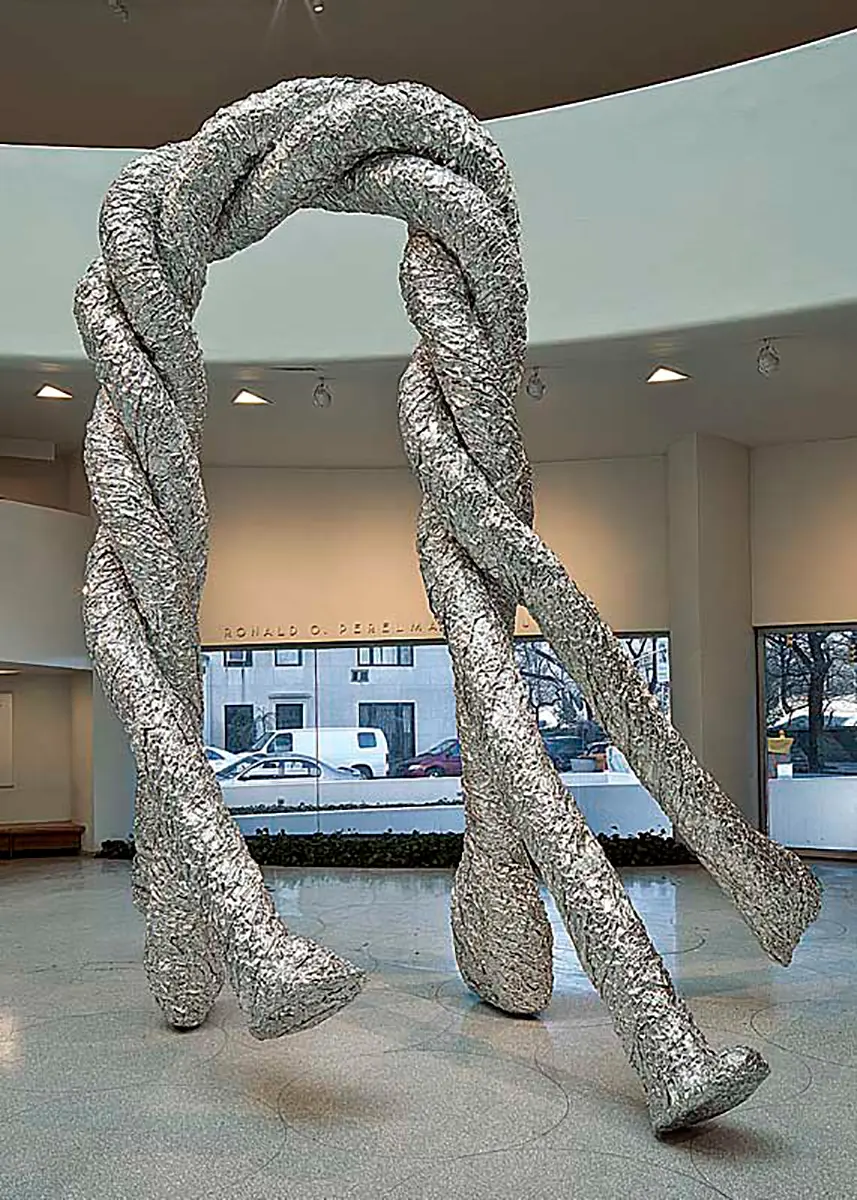
2. Chamberlain is amazingly consistent all through his work except for a few down points like his late Sphinxgrin Two (1986-2010): a huge aluminum arch inspired by entwined ropes and definitely on the aesthetically cheap and glittery side of things, and Women’s Voices (2005) where he explores for him atypical narratives that land in the sentimental territory.
3. The “first-page” states the objectives of the dictatorship in three categories: political striving at stability and modernization; economic stating basic capitalist aims; and social aspiring at morale and morality, patriotic spirit and health, and education. A further section promises “To crush all internal and external destructive elements as the common enemy.” Amar Kanwar, The Torn First Pages, Public Press, New Delhi, 2008
4. http://www.youtube.com/watch?v=mRQSK0p95nk
LUIS CAMNITZER
Uruguayan artist, Emeritus professor at the SUNY College, Old Westbury