
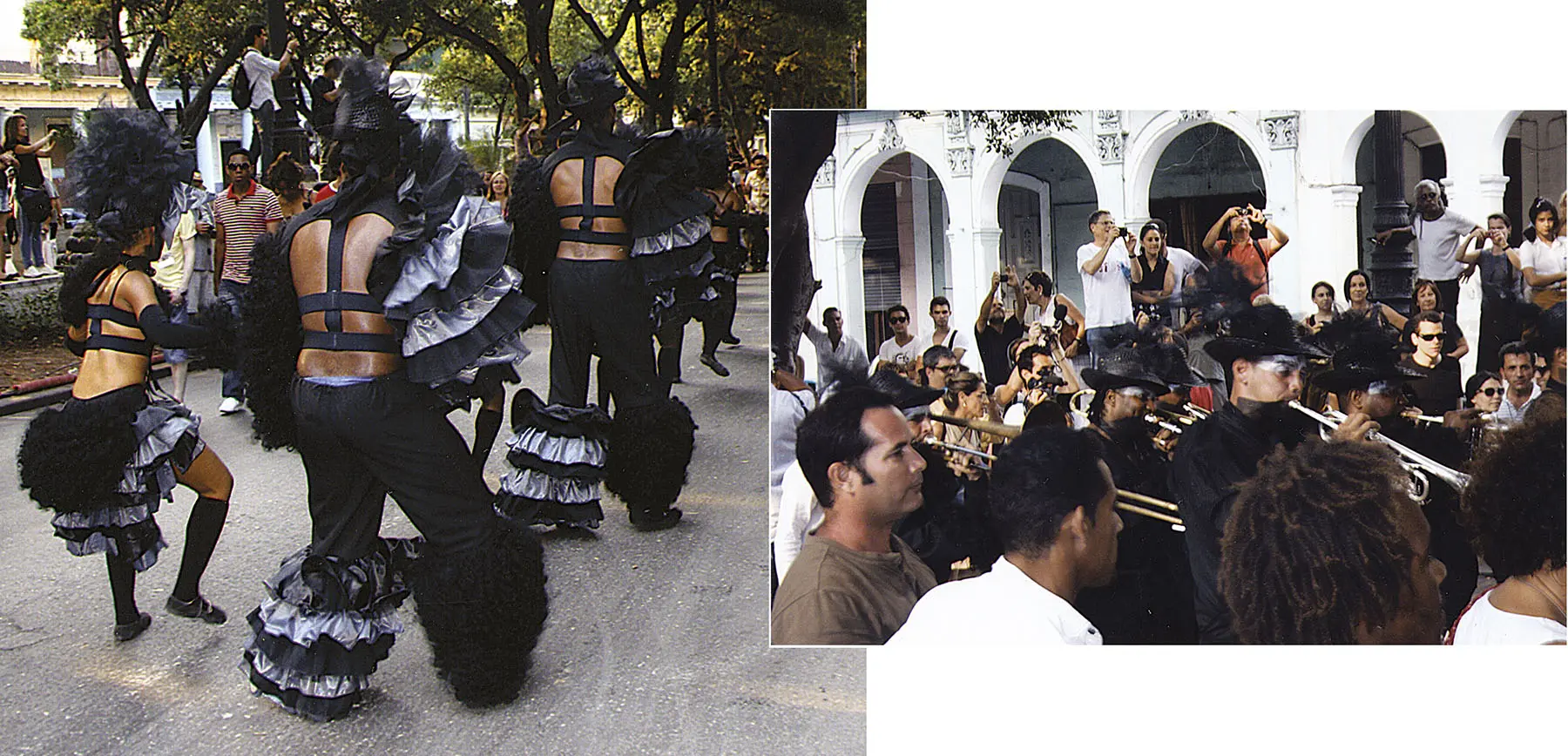
Artists went backward twice in this biennial. It’s interesting to look at those two similar gestures, and at the dissimilarity between them since they sum up pretty well the main aspirations that the biennial has staked out for itself. After some false starts in recent editions, there seems to be clarity about what each of those directions requires and implies, and what kinds of impacts are attainable in each of them. I refer to those two branching lines of the biennial’s public and social vocation—namely of spectacle, on the one hand, and of social process on the other.
Los Carpinteros—impeccable, as always—staged a conga and named it Irreversible. It went, of course, in reverse. Dancers danced backward and musicians played backward and the intense color scape of a usual comparsa was reversed, we could say, by clothing everyone in black. In the process, they proved that a conga is hot no matter which way it goes, and the giant throng of people who followed it down Paseo del Prado erupted into cheers at the end.1
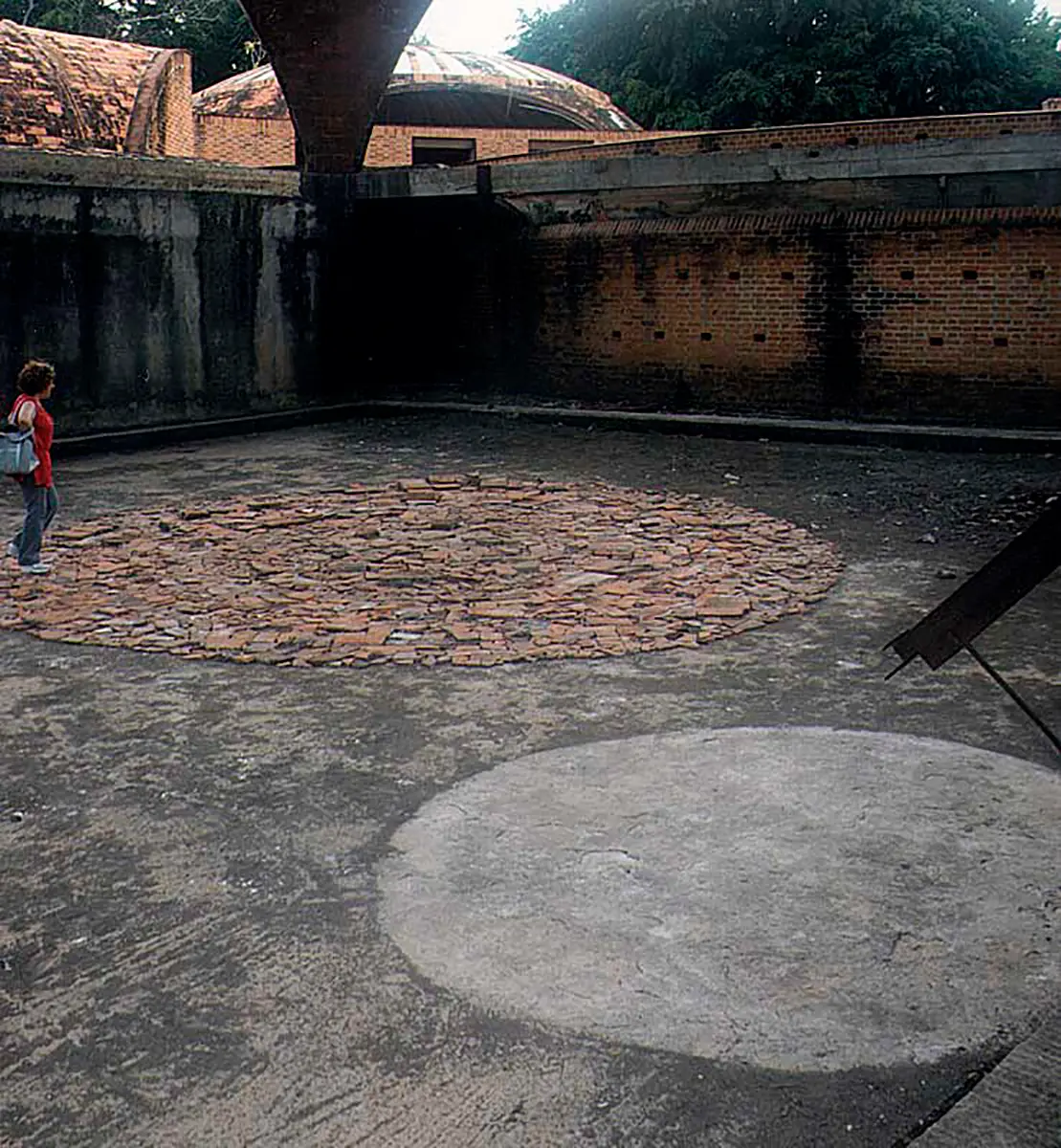
Out in San Agustín—a forlorn backwater some miles distant from the city center—artists occupied the half-finished structure of what was once intended to be the headquarters for the phone company and then abandoned 20 years ago, and declared it the neighborhood’s Museum of Contemporary Art. As scrappy as the Carpinteros’ work was polished, this energy center buzzed with a whole range of projects, one of which involved walking the neighborhood, backward.
There was plenty of spectacle in the biennial. Not only the Carpinteros but Manuel Mendive too made a parade, in his case with a gigantic police escort that accompanied the dancers and acrobats and news cameras and crowd. (The exaggerated folkloricism of Mendive’s work, oddly, brought the folkloric aspects of the Carpinteros’ promenade closer to the surface—though playing to a somewhat different demographic.) And South African artist Steven Cohen, known for his outlandish getups and impossibly high heels, teetered around the courtyard of the Centro Wifredo Lam, attracting much attention and stealing some thunder from Magdalena Campos, who was about to get her own parade of street vendors underway: her geisha costume and white face paint eventually brought the lenses back to the center. (The pregoneros, a tuneful fixture on Havana streets, are also a kind of reversed phenomenon, as one observer noted—taking the city’s commerce right back to the 19th century.)
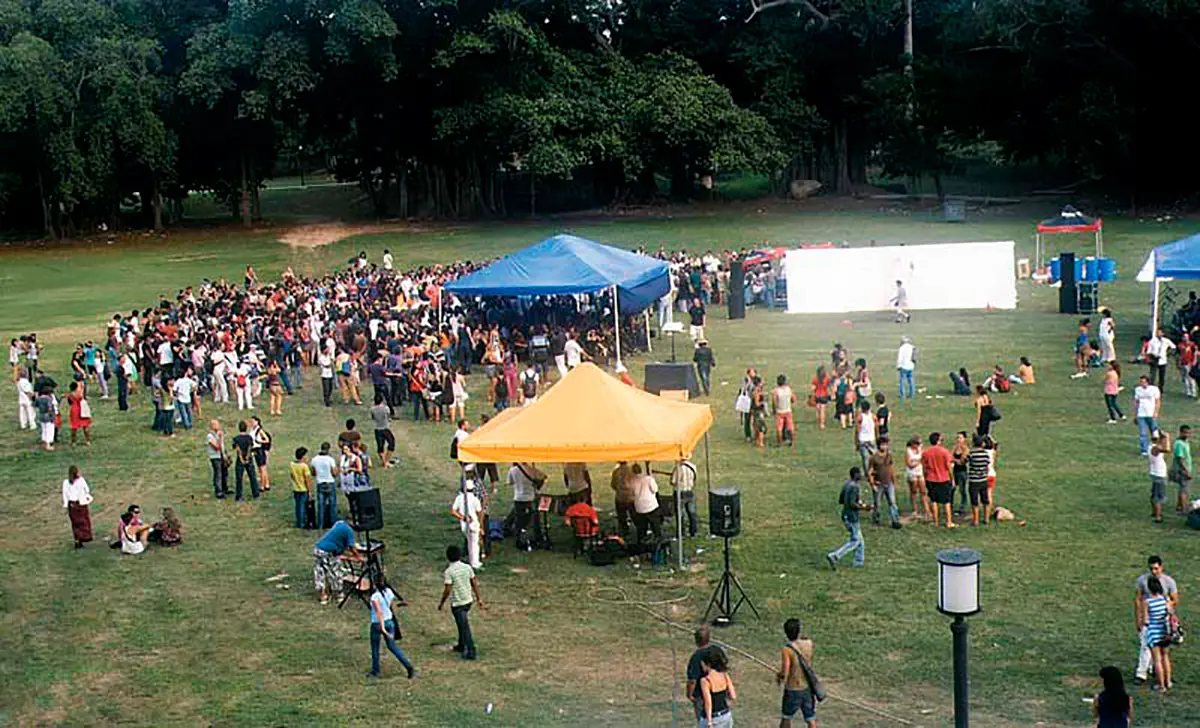
Spectacle is a word that gets used in a mostly pejorative sense in the arts, but that’s not how I mean it here. These were well-produced, energetic events. True to the biennial’s claims of focusing on the relation of artistic practices to ‘social imaginaries,’ they spread out across the city’s public spaces, and enlivened some not-so-public ones, creating a biennial that—for the first time in a long time—really did blur the edges of the institution and create a porous, heterogeneous zone in which it was possible to encounter, interact, engage, muse and grin. Artists pried open their practices, weaving music and dance into works that caught people off guard in a genial way: even Hermann Nitsch, that ultimate head-banger of Viennese Actionism, squeezed some tropical fruit and salsa into his gut-splattering extravaganza (about which one critic remarked: if you’ve got to see a Nitsch, at least it could be an original).
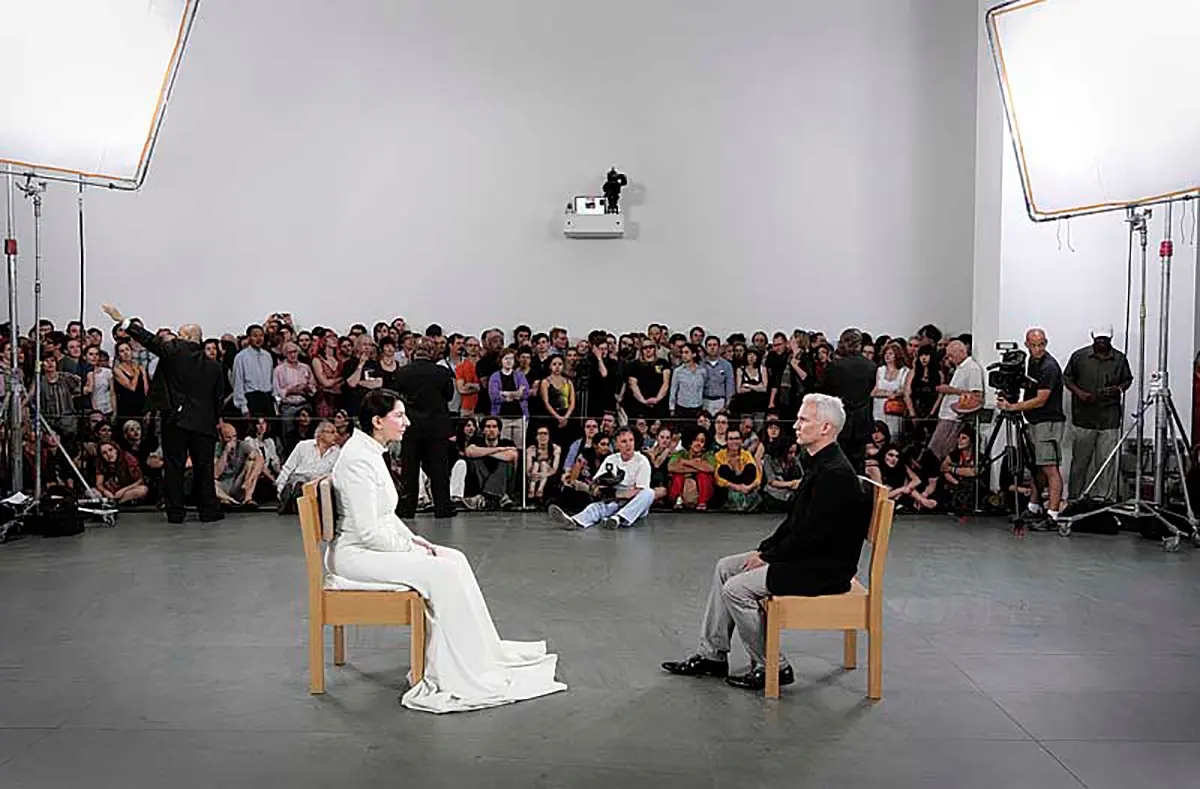
And then there was Marina Abramovic. Fresh off her hit run at MoMA, she came to Havana with her new biopic, The Artist Is Present, which makes the larger-than-life artistic persona even larger. The screening was packed and the artist was present (although worn out from some intense days working with students—apparently, extraordinary). There is tremendous tension in the Abramovic we see on film, performing a work that is all about breaking the confines of what private experiences can be had in public, and while there are parts that are just plain silly (as when, for instance, she discovers the psychotherapeutic value of high-end shopping), the complications that her work brings to the idea of privacy were a bracing counterpoint to the biennial’s framework.
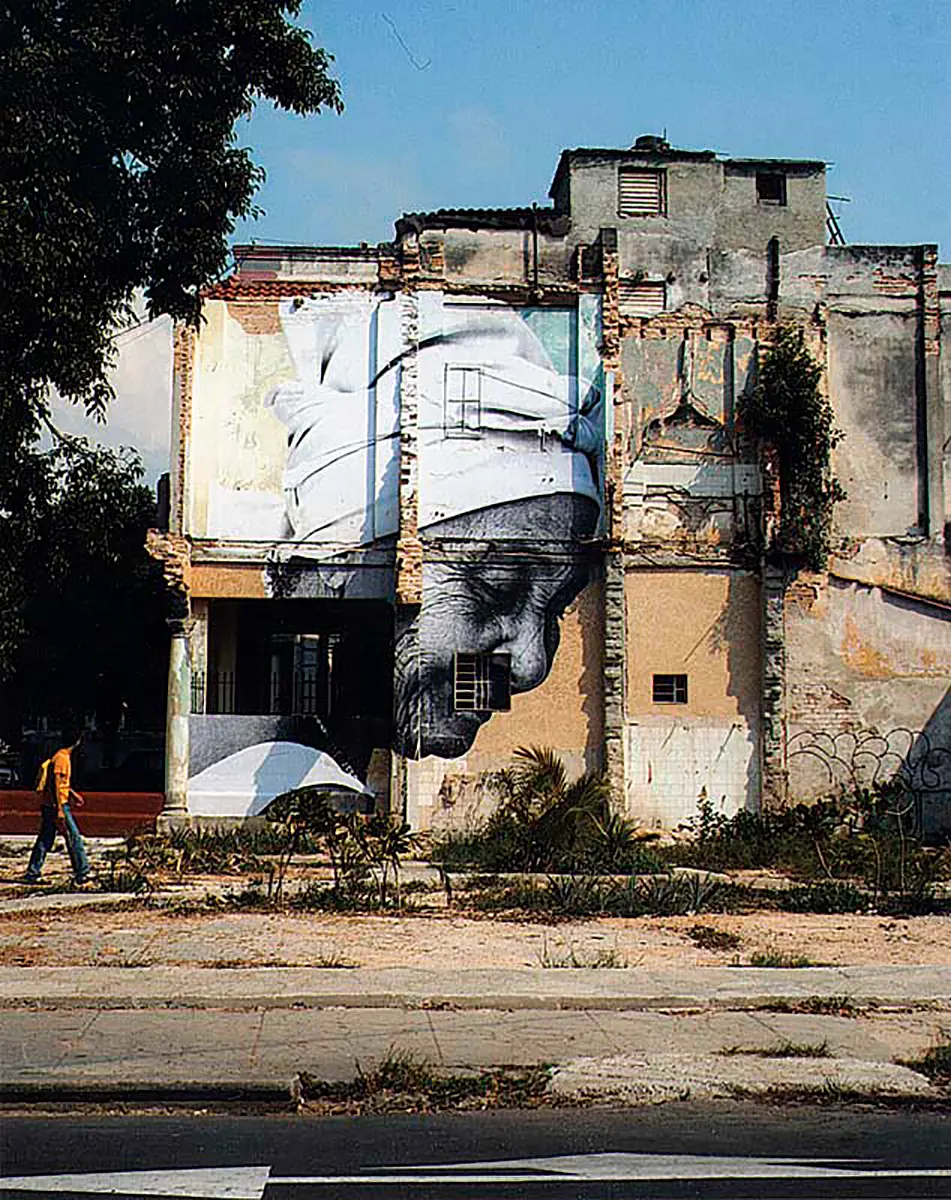
There were some stagings that were meant to be splashy but somehow missed: Kcho (taking over a whole floor of the Gran Teatro), French muralist/graffitist JR, teamed up with José Parla to create 21 giant street portraits of ‘ordinary people’ (“It’s the first time in Cuba there is another face-up other than Che or Fidel or Raul. Just someone from the street, who’s not famous,” he’s quoted as saying), to say nothing of the boat full of platitudes provided by the Kabakovs, but on the whole, the big-name events were convincing, grand and dynamic.
Another star attraction was lodged in the Edificio de Arte Universal of the National Museum of Fine Arts, where there was a gala presentation of works from the Ella Fontanals Cisneros collection—an extraordinary feat on several counts. First, for the political and logistical complexity of a Miami-based Cuban American collector collaborating with a Cuban national institution, and also for the inclusion of a section called Outside Cuba, with works by Félix González-Torres, Ana Mendieta, María Martínez Cañas, Jorge Pardo, and Leyden Rodríguez Casanova. Cuban cultural institutions have been rebuilding relationships with artists who left for a while now, and there has been evidence of this in the past couple of biennials. Even so, the high visibility and quantity of those artists in this installment was noteworthy (There is even a category on the website listing of artists by nationality for ‘Cuba-US’) and it, along with the increased fluidity of movement for many artists out of and then back into the island, gave a sense of this wounded, divided body finally finding a more resolved configuration, far from the absolutes of pro or con that ruled for so many years. That the biennial should be the centerpiece of this seems fitting: conceived as a platform on which artists from many places could encounter each other, and on which the Cuban public could participate, this 11th iteration removed the final, vestigial national barrier that had scarred it. This was one of a couple of returns that felt important.
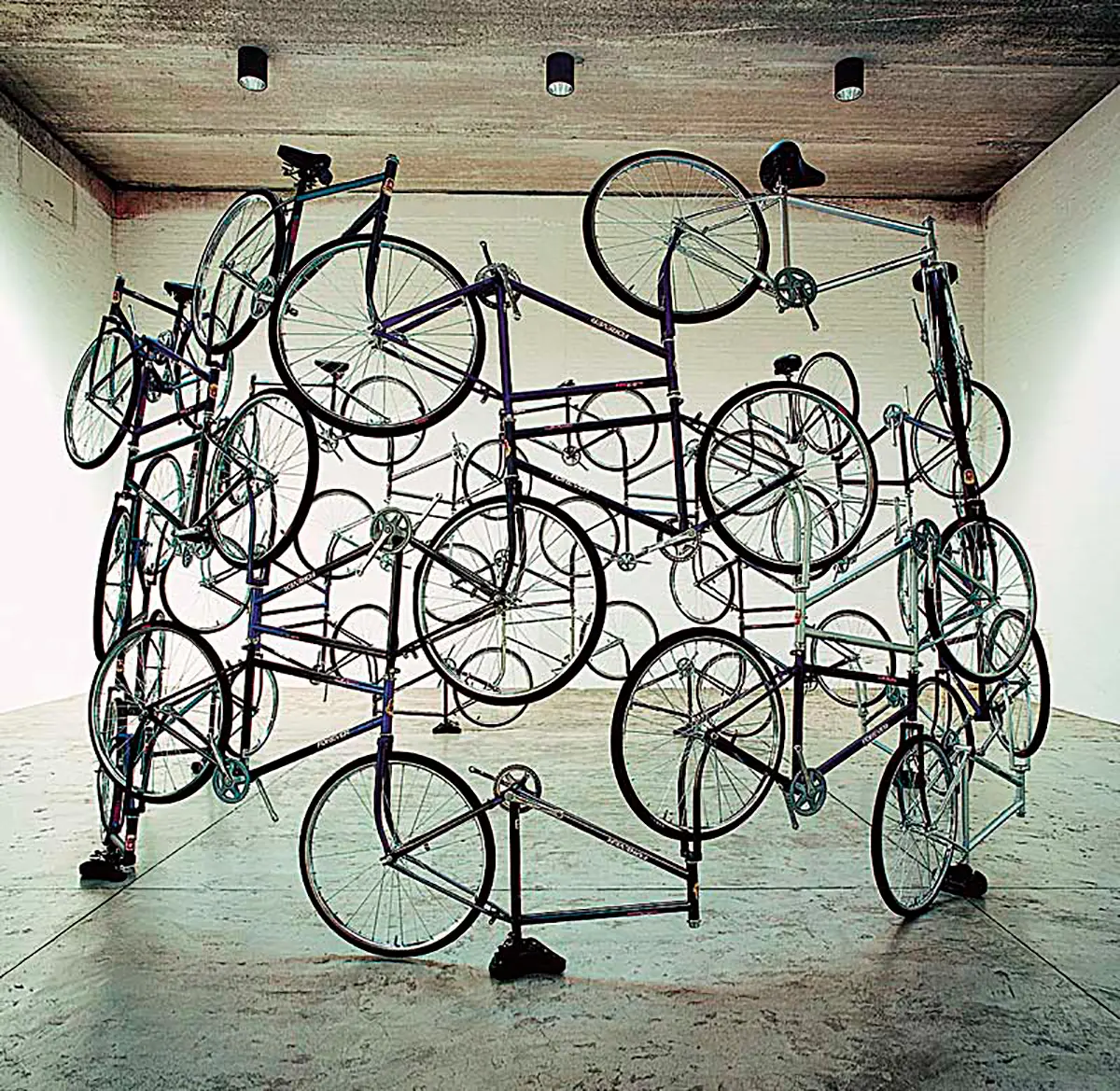
The works in Una Mirada Múltiple ranged from early conceptualism (Acconci, Kosuth, Baldessari, Matta Clark) to well-known contemporary Latin American (Kuitca, Neto, Silveira, Meireles, Tunga, Porter), with special density around German photography (Gursky, Struth): the show filled out with a quirky scattering of other creators (Ai Wei Wei, Irán do Espírito Santo, Iñigo Manglano-Ovalle, Nedko Solakov). Playing off the symmetrical floor plan of the museum, curator Osbel Suárez laid out the show with two different entrances, neither of which was given priority: after passing by Ai’s gigantic cyclone of bicycles in the grand foyer, one entry led between works by Tracy Emin and a surveillance-based interactive piece by Rafael Lozano-Hemmer—a vaguely hostile welcome. On the other side, a diptych by Shirin Neshat (women on one side, in white, men in black on the other) framed the entry, with one of Allan McCollum’s blank arrays of frames just in front created a study in contestation: full vs. empty, reticulate vs. solid; one form of power against another. The tension in the two portals helped underscore the show’s premise, namely that there was no single reading to be had, or desired: “Confío mucho,” said Suárez, “en el público cubano.”
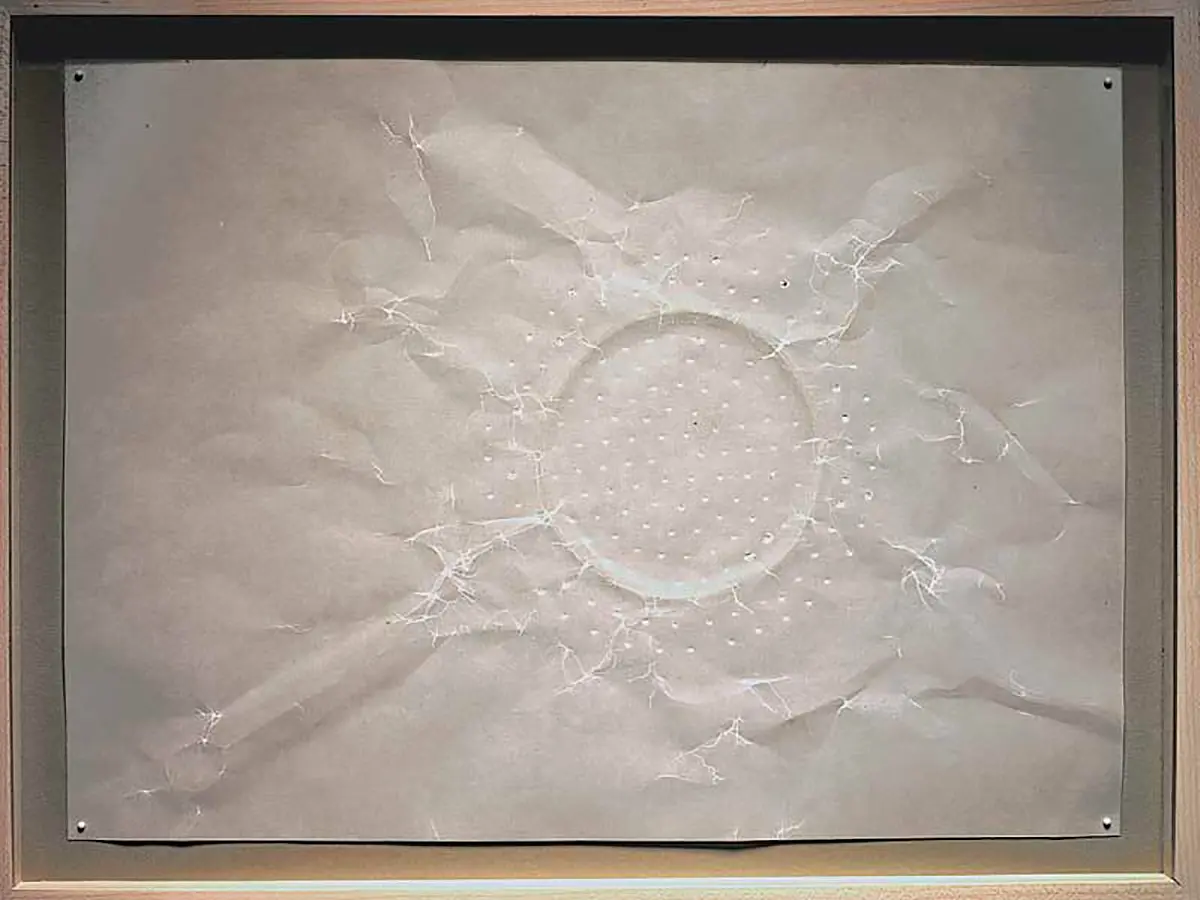
The heart of the exhibition was a quiet corner where works by William Kentridge, Nam June Paik, Mona Hatoum, and Nedko Solakov all faced each other. The South African, in a lyrical, Meliés kind of moment; the video pioneer’s gawky robot; a suite of barely discernable wax paper rubbings of kitchen utensils inspired by Hatoum’s encounter with the quietude of Shaker life; and Solakov’s wistful, always slight humor, allowed a swirl of existential ideas to softly coalesce into an ample emotional space. It was, for me, a truly fine curatorial moment.
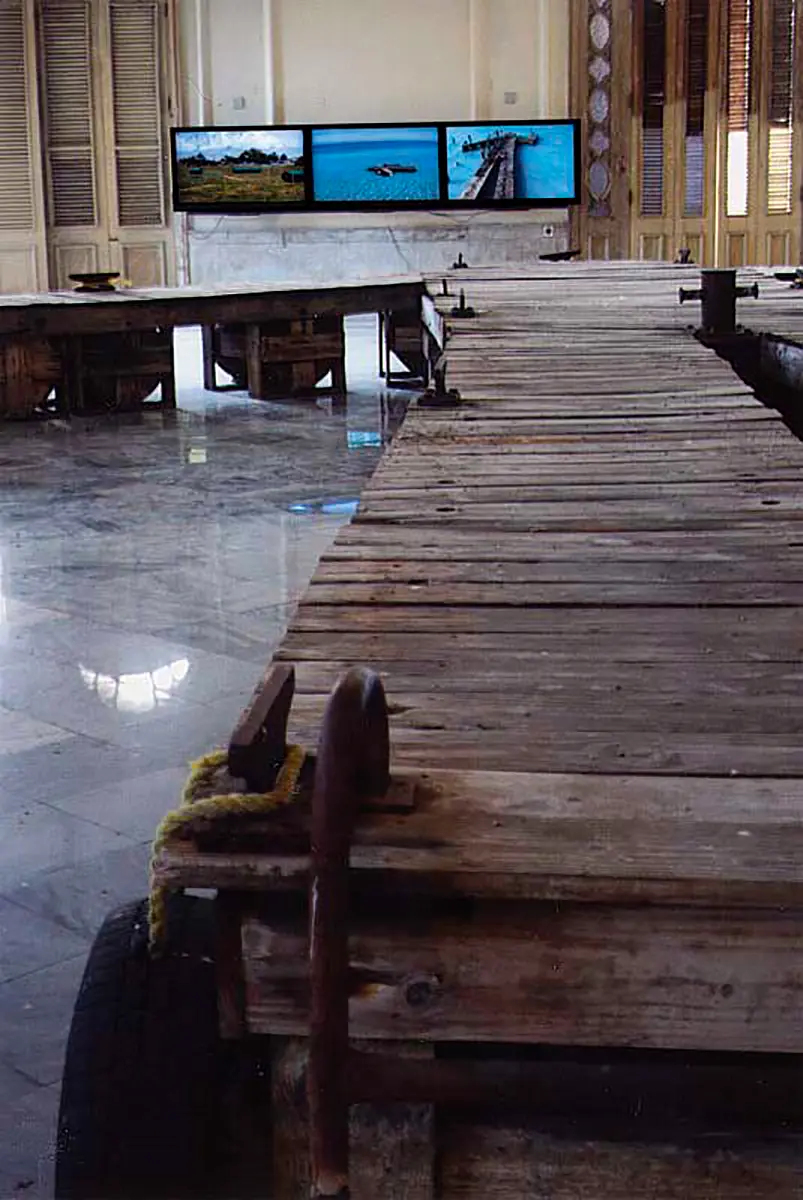
So that’s a sampling of one of the branches I mentioned back at the beginning. As for the other, which I called the social process, I should make a couple of clarifications and disclaimers. First, the ‘social imaginaries’ alluded to in the biennial’s title are not simply the flipside of what I’ve lumped together as ‘spectacle’—unlike so many projects which imagine the ‘social’ as the distaff and Lilliputian counter to spectacle’s brawn and crassness. Havana is a complicated cityscape, in which there is a huge variety of ways in which people gather and encounter each other, whether they’re neighbors or tourists. And so the biennial used that polyphony as a model, letting modalities and scales and publics overlap and intersect.
While it had its share of the ingredients we have come to expect from any immense international art show, this biennial was more complicated than just that. Conversely, while it espoused rhetoric about ‘the streets,’ ‘social imaginaries’ and so forth that pretty much echoed what was claimed by the last 2 or 3 biennials, it was not like those desultory wannabes wrapped in activist clothing. Nor was it the painfully bifurcated remnant of art that wants to be something other than art, a biennial that wants to be something other than a biennial. It felt like something else—something that’s hard to put a finger on because of being so game and willing. Centro Wifredo Lam director Jorge Fernández has said that this is not so much a biennial of curatorship as of negotiation, and that sounds right: it felt like it really was experimenting with that social fabric, with its forms and spaces—like it really did place its bets on its public.
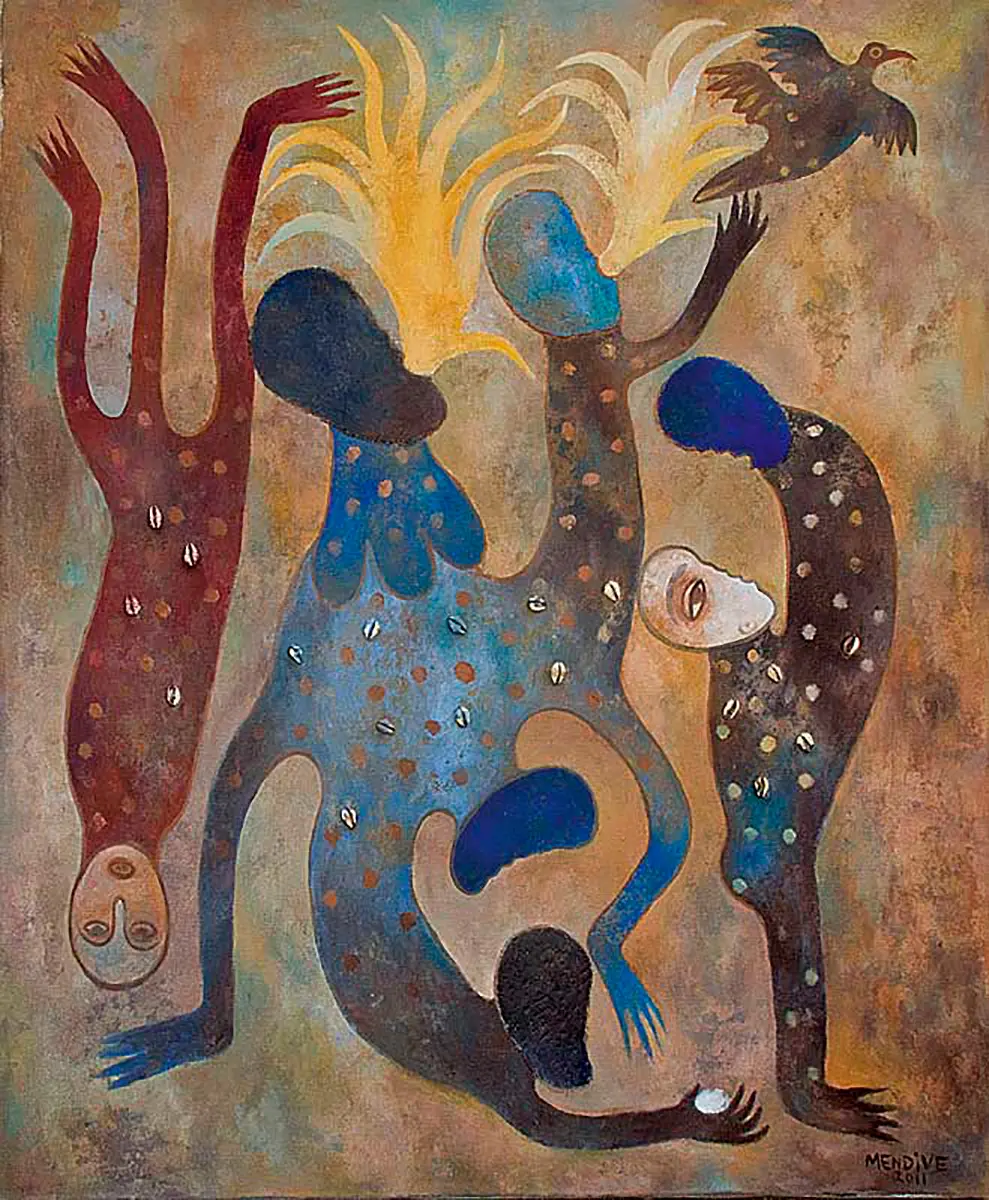
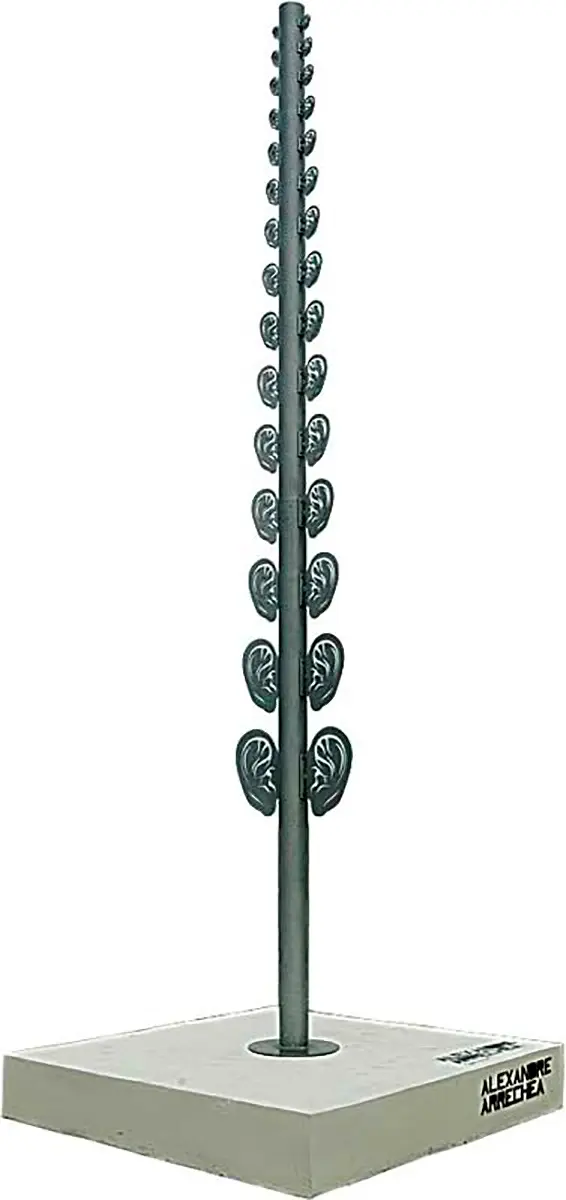
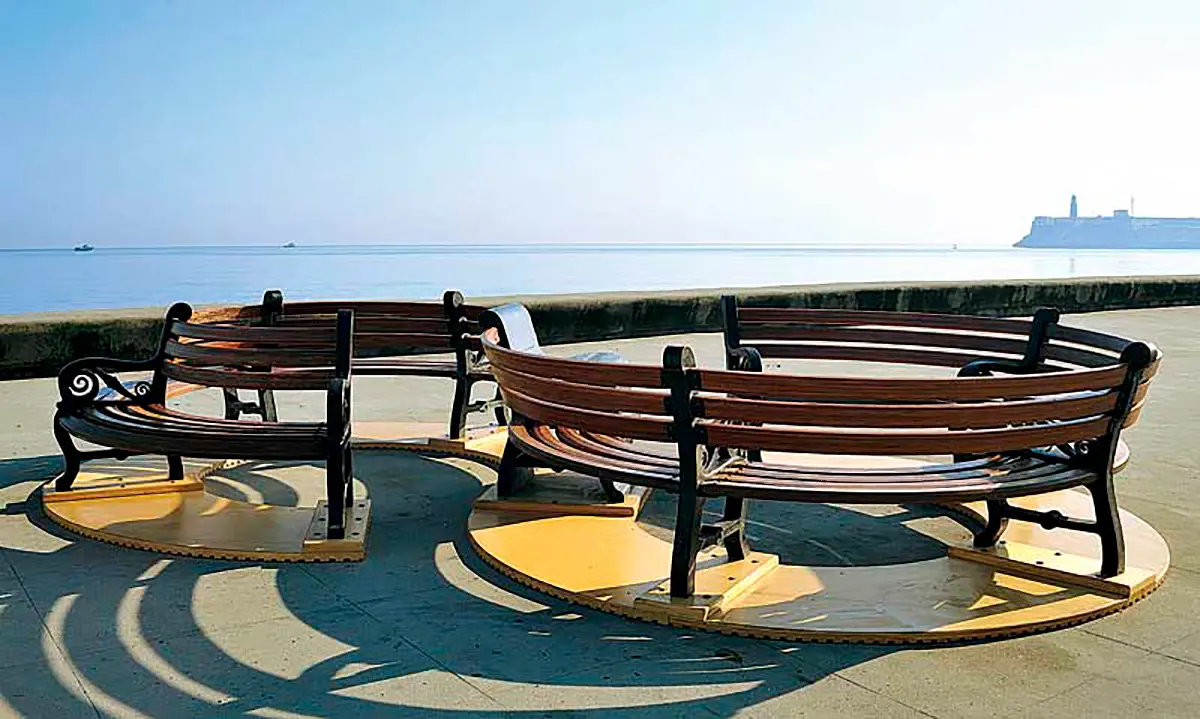
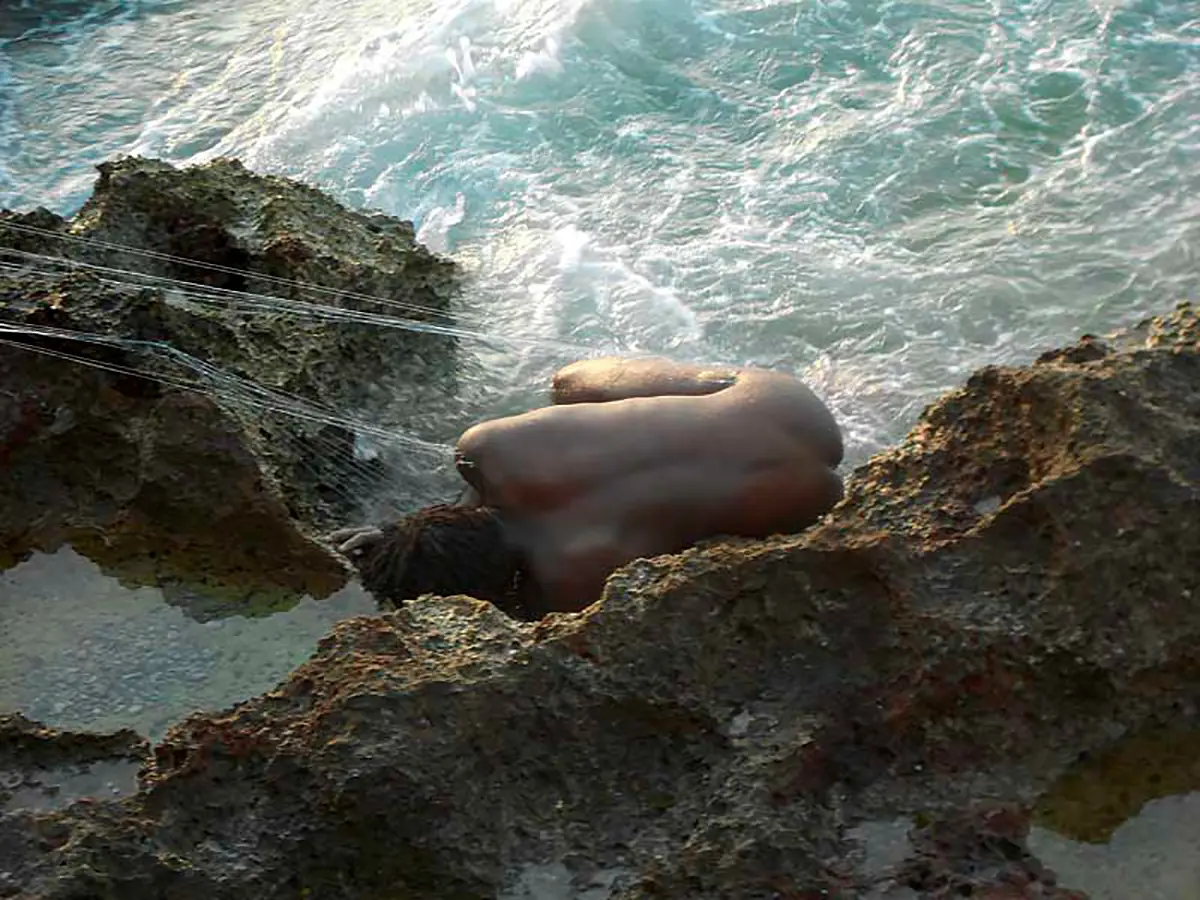
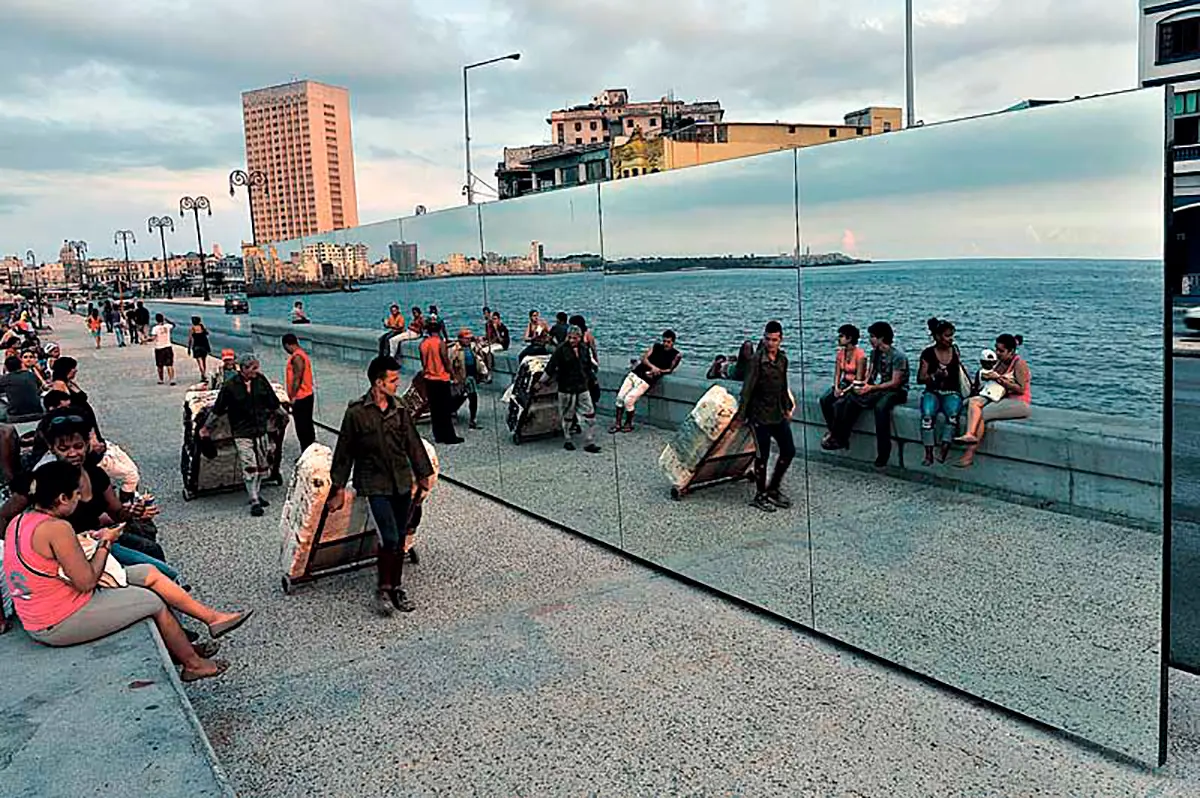
For example, Detrás del muro was a show of large-scale works installed along the Malecón. It opened on Mother’s Day—a huge event in Cuba—and there were thousands of people there since the space is one of the most popular in the city. The works themselves were a mixed bag, including one-liners popular with the international press such as Inti Hernández’s serpentine bench (you could sit either facing toward or away from the other people on the bench, just like Cubans on the island and Cubans living elsewhere—sort of) or Alexandre Arrechea’s tower of metal ears called Nobody’s Listening, or Esterio Segura’s 1950s Chrysler transformed into a home-made submarine. On the other hand, works like Rachel Valdes’ giant mirror facing the sea (Happily Ever After No. 1) wound up being spaces where lots of different people moved and played in lots of different ways: ditto, for Arlés del Río’s Fly Away (an airplane-shaped cutout in a strand of chain link fence) and for Aimeé García’s wonderful performance consisting of two women sitting on the seawall, day after day, crocheting an ever-lengthening tablecloth along its span. Passersby were continually going up to them on the day that I was there, and the conversations ranged from what’s on the other side of the horizon to crochet technique, to art—and whether this consisted of that. In a very different vein, Carlos Martiel lay naked among the rocks beneath the wall, snagged and pierced by fishing line and rocked by the sea—the near side of the horizon, perhaps. The Malecón is a place where people often look out to sea and surely there are thoughts about leaving that pass through some of those heads. This is well known, but to speak of it as multiply as Detrás del muro did was novel, and maybe provides some explanation for why this show was so successful at actually activating four miles of public space.
Social imaginaries appeared in many guises. In the Gran Teatro, Celia y Yunior installed a work based on the dissertations produced recently in the Sociology Department at the University of Havana, revealing intense academic focus on the many problems faced by Cuban society. Since all that research had never been entered into a database it was inaccessible to other investigators, so the artists made a deal to do that task in exchange for access to it. The duo has been working in a sociological vein for some years, tapping into popular circumvention of regulatory systems to highlight fissures in the social fabric of the city; stumbling on the trove of research provided a new way for them to bring the attention of art and artists to matters of much broader concern.
Also in the Gran Teatro, a video work by Egyptian artist Khaled Hafaz brought a close-up view of events in Tahrir Square through cellphone footage—an apt reminder of the very different meanings that ‘the streets’ can connote in different places and different moments, and adding complexity to the thread running through the biennial. In this compelling work, we see people fighting back against a water cannon, and others being shot by snipers: it is inconclusive and raw, and while it is in itself extraordinary, it’s even more interesting to hear about the transformation the artist underwent in the process of making it. “My generation was raised not to believe in demonstrations,” Hafez explained: Tahrir Square changed that because everyone knew someone who was affected. “I became a citizen and an artist. I had never tasted that before and, worse, had never believed in it.” The narrative of this work, and the meta-narrative of its making, reflect the best that the biennial holds as a promise: a coming-together in which we are confronted with things we never considered, felt, or believed, opening a sense of possibility and responsibility.
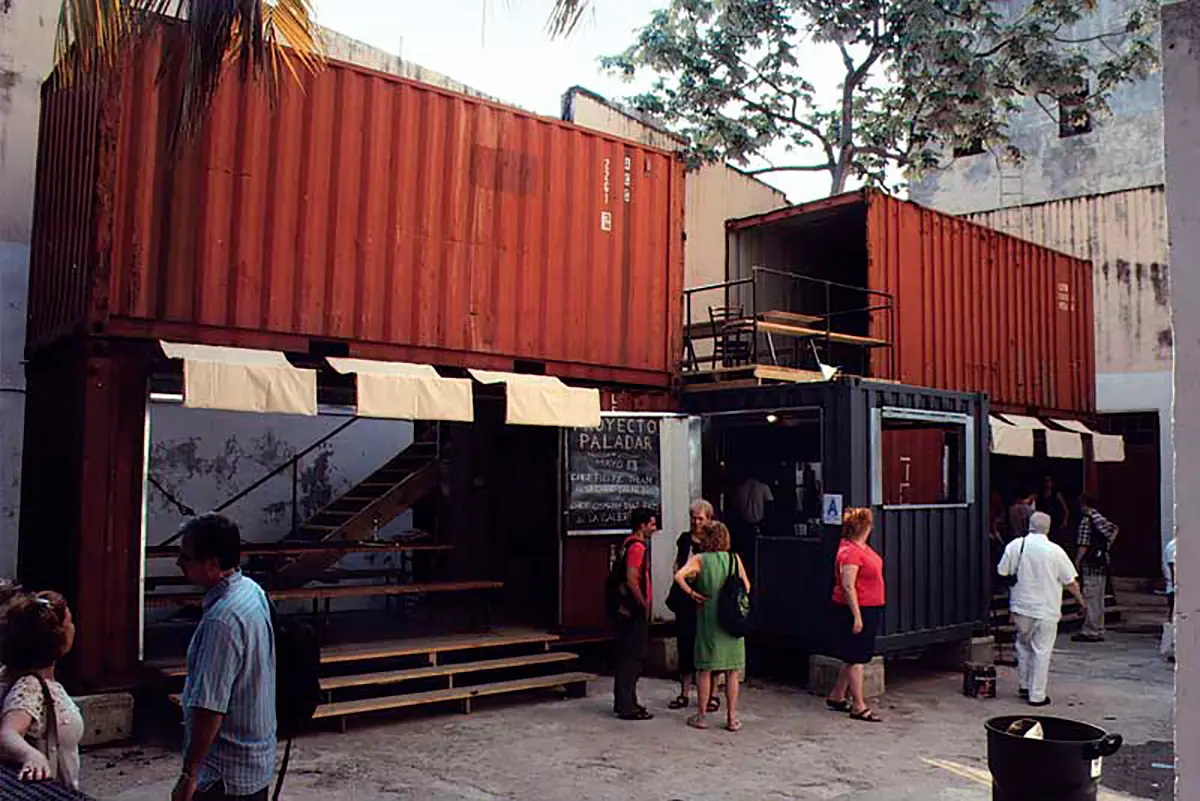
Probably the most portentous change on the island in recent times has been the loosening of restrictions on small, private businesses. There has been an explosion of cuentapropista activity in various sectors of the economy, selling food, services, and assorted goods. The most visible expansion has been in paladares, the private restaurants that have operated for some time now, and which were the subject of another of the biennial’s more ambitious projects. With private financing, ten chefs from the US teamed up with ten from Havana and opened an improvised paladar during the opening week: foreign guests were charged $250 for a meal, and were paired with a local resident who ate for free—with the exception of VIPs like Ricardo Alarcón, president of the National Assembly, and Nilsa Castro Espín, one of President Raúl Castro’s daughters—so that they could get to know each other. (Interestingly, the project’s curator, Elizabeth M. Grady, is the Program Manager of smARTpower, a U.S. State Department-funded soft power initiative meant to foster people-to-people exchange.) Though various of the US team complained about the quality and unavailability of ingredients (some brought their own spices and cheese), the organic farms run by the State were cause for celebration among the foodie contingent, and there are plans for follow-up collaborations on the other side of the Florida Straits.
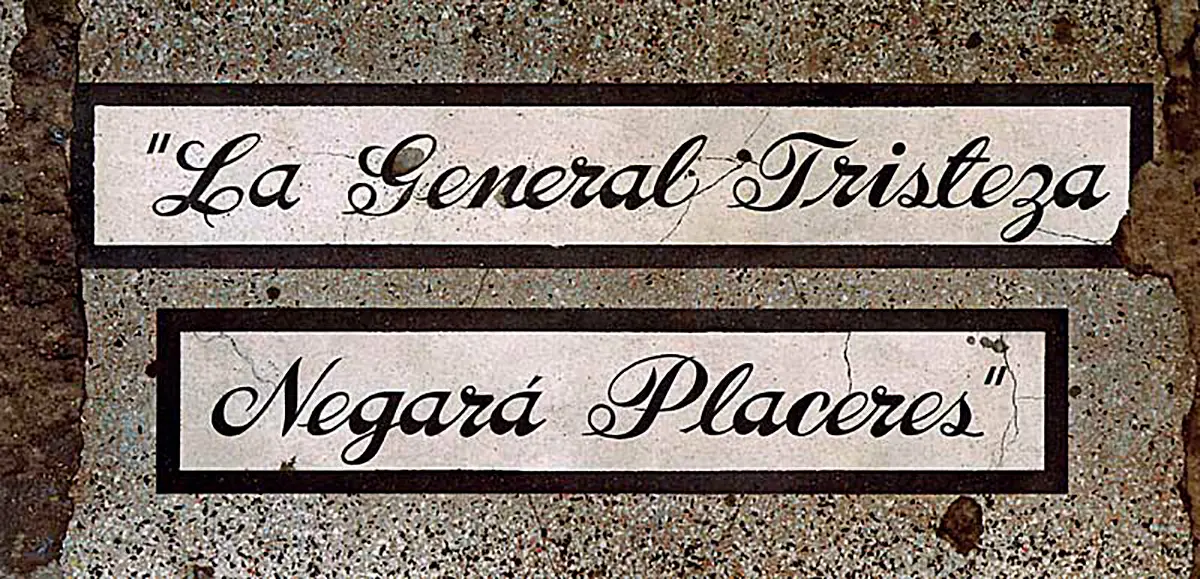
An array of other venues around the city were also part of the gigantic list—Factoría Habana (an exhibition space owned by the Office of the City Historian), La Lavandería, the Museum of Rum (showcasing works funded by Havana Club’s new grants program for young artists) and even the Hotel Nacional, where the Fondo Cubano de Bienes Culturales staged ab&c, a “package” of lesser works by greatest hit Cuban artists from the last century or so. Other works were shown and sold (or at least offered) from the space of wheeled carts wandering the city, under the banner of “You don’t have to be a collector or dealer to have access to art.”In a related vein, “La caza del éxito,” described in some press as 'a survey of contemporary Cuban architecture and design,' was actually a compendium of the island’s most recent iteration of kitsch. Organized by Nelson Herrera Ysla, the show brought paintings from the city’s street markets to the biennial’s gallery spaces: knockoffs in the style of Lam, Portocarrero, Kahlo, Picasso (in bright yellow—something new), and Botero, not to mention cheesecake nudie pictures, were crammed together on the walls of the Center for the Development of Visual Arts—a sly placement, to be sure. The display raised interesting, if familiar, questions about how the economics of art intersect with more philosophical preoccupations like originality, authenticity, cultural stereotyping, aesthetics, quality, and so on. Cement jardinières by the artista del cemento added a different twist since these lawn ornaments are popping up in yards as signs of the new wealth that has come along with the new entrepreneurial economy. When placed within the context of the biennial, these déclassé status symbols were injected with an ironic charge that they otherwise would not have: an array of what those who are now earning steady streams of hard currency are buying in the name of beautification, the show was, in its own unapologetic way, indeed very close to the streets of this complicated city.
Live-ness was a central tenet in this biennial. And so performance, as the historical bulwark of live art, was obviously fundamental. There have been a number of heated debates recently about performance (remember the extended flap about ‘re-performance’ that swirled around Abramovic’s show, for instance), as the form settles into art historical accounts. It was at issue in a couple of ways in Havana: Abramovic’s mission with the MoMA show and the film and her future museum of performance art (hers, mostly) are to usher performance into the mainstream and out of the realm of ‘alternative’ artistic practice. For his part, Pablo Helguera wants the performance to have a more rigorous conceptual and theoretical armature—principally, he argues, to develop a more effective pedagogy of performance art. Both of these rescue operations are interesting to think about within the context of a biennial dedicated to activating its relationship to the streets, principally through performative acts and interactions. Presumably, in the biennial’s logic, ‘performativity’ connotes elements or fundaments of spontaneity and release. In the view of these two artists, though, it is time for performance to grow up and get serious. In any case, Helguera’s performance, The Well-Tempered Exhibition, with its austere, abstract texts, exquisite staging, and excellent performances, was so beautiful that his slightly pedantic backdrop melted away in the sheer pleasure of (passive) engagement.
The Centro Hispanoamericano de Cultura (which is a previous moment was known as the Centro Cultural de España) showed Open Score, the only project dedicated to high tech, curated by Dannys Montes de Oca and artist Luis Gómez. Among the virtual spaces and robots, Gómez, Patricia Clark, and Barry Moon showed Alt Ctrl, ostensibly an interactive environment which registers the viewer’s movement by altering a projection of an image (Warhol, Mondrian), but which also provided a writeable database of unofficial events during the biennial, visible only with polaroid glasses. As an alternate mechanism of information, the work reminded viewers that the biennial, for all its expansiveness and porosity, was nonetheless a project staged within certain limits.
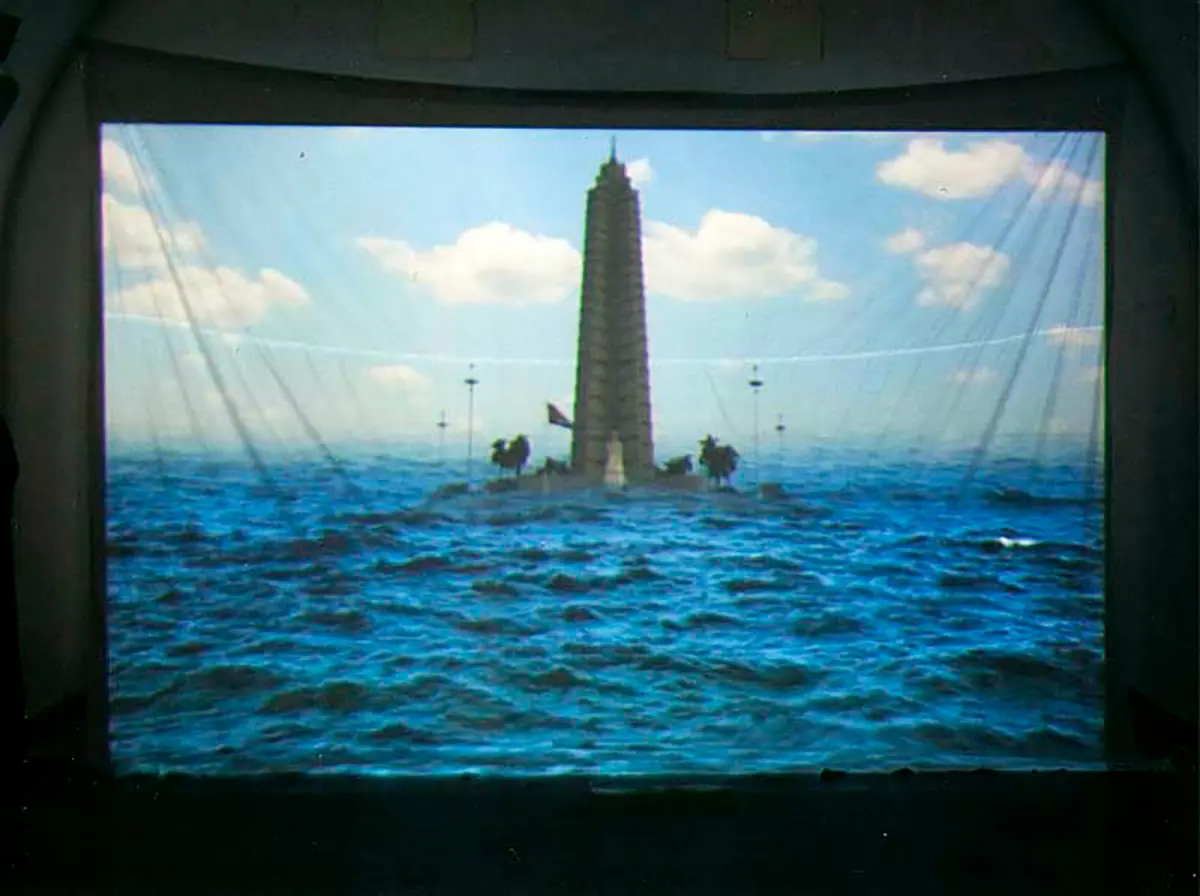
Unlike in recent biennials, the more formal exhibitions were often the weak links of the project. This was the case with the installation in the Gran Teatro, where the small, partitioned spaces fought against the building’s scale and lift to the detriment of the works. Likewise, the installation at La Cabaña was hit and miss, with what seemed like a random array of individual and group projects including the somewhat mystifying group show Heavy and Happy Painters co-organized with the Warsaw-based artist group Spazio 13. Nonetheless, some works stood out, including Alina Aguila’s installation of a tiny stool swamped in a sea of threads (El día que dijiste "lo siento"), Liudmila y Nelson’s Absolut Revolución: La isla, a large video projection showing the iconic Martí monument inundated by waves, and an astonishingly cantilevered, hollowed-out Royal Palm (emblem of the nation) by Humberto Díaz. La Marea, by Tamara Campos, alluded to the world financial crisis in the form of a wave of some 650 banknotes carved from fragrant cedar and cascading from the ceiling to the floor. The work’s visual exquisiteness made it a hit with visitors and press (she is quoted as saying, “I’ve collected a ton of business cards”).
The range of ‘collateral’ exhibitions and projects was huge and the lines between ‘official’ and unofficial were blurred to an unprecedented degree, both spatially and fiscally. Artists' self-financing shows in their studios during the biennial is nothing new, but they took place this time on an unprecedented scale and, in many cases, with a lot more resources than the sites organized by the biennial itself. When artists first started putting together independent shows in the 1990s they were a kind of salon des refusés, a place from which artists contested the biennial’s dominance. That they have become star attractions is a little ironic, and reflective of the growing market for Cuban art. This biennial took place in a moment when travel restrictions for US citizens were looser than they had been in a decade,2 the Wall Street Journal had (yet again) declared investment in Cuban art to be hot, and auction sales in New York for Wifredo Lam and Tomás Sánchez were breaking records.
For the past twenty years or so a poetics of melancholy has been a signature marker of Cuban art, and when coupled with evident craftsmanship and high production values this has sold well internationally. One of the leaders in this school, Carlos Garaicoa showed beautiful carpets made to look just like the now-dilapidated terrazzo that graces some of the city’s establishments, leftover from the glory days. For his part, Wilfredo Prieto staged an empty and desolate circus tent (Circo Triste) in his typically deadpan but slightly upbeat manner: a ‘spectacle without spectacle.’ Gabriel Orozco’s installation in the ruins of the Ballet School mined the same, self-consciously poignant vein. As the artist has done previously, he made small interventions—sweeping dirt into swirls like a Japanese garden, and placing tiny, vivid seedlings, shiny little balls, and filthy detritus together into near-accidental still lives. The spaces themselves were in this case the main attraction, mostly off-limits to visitors for decades and made famous in recent years because of their state of dereliction. Some visitors speculated that by opening access to this politically sensitive site the biennial was signaling a change in policy, and in fact, it was announced a couple of weeks later that Norman Foster (of all people) has been commissioned to redesign the ballet campus—yet another indication of the evolving cultural calculus on the island.
The presence of so many large, media-friendly events seems at first glance to go against the grain of a biennial dedicated to pedestrian, quotidian space. All of those presentations do indeed incite qualms about the project if taken only on their merits. But this biennial was a lot more than just its centerpieces. In fact, I’d argue that its real center was out in San Agustín—that the beating heart of this biennial was that apocryphal, wonderful ‘museum,’ which offered a new skeleton for the biennial’s promise moving forward.
MAC/SAN asked big questions. It wanted to dip its toes into lots of things, including urban planning, sustainable environmental practices, and local agriculture. As part of creating an ‘adaptable prototype’ for a new kind of contemporary art museum, it set out to participate in building community and catalyzing social transformation, to provide pedagogical tools and research contexts. It proceeded with simple tools, like a community garden, a café, a TV station whose programs circulated entirely on USB drives (mechanism of choice across the island, in the absence of internet access), and a micro-enterprise for drying and selling locally-grown mangoes.
There were artworks that took off on the long-standing Cuban tradition of adaptive invention and reinvention—a model for a new generation of DIY housing3, a staircase made of scrap, and a research project identifying medicinal herbs and compiling information about their use in traditional practices. As anyone will know who has participated in one of the many projects that have writs like that of MAC/SAN, they can often amount to not much more than wishful thinking, with the artists spinning out utopian ideas in a well-intentioned vacuum. Ultimately, it all depends on the quality and texture, and breadth of the interactions, and in San Agustín it evolved along the way, depending on whatever caught interest. The café tapped into local networks and the kitchen filled with whole families helping out the ‘chefs.’ One research project turned into a collaborative multi-media performance staged around the neighborhood and one performance—the one with walking backward—turned into an animated, ongoing conversation. Carissa Carman walked around the neighborhood in reverse and talked with the people she met along the way. They were surprised and intrigued: some joined in, while others reacted with hostility, and through those unguarded encounters the open proposition of MAC/SAN seeped into the local social tissue.
This biennial was perhaps overly ambitious, and with some odd curatorial calls, but there was a real spirit. It’s nice serendipity that longtime biennial director Llilian Llanes’ book recounting the event’s history (Memorias: Bienales de La Habana 1984-1999) was launched on this occasion, providing a historical overview of the project’s accomplishments and struggles. Sometimes going backward is losing ground and sometimes it isn’t. This biennial went back to the old goals of really experimenting with and in public space, and found inspiration in them. History, as this suggests, can sometimes point us forward.
I’m not suggesting that the biennial should stop mounting exhibitions, particularly places where things that are recognizably art would be installed. But as this edition proved, it can let one be what it is, without apologies, so that its other can move more freely, in a space that is truly the imaginary of the possible.
NOTES
1. ‘Irreversible’ is, probably not coincidentally, the word
that has been routinely attached to socialism by the
Cuban leadership since the depths of the national crisis
in the 1990s.
2. 1,300 visitors came from the US according to reports, consisting mostly of museum and collector groups.
3. A model for a new generation of DIY housing: Florian Zeyfang, Lisa Schmidt-Colinet, Alex Schmoeger, a staircase made of scrap: Andrés Victores, a research project identifying medicinal herbs and compiling information about their use in traditional practices. Multidisciplinary research team from Colombia: Rocío Polanía, Jaime Ruiz Solórzano, José Leonardo Ruiz and Juan Pablo Rodriguez (South-Colombian University); Gonzalo Díaz, Jaime Leudo Hurtado, Jairo Marín and Denis Antonio Palacios (Technological University of Chocó), Florencia Mora (Javeriana University - Cali), Jorge Reyes (Valle University), Sua Dabeida Baquero (independant researcher), Gonzalo González (Catholic University Lumen Gentium), Diana Carolina Torres and Viviana Guarnizo (artists and documentalists), Jazmín Andrea Gómez and Carlos Lerma (research assistants).
RACHEL WEISS
Chair and Professor, Dept. of Arts
Administration and Policy School of the Art
Institute of Chicago