

Academic studies of the Caribbean often encounter a problem that is almost impossible to solve: How to establish, if such a thing exists, a single cultural identity for this collection of archipelagoes and coastal areas? The common history of the region’s colonized nations, their native populations exterminated and replaced with an enslaved labor force imported from Africa—and later China, and even India—obscures the existence of enormous differences. The Caribbean is a space of exceptional linguistic diversity—including dialects such as Creole and Patois—the fruit of colonial partition at the hands of European imperial powers such as Spain, France, England Portugal, The Netherlands, and Denmark. The region was also the cradle of religious practices such as Santeria, Voodoo, and Rastafarianism, which are the result of complex transcultural phenomena. The Caribbean was also the stage of social processes that had great international impact, like the Haitian and Cuban revolutions. Moreover, historical and cultural differences are amplified today by inequalities in economic development between the countries of the region, which encompasses such diverse spaces as New Orleans and Miami, Havana and the Virgin Islands, the Dutch Antilles, and Haiti.
One consequence of this diversity is that to date there has been not one art show offering an integral panoramic of the visual arts in the region. Caribbean Crossroads of the World, organized in New York City by El Museo del Barrio—in collaboration with The Harlem Studio and the Queens Museum of Art—is the first curatorial effort directed towards filling that gap. It is interesting for such an exhibition to take place in New York, a location that is, geographically, rather distant from the Caribbean. But perhaps it could not have been otherwise. On the one hand, Caribbean institutions are not robust enough to undertake cultural projects of this size. On the other, the collaboration between these three institutions is also a reflection of the Caribbean’s strong presence in New York. El Museo del Barrio, The Harlem Studio, and the Queens Museum of Art are all located in districts whose respective cultural identities are strongly influenced by the presence of immigrants from the Dominican Republic, Puerto Rico, Jamaica, Haiti, and Central America. Caribbean Crossroads of the World presents us with the case of an art show that in many ways represented the communities settled in East Harlem, Harlem, and Corona.
Caribbean Crossroads of the World doesn’t follow a chronological order and is not divided into historical periods. On the contrary, the arrangement of the works moves fluidly from the colonial past to the Avant-Garde and to contemporary visions. The curators didn’t pay heed, either, to distinctions of style or technique. In a rather unconventional way, a Nineteenth Century engraving can appear alongside a video installation, a naïf painting next to a photograph, and an academic canvas next to a postmodern work. The team of curators and researches headed by Elvis Fuentes set out to group the works according to thematic lines that would contribute to the configuration of regional identity. The themes encompassed everything from a relationship to nature to revisions of history and reserved a space for the importance that smuggling has had in the region.
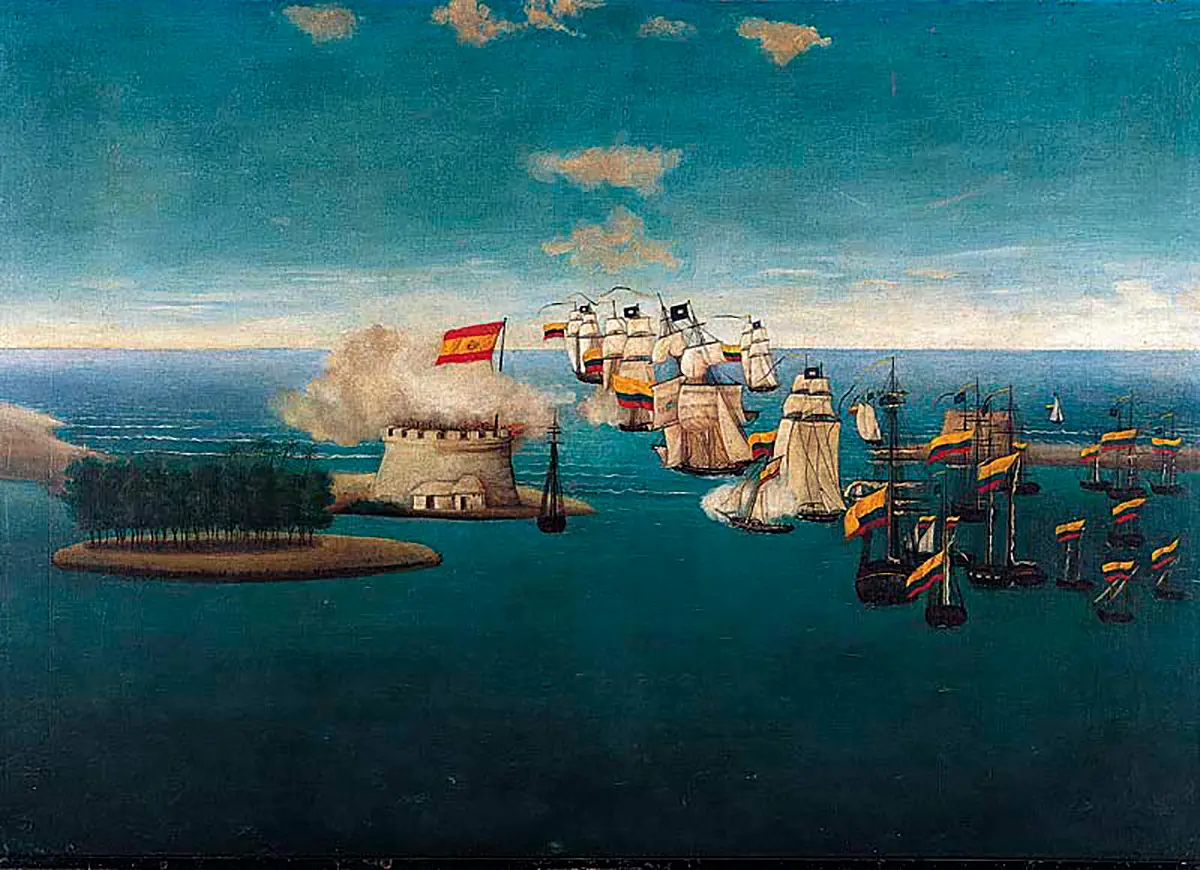
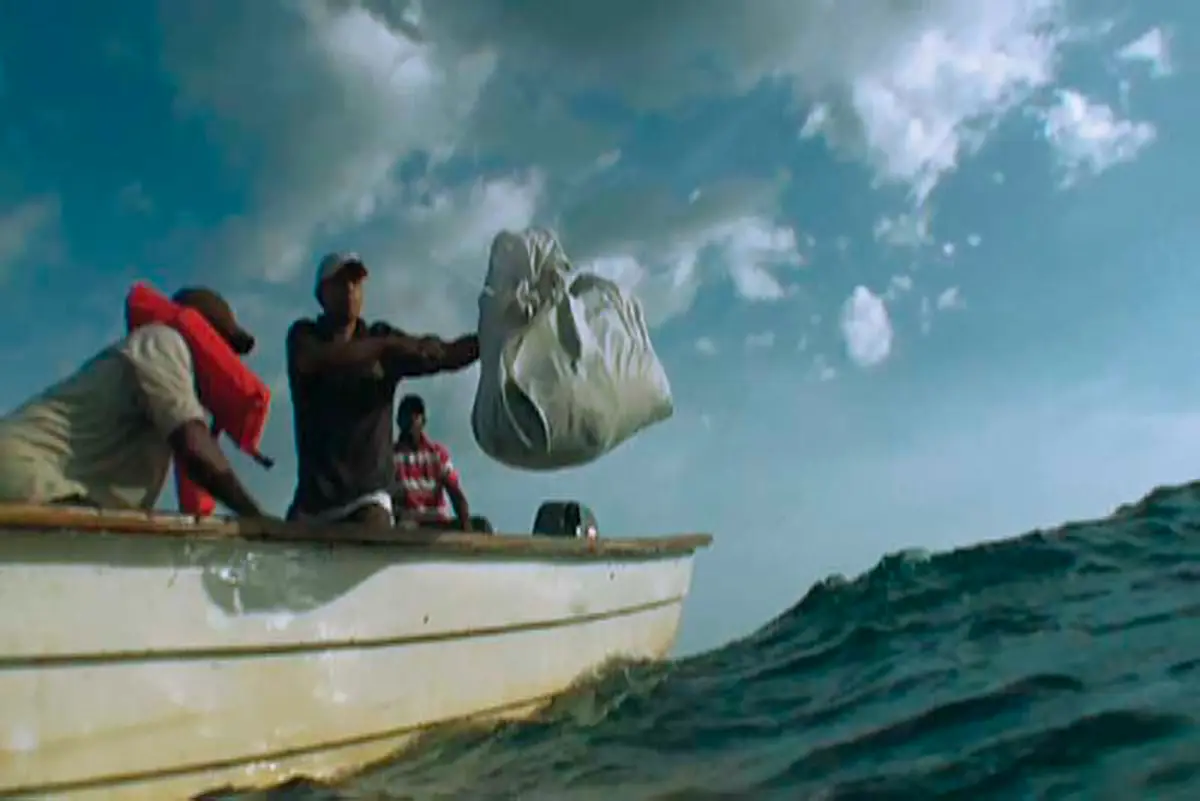
At the Queens Museum of Art, a large exhibition dedicated to the topic of the sea is presented under the title Fluid Motions. A well-known line by Cuban poet Virgilio Piñera refers to “the cursed circumstance of the ocean all around us”; this element, the ocean, could in fact be the basis for the first approach to Caribbean-ness. But here the curators did not limit themselves to interpreting the sea as an idiosyncratic feature, as in Cuban painter Luis Martínez Pedro’s abstract series Aguas territoriales, but connected it to the course of the region’s history. This can be seen, for example, in two canvases depicting sea battles. The first one, Acción del Castillo de Maracaibo (1840), by Colombian painter José María Espinosa, depicts the struggle for freedom from the Spanish colonial power, with ships carrying the flag of Great Colombia attacking a garrison defended by imperial troops. In the second canvas, dated in 1898, Puerto Rican artist Manuel Jordán paints US vessels confronting their Spanish counterparts, as part of what for many was the first imperial war in the contemporary era. In her video Tumba (2009), Guatemalan artist Regina José Galindo hired several men to throw in the ocean bags that seemed to contain human remains. Like other Galindo performances, Tumba alludes to the violence in her country. In turn, Kingdoms of the World brings together works related to the Caribbean region’s festivities and syncretic religions.
On exhibit in one of El Museo del Barrio’s galleries are Counterpoints, among other things a tribute to Cuban anthropologist Fernando Ortiz. The Caribbean economy is seen as a clash between local industries. The curators contribute an update to the concept of this dual or divided character of local production. While the past was marked by tensions between the banana and mining industries, or between tobacco and sugar—about which Ortiz wrote in abundance—the present features a conflict between the development of tourism and oil exploitation. On the one hand, the refineries and wells that poison the region’s beaches, and on the other the hotel chains that demand the conservation of artificial, paradisiacal environments that can be used advantageously for tourism. A troubling document of this counterpoint is a photograph by Venezuelan artist Alessandro Balteo (1972), from his series Modern Entanglements, US Interventions (2009). Balteo offers a panoramic view of the Maracaibo lake, its waters pockmarked by dozens of oil wells. The black and white image seems to emphasize the fact that this site is far removed from the colorful beaches visited by tourists.
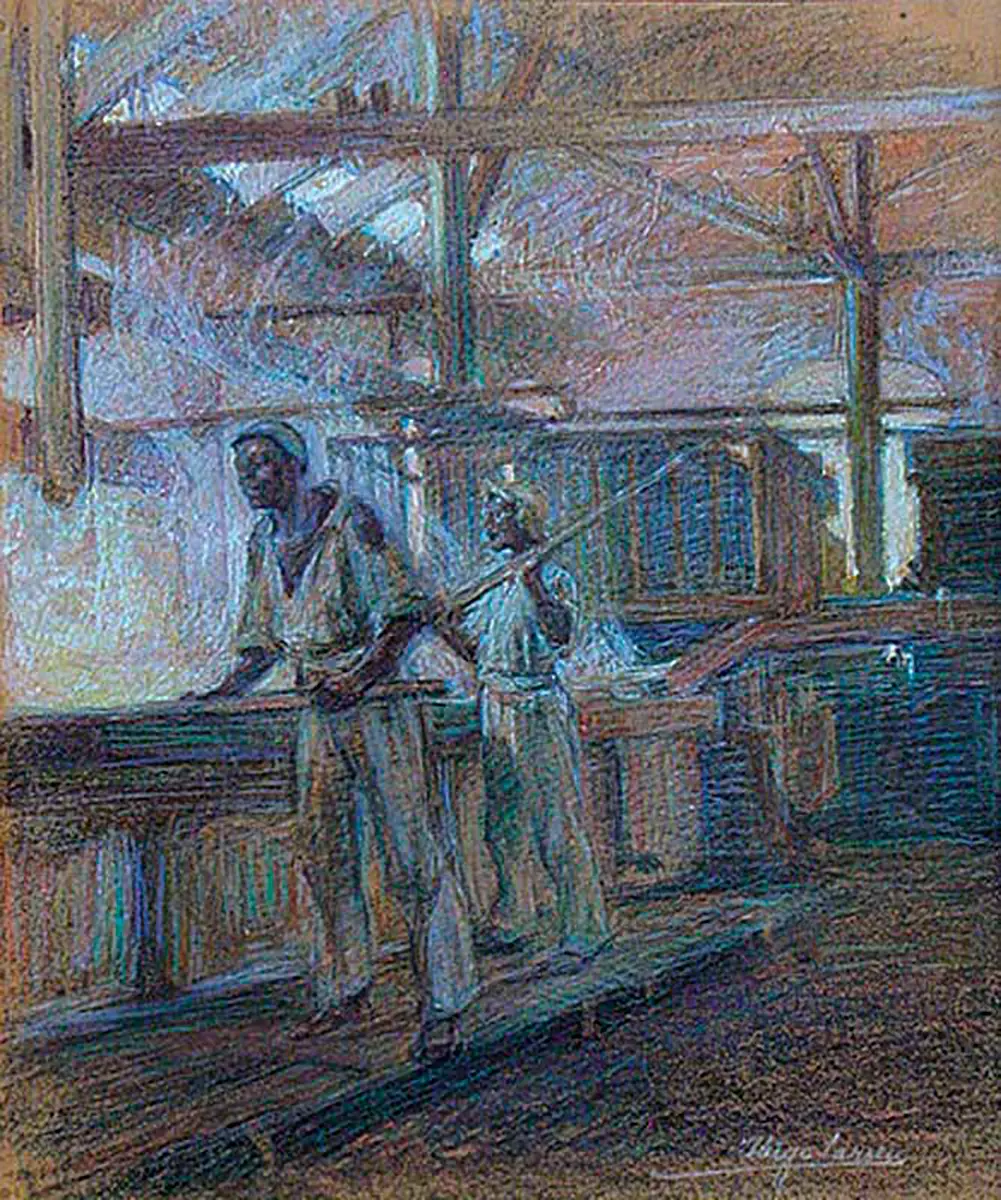
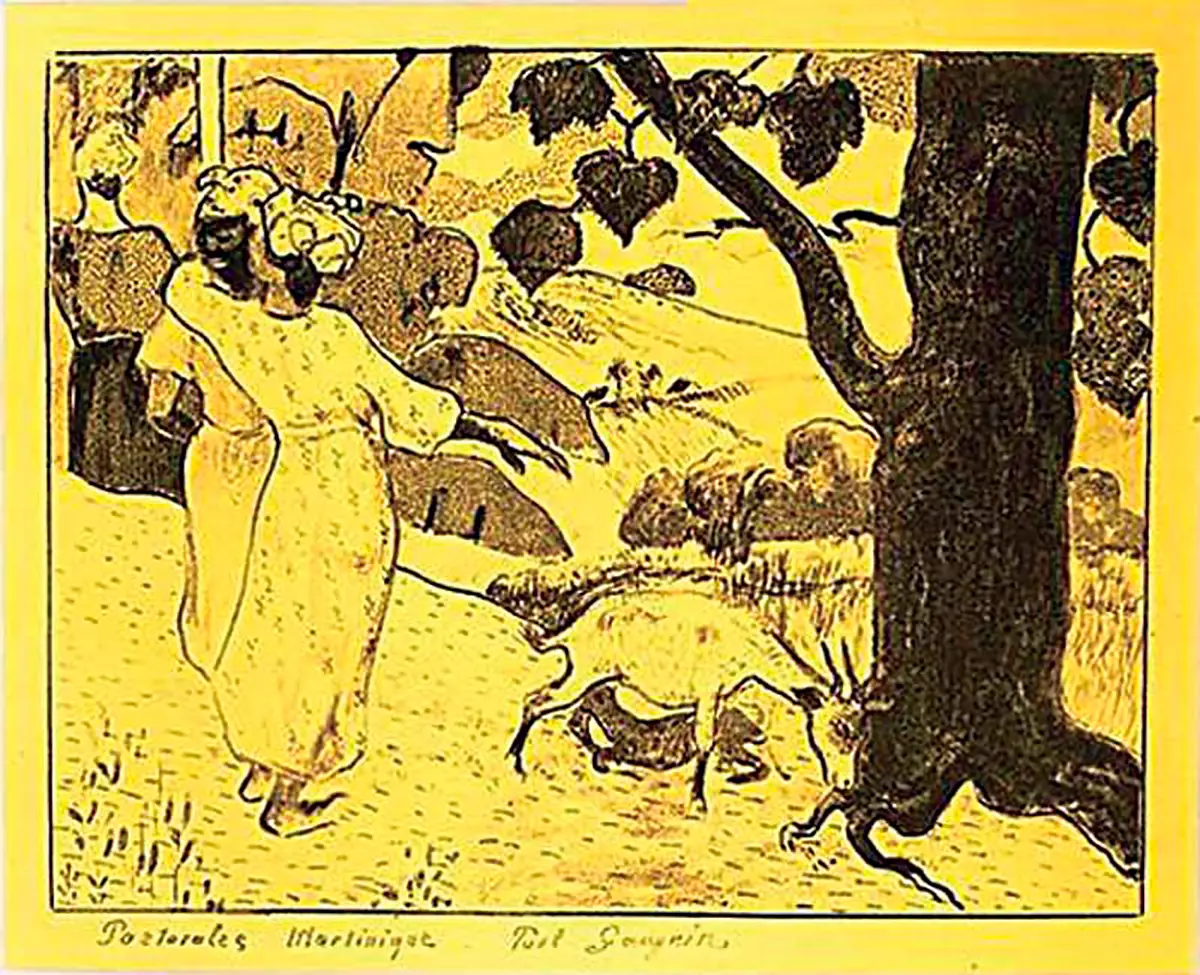
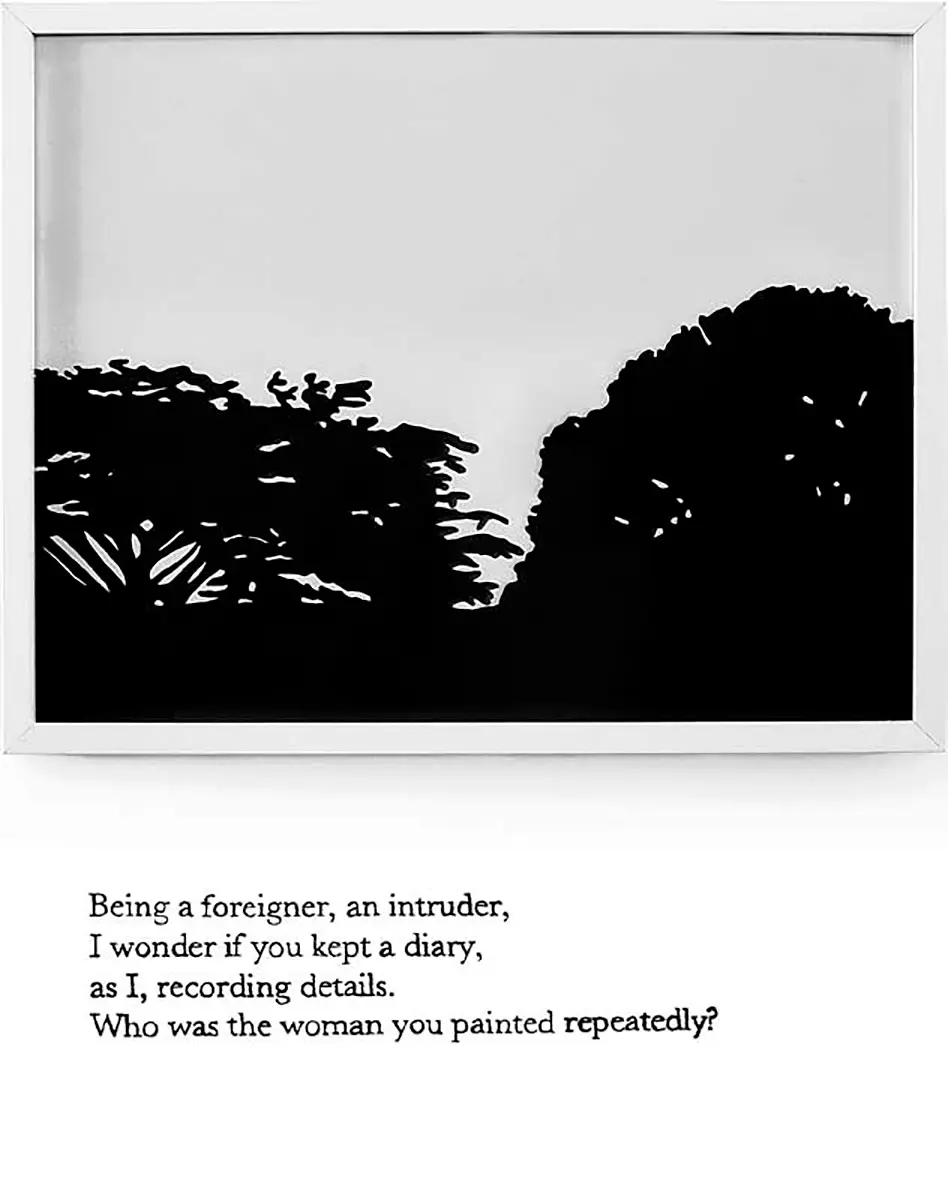
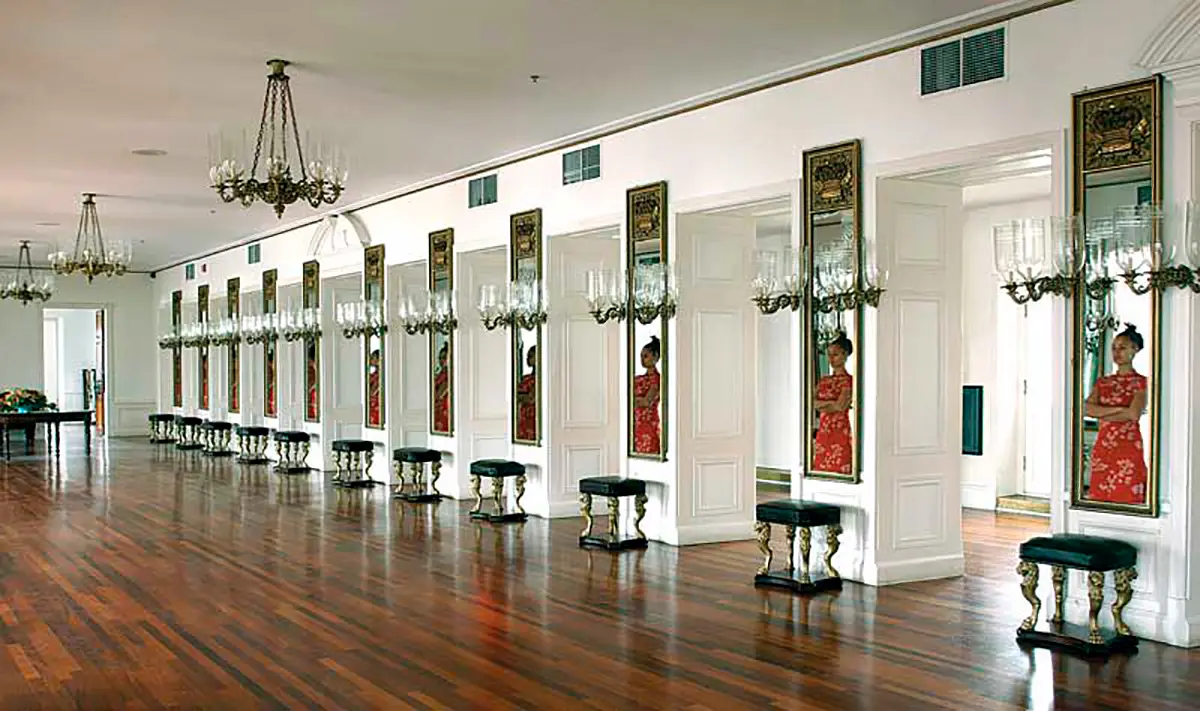
One of the segments includes artists such as Gauguin, Pissarro, and Danish painter Hugo Larsen, who passed through the Caribbean. The show is not limited to artists native to the region. On the contrary, it seeks to imagine the region as a space for journeys, displacements, and sojourns. A series of landscapes, portraits, paintings of customs, and Avant-Garde canvases serve to illustrate a perception of the Caribbean as a picturesque, exotic space containing something savage. In that sense, the Caribbean is revealed as an identity defined from the vantage of a Euro-centric gaze, dominated by motifs such as negritude, insularity, popular festivities, magical-religious practices, and an exacerbated sensuality. Three Steps of a Story (1009), a video by Jeannette Ehlers (Denmark, 1973,) expresses the need to deconstruct this vision. The artist dances the waltz as she moves around an ample room (the same where Peter von Sholten, the governor of the Danish West Indies, shocked colonists by inviting freed slaves to a society ball.) She wears a red dress with floral prints, which could be construed as a stereotypical Caribbean motif. However, we never see the woman’s real body, only her image reflected on mirrors. Another contemporary Danish artist, Nanna Debois (1975), uses the landscapes created by her conational Hugo Larsen in the early Twentieth century to offer a more complex understanding of the Caribbean space. Her installation, titled Eyewitness Accounts (2008), includes a series of small-format gouaches where the artist creates silhouettes of nature, filled in with gray planes—in opposition to the chromatic exuberance that is often attributed to the Caribbean—as though it were impossible to determine what is it that these versions of the landscape contain (or hide). One of the images shows a McDonald’s logo, pointing towards the post-colonial character of the Caribbean today and to the fact that nature has been colonized by capital and consumerism.
Another section presents images of Caribbean revolutionaries and leaders. It includes little-known works such as a portrait of José Martí by Cuban artist Ángel Acosta León, made early in his career, or an engraving of Haitian president Jean Pierre Boyer. In Emergía, a performance by Mexican artist Miguel Rodríguez de Sepúlveda (1971), a man jogs. On his back is a drawing of Simón Bolívar. The figure is slowly dissolved by sweat.
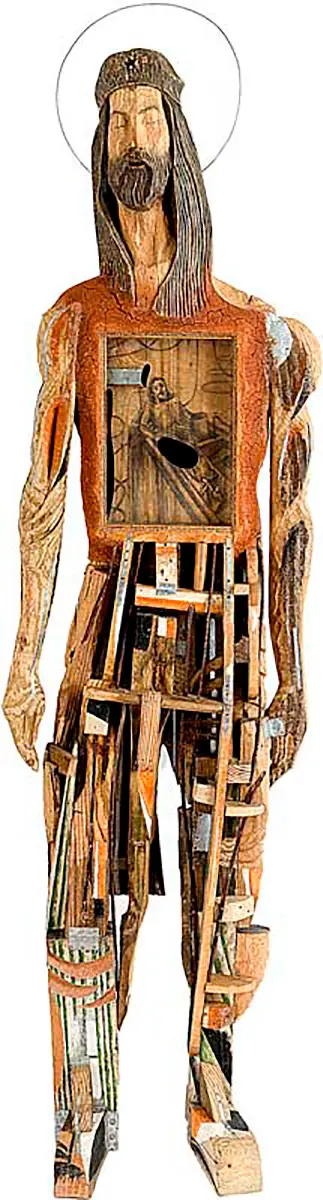
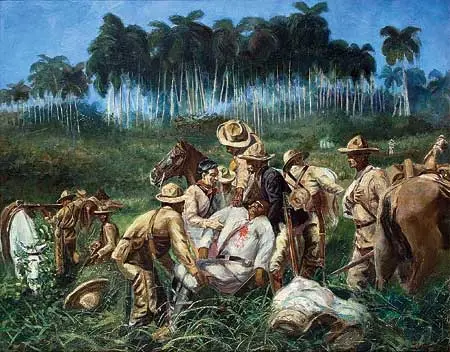
The Shape of History is the title of one of the segments seen at The Harlem Studio. The images on exhibit are connected to the history of the Caribbean. These include Henri Christophe’s portrait of Toussaint Louverture, and a small canvas by Antonio Menocal depicting the death in battle of Cuban general Antonio Maceo. Also included are references to the Cuban revolution. In one video, Geandy Pavón (1972) progressively unveils a portrait of political prisoner Orlando Zapata Tamayo, who died in a Cuban prison after a lengthy hunger strike. Another allusion is found in The Crown Jewels (2009), by Carlos Garaicoa, whose works are small silver replicas of buildings used as centers of repression or which have contributed to the preservation of totalitarian regimes. Among these “jewels” Garaicoa added—alongside replicas of the Pentagon, the headquarters of the KGB and the Stasi, and Chile’s National Stadium—the figure of Villa Marista, a prison maintained by Cuba’s intelligence services. In Santa Veronica, by José Ángel Toirac (Cuba, 1966), on exhibit at El Museo del Barrio, the face of Che Guevara replaces that of Christ, in an ironic complaint against (or mockery of) the sanctification of the revolutionary leader. Similarly, at the Queens Museum of Art, Alejandro Aguilera offers an image of Che surrounded by a halo.
Yet besides these critiques and de-mystifications, the iconography produced by the Cuban revolution was excluded from Caribbean Crossroads of the World. This absence is, in my view, objectionable, independent of the ideological positions of those who participated in the planning of the show. Even if we think that the current Cuban leaders are tyrannical figures that destroyed the country’s economy or acted as mere Soviet lackeys during the Cold War, it cannot be doubted that the protagonists of the Cuban revolution transformed, even at the visual level, the history of the Caribbean. Apologetic images of the process begun in 1959 would have added greater complexity to the selection.
Nevertheless, this lacuna could also be defended as one of the show’s successes. The research effort required by Caribbean Crossroads of the World extended for over five years. Despite the inclusion of hundreds of works of art, visitors will not necessarily encounter the most representative or best known, nor those that, like Wifredo Lam’s La Jungla, are recognized landmarks of Caribbean-ness in the visual-arts realm. One of the project’s merits is the fact that it presents a sizable number of works seen for the first time, little-known artists, and material that languished for decades in archives or private collections. Caribbean Crossroads of the World is a curatorial effort that skirts the commonplace to dust off works that are veritable finds and propose a novel interpretation of the entire selection. Given this curatorial criterion, it could be perfectly legitimate to set aside Korda’s well-known image of Che in order to emphasize others. Caribbean Crossroads of the World succeeds in anthologizing the cultural and geographic complexity of the region, at the same time rousing the curiosity of experts in the topic.
ERNESTO MENÉNDEZ CONDE