
In 2007, artist José Dávila (Guadalajara, Mexico, 1974) exhibited a series of drawings on paper created by a felt-tip pen tied to a balloon. Titled Exercises of the Possible, the series explored the possibility of creating without the direct intervention of the hand. Internationally renowned for the refinement and elegance of his installations, objects, drawings, and photographs, the work by Dávila is based on the rupture with the assumed perspectives on things, through a complete subversion of the observation field on which he works. Dávila is curious about the achievements in art and architecture, about utopias and discoveries, perception and mental games, existential and emotional matters, as these conform vehicles of communication that convey our human condition.
Dávila’s third solo show at the Galería Travesía Cuatro borrows its title from the book by French biologist François Jacob: Le jeu des possibles, essai sur la diversité du vivant. The book addresses themes like the relationship between myth and science, the Theory of Evolution and randomness, the functioning of the brain, and genetic engineering, among others. It warns about the dangers of assuming theories as ideologies, the rigidity of thought, the search for absolutes. It is a work that combines scientific knowledge and the wisdom of life and that invites us to see human creation from a “game of the possible,” as it pushes us to venture into the world of knowledge and to live our existence imagining a better future. Based on these formulations, José Dávila lays out a group of works that offer several angles both in the history of art and the creative-exploration processes in visual perception, as well as of the social and human. With great economy of resources, technical mastery, and his well-known minimalist accent, Dávila’s pieces, powerful in the arrangement of forms and volumes, seek a continuous and ever-changing relationship of equilibrium, in the use of light, the chromatic harmony, and the way in which new and eloquent relationships in the space are established.
Formally trained as an architect, Dávila belongs to a generation of Mexican artists from the beginning of the 1990s who were fascinated with the strategies and the policies of conceptual art, as they developed urban intervention projects that were in constant dialog with the place and its function. Since then, a central preoccupation of his is born pertaining to space and the diverse forms that can be represented, subverted, muted,1 all the while he continues with the long tradition of “wanting to introduce painting in the space.” It is no coincidence that the authors he uses as reference include architect Buckminster Fuller, Lygia Clark, Oiticica, the Poems-Light by Lygia Pape, Malevich, Matta-Clark, the re-reading of the minimalist approaches by figures like Sol LeWitt, Dan Flavin, or Donald Judd.
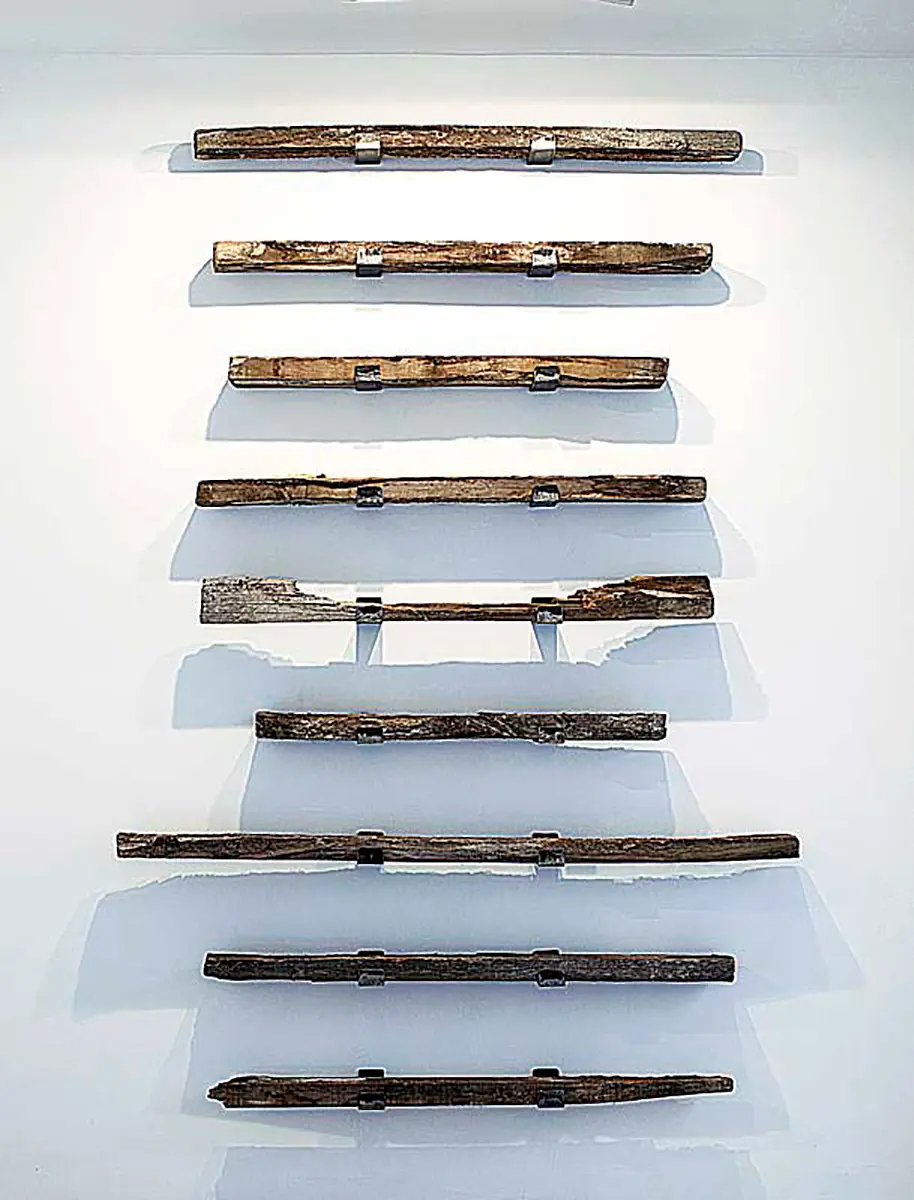
In Horizonte Vertical (Vertical Horizon, 2012) Dávila presents a group of wooden beams placed on metal bases to form a column, as he draws a continuous vertical “horizon” on a wall. In other two pieces, a row of black crystals on metal bases and a series of wooden cubes painted in red, also play with this idea of utilizing diverse textures and qualities; from the progression of identical units, using the wall as support—that reminds us of the wonderful compositions by Judd, were three-dimensionality offered a scape from the limitations of painting.
Depurated lines and forms of minimalist surfaces undergo significative variations in the series titled Posibilidades Finitas (Finite Possibilities, 2012), as they combine imperfect materials like concrete (rustic, opaque), with the perfect luminosity of neon. The use of concrete, so common in building construction, points to constructive processes, to the possibilities of action by mankind in society. If in Promise of a Better World (2011) the concrete blocks offered a symbolic image of the city, then in the new series, the panels are intertwined as they create various effects of continuity and rupture, union, and opposition. Sometimes they simulate the internal structure of a corner that opens to the exterior (Posibilidades Finitas I) or draw structures that get closer to each other without touching, like the expression of the “possible” for which we adapt out behavior or confront our desires and fears (Posibilidades Finitas II).
One of the central pieces of the exhibition, Topologías de Luz (Light Topologies 2012) consists of a group of photographs of installations by Dan Flavin, where the principal element has been cut out (the neon bar) to highlight the chromatic harmony and subtlety of the various traces of light on the background. To the “classification and connectivity” applied in the architectural icons (Buildings You Must See Before You Die, 2009), works of art (Topologies of Memory, 2011), or the image of famous artists that disappear from their own portrait (Topologies of Identity, 2012), Dávila establishes here relationships of proximity among “new objects” (works by Flavin), as a way to perhaps insist in that long period of experimentation with light, color, and interior spaces outside from traditional mediums.
A subtle combination of belief, knowledge, and imagination builds the ever-changing image of the possible2 before our eyes. The exhibition underscores ideas surrounding that continuous dialogue between “what it could be, what is, between the possible and the real,” as it approaches points of encounter between what are apparently opposing realities. The work by Dávila is reaffirmed as an exercise of experimentation and redefining boundaries; from the creation of systems of apparent great simplicity that become meaningful clues for reflection, to the search for new combinations of ‘different possibilities,’ like paths, ways to transform our environment. Dávila makes it possible.
NOTES
1. Cfr. Naief Yehya: José Dávila, Artnexus Magazine #46 Oct - Dec 2002 Mexico, Mexico City.
2. Cf. François Jacob: Le jeu des possibles, essai sur la diversité du vivant, 1981.
WENDY NAVARRO