
Sara Facio (Argentina, 1932) is passionate about photography and has consecrated her entire life to it. Artist, collector, curator, writer, and editor, Facio constructed from her artistic practice the memory of her time and, as a cultural promoter, contributed to the consolidation of photography in Argentina. A great portrait photographer, her gaze and subjectivity created, among other memorable representations, a gallery of iconic images of Latin American Writers like Pablo Neruda, Jorge Luis Borges, Alejandra Pizarnik, Juan Carlos Onetti, Gabriel García-Márquez, Mario Vargas-Llosa, Adolfo Bioy-Casares, the Ocampo Sisters, Ernesto Sábato, among others. Facio owes her gratitude to art critic and writer Marta Traba—also photographed—for being complicit in helping her photograph Juan Rulfo who did not like to have his picture taken.
Facio begins her artistic trajectory in 1957 as assistant to Annemarie Heinrich, who she regards as her teacher in Argentina along with Anatole Saderman and Juan Di Sandro. In 1960, Facio sets up a photographic studio with Alicia D’Amico who was a “superior photographer, the best our generation has to offer.” They remained partners of the studio until 1985. Then, she mostly works with black and white photography, focusing on portraiture as she explores advertising, photojournalism, and journalism, and even by creating some of the most important newspaper photographic sections in the country. She exhibits her work and wins awards, organizes exhibitions like Fotogalería del Teatro San Martín, which she created in 1985.
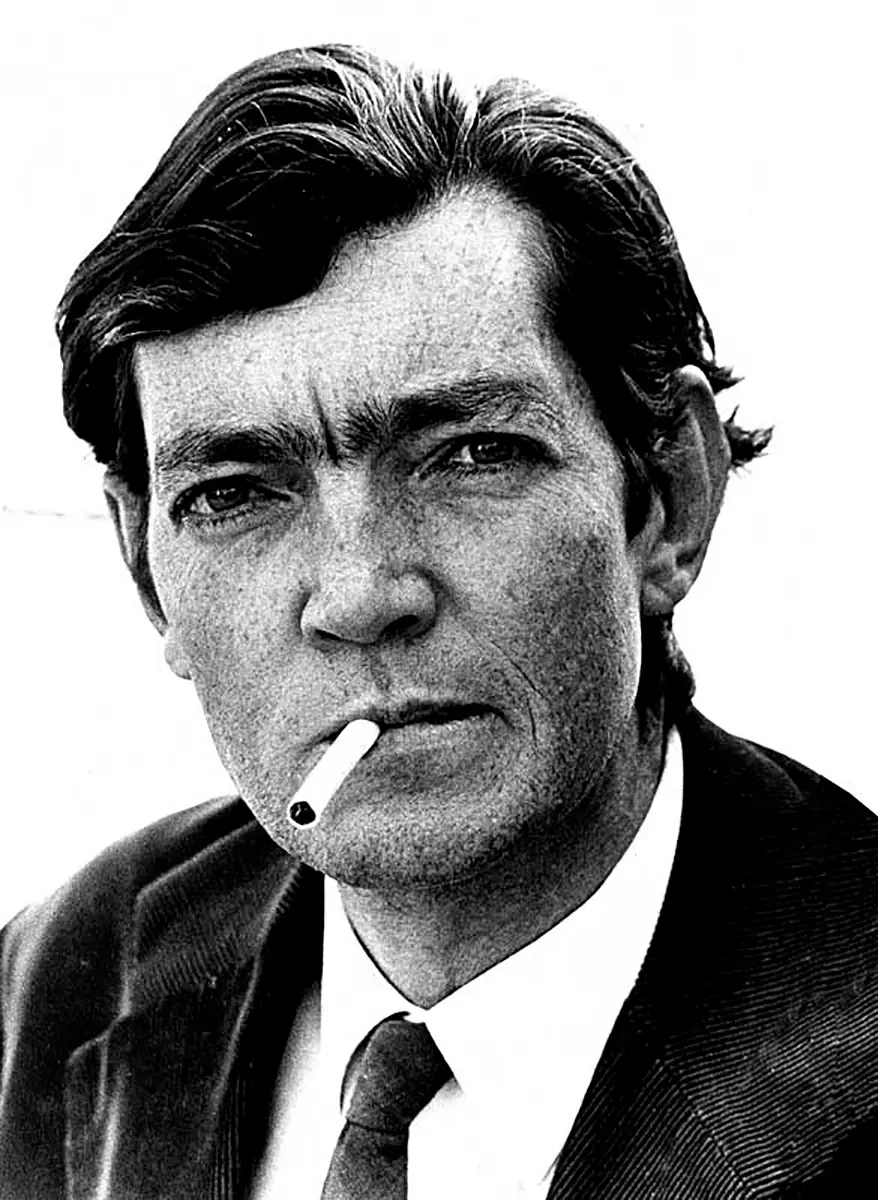
Her anthology Sara Facio. Fotografías was presented during the 17th Open Encounter Festival of Light (2012) at the Centro Cultural Recoleta. From one of the gigantic walls in the Sala Cronopios, one already classic photograph of Julio Cortázar presided over the exhibition solitary and magnificent. Taken in Paris in 1967, the image shows the writer absorbed while he questions viewers with his intense and intelligent gaze and confronts the camera with an unlit cigarette in his mouth. Facio’s Julio is the Cortázar of the Argentineans.
The 200 expressive and sincere images in this successful exhibition also established the staying power of artists and musicians, producers and singers like Norma Aleandro, Goyeneche / Piazzolla, María Luisa Bemberg, Lina Wertmüller, Tita Merello, Mercedes Sosa, and María Elena Walsh, the singer-songwriter and poet who was also Facio’s partner in art and in life. A succession of early images appears before us during the early part of the exhibition, like the unforgettable series First Awards that depict the faces of fascinated children photographed in Colonia (Uruguay), and Humanitarian, a project with the mentally ill. Her work also reports on political events like in the photographic essays Perón Returns and Funerals of President Perón, with anonymous supporters of the president, first euphoric because of the leader’s return to Argentina in 1973, and then mourning his death in 1974.
The pictures survey streets and architectures—of Buenos Aires and around the world—that is “life itself.” It is then that Facio introduces color in works like Metropolis, a series centered on the rituals and traditions of Guatemala. She also intervenes some of the photos from the series Of Warlocks and Sorcerers, like the one of Jeanne Moreau, with “color markers, fake, arbitrary” because she dislikes industrial colors; because “the negation of color is a photographer’s first rebellious act,” since, after all, he/she knows that “life is in color.”
After breaking both her wrists in 2005, she stops taking pictures. But Sara Facio continues to be a constant presence in the artistic scene. Some days back, at the age of 80, she participated in a public debate about photography publishers. In 1973 she founded with Christina Orive the still relevant La Azotea Editorial Fotográfica.
Last October Facio was honored during the presentation of the donation Fotografía Argentina- Colección Rabobank, at the Museo Nacional de las Artes. In 1995, when Jorge Glusberg was the director at MNBA, she spearheaded the foundation of that institution’s Photographic Collection, with more than 50 works donated by Facio—until recently a curator there—from renowned national and international artists. About leaving that job, Facio said: “After almost three decades there, I decided to leave my post at the MNBA because I concluded that I had achieved my purpose there: to have photography accepted as a Fine Art.”
Facio has white hair, speaks softly but her opinions are firm. According to her, the important thing about photography is that “the image is moving, because of its subject matter, beauty, unique aesthetic, power, ability to surprise. I do not care about the mechanics of photography without the complicity of the person who presses the shutter. These are photos without a heart or a soul.” On the contrary, Sara Facio approaches a pure photographic language to create heartfelt and indelible images that reflect a discerning point of view, nourished also by books and travels, as well as by her love for movies and jazz. The exhibition captures the insightful gaze of this essential photographer and the artistic dimension of her photography.
VICTORIA VERLICHAK